
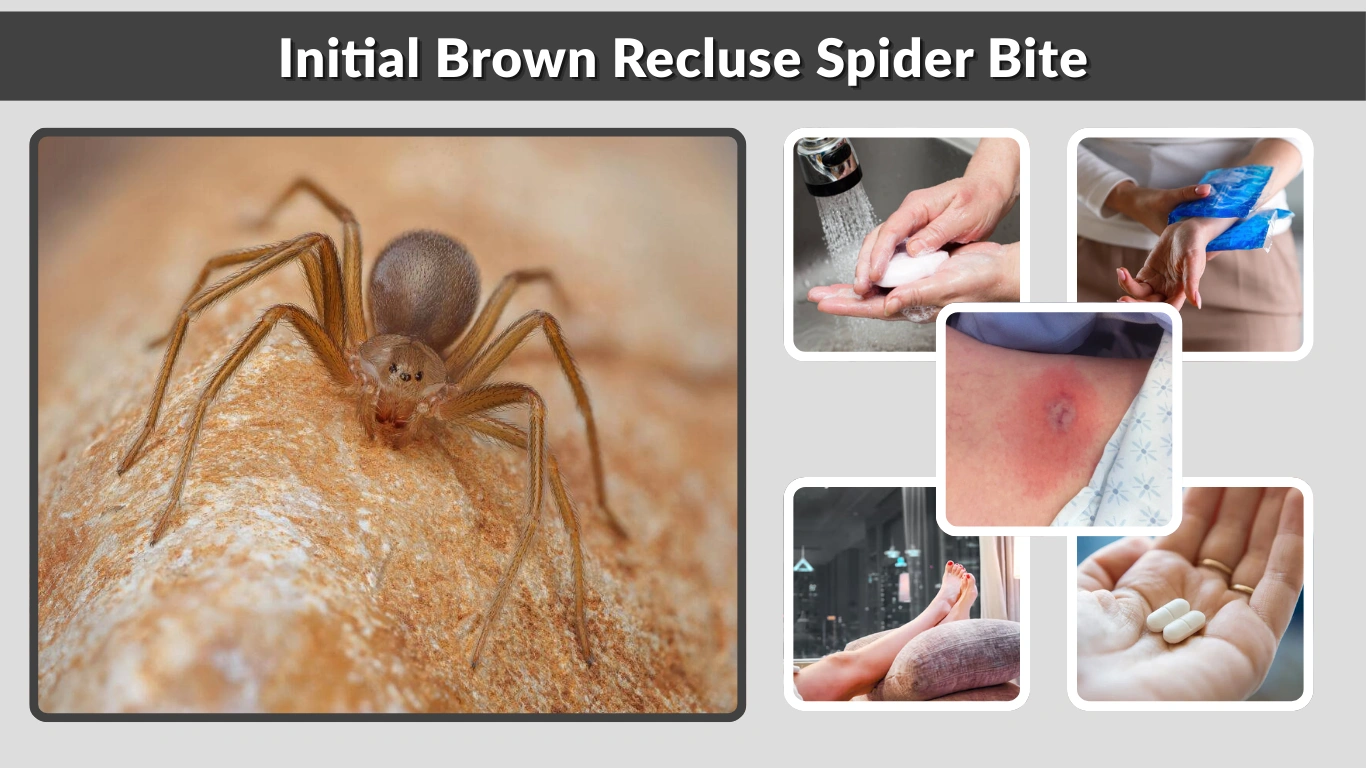
An initial brown recluse spider bite is often overlooked because it rarely causes immediate pain or dramatic symptoms. Many people only realize something is wrong hours or even days later, when skin changes begin to appear. This delayed reaction is one reason brown recluse bites are frequently misunderstood or misdiagnosed.
Understanding the early signs of a brown recluse bite is important, especially in areas where these spiders are known to live. While most bites heal without serious complications, a small percentage can develop tissue damage if not monitored properly. Knowing what an initial brown recluse spider bite looks and feels like, and how symptoms progress in the first 24 hours, can help you respond appropriately and avoid unnecessary panic.
What Is a Brown Recluse Spider Bite?
A brown recluse spider bite occurs when the spider injects venom through its fangs as a defensive reaction. Brown recluses are not aggressive and typically bite only when pressed against the skin, such as when putting on clothing or rolling over in bed.
The venom contains enzymes that can damage skin tissue, but this process happens slowly. Unlike many insect bites, the initial brown recluse bite often does not cause immediate pain or swelling. This delayed effect is what makes early identification difficult and leads many people to ignore the bite until symptoms worsen.
It is also important to note that confirmed brown recluse bites are relatively rare. Many suspected bites are later identified as skin infections, allergic reactions, or bites from other insects.
Initial Brown Recluse Spider Bite Symptoms

What Does an Initial Brown Recluse Bite Look Like?
In the early stage, an initial brown recluse spider bite may appear as a small red mark, pale spot, or slightly raised area on the skin. Swelling is usually minimal, and the bite can resemble a mosquito bite or minor skin irritation.
Some bites show a faint central area that may look lighter or slightly indented compared to the surrounding skin. At this stage, there is typically no open wound or ulceration, which is why many people underestimate the bite.
How Does an Initial Brown Recluse Bite Feel?
Many people report that the bite is painless at first or causes only mild discomfort. Others describe a slight burning or stinging sensation that fades quickly. Itching may occur but is usually mild.
Because the initial bite does not feel severe, it is common for people to forget about it entirely until symptoms progress later.
Initial Brown Recluse Spider Bite Timeline

First 0–6 Hours After the Bite
During the first few hours, symptoms are usually minimal. The bite site may appear slightly red or irritated, but pain is often absent. In some cases, the area may feel warm or mildly sensitive to the touch.
This delay happens because the venom’s effects on tissue develop gradually rather than immediately. At this stage, it is difficult to distinguish an initial brown recluse bite from many other minor skin issues.
6–24 Hours After the Bite
Within the first 24 hours, changes may become more noticeable. Redness can increase, and swelling may begin to develop around the bite site. Some people notice a blister forming or a more defined central area.
Pain may increase during this period, often described as a deep, aching sensation rather than sharp pain. While not all bites progress beyond this point, this stage is critical for monitoring changes and deciding whether medical evaluation may be needed.
24–72 Hours After the Bite
Between 24 and 72 hours after an initial brown recluse spider bite, symptoms may either stabilize or worsen, depending on how the body reacts to the venom. In mild cases, redness and discomfort gradually decrease. In more serious cases, the skin around the bite may change color, turning bluish, purplish, or dark red.
A blister or small ulcer may form at the center of the bite. This does not occur in all cases, but when it does, it signals a stronger local reaction. Tissue damage, sometimes referred to as necrosis, develops slowly and is usually limited to a small area. Severe tissue damage is uncommon but requires medical evaluation.
Initial Brown Recluse Bite vs Other Bites

Initial Brown Recluse Bite vs Wolf Spider Bite
One of the most common comparisons is between an initial brown recluse bite and a wolf spider bite. Wolf spider bites typically cause immediate pain, redness, and swelling that improves within a few days. The reaction is usually mild and localized.
In contrast, an initial brown recluse spider bite may not hurt at first but worsens over time. The delayed onset of pain and skin changes is one of the clearest differences between the two.
Initial Brown Recluse Bite vs Common Insect Bites
Mosquito, ant, and flea bites usually cause itching shortly after they occur and improve within hours or days. Brown recluse bites are different because itching is often minimal, and symptoms may continue to worsen instead of improve.
Many suspected brown recluse bites are actually bacterial infections or allergic reactions, which is why professional diagnosis is important if symptoms escalate.
Early Signs of a Serious Reaction
Local Skin Changes to Watch For
Certain skin changes may indicate a more serious reaction. These include a spreading dark area around the bite, increasing pain, and the development of an open sore. If the skin becomes blackened or breaks down, medical attention should be sought promptly.
Systemic Symptoms (Rare)
In rare cases, brown recluse venom can cause systemic symptoms such as fever, chills, nausea, fatigue, or muscle pain. These reactions are uncommon but more likely in children, older adults, or individuals with underlying health conditions.
What to Do Immediately After a Suspected Initial Bite

First Aid for an Initial Brown Recluse Spider Bite
Clean the bite area gently with soap and water to reduce the risk of infection. Applying a cold compress can help limit swelling and slow venom activity. Keep the affected area elevated when possible.
Avoid using heat, cutting the wound, or applying home remedies that may worsen tissue damage. Antibiotics should only be used if prescribed by a healthcare provider.
When to Seek Medical Attention
Medical evaluation is recommended if pain increases, a blister or open wound forms, or symptoms worsen after 24 hours. Individuals with weakened immune systems or underlying conditions should seek care earlier.
If possible, noting when the bite occurred and how symptoms changed over time can help medical professionals determine the best course of treatment.
Why Brown Recluse Bites Are Often Misdiagnosed
Brown recluse bites are frequently overdiagnosed because many skin conditions mimic their appearance. Infections such as MRSA, allergic reactions, and even minor injuries are commonly mistaken for spider bites.
Geography also plays a major role. In areas where brown recluse spiders are not native, a true brown recluse bite is unlikely. Accurate diagnosis requires careful evaluation rather than assumptions based on appearance alone.
How Long Does an Initial Brown Recluse Bite Take to Heal?
Healing time depends on the severity of the reaction. Mild bites may heal within one to two weeks. Moderate bites with skin breakdown may take several weeks. Severe cases involving necrosis can require months and, in rare situations, surgical intervention.
Most people recover fully with proper care and monitoring.
How to Prevent Brown Recluse Spider Bites
Preventive steps include reducing clutter, sealing cracks, and storing clothing and shoes in sealed containers. Shake out clothing, towels, and bedding before use, especially in areas where brown recluse spiders are known to live.
Keeping beds slightly away from walls and avoiding cardboard storage can also reduce risk.
Conclusion
An initial brown recluse spider bite often appears mild and painless, which makes early recognition difficult. Monitoring symptoms over the first 24 to 72 hours is essential, as delayed skin changes can signal a stronger reaction. While serious complications are rare, understanding the early signs and knowing when to seek medical care allows for timely treatment and peace of mind.
FAQs
What does an initial brown recluse spider bite look like?
An initial brown recluse spider bite often looks like a small red mark, pale spot, or slightly raised area on the skin. Swelling is usually minimal at first, and there is typically no open wound. Because it can resemble a minor insect bite, many people do not recognize it immediately.
Does an initial brown recluse bite hurt right away?
In most cases, no. An initial brown recluse bite is often painless or causes only mild discomfort during the first few hours. Pain may develop gradually over the next 6 to 24 hours as the venom begins to affect surrounding tissue.
How fast do symptoms appear after a brown recluse bite?
Symptoms usually appear slowly. Mild redness or irritation may be noticed within the first few hours, but more noticeable changes such as increasing pain, swelling, or blistering often develop within 6 to 24 hours after the bite.
How can you tell an initial brown recluse bite from other bites?
Unlike many insect bites, an initial brown recluse bite usually does not itch and may worsen over time instead of improving. The delayed onset of pain and skin changes is a key difference. However, many skin conditions can look similar, so medical evaluation may be necessary.
When should you see a doctor for a suspected brown recluse bite?
You should seek medical attention if pain increases, the bite develops a blister or open sore, skin discoloration spreads, or symptoms worsen after 24 hours. Children, older adults, and individuals with weakened immune systems should seek care sooner.
