
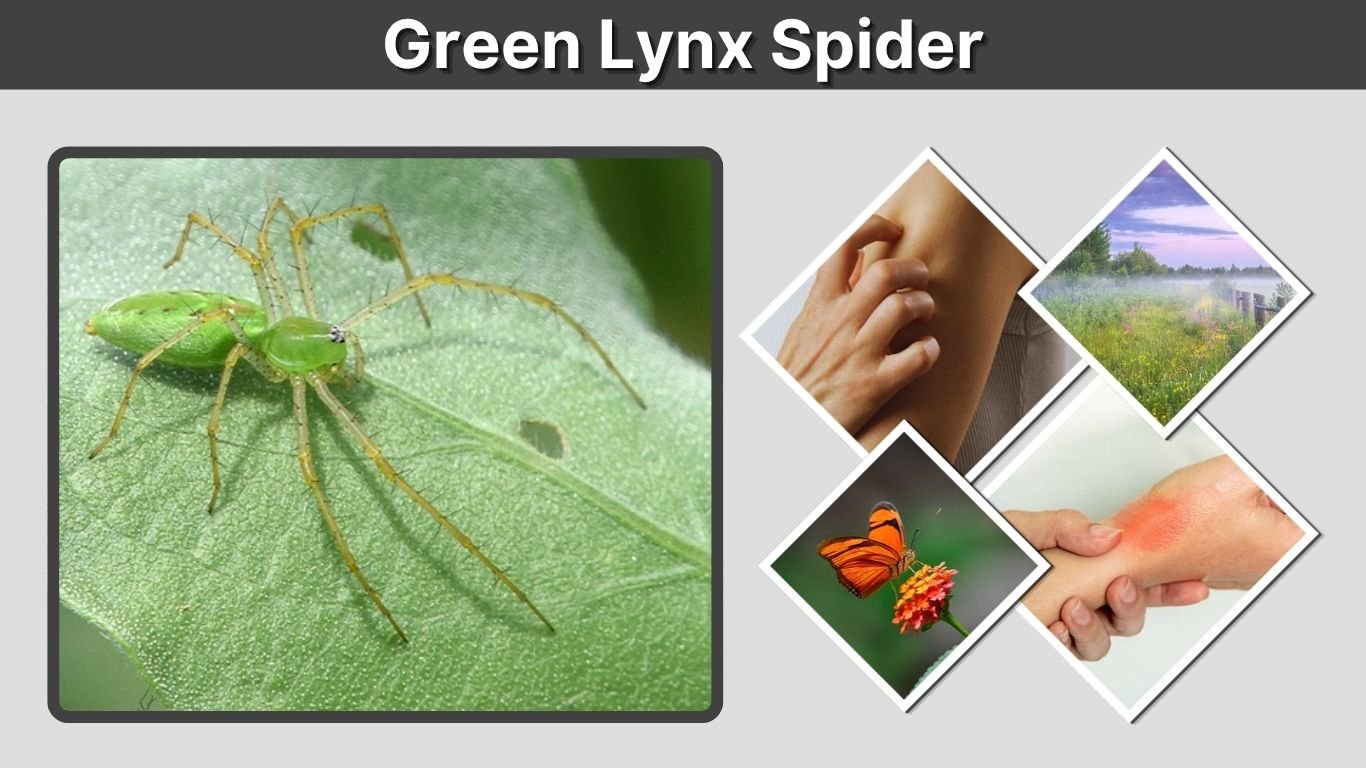
The green lynx spider (Peucetia viridans) is a striking bright-green hunting spider commonly found on shrubs, flowers, and other vegetation. Its long legs are covered with prominent black spines, giving it an unmistakable appearance. Unlike many familiar spiders, it does not build a web to capture prey. Instead, it waits among plants before quickly pouncing on insects. Green lynx spiders are especially common across the southern United States and can be beneficial garden predators, although they sometimes capture pollinators as well as pest insects.
What Is a Green Lynx Spider?
The green lynx spider belongs to the family Oxyopidae, commonly known as lynx spiders. Its scientific name is Peucetia viridans. It is the largest lynx spider species found in North America and is particularly conspicuous because of its vivid green coloration and extremely spiny legs.
Green Lynx Spider Identification
Look for these characteristics:
- Bright green or yellow-green body
- Long, slender legs
- Numerous prominent black leg spines
- Small black spots on the legs
- Red markings that may appear around the eyes
- Elongated, somewhat tapered abdomen
- Eight eyes in a distinctive lynx-spider arrangement
- Agile running and jumping behavior
- Habit of sitting on flowers, leaves, and shrubs
Some individuals develop reddish, pinkish, or yellowish areas, so not every green lynx spider looks uniformly green.
Why Is It Called a Lynx Spider?
The name refers to the spider’s active, cat-like hunting style. Green lynx spiders have excellent eyesight and can rapidly run or leap toward prey.
Rather than waiting for an insect to become tangled in sticky silk, they stalk, ambush, and pounce on prey from vegetation. Their hunting abilities make them similar in behavior to jumping spiders, although they belong to a different family.
Green Lynx Spider Size
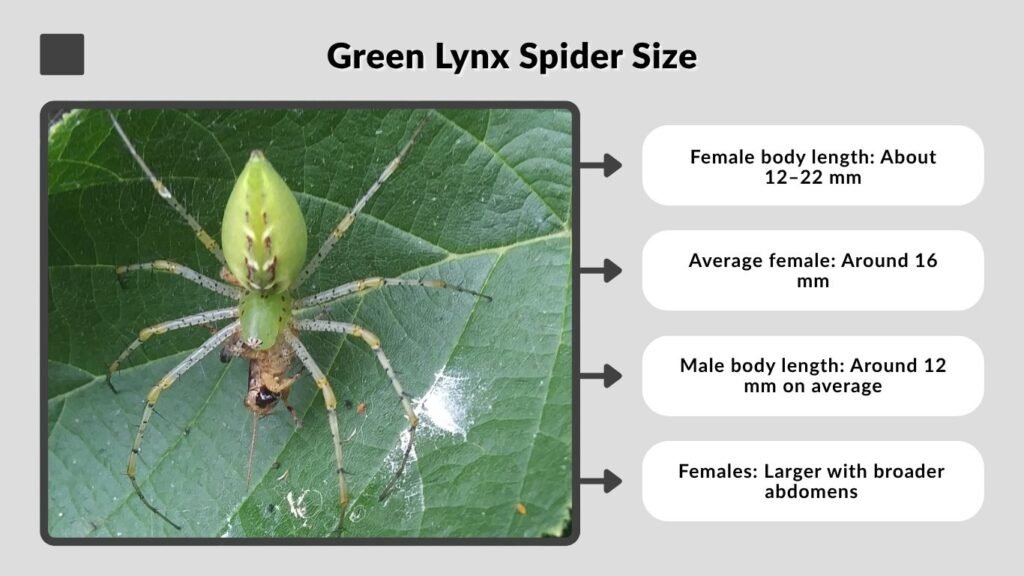
Although not enormous, the green lynx spider is relatively large compared with many spiders commonly seen on flowers and garden plants.
Females are considerably bigger and more heavily built than males.
How Big Is a Green Lynx Spider?
Typical adult sizes include:
- Female body length: About 12–22 mm
- Average female: Around 16 mm
- Male body length: Around 12 mm on average
- Females: Larger with broader abdomens
- Males: Smaller and noticeably slimmer
Long legs make both sexes appear substantially larger than their body length alone suggests.
Male vs. Female Green Lynx Spider
Male and female green lynx spiders share the same characteristic green coloration and strongly spined legs, but their proportions are different.
Females become especially easy to recognize when mature because of their larger abdomen and reproductive behavior.
Male Green Lynx Spider
Adult males generally have:
- Smaller overall bodies
- Narrower abdomens
- Longer-looking legs
- More slender appearance
- Enlarged pedipalps when mature
Their body proportions can make males appear almost delicate compared with adult females.
Female Green Lynx Spider
Adult females typically have:
- Larger bodies
- Broader abdomens
- Heavier overall build
- Ability to produce large egg sacs
- Strong defensive behavior around eggs
Females become particularly protective once an egg sac is produced and may aggressively confront animals approaching their offspring.
Where Do Green Lynx Spiders Live?
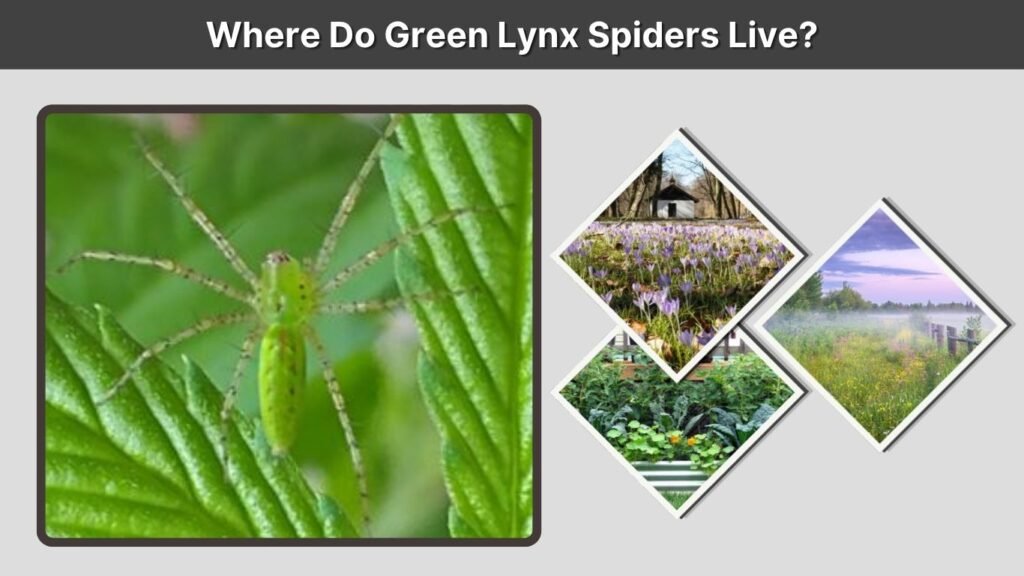
Green lynx spiders are primarily associated with warm climates and vegetation. In North America, Peucetia viridans occurs across much of the southern United States from coast to coast, as well as Mexico, Central America, and the West Indies.
Common Habitat
They frequently occur on:
- Flowering plants
- Tall weeds
- Shrubs
- Garden plants
- Cotton plants
- Meadows
- Field vegetation
- Woody bushes
- Agricultural crops
- Low herbaceous vegetation
Their green coloration allows them to blend remarkably well with leaves and stems.
Green Lynx Spider in Florida, Texas, and California
Florida is particularly well known for green lynx spiders, where they are commonly found among shrubs and garden plants. Their range also includes Texas and California, so encounters in warm southern and southwestern areas are normal.
In San Diego and other parts of Southern California, suitable gardens, flowering vegetation, and warm weather can provide excellent habitat.
What Do Green Lynx Spiders Eat?
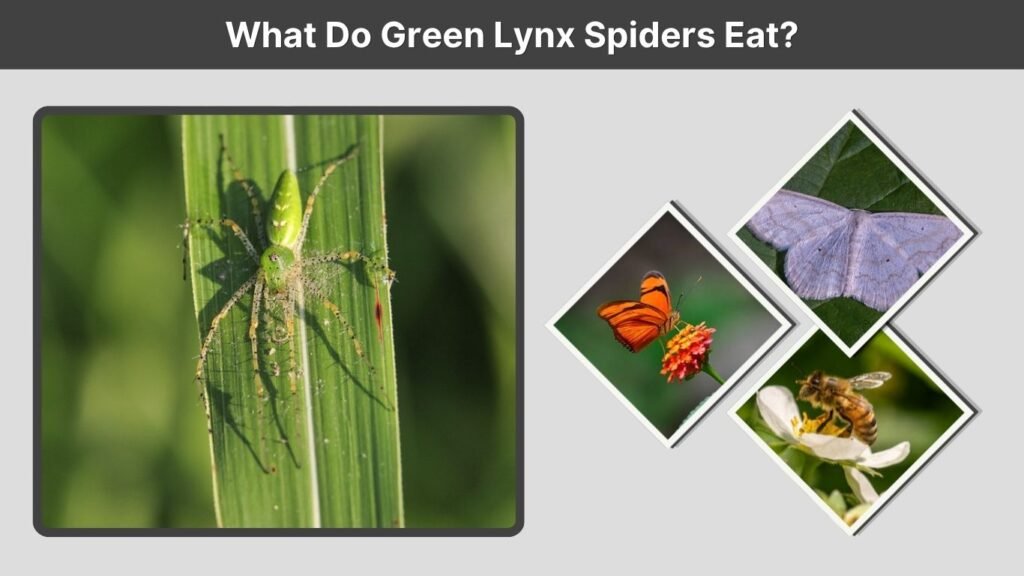
Green lynx spiders are generalist insect predators. They wait among vegetation for insects to approach and then rapidly grab their prey.
They can capture surprisingly large insects relative to their body size.
Green Lynx Spider Diet
Common prey may include:
- Moths
- Moth larvae
- Flies
- Bees
- Wasps
- Butterflies
- Small grasshoppers
- Other plant-visiting insects
They consume several important agricultural pests, including corn earworm moths and cabbage looper moths. However, they also capture beneficial insects such as honey bees, pollinating flies, and predatory wasps.
Does a Green Lynx Spider Make a Web?
Green lynx spiders produce silk but do not construct a prey-catching web.
They are daytime hunters that run and leap over vegetation. Silk may be used as a safety dragline while jumping and becomes especially important during reproduction and egg-sac construction.
How Do They Hunt?
A green lynx spider may remain motionless on a flower or leaf until an insect approaches.
Once prey comes close enough, the spider quickly lunges forward, grips the insect using its spiny legs, and delivers a venomous bite.
This sit-and-wait strategy allows it to capture insects without maintaining a large web.
Green Lynx Spider Bite
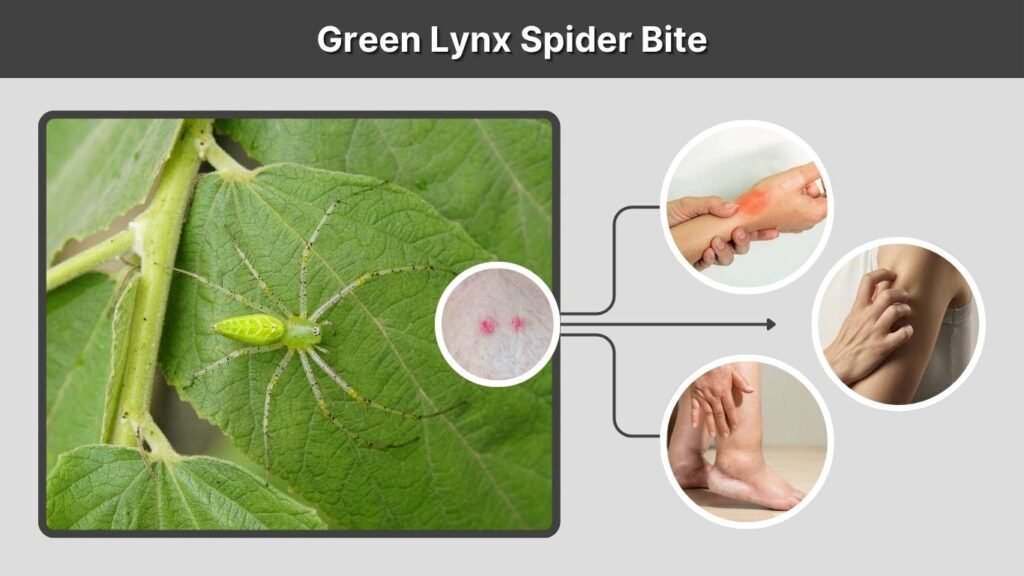
Green lynx spiders can bite humans, but bites are uncommon. They are much more interested in catching insects than interacting with people.
A female guarding an egg sac may be particularly defensive, so handling one is best avoided. University of Florida information notes that the species seldom bites people.
Green Lynx Spider Bite Symptoms
Reported effects can include:
- Local pain
- Redness
- Itching
- Mild to moderate swelling
- Tenderness around the bite
- Temporary skin irritation
Published case reports have described local pain, itching, redness, and firmness without systemic illness or tissue necrosis.
If symptoms become severe, spreading, or unusual—or if identification of the spider is uncertain—medical evaluation is appropriate.
Is the Green Lynx Spider Poisonous?
Green lynx spiders are venomous rather than poisonous. Their venom is delivered through the fangs and helps immobilize insect prey.
Their bites are not generally considered medically significant to humans, although they can be painful and cause temporary localized reactions.
Can Green Lynx Spiders Spit Venom?
Yes. One of the most unusual characteristics of Peucetia viridans is its ability to defensively spray venom or venom-containing fluid toward a perceived threat.
This behavior has been documented scientifically and appears especially important when females are protecting egg sacs. Contact with the eyes could cause significant irritation, so keeping some distance from a defensive spider is sensible.
Green Lynx Spider Egg Sac
Reproduction produces one of the most interesting behaviors associated with this species. The female constructs an egg sac among vegetation and guards it vigorously.
In much of its North American range, egg sacs are produced toward late summer or fall.
Eggs and Spiderlings
A green lynx spider egg sac:
- Is initially pale green
- Becomes straw-colored with age
- Measures roughly 1.5–2.5 cm across
- May contain 25–600 eggs
- Is usually attached among branches and leaves
- Is continuously guarded by the female
The average reported egg sac contains around 200 bright orange eggs. After hatching and developing inside the sac, spiderlings eventually emerge and disperse.
Green Lynx Spider vs. Striped Lynx Spider
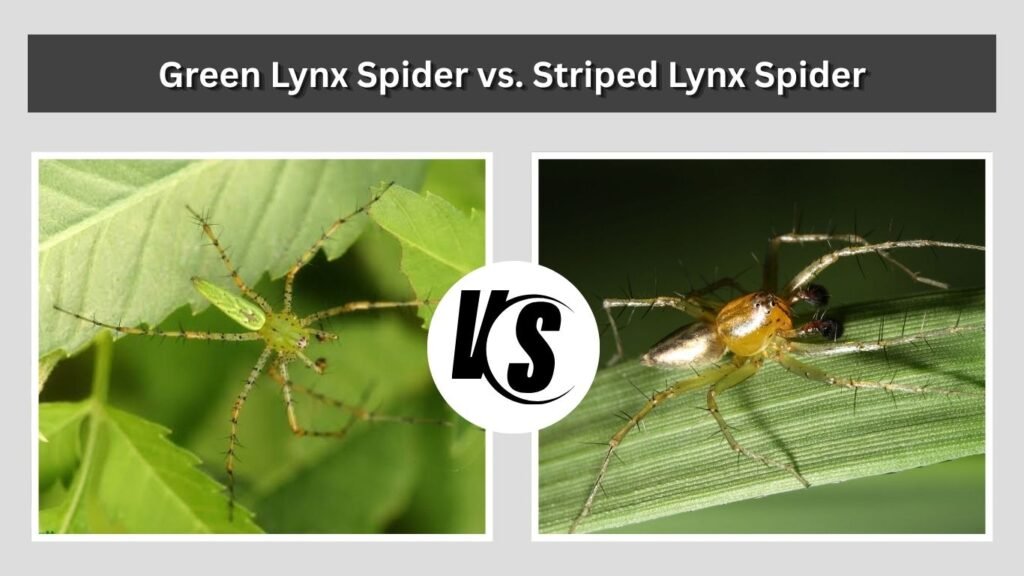
The striped lynx spider (Oxyopes salticus) is another common North American lynx spider. Both are fast hunters with highly spined legs, but their appearances are substantially different.
Key Differences
| Feature | Green Lynx Spider | Striped Lynx Spider |
| Scientific name | Peucetia viridans | Oxyopes salticus |
| Color | Bright green | Brown/tan with stripes |
| Size | Larger | Generally smaller |
| Legs | Green with black spines | Brownish, strongly spined |
| Habitat | Flowers and shrubs | Fields and low vegetation |
| Hunting | Active/ambush hunter | Active hunter |
Both species are beneficial predators of many crop-associated insects, but neither limits itself to pest species.
Are Green Lynx Spiders Dangerous?
Green lynx spiders can look intimidating because of their long spines, vivid coloration, and quick movements, but they are not considered a major danger to humans.
Most encounters involve a spider sitting quietly among vegetation waiting for insects. They are far more likely to flee or remain hidden than bite unless disturbed or defending an egg sac.
FAQs
1. Is a green lynx spider poisonous to humans?
It is venomous rather than poisonous. Its venom helps capture insect prey, but bites to humans are uncommon and generally cause localized symptoms rather than serious systemic illness.
2. How big does a green lynx spider get?
Females can reach approximately 12–22 mm in body length, while males average around 12 mm and are considerably more slender. Long legs make both sexes appear larger.
3. Can a green lynx spider spit venom?
Yes. Green lynx spiders have been documented spraying venom defensively, particularly when threatened. Because the spray may irritate the eyes, avoid placing your face close to a defensive spider.
4. What does a green lynx spider eat?
Its diet includes moths, caterpillars, flies, bees, wasps, and other insects visiting vegetation. It eats agricultural pests but may also capture beneficial pollinators and predatory insects.
5. Does a green lynx spider make a web?
It does not build a web to catch prey. Instead, it actively hunts or waits in ambush on vegetation. Silk is still used for draglines, egg sacs, and reproductive purposes.
