
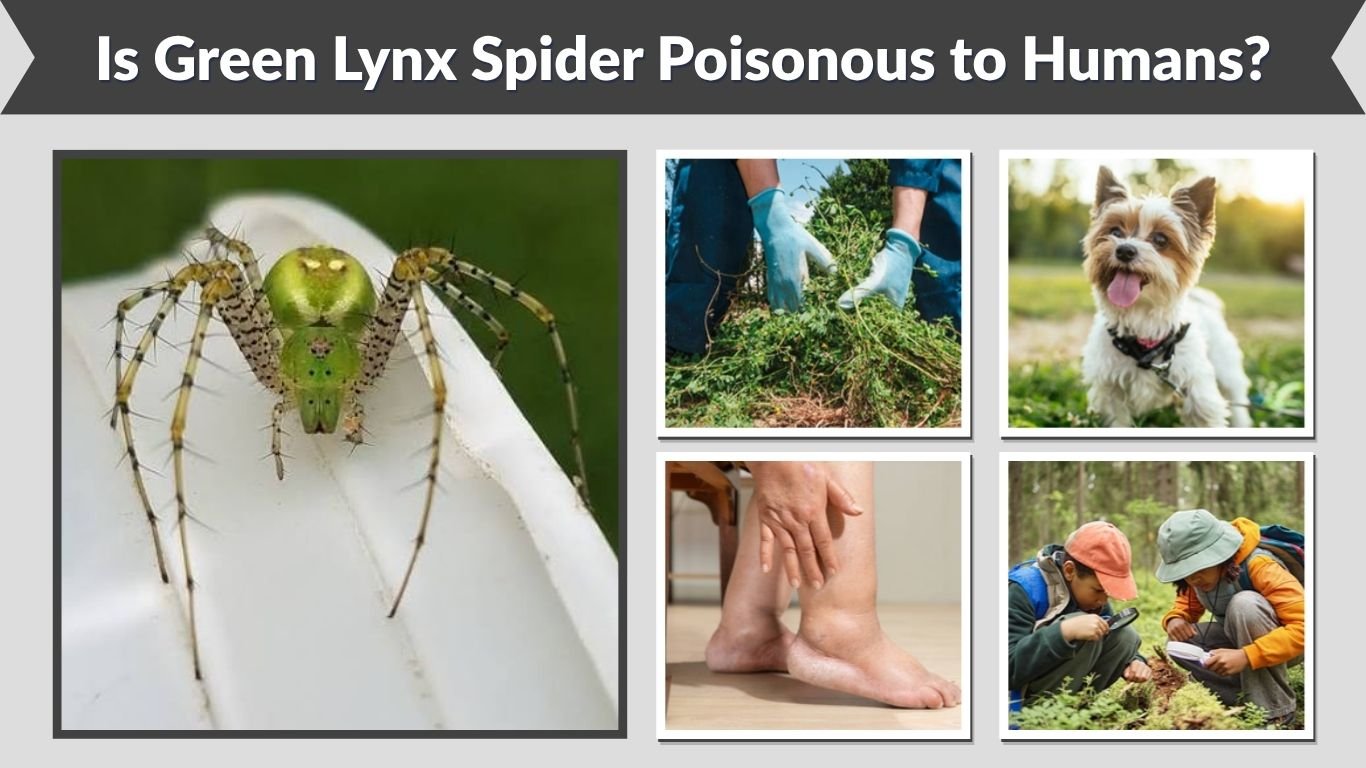
The bright green color and long, spiny legs of a green lynx spider can make this garden hunter look intimidating. So, is the green lynx spider poisonous to humans? Technically, green lynx spiders are venomous rather than poisonous because they inject venom into prey through their fangs. However, their venom is not considered medically significant to humans, and bites are uncommon. A bite may cause temporary pain, redness, or swelling, but serious complications are rare.
Are Green Lynx Spiders Poisonous to Humans?
Green lynx spiders (Peucetia viridans) possess venom that helps them capture insects and other small prey. Despite this, they are not considered dangerous spiders for people. They usually remain on flowers, shrubs, grasses, and other vegetation rather than seeking contact with humans.
Poisonous vs. Venomous
Calling a green lynx spider “poisonous” is technically inaccurate. It is venomous, meaning venom is delivered through a bite.
Most spiders use venom to immobilize their prey, but having venom does not automatically make a spider dangerous to people. Only a relatively small number of spider species have venom considered medically significant to humans.
For green lynx spiders, the venom is primarily adapted for catching insects rather than defending against humans.
How Dangerous Is a Green Lynx Spider?
For most people, a green lynx spider presents a very low health risk. Research and extension sources describe its bite as being of little medical concern, although it can be painful.
The spider is also not known for pursuing people. Most encounters occur when someone is gardening, handling plants, or accidentally disturbing a spider or its egg sac.
Because individual reactions vary, however, any unusual or worsening symptoms after a suspected spider bite deserve medical attention.
What Happens If a Green Lynx Spider Bites You?
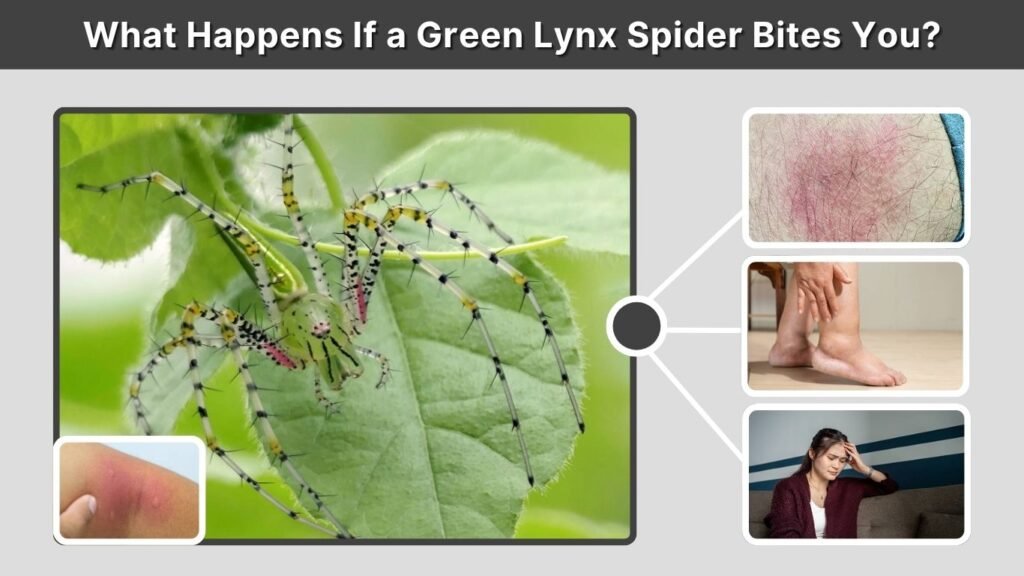
A green lynx spider is capable of biting when physically threatened or trapped against the skin. Documented bites are uncommon, but they demonstrate that the spider can produce noticeable localized reactions.
Green Lynx Spider Bite Symptoms
Possible symptoms around the bite may include:
- Immediate or temporary pain
- Redness around the bite
- Mild burning or irritation
- Localized swelling
- Tenderness
- A small skin lesion
Published information describes bites as generally mild, although localized swelling may occasionally become more noticeable and persist for several days.
Severe systemic poisoning is not considered typical of a green lynx spider bite.
What Should You Do After a Bite?
Wash the affected area gently with soap and water and avoid scratching or irritating it. A wrapped cold pack can sometimes help reduce discomfort and swelling.
Seek professional medical advice if pain or swelling becomes severe, symptoms continue worsening, breathing becomes difficult, dizziness develops, or the person experiences another significant reaction.
It is also important not to assume every unexplained skin lesion is a spider bite. Many insect bites, infections, and skin conditions can produce similar marks.
Are Green Lynx Spiders Aggressive?
Green lynx spiders are active hunters. Instead of constructing a web to capture flying insects, they wait among vegetation and quickly pounce on suitable prey. This hunting behavior can make them appear aggressive, but their aggression is primarily directed toward prey and threats rather than humans.
When Can Green Lynx Spiders Bite?
A bite is most likely when the spider is:
- Grabbed with bare hands
- Trapped against clothing or skin
- Accidentally squeezed
- Disturbed while protecting an egg sac
Female green lynx spiders can become particularly defensive around their eggs. Giving a spider space is normally enough to prevent an unpleasant encounter.
Can Green Lynx Spiders Spray Venom?
One particularly unusual defensive behavior of the green lynx spider is its ability to eject venom toward a perceived threat.
Reports describe green lynx spiders projecting venom over a short distance, and venom reaching the eye has been associated with significant eye irritation or chemical conjunctivitis.
For this reason, avoid putting your face close to a green lynx spider, particularly a female guarding an egg sac.
If material from a spider enters the eye, rinse the eye thoroughly with clean water and seek medical advice if pain, redness, blurred vision, or irritation continues.
Are Green Lynx Spiders Poisonous to Dogs?
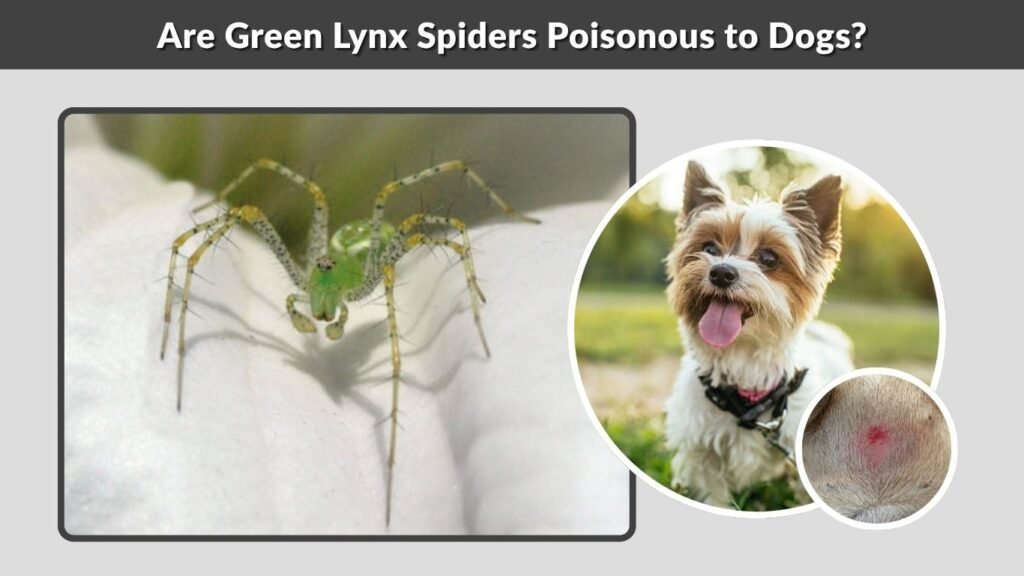
There is no strong evidence that green lynx spiders represent a major poisoning threat to dogs. Their venom is intended for small arthropod prey, and the species is not recognized as one of the spiders associated with medically significant human envenomation.
A dog could still experience discomfort if it investigates, paws at, or bites a spider and is bitten in return.
Green Lynx Spider Bites on Dogs
A suspected bite could potentially produce local pain, redness, tenderness, or swelling. Reactions may also vary according to the dog’s size, bite location, and individual sensitivity.
Because specific veterinary data on green lynx spider bites are limited, contact a veterinarian if your dog develops substantial facial swelling, persistent pain, weakness, vomiting, breathing difficulties, or other unusual symptoms after interacting with a spider.
The same cautious approach is appropriate for cats and other pets.
Are Striped Lynx Spiders Poisonous?
The term striped lynx spider commonly refers to other members of the lynx spider family rather than the green lynx spider itself. Like most spiders, lynx spiders generally use venom to capture small prey.
They should therefore be described as venomous rather than poisonous. Lynx spiders are not generally regarded among the major medically dangerous spider groups, but any unidentified spider should still be handled cautiously.
Do not rely only on color or stripes when identifying one. Numerous unrelated spider species can have green bodies, dark stripes, or long spiny legs.
How to Identify a Green Lynx Spider
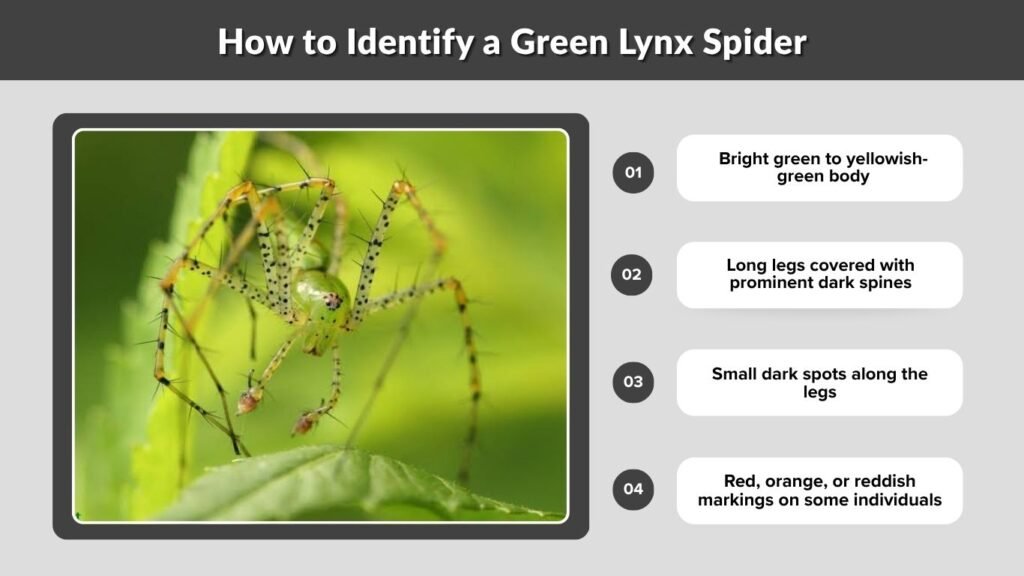
The green lynx spider is particularly adapted to hunting among vegetation, where its coloration provides excellent camouflage. Adults are frequently found in gardens, fields, open areas, shrubs, and flowering plants.
Common Identification Features
Look for these characteristics:
- Bright green to yellowish-green body
- Long legs covered with prominent dark spines
- Small dark spots along the legs
- Red, orange, or reddish markings on some individuals
- Long, tapered abdomen
- Active hunting behavior rather than a prey-catching web
The scientific name of the green lynx spider is Peucetia viridans, and it belongs to the family Oxyopidae.
Where Are Green Lynx Spiders Found?
Green lynx spiders are commonly associated with open vegetation, including gardens, fields, prairies, shrubs, and similar habitats. In North America, Peucetia viridans occurs primarily across southern portions of the United States and into warmer regions farther south.
Because they feed on insects, they are often noticed near flowering plants where potential prey is abundant.
Should You Kill a Green Lynx Spider?
Usually, there is no reason to kill a green lynx spider simply because you find one outdoors. These spiders prey on many insects and are generally reluctant to interact with humans.
However, they may also capture beneficial insects, including pollinators, so their ecological role is more complicated than simply labeling them as beneficial pest controllers.
If one is somewhere inconvenient, avoid touching it directly. Give it an escape route or carefully encourage it to move away without using bare hands.
How to Avoid Green Lynx Spider Bites
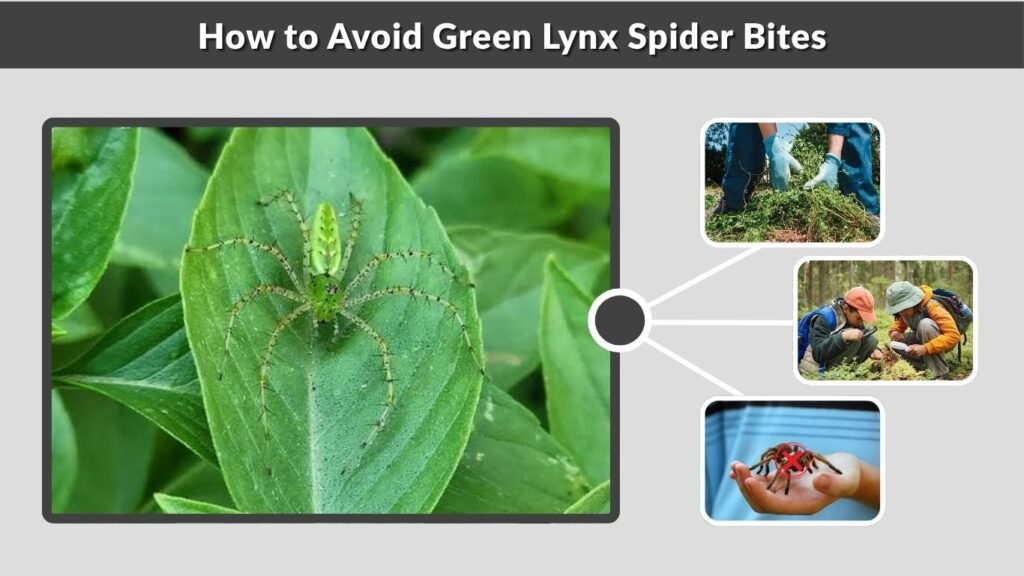
Green lynx spider bites are unusual and largely preventable. Most encounters can be handled by giving the spider enough space.
When working outdoors:
- Wear gardening gloves when handling thick vegetation.
- Check plants before reaching between leaves or flowers.
- Never pick up an unfamiliar spider with bare fingers.
- Avoid disturbing females guarding egg sacs.
- Keep your face away from a defensive green lynx spider.
- Teach children not to handle colorful spiders they find outdoors.
These precautions allow you to enjoy your garden without unnecessarily disturbing the spider.
FAQs
Is a Green Lynx Spider Poisonous?
Green lynx spiders are venomous rather than poisonous. They use venom to immobilize insect prey. Their bites can cause pain, redness, or swelling, but the venom is not considered medically significant to humans under normal circumstances.
Can a Green Lynx Spider Kill a Human?
There is no evidence that the green lynx spider is normally capable of causing fatal human envenomation. Documented bites have generally produced localized symptoms rather than severe systemic poisoning. Anyone experiencing a serious reaction after a spider bite should nevertheless seek medical attention.
Do Green Lynx Spiders Bite?
Yes, green lynx spiders are physically capable of biting humans, but bites are uncommon. They are most likely to bite defensively when handled, squeezed, trapped against the skin, or disturbed while protecting an egg sac.
Is a Green Lynx Spider Poisonous to Dogs?
Green lynx spiders are not recognized as a major poisoning threat to dogs, although a defensive bite could potentially produce pain or localized swelling. Because specific veterinary evidence is limited, contact a veterinarian if a pet develops significant symptoms after interacting with a spider.
Should I Be Afraid of a Green Lynx Spider?
There is generally little reason to fear a green lynx spider. Although it possesses venom and can bite defensively, it is not considered medically significant to humans. Avoid handling it, especially around an egg sac, and it will normally pose very little risk.
