
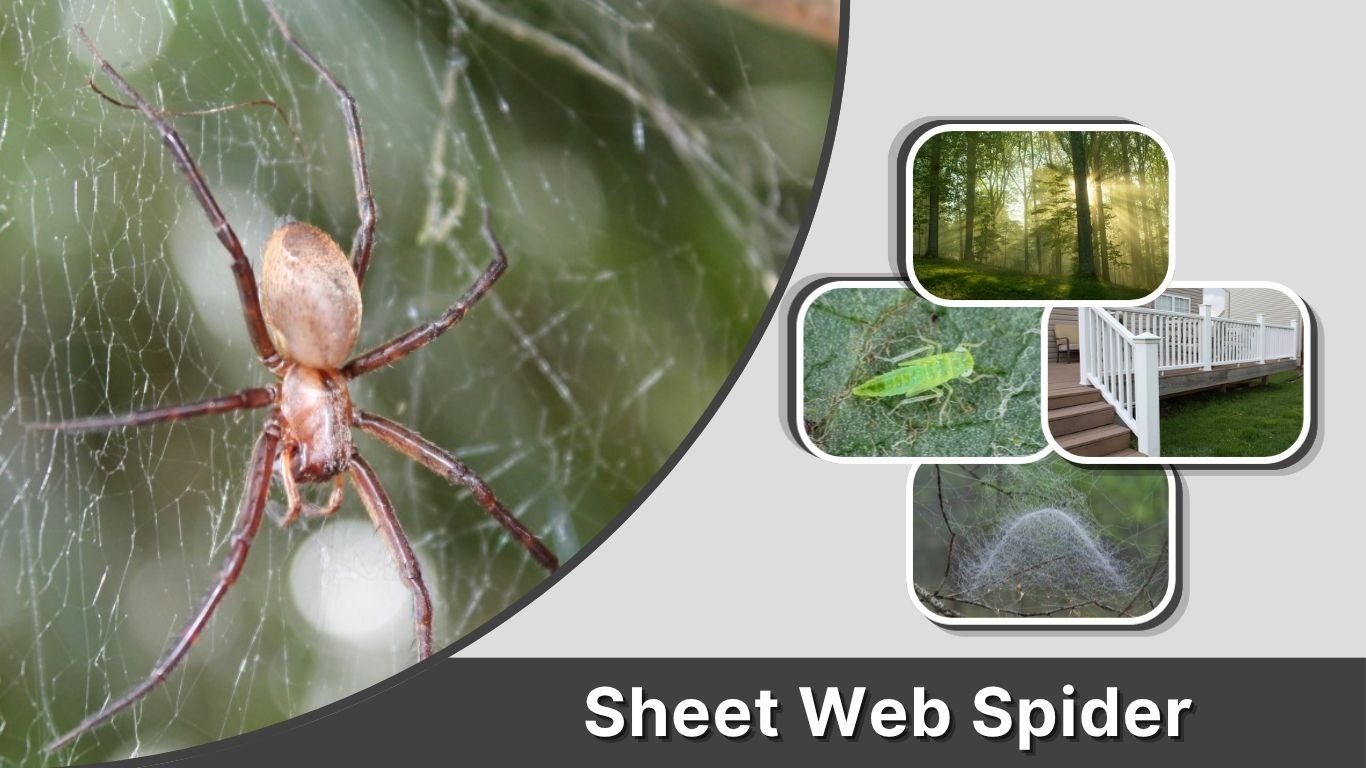
A sheet web spider is recognized primarily by the flat or slightly curved sheet of silk it builds to capture insects. The name does not refer to just one spider species; several spider groups construct sheet-like webs. In North America, many familiar sheet-web weavers belong to the family Linyphiidae, while New Zealand has distinctive Cambridgea sheetweb spiders. These spiders are generally beneficial predators that feed on small insects. Their unusual webs can appear across grass, shrubs, gardens, forests, and other sheltered places.
What Is a Sheet Web Spider?
“Sheet web spider” is a descriptive name for spiders that construct broad layers of silk resembling a thin sheet. Many small spiders in the family Linyphiidae are commonly called sheetweb or dwarf spiders. However, not every spider making a sheet-shaped web belongs to this family, so web design alone cannot always determine the spider’s exact identity.
Sheet Web Spider Identification
Typical characteristics may include:
- Small to medium body size
- Long, relatively slender legs
- Brown, gray, tan, black, or patterned coloration
- Eight legs and eight eyes
- A flat or dome-shaped silk web
- Fine supporting threads above the main sheet
- Spider positioned beneath or near the sheet
- Preference for vegetation or sheltered locations
Species vary significantly in color and size. Some are tiny enough to be overlooked even when their webs are clearly visible.
Is a Sheet Web Spider One Species?
No. The term may describe several spiders with similar web-building behavior.
Linyphiidae contains many species known for sheet webs, but grass spiders in the family Agelenidae also construct sheet-like webs connected to a funnel-shaped retreat. New Zealand’s well-known Cambridgea sheetweb spiders belong to another family.
What Does a Sheet Spider Web Look Like?
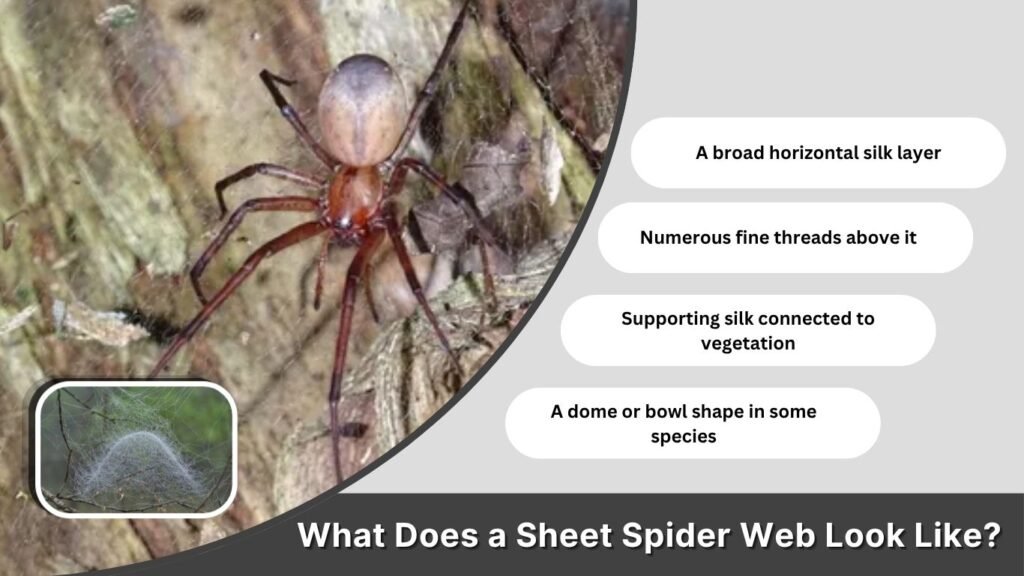
The web is the most obvious clue. Instead of producing the circular design associated with an orb weaver, these spiders create a broad platform of silk.
The structure may stretch horizontally between grasses, shrubs, branches, rocks, or other supports.
Structure of a Sheet Web
A typical sheet spider web may contain:
- A broad horizontal silk layer
- Numerous fine threads above it
- Supporting silk connected to vegetation
- A dome or bowl shape in some species
- A sheltered retreat nearby in certain spiders
Flying insects may strike the upper threads and fall onto the silk sheet below. The spider then moves rapidly across or beneath the web to capture them.
Sheet Spider Webs in Grass
Sheet-like webs are especially noticeable in lawns and fields during damp mornings because dew collects on the silk.
Some webs seen across grass are made by grass spiders. These webs consist of a broad sheet leading into a funnel or tunnel where the spider waits. Penn State describes grass-spider webs as large sheet-like structures with a funnel positioned toward one side.
Where Do Sheet Web Spiders Live?
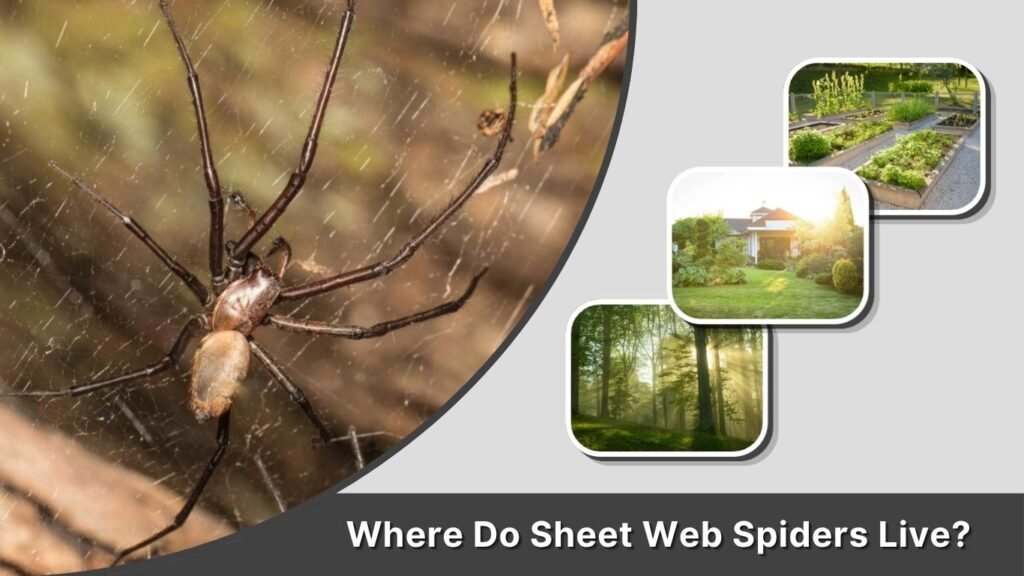
Sheet-web-building spiders occupy many environments. Their habitat depends on the species, but vegetation provides excellent attachment points for their silk.
They generally select locations where small flying and crawling insects frequently pass.
Common Habitats
Sheet web spiders may occur around:
- Lawns
- Tall grasses
- Shrubs
- Gardens
- Forest vegetation
- Leaf litter
- Low tree branches
- Fences
- Building edges
- Damp or shaded areas
Small Linyphiidae can be particularly common among vegetation even though people rarely notice the individual spiders.
What Does a Sheet Web Spider Eat?
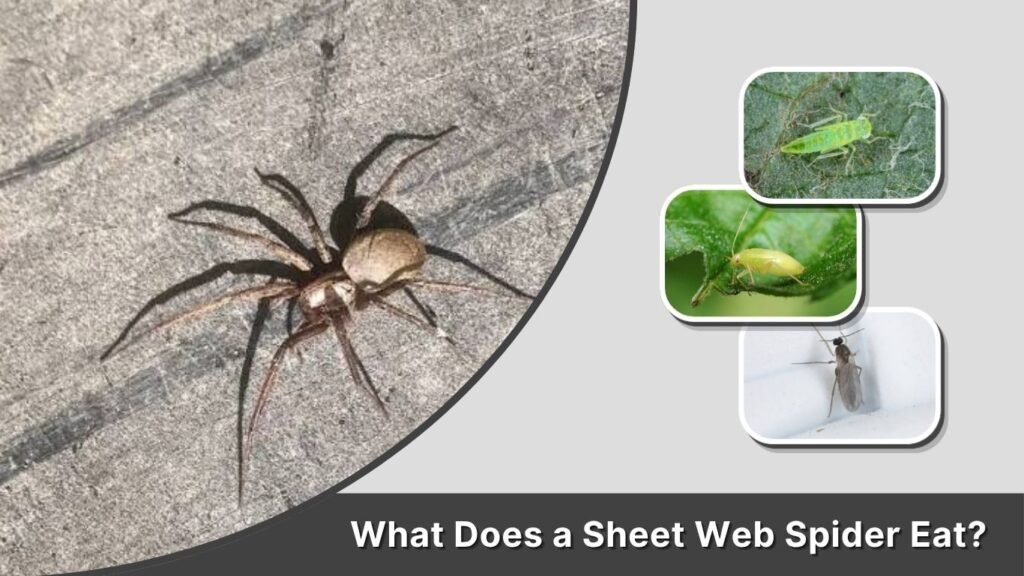
Sheet web spiders are carnivorous predators. Their web allows them to capture insects without actively chasing prey across long distances.
Diet varies according to the size of the spider and what becomes trapped in the web.
Common Prey
They may eat:
- Gnats
- Mosquito-sized insects
- Small flies
- Aphids
- Small moths
- Leafhoppers
- Midges
- Tiny beetles
- Other small insects
When prey contacts the surrounding silk, the spider detects vibrations and moves toward it.
Because they consume many small insects, sheet-web-building spiders can be beneficial around gardens and natural vegetation.
How Do Sheet Web Spiders Catch Their Prey?
The sheet web functions differently from a traditional vertical orb web. Some sheet-web spiders suspend irregular threads above the main silk platform.
An insect flying through these threads can lose control and fall onto the sheet.
Hunting Process
The spider generally:
- Waits beneath or close to the silk sheet.
- Detects vibrations produced by an insect.
- Quickly approaches the struggling prey.
- Bites and restrains the insect.
- Feeds while remaining protected by the web.
This web design can remain productive even when the spider itself is difficult for predators to see.
Are Sheet Web Spiders Poisonous?
Most spiders possess venom for capturing prey, but venomous is the more accurate term than poisonous.
The common small sheet-web spiders people encounter around gardens and lawns are not generally regarded as dangerous to humans.
Do Sheet Web Spiders Bite?
A sheet web spider could potentially bite if trapped against the skin or handled, but bites are uncommon.
These spiders have little reason to approach people. Their normal response is to remain within their web, hide, or escape when disturbed.
Because many different spiders can construct sheet-like webs, however, identification should be based on the spider itself rather than the shape of the web alone.
Sheet Web Spider vs. Funnel Web Spider
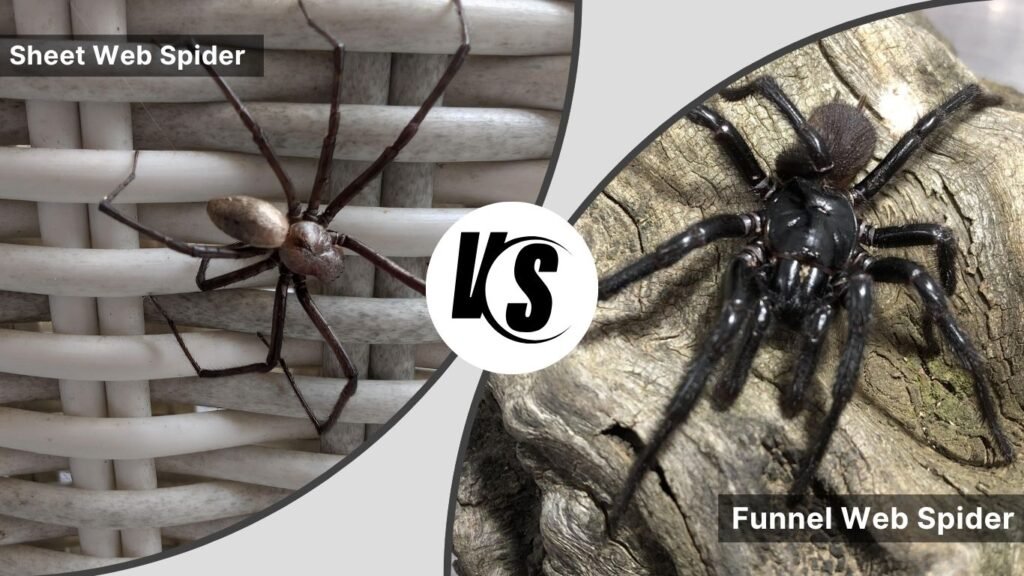
Sheet and funnel webs can look similar because a funnel web often begins with a broad silk platform.
The main difference is the retreat.
Key Differences
| Feature | Sheet Web | Funnel Web |
| Main structure | Broad silk sheet | Sheet leading to funnel |
| Retreat | May be absent | Distinct funnel or tunnel |
| Spider position | Often beneath sheet | Usually inside funnel |
| Example | Many Linyphiidae | Grass/funnel weavers |
| Hunting method | Detects prey on sheet | Rushes from funnel |
Grass spiders demonstrate how the two designs overlap: their webs are essentially modified sheet webs connected to a tunnel-shaped refuge.
New Zealand Sheet Web Spider
New Zealand is home to distinctive sheetweb spiders in the genus Cambridgea. These are different from the tiny Linyphiidae often called sheet-web weavers elsewhere.
Approximately 30 Cambridgea species are recognized, and they occur throughout New Zealand, particularly in native forests.
New Zealand Sheet Web Spider Size
Their size varies dramatically. Smaller species can have bodies under a centimeter long, while the largest species, Cambridgea foliata, can reach a leg span approaching the size of a person’s palm.
These spiders typically have relatively long legs and construct substantial horizontal sheet webs. Some species also occur around suburban gardens.
Sheet Web Spider in Gardens and Around Homes
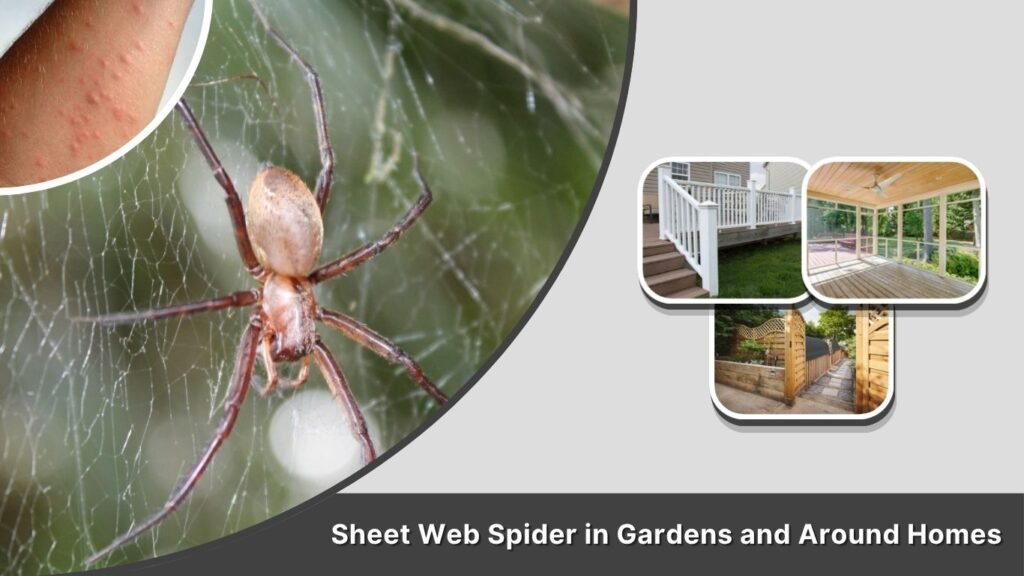
Sheet webs occasionally appear on bushes, lawns, railings, fences, porches, and near doors.
A large number of visible webs does not necessarily mean the spiders are dangerous. Suitable weather conditions can simply make existing silk much easier to see.
Should You Remove Them?
Outdoor sheet web spiders generally provide natural insect control and can usually be left undisturbed.
If a web repeatedly blocks a doorway or walkway, it can be removed mechanically. Reducing outdoor lighting near entrances may also decrease concentrations of flying insects that attract spiders.
Interesting Sheet Web Spider Facts
Sheet-web-building spiders have evolved an effective hunting strategy that requires relatively little movement.
Quick Facts
- “Sheet web spider” can describe multiple spider groups.
- Linyphiidae includes many classic sheet-web weavers.
- Some sheet webs are almost perfectly horizontal.
- Dew can make otherwise invisible webs easy to see.
- Small flying insects form much of their diet.
- Some spiders remain underneath the silk sheet.
- Grass spiders create modified sheet webs with funnels.
- New Zealand Cambridgea spiders can become surprisingly large.
- Sheet-web spiders contribute to natural insect control.
- Most prefer avoiding contact with humans.
FAQs
1. What kind of spider makes a sheet web?
Many spiders make sheet-shaped webs. Members of Linyphiidae are particularly well known as sheetweb spiders, while grass spiders create sheet webs leading to funnel-shaped retreats. Other spider families can produce similar structures as well.
2. Are sheet web spiders poisonous?
They are better described as venomous rather than poisonous. Common small sheet-web spiders use venom against insect prey but are not generally considered medically dangerous to people.
3. What do sheet web spiders eat?
They primarily consume small insects and other arthropods. Flies, gnats, aphids, midges, tiny moths, leafhoppers, and small beetles can become trapped in or around their silk structures.
4. Why are there sheet spider webs all over my grass?
Moist mornings and heavy dew can suddenly make numerous existing webs visible. Grass spiders and various other web-building spiders may create sheets among vegetation, especially where insect prey is abundant.
5. Are New Zealand sheet web spiders large?
Some are. Cambridgea species vary greatly in size. Smaller species may measure less than a centimeter in body length, while the largest species can have a palm-sized leg span.
