
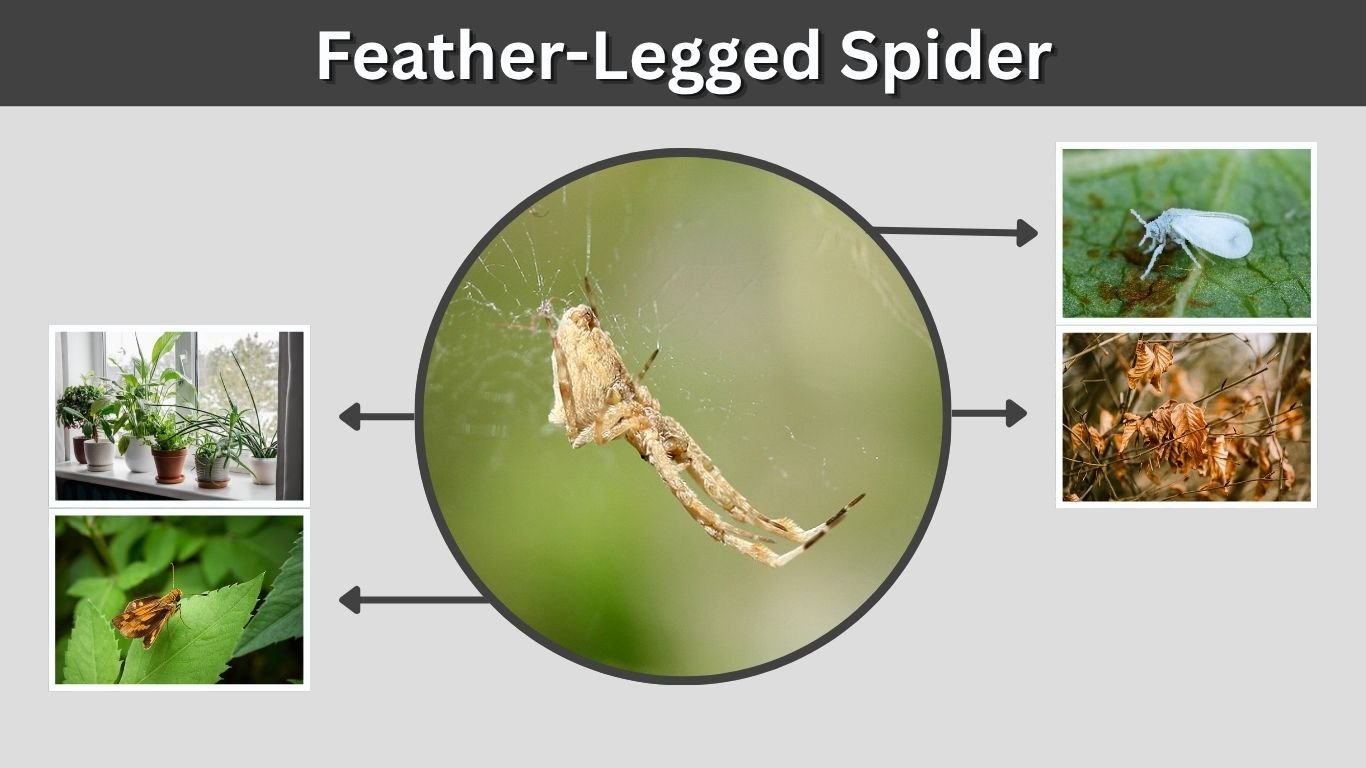
The feather-legged spider, commonly called the feather-legged lace weaver, is a small and unusually shaped spider scientifically known as Uloborus plumipes. Its most recognizable feature is the dense, feather-like hair on its front legs. This spider is also notable because it lacks the typical venom apparatus found in most spiders. Instead, it relies heavily on specialized silk and digestive secretions to subdue prey. Feather-legged spiders are excellent at camouflage and are often found hanging almost motionless in delicate horizontal webs around plants and greenhouses.
What Is a Feather-Legged Spider?
The feather-legged spider belongs to the family Uloboridae, a distinctive group of cribellate spiders. Uloborus plumipes is also known as the feather-legged lace weaver, hothouse featherleg, and sometimes the garden centre spider because it frequently appears among plants in heated greenhouses and garden centers.
Feather-Legged Spider Identification
Important characteristics include:
- Small, slender body
- Gray, brown, cream, or mottled coloration
- Long, thin legs
- Dense feather-like hairs on the front legs
- Irregularly shaped or somewhat pointed abdomen
- Horizontal orb-shaped web
- Excellent dead-leaf or debris camouflage
- Habit of hanging motionless in the web
The thick hairs on sections of the front legs are especially distinctive and are responsible for the spider’s common name.
Why Does It Have Feather-Like Legs?
The “feathers” are actually dense groups of hairs, or setae, rather than true feathers. They make parts of the front legs appear wider and fuzzy.
The species name plumipes reflects this unusual appearance: its name derives from words referring to a feather and foot. These unusual legs, combined with its body shape, make it one of the more distinctive small orb-weaving spiders.
Feather-Legged Spider Size
Despite its unusual appearance in close-up photographs, the feather-legged spider is quite small. A photograph taken at macro scale can make the animal look considerably larger than it really is.
Females are generally larger and more conspicuous than males.
How Big Is a Feather-Legged Spider?
Adult females are usually only several millimeters long, with some references reporting females reaching approximately 10 mm. Males are generally smaller and more slender.
Its long legs increase its overall apparent size, but this is still a tiny spider compared with wolf spiders, huntsman spiders, or tarantulas.
Feather-Legged Spider Camouflage
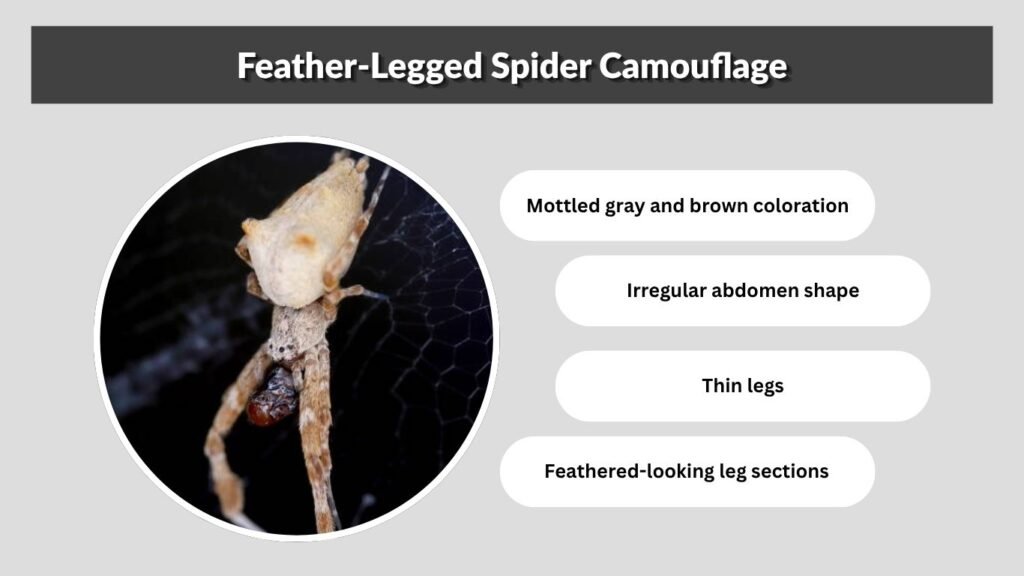
One of the most interesting characteristics of Uloborus plumipes is its ability to almost disappear inside its web. Its mottled coloration resembles dry plant material, bark, dust, or dead insects.
Remaining motionless makes the disguise even more effective.
How Does the Feather-Legged Spider Disguise Itself?
Its camouflage involves several features:
- Mottled gray and brown coloration
- Irregular abdomen shape
- Thin legs
- Feathered-looking leg sections
- Motionless posture
- Alignment of the legs with the body
- Positioning among silk and plant material
Juveniles can be especially difficult to notice because they may resemble tiny dead insects or pieces of debris suspended in a web.
Feather-Legged Spider Web
Unlike wandering hunters, feather-legged spiders depend heavily on webs for catching food. They produce an orb-like web that is often positioned approximately horizontally rather than vertically.
The web’s capture silk is also unusual.
How Does Its Web Catch Insects?
The feather-legged spider is a cribellate spider. It produces extremely fine silk fibers that form fuzzy capture threads. Instead of depending on sticky glue droplets like many orb weavers, the spider’s fine fibers physically entangle prey. Research has examined the extraordinary nanoscale fibers produced by U. plumipes.
The web may look untidy or delicate, sometimes giving the impression of an abandoned web even when the spider is sitting at its center.
Does the Feather-Legged Spider Have Venom?
This is perhaps the most unusual fact about the species. Uloborus plumipes lacks the specialized venom apparatus typical of most spiders.
However, newer research has made its prey-capture biology more interesting than simply calling it “nonvenomous.”
How Does It Kill Prey Without Venom?
When an insect becomes caught, the spider uses extensive silk wrapping to restrain it. It then applies digestive fluid to the wrapped prey.
A 2025 study confirmed that U. plumipes lacks specialized venom glands and venom-delivery ducts. However, researchers found toxin-like proteins strongly expressed in its digestive system, and laboratory tests showed biological toxicity in midgut extracts. This suggests that uloborid spiders lost conventional injectable venom but retained other chemically active compounds involved in feeding and prey immobilization.
Is a Feather-Legged Spider Dangerous to Humans?
The feather-legged lace weaver is not regarded as a medically dangerous spider. It is tiny, lacks the conventional venom apparatus used by venomous spiders, and is adapted to capturing small insect prey in its web.
There is therefore little reason to fear one living among plants or in a greenhouse.
What Do Feather-Legged Spiders Eat?
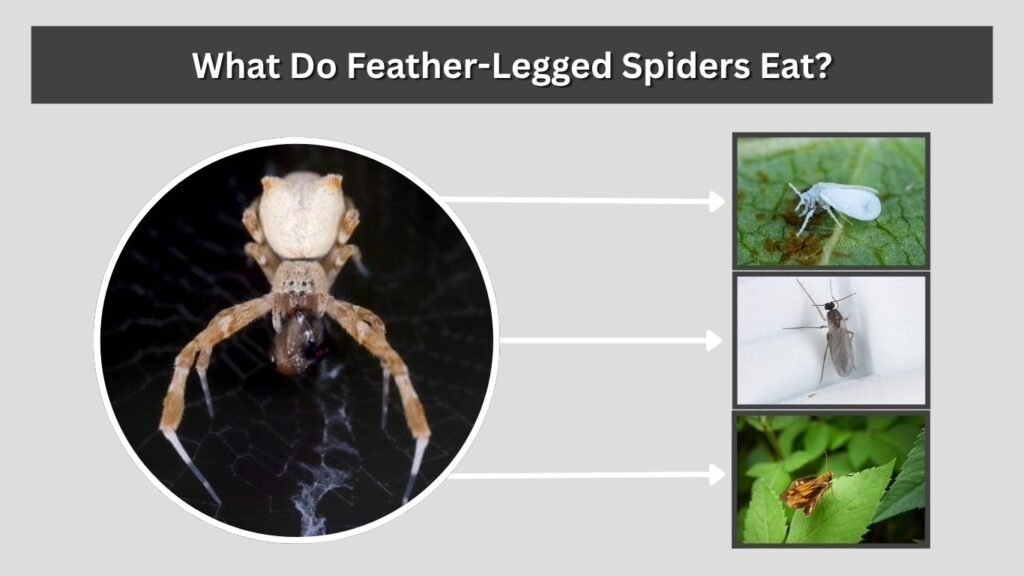
These spiders feed on small insects caught in their specialized webs. Because they frequently occur around plants and greenhouses, their prey often consists of tiny flying insects.
Typical Diet
Potential prey includes:
- Whiteflies
- Small flies
- Gnats
- Small moths
- Other tiny flying insects
- Small plant-associated insects
Their ability to capture pests such as whiteflies means they may provide some natural pest-control benefits around greenhouse plants.
Where Do Feather-Legged Spiders Live?
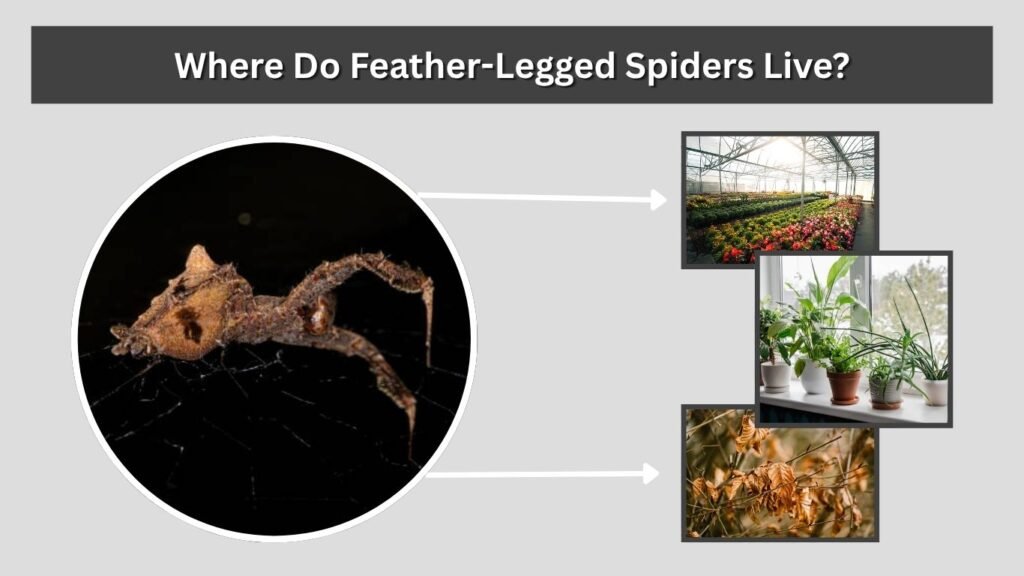
Uloborus plumipes has Old World origins but has spread well beyond its original warmer range. Human movement of plants appears to have helped it establish in greenhouses and similar warm indoor environments in cooler regions.
Common Places to Find Them
Look around:
- Greenhouses
- Garden centers
- Houseplants
- Conservatories
- Warm buildings
- Plant branches
- Dead twigs
- Sheltered corners
- Beneath eaves
In cooler climates, heated greenhouses offer the warm conditions necessary for these spiders to persist through winter.
Feather-Legged Spider Eggs and Life Cycle
Female feather-legged spiders construct distinctive egg sacs and suspend them in or around their webs. Their camouflage makes both the female and the egg sacs relatively difficult to notice.
This provides protection for the developing young.
What Do the Egg Sacs Look Like?
Egg sacs can appear:
- Brown to pale cream
- Flattened
- Papery
- Angular or star-like
- Similar to dried plant material
The female’s coloration can blend remarkably well with the egg sacs and web debris. After hatching, young spiders remain extremely small and eventually construct their own webs.
Feather-Legged Spider vs. Feather-Leg Baboon Spider
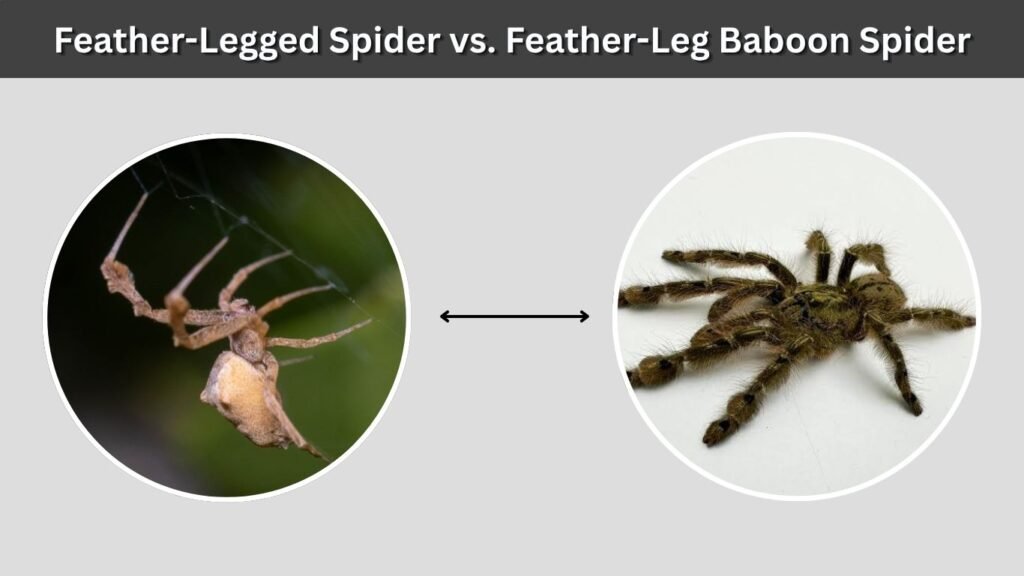
These names can cause considerable confusion. The small feather-legged lace weaver is not the same spider as the feather-leg baboon tarantula.
Key Differences
| Feature | Feather-Legged Spider | Feather-Leg Baboon |
| Scientific name | Uloborus plumipes | Stromatopelma calceatum |
| Family | Uloboridae | Theraphosidae |
| Size | Very small | Large tarantula |
| Lifestyle | Orb-web builder | Arboreal tarantula |
| Venom apparatus | Absent | Present |
| Native region | Old World origins, widely introduced | West Africa |
| Human concern | Very low | Defensive handling should be avoided |
The feather-leg baboon (Stromatopelma calceatum) is a large West African arboreal tarantula and should not be confused with the tiny lace weaver described in this article.
St. Vincent Feather-Legged Tree Spider
The search term St. Vincent feather-legged tree spider can also lead to confusion with the ordinary feather-legged spider.
The St. Vincent’s tree spider, Tapinauchenius sanctivincenti, is an arboreal tarantula native to St. Vincent in the Lesser Antilles. It is much larger than Uloborus plumipes and belongs to a completely different spider family.
FAQs
1. Is the feather-legged spider venomous?
Uloborus plumipes lacks the conventional venom glands and delivery apparatus found in most spiders. However, recent research found toxin-like compounds associated with its digestive system, which appear to help it process and immobilize insect prey.
2. How big is a feather-legged spider?
It is a small spider. Females generally measure only several millimeters in body length and may reach roughly 10 mm. Their long, slender legs can make them appear somewhat larger.
3. Why does a feather-legged spider look disguised?
Its mottled body, irregular shape, feathery leg hairs, and motionless posture help it resemble dried vegetation, debris, or dead insects. This camouflage can make the spider very difficult to notice in its web.
4. Where are feather-legged spiders commonly found?
They are frequently associated with plants, garden centers, greenhouses, conservatories, and other warm sheltered environments. In colder regions, heated greenhouses provide conditions that allow them to survive through winter.
5. Is the feather-legged spider the same as a feather-leg baboon spider?
No. Uloborus plumipes is a tiny lace-weaving spider, while the feather-leg baboon (Stromatopelma calceatum) is a much larger West African tarantula. They belong to completely different spider families.
