
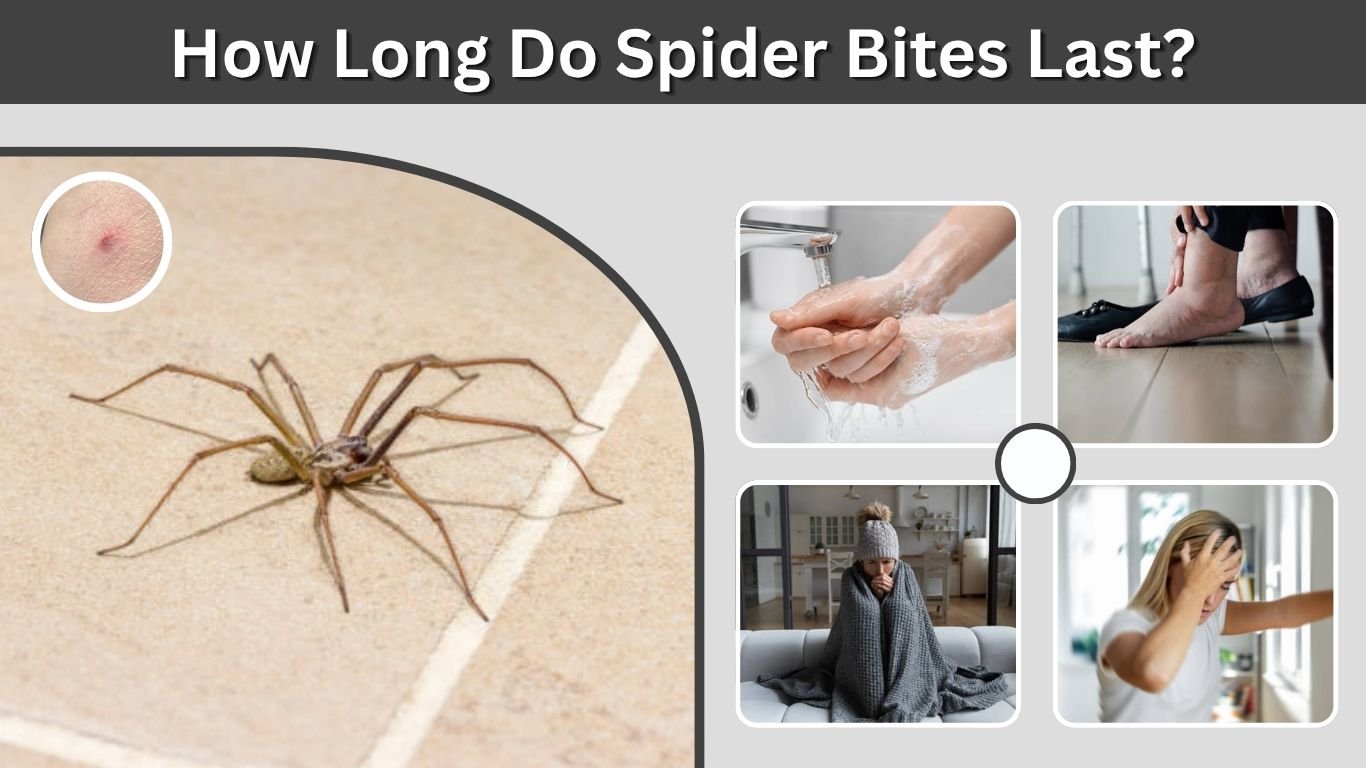
A suspected spider bite can be concerning when the redness, itching, swelling, or pain does not disappear quickly. So, how long do spider bites last? Most mild spider bites heal on their own in about a week, although itching, tenderness, or discoloration may sometimes linger longer. Bites from medically significant spiders, infections, or severe reactions can take considerably longer to resolve.
Understanding the normal spider bite healing process can help you recognize whether a bite appears to be improving or needs medical attention.
How Long Does a Spider Bite Last?
For an uncomplicated spider bite, symptoms such as redness, mild swelling, itching, and tenderness usually improve gradually over several days. Mayo Clinic notes that most spider bites heal on their own in approximately one week.
However, there is no exact timeline for every bite.
Healing can depend on:
- Type of spider
- Amount of venom delivered
- Location of the bite
- Individual sensitivity
- Amount of scratching
- Secondary infection
- Severity of the initial reaction
A bite from a recluse spider may take substantially longer to heal and can occasionally leave a scar.
Spider Bite Healing Stages
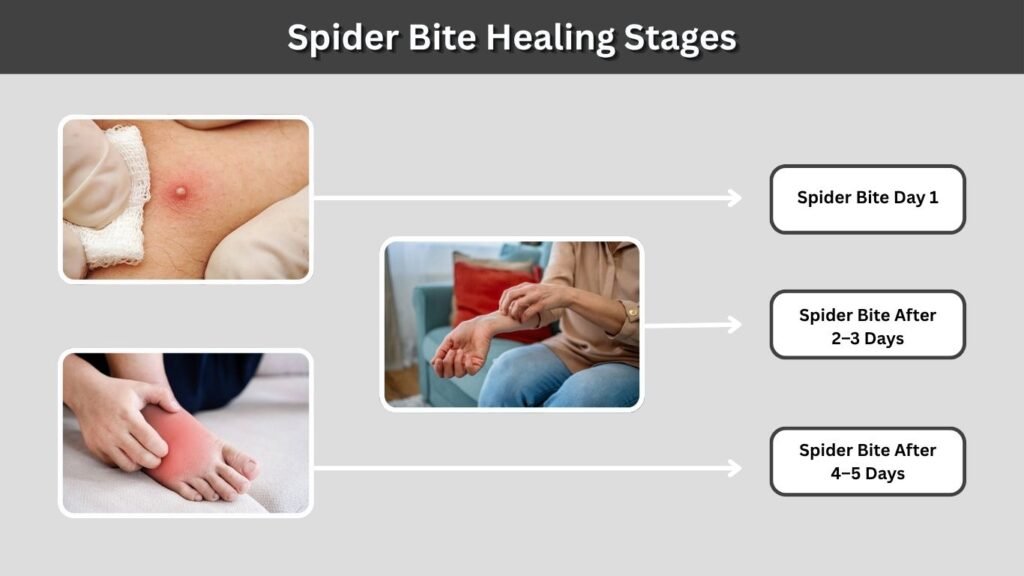
A mild bite generally follows a pattern of initial inflammation followed by gradual improvement.
Spider Bite Day 1
During the first several hours, you may notice:
- Small red bump
- Mild swelling
- Itching
- Burning or stinging
- Tenderness
- Localized pain
Some spider bites may barely be noticeable at first. Others can produce pain shortly after the bite. Redness, pain, and swelling are among the most common reactions.
Spider Bite After 2–3 Days
By days two and three, a mild reaction may still be visible.
The bite can remain:
- Red
- Slightly swollen
- Itchy
- Tender
- Warm
The important feature is the overall trend. A simple bite should generally begin stabilizing rather than rapidly getting larger or dramatically more painful.
Some itching several days after a bite can occur as the inflammatory reaction settles.
Spider Bite After 4–5 Days
A spider bite after 5 days may still have mild redness, itching, or a small bump, but uncomplicated bites should usually be moving toward improvement.
The swelling should generally be decreasing rather than rapidly increasing.
A small amount of discoloration can sometimes remain after the main inflammation has subsided.
If the area is becoming hotter, more painful, increasingly swollen, or producing drainage, infection or another skin condition should be considered.
Spider Bite After One Week
By approximately one week, many ordinary spider bites are significantly improved or healed.
Some people may still notice:
- Faint redness
- Mild itching
- Small scab
- Slight discoloration
- Residual tenderness
Persistent symptoms alone do not necessarily mean the bite is dangerous, but worsening symptoms deserve attention.
Spider Bite After Two Weeks
A spider bite that hasn’t healed after two weeks should be assessed more carefully, particularly if the wound is still painful, swollen, draining, enlarging, or ulcerated.
A recluse bite, for example, may require substantially more time to heal than a simple bite.
A persistent wound may also have another cause entirely.
Spider Bite Healing Time Chart
| Time After Bite | Possible Appearance | Expected Trend |
|---|---|---|
| First few hours | Red bump, pain, itching, swelling | Reaction develops |
| Day 1 | Local redness and tenderness | Monitor closely |
| Days 2–3 | Itching and mild swelling may remain | Should stabilize |
| Days 4–5 | Redness may persist | Should begin improving |
| Around 1 week | Minor discoloration or scab possible | Most mild bites substantially healed |
| 2+ weeks | Persistent wound is less typical | Consider medical evaluation |
This timeline applies only to uncomplicated suspected bites. More severe reactions do not necessarily follow the same progression.
Do Spider Bites Itch?
Yes, spider bites can itch.
Itching or rash is among the possible symptoms of spider bites listed by the CDC.
A mild bite can be:
- Itchy
- Red
- Slightly raised
- Warm
- Tender
Itching may occur almost immediately or become more noticeable several hours later.
How Long Do Spider Bites Itch?
There is no universal duration.
For a mild bite, itching should usually diminish as the local inflammation improves over several days.
Avoid scratching as much as possible because breaking the skin can introduce bacteria and complicate healing.
If severe itching continues for a long period or is accompanied by spreading rash, significant swelling, breathing difficulty, or other symptoms, medical evaluation may be appropriate.
Do Spider Bites Hurt Immediately?
They can, but not always.
Some people describe an immediate:
- Pinching sensation
- Sting
- Burning feeling
- Sharp pain
Other bites may initially produce little noticeable pain.
This is one reason it can be difficult to know whether a spider caused a skin lesion unless the spider was actually observed biting.
Mayo Clinic emphasizes that many insect bites and skin sores can produce the same redness, pain, and swelling associated with suspected spider bites.
Spider Bite Swelling: How Long Does It Last?
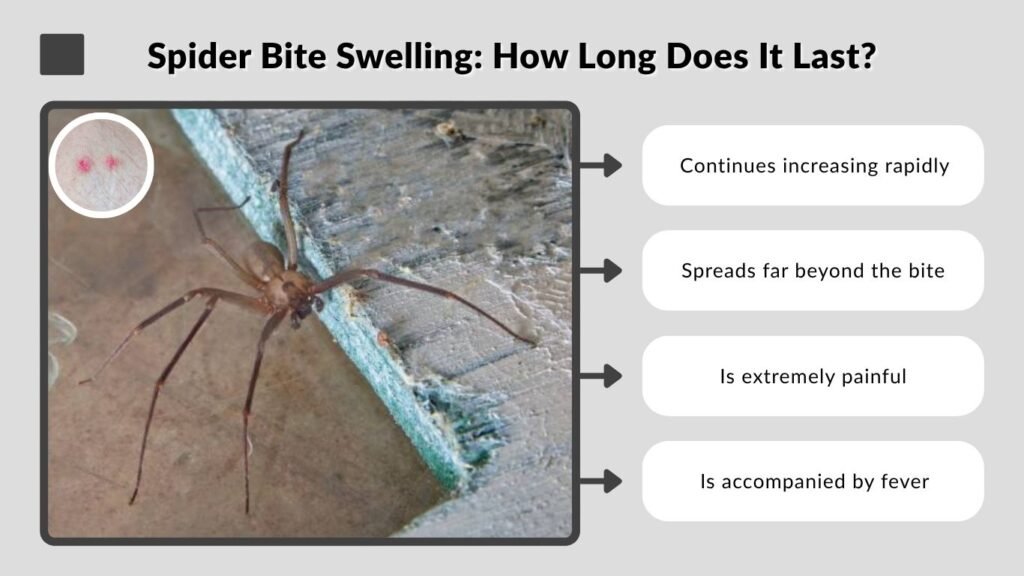
Minor swelling commonly occurs around a spider bite.
With a mild reaction, swelling should gradually decrease as the bite heals.
Cold application can help reduce pain and swelling. MedlinePlus recommends washing the area with soap and water and applying an ice pack or wet compress for basic care of a spider bite.
Swelling becomes more concerning when it:
- Continues increasing rapidly
- Spreads far beyond the bite
- Is extremely painful
- Is accompanied by fever
- Restricts movement
- Involves the face or throat
Rapid facial or throat swelling or breathing difficulty requires emergency medical attention.
Can a Spider Bite Cause Bruising?
Some bites or inflammatory reactions may develop red, purple, or bruise-like discoloration.
The CDC lists reddish-to-purplish skin color and blistering among possible spider-bite symptoms.
However, a bruise does not prove that a spider caused the lesion.
Watch the direction in which the discoloration is changing. A fading bruise-like mark that becomes smaller is very different from a rapidly darkening wound accompanied by increasing pain or blistering.
Spider Bite With a Blister
A spider bite blister may appear in certain reactions.
Blisters can contain clear fluid or occasionally blood. Blistering and tissue injury are more commonly associated with some spider bites but can also occur after other insect bites.
A small blister should be kept clean and protected.
Avoid intentionally popping it.
Seek medical care when a blister:
- Becomes very large
- Turns dark purple or black
- Produces pus
- Becomes extremely painful
- Develops into an open sore
- Is surrounded by rapidly spreading redness
What Does a Healing Spider Bite Look Like?
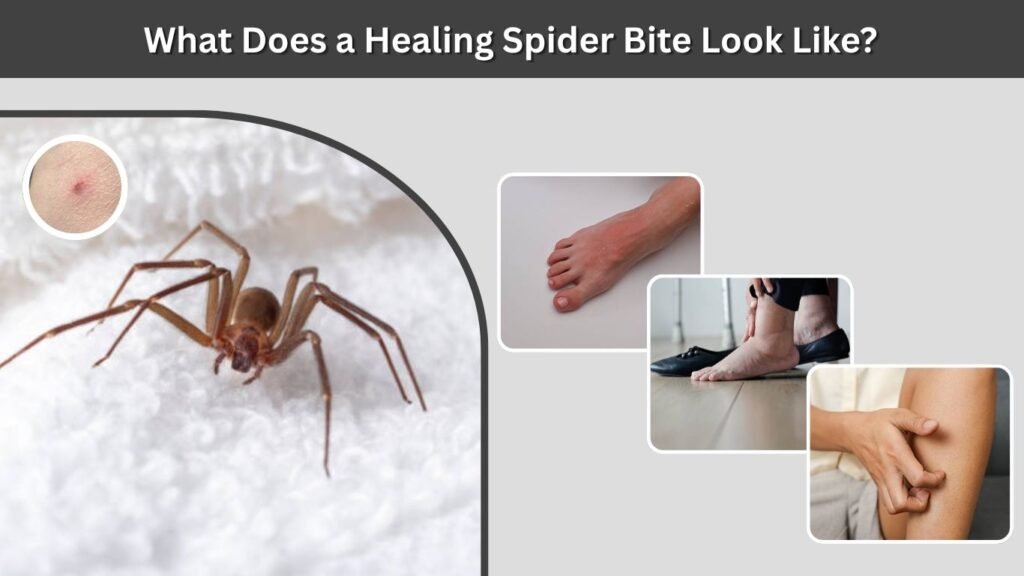
A healing spider bite should generally become less dramatic over time.
Signs that healing is progressing include:
- Less redness
- Less swelling
- Reduced pain
- Decreasing itching
- Smaller affected area
- Drying of a minor scab
- Gradually fading discoloration
Healing should move in the direction of improvement rather than deterioration.
Taking a photograph once each day can make changes easier to recognize.
What Does an Infected Spider Bite Look Like?
A skin infection can sometimes be mistaken for a spider bite from the beginning.
For example, MRSA infections may start as painful swollen bumps resembling pimples or spider bites. The area can become warm and develop into an abscess containing fluid.
Warning signs of possible infection include:
- Increasing redness
- Increasing warmth
- Worsening pain
- Increasing swelling
- Pus or yellow drainage
- Red streaks
- Fever
- Expanding wound
A wound producing pus or continuing to worsen after several days should be medically assessed.
Why Is My Spider Bite Still Itchy After a Week?
Mild residual inflammation can occasionally make a bite itchy after several days.
However, persistent itching can also have causes unrelated to spiders, including other insect bites, allergic skin reactions, dermatitis, or irritation.
A bite that is still slightly itchy but clearly smaller and less red is more reassuring than one that is becoming increasingly swollen, hot, painful, or blistered.
Why Is My Spider Bite Getting Worse?
A suspected bite that becomes worse instead of better should not automatically be assumed to represent normal venom progression.
Possibilities include:
- Significant spider envenomation
- Bacterial infection
- Allergic reaction
- Different insect or arthropod bite
- Skin abscess
- Another dermatologic condition
Because many lesions resemble spider bites, identifying the spider itself provides stronger evidence than the appearance of the wound.
Brown Recluse Spider Bite Healing Time
Recluse bites deserve special attention because some can cause local tissue injury.
The affected area may initially become red before progressing in some cases to:
- Blistering
- Bleeding
- Dark discoloration
- Ulcer formation
The CDC notes that these changes can occur with recluse bites, although serious tissue damage does not happen with every bite.
A recluse bite may therefore take longer than an ordinary spider bite to heal and can occasionally leave a scar.
Black Widow Bite Symptoms
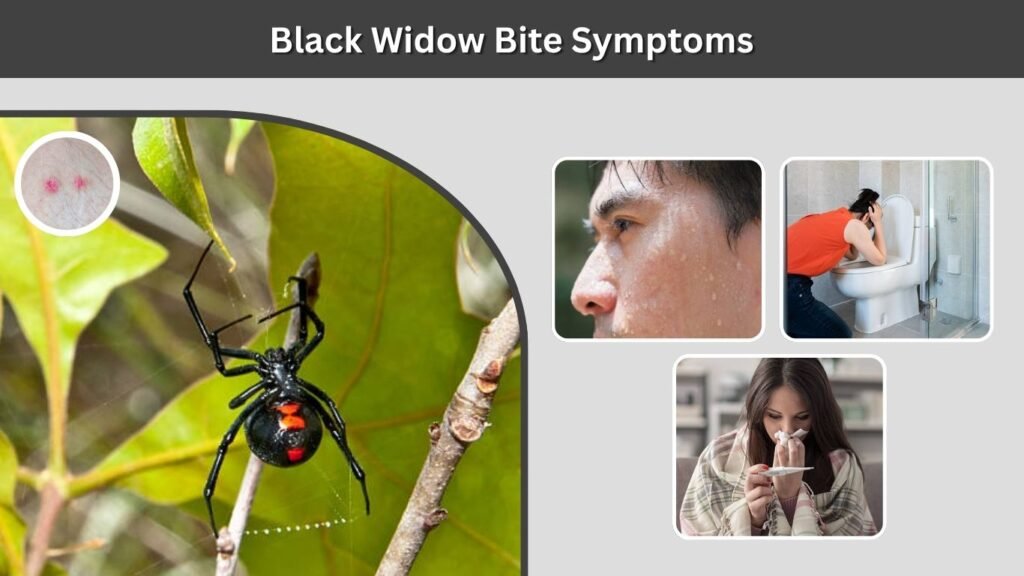
Black widow bites can behave differently from skin-damaging recluse bites.
The visible bite may be relatively minor, while symptoms elsewhere in the body can become more significant.
Possible symptoms of medically important spider bites include:
- Radiating pain
- Muscle pain
- Muscle cramps
- Sweating
- Headache
- Nausea
- Vomiting
- Fever or chills
- Restlessness
- Difficulty breathing
The CDC lists these among potential symptoms following venomous spider bites.
Severe muscle cramping, intense pain, or systemic illness following a suspected spider bite warrants medical attention.
How to Treat a Mild Spider Bite
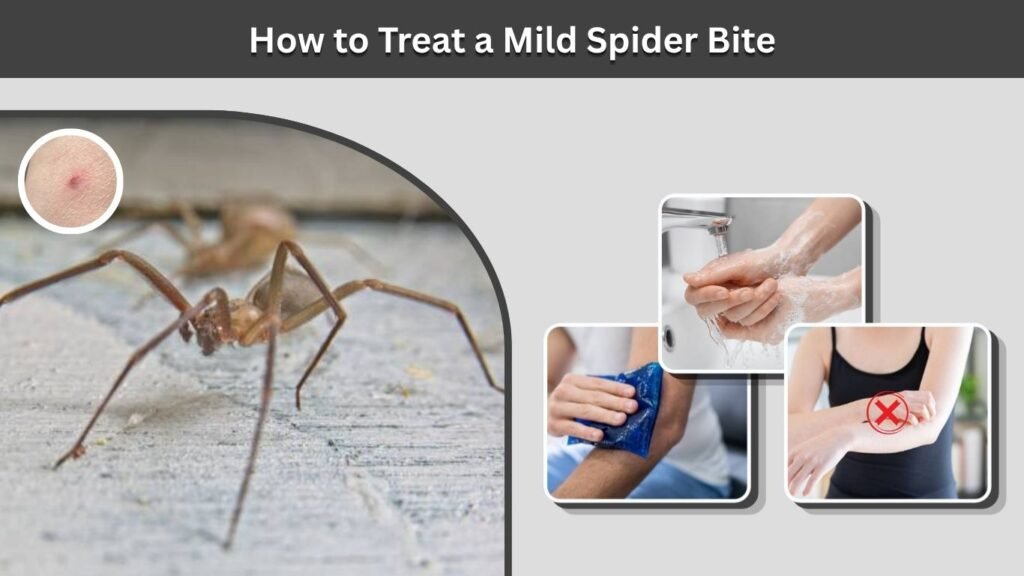
Most mild suspected spider bites can initially be managed with simple first aid.
Basic Spider Bite Treatment
- Wash the area thoroughly with soap and water.
- Apply a wrapped cold pack or cool compress.
- Keep the bite clean.
- Avoid scratching.
- Elevate an affected arm or leg when practical.
- Monitor redness and swelling.
These measures are consistent with first-aid recommendations from MedlinePlus and Mayo Clinic.
Do not cut the wound, attempt to suck out venom, or apply harsh chemicals.
When Should You Worry About a Spider Bite?
Seek prompt medical care if a suspected spider bite causes:
- Severe or worsening pain
- Rapidly spreading redness
- Large or increasing swelling
- Dark purple or black skin
- Growing blister
- Open ulcer
- Pus or drainage
- Red streaks
- Fever or chills
- Severe muscle cramps
- Nausea or vomiting
- Significant weakness
Difficulty breathing is an especially serious warning sign and requires emergency care.
FAQs
How long do spider bites usually last?
Most uncomplicated spider bites improve over several days and generally heal in about a week. Some redness, itching, or discoloration may remain slightly longer. Recluse bites and complicated wounds can take considerably longer to heal.
Is it normal for a spider bite to itch after 5 days?
Mild itching can remain while the skin is recovering, particularly if the overall redness and swelling are decreasing. However, increasing itching accompanied by worsening swelling, warmth, pain, drainage, or spreading redness deserves medical evaluation.
How long does swelling from a spider bite last?
Minor swelling typically improves as the local reaction settles over several days. Rapidly increasing swelling, swelling that continues worsening, or swelling accompanied by breathing difficulty or facial or throat involvement requires prompt medical attention.
Should a spider bite still hurt after 3 days?
Some tenderness can remain after three days, but pain should generally be stable or improving in a mild bite. Pain that is becoming substantially worse, especially with spreading redness, blistering, fever, or drainage, should be evaluated.
Why is my spider bite not healing after two weeks?
A wound persisting for two weeks may represent a more significant bite, infection, ongoing irritation, or a condition that only resembles a spider bite. Because most uncomplicated bites heal much sooner, a persistent or worsening lesion should be assessed by a healthcare professional.
