
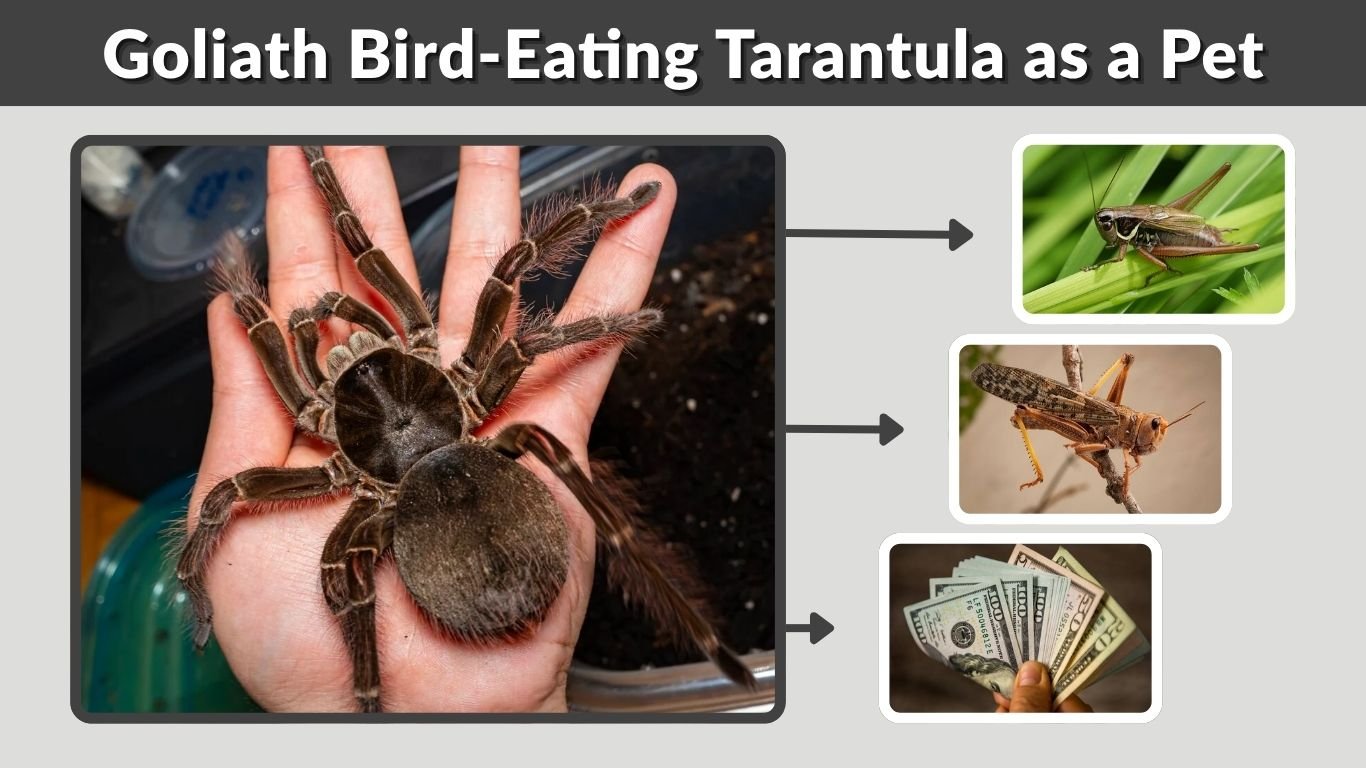
The Goliath bird-eating tarantula (Theraphosa blondi) is one of the largest and most impressive spiders kept in captivity. However, its enormous size, defensive behavior, irritating hairs and demanding humidity requirements make it unsuitable for most beginners. This terrestrial tarantula needs a spacious, secure enclosure with deep substrate, a sheltered burrow and carefully controlled moisture. Anyone considering one as a pet should understand that it is primarily a display animal—not a spider that should be regularly handled.
Is a Goliath Bird-Eating Tarantula a Good Pet?
A Goliath bird-eating tarantula can be a fascinating pet for an experienced keeper who understands large, moisture-dependent terrestrial tarantulas. It is generally solitary, mostly active at night and likely to spend considerable time inside its burrow.
However, this species is not considered a suitable beginner tarantula. Its large fangs, defensive posture and highly irritating urticating hairs make routine maintenance more difficult than with calmer species.
Advantages
The Goliath birdeater has several qualities that attract experienced arachnid keepers:
- Exceptional adult size
- Impressive feeding behavior
- Long potential lifespan
- Interesting burrowing habits
- Relatively simple lighting needs
- No need for social interaction
Females can live for up to about 20 years, while males generally live only three to six years. This means purchasing a female can involve a commitment lasting well over a decade.
Challenges
Owners must be prepared to manage:
- Irritating airborne hairs
- A potentially painful bite
- High but stable humidity
- Deep, moisture-retaining substrate
- Mold and mite prevention
- A powerful feeding response
- Difficult enclosure maintenance
The species may hiss by rubbing specialized bristles together, raise its front legs to display its fangs or release defensive hairs when it feels threatened.
Goliath Birdeater Pet Care at a Glance
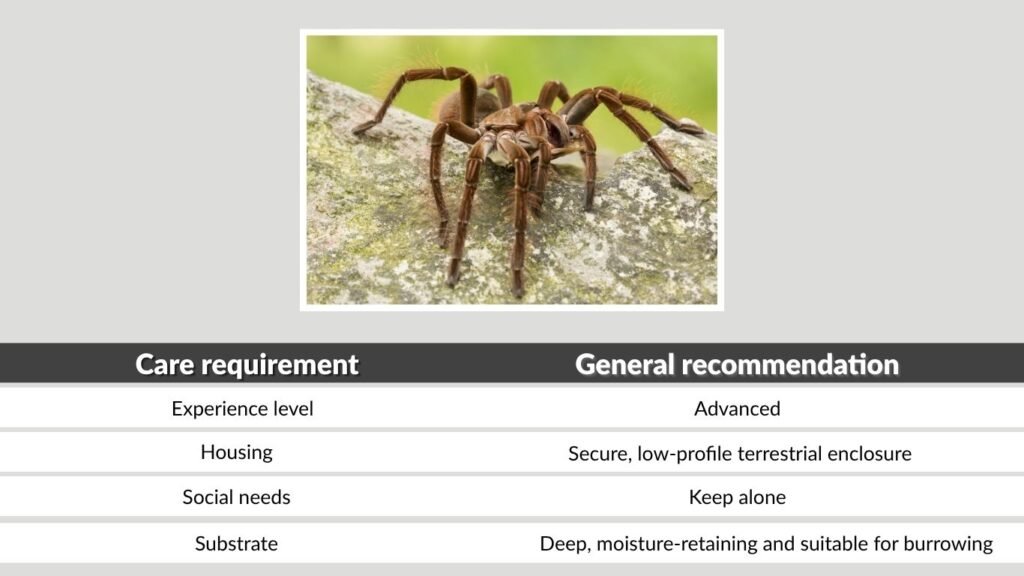
| Care requirement | General recommendation |
| Experience level | Advanced |
| Housing | Secure, low-profile terrestrial enclosure |
| Social needs | Keep alone |
| Substrate | Deep, moisture-retaining and suitable for burrowing |
| Temperature | Stable warm room; commonly around 75–80°F |
| Humidity | Approximately 75% or higher, with moisture and ventilation balanced |
| Food | Captive-bred insects |
| Water | Clean, shallow water dish |
| Handling | Strongly discouraged |
| Female lifespan | Up to approximately 20 years |
Humidity recommendations differ among husbandry sources because enclosure ventilation, substrate depth and room conditions affect moisture. The Royal Veterinary College suggests around 75% for Goliath birdeaters, while another husbandry guide gives a broader range of 70–90%. The substrate should remain appropriately moist without becoming swampy or stagnant.
Goliath Bird-Eating Tarantula Enclosure
A Goliath birdeater needs more room than an average tarantula because its leg span can approach 11 inches. Its enclosure should be wide enough for walking and burrowing but should not be excessively tall. Terrestrial tarantulas can suffer serious injuries if they climb and fall onto hard objects.
Enclosure Features
A proper setup should have:
- An escape-proof glass or durable plastic container
- Secure ventilation openings
- Deep substrate
- A starter burrow or hide
- A shallow water dish
- No sharp stones or heavy decorations
- Limited distance between the substrate and lid
Avoid mesh tops where the tarantula’s feet may become trapped. The enclosure must also close securely because mature males may wander in search of females.
Substrate and Burrow
The Goliath birdeater naturally inhabits silk-lined burrows under rocks, roots and rainforest soil. In captivity, provide a deep layer of moisture-retaining substrate and a partially buried cork-bark hide or similar shelter to encourage burrowing.
Suitable substrate materials may include:
- Coconut fiber
- Fertilizer-free topsoil
- Peat-based soil mixtures
- Moisture-retaining tarantula substrate
Do not use gravel, abrasive sand, aromatic wood shavings or loose bark chips. These materials can interfere with burrowing, damage the spider or contribute to mite problems.
Temperature, Humidity and Ventilation
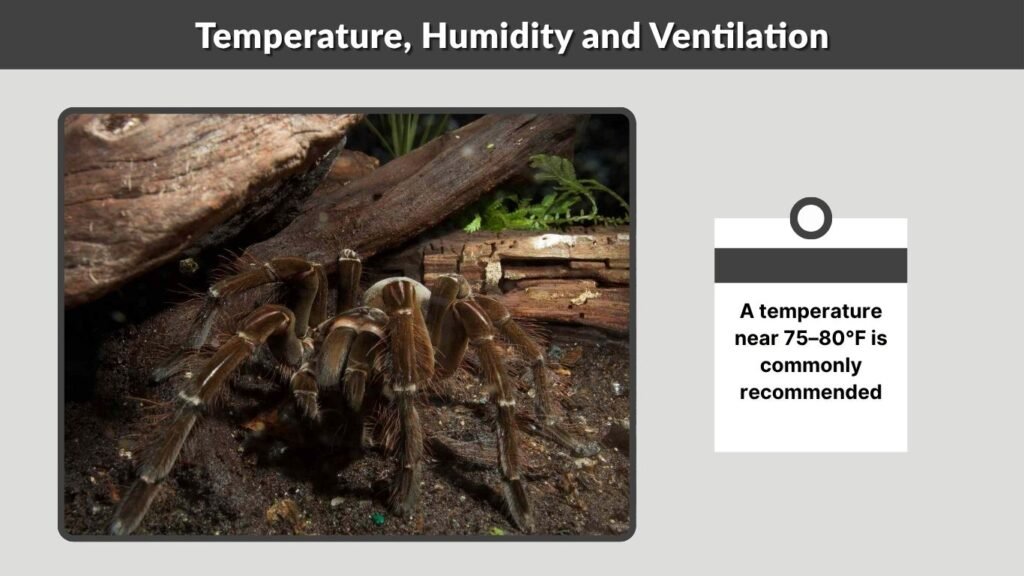
The goal is to create a humid forest-floor environment without producing stagnant, waterlogged conditions. Keeping the substrate deeply hydrated at one end while leaving the surface and opposite end slightly drier can create a useful moisture gradient.
Temperature
A temperature near 75–80°F is commonly recommended, with a slight nighttime reduction being acceptable. Stable room temperatures are generally safer than intense direct heating. Heat lamps and poorly controlled heat mats can dry the substrate and dehydrate the tarantula.
Use a digital minimum-and-maximum thermometer to identify dangerous fluctuations. Keep the enclosure away from direct sunlight, cold windows and air-conditioning vents.
Humidity
A hygrometer can help monitor conditions, but substrate moisture and the spider’s behavior should also be observed. Provide appropriate humidity without constantly soaking the surface.
Excessive moisture combined with poor airflow can encourage:
- Mold
- Mites
- Pest flies
- Bacterial growth
- Spoiled food remains
Maintaining moisture at the lower levels of the substrate can support humidity while leaving the surface less saturated.
What Does a Pet Goliath Birdeater Eat?
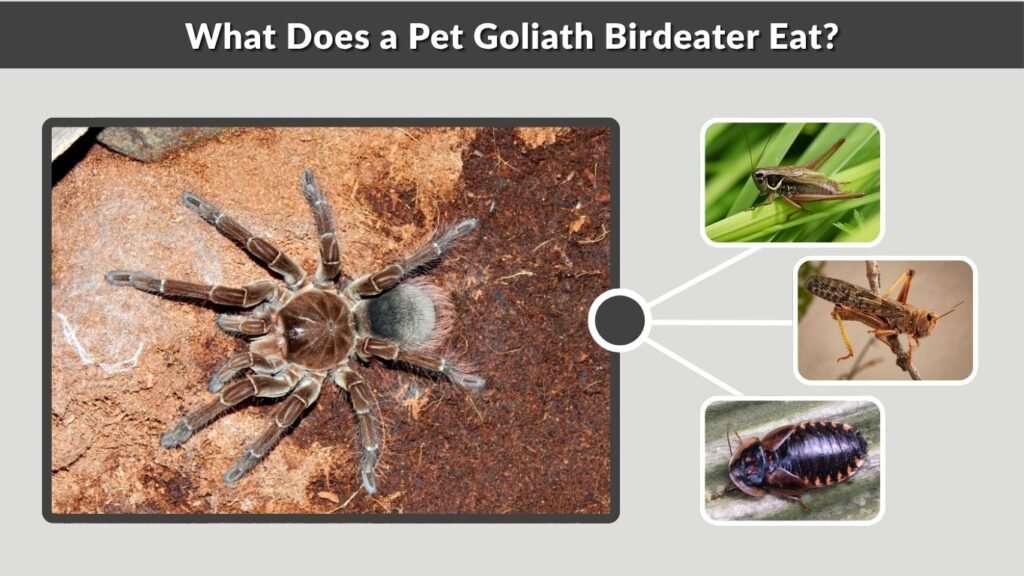
Although it can overpower small vertebrates, a captive Goliath birdeater should primarily receive appropriately sized, captive-bred invertebrates. The Smithsonian feeds its Goliath bird-eating tarantulas cockroaches.
Suitable foods include:
- Dubia or discoid roaches
- Crickets
- Locusts
- Other captive-bred feeder insects
- Smaller prey for spiderlings
Provide dietary variety where possible. Remove uneaten prey, particularly when the tarantula is preparing to molt. Vertebrate prey such as mice and lizards are unnecessary and may leave remains that encourage bacteria, mold and pest flies.
A clean, shallow water dish should always be available. Do not use wet sponges or cotton as drinking sources because they can collect bacteria and pests.
Handling and Safety
A Goliath bird-eating tarantula should be treated as an observation animal. Handling offers no benefit to the spider and creates unnecessary risks for both the keeper and the tarantula.
Urticating Hairs
The species can release microscopic barbed hairs that irritate the skin, eyes, nose and respiratory system. Its hairs may become airborne during enclosure maintenance and can continue causing discomfort after leaving the spider’s abdomen.
When cleaning or feeding:
- Keep your face away from the enclosure
- Use long feeding tools
- Avoid sudden movements
- Wash exposed skin afterward
- Consider gloves and eye protection
- Never touch your eyes during maintenance
The Royal Veterinary College warns that sensitive individuals may experience severe skin reactions or breathing difficulties after exposure.
Bite Risk
The Goliath birdeater possesses large downward-striking fangs and venom used to subdue prey. Even when its venom does not produce severe systemic effects, the mechanical puncture from the fangs can be painful and medically significant.
Do not attempt to pick it up with your hands. Use secure containers and established transfer methods when moving the spider.
Molting Care
A tarantula must shed its old exoskeleton to grow. Before molting, it may stop eating, become less active, seal its burrow or lie on its back. Spiderlings molt frequently, while adults do so less often.
During this period:
- Remove live feeder insects
- Do not touch or move the tarantula
- Maintain access to clean water
- Avoid digging into its burrow
- Keep environmental conditions stable
- Wait until the new fangs harden before feeding
Premolt fasting is normal and should not automatically be interpreted as illness.
Buying a Goliath Bird-Eating Tarantula as a Pet
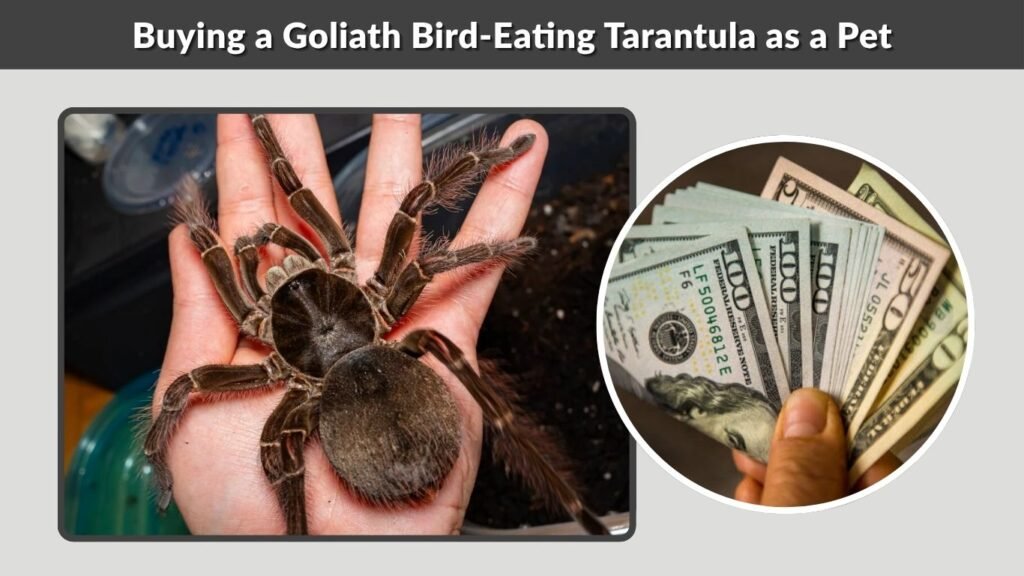
Purchase only after preparing and testing the enclosure. Look for a reputable specialist who can confirm the spider’s scientific name, captive history, approximate size, feeding record and sex when known.
Be aware that Theraphosa blondi may be confused with other large species, particularly Theraphosa stirmi. Ask for accurate identification rather than relying only on the common name “Goliath birdeater.”
Before ordering, check local wildlife, import and exotic-animal regulations. Cross-border shipment may require permits or other documentation depending on the seller, destination and origin of the animal. A captive-bred specimen is preferable to an animal removed from its native rainforest.
FAQs
Can beginners keep a Goliath birdeater?
It is not generally recommended for beginners. Its large adult size, strong feeding response, irritating hairs and moisture-sensitive enclosure make it more demanding than many commonly kept tarantulas. New keepers should first gain experience with a calmer, hardier terrestrial species.
How large does a pet Goliath birdeater become?
The species can develop a body length of approximately 4.75 inches and a leg span approaching 11 inches. Females are typically heavier and longer-lived than males, although individual growth depends on sex, food availability and environmental conditions.
Can two Goliath birdeaters live together?
No. They are solitary tarantulas and should be housed separately to reduce the risk of fighting, injury or cannibalism. Individuals normally meet only for reproduction, and even mating must be carefully supervised by experienced breeders.
Is a Goliath bird-eating tarantula deadly?
It has venom and can deliver a painful bite, but its defensive hairs may be a more frequent problem during captive maintenance. Regardless of venom potency, its large fangs can cause substantial puncture wounds, so direct handling should be avoided.
How long does a pet Goliath birdeater live?
Females may live as long as approximately 20 years, while males usually survive three to six years. The difference makes the spider’s sex an important consideration when estimating the length of the ownership commitment.
