
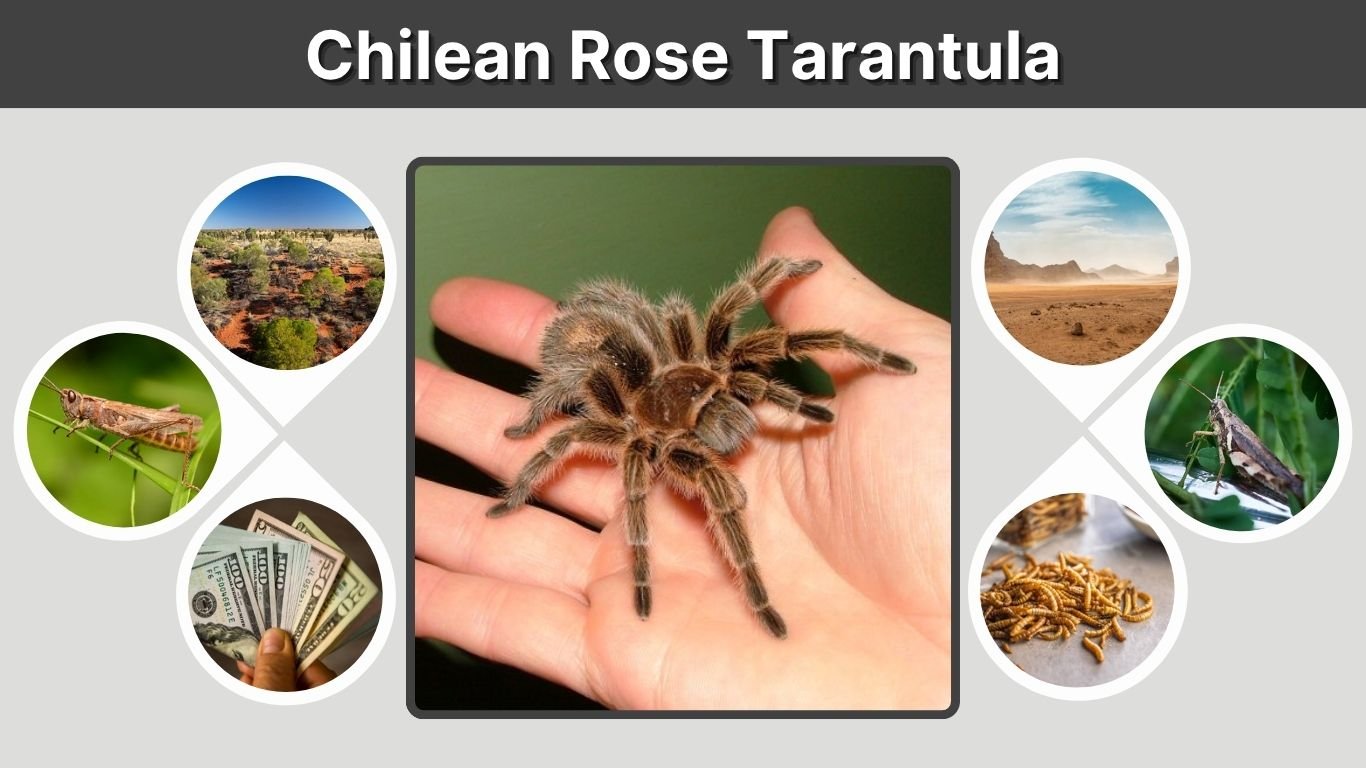
The Chilean rose tarantula (Grammostola rosea), also called the Chilean rose-hair tarantula, is a medium-sized terrestrial spider from dry regions of South America. Its calm reputation, simple housing needs and attractive pinkish-brown hairs have made it popular among beginner tarantula keepers. However, it is still a venomous wild animal that can bite or release irritating abdominal hairs. Proper care requires a secure ground-level enclosure, dry substrate, a hiding place, clean water and appropriately sized live insects.
| Quick fact | Details |
| Scientific name | Grammostola rosea |
| Other names | Chilean rose hair, Chile rose tarantula |
| Adult leg span | Approximately 4–5 inches |
| Native range | Chile, Bolivia and Argentina |
| Habitat | Desert and dry scrubland |
| Lifestyle | Terrestrial and solitary |
| Female lifespan | Up to approximately 20 years |
| Diet | Insects and other small prey |
Chilean Rose Tarantula Identification and Size
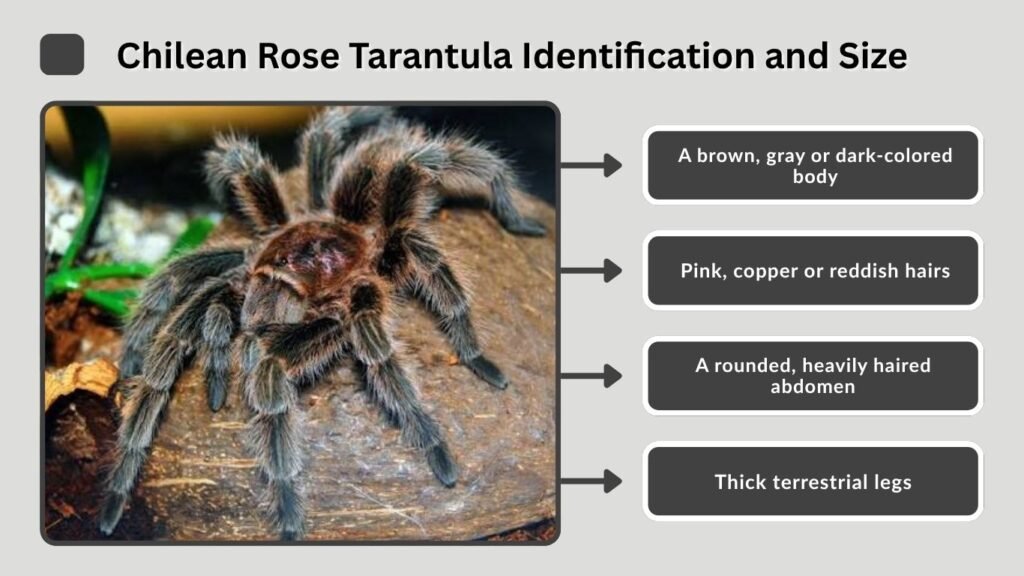
The Chilean rose is a robust, heavily haired tarantula with subdued colors that help it blend into dry ground. Individual coloration varies considerably, which explains names such as pink Chilean rose, red Chilean rose and Chilean rose hair. Females are normally larger-bodied, whereas mature males usually appear slimmer and have proportionally longer legs.
Identification Features
A Chilean rose tarantula typically has:
- A brown, gray or dark-colored body
- Pink, copper or reddish hairs
- A rounded, heavily haired abdomen
- Thick terrestrial legs
- A subtle pink or rose-colored carapace
- Two large downward-pointing fangs
- A leg span of approximately 4–5 inches
Females average about five inches across the legs, while males are often closer to 3.5 inches. Color may become dull before molting and appear brighter after the new exoskeleton hardens.
Scientific Name
The accepted scientific name is Grammostola rosea, a member of the tarantula family Theraphosidae. The World Spider Catalog records the species from Bolivia, Chile and Argentina. Because common names may be used inconsistently by pet sellers, buyers should confirm the scientific name before purchasing a spider.
Male vs Female
Adult females usually have heavier bodies, larger abdomens and substantially longer lifespans. Mature males develop reproductive structures at the ends of their pedipalps and may become more active while searching for females.
Examining a well-preserved shed exoskeleton is usually the most reliable way to determine sex. Body shape alone may be misleading, particularly in spiderlings and juveniles.
Chilean Rose Tarantula Natural Habitat and Behavior
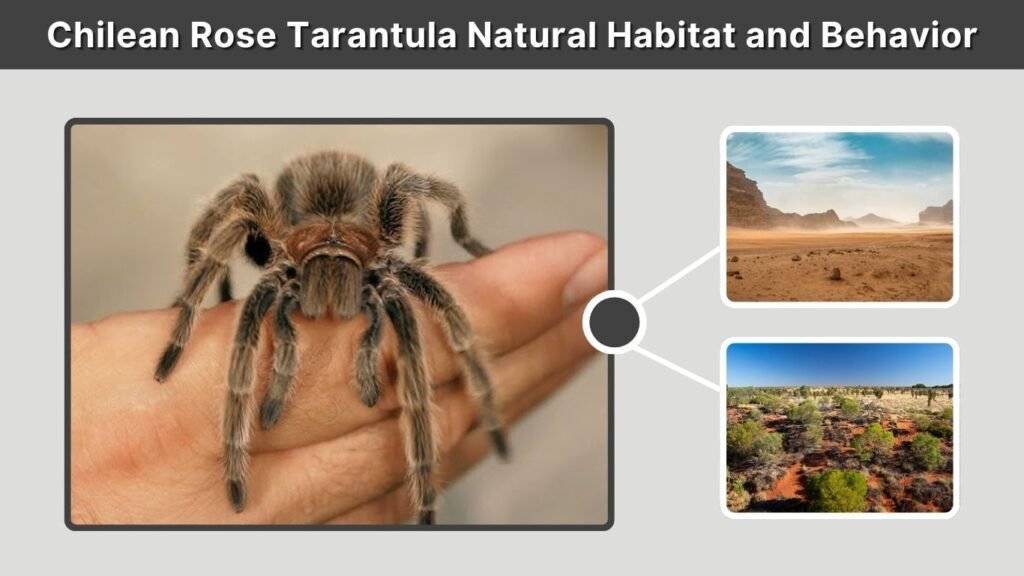
Chilean rose tarantulas inhabit deserts, dry scrublands and other arid or semi-arid environments. They are ground-dwelling spiders that shelter in burrows or protected spaces beneath rocks and vegetation. Their natural environment explains why captive enclosures should not remain wet, tropical or poorly ventilated.
Are Chilean Rose Tarantulas Friendly?
They are often described as calm or docile, but “friendly” is not an accurate description. Tarantulas do not form affectionate relationships with people, and temperaments vary between individuals.
A calm specimen may tolerate routine maintenance, while another may retreat, raise its front legs, release defensive hairs or attempt to bite. They are best treated as display animals.
Burrowing and Webbing
The Chilean rose is terrestrial and may use an existing shelter rather than constructing an extensive burrow. Some individuals rearrange substrate or deepen the area beneath their hide.
It produces silk but does not build a suspended web for catching flying insects. Silk may be placed around its retreat and across the ground to help detect prey vibrations.
Long Periods Without Eating
This species has a slow metabolism and may refuse food for extended periods, particularly before molting. A healthy adult can sometimes fast for weeks or months while continuing to maintain a normal body condition.
Fasting alone is not necessarily a sign of illness. Check that clean water is available and that the abdomen is not becoming severely shrunken.
Chilean Rose Tarantula Enclosure
A suitable enclosure should emphasize ground area rather than height. Terrestrial tarantulas have delicate abdomens and can be seriously injured by falls. The habitat does not need elaborate decorations, but it must provide security, appropriate substrate, good ventilation and a dark retreat.
Enclosure Checklist
A proper setup should include:
- A secure glass or plastic terrestrial enclosure
- Cross-ventilation or suitable air holes
- Three to four inches of substrate
- A cork-bark or artificial hide
- A shallow water dish
- More floor space than climbing height
- A tightly fitted, escape-proof lid
- No sharp or heavy decorations
House each tarantula separately. Chilean rose tarantulas are solitary, and keeping two together can result in stress, injury or cannibalism.
Best Substrate
Suitable choices include fertilizer-free topsoil, coconut fiber or a compacted soil-and-coir mixture. The substrate should support light digging without remaining muddy.
Avoid gravel, sharp sand, cedar, pine and strongly scented wood products. Pack the substrate firmly and leave only a short distance between its surface and the enclosure lid.
Temperature and Humidity
A practical temperature range is approximately 70–80°F, or 21–27°C. Daytime humidity around 55–65% generally reflects the species’ relatively dry natural environment. A clean water dish and occasional controlled moistening are preferable to soaking the entire enclosure.
Constantly wet substrate can encourage mold and may cause the tarantula to avoid the ground. Heat lamps are generally unnecessary when the room remains comfortably warm. Never place an enclosure in direct sunlight, where temperatures can rise rapidly.
Chilean Rose Tarantula Diet and Feeding
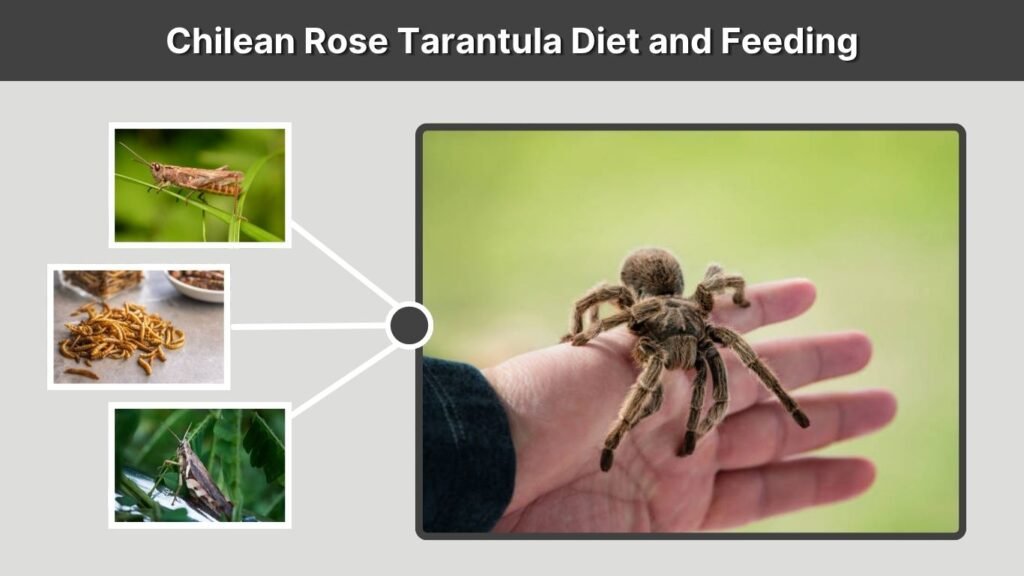
Wild Chilean rose tarantulas are predators of insects and other small animals. Captive specimens normally remain healthy on a diet of appropriately sized, captive-bred invertebrates. Feeding rodents or other vertebrates is unnecessary and creates additional risks from injury, waste and spoiled remains.
Suitable Foods
Common feeder options include:
- Crickets
- Dubia or discoid roaches
- Locusts
- Mealworms
- Superworms in moderation
- Small flies or tiny roaches for spiderlings
Offer prey smaller than the tarantula’s body. Juveniles may eat once or twice weekly, while adults commonly require food every one or two weeks. Adjust portions according to abdominal condition rather than overfeeding on a rigid schedule.
Water Requirements
Keep a shallow dish of clean water available at all times. The dish should be wide enough for drinking but not so deep that a small spider could become trapped.
Do not use a wet sponge, cotton ball or water gel. These products can collect waste and microorganisms without providing a better drinking source.
Chilean Rose Tarantula Molting and Lifespan
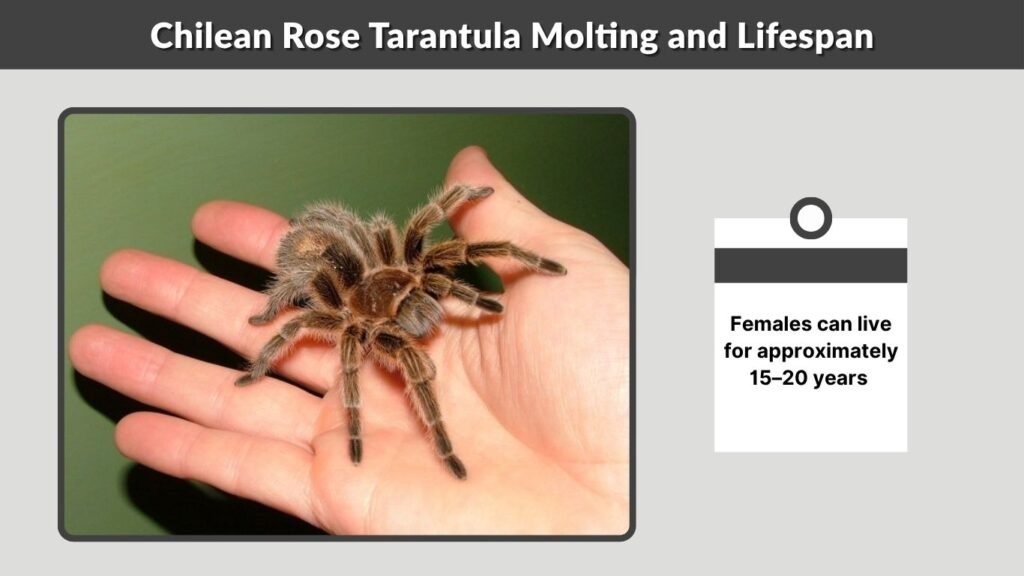
Like all tarantulas, the Chilean rose must shed its rigid exoskeleton to grow. Molting becomes less frequent with age, and adults may molt only once every year or two. The spider is extremely vulnerable during and immediately after the process and should be left completely undisturbed.
Signs of an Upcoming Molt
Common premolt signs include:
- Refusing food
- Becoming less active
- Darkening of the abdomen
- Remaining inside the hide
- Creating a silk mat
- Sealing the retreat
- Lying on its back
Remove live prey as soon as premolt behavior begins. A cricket can injure a soft, freshly molted spider. Do not turn over a tarantula lying on its back, as this is a normal molting position.
How Long Do Chilean Rose Tarantulas Live?
Females can live for approximately 15–20 years or longer under good captive care. Males have much shorter lives and commonly survive for about four or five years, although reported lifespans vary. Their slow growth and female longevity make ownership a considerable long-term commitment.
Chilean Rose Tarantula Bite, Venom and Handling
The Chilean rose tarantula is venomous rather than poisonous. It injects venom through its fangs when capturing prey or defending itself. Bites are uncommon when the spider is left undisturbed, but any individual may bite if trapped, squeezed or repeatedly provoked.
Is It Bite Dangerous?
Tarantula bites can be painful, but their venom does not typically cause serious illness in humans. However, reactions vary, and the large fangs can create puncture wounds. Clean a bite promptly and seek medical attention for severe pain, spreading swelling, breathing difficulty or other concerning symptoms.
Urticating Hairs
When threatened, a Chilean rose may kick tiny barbed hairs from its abdomen. These hairs can cause itching and inflammation when they contact the skin. Eye exposure is more serious and may require professional medical treatment. Keep your face away from the enclosure and wash your hands after maintenance.
Can You Handle One?
Routine handling is discouraged. It provides no benefit to the tarantula and increases the risks of defensive hairs, biting and accidental falls. Even a short fall onto a hard surface can rupture the abdomen.
Use a catch cup and soft guiding tool whenever relocation is necessary. Never grasp the spider with your fingers.
Buying a Chilean Rose Tarantula
Purchase from a reputable breeder or specialist who can provide the scientific name, approximate age, feeding history and captive origin. Captive-bred animals are preferable because they reduce pressure on wild populations and usually come with clearer care information.
CITES parties approved the inclusion of Grammostola rosea in Appendix II at CoP20, increasing controls on international trade. Buyers importing or exporting the species should check current wildlife and permit requirements in both countries.
FAQs
Are Chilean rose tarantulas good pets?
They can be good pets for beginners who want an animal to observe rather than handle. They require little space and relatively simple care, but owners must be comfortable providing live insects, maintaining a secure enclosure and avoiding unnecessary physical contact.
Are Chilean rose tarantulas dangerous?
They are not generally considered highly dangerous to healthy adults, but they can bite and release irritating abdominal hairs. Eye exposure to the hairs may be serious. Children and pets should not have unsupervised access to the enclosure.
How big does a Chilean rose tarantula get?
Adult females commonly reach a leg span of approximately five inches, while males may average closer to 3.5 inches and have proportionally longer legs. Growth is slow, and a juvenile may require several years to reach its full adult size.
How often should you feed a Chilean rose tarantula?
Juveniles may eat once or twice each week, while adults often need feeding every one or two weeks. Remove uneaten insects and stop feeding when premolt signs appear. Long fasting periods can be normal when the spider otherwise appears healthy.
Is a Chilean rose tarantula poisonous?
It is venomous, not poisonous. The tarantula uses its fangs to inject venom into prey. Its venom usually does not produce serious illness in people, but a bite may be painful, and individual reactions can vary.
