
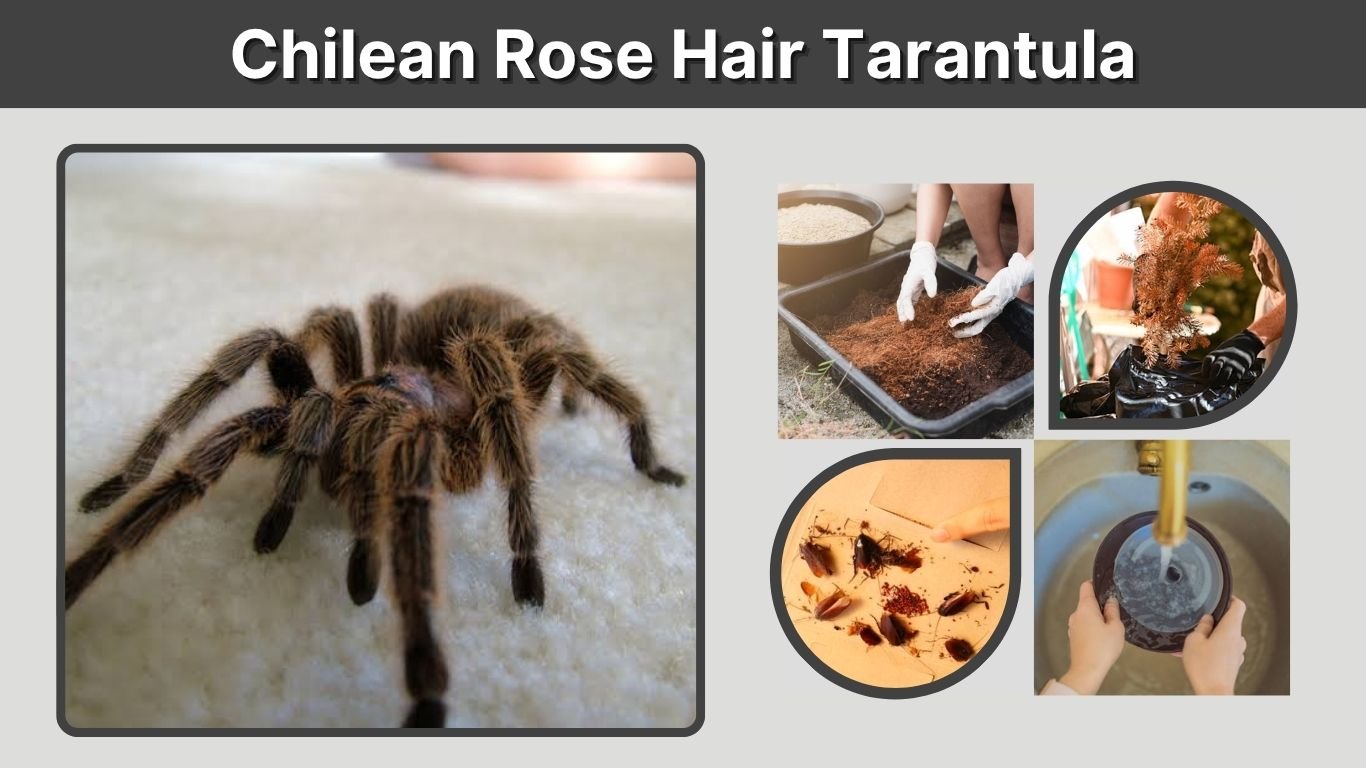
A Chilean rose hair tarantula enclosure should be secure, well ventilated and designed for a ground-dwelling spider. Rather than using a tall climbing tank, provide generous floor space, deep compact substrate, a ground-level hide and a shallow water dish. The enclosure should remain mostly dry while maintaining stable temperature and moderate humidity. Because the Chilean rose tarantula is a solitary species with a delicate abdomen, it must live alone in a low-profile habitat without sharp rocks or heavy decorations.
Choosing the Correct Enclosure
The Chilean rose hair tarantula, Grammostola rosea, is a medium-sized terrestrial species from desert and scrub environments in Chile, Argentina and Bolivia. Adult females average about five inches across the legs, while males are usually smaller. Its enclosure should therefore prioritize horizontal floor space rather than height.
Recommended Enclosure Size
A five- to ten-gallon enclosure is generally sufficient for one adult Chilean rose tarantula. As a practical guide, the enclosure should be approximately three times the spider’s leg span in length and wide enough for it to walk, turn and reach every resource comfortably.
| Life stage | Suggested enclosure |
| Small spiderling | Ventilated deli cup or small acrylic enclosure |
| Juvenile | Compact terrestrial enclosure matched to leg span |
| Adult | Approximately 5–10 gallons |
| Mature female | Low-profile enclosure with generous floor space |
A very large habitat is not necessarily better. Oversized enclosures may make it harder to locate prey and monitor the spider, particularly when it is young.
Keep the Enclosure Low
Chilean rose tarantulas are terrestrial spiders and can suffer serious injuries if they fall from a high surface. The open space between the substrate and lid should remain limited, ideally no greater than approximately the spider’s body length.
Add enough substrate to reduce climbing height. Avoid tall branches, stacked stones and decorations that encourage the tarantula to climb near the lid.
Glass or Plastic Enclosure
Both glass terrariums and sturdy plastic enclosures can work when they are escape-proof and properly ventilated. The lid must close securely because tarantulas can climb enclosure walls and squeeze through surprisingly small openings.
Avoid wire-mesh lids when possible. A tarantula’s claws can become trapped in the mesh, leaving it suspended and at risk of injury. Ventilation holes in solid plastic or acrylic are generally safer.
Substrate and Burrowing Space
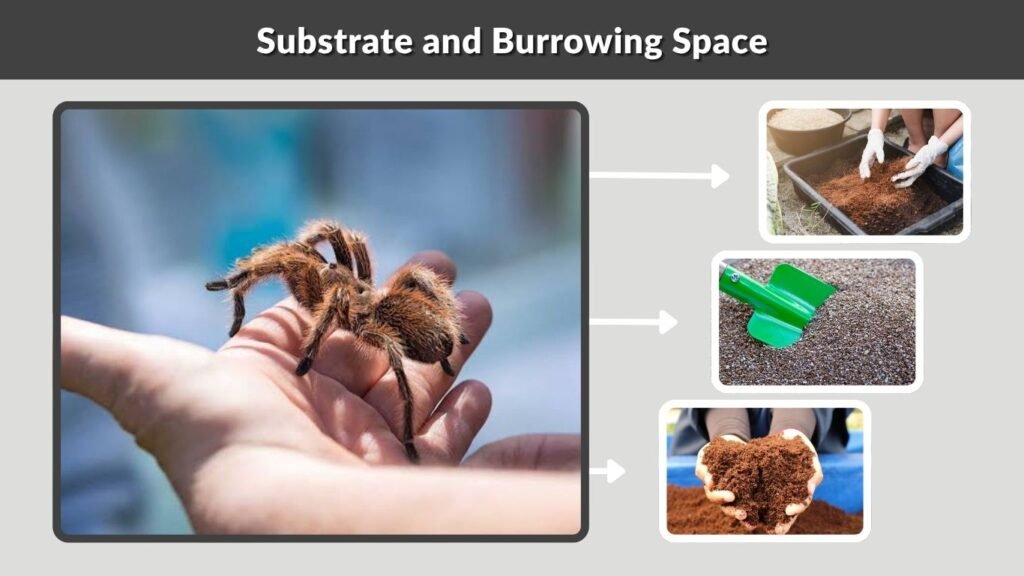
Although captive Chilean rose tarantulas may remain visible for long periods, they should still be able to dig and modify their surroundings. Deep, compact substrate supports natural burrowing behavior, provides a stable surface and helps reduce the distance the spider could fall from the enclosure wall or lid.
Best Substrate Options
Suitable materials include:
- Fertilizer-free topsoil
- Coconut fiber mixed with topsoil
- Commercial tarantula substrate
- Soil mixed with a small amount of vermiculite
- Firmly packed peat-free substrate
Provide approximately three to four inches for an adult, adding more when the enclosure is relatively tall. Pack the material firmly enough to support a shallow tunnel rather than leaving it light and fluffy.
Substrates to Avoid
Do not use:
- Gravel
- Sharp or abrasive sand
- Cedar or pine shavings
- Loose bark chips
- Fertilized potting compost
- Substrate treated with pesticides
Sand can damage the spider’s cuticle, gravel may injure its feet, and aromatic wood products may release irritating oils. Loose bark also provides poor support for burrowing and may contribute to mite problems.
Moisture Gradient
The enclosure should not resemble a wet tropical rainforest. Keep most of the substrate dry while allowing one small area—often near the water dish—to remain slightly moist. This provides a moisture gradient without creating swampy conditions.
If humidity drops excessively, lightly moisten one corner instead of spraying the entire tank. Never spray water directly onto the tarantula.
Temperature, Humidity and Lighting
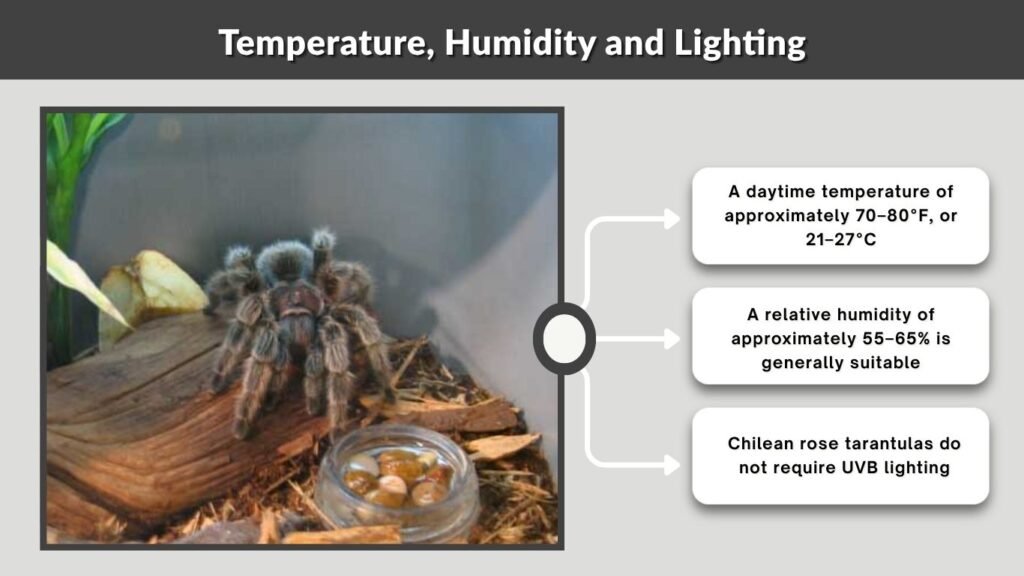
Chilean rose tarantulas come from dry scrub and desert habitats, so excessive moisture is a greater concern than slightly dry surface conditions. Environmental stability is more important than repeatedly changing equipment to reach an exact number. Use simple digital instruments to monitor conditions without creating intense heat or light.
Temperature Range
A daytime temperature of approximately 70–80°F, or 21–27°C, is appropriate for most Chilean rose tarantula enclosures. A modest nighttime drop is normally acceptable. Avoid significant temperature fluctuations and keep the enclosure away from cold drafts, radiators and direct sunlight.
A heat lamp is usually unnecessary and may dry the spider and substrate. When additional heating is genuinely required, warm the room rather than placing a strong heating device directly over the enclosure.
Humidity Level
A relative humidity of approximately 55–65% is generally suitable. A full water dish, occasional moistening of one substrate corner and normal room humidity are usually sufficient. Constant misting can produce stagnant conditions, mold and overly wet soil.
Lighting
Chilean rose tarantulas do not require UVB lighting. Ordinary indirect room lighting can provide a normal day-and-night cycle. Keep strong lamps, spotlights and direct sunlight away from the enclosure because bright light can cause stress and overheating.
Hides, Water and Decorations
A well-designed enclosure does not need to be crowded. The essential furnishings are a secure retreat, clean drinking water and enough open ground for walking and feeding. Every object should be stable, smooth and positioned so it cannot collapse onto the tarantula or damage its abdomen.
Essential Enclosure Supplies
Include the following:
- Cork-bark hide or half flowerpot
- Shallow water dish
- Digital thermometer
- Hygrometer
- Secure ventilated lid
- Feeding tongs
- Compact substrate
- Artificial plant or leaf litter for cover
Place the hide partly beneath the substrate to create the entrance to a natural-looking burrow. RVC guidance recommends tunnels, sideways plant pots or other protected retreats while warning against hazardous furnishings such as rocks and cacti.
Water Dish
Provide clean water at all times in a shallow, stable dish. Replace it regularly and clean it whenever substrate, waste or prey remains enter the water.
Do not use wet cotton, water crystals or sponges. These materials can harbor bacteria and are unnecessary when a suitable shallow dish is available.
Safe Decorations
Cork bark, artificial foliage and a small amount of pesticide-free leaf litter can improve cover. Keep an open area around the hide and water dish so the tarantula can move easily.
Avoid sharp stones, tall branches, metal decorations and heavy objects resting loosely on the substrate. A burrowing spider could undermine an unstable decoration and become trapped beneath it.
Enclosure Maintenance
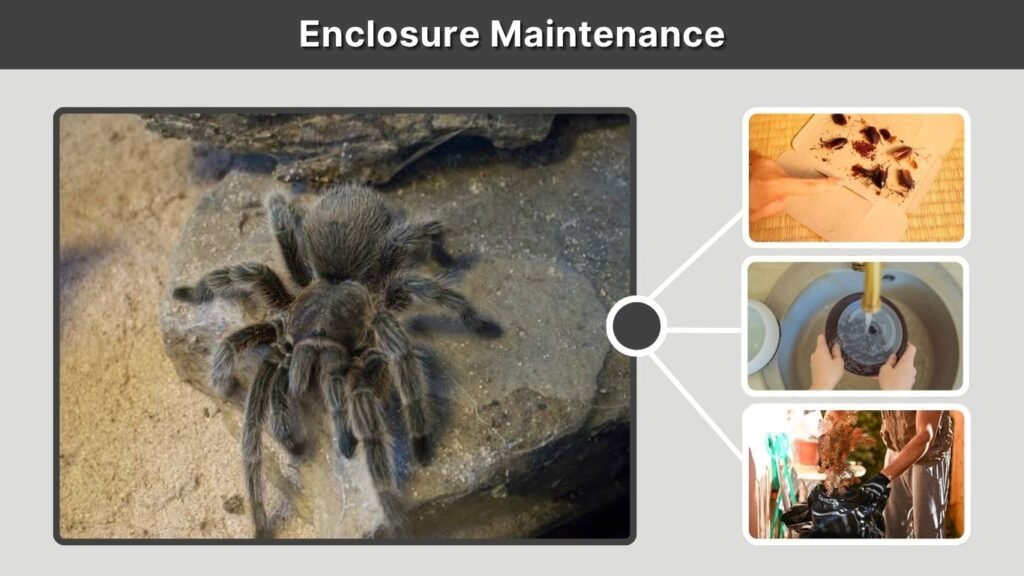
Chilean rose tarantula habitats require regular observation but not frequent complete cleaning. Excessive disturbance can cause stress, while unnecessary substrate replacement may destroy the spider’s burrow. Spot cleaning and water-dish maintenance are normally enough unless mold, mites or serious contamination develops.
Regular Cleaning Tasks
Follow a simple routine:
- Remove uneaten prey within 24 hours
- Take out insect remains and visible waste
- Refill and wash the water dish regularly
- Check temperature and humidity
- Inspect the enclosure for mold or mites
- Confirm that the lid remains secure
- Remove dead plant material
Do not use household cleaners, air fresheners, pesticides or scented disinfectants near the enclosure. Tarantulas can be harmed by chemical exposure.
Care During Molting
A Chilean rose tarantula may stop eating, become inactive, darken or close the entrance to its hide before molting. Some individuals lie on their backs during the process.
Remove live feeder insects and leave the spider undisturbed. Do not dig it out, touch it or turn it over. Molting is necessary for growth, and the new exoskeleton remains soft and vulnerable until it hardens.
Common Enclosure Mistakes
Many enclosure problems result from applying reptile or tropical-spider care to a dry-habitat terrestrial tarantula. The most serious risks are excessive height, persistent wetness, unsuitable heating and unstable decorations. Correcting these problems early can prevent falls, dehydration, mold and unnecessary stress.
Mistakes to Avoid
- Using an arboreal or tall enclosure
- Keeping the substrate permanently wet
- Installing a heat lamp above the tank
- Using a wire-mesh lid
- Providing no hiding place
- Using sharp gravel or sand
- Housing two tarantulas together
- Placing the enclosure in direct sunlight
- Leaving live prey during a molt
- Handling the spider frequently
Every Chilean rose tarantula should be housed separately because tarantulas may attack or cannibalize one another. Routine handling is also discouraged because a fall can seriously injure the spider.
FAQs
What size enclosure does a Chilean rose tarantula need?
A five- to ten-gallon enclosure is usually sufficient for one adult. Choose a low terrestrial design with roughly three times the spider’s leg span in horizontal space. Smaller enclosures are appropriate for spiderlings and juveniles and should be upgraded as the tarantula grows.
How deep should the substrate be?
Provide approximately three to four inches of firmly packed substrate for an adult, or enough to minimize the open falling distance above it. A deeper layer may be needed in a taller tank. The substrate should support digging without remaining soggy or collapsing easily.
Does a Chilean rose tarantula need a heat lamp?
A heat lamp is normally unnecessary. A stable, comfortably warm room is safer because strong overhead heat can dry the substrate and dehydrate the spider. Monitor the enclosure with a digital thermometer and only consider carefully controlled supplemental heating when the room remains consistently too cold.
Should the enclosure be dry or humid?
Keep most of the enclosure relatively dry, with humidity around 55–65%. Maintain a shallow water dish and slightly moisten one corner when necessary. Avoid soaking the entire substrate, constant misting or restricting ventilation, as these conditions can encourage mold and cause discomfort.
Can two Chilean rose tarantulas share an enclosure?
No. Chilean rose tarantulas are solitary and should be housed individually. Keeping two together creates a risk of competition, injury and cannibalism, even when the enclosure appears spacious. Separate housing also makes feeding, molting observation and general health monitoring much easier.
