
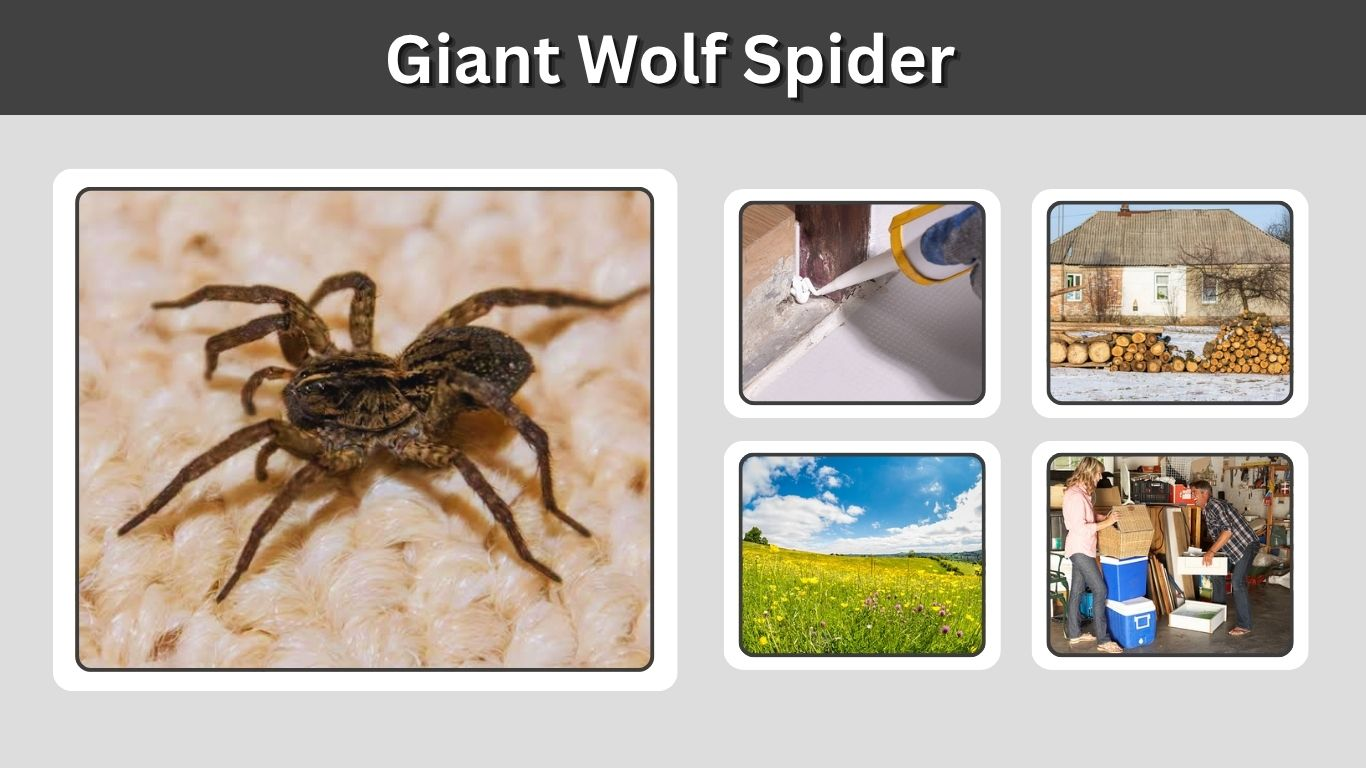
The giant wolf spider is not one single spider species. It is a common search term people use for large wolf spiders, especially big Hogna species such as the Carolina wolf spider and the rare Desertas wolf spider. These spiders look intimidating because of their hairy bodies, fast movement, and ground-hunting behavior, but most are not dangerous to people. This guide explains their size, identification, bite risk, habitat, and how they compare with giant house spiders and other large spiders.
What Is a Giant Wolf Spider?
“Giant wolf spider” usually means a large member of the wolf spider family, Lycosidae. Wolf spiders are active hunters. Unlike orb-weavers or cobweb spiders, they do not build prey-catching webs. They run, stalk, or ambush insects on the ground. The University of Minnesota Extension describes wolf spiders as dark brown, slightly hairy hunting spiders that live in places such as woodlands, meadows, beaches, gardens, fields, and sometimes underground.
Scientific Classification
Wolf spiders belong to the family Lycosidae. Many large species are placed in genera such as Hogna, Tigrosa, and related groups. In the United States, one of the most recognized large wolf spiders is the Carolina wolf spider (Hogna carolinensis). In Europe and Madeira, the famous Desertas wolf spider (Hogna ingens) is often called one of the largest wolf spiders in the world.
Why Are They Called “Wolf” Spiders?
They are called wolf spiders because they actively hunt prey instead of waiting in a web. They move quickly, have strong eyesight, and often chase insects across soil, grass, leaves, stones, or home floors. UC Agriculture and Natural Resources notes that wolf spiders stalk prey and mainly hunt insects at night.
Giant Wolf Spider Size
Size is the biggest reason people search for this spider. A large wolf spider can look much bigger than its actual body length because its legs spread wide when it runs.
| Spider Type | Approximate Size | Notes |
| Common wolf spiders | 1/4 to 1 inch body length | Many are medium to large hunting spiders |
| Carolina wolf spider | Body over 1 inch; leg span up to about 4 inches | One of the largest wolf spiders in the U.S. |
| Desertas wolf spider | Body up to 4 cm; leg span up to 12 cm | Critically endangered island species |
| Giant house spider | Body up to 1.6 cm; leg span up to 7.5 cm | Often confused with wolf spiders |
The Carolina wolf spider can have a body longer than one inch and a full leg span reaching about four inches, according to UC Agriculture and Natural Resources. The Desertas wolf spider is even larger, with females reaching up to 12 cm in leg span and about 4 cm in body length.
Size Comparison
A giant wolf spider may look as large as a small tarantula, but it is usually slimmer and faster. Tarantulas often have heavier bodies and thicker legs, while wolf spiders have a more athletic build. Giant house spiders can also have long legs, but they usually look more slender and are connected with sheet-like funnel webs indoors.
How to Identify a Giant Wolf Spider
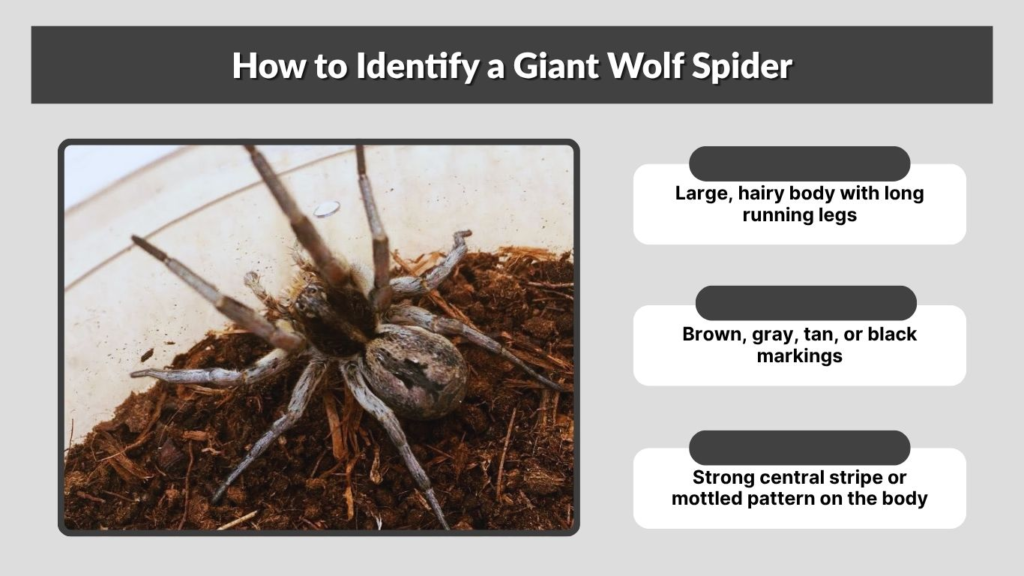
Large wolf spiders can be brown, gray, tan, blackish, or patterned. Their coloring helps them hide on soil, bark, leaves, stones, and dry grass.
Identification Features
- Large, hairy body with long running legs
- Brown, gray, tan, or black markings
- Strong central stripe or mottled pattern on the body
- Fast movement across the ground
- No round orb web or messy house cobweb
- Often found on floors, soil, grass, wood piles, or under stones
- Females may carry a round egg sac attached to the spinnerets
- Mother wolf spiders may carry spiderlings on their back
The eye pattern is also useful. Wolf spiders have eight eyes arranged in three rows, including two large forward-facing eyes that reflect light at night. This eye shine is one reason people sometimes spot them with a flashlight outdoors.
Giant Wolf Spider Habitat
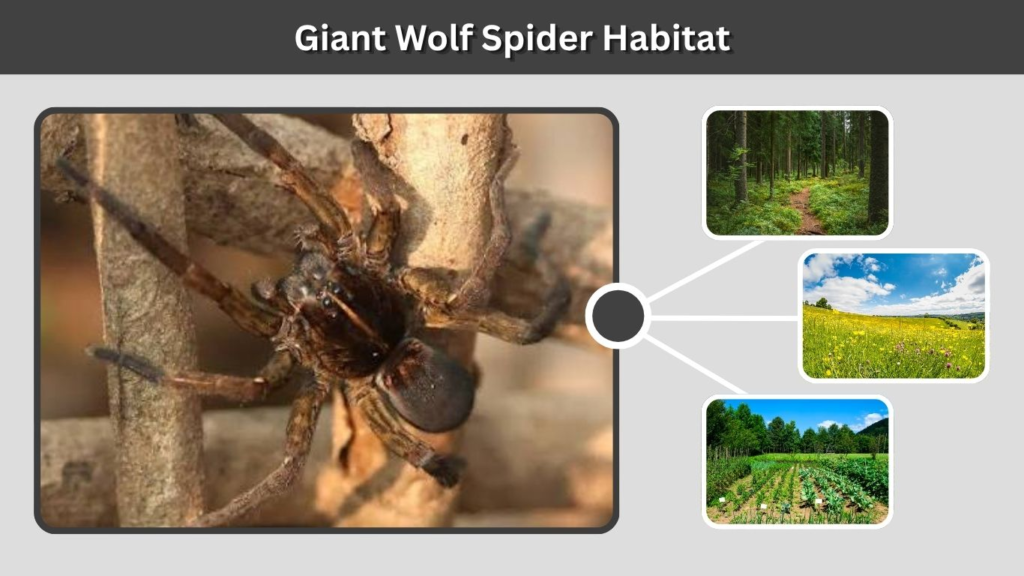
Giant wolf spiders are mostly outdoor spiders. They prefer places where insects are available and hiding cover is nearby.
Common Outdoor Habitats
Wolf spiders can live in:
- Woodlands
- Grasslands and meadows
- Gardens and fields
- Rocky areas
- Wetlands and pond edges
- Beaches and sandy soil
- Burrows or ground tunnels
- Under logs, stones, boards, and firewood
Some species dig burrows, while others wander without a permanent retreat. The Desertas wolf spider is strongly linked to burrows, rocks, and crevices on Deserta Grande Island, where conservation work focuses on understanding its habitat needs.
Why They Enter Homes
A giant wolf spider in the house usually wandered in by accident. They may enter through gaps under doors, cracks near foundations, damaged screens, basement openings, or garage doors. They do not usually build indoor colonies like some cobweb spiders. Most are searching for shelter or prey and would rather escape than interact with people.
Giant Wolf Spider Bite
A giant wolf spider bite can happen if the spider is trapped against skin, handled, stepped on, or pressed inside clothing. However, wolf spiders are not aggressive toward people. UC Agriculture and Natural Resources says their bite is not considered dangerous to people, though it can be painful like a bee sting.
Bite Symptoms
Possible symptoms may include:
- Sharp pain at the bite site
- Redness
- Mild swelling
- Itching or irritation
- Tenderness for a short time
Most spider bites are over-diagnosed. The University of Minnesota Extension notes that many suspected spider bites are actually caused by other issues, including skin infections or medical conditions.
When to Get Medical Help
Get medical help if there is severe swelling, trouble breathing, spreading redness, fever, intense pain, dizziness, or signs of infection. Also seek help for bites on young children, older adults, or anyone with a known allergy risk.
Giant Wolf Spider vs Giant House Spider
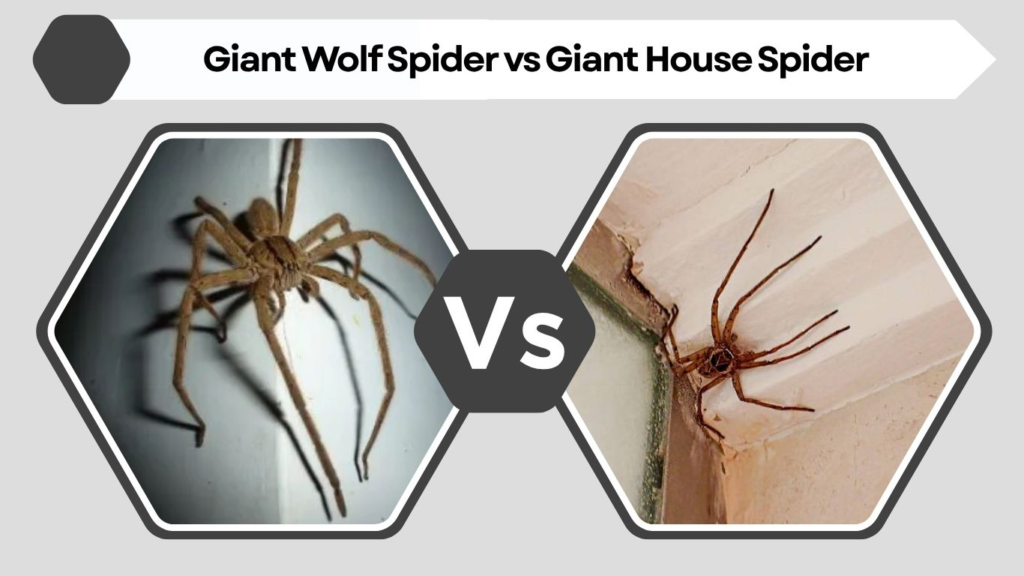
Many people confuse wolf spiders with giant house spiders because both can be large, brown, and fast. However, they are not the same.
| Feature | Giant Wolf Spider | Giant House Spider |
| Family | Lycosidae | Agelenidae |
| Hunting style | Active ground hunter | Funnel/sheet web hunter |
| Web use | Does not use webs to catch prey | Spins sheet-like funnel webs |
| Body shape | Stout, hairy, athletic | Slender with long legs |
| Common location | Soil, grass, gardens, basements, garages | Dark indoor corners, sheds, walls |
| Danger to humans | Usually not dangerous | Usually not dangerous |
The Wildlife Trusts describe the giant house spider as a large brown spider that spins sheet-like cobwebs and appears in dark corners of houses, especially in autumn. Wolf spiders, by contrast, are ground hunters that do not build prey-catching webs.
Giant Wolf Spider vs Huntsman Spider
Huntsman spiders and wolf spiders are also commonly confused. Huntsman spiders often have flatter bodies and legs that spread sideways like a crab. Wolf spiders usually have a more compact, upright, hairy appearance and run along the ground.
Huntsman spiders are famous for their wide leg span, while wolf spiders are known for strong eyesight, ground hunting, and females carrying egg sacs or babies. If you see a very flat spider on a wall, it may be a huntsman. If you see a stout, hairy spider running across the ground or floor, it may be a wolf spider.
Types Often Called Giant Wolf Spiders
The keyword data shows that people search for “giant Carolina wolf spider,” “wetland giant wolf spider,” “woodland giant wolf spider,” “giant black wolf spider,” and “giant Australian wolf spider.” These terms are often descriptive rather than official common names.
Carolina Giant Wolf Spider
The Carolina wolf spider is one of the most searched large wolf spiders in North America. It has a big, strong body, earthy brown coloring, and dark markings. Females are larger than males. This species may live in burrows and is often seen in dry, open habitats.
Desertas Giant Wolf Spider
The Desertas wolf spider is a rare species from the Madeira archipelago. It is Critically Endangered, and conservation groups maintain breeding and habitat programs for it. Twycross Zoo describes it as one of the largest wolf spiders in the world, with females larger than males.
Wetland and Woodland Giant Wolf Spiders
Search terms like “wetland giant wolf spider” and “woodland giant wolf spider” usually refer to large wolf spiders found in those habitats. Wetland species may live near damp soil, pond edges, marshes, or grassy water margins. Woodland wolf spiders hide under leaves, bark, stones, and fallen branches.
Are Giant Wolf Spiders Good or Bad?
Giant wolf spiders are beneficial predators. They eat insects and other small arthropods, helping control pest populations naturally. In gardens, they may feed on crickets, beetles, roaches, flies, grasshoppers, and other crawling insects.
They are “bad” only when they frighten people indoors. Even then, they are not trying to infest the home or attack humans. The best response is usually capture and release, sealing entry points, and reducing clutter where insects and spiders hide.
How to Keep Giant Wolf Spiders Out of the House
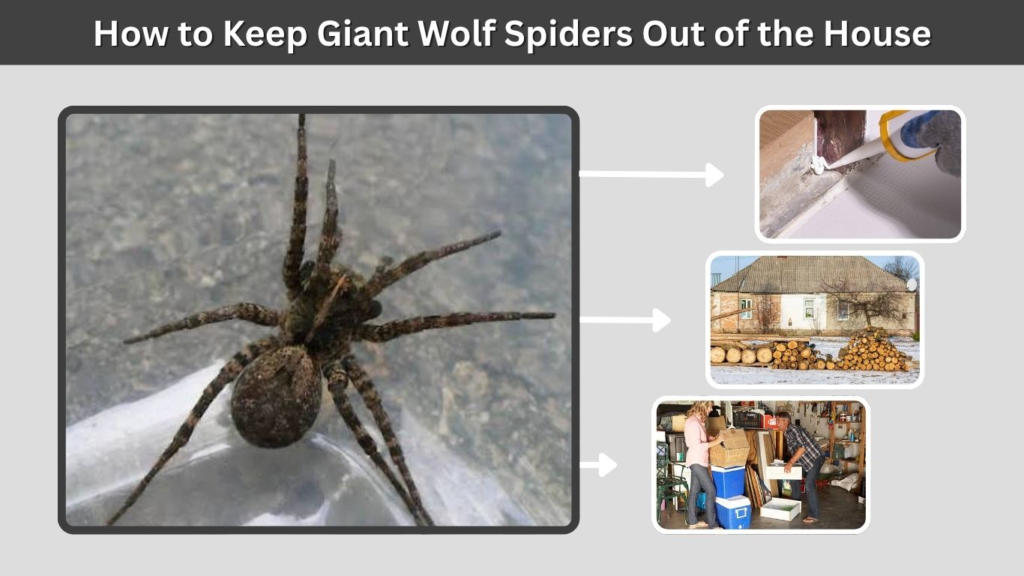
You do not need heavy chemical treatment for one or two wandering wolf spiders. Prevention is more useful.
Simple Prevention Tips
- Seal cracks around doors, windows, and foundations
- Repair torn screens
- Keep firewood away from the house wall
- Reduce clutter in garages and basements
- Remove leaf piles, boards, bricks, and debris near the home
- Use door sweeps on exterior doors
- Reduce outdoor lights that attract insects
- Capture and release individual spiders when possible
The University of Minnesota Extension recommends reducing clutter, removing individual spiders, sealing gaps, replacing damaged screens, and reducing insect-attracting lights as part of spider management.
FAQs
How big is a giant wolf spider?
A large wolf spider may have a body around one inch long, while the full leg span can look much bigger. The Carolina wolf spider may reach about four inches across with legs spread, while the Desertas wolf spider can be larger, reaching up to 12 cm in leg span.
Is a giant wolf spider dangerous?
A giant wolf spider is not considered dangerous to most people. It can bite if trapped or handled, and the bite may hurt, but wolf spiders usually run away. Serious reactions are uncommon, but medical help is important if symptoms are severe.
What is the difference between a wolf spider and a giant house spider?
A wolf spider is a ground hunter that does not use a web to catch prey. A giant house spider is a funnel-web spider that often lives in dark indoor corners and builds sheet-like webs. Wolf spiders also tend to look more robust and hairy.
Why is there a giant wolf spider in my house?
It probably wandered indoors by accident through a gap, open door, garage, basement, or damaged screen. Wolf spiders may enter homes while searching for prey or shelter, but they usually do not reproduce indoors in large numbers.
Is the giant wolf spider in DnD real?
No. The DnD giant wolf spider is a fantasy creature based on spider traits such as climbing, venom, and stealth. Real wolf spiders can be large and fast, but they do not reach fantasy monster size and do not behave like game creatures.
