
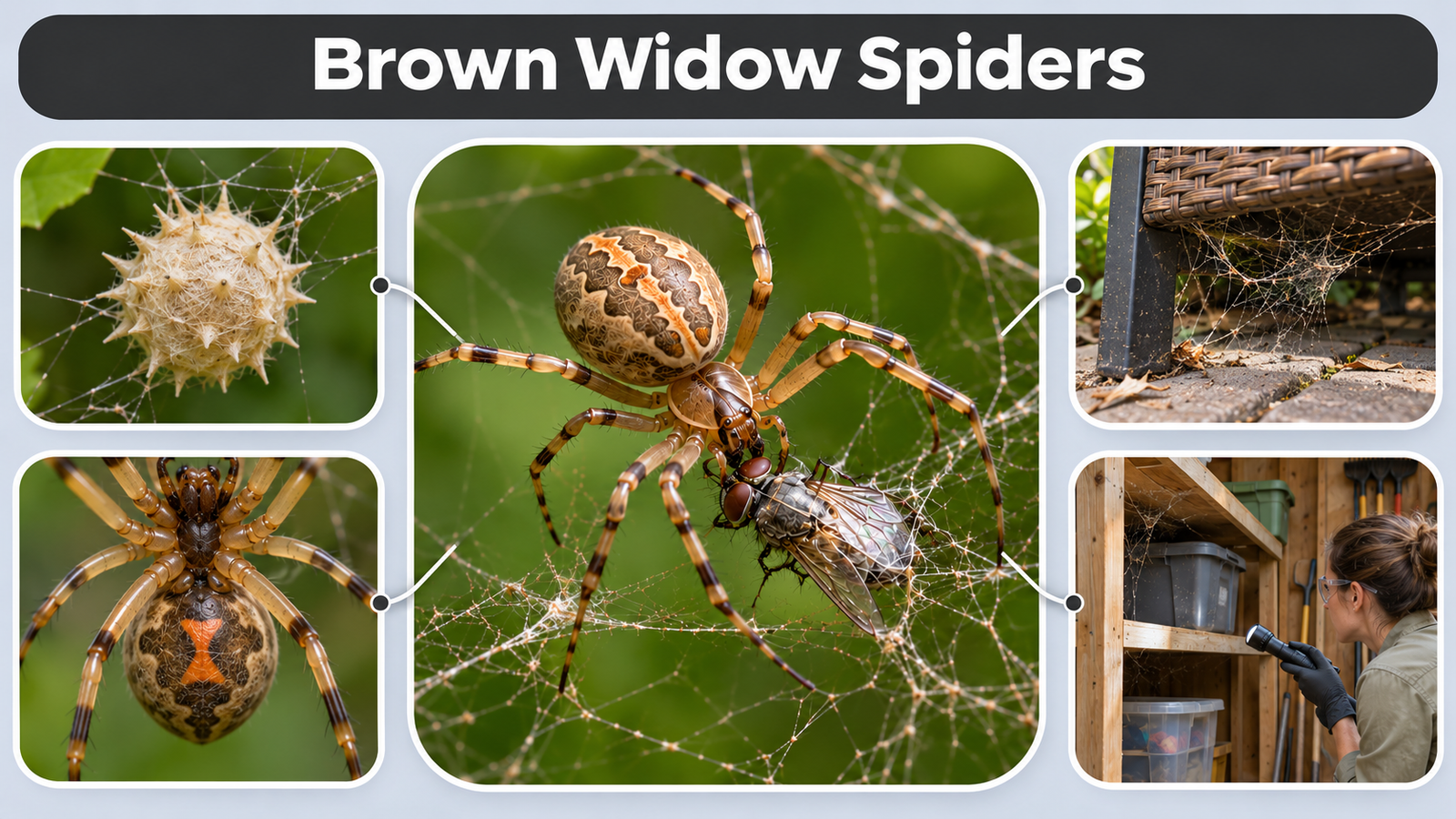
Brown widow spiders are relatives of black widows, but they are usually lighter in color and less likely to bite people. They often hide in quiet, protected places around homes, such as outdoor furniture, sheds, and sheltered corners. Their most distinctive clue is a round egg sac covered in tiny silk spikes. Learn how to identify brown widow spiders, understand the risks of a bite, and reduce the chance of finding them around your home.
What Is a Brown Widow Spider?
The brown widow is a venomous spider in the widow spider genus Latrodectus. Its scientific name is Latrodectus geometricus. Although it can live near people, it generally avoids contact and is more likely to bite if trapped or pressed against skin.
Where Do Brown Widow Spiders Live?
Brown widow spiders occur in warm, subtropical regions around the world. In the United States, they are established in parts of the South and Southwest, including Florida and Gulf Coast states. They favor warm, sheltered areas and may be found around homes, gardens, garages, and outdoor structures. Their local range can change, so a spider’s appearance alone does not confirm where it is from. ipm.ucanr.edu
Outside, brown widows may build webs in woody vegetation, under plant pots, or in protected spaces around fences and buildings. Around a home, look in undisturbed areas such as beneath patio furniture, inside storage boxes, around eaves, and in the corners of sheds. They are not usually roaming across floors or actively searching for people; they tend to stay close to their webs.
What Does a Brown Widow Spider Look Like?
Adult female brown widows have rounded abdomens and vary in color from tan or gray-brown to dark brown. Their backs may show geometric markings, while the underside often has an orange, yellow, or reddish hourglass shape. The color and pattern can vary, so the hourglass may be faint or difficult to see.
Females are generally larger and more noticeable than males. Male brown widows are smaller, slimmer, and less likely to be encountered. Young spiders can look different from adults, which makes identification by color alone unreliable. If you are unsure, avoid handling the spider and look for the egg sac, which is often a more useful clue.
How to Identify a Brown Widow Egg Sac
A brown widow egg sac is typically round and pale tan, yellowish, or whitish. Its surface is covered with small, pointed silk projections, giving it a spiky or prickly appearance. This texture is a helpful way to distinguish it from the smoother egg sacs of some other widow spiders.
Brown widows may produce several egg sacs over time, and one sac can contain many eggs. Finding a spiky sac may indicate that a female is nearby, though the spider itself may be hidden in the web. Don’t pick up or crush an egg sac with bare hands. Use gloves and a tool, or contact a pest professional if it is in a place where people might disturb it.
Are Brown Widow Spiders Dangerous?
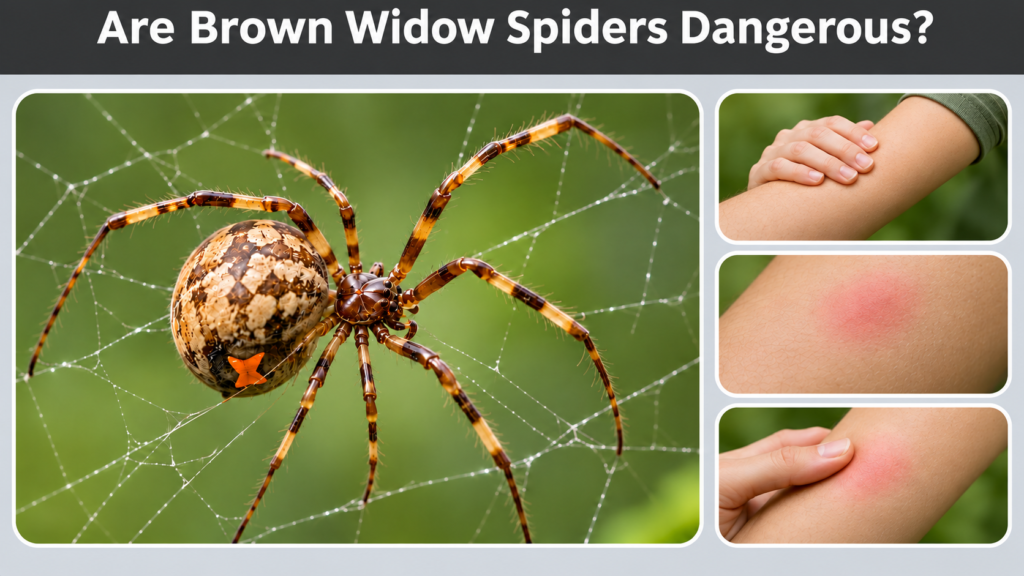
Brown widow spiders have venom, so a bite should be taken seriously. However, they are generally shy and tend to bite when squeezed, trapped in clothing, or otherwise pressed against a person. Research and extension guidance suggest that brown widow bites are often less severe than bites from some other widow spiders, but more serious symptoms have been documented. Avoid assuming a bite is harmless based only on the spider’s color.
Brown Widow Spider Bite Symptoms
A bite may cause pain, redness, swelling, or tenderness near the bite site. Some people may experience pain that spreads or other symptoms, such as muscle cramping, sweating, nausea, or feeling unwell. Symptoms vary, and it may not be possible to identify the spider from a skin mark alone.
If you suspect a widow spider bite, contact a healthcare professional or local poison center for guidance, especially if pain is severe, symptoms are spreading, or the person bitten is a child or has a serious health condition. Seek emergency care for severe symptoms or difficulty breathing. If it is safe to do so, take a clear photo of the spider from a distance for identification; do not try to catch it by hand.
What to Do After a Suspected Bite
Move away from the web and wash the area gently with soap and water. A cool compress may help with localized discomfort while you arrange medical advice. Avoid cutting the skin, applying harsh chemicals, or using home remedies that could irritate the bite. If symptoms worsen, seek urgent medical care.
It can be difficult to confirm a spider bite based only on appearance. Many skin conditions and insect bites can look similar, so a healthcare professional can help assess symptoms and recommend care. Do not delay care because you believe the spider was a brown widow rather than another widow species.
Brown Widow vs. Black Widow: What Is the Difference?
Brown widows and black widows are related, and both may have an hourglass-shaped marking on the underside of the abdomen. Adult female black widows are often glossy black, while brown widows are commonly tan to dark brown and may have patterned markings on the back. These differences are not always clear, especially with young spiders.
The egg sac is one of the most useful clues: brown widow egg sacs have many small silk spikes, while the egg sacs of western black widows are generally smooth. However, identifying a spider from a single feature can be difficult. If you find an unknown widow spider in a high-traffic area, avoid touching it and consider asking a local extension office or pest professional to identify it.
What Do Brown Widow Spiders Eat?
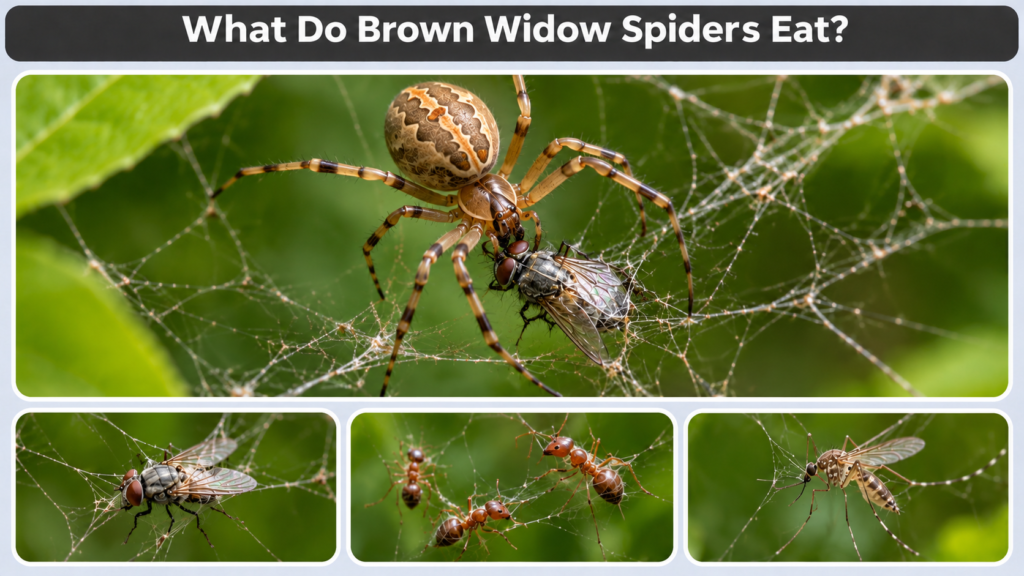
Brown widow spiders catch small insects and other arthropods in their webs. Depending on what is available, prey may include flies, mosquitoes, ants, and other small creatures. The spider waits for prey to become tangled in the web, then uses its fangs and silk to subdue it.
Like other spiders, brown widows play a role in the food web by eating insects. Their presence around a house does not automatically mean there is an infestation. A few webs in quiet outdoor corners may reflect suitable shelter and available prey. Repeatedly finding webs and egg sacs in places people use, however, is a reason to inspect and clean those areas.
How to Get Rid of Brown Widow Spiders
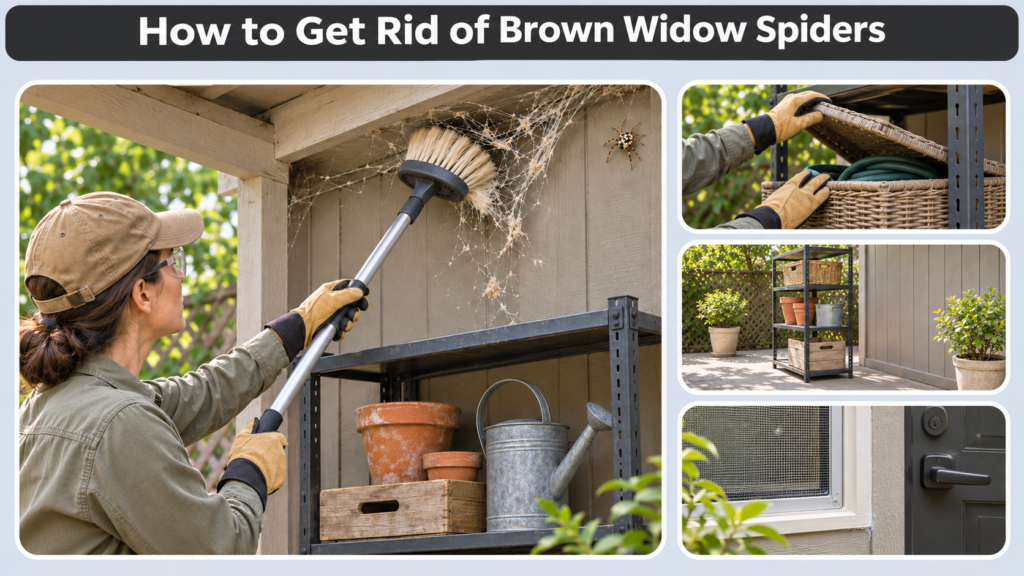
The safest way to reduce brown widow activity is to limit the sheltered places where they can build webs and lay egg sacs. Take care around clutter and dark corners, where the spider may be difficult to see. If you have a large number of spiders or webs, or someone in your household is at higher risk from a bite, contact a licensed pest professional.
Remove Webs and Egg Sacs Carefully
Wear gloves, long sleeves, and closed shoes when checking outdoor storage areas or moving items that have been undisturbed. Use a broom, vacuum with an extension attachment, or another tool to remove visible webs and sacs without reaching into them. Dispose of the collected material in a sealed bag.
Before putting on shoes, gloves, or stored clothing that has been left outside or in a shed, shake them out and inspect them. Avoid reaching blindly into boxes, patio furniture, or gaps around walls. If a web or egg sac is difficult to reach, or you cannot safely identify what you found, arrange professional help.
Reduce Hiding Places Around the Home
Move firewood, empty pots, unused containers, and other stored items away from walls where practical. Keep outdoor storage organized, trim vegetation that touches the house, and check sheltered areas such as under chairs, around sheds, and inside garages. Regularly sweeping corners and removing old webs can make it harder for spiders to establish themselves.
Seal gaps around doors and windows, repair damaged screens, and use outdoor lighting only where needed. Bright lights may attract insects, which can provide prey for spiders. These steps do not guarantee that brown widows will disappear, but they can reduce the number of quiet, insect-rich places where spiders settle.
When to Call a Pest Professional
Consider professional help if you repeatedly find brown widow spiders or egg sacs in areas where children, pets, or other household members might contact them. A professional can inspect likely hiding places, identify the spider, and recommend a control approach suited to the property.
Avoid spraying pesticides without checking the product label and confirming that it is intended for the specific location and pest. Broad, unnecessary pesticide use can affect people, pets, and beneficial insects. Web removal and reducing clutter are useful first steps, while a professional can advise whether additional treatment is appropriate.
Frequently Asked Questions
Are brown widow spiders poisonous?
Brown widow spiders are venomous, meaning they can inject venom through a bite. They generally avoid people, and bites are uncommon unless the spider is disturbed or trapped. A suspected widow bite should still be taken seriously, especially if pain spreads or other symptoms develop.
Do brown widow spiders bite people?
They can bite, but they are not usually aggressive. A bite is more likely if the spider is pressed against skin, such as inside clothing or a glove, or if someone handles it. Avoid touching the spider or its web, and seek medical advice if you suspect a bite.
How can I tell if a spider is a brown widow?
Brown widows are usually tan to dark brown, with a rounded abdomen and sometimes an orange or reddish marking underneath. Their most distinctive clue is a pale, round egg sac covered in small silk spikes. Because coloration varies, avoid relying on color alone to identify one.
Are brown widow spiders worse than black widows?
Brown widows and black widows are related, but brown widow bites are often reported to cause less severe symptoms. Individual reactions vary, and serious symptoms have been documented. Treat a suspected widow bite cautiously and contact a healthcare professional or poison center for advice.
Should I kill a brown widow spider?
You do not need to kill every spider you find. If a brown widow is in a place where someone could accidentally touch it, remove the web and spider carefully with a tool or get professional help. Avoid handling the spider or egg sac directly.
