
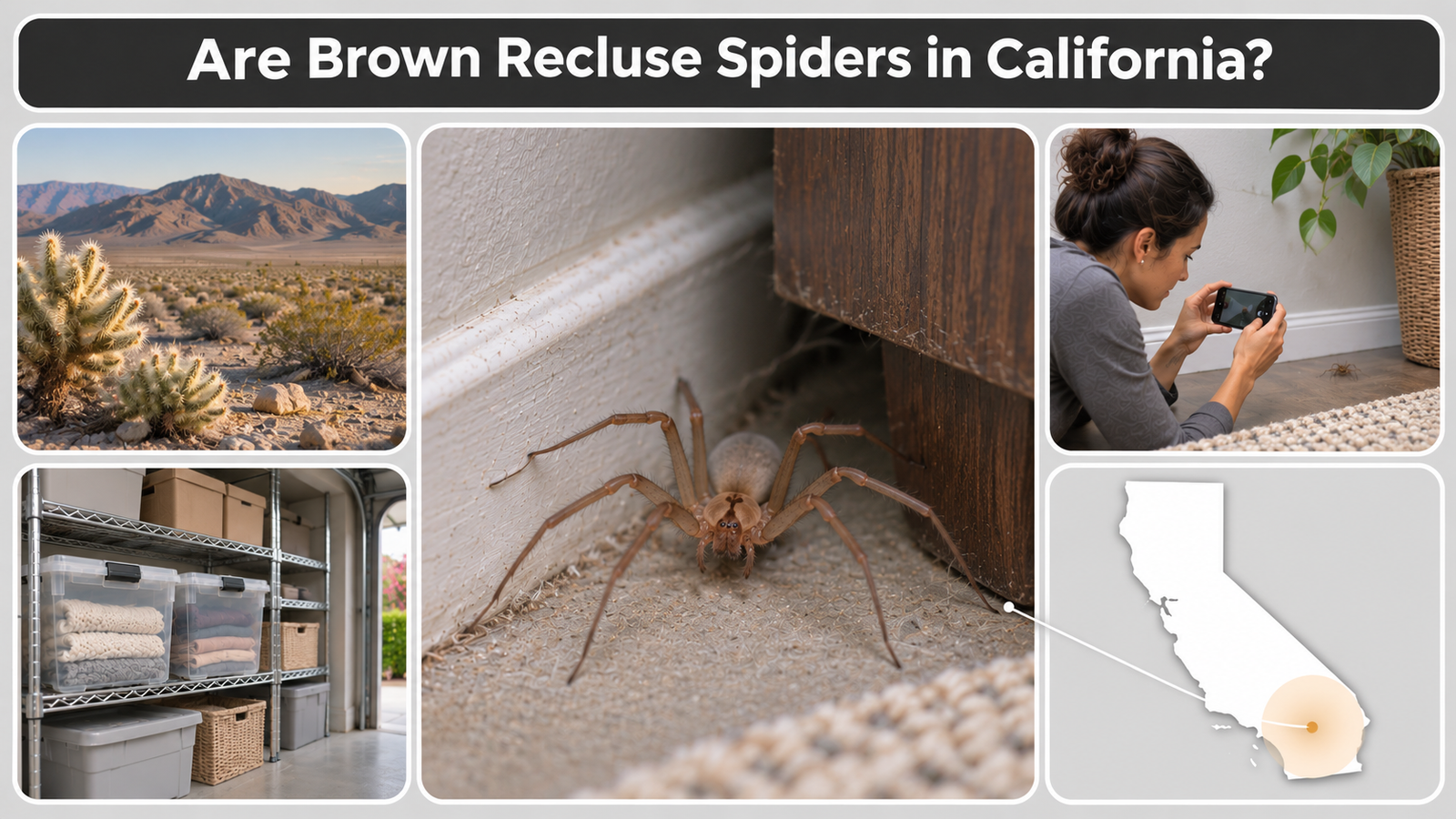
The brown recluse spider (Loxosceles reclusa) does not have an established population in California. Individual brown recluses have occasionally arrived in shipments or household belongings, but these rare arrivals have not formed a resident population. California does have other recluse spiders in limited areas, including the desert recluse in the southeast and a localized population of Chilean recluses in Los Angeles County. Knowing the difference can help you identify a spider more accurately and avoid mistaking a skin sore for a confirmed spider bite.
Are Brown Recluse Spiders Found in California?
The short answer is that brown recluse spiders are not established in California. State wildlife officials report no known populations of Loxosceles reclusa in the state. University of California’s pest guidance also notes that occasional spiders may arrive with goods or people moving from areas where the species is common, but these isolated arrivals have not established a population.
Could a Brown Recluse Be Brought Into California?
Yes, an individual spider can sometimes be transported accidentally in a box, piece of furniture, vehicle, or other belongings. This is different from having an established population. A lone spider arriving from another state does not show that brown recluses are living and reproducing throughout the surrounding area.
If you think you have found one, avoid handling it. Take a clear photo from a safe distance, noting where you found it, and ask a qualified spider expert, university extension office, or pest professional for help. A quick visual guess—especially one based on a brown color or violin-shaped marking—may be wrong.
Are There Recluse Spiders in California?
Yes. Although the brown recluse itself is not established in California, other spiders in the recluse genus Loxosceles occur in parts of the state. The desert recluse is native to the southeastern deserts. A separate species, the Chilean recluse, has a very localized, long-established presence in parts of Los Angeles County, including areas around Alhambra, Sierra Madre, Monterey Park, and San Gabriel.
These spiders are related to brown recluses, but they are not the same species. So the most accurate answer depends on what someone means by “brown recluse”: Loxosceles reclusa is not established in California, while other recluse species live in limited parts of the state.
Where Are Recluse Spiders Found in California?
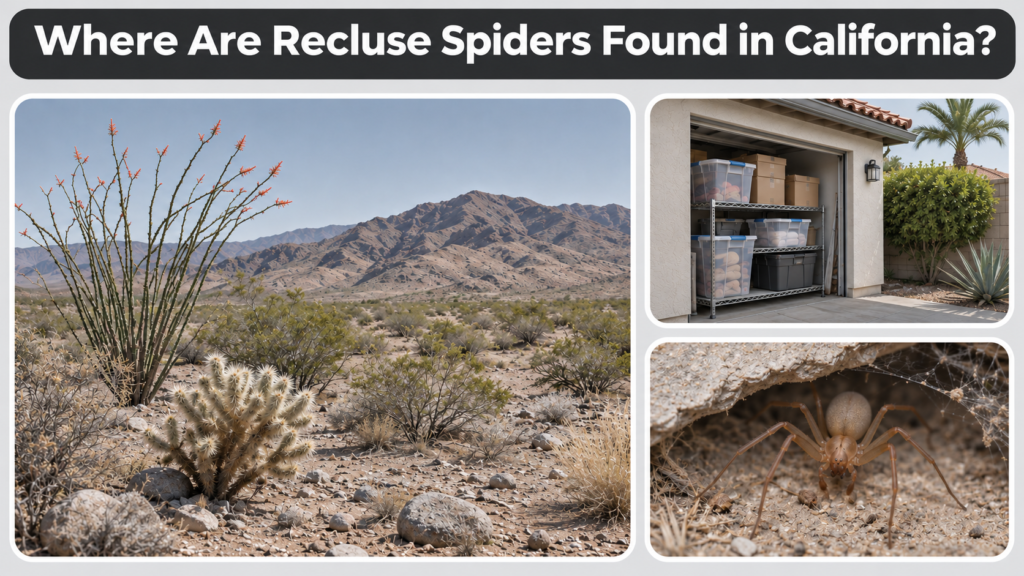
California’s recluse spiders are not spread evenly across the state. The desert recluse is associated with southeastern desert areas, while the Chilean recluse has a restricted range in Los Angeles County. Their presence in those places does not mean every brown spider found in Southern California is a recluse.
Desert Recluse in Southeastern California
The desert recluse (Loxosceles deserta) is native to parts of the southwestern United States, including southeastern California. It is generally associated with dry environments and sheltered spots. Like other recluses, it may hide in quiet spaces and is more likely to encounter people when disturbed or accidentally pressed against skin.
A desert recluse may resemble a brown recluse, and the two are related. But a spider’s color, size, or location alone is not enough for reliable identification. If you find a suspected recluse in the desert, leave it alone and seek expert identification rather than trying to inspect it closely.
Chilean Recluse in Los Angeles County
The Chilean recluse (Loxosceles laeta) is established in a small area of Los Angeles County. UC IPM describes the population as highly localized and says it has been present for decades rather than spreading throughout the state.
This does not mean that residents across Los Angeles County are likely to encounter the spider. Its known presence is limited, and many other local spiders can be mistaken for a recluse. A confirmed identification requires more than matching a spider to a photo online.
How to Identify a Brown Recluse Spider
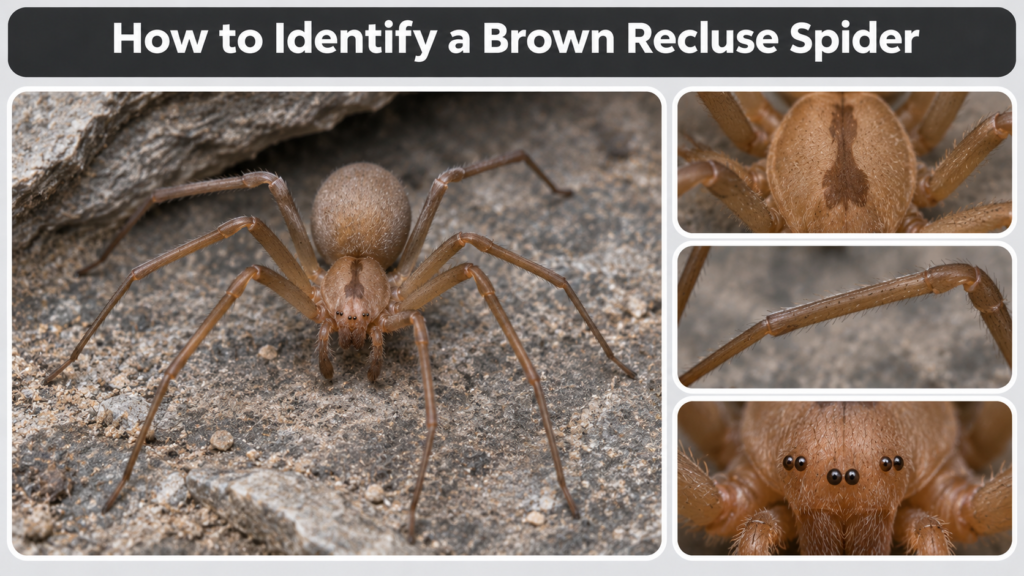
Brown recluses are usually light to medium brown, with plain-colored legs and a mostly uniform abdomen. They have six eyes arranged in three pairs. Many other spiders have eight eyes, but counting the eyes can be difficult without magnification and is best left to an expert.
Is the Violin Marking Reliable?
A dark violin-shaped mark on the body is often used to describe brown recluses, but it is not a reliable identification shortcut. People may interpret markings on unrelated spiders as violins, and some recluse spiders may have a faint or hard-to-see mark. The eyes, body features, location, and behavior all matter.
Avoid picking up a spider or trying to turn it over to inspect its eyes. A photo taken without touching it is safer. If the spider is in a place where someone might make contact with it, keep people and pets away and contact a professional.
Brown Spiders Commonly Mistaken for Recluses
California has many brown or tan spiders, and several are commonly misidentified as brown recluses. UC IPM notes that harmless spiders are frequently submitted for identification because their markings, color, or body shape seem to match a recluse. For example, the Mediterranean false wolf spider (Zoropsis spinimana) is found in parts of California and may be mistaken for a recluse because of a dark marking on its abdomen. That marking is in a different location from a recluse’s violin mark.
Other spiders can look similar at a glance. A brown color or a dark mark does not prove a spider is a recluse, and a spider found indoors is not automatically dangerous. When the identification matters, use an expert rather than relying on appearance alone.
Are Brown Recluse Spider Bites Common in California?
Brown recluse bites are not a common explanation for skin sores in California because the species is not established there. Even in places where brown recluses are common, a skin injury cannot be confidently identified as a spider bite from its appearance alone. Many conditions, including infections and other bites, can cause redness, swelling, pain, blisters, or ulcers.
Why Bite Reports Can Be Misleading
People may see a skin lesion and assume a spider caused it, especially if they have recently found a brown spider indoors. But seeing a spider in the home does not prove it caused a particular wound. In California, a diagnosis of a brown recluse bite should be considered carefully because the species is not established in the state and other causes may be more likely.
This distinction matters because a bacterial infection or another medical problem may need different treatment. A clinician can examine the wound and assess symptoms. Do not try to diagnose the cause by comparing a sore with online bite photographs.
What to Do About a Suspected Bite
Wash the area gently with soap and water, avoid scratching or cutting it, and contact a healthcare professional for advice if symptoms are worsening or you are concerned. Seek prompt medical care for a rapidly expanding wound, severe pain, fever, chills, vomiting, or other symptoms affecting the whole body. If possible, take a photo of the spider from a safe distance, but do not handle it to capture an image.
How to Reduce Spider Encounters at Home
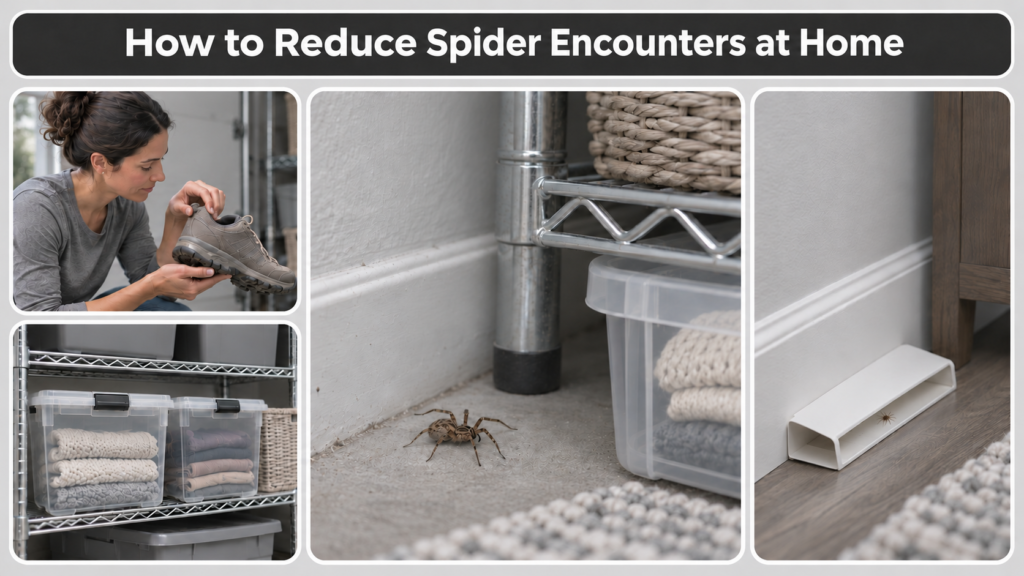
Simple housekeeping can reduce the number of hiding places available to spiders, whether or not a recluse is present. Focus on areas that stay undisturbed, such as storage rooms, garages, sheds, closets, and boxes. These steps also make it easier to notice spiders before reaching into a hiding place.
- Reduce clutter and store items in sealed plastic containers where practical.
- Shake out shoes, gloves, clothing, and bedding that have been stored or left unused.
- Wear gloves when moving firewood, boxes, or materials from sheds and garages.
- Move stored belongings carefully instead of reaching blindly behind or underneath them.
- Use sticky traps to monitor spider activity, placing them where children and pets cannot reach them.
- If you repeatedly find suspected recluse spiders, ask a licensed pest professional to inspect the area.
These steps can help prevent accidental contact, but they are not proof that a recluse spider is present. Correct identification is the first step before choosing a treatment plan.
Frequently Asked Questions
Are brown recluse spiders in Los Angeles?
Brown recluse spiders (Loxosceles reclusa) are not established in California. However, a small, localized population of the related Chilean recluse is known in parts of Los Angeles County. The two species are different, and most brown spiders found in Los Angeles are not necessarily recluses.
Are brown recluse spiders in Southern California?
The brown recluse is not established in Southern California. Other recluse species do occur in limited parts of the region: desert recluses in southeastern desert areas and Chilean recluses in a small area of Los Angeles County.
What spider is mistaken for a brown recluse in California?
Several brown spiders may be mistaken for a brown recluse, including the Mediterranean false wolf spider and other locally common spiders. A violin-like mark or brown color alone cannot confirm the identification. An expert can assess a clear photo or specimen.
Can a brown recluse spider bite happen in California?
An individual brown recluse could be accidentally transported into California, but such arrivals are rare and have not established a state population. A wound in California should not automatically be diagnosed as a brown recluse bite; other medical causes may be more likely.
What should I do if I find a suspected recluse spider?
Do not handle it. Keep children and pets away, take a photo from a safe distance if possible, and ask a qualified expert or pest professional to identify it. If someone has a worsening wound or whole-body symptoms, contact a healthcare professional promptly.
