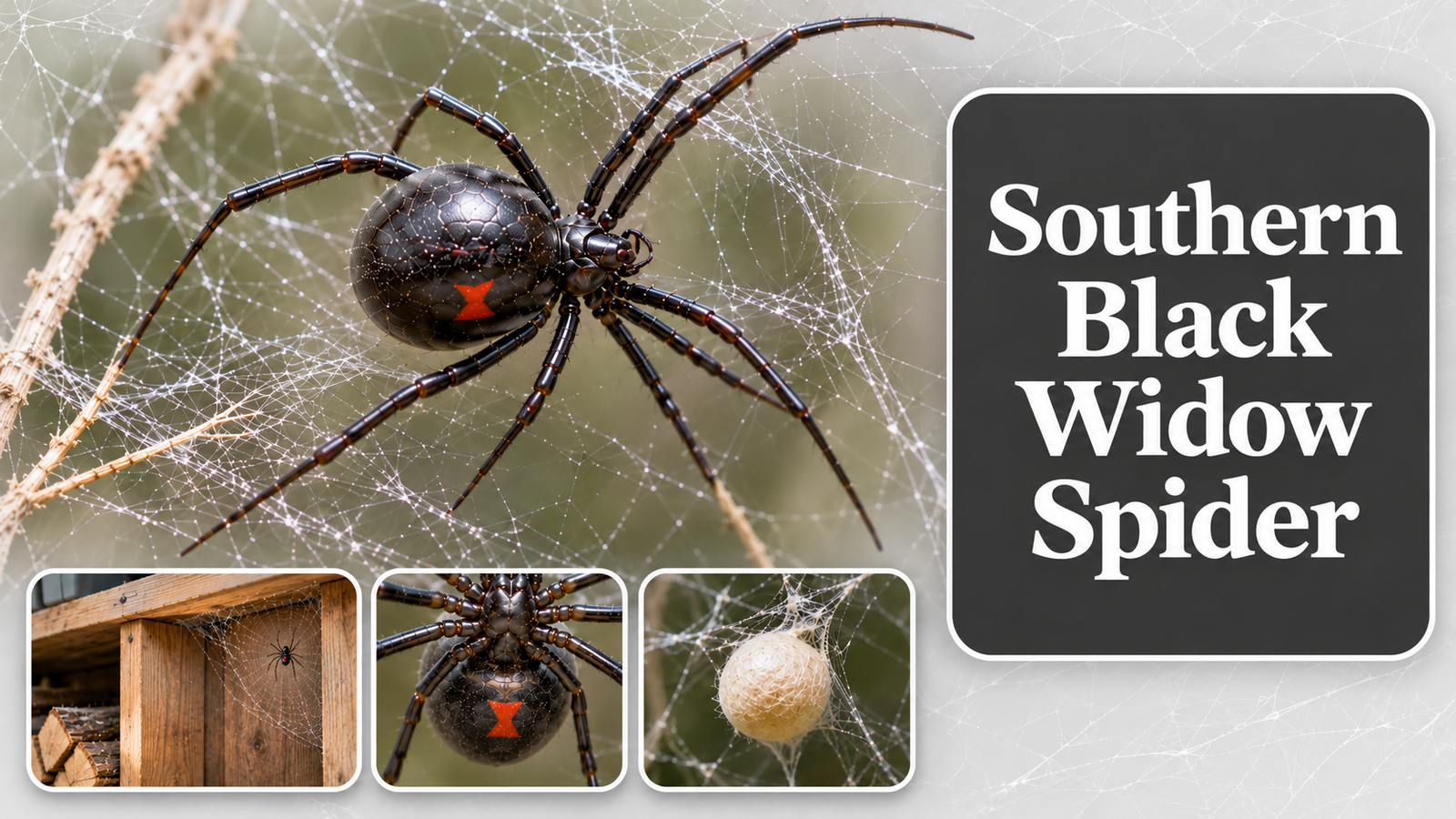
The southern black widow (Latrodectus mactans) is a venomous spider best known for the red hourglass marking on the underside of the adult female. It lives in sheltered places where its tangled web can catch insects, and it generally avoids people. A bite can cause significant pain and muscle cramps, although bites are uncommon and severe outcomes are rare. Learning how to identify this spider, where it hides, and what to do after a suspected bite can help you stay safe without disturbing it.
What Is a Southern Black Widow?
The southern black widow is one of North America’s best-known widow spiders. Its scientific name is Latrodectus mactans, and it belongs to the cobweb spider family, Theridiidae. The species is recognized by the adult female’s dark, rounded body and a red, orange, or sometimes yellowish hourglass-shaped marking on the underside of her abdomen. Markings can vary, so color should not be the only feature used for identification.
The spider’s common name can create a misleading impression that it actively hunts people. Southern black widows are not aggressive and usually bite only when threatened, trapped against skin, or handled. They are important predators of insects and other small arthropods, so their presence outdoors can be part of a healthy ecosystem.
Southern Black Widow Identification
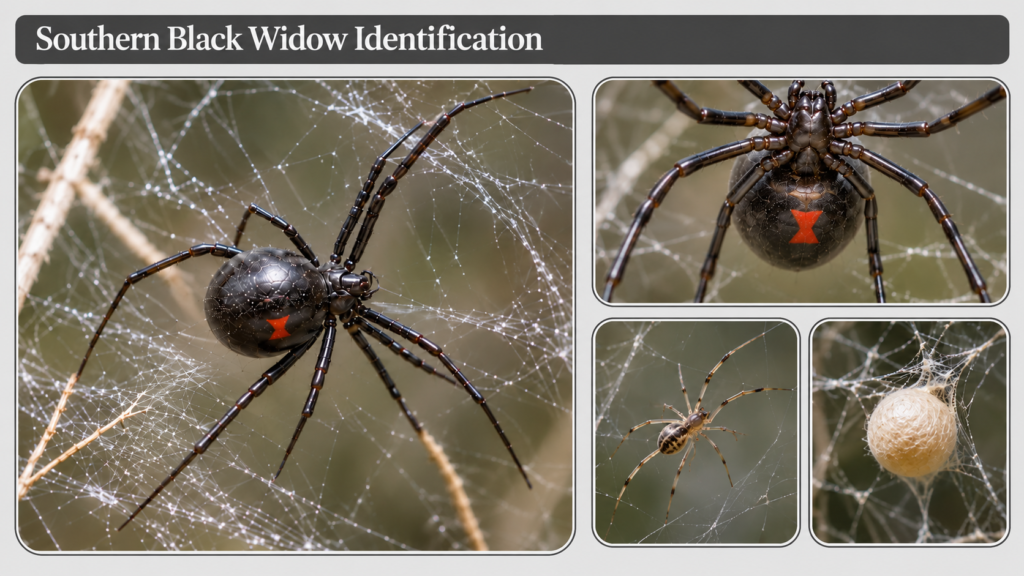
Adult females are the easiest to recognize. They have a shiny black body, long slender legs, and a bulbous abdomen. The body is often around half an inch long, with the legs making the spider appear larger. The familiar red hourglass is typically on the underside; it may be complete or split into two separate marks. Some females also have small red markings near the rear of the abdomen.
Female, Male, and Juvenile Spiders
Female southern black widows are much larger and darker than males. Adult males are smaller, often lighter brown or gray, and may have pale bands or spots along the abdomen. Young spiders can show orange, red, or white markings that fade or change as they mature. These differences mean a spider that lacks the classic adult female appearance may still be a widow.
Avoid picking up a spider to check its underside. If identification is important, take a photograph from a safe distance and ask a local extension service or pest professional. A web or an egg sac can suggest widow activity, but neither alone confirms the species.
Egg Sacs and Webs
Southern black widows make irregular, tangled webs rather than neat, circular orb webs. Their silk can be unusually strong. The spider often stays in a retreat near the web, especially in a dark crevice or protected corner. Egg sacs are usually round or pear-shaped and pale cream to tan. A female may produce several egg sacs, each containing many eggs. Do not touch a sac or web; a nearby female may defend herself if disturbed.
Where Do Southern Black Widows Live?
The southern black widow is native to the southeastern United States and is also reported in other parts of the country and nearby regions. Its range can overlap with other widow species, so the name “black widow” does not always identify the exact species. Local records and expert identification are useful when a precise location or species matters.
This spider favors warm, sheltered, undisturbed spots. Outdoors, it may be found beneath rocks, in woodpiles, brush piles, hollow stumps, sheds, crawl spaces, outdoor furniture, and the underside of objects left on the ground. Around buildings, it can occupy garages, storage areas, outhouses, and spaces around foundations. It may also hide in gloves, boots, or equipment that has been left unused.
Black widows are most active at night, but people can encounter them while moving stored items during the day. They tend to remain close to their webs rather than roam across open floors. A spider found in a garage does not mean the entire home is infested; it may be living in one undisturbed corner.
What Do Southern Black Widows Eat?
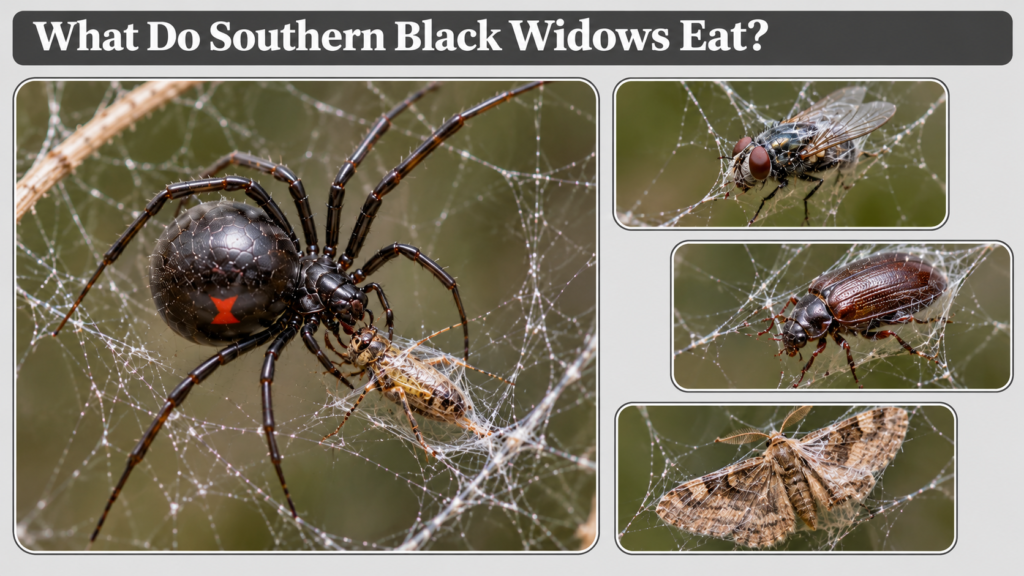
Southern black widows feed mainly on insects and other small invertebrates that become caught in their webs. Their prey can include flies, mosquitoes, beetles, moths, and other spiders. Once prey is trapped, the spider uses silk to restrain it and venom to subdue it before feeding.
By capturing insects, black widows contribute to natural pest control. They are not beneficial to handle or keep near high-traffic areas, but outdoor spiders do not need to be killed simply because they exist. If a web is in a place where people may accidentally contact it, manage the area carefully or call a pest professional.
Are Southern Black Widow Spiders Dangerous?
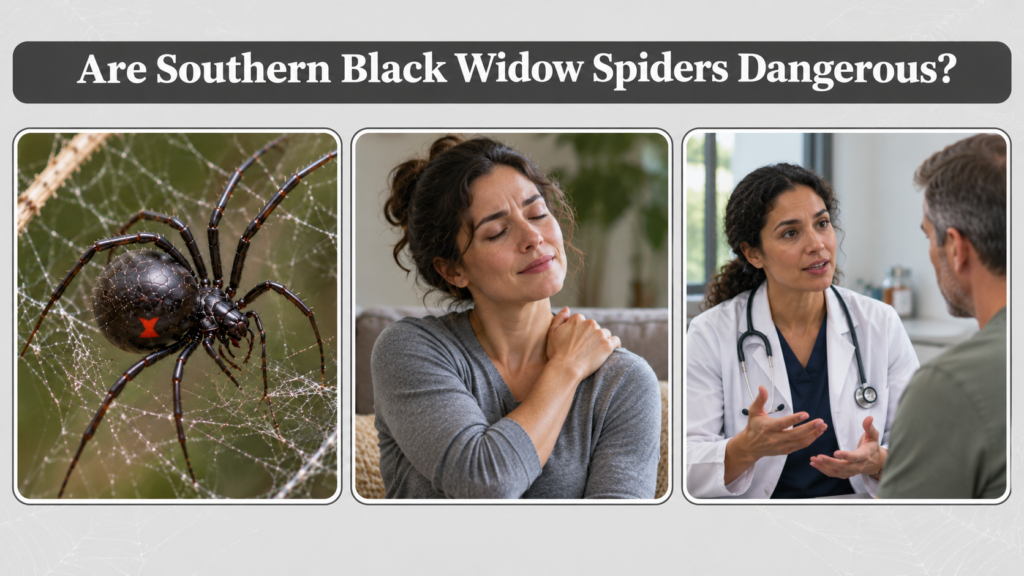
Southern black widows are venomous, but they do not typically seek out people. Bites usually occur when the spider is pressed against skin or feels threatened. The venom can affect the nervous system and lead to pain and muscle symptoms. The risk from a bite depends on factors such as the amount of venom injected and the person’s age and health.
A bite may initially feel like a pinprick or may go unnoticed. Local pain, redness, or swelling can occur, followed by pain that spreads and muscle cramps. Other possible symptoms include abdominal or back pain, sweating, nausea, vomiting, restlessness, headache, or increased blood pressure. Symptoms can start within an hour, though timing varies.
A bite mark alone cannot reliably confirm that a black widow was responsible. Many skin conditions and other bites can look similar. Do not assume a painful or infected-looking spot is a spider bite without medical assessment.
What to Do After a Suspected Bite
Wash the bite area gently with soap and water. Keep the person calm and seek medical advice, especially if pain spreads, cramps develop, or the person is a child, an older adult, or has a serious health condition. Call local emergency services for trouble breathing, collapse, severe weakness, or rapidly worsening symptoms. Follow local poison-control or medical guidance, since services vary by country.
A wrapped cold pack may ease local discomfort; do not place ice directly on the skin. Do not cut or squeeze the bite, suck out venom, apply a tight tourniquet, or try to capture the spider. A photo from a safe distance may help identification, but do not delay care to get one. Medical professionals can assess symptoms, provide pain relief and supportive care, and decide whether further treatment is needed. Antivenom is used only in selected cases under medical supervision.
How to Prevent Encounters
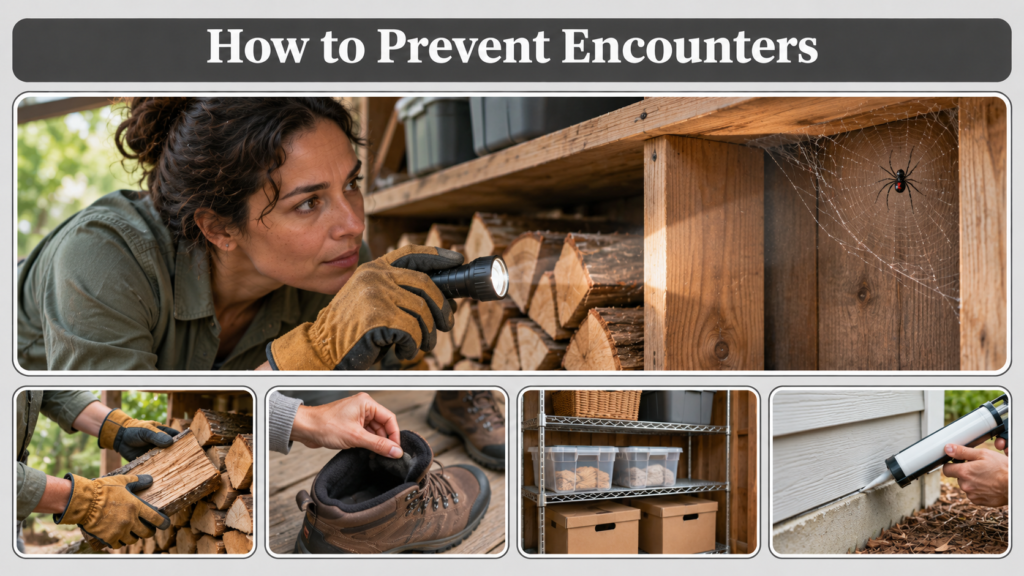
Reduce clutter in garages, sheds, basements, and storage areas so hidden corners are easier to inspect. Wear gloves when moving firewood, rocks, boxes, or outdoor equipment. Shake out shoes, boots, gloves, and clothing that have been stored in a shed or garage before putting them on. Avoid reaching blindly into dark crevices or under objects; use a tool or flashlight to check first.
Keep woodpiles and debris away from doors and frequently used paths where possible. Seal gaps around foundations, doors, windows, and utility openings to limit access indoors. If you find repeated webs in a high-traffic area, or are uncertain about safe removal, contact a qualified pest-control professional. Follow pesticide labels exactly and avoid applying chemicals where children or pets may come into contact with them.
Southern Black Widow vs. Other Black Widows
The southern black widow is one of several closely related widow spiders. In the United States, the northern black widow and western black widow can also be encountered. They share the general widow shape and can have red or orange markings, but the markings, color patterns, and geographic ranges differ. Brown widows are usually tan or mottled and often have an orange hourglass; their egg sacs are notably spiky, unlike the smoother sacs often associated with black widows.
Because species overlap and markings vary, visual identification from a quick glance may be unreliable. For most people, the important practical point is to avoid handling any widow spider and to seek care for concerning symptoms after a suspected bite. Exact species identification is best left to a qualified expert using a clear photograph or specimen handled safely.
Frequently Asked Questions
Is the southern black widow the same as a black widow?
It is one species commonly called a black widow. Its scientific name is Latrodectus mactans. Other related species, including northern and western black widows, also occur in North America, and their ranges and markings differ.
How can I identify a female southern black widow?
Look for a shiny black body, a rounded abdomen, long legs, and a red or orange hourglass marking on the underside. The marking can vary in shape or color. Do not handle a live spider to inspect it; use a distant photo or consult an expert.
Where do southern black widows make their webs?
They build irregular, tangled webs in sheltered, undisturbed places such as woodpiles, sheds, garages, crawl spaces, outdoor furniture, and beneath stored objects. They generally stay near the web and retreat into a nearby crevice.
What happens if a southern black widow bites you?
A bite may cause local pain and, in some cases, spreading pain, muscle cramps, sweating, nausea, or abdominal discomfort. Symptoms vary. Seek medical advice for a suspected bite and urgent care for severe or worsening symptoms.
Should I kill a southern black widow if I find one?
Avoid handling it. If it is outdoors and away from people, leaving it undisturbed may be reasonable. If it is in a high-traffic area or you find repeated spiders, ask a pest professional about safe control, especially when children or pets are present.
