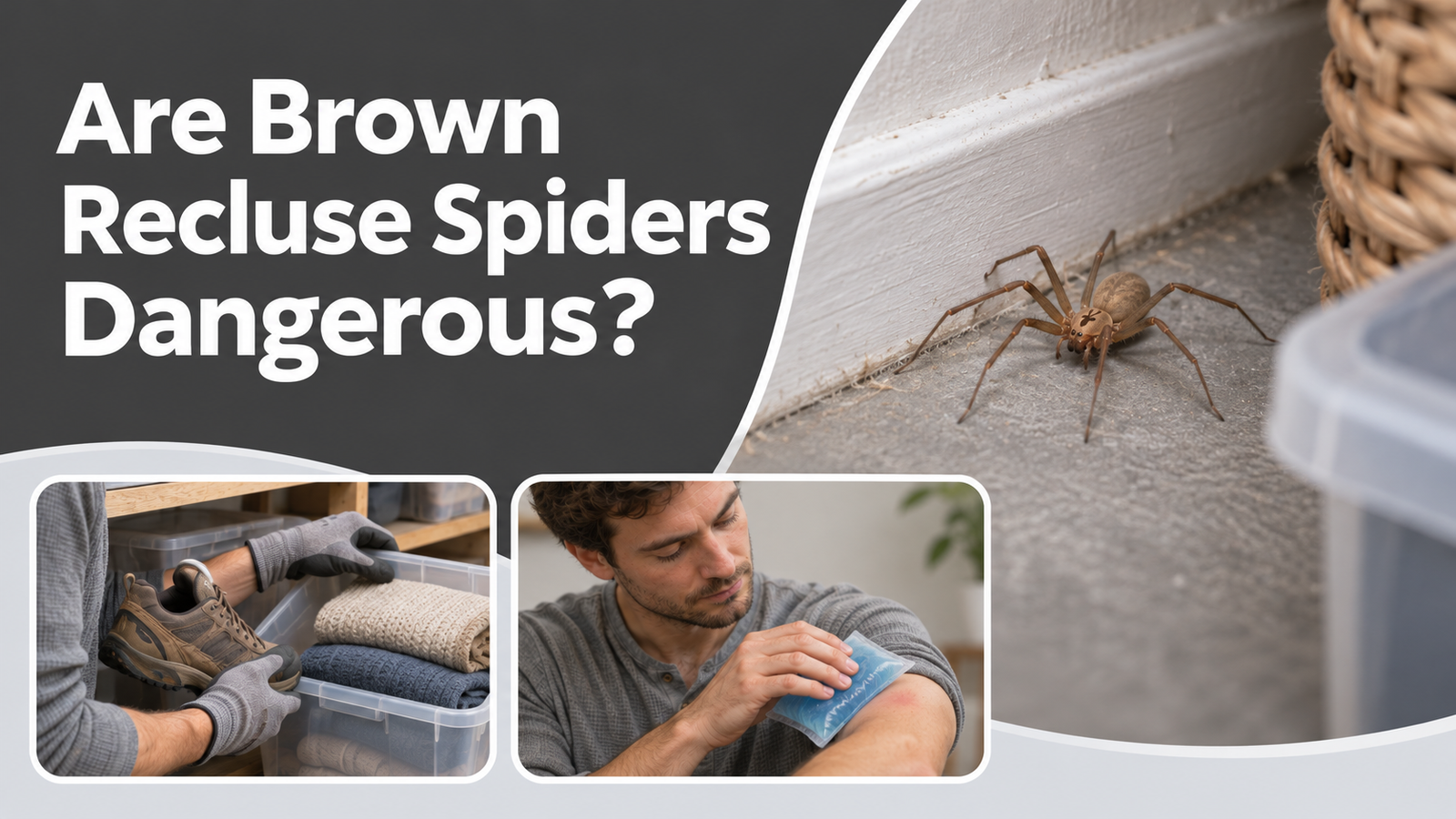
Brown recluse spiders can be dangerous because their venom may damage skin and, rarely, cause serious illness. However, bites are uncommon, and many injuries blamed on brown recluse spiders have another cause. Knowing where these spiders live, how to identify them, and what to do after a suspected bite can help you respond calmly and avoid unnecessary panic.
How Dangerous Are Brown Recluse Spiders?
A brown recluse bite can cause a painful skin wound, but severe reactions are rare. The spider is usually shy and bites when trapped against skin or disturbed. Risk also depends on where you live: brown recluse spiders are native mainly to parts of the central and southern United States, so a suspected bite elsewhere is less likely to be from this species.
What Makes a Brown Recluse Bite Dangerous?
Brown recluse venom can damage tissue around the bite. In some cases, the affected area develops an open sore or an area of dead skin, called necrosis. More serious reactions can affect the rest of the body, but they are uncommon. Death is very rare.
Brown recluse spiders do not usually bite people on purpose. Bites are more likely when a spider is pressed against skin—for example, inside a shoe, glove, or piece of clothing—or when someone reaches into a dark storage space where it is hiding. A bite may not be noticed right away.
Are Brown Recluse Bites Common?
Brown recluse spiders are often misidentified, and skin problems attributed to their bites may have other causes. Bacterial infections, other bites, and some medical conditions can produce similar redness, swelling, or sores. Without seeing and correctly identifying the spider, it can be difficult to know whether a brown recluse was responsible.
Location matters, too. Brown recluse spiders are not established everywhere, and many regions have no resident population. If you are outside their known range, do not assume that a wound is a brown recluse bite simply because it looks unusual. A healthcare professional can assess the wound and consider other possible causes.
How to Identify a Brown Recluse Spider
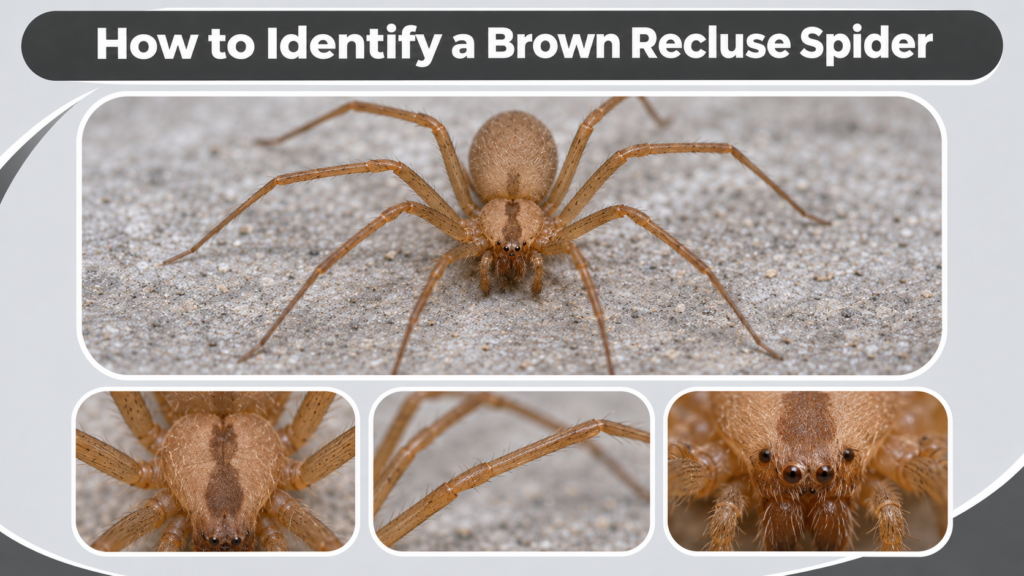
Brown recluse spiders are small, usually light to medium brown, and prefer undisturbed places. Their best-known feature is a dark violin-like marking on the body behind the head, but color and markings alone are not enough for a reliable identification. Several other brown spiders have similar markings.
Look for More Than the Violin Mark
The brown recluse, Loxosceles reclusa, has six eyes arranged in three pairs. Most spiders have eight eyes, so the eye pattern can help specialists identify a recluse. Its legs are generally plain and lack the prominent spines or bands seen on many other species.
These details can be difficult to inspect on a moving spider, so do not pick one up or try to examine it closely. A clear photo taken from a safe distance may help an expert identify it. If you find a suspected brown recluse in a region where the species is not normally present, ask a local university extension office or pest professional to check the identification.
Where Brown Recluse Spiders Hide
Brown recluses prefer dry, dark, quiet spaces. Indoors, they may hide in closets, cabinets, basements, attics, boxes, or behind stored items. Outdoors, they may be found in sheds, woodpiles, and other sheltered spots.
They are called “recluse” spiders because they tend to avoid open, busy areas. Finding one in a storage space does not necessarily mean a home has a large infestation. Still, repeated sightings or spiders found where people sleep, dress, or store clothing are reasons to inspect carefully.
Brown Recluse Spider Bite Symptoms
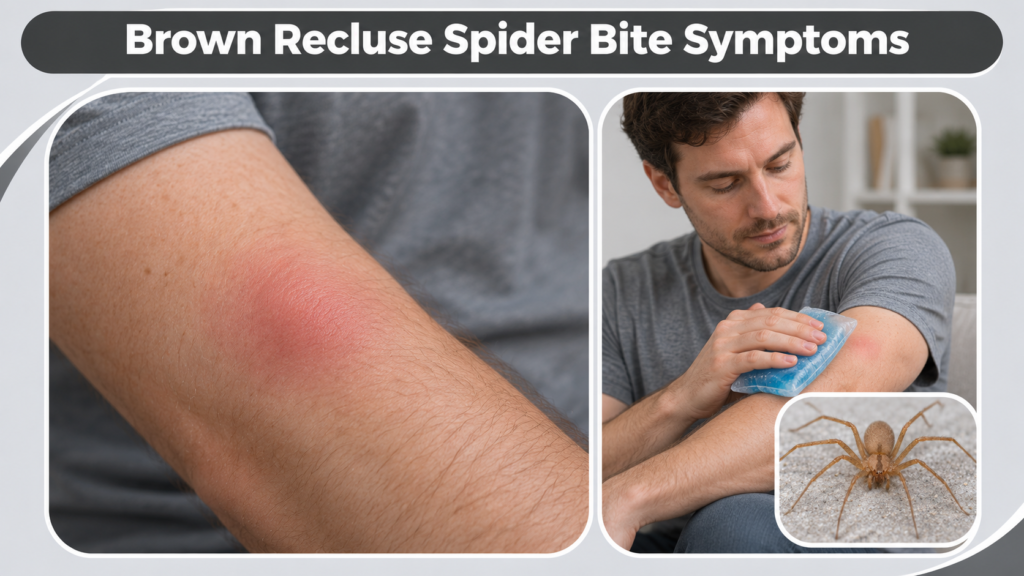
A brown recluse bite may initially go unnoticed or feel like a mild sting. Symptoms can change over time, so watch the area rather than relying on how it feels immediately after the bite. A suspected bite should be assessed by a medical professional if pain worsens, the wound changes significantly, or other symptoms appear.
Early Signs of a Bite
The skin may become red, tender, itchy, or swollen. A small blister can develop, sometimes with a pale center and darker surrounding redness. Some people feel a burning sensation, while others notice little at first. These signs are not unique to brown recluse bites and cannot confirm the spider species on their own.
Possible Skin and Whole-Body Symptoms
In a more serious local reaction, a blister may break and leave an ulcer or a wound that takes time to heal. The damaged area can enlarge, but a sore that looks severe is not proof that a brown recluse caused it. Infections and other conditions can resemble a spider bite and need proper evaluation.
Rarely, symptoms can extend beyond the bite area. These may include fever, chills, nausea, vomiting, or muscle aches. Seek prompt medical advice if these symptoms occur after a suspected bite. Severe illness, rapidly worsening symptoms, or difficulty breathing requires emergency care.
What to Do After a Suspected Brown Recluse Bite
If you think a brown recluse may have bitten you, focus on basic wound care and getting appropriate medical advice. Do not wait for a wound to become severe before contacting a healthcare professional, especially if the person bitten is a child or has a health condition that may increase risk.
First Aid Steps
Wash the area gently with soap and water, then cover it with a clean, nonstick bandage. A cool compress may ease discomfort. Avoid cutting or squeezing the wound, applying harsh substances, or trying home treatments that could irritate the skin.
If possible, take a photo of the spider from a safe distance. Do not handle or trap it with bare hands. If no spider was seen, tell the clinician that the bite is suspected rather than confirmed. This helps prevent a mistaken diagnosis from delaying treatment for another problem.
When to Get Medical Care
Contact a healthcare professional or poison center for guidance if you suspect a brown recluse bite. Get medical care promptly if the wound is worsening, pain is increasing, or a blister or open sore develops. Fever, chills, vomiting, or severe muscle aches are additional reasons to seek prompt attention. For a severe reaction or emergency symptoms, use your local emergency services.
There is no simple home antidote for brown recluse venom. Medical care focuses on evaluating the wound, managing symptoms, and watching for complications such as infection. A clinician can also check whether your tetanus vaccination is up to date.
How to Reduce the Risk of Brown Recluse Bites
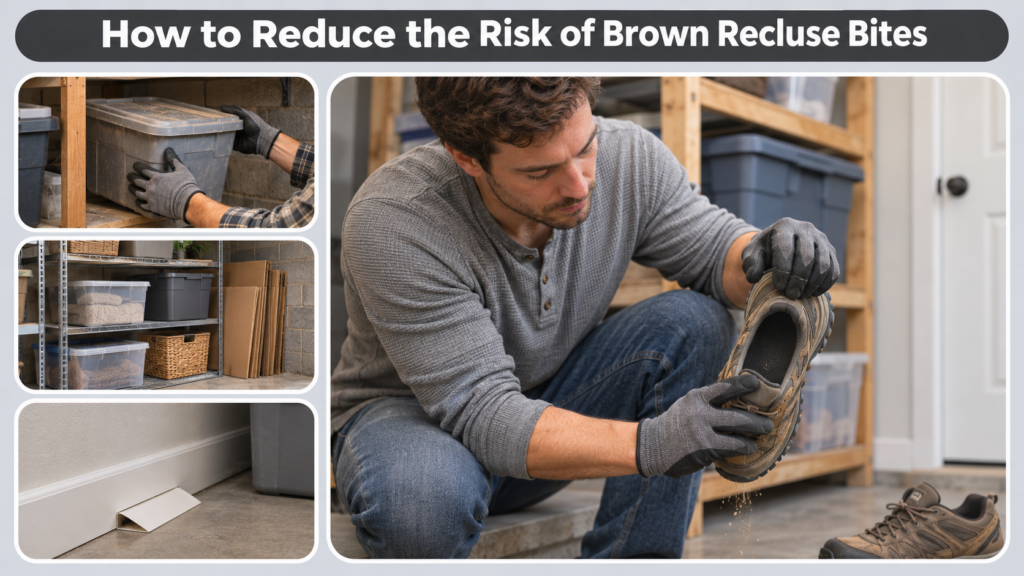
Brown recluse bites usually happen when a spider is accidentally pressed against skin. A few habits can reduce that chance, particularly if you live in an area where the spider is established or are handling items that have been stored for a long time.
- Shake out shoes, gloves, clothing, and blankets that have been stored or left unused.
- Wear gloves when moving boxes, firewood, or clutter in sheds, basements, and attics.
- Reduce piles of cardboard, paper, and stored belongings where spiders can hide.
- Move beds and furniture slightly away from walls where practical, and keep bedding from touching the floor.
- Use sticky traps along walls to monitor for spiders, placing them where children and pets cannot reach them.
- Contact a pest professional if you repeatedly find suspected brown recluses indoors.
Avoid reaching blindly into dark gaps or containers. Move stored items carefully before handling them. If you suspect an infestation, a pest professional can inspect the home and recommend targeted control measures.
Frequently Asked Questions
Can a brown recluse spider kill a human?
A brown recluse bite can cause tissue damage and, rarely, serious illness, but deaths are very rare. Most suspected bites do not result in a life-threatening reaction. Get medical advice if you think you were bitten, particularly if symptoms spread beyond the bite area.
How can I tell if a wound is a brown recluse bite?
A wound’s appearance alone cannot confirm a brown recluse bite. Infections, other bites, and medical conditions can look similar. Identification is more reliable if the spider is photographed or captured safely and assessed by an expert.
Do brown recluse spiders chase or attack people?
No. Brown recluse spiders are generally shy and avoid people. A bite is more likely when a spider is accidentally trapped against skin or disturbed in a hiding place, such as clothing, shoes, boxes, or stored items.
What should I avoid doing after a suspected bite?
Do not cut, squeeze, or burn the wound, and avoid applying harsh chemicals or unproven remedies. Wash it gently with soap and water, cover it with a clean bandage, and contact a healthcare professional or poison center for advice.
Are brown recluse spiders found everywhere?
No. Brown recluses are native mainly to parts of the central and southern United States, and they are not established in many other regions. If you live outside their usual range, a suspected bite is more likely to have another cause, though a professional can help assess it.
