
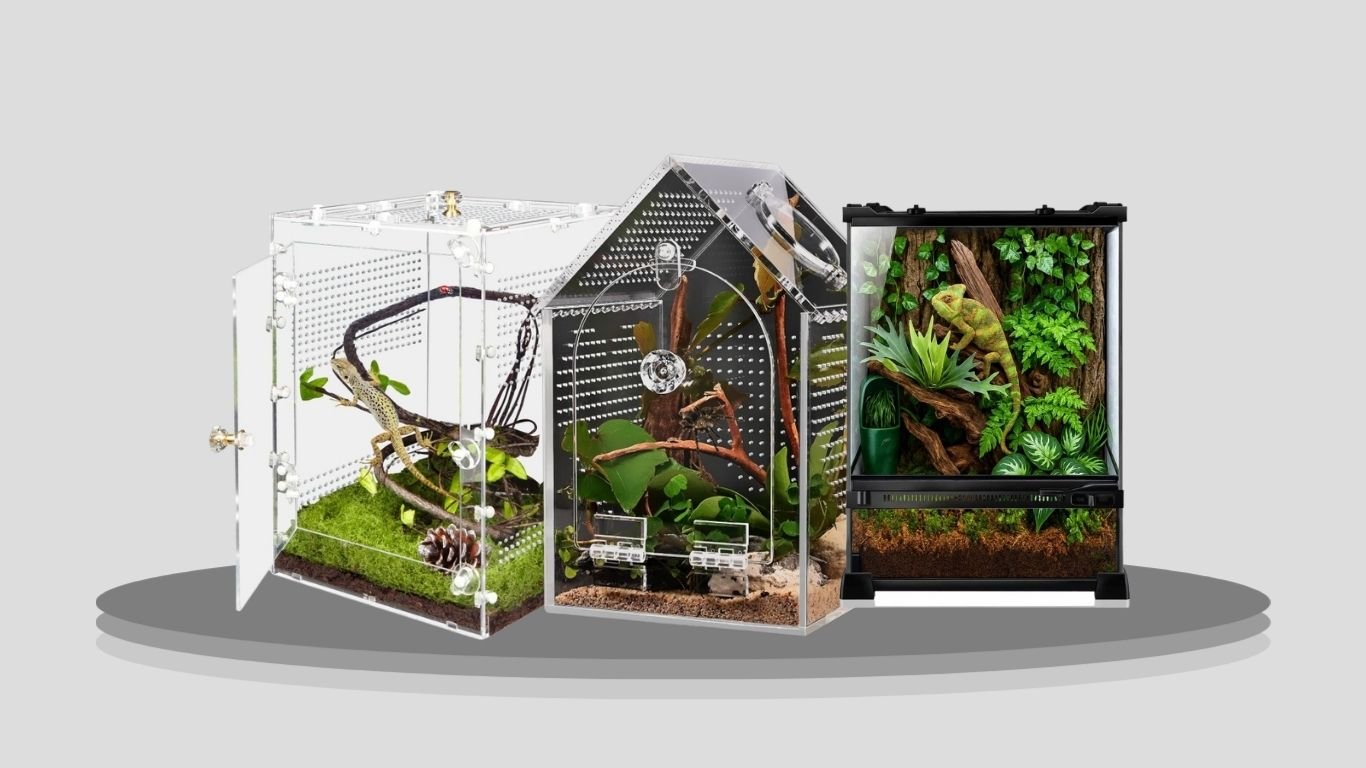
Choosing the right enclosure is essential for keeping a terrestrial tarantula safe, comfortable, and easy to observe. A good setup should provide secure ventilation, enough floor space, proper substrate depth, and an escape-resistant design without creating unnecessary climbing height. Whether you keep a beginner-friendly species or a larger adult tarantula, the enclosure plays a major role in maintaining proper humidity and reducing stress. In this guide, we review 10 of the best terrestrial tarantula enclosures based on construction, ventilation, accessibility, size, and overall practicality.
1. MaryCarrie Transparent Tarantula Enclosure
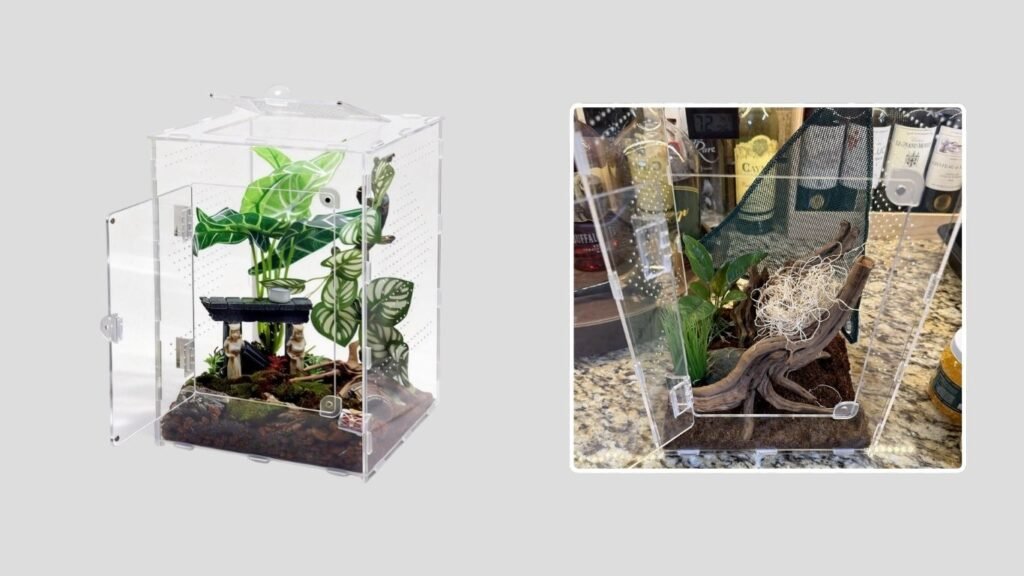
The MaryCarrie Tarantula Enclosure is a practical choice for keepers who want a clear, well-ventilated habitat for terrestrial tarantulas and other small invertebrates. Its transparent construction makes everyday observation easier, while the compact 8.5 × 8.5 × 12-inch design provides useful space for substrate, hides, and basic enclosure décor. For keepers building a neat display setup, it combines visibility with straightforward habitat management.
Key Features
- Approximate dimensions of 8.5 × 8.5 × 12 inches
- Transparent enclosure for easy viewing
- Multiple ventilation openings for improved airflow
- Suitable for tarantulas and other small invertebrates
- Space for deep substrate, hides, and décor
- Compact design for shelves, desks, or reptile racks
- Clear construction helps with routine monitoring
Why It Works Well for Terrestrial Tarantulas
A terrestrial tarantula generally benefits more from usable ground space and adequate substrate depth than excessive climbing height. This MaryCarrie enclosure offers a manageable footprint that can be arranged with substrate, cork bark, artificial foliage, and a shallow water dish. The clear walls also make it easier to monitor feeding activity, burrowing, and general behavior without constantly opening the habitat.
Its ventilated construction is particularly useful because airflow helps prevent the enclosure from becoming overly stagnant. With the correct substrate and moisture routine, keepers can create a more balanced environment suited to many commonly kept terrestrial species.
Practical Design and Everyday Maintenance
The transparent walls simplify visual inspections, making it easier to notice uneaten prey, leftover food, webbing, or changes in substrate condition. Its compact size also makes spot-cleaning and enclosure rearrangement relatively straightforward.
Because the enclosure is not excessively large, it can be particularly convenient for juvenile or medium-sized tarantulas when appropriately matched to the spider’s size. Keepers can also add sufficient substrate to reduce unnecessary climbing distance and create a more natural ground-oriented setup.
Overall Value for Tarantula Keepers
The MaryCarrie enclosure stands out as a functional option for keepers who prioritize visibility, ventilation, and straightforward habitat organization. Its clear construction produces an attractive display while still supporting the essential elements of terrestrial tarantula husbandry.
For someone seeking a compact enclosure that can accommodate deep substrate, hiding areas, and simple décor without taking up excessive space, this model provides a practical balance of presentation and everyday usability.
2. HELIME Polycarbonate Tarantula Terrarium
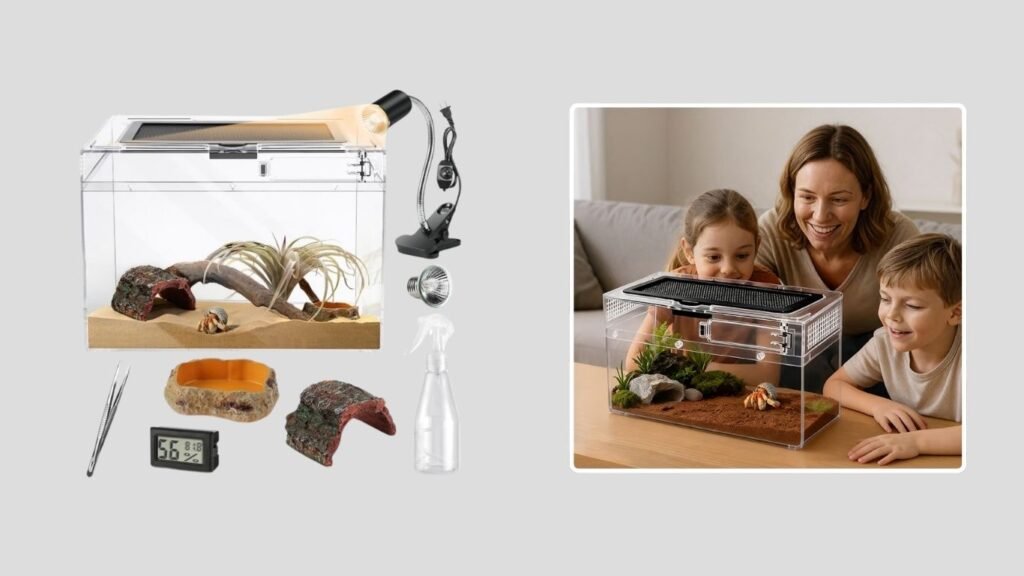
The HELIME Polycarbonate Terrarium is designed for keepers who want a sturdy, escape-resistant habitat with clear viewing and practical environmental monitoring. Its polycarbonate construction offers better impact resistance than thin acrylic, while integrated ventilation supports airflow throughout the enclosure. For terrestrial tarantulas, the setup can be customized with deep substrate, a hide, and a water dish to create a secure ground-focused habitat.
Key Features
- Durable polycarbonate construction
- Clear panels for easy observation
- Escape-resistant enclosure design
- Integrated ventilation openings
- Includes hygrometer for humidity monitoring
- Suitable for tarantulas and small reptiles
- Easy access for feeding and maintenance
Why It Works Well for Terrestrial Tarantulas
This enclosure is especially useful for keepers who want to monitor both the animal and enclosure conditions without constantly disturbing the setup. The included hygrometer makes it easier to track humidity levels, while the ventilated design helps reduce stagnant air.
For terrestrial tarantulas, the interior can be filled with a generous layer of substrate to encourage natural digging and burrowing behavior. Adding cork bark or another low hide creates a more secure retreat and helps reduce unnecessary exposure.
Durability and Daily Usability
Polycarbonate gives this enclosure a solid feel while maintaining excellent visibility. It is less prone to cracking than some thin plastic habitats, which can make it a better option for long-term use. The smooth interior surfaces are also relatively simple to wipe clean during routine maintenance.
The clear construction helps keepers monitor molts, feeding responses, and webbing activity with minimal disturbance.
Overall Value for Keepers
The HELIME terrarium offers a good combination of durability, ventilation, and environmental monitoring. It is particularly appealing for keepers who prefer an enclosure that feels more substantial than lightweight acrylic alternatives.
With proper substrate depth and interior arrangement, it can provide a secure and manageable environment for a wide range of terrestrial tarantulas.
3. Vertical Rainforest Reptile and Tarantula Terrarium
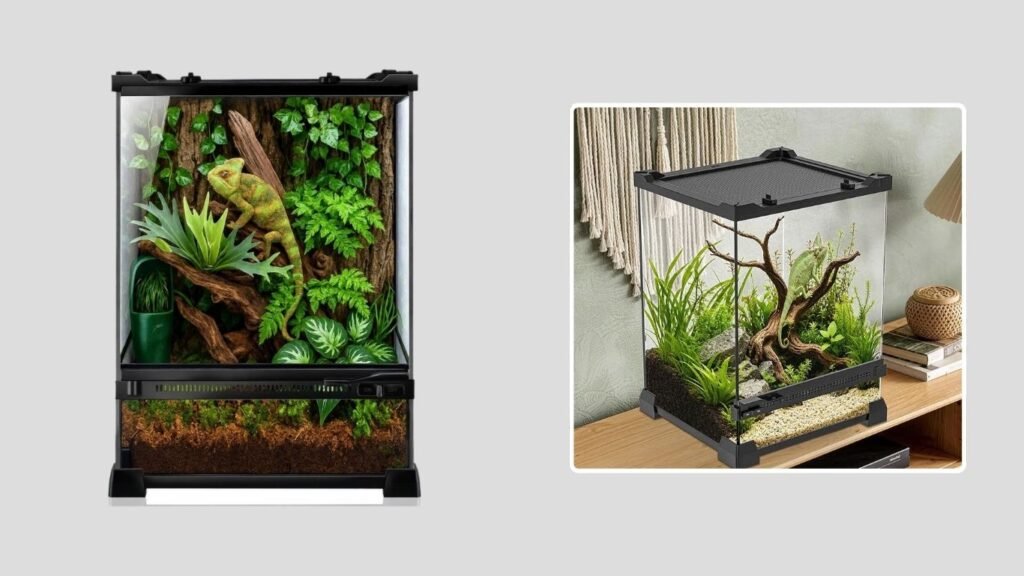
This vertical-style terrarium offers a spacious interior and clear viewing panels that can be adapted for tarantula keeping. Although taller enclosures require careful setup for terrestrial species, adding a deep substrate layer can reduce fall risk while making excellent use of the available interior volume. Its roomy design also allows keepers to create a more naturalistic habitat.
Key Features
- Spacious transparent terrarium
- Vertical enclosure design
- Ventilation for continuous airflow
- Room for substrate, cork bark, and décor
- Suitable for spiders and small reptiles
- Easy viewing from multiple angles
- Can support naturalistic enclosure layouts
Why It Works Well for Terrestrial Tarantulas
The main advantage of this enclosure is flexibility. Its added height allows keepers to build up a thick substrate layer, which is particularly useful for species that like to dig or create shallow burrows.
Once the substrate is raised appropriately, the usable floor area can become safer and more suitable for terrestrial tarantulas. Decorative cork bark, artificial plants, and leaf litter can also be positioned without overcrowding the habitat.
Setup Flexibility and Maintenance
The transparent panels make it easy to inspect the enclosure from different angles, which can be helpful when a tarantula remains partially hidden. Ventilation helps keep air moving, while the open interior makes basic cleaning and rearrangement relatively straightforward.
Because of its height, careful interior planning is important. Keeping climbing distances low is especially important for heavy-bodied terrestrial species.
Overall Value for Keepers
This enclosure is best suited to keepers who enjoy customizing habitats and want more vertical interior space for deep substrate. When arranged correctly, it can create an attractive display that still supports terrestrial behavior.
Its spacious layout gives keepers room to build a visually appealing, functional environment rather than a bare basic enclosure.
4. Cycodo Warp-Proof Tarantula Terrarium
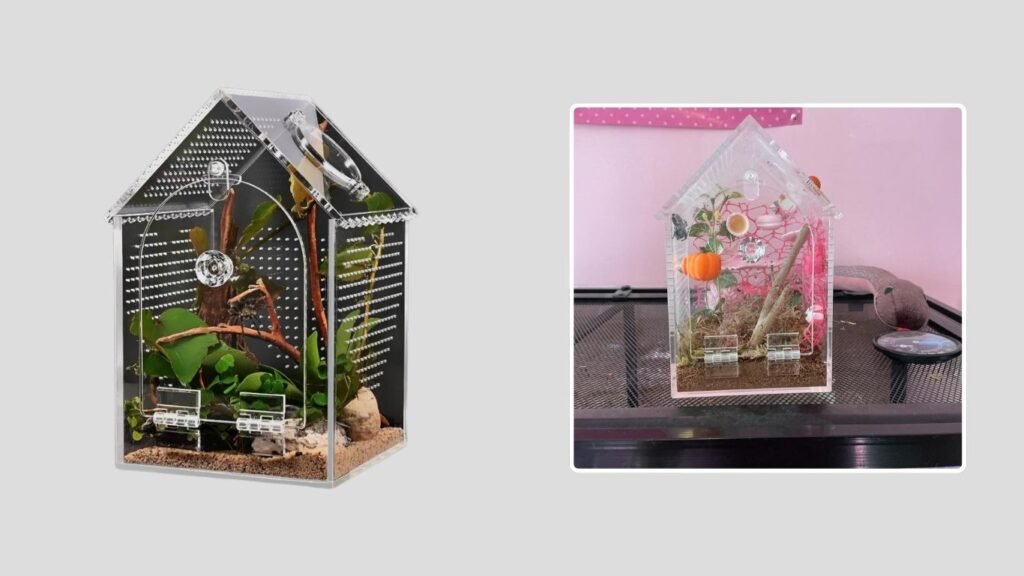
The Cycodo Tarantula Terrarium focuses on structural stability, clear visibility, and practical enclosure management. Its warp-resistant construction is useful for keepers who want the enclosure panels to remain properly aligned over time. The transparent design also provides a clean display while allowing quick visual checks without unnecessary handling or disturbance.
Key Features
- Warp-resistant enclosure construction
- Transparent walls for clear viewing
- Designed for tarantulas and other invertebrates
- Ventilation openings for airflow
- Secure enclosure structure
- Space for substrate and hides
- Easy to incorporate naturalistic décor
Why It Works Well for Terrestrial Tarantulas
A stable enclosure is particularly important when housing tarantulas because small gaps or warped panels can potentially create escape opportunities. The Cycodo design aims to maintain its shape, helping the enclosure remain secure during regular use.
Its clear walls also support low-disturbance observation. Keepers can monitor feeding, burrowing, and pre-molt behavior without frequently opening the enclosure.
Construction and Long-Term Practicality
The warp-resistant design may be especially helpful in environments where temperature and humidity changes can affect thinner materials. A more rigid enclosure can maintain cleaner panel alignment and improve overall durability.
The interior can be arranged with deep substrate, cork bark, and a shallow water dish. Smooth walls also make routine spot-cleaning easier.
Overall Value for Keepers
The Cycodo enclosure is a strong option for tarantula owners who prioritize structural stability and visibility. Its simple design makes it suitable for both basic and more decorative setups.
For keepers looking for an enclosure that maintains a neat shape while offering good observation and easy habitat customization, this model provides practical long-term appeal.
5. Reptile Growth 10-Gallon Terrarium
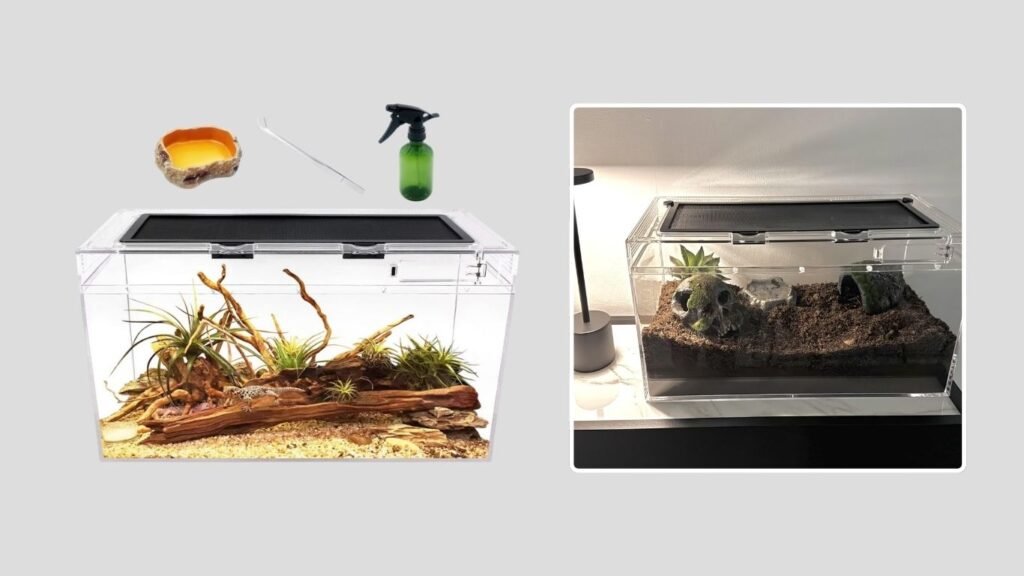
The Reptile Growth terrarium offers a larger interior than many compact invertebrate habitats, making it useful for keepers housing bigger terrestrial tarantulas or creating more elaborate setups. Its roomy footprint allows for deeper substrate, multiple hiding areas, and naturalistic décor while maintaining enough open ground space for normal movement.
Key Features
- Approximately 10-gallon capacity
- Spacious interior footprint
- Suitable for larger tarantula setups
- Room for deep substrate layers
- Accommodates hides, plants, and décor
- Clear construction for observation
- Designed for reptiles and invertebrates
Why It Works Well for Terrestrial Tarantulas
Larger terrestrial tarantulas can benefit from extra floor space when the enclosure is arranged correctly. This terrarium gives keepers flexibility to create a more complete habitat with a generous substrate layer, cork bark retreat, water dish, and leaf litter.
The extra room also prevents the enclosure from feeling cramped when multiple habitat elements are added.
Space, Setup, and Maintenance
The larger interior makes habitat design easier because keepers can separate the hide, feeding area, and water dish more naturally. Deep substrate can also help limit climbing height while supporting burrowing behavior.
Because the enclosure is more spacious, spot-cleaning and removing uneaten prey can be easier than in very tight habitats.
Overall Value for Keepers
This 10-gallon terrarium is a good fit for keepers who prefer a spacious, display-style enclosure. It offers enough room for mature terrestrial tarantulas while allowing creative habitat design.
For species that benefit from more floor area and deeper substrate, the enclosure provides excellent flexibility without forcing the setup to feel crowded.
6. Reptile Growth Stackable Reptile Enclosure
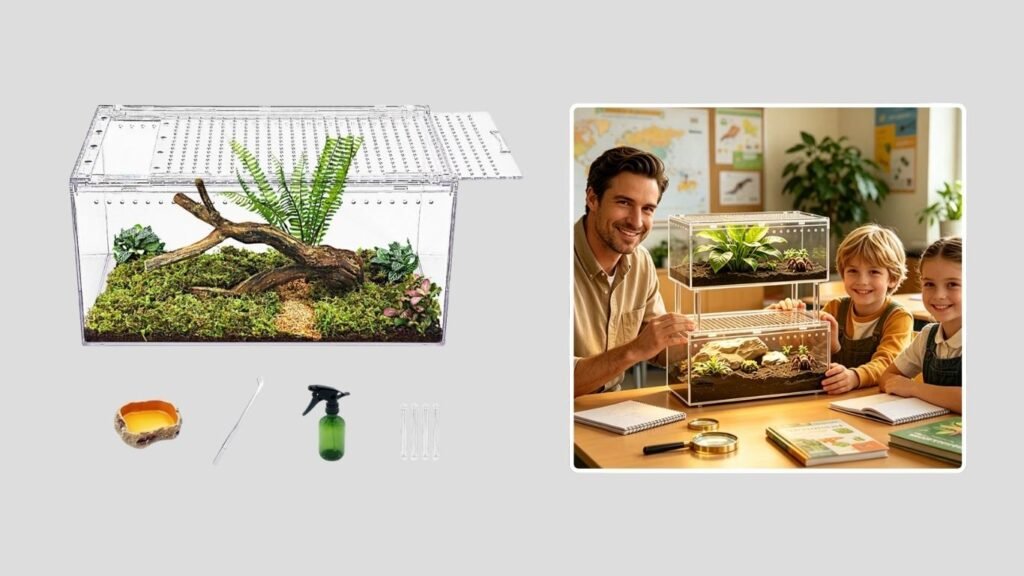
The Reptile Growth Stackable Enclosure is a practical option for keepers managing multiple tarantulas or trying to make better use of limited shelf space. Its stack-friendly design helps organize several habitats efficiently, while the secure enclosure structure and transparent walls make routine observation and maintenance straightforward.
Key Features
- Stackable enclosure design
- Secure button-style closure
- Transparent construction
- Ventilation for consistent airflow
- Suitable for tarantulas and small reptiles
- Space-efficient footprint
- Easy access for feeding and cleaning
Why It Works Well for Terrestrial Tarantulas
The stackable format is particularly useful for enthusiasts who keep more than one tarantula. Separate enclosures can be organized neatly while still allowing individual animals to remain isolated, which is essential for most tarantula species.
Each habitat can be filled with appropriate substrate and customized with a hide, water dish, and simple décor based on the tarantula’s needs.
Space Efficiency and Everyday Use
One of the strongest advantages is efficient storage. Keepers with limited room can organize multiple habitats without spreading enclosures across several shelves or tables.
The clear sides simplify visual checks, while the secure closure helps reduce the chance of accidental openings. Regular feeding and spot-cleaning can also be completed without dismantling the entire setup.
Overall Value for Keepers
The Reptile Growth Stackable Enclosure offers excellent practicality for multi-tarantula collections. Its compact organization, visibility, and secure design make routine husbandry easier.
For keepers who want to expand their collection while maintaining a neat and manageable setup, this enclosure provides a useful balance between space efficiency and functional tarantula housing.
7. KAKOOTI Acrylic Tarantula & Reptile Terrarium
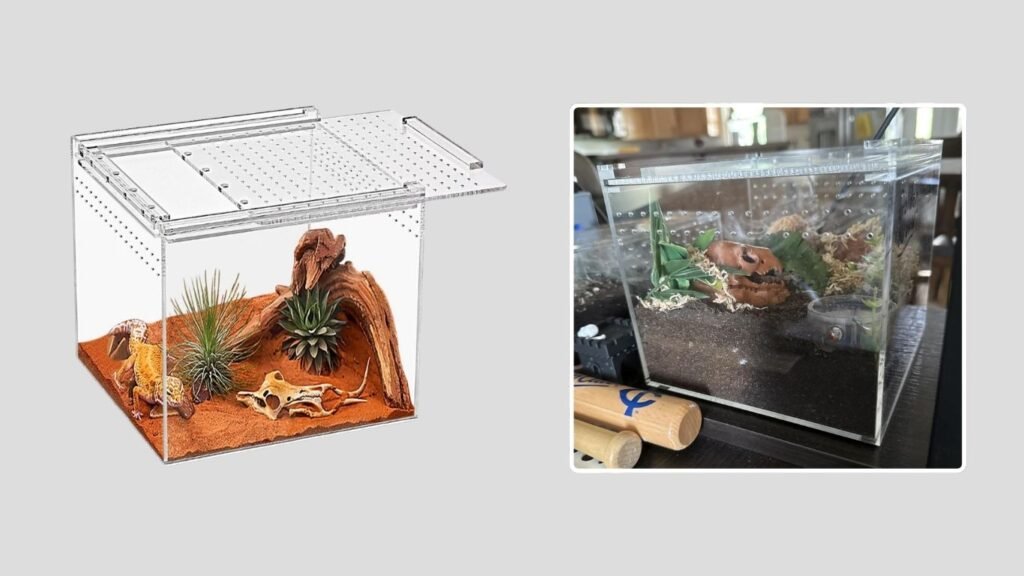
The KAKOOTI Acrylic Tarantula Terrarium offers a clear and compact housing solution for keepers who want strong visibility without taking up excessive shelf space. Its transparent acrylic construction allows easy observation of feeding, burrowing, webbing, and general activity. When properly filled with substrate and furnished with a secure hide, it can provide a practical environment for many terrestrial tarantula species.
Key Features
- Clear acrylic enclosure
- Compact, space-saving design
- Ventilation openings for airflow
- Suitable for tarantulas and small invertebrates
- Easy viewing from multiple sides
- Space for substrate, hides, and a water dish
- Lightweight construction for easy positioning
Why It Suits Terrestrial Tarantulas
Terrestrial tarantulas generally need more usable ground space than climbing height, and this enclosure can be arranged around that requirement. Adding several inches of suitable substrate provides a soft floor and gives burrowing species an opportunity to dig.
A piece of cork bark or another low hide can create a secure retreat while leaving enough open ground for feeding and movement. The transparent walls also make it easy to observe the tarantula without frequently opening the enclosure.
Practicality for Feeding and Maintenance
The clear construction is particularly convenient for routine monitoring. Keepers can quickly check the water dish, substrate condition, leftover prey, and webbing activity before opening the habitat.
Its relatively compact size also means spot-cleaning does not require working through a large enclosure. With appropriate ventilation and moisture management, the setup can remain clean and manageable for regular husbandry.
Overall Value for Keepers
The KAKOOTI terrarium provides a straightforward combination of visibility, compactness, and enclosure customization. It is well suited to keepers who want a clean display without complicated habitat features.
For smaller or medium-sized terrestrial tarantulas, its adaptable interior can create an effective setup when sufficient substrate and a suitable hide are included.
8. AZV Versatile Tarantula Terrarium
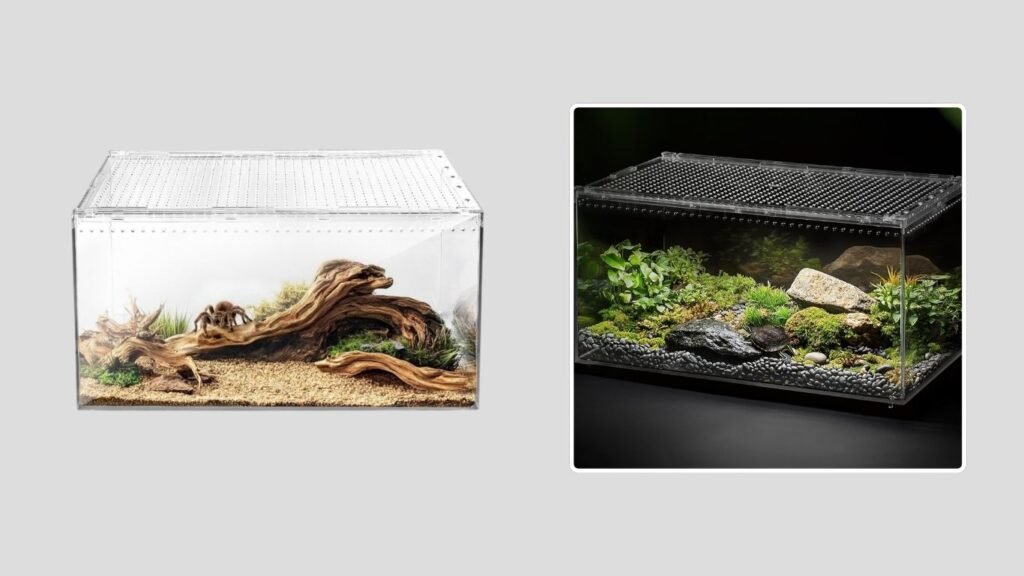
The AZV Versatile Tarantula Terrarium is designed for keepers who want an adaptable enclosure for spiders and other small exotic pets. Its clear construction makes everyday observation simple, while the interior provides room for substrate, hides, water dishes, and decorative elements. For terrestrial tarantulas, the enclosure can be customized to emphasize floor space and minimize unnecessary climbing.
Key Features
- Transparent terrarium construction
- Versatile enclosure for small exotic pets
- Ventilation openings for fresh-air exchange
- Room for deep substrate
- Accommodates cork bark and other hides
- Easy visual monitoring
- Suitable for customized naturalistic setups
Why It Works for Ground-Dwelling Species
The greatest advantage of this enclosure is customization. Terrestrial tarantula keepers can use substrate to adjust the effective interior height and create a safer floor-oriented environment.
A thick substrate layer can encourage digging while also decreasing the distance between the substrate and enclosure roof. This is important because heavy-bodied terrestrial tarantulas may be vulnerable to injury from significant falls.
Setup Flexibility and Daily Performance
The interior offers enough flexibility to build either a basic setup or a more decorative habitat. Cork bark, leaf litter, artificial plants, and a shallow water dish can be arranged while preserving open floor space.
Transparent panels also allow keepers to monitor behavior with less disturbance. This can be especially useful during pre-molt periods when unnecessary interaction should be minimized.
Overall Value for Keepers
The AZV enclosure is most appealing to keepers who enjoy adapting habitats to the needs of individual species. Its combination of visibility, ventilation, and interior flexibility makes it useful for numerous tarantula setups.
With careful substrate placement and sensible décor, it can become an attractive yet practical home for terrestrial species.
9. TCooSo 10-Gallon Acrylic Spider Enclosure
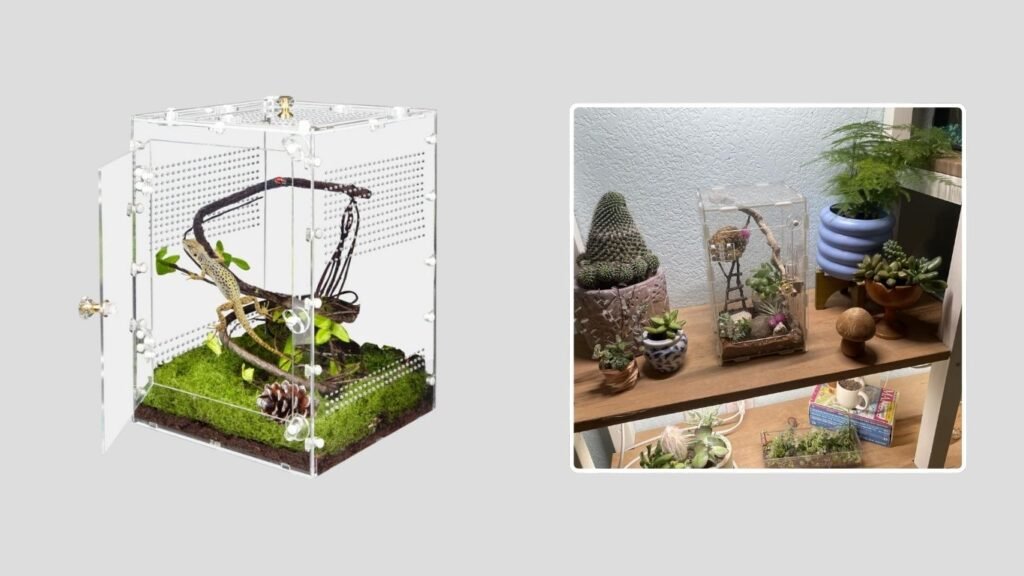
The TCooSo 10-Gallon Acrylic Enclosure provides considerably more interior space than many compact spider habitats. Its larger footprint makes it particularly useful for mature terrestrial tarantulas that need adequate floor room for comfortable movement. The spacious interior also gives keepers more freedom to build a naturalistic enclosure with deep substrate and multiple habitat features.
Key Features
- Approximately 10-gallon capacity
- Spacious floor-oriented interior
- Clear acrylic walls
- Suitable for larger spiders and reptiles
- Room for thick substrate
- Space for hides and decorative elements
- Easy observation of tarantula activity
Why It Is Useful for Larger Tarantulas
Adult terrestrial tarantulas can require noticeably more space than juveniles, especially once a hide and water dish are added. The TCooSo enclosure provides enough room to include these essentials without making the habitat feel overcrowded.
A generous layer of substrate can further improve the environment by supporting burrowing and reducing potentially hazardous vertical space.
Roomy Design and Habitat Customization
The larger dimensions allow keepers to create defined areas within the habitat. A sheltered section can contain the main hide, while another area can hold the water dish and provide open space for feeding.
More room also means naturalistic elements such as leaf litter, cork bark, artificial foliage, and appropriately sized decorations can be incorporated without restricting movement.
Overall Value for Keepers
The TCooSo 10-Gallon enclosure is particularly attractive for keepers housing larger terrestrial tarantulas or building display-style setups. Its generous capacity offers more flexibility than compact containers.
For a mature specimen that needs additional ground space and deeper substrate, this enclosure provides plenty of potential for a comfortable, visually appealing habitat.
10. maiyuolg 12×12×18 Reptile and Tarantula Enclosure
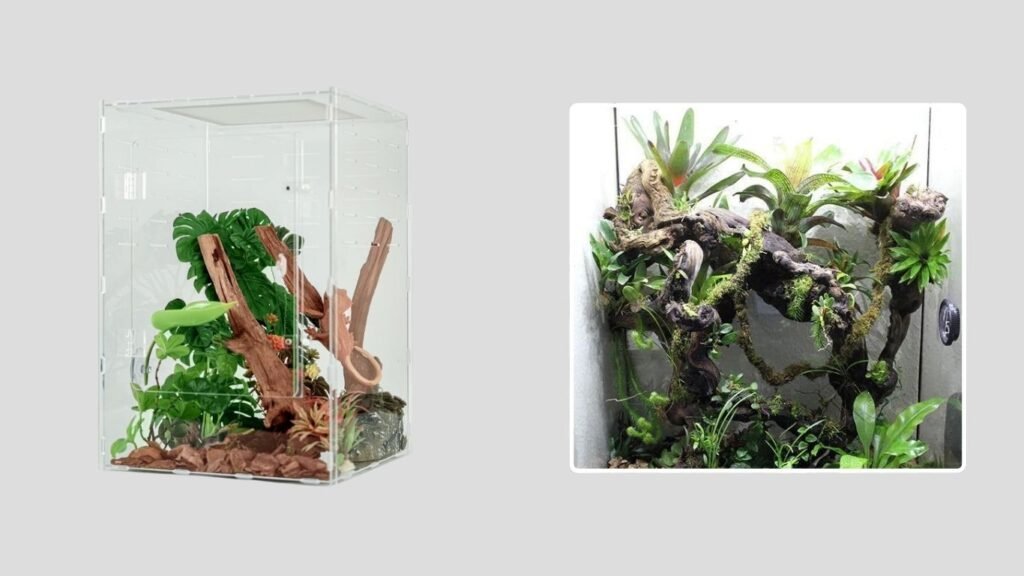
The maiyuolg 12×12×18 enclosure combines a roomy interior with clear viewing panels, making it suitable for keepers who enjoy creating detailed habitats. Although its 18-inch height is substantial for a terrestrial tarantula, the enclosure can be adapted by adding a deep substrate layer. This allows keepers to use the available volume while keeping the climbing distance more appropriate for a ground-dwelling spider.
Key Features
- Approximate size of 12 × 12 × 18 inches
- Spacious transparent enclosure
- Room for deep substrate layers
- Suitable for reptiles and invertebrates
- Provides space for hides and décor
- Clear panels for easy observation
- Flexible interior arrangement
Why It Can Work for Terrestrial Tarantulas
The spacious dimensions allow keepers to add a considerable amount of substrate, which is valuable for terrestrial species that enjoy digging. Raising the substrate level also reduces excessive open height and creates a safer arrangement.
Once properly configured, the enclosure provides enough floor space for a substantial hide, water dish, and naturalistic elements without making the environment feel crowded.
Spacious Design and Long-Term Use
The larger interior may be especially useful for adult tarantulas or keepers who want an enclosure that does not need to be replaced quickly as an animal grows.
Clear walls make everyday inspections convenient, while the additional volume provides flexibility for rearranging substrate and décor as husbandry needs change. Care should still be taken to avoid hard, sharp decorations that could increase injury risk.
Overall Value for Keepers
The maiyuolg enclosure provides plenty of room for keepers who prefer larger, display-oriented habitats. Its dimensions support deep-substrate setups and more elaborate interior arrangements.
When carefully configured to reduce excess climbing height, it can provide a spacious and visually impressive environment for an appropriately sized terrestrial tarantula.
FAQs
1. What size enclosure is best for a terrestrial tarantula?
The ideal size depends on the tarantula’s leg span and life stage. A terrestrial tarantula generally needs sufficient floor space to move comfortably, along with room for a hide and water dish. Excessively large enclosures are not always necessary, especially for juveniles.
2. How deep should substrate be in a terrestrial tarantula enclosure?
Many terrestrial tarantulas benefit from several inches of substrate. Burrowing species may require considerably deeper substrate. A thick layer also helps reduce the distance a heavy-bodied tarantula could fall if it climbs the enclosure walls.
3. Do terrestrial tarantulas need ventilation?
Yes. Adequate ventilation helps prevent overly stagnant conditions and excessive moisture accumulation. Cross-ventilation is particularly useful because it allows air to circulate through the habitat while appropriate substrate moisture can still be maintained.
4. Is acrylic or glass better for a tarantula enclosure?
Both materials can work when the enclosure provides suitable ventilation and security. Acrylic is lightweight and easy to move, while glass is heavier and resistant to scratching. The enclosure design, ventilation, dimensions, and escape resistance are generally more important than the material alone.
5. What should I put inside a terrestrial tarantula enclosure?
A basic setup normally includes suitable substrate, a secure hide such as cork bark, and a shallow water dish. Leaf litter or artificial plants can be added for additional cover. Décor should be stable and free from sharp or excessively hard objects that could injure the tarantula.
