
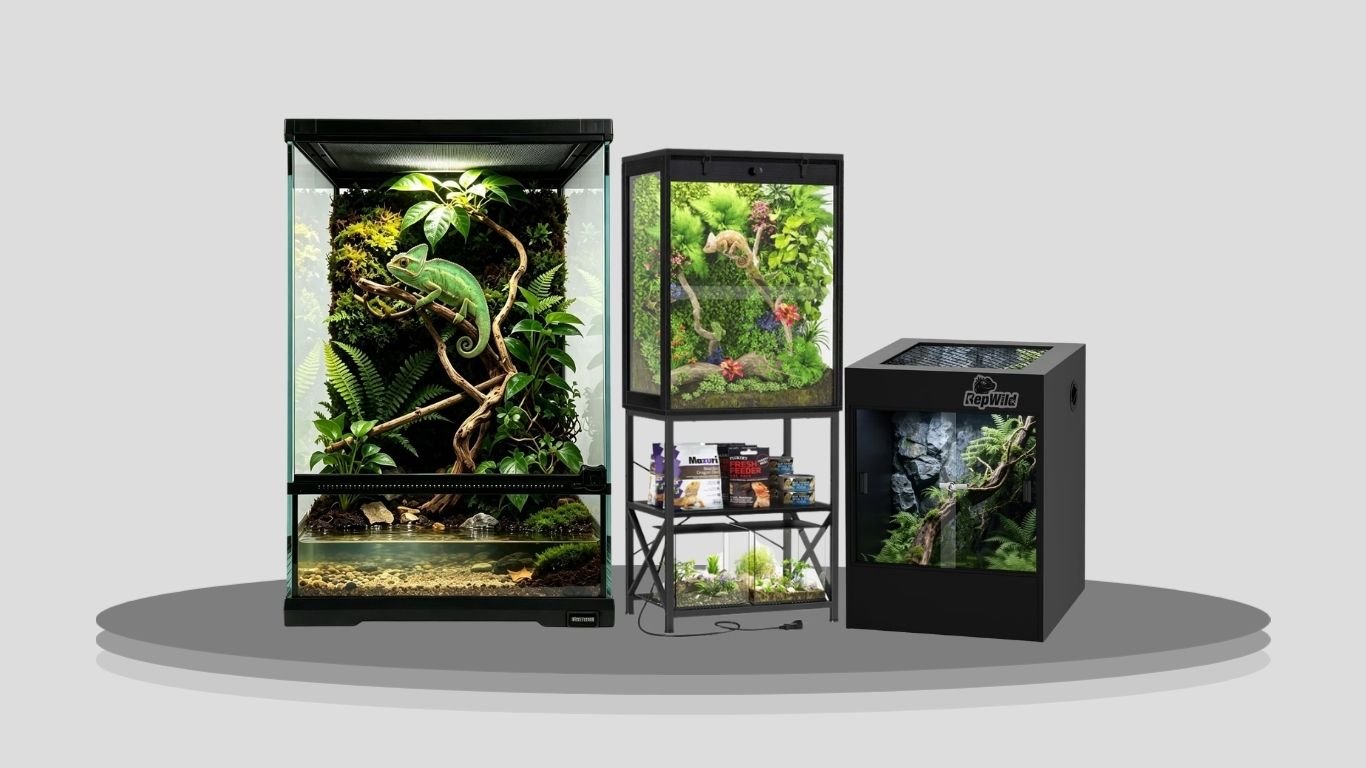
Choosing the right arboreal tarantula enclosure is essential for creating a secure, comfortable, and climbing-friendly habitat. Arboreal species need more vertical space than terrestrial tarantulas, along with good ventilation, secure doors, and enough room for cork bark, branches, and webbing areas. The right enclosure also makes feeding and maintenance easier while reducing escape risks. In this guide, we review 9 of the best arboreal tarantula enclosures based on vertical space, ventilation, accessibility, build quality, and overall suitability for naturalistic setups.
1. Snughome Arboreal Terrarium Enclosure
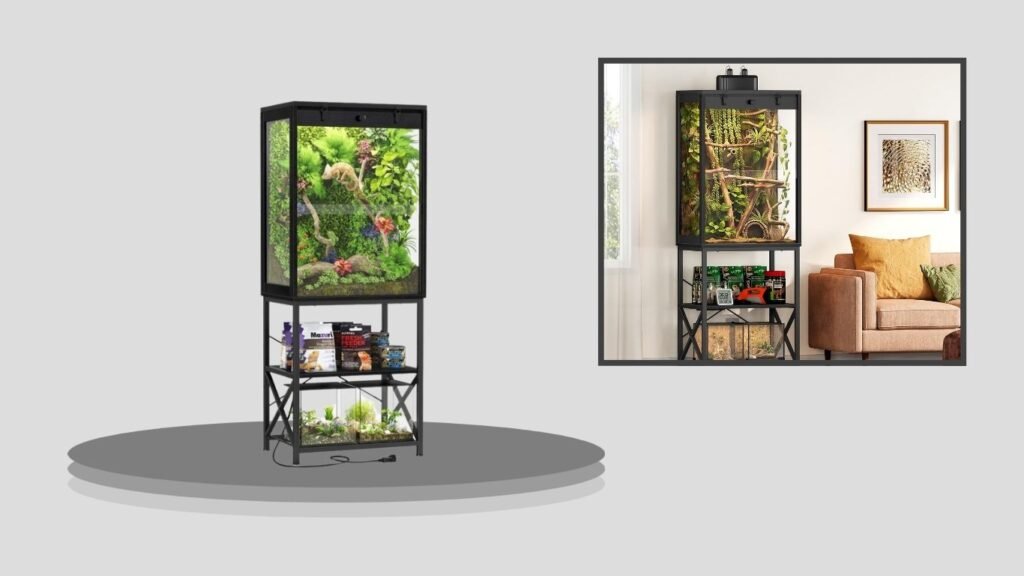
The Snughome Arboreal Terrarium Enclosure is a tall acrylic habitat designed to provide plenty of vertical room for climbing species. It includes a top mesh section, sliding front access, a stand with adjustable storage, and an integrated power strip, giving it a more furniture-style setup than a basic tabletop enclosure. Its height makes it appealing for building a branch- and cork-bark-focused habitat, although tarantula keepers should carefully evaluate the mesh top and any gaps before housing an arboreal species.
Key Features
- Tall vertical design for arboreal habitat layouts
- Acrylic enclosure construction
- Top mesh section for ventilation
- Sliding front door for easier access
- Included stand with two-tier open storage
- Adjustable shelf for organizing supplies
- Integrated power strip for enclosure accessories
- Suitable for adding branches, cork bark, foliage, and climbing décor
Why It Works for Vertical Habitat Designs
The main attraction of this enclosure is its height. Arboreal tarantula setups typically benefit from vertical structure because species that live above ground naturally use bark, branches, and elevated retreats.
The Snughome enclosure provides enough room to build a visually layered habitat with vertical cork bark, artificial or live plants, and sheltered webbing areas. Front access also makes feeding and routine maintenance easier than repeatedly reaching down from the top.
Build, Ventilation, and Practical Use
The acrylic body provides clear viewing while helping create a clean display appearance. The top mesh promotes airflow, which can be useful for preventing overly stagnant conditions.
However, tarantula keepers should inspect the mesh carefully. Some experienced keepers caution that certain screen or mesh tops can present a risk if a tarantula’s claws become caught, so suitability depends on the species, enclosure arrangement, and whether the top requires modification.
Overall Habitat Value
The Snughome Arboreal Terrarium stands out for anyone wanting a large, attractive vertical display with built-in storage and convenient front access. Its height provides excellent potential for creating a detailed arboreal layout rather than a simple box-style enclosure.
For tarantula use specifically, the enclosure is most appropriate for experienced keepers willing to check ventilation, escape gaps, fall distance, and the mesh top carefully before introducing an animal.
2. Arboreal Tarantula Enclosure with Accessories
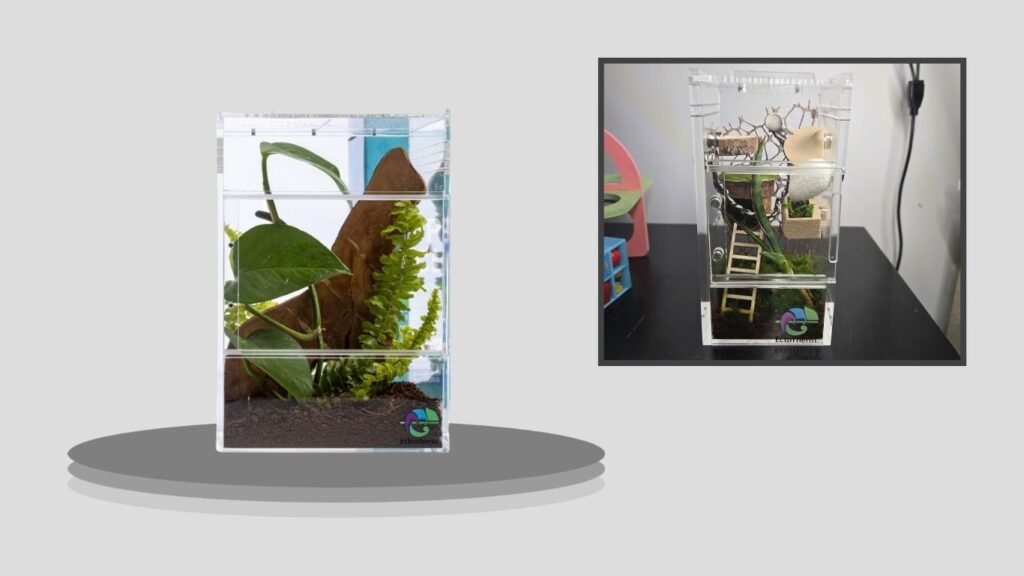
This Arboreal Tarantula Enclosure with Accessories is designed for keepers who want a compact vertical habitat that can be arranged around the needs of tree-dwelling tarantulas. Its upright format provides room for cork bark, foliage, webbing anchors, and elevated retreats while keeping the setup manageable for feeding and observation. The included accessory-focused design also makes it easier to create a complete-looking habitat without starting with an entirely empty enclosure.
Key Features
- Vertical configuration for arboreal tarantulas
- Space for upright cork bark and climbing décor
- Designed for compact invertebrate habitat setups
- Accessory-friendly interior arrangement
- Clear viewing area for easier observation
- Suitable for webbing and elevated retreats
Why It’s Well Suited to Arboreal Species
An arboreal tarantula generally benefits more from usable height than excessive floor space. This enclosure follows that principle, allowing cork bark or branches to be positioned vertically so the spider can climb and establish a retreat above the substrate.
The compact layout can also make feeding easier because prey is less likely to disappear into an unnecessarily large habitat. For juvenile or appropriately sized arboreal species, this balance between height and manageable interior space can be particularly useful.
Setup and Everyday Maintenance
A thoughtful interior arrangement can make a significant difference. Vertical cork bark can serve as the main retreat structure, while artificial or suitable live foliage provides additional anchor points for webbing. Keeping the water dish accessible near the front can simplify routine care.
Before introducing a tarantula, owners should always inspect door gaps, ventilation openings, and other possible escape points. The enclosure should also match the spider’s current size rather than being chosen solely for future growth.
Overall Habitat Value
This Arboreal Tarantula Enclosure is a practical choice for keepers who want a compact, vertically oriented habitat that is easy to customize.
Its accessory-ready design gives hobbyists flexibility to create a natural-looking setup with bark, plants, and webbing areas. When properly sized for the individual tarantula and arranged with secure climbing structures, it can provide an attractive and functional home.
3. Heavy-Duty Arboreal Terrarium Enclosure
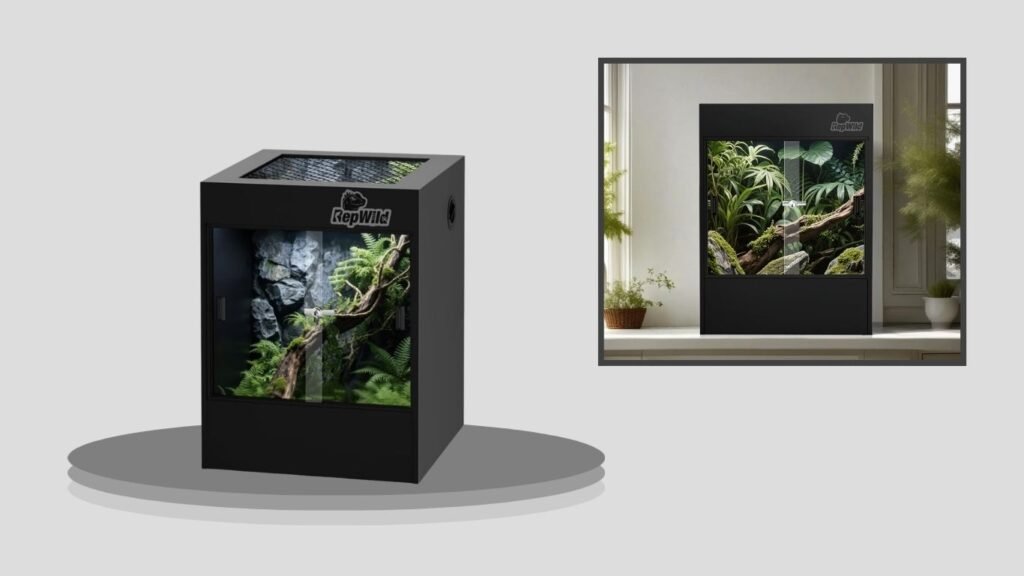
The Heavy-Duty Arboreal Terrarium Enclosure is an appealing option for keepers who prefer a more substantial habitat for vertical species. Originally styled for arboreal reptiles and amphibians, its upright design also offers useful possibilities for certain tarantula setups when the enclosure dimensions and openings are appropriate. It provides generous room for cork bark, foliage, branches, and naturalistic decoration, making it especially attractive for display-focused keepers.
Key Features
- Tall terrarium-style construction
- Heavy-duty enclosure design
- Ample vertical decorating space
- Suitable for branches and cork bark
- Clear viewing panels
- Works well for naturalistic habitat designs
Why It Appeals to Display-Focused Keepers
Some tarantula keepers want more than a basic plastic box. A larger vertical terrarium allows the enclosure itself to become part of the room’s display while still providing functional climbing space.
The extra height can accommodate a substantial piece of upright cork bark, creating a strong central retreat. Plants and other lightweight décor can then be positioned around it to produce a layered rainforest-style appearance.
Practicality and Habitat Planning
A larger enclosure requires more careful planning than a compact tarantula-specific habitat. Keepers should ensure the tarantula can still locate prey and water easily and that excessive open space is filled with appropriate cover.
Ventilation is another important consideration. Arboreal setups benefit from good airflow, so the available ventilation pattern should be evaluated before use. All doors and cable openings should also be checked carefully for gaps.
Overall Habitat Value
The Heavy-Duty Arboreal Terrarium Enclosure is most attractive for enthusiasts who want a roomier, visually impressive vertical setup rather than a minimalist tarantula container.
Its larger decorating potential allows a keeper to create an elaborate naturalistic habitat. With appropriate modifications and careful attention to escape security, ventilation, and enclosure size, it can become an impressive home for suitable arboreal species.
4. Furatune Arboreal Tarantula Terrarium Enclosure
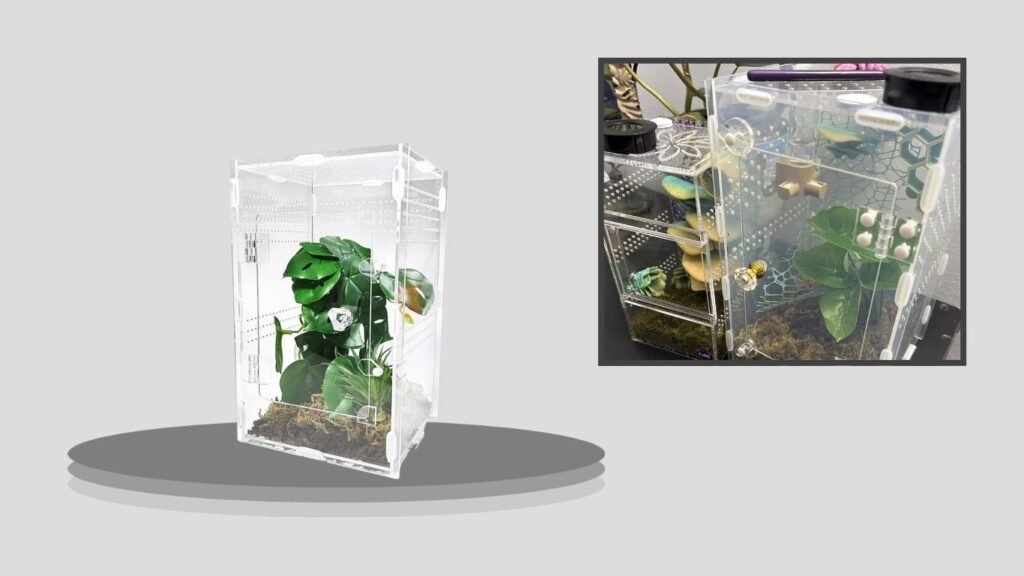
The Furatune Arboreal Tarantula Terrarium Enclosure is a compact acrylic habitat created with spiders and other small invertebrates in mind. Its approximately 6 × 6 × 10-inch profile emphasizes vertical space, making it particularly suitable for climbing and web-building animals. The clear construction provides excellent visibility, while front access can make routine feeding and maintenance easier without disturbing webbing positioned near the upper portion of the enclosure.
Key Features
- Approximately 6 × 6 × 10-inch vertical size
- Clear acrylic construction
- Front-opening access
- Designed for spiders and other small invertebrates
- Vertical room for cork bark and webbing
- Compact footprint for shelf or display use
Why It’s Best for Compact Arboreal Setups
The Furatune’s proportions are one of its strongest advantages. It provides considerably more height than floor space, which matches the way many arboreal tarantula habitats are arranged.
A vertical cork bark slab can become the primary retreat, while artificial foliage around the upper section provides additional webbing anchors. Because the enclosure remains relatively compact, the tarantula and uneaten prey can also be easier to locate.
Access and Everyday Usability
Front access is particularly convenient in an arboreal enclosure. Tarantulas often web extensively around the upper portion of their habitat, so opening the enclosure from above can damage retreats or cause unnecessary disturbance.
A front door allows food, water, and maintenance tools to enter from a lower angle. Clear acrylic also provides an unobstructed view of web development and general activity without repeatedly opening the enclosure.
Overall Habitat Value
The Furatune enclosure provides a useful combination of vertical space, clear viewing, and compact dimensions.
It is particularly appealing for keepers who want a purpose-oriented habitat rather than adapting a conventional reptile tank. When matched correctly to the tarantula’s size and equipped with cork bark, a water dish, suitable substrate, and secure décor, it can create a clean and practical arboreal setup.
5. Vertical Rainforest Terrarium Enclosure
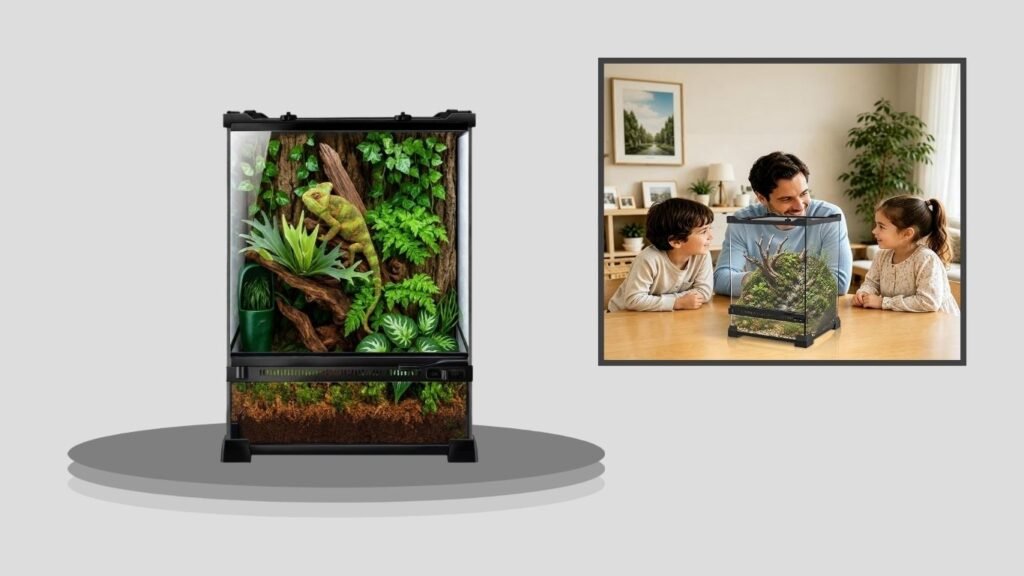
The Vertical Rainforest Terrarium Enclosure is designed around an upright habitat style, making it an interesting option for keepers planning a heavily decorated arboreal setup. The taller format creates room for branches, cork bark, foliage, and elevated hiding areas rather than concentrating everything at ground level. This makes it particularly appealing for enthusiasts who enjoy designing naturalistic terrariums and want enough visual space to build a rainforest-inspired environment.
Key Features
- Vertical rainforest-style layout
- Ample room for climbing décor
- Suitable for cork bark and foliage
- Clear display-oriented design
- Space for naturalistic habitat arrangements
- Useful for creating elevated retreats
Why It Works for Naturalistic Layouts
A rainforest-style enclosure gives the keeper more freedom to create multiple levels within the habitat. A large cork bark section can run vertically through the enclosure, with plants and webbing points positioned around it.
This type of design can make an arboreal tarantula setup look much closer to a section of tree trunk or dense vegetation than a simple container. It also provides several sheltered areas from which the spider can choose its preferred retreat.
Setup Flexibility and Daily Care
The larger decorating area offers plenty of flexibility, but the interior should remain functional. Decorations should be firmly secured so they cannot shift or fall, and the water dish should remain easy to reach.
Keepers should avoid overcomplicating the layout to the point where feeding and maintenance become difficult. Good ventilation and secure openings are also essential when adapting a reptile-style terrarium for an invertebrate.
Overall Habitat Value
The Vertical Rainforest Terrarium Enclosure is well suited to keepers who want a visually rich arboreal habitat with extensive decorating possibilities.
Its upright design provides an excellent foundation for bark, climbing structures, foliage, and webbing areas. For someone building a display enclosure rather than a basic functional setup, the added vertical room can make the finished habitat considerably more impressive.
6. Clioran Vertical Reptile Terrarium Starter Enclosure
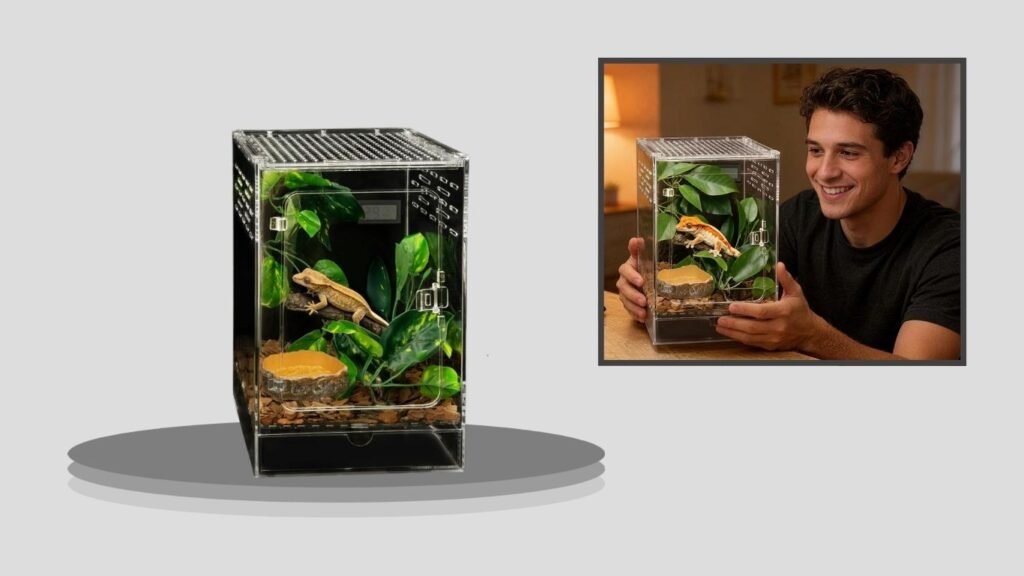
The Clioran Vertical Reptile Terrarium Starter Enclosure offers an upright habitat format designed for climbing animals and naturalistic decorating. For tarantula keepers, the vertical proportions provide useful space for cork bark, artificial plants, and elevated shelter locations. Its starter-style concept may also appeal to hobbyists who want a more complete enclosure foundation instead of assembling every habitat component separately.
Key Features
- Vertical terrarium configuration
- Starter-style enclosure design
- Space for cork bark and climbing structures
- Suitable for naturalistic decoration
- Clear viewing area for observation
- Designed around arboreal habitat layouts
Why It’s Convenient for New Habitat Builds
Starting an arboreal enclosure from an empty box requires choosing and arranging several separate components. A starter-oriented terrarium can simplify the process by giving the keeper a structured foundation for building the habitat.
The vertical interior makes it easy to establish a main cork bark retreat stretching toward the upper section. Additional foliage can then be arranged around the sides, creating sheltered areas and multiple attachment points for webbing.
Habitat Performance and Practical Considerations
For tarantulas, the quality of the final setup depends heavily on how the interior is arranged. A secure retreat, accessible water source, suitable substrate, and adequate ventilation remain more important than decorative complexity.
Because this product is marketed more broadly as a reptile terrarium, tarantula keepers should inspect ventilation openings and door gaps carefully. Small or juvenile specimens can escape through openings that would be insignificant for reptiles.
Overall Habitat Value
The Clioran Vertical Reptile Terrarium Starter Enclosure is a useful option for hobbyists seeking a tall, customizable enclosure with plenty of decorating flexibility.
Its vertical design naturally supports the type of bark-and-foliage arrangement commonly used for arboreal species. With careful attention to size, ventilation, and escape prevention, it can provide an attractive foundation for a well-organized tarantula habitat.
7. Zilla Tropical Vertical Reptile Terrarium
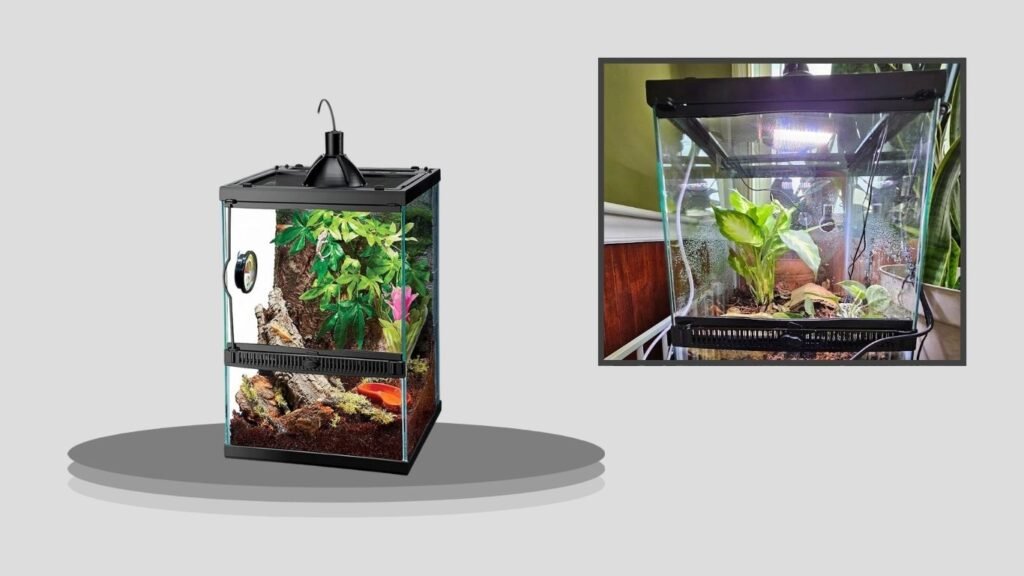
The Zilla Tropical Vertical Reptile Terrarium provides a tall enclosure layout that can be adapted for arboreal tarantulas when properly prepared. Its vertical design creates valuable room for cork bark, climbing structures, foliage, and elevated webbing areas. The clear viewing panels also make it easier to observe the habitat without frequent disturbance. For keepers who want a polished display enclosure rather than a simple plastic container, this Zilla terrarium offers plenty of decorating potential.
Key Features
- Tall vertical terrarium design
- Clear viewing panels for easy observation
- Space for cork bark and climbing décor
- Suitable for tropical-style habitat layouts
- Allows room for plants and webbing anchors
- Convenient access for routine maintenance
Why It Works for Display-Style Arboreal Setups
The greatest advantage of this enclosure is its vertical interior. Arboreal tarantulas naturally benefit from access to elevated retreats, so a tall enclosure allows keepers to position cork bark upright and create sheltered spaces higher above the substrate.
There is also enough visual room to add foliage around the main retreat. This can make the habitat feel more secure while producing a realistic tropical appearance that works particularly well as a display setup.
Ventilation and Everyday Maintenance
A well-ventilated enclosure is important for maintaining healthy conditions and preventing excessive stagnant moisture. Keepers should evaluate the airflow carefully and adjust the setup according to the requirements of the species being housed.
Any screen, door gaps, or openings should also be inspected before introducing a tarantula. Front access can make water changes, feeding, and spot cleaning easier without requiring extensive disturbance of upper webbing.
Overall Habitat Value
The Zilla Tropical Vertical Reptile Terrarium is a strong option for keepers who want a professional-looking vertical habitat with plenty of decorating freedom.
Its height allows creative placement of bark, foliage, and elevated retreats. When properly secured and adapted for an appropriately sized arboreal tarantula, it can create an attractive and functional centerpiece habitat.
8. FixHaven Pre-Assembled Reptile Enclosure
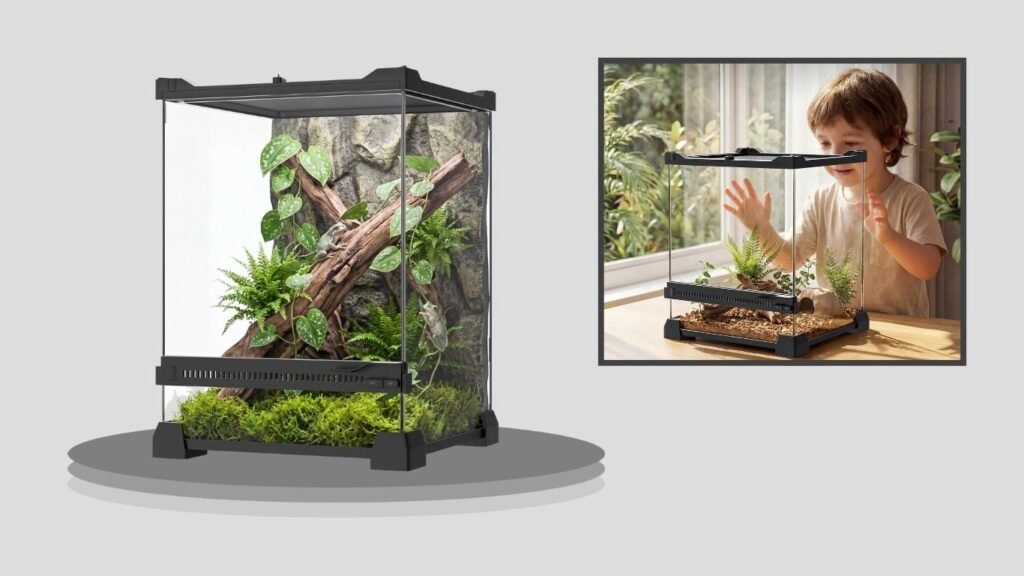
The FixHaven Pre-Assembled Reptile Enclosure is designed for users who appreciate convenience and a more spacious habitat without dealing with complicated assembly. Its enclosure-style construction provides room for naturalistic décor, climbing materials, plants, and hiding areas. For arboreal tarantula keepers, the available vertical structure can be adapted around a secure cork bark retreat while maintaining enough open space for observation and routine care.
Key Features
- Pre-assembled enclosure design
- Spacious interior for naturalistic décor
- Clear viewing area
- Room for cork bark and climbing structures
- Suitable for vertical habitat arrangements
- Convenient option for display-focused setups
Why It Appeals to Keepers Wanting More Space
A larger enclosure gives experienced keepers more freedom when building visually detailed habitats. Instead of using only one small cork bark section, the interior can accommodate multiple pieces of décor, foliage, and anchor points.
This creates opportunities for a more complex naturalistic environment while still providing the tarantula with sheltered areas. The pre-assembled format can also make initial setup faster compared with enclosures requiring extensive construction.
Setup Quality and Practical Use
Extra space should be used carefully. Arboreal tarantulas still need an accessible retreat, water source, and secure climbing surfaces rather than large amounts of empty space.
Keepers should check every opening before use, particularly if housing smaller specimens. Decorations should also be firmly positioned so that branches, rocks, or bark cannot shift unexpectedly during maintenance.
Overall Habitat Value
The FixHaven enclosure is particularly appealing for hobbyists who want a larger, display-oriented habitat with minimal assembly work.
Its interior provides considerable flexibility for creating attractive vertical arrangements. With careful preparation and attention to ventilation, escape prevention, and appropriate sizing, it can become an impressive enclosure for suitable arboreal species.
9. Waazoorep Glass Reptile Terrarium with Drainage
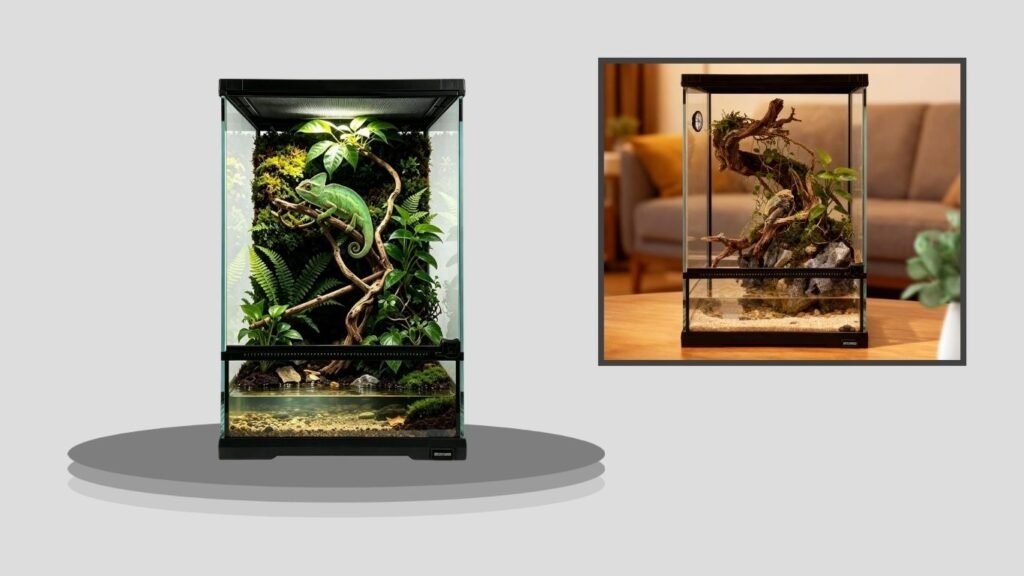
The Waazoorep Glass Reptile Terrarium with Drainage offers a more advanced enclosure platform for keepers interested in elaborate tropical or bioactive-style displays. Its glass construction provides excellent visibility, while the drainage-oriented design can be useful when creating planted setups that involve deeper substrate layers. For arboreal tarantula keepers, the vertical interior provides space for cork bark, vegetation, climbing structures, and sheltered webbing locations.
Key Features
- Clear glass terrarium construction
- Vertical space for arboreal habitat layouts
- Integrated drainage-oriented design
- Suitable for planted or naturalistic setups
- Room for cork bark, branches, and foliage
- Display-friendly enclosure appearance
Why It’s Best for Elaborate Naturalistic Habitats
The drainage feature gives this enclosure an advantage for keepers planning planted setups. A properly constructed substrate layer can manage excess moisture more effectively while allowing live plants to become part of the overall design.
For an arboreal tarantula, vertical cork bark can serve as the main retreat while plants and foliage create additional cover. This produces a visually impressive enclosure that can resemble a small section of tropical habitat.
Build Quality and Habitat Management
Glass enclosures provide excellent viewing clarity and can create an attractive permanent display. However, moisture still needs to be managed carefully. A drainage system does not mean the habitat should remain constantly wet, and adequate airflow remains essential.
Keepers should also verify door security and ventilation gaps before introducing a tarantula. The enclosure should be sized appropriately so prey, water, and the animal itself remain easy to monitor.
Overall Habitat Value
The Waazoorep Glass Reptile Terrarium is an attractive choice for experienced keepers who want a premium-looking, planted arboreal display with drainage capability.
Its combination of vertical space, clear viewing, and naturalistic setup potential gives hobbyists considerable creative freedom. When carefully arranged around the tarantula’s actual needs, it can provide both visual impact and practical habitat functionality.
FAQs
1. What size enclosure is best for an arboreal tarantula?
The ideal size depends on the species and the tarantula’s leg span. Arboreal species generally need more usable vertical space than floor space. The enclosure should provide enough height for climbing and an upright retreat without creating an excessive fall distance. Juveniles usually require smaller habitats than mature specimens.
2. What should I put inside an arboreal tarantula enclosure?
A basic setup usually includes suitable substrate, an upright cork bark retreat, a water dish, and foliage or other lightweight material that can provide cover and webbing anchor points. Decorations should remain securely positioned so they cannot collapse or injure the tarantula.
3. Do arboreal tarantulas need good ventilation?
Yes. Adequate ventilation is important because excessive stagnant moisture can create unhealthy enclosure conditions. Many keepers favor cross-ventilation because it allows air to move through the enclosure. Humidity and moisture requirements vary between species, so the habitat should be adjusted accordingly.
4. Are glass enclosures suitable for arboreal tarantulas?
Glass enclosures can work well when they provide appropriate dimensions, ventilation, secure access, and escape-proof openings. They are particularly attractive for display or planted setups. However, larger reptile terrariums should be inspected carefully because ventilation gaps or door openings may be too large for smaller tarantulas.
5. Should an arboreal tarantula enclosure have a mesh top?
Mesh tops require careful consideration. Some tarantula keepers avoid certain metal screen tops because a spider’s claws can potentially become caught while climbing. A secure enclosure with suitable ventilation holes or appropriately designed ventilation panels may be preferable. If an enclosure includes mesh, its material, spacing, and accessibility to the tarantula should be evaluated before use.
