
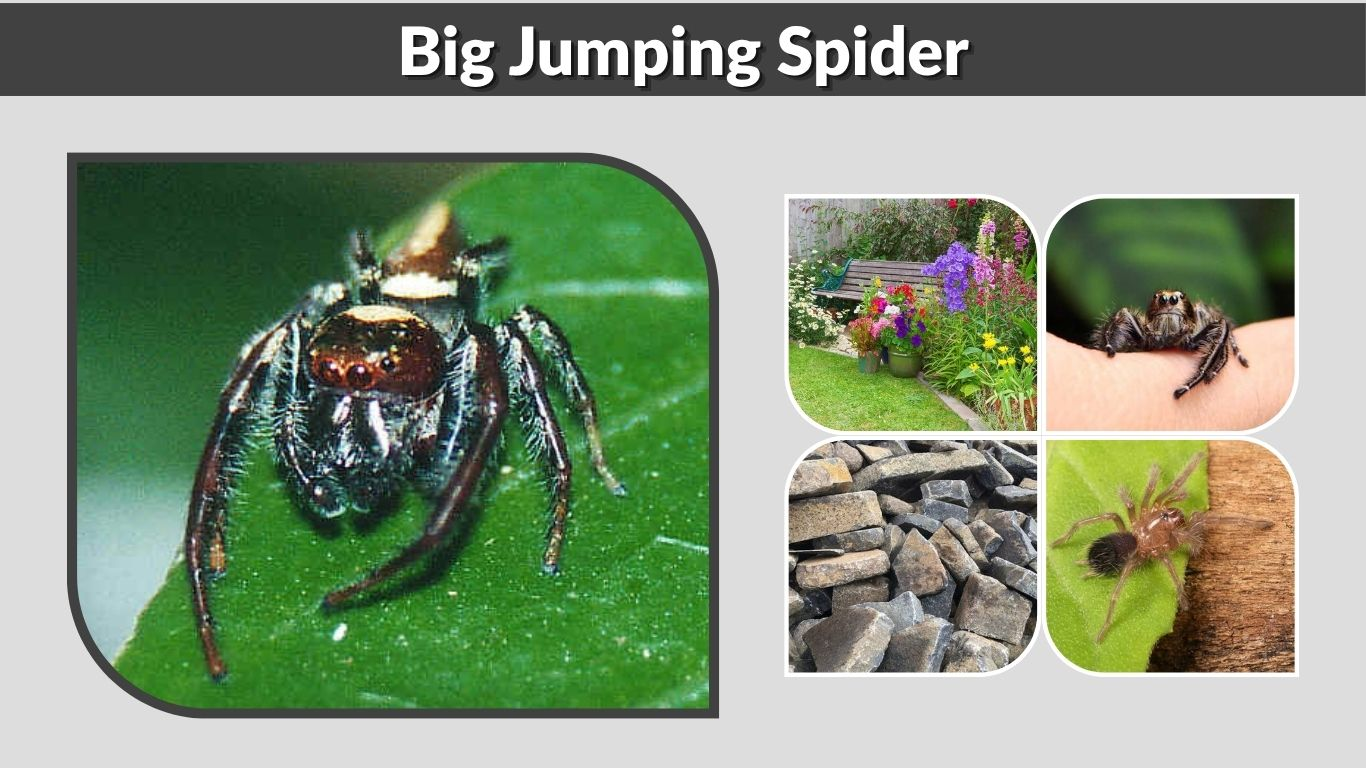
A big jumping spider can look surprising because of its large eyes, fuzzy body, strong front legs, and quick movements. Most are harmless hunters that chase small insects instead of building sticky webs. Some large species are black, brown, gray, or patterned with white spots. This guide explains how big jumping spiders get, how to identify them, and what to do if you find one indoors.
How Big Can a Jumping Spider Get?
Jumping spiders are usually small, but some species grow large enough to be noticed on walls, windows, plants, fences, and outdoor furniture. Their compact body shape can also make them look bigger than they really are. A large jumping spider may seem bold because it turns toward movement and watches with its front-facing eyes.
Most common jumping spiders are only a few millimeters long. Larger species may reach around 10–20 mm in body length. The largest known types can approach about 1 inch, not including the legs. This is still much smaller than tarantulas or large wolf spiders, but for a jumping spider, it is impressive.
Average Size of Common Big Jumping Spiders
Many house and garden jumping spiders stay under half an inch. Bigger species, such as bold jumping spiders and regal jumping spiders, are more noticeable because they have sturdy bodies, thick legs, and bright markings. Adult females are often larger and heavier than males.
Biggest Jumping Spider Species
The giant jumping spider, often linked with the genus Hyllus, is one of the largest jumping spiders in the world. These spiders are found in warmer regions and may reach close to 1 inch in body length. Their size, hairy body, and strong jumping ability make them stand out from smaller salticids.
Why Some Jumping Spiders Look Bigger
A jumping spider can look larger when it raises its front legs, faces you directly, or has a round abdomen. Females with eggs may also appear bigger than usual. Hairy bodies, bold stripes, and thick front legs can make even medium-sized spiders seem large.
Big Jumping Spider Identification
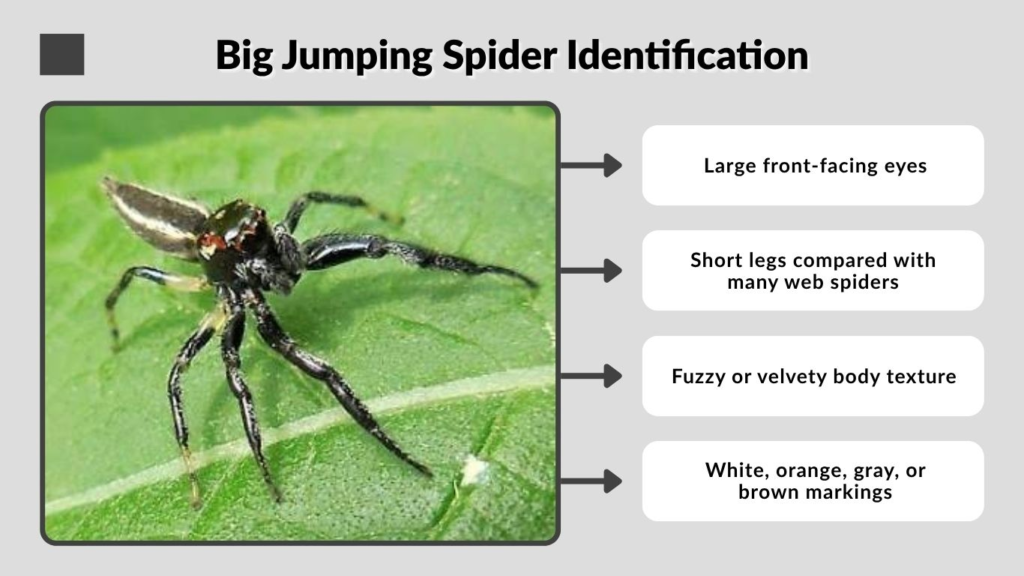
A big jumping spider is usually easy to recognize if you look at the eyes, body shape, and movement. These spiders have excellent vision and often stop, turn, and look directly at people. Unlike web-building spiders, they actively stalk prey and pounce when close enough.
They have short, compact bodies, strong legs, and a quick start-stop walking style. Many large species are black, brown, gray, tan, or patterned. Some have white spots, orange markings, metallic green mouthparts, or fuzzy front legs.
Key Identification Signs
- Large front-facing eyes
- Compact, sturdy body
- Short legs compared with many web spiders
- Quick jumping movement
- Fuzzy or velvety body texture
- White, orange, gray, or brown markings
- Active during the day
- Often found on walls, windows, plants, fences, and tree bark
Big Black Jumping Spider
A big black jumping spider is often a bold jumping spider or a related species. Many have a black body with white spots or bands. Some also have shiny green or blue chelicerae, which are the mouthparts near the front of the face. These spiders may look intense, but they are usually not dangerous.
Big Brown Jumping Spider
A big brown jumping spider may be tan, gray-brown, or mottled. Brown jumping spiders often blend into bark, dry leaves, walls, or fences. They may be mistaken for young wolf spiders, but jumping spiders have a more compact shape and much larger front-facing eyes.
Big Black and White Jumping Spider
Black and white jumping spiders are common in many areas. They may have white spots on the abdomen, pale bands on the legs, or a white mark near the front of the body. Their high-contrast pattern makes them easy to notice on light-colored walls.
Big Jumping Spider Size Chart
This table gives a simple size comparison for common large jumping spiders and similar-looking types.
| Spider Type | Usual Body Size | Common Color | Where You May Find It |
| Bold jumping spider | 8–18 mm | Black with white or orange spots | Walls, fences, gardens, windows |
| Regal jumping spider | 10–22 mm | Black, gray, orange, or white patterns | Warm outdoor areas, shrubs, trees |
| Gray wall jumper | 8–12 mm | Gray, brown, or striped | House walls, lights, fences |
| Pantropical jumper | 8–12 mm | Brown, gray, black, pale markings | Buildings, walls, warm regions |
| Giant jumping spider | Up to about 25 mm | Brown, black, tan, hairy | Tropical forests and warm habitats |
Where Big Jumping Spiders Live
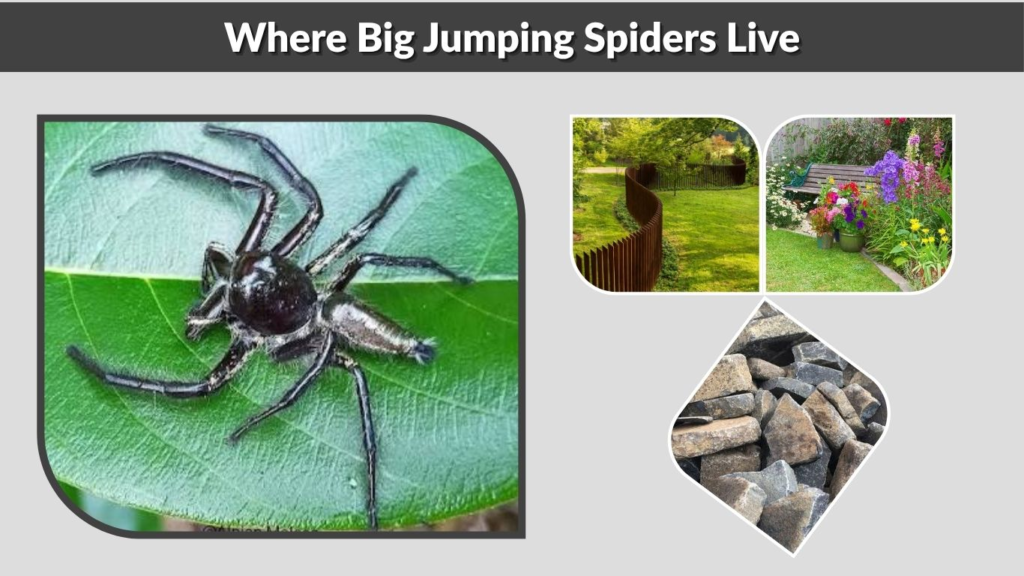
Big jumping spiders live in places with enough sunlight, hiding spots, and small insects. They are active hunters, so they prefer areas where flies, moths, mosquitoes, beetles, and other small prey are available. They do not need large webs to catch food.
Outside, they may live on tree trunks, fences, garden plants, rocks, sheds, and porch railings. Indoors, they may appear on windows, ceilings, walls, curtains, or near lights where insects gather. A big jumping spider in the house is usually there by accident or because prey is nearby.
Common Indoor Places
- Window frames
- Bright walls
- Ceilings and corners
- Curtains and blinds
- Door frames
- Houseplants
- Basements or garages
- Near outdoor lights
Outdoor Habitats
Large jumping spiders are often found in gardens, shrubs, tall grass, tree bark, wooden fences, and sunny walls. They like open hunting spaces where they can see prey clearly. They may also hide under leaves, bark, or small cracks when resting.
Why They Come Inside
A big jumping spider may enter a home while hunting insects or escaping heat, cold, rain, or wind. Open doors, window gaps, damaged screens, and plants brought indoors can also allow them inside. Seeing one spider does not always mean an infestation.
Are Big Jumping Spiders Dangerous?
Big jumping spiders may look scary, but they are not considered dangerous to people. They do have venom, but it is used to subdue tiny prey. They are not aggressive and usually avoid biting unless trapped, squeezed, or handled roughly.
A bite from a large jumping spider may feel like a small pinch. Some people may notice mild redness, swelling, itching, or brief pain. Serious reactions are rare, but anyone with strong swelling, breathing trouble, dizziness, spreading redness, or unusual symptoms should seek medical advice.
Are Big Black Jumping Spiders Poisonous?
Big black jumping spiders are not poisonous to touch. They are venomous like most spiders, but their venom is not considered medically important for healthy adults. They should still be handled gently or moved with a cup and paper instead of bare hands.
What to Do After a Bite
Wash the area with soap and water. Apply a cold compress to reduce swelling. Avoid scratching the skin. Watch the bite for changes. If pain increases, swelling spreads, or symptoms become unusual, contact a medical professional.
Safe Removal From the House
The easiest method is to place a cup over the spider and slide a piece of paper underneath. Carry it outside and release it near plants, a fence, or a tree. Avoid crushing it if possible, because jumping spiders help reduce small insect pests.
Big Jumping Spider as a Pet
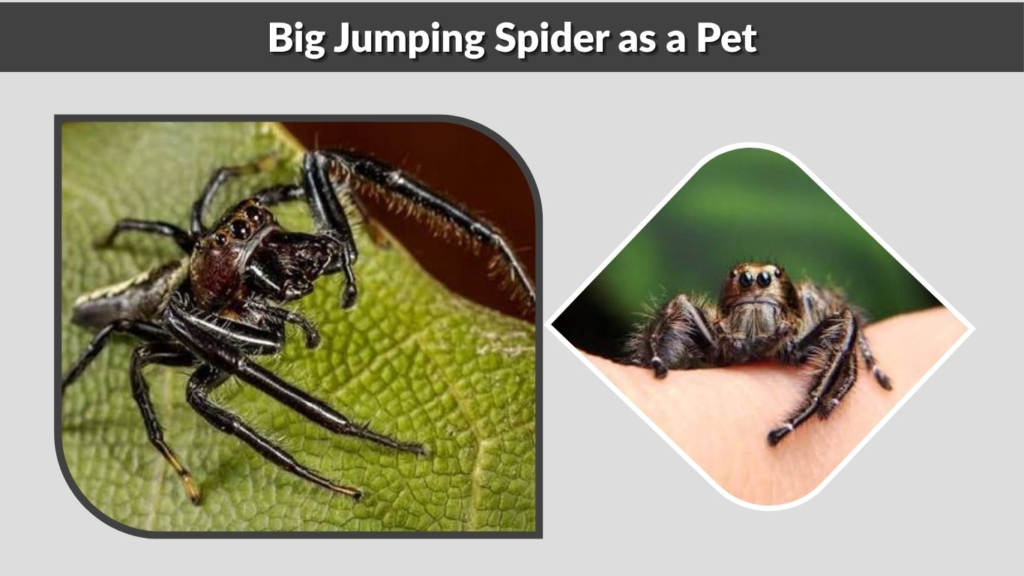
Some people keep large jumping spiders as pets because they are active, curious, and easy to observe. Species such as regal jumping spiders and bold jumping spiders are popular with hobbyists. They do not need a huge enclosure, but they do need proper ventilation, safe climbing surfaces, and suitable prey.
A big enclosure is not always better. Jumping spiders are small hunters, and too much space can make it harder for them to find food. A simple, well-ventilated enclosure with perches, hides, and anchor points is usually better than a large empty container.
How Big Should a Jumping Spider Enclosure Be?
For many adult jumping spiders, a small vertical enclosure works well. A space around 4 x 4 x 6 inches may suit many species, while larger species may need slightly more room. The enclosure should be tall enough for climbing and molting, but not so large that prey disappears.
Basic Pet Care Needs
- Good ventilation
- Vertical climbing space
- Small branches, bark, or artificial plants
- Light misting for drinking droplets
- Live prey such as small flies or tiny crickets
- No sharp decorations
- No pesticide-treated materials
- Secure lid to prevent escape
Can an Enclosure Be Too Big?
Yes, a jumping spider enclosure can be too big if the spider cannot find food easily. Young spiders especially need a smaller space. A large enclosure may look nice, but feeding and monitoring become harder. The best setup is safe, clean, vertical, and easy to observe.
Big Jumping Spider Behavior
Big jumping spiders are visual hunters. They do not wait in sticky webs like orb-weavers. Instead, they stalk prey, judge distance, attach a silk safety line, and leap. This behavior makes them fascinating to watch.
They may tilt their body, wave their front legs, or turn toward movement. This does not mean they want to attack. Most are simply observing. Their large eyes help them detect prey, avoid danger, and explore their surroundings.
Why Jumping Spiders Have Big Eyes
Jumping spiders have excellent vision compared with many other spiders. Their large front eyes help them judge distance before jumping. Smaller side eyes help detect movement around them. This eye arrangement gives them a curious, alert appearance.
Why They Jump
Jumping spiders jump to catch prey, escape danger, move between surfaces, and explore. Before jumping, they often attach a silk dragline. This silk works like a safety rope if they miss the landing or need to climb back.
What Big Jumping Spiders Eat
Big jumping spiders eat small insects and other tiny arthropods. Their diet may include flies, mosquitoes, moths, gnats, small beetles, and other spiders. In homes and gardens, they can be helpful natural pest hunters.
Big Jumping Spider vs Other Large Spiders
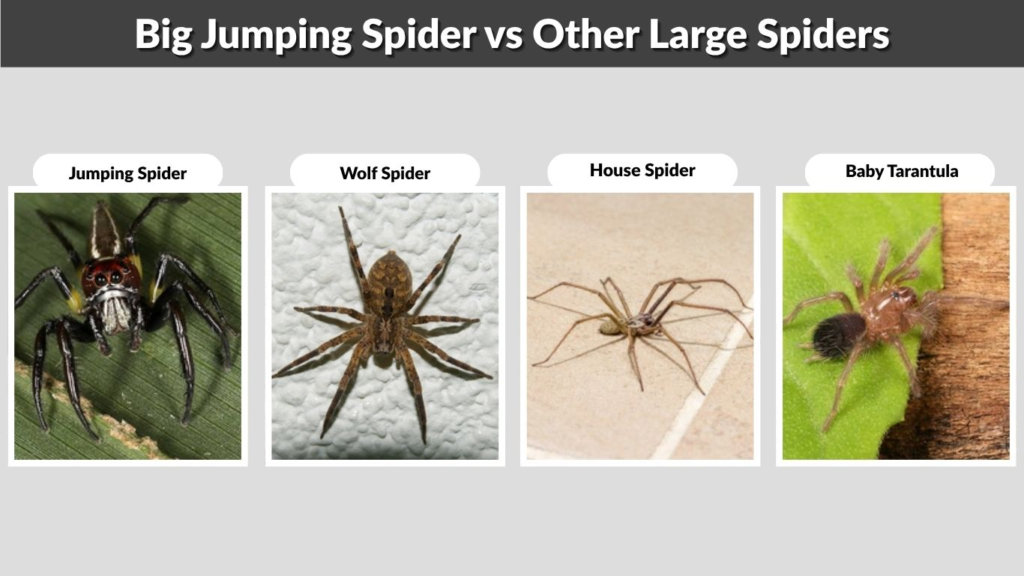
A big jumping spider may be confused with wolf spiders, house spiders, or young tarantulas. The easiest difference is the face. Jumping spiders have large front-facing eyes and a compact body. Wolf spiders have longer legs and usually run instead of making short, precise jumps.
House spiders often have longer, thinner legs and build messy webs. Jumping spiders may produce silk retreats, but they do not make large sticky webs to trap prey. Their bold movements and direct stare are strong clues.
Jumping Spider vs Wolf Spider
Wolf spiders are usually larger, faster runners with longer legs. They hunt on the ground and do not have the same front-eyed “face” as jumping spiders. Jumping spiders are more compact and often pause to look around before moving.
Jumping Spider vs House Spider
Common house spiders often stay in webs and wait for prey. Jumping spiders roam across walls, windows, furniture, and plants. If the spider is walking in short bursts and looking directly at movement, it is likely a jumping spider.
Jumping Spider vs Baby Tarantula
A large fuzzy jumping spider may look like a tiny tarantula, but it has a shorter body and a more alert face. Baby tarantulas are heavier-bodied ground spiders and do not move with the same quick jumping pattern.
FAQs
How big is an adult jumping spider?
An adult jumping spider may be only a few millimeters long, but larger species can reach around 10–20 mm in body length. Some of the biggest species may approach about 1 inch. Females are often larger than males, especially when mature.
How big can a bold jumping spider get?
A bold jumping spider can grow large enough to be easily noticed on walls, windows, and fences. Many adults are around 8–18 mm in body length. Their black body, white spots, and sometimes shiny green mouthparts make them look even more striking.
How big does a regal jumping spider get?
A regal jumping spider is one of the larger jumping spiders in North America. Adult females are usually bigger and heavier than males. Some individuals can reach over half an inch in body length, making them one of the most impressive common jumping spiders.
Is a big jumping spider in the house a problem?
A big jumping spider in the house is usually not a serious problem. It may have entered while hunting small insects or through a gap near a window or door. You can safely move it outside with a cup and paper if you do not want it indoors.
Are big jumping spiders good pets?
Big jumping spiders can be good pets for careful keepers. They are small, active, and interesting to watch. However, they need proper ventilation, safe climbing space, suitable prey, and gentle care. Wild spiders should not be handled roughly or kept without knowing their needs.
