
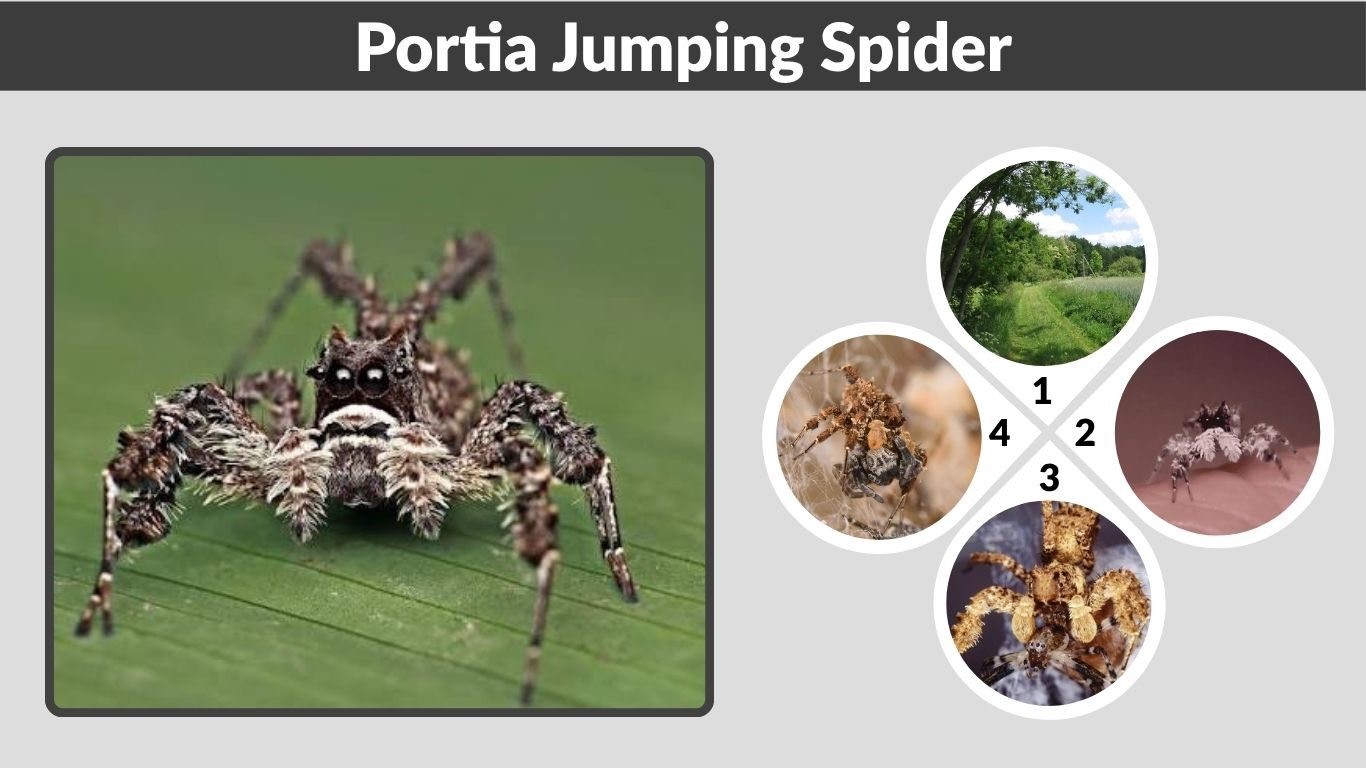
The Portia jumping spider is one of the most fascinating spiders in the world. Unlike many spiders that rely only on webs or simple ambush tactics, Portia uses patience, planning, and clever hunting moves. This small jumping spider is famous for attacking other spiders, copying web vibrations, and solving problems while hunting dangerous prey.
What Is a Portia Jumping Spider?
A Portia jumping spider is a member of the jumping spider family, Salticidae. It belongs to the genus Portia, a group known for hunting other spiders more than insects. These spiders are small, sharp-eyed, and highly skilled predators.
Portia spiders do not look as colorful as some pet jumping spiders, but their behavior makes them special. They can stalk prey, enter another spider’s web, send false signals through silk, and attack from a safe angle. Their hunting style often looks more like strategy than simple instinct.
Basic Identification
- Small to medium-sized jumping spider
- Brown, gray, or mottled body color
- Long, thin-looking legs compared with many jumpers
- Hairy or fringed body shape
- Large front-facing eyes
- Slow, careful movement when stalking prey
- Often found near webs of other spiders
- Known for hunting spiders instead of only insects
Why Portia Spiders Are Special
Portia spiders are special because they can change their hunting method depending on the situation. If one approach does not work, they may try another. They can also take long detours to reach prey from behind or above, even when they temporarily lose sight of the target.
Portia vs Common Jumping Spiders
Most jumping spiders hunt insects by watching, stalking, and jumping. Portia can do that too, but it is more famous for spider-hunting. It often invades webs, tricks web-building spiders, and uses slow movements to avoid being detected.
Portia Labiata Jumping Spider
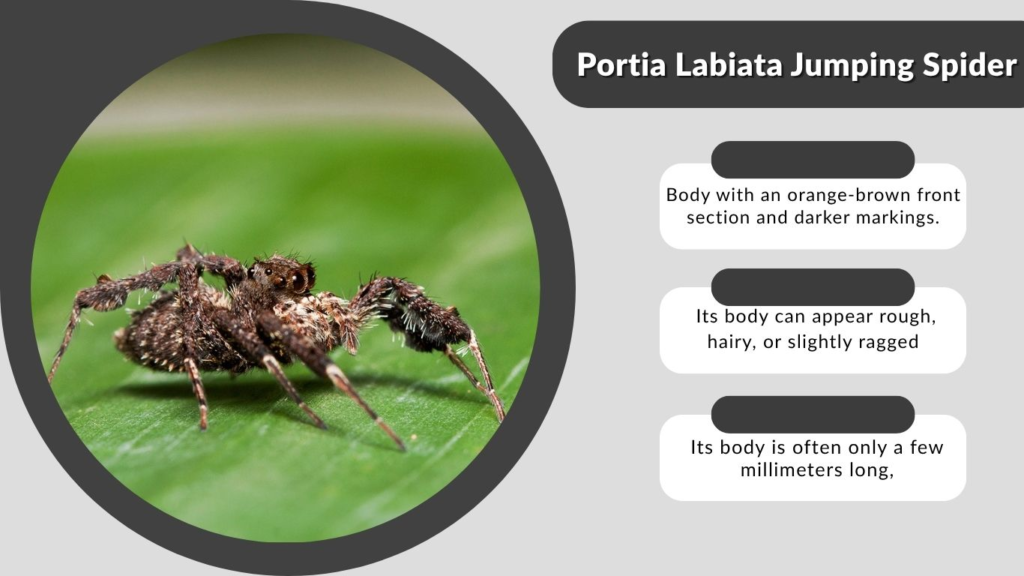
Portia labiata is one of the best-known Portia species. It has been studied because of its complex hunting behavior and problem-solving ability. This species is often mentioned when people talk about spider intelligence.
Portia labiata is found in several parts of Asia, including India, Sri Lanka, southern China, Myanmar, Malaysia, Singapore, Java, Sumatra, and the Philippines. It usually lives in warm habitats where other spiders are available as prey.
Portia Labiata Appearance
Portia labiata usually has a brownish body with an orange-brown front section and darker markings. It does not always look bright or flashy. Its body can appear rough, hairy, or slightly ragged, which helps it blend with leaves, bark, and web debris.
Portia Labiata Size
Portia labiata is not a giant spider. It is usually small to medium-sized compared with other jumping spiders. Its body is often only a few millimeters long, but its thin legs and unusual posture can make it look larger when it moves across leaves or webs.
Portia Labiata Habitat
This species is often found in warm, humid places with plenty of vegetation and spider webs. Forest edges, shrubs, gardens, and leafy areas can provide good hunting grounds. Since Portia often hunts other spiders, it may stay near webs where prey is available.
Portia Jumping Spider Intelligence
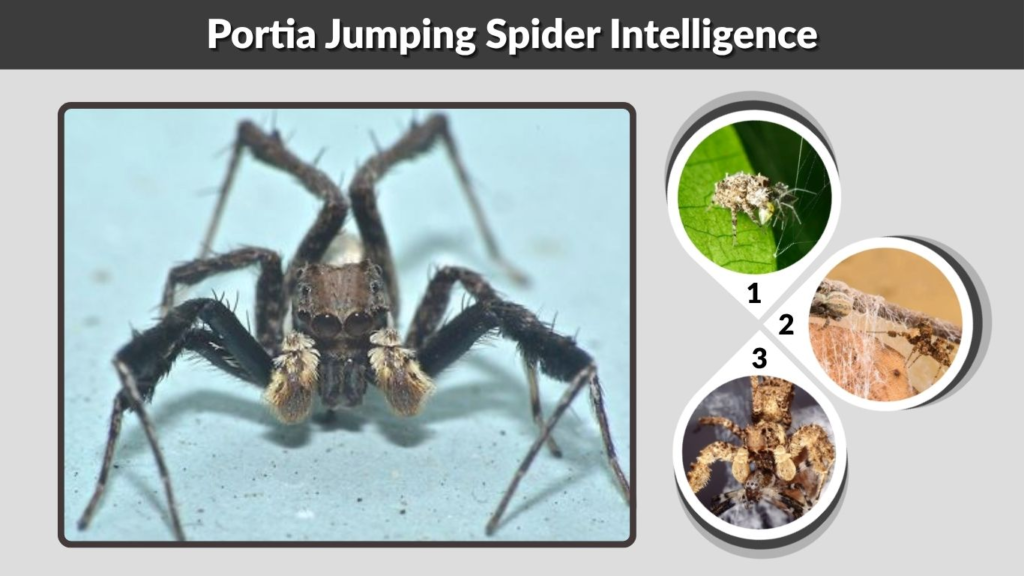
Portia jumping spiders are often called intelligent because they show flexible hunting behavior. They do not always rush at prey. Instead, they may pause, test signals, change routes, and choose a safer attack path.
Their intelligence is not the same as human intelligence, but it is impressive for such a small animal. A Portia spider has a tiny brain, yet it can solve hunting problems that require patience and adjustment.
Signs of Smart Behavior
- Can take detours to reach prey
- Can hunt even when prey is temporarily out of sight
- Can test different web vibrations
- Can change tactics after failure
- Can wait patiently before attacking
- Can avoid dangerous prey movements
- Can approach from behind or above
- Can use silk as a safety line while attacking
Object Permanence in Portia
Object permanence means understanding that something still exists even when it cannot be seen. Portia spiders have shown behavior that suggests they can continue a hunting plan after losing visual contact with prey. This helps them take indirect routes instead of only moving straight toward a target.
Problem-Solving Ability
Portia may face dangerous prey that can bite, trap, or attack back. To survive, it cannot rely on speed alone. It may test the prey’s reaction, move slowly, use cover, and attack only when the chance is right. This careful hunting style is one reason scientists and spider enthusiasts find Portia so interesting.
How Portia Jumping Spiders Hunt
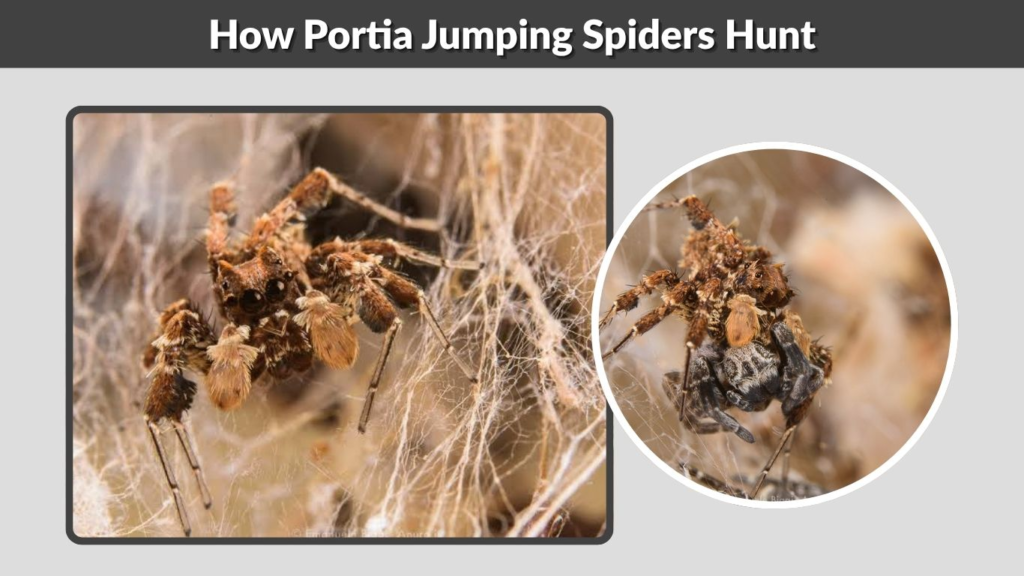
Portia jumping spiders are famous for hunting other spiders. This is risky because their prey may also be venomous, strong, or web-skilled. Portia must avoid being trapped in sticky silk or bitten during an attack.
Instead of charging blindly, Portia uses stealth. It may move in a slow, broken pattern that resembles debris in a web. It may also pluck silk strands to create fake signals. These signals can make the web owner come closer or become less alert.
Web Signal Mimicry
Portia can make vibrations in another spider’s web. These vibrations may imitate trapped prey, a potential mate, or harmless movement. When the resident spider responds, Portia may slowly move closer and attack.
Detour Hunting
Sometimes the best way to reach prey is not the shortest path. Portia may climb around leaves, branches, or web edges to attack from behind. This can take time, but it reduces danger. The spider may choose a longer route if it gives a better attack angle.
Patient Ambush
Portia can wait for the right moment. If the prey is moving too much or the web is dangerous, it may pause. This patience helps it avoid mistakes. Since attacking another spider is risky, one wrong move can turn the hunter into prey.
Portia Jumping Spider Size and Quick Facts
Portia spiders are not large spiders, but their behavior makes them feel powerful. They are usually smaller than bold jumping spiders or regal jumping spiders. Their long legs, slow stalking posture, and unusual body shape can make them look bigger than their actual size.
| Feature | Portia Jumping Spider |
| Family | Salticidae |
| Genus | Portia |
| Common prey | Other spiders, small insects |
| Hunting style | Stalking, web vibration, detours |
| Body size | Usually small to medium |
| Known for | Intelligence and spider-hunting |
| Danger to humans | Not considered dangerous |
| Best-known species | Portia labiata |
Where Portia Jumping Spiders Live
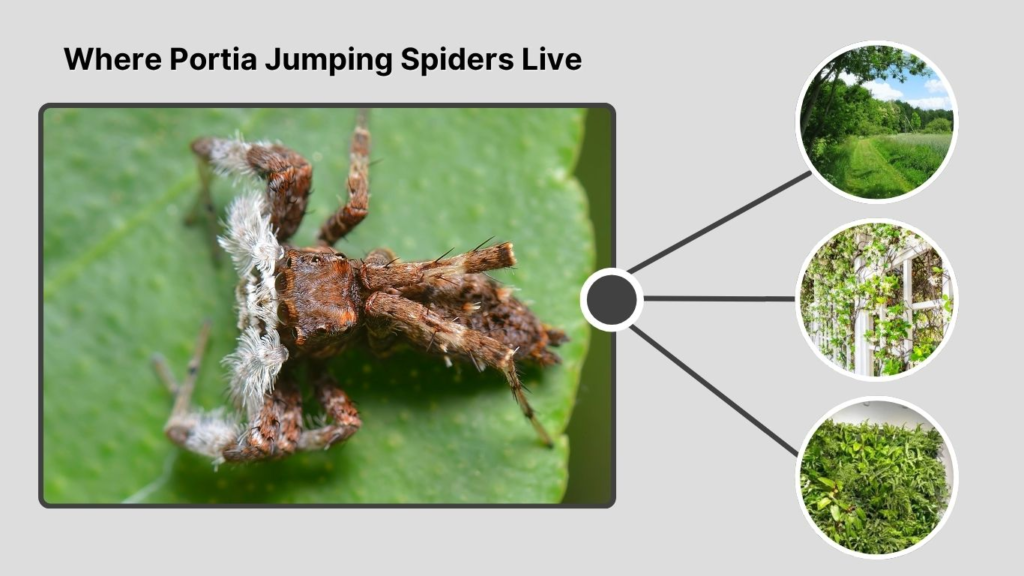
Portia jumping spiders are mostly found in warmer regions. Different species may live in Asia, Africa, and parts of Australia. They prefer habitats where other spiders are common, because webs provide both hunting opportunities and shelter.
They may live among leaves, shrubs, tree trunks, vines, forest edges, and garden vegetation. Some species can also be found near human structures if web-building spiders are present nearby.
Natural Habitat
- Forest edges
- Shrubs and vines
- Leafy vegetation
- Tree bark
- Garden plants
- Areas with many spider webs
- Warm and humid locations
- Sheltered outdoor spaces
Portia Jumping Spider Area
The exact area depends on the species. Portia labiata is known from South and Southeast Asian regions. Other Portia species occur in different tropical or subtropical areas. They are not common house spiders in many countries, so finding one indoors may be unusual.
Do Portia Spiders Live in Houses?
Portia spiders are more likely to live outdoors or near vegetation than inside clean indoor rooms. However, they may appear near buildings if there are webs and other spiders around. A house with many small web spiders could attract spider-hunting species.
Are Portia Jumping Spiders Dangerous?
Portia jumping spiders are not considered dangerous to humans. Like most spiders, they have venom for subduing prey, but they are small and not aggressive toward people. Their main interest is hunting other spiders, not biting humans.
A bite is unlikely unless the spider is trapped, pressed, or handled roughly. If a bite happens, it may cause mild pain, redness, or swelling. Serious effects are not expected for most healthy people, but unusual symptoms should be checked by a medical professional.
Can Portia Jumping Spiders Bite?
Yes, they can bite, but they usually avoid humans. A Portia spider is more likely to run, hide, or drop away on silk than attack a person. Handling any spider with bare hands is not recommended.
What to Do If You Find One
Use a cup and paper to move it outside. Place the cup gently over the spider, slide paper underneath, and release it near plants or shrubs. Avoid crushing it because Portia spiders are useful predators in the ecosystem.
Are They Poisonous?
Portia spiders are not poisonous to touch. They are venomous because they use venom on prey, but their venom is not known to be medically serious for humans. The safest choice is still to observe without handling.
Portia Jumping Spider as a Pet
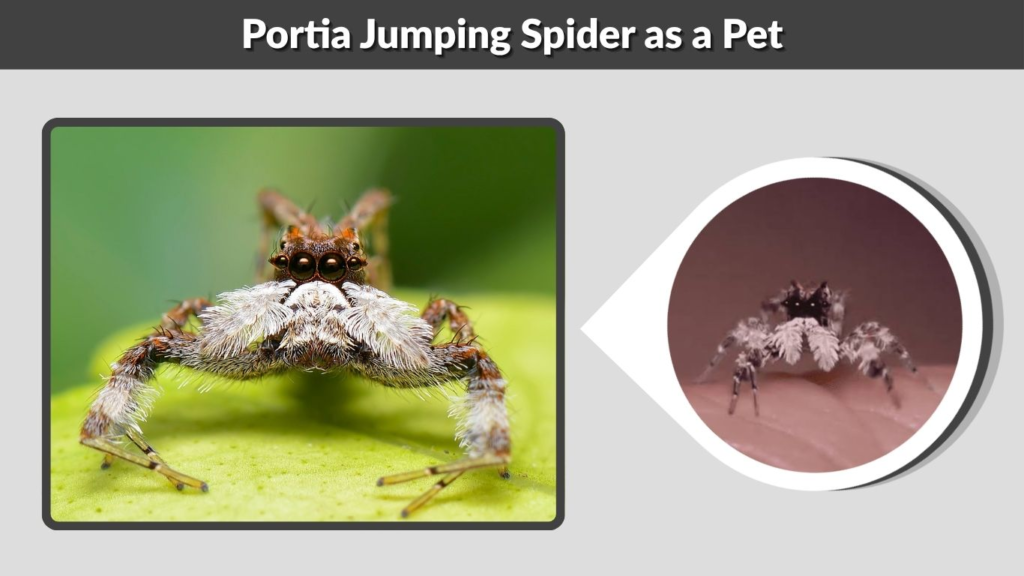
Some spider keepers may be interested in Portia because of its intelligence and hunting behavior. However, Portia is not as common in the pet trade as regal jumping spiders, bold jumping spiders, or other popular species.
Portia may also be harder to care for because of its natural preference for other spiders as prey. This makes feeding more complicated than feeding common pet jumpers with flies or small crickets.
Portia Jumping Spider for Sale
Portia jumping spiders may occasionally appear for sale from specialty breeders or exotic invertebrate keepers. However, availability can be limited. Buyers should avoid wild-caught animals from questionable sources and should check local rules before buying any exotic spider.
Pet Care Difficulty
Portia is better for experienced keepers than beginners. It may need a small, secure, well-ventilated enclosure with climbing space, hiding areas, and careful feeding. Because it may hunt other spiders, feeding choices must be planned responsibly.
Should Beginners Keep Portia?
Beginners may do better with a more common pet jumping spider first. Species such as regal jumping spiders are usually easier to find and care for. Portia is best for keepers who already understand jumping spider behavior, feeding, molting, and safe enclosure setup.
Portia Jumping Spider Behavior
Portia behavior can look slow and thoughtful. It may stop often, move one leg at a time, and study its surroundings. This is different from some jumping spiders that move quickly in short bursts.
When hunting in webs, Portia may become extremely cautious. It must read silk vibrations, avoid sticky strands, and stay out of reach until it is close enough to attack. This careful behavior helps it survive dangerous hunts.
Jumping Ability
Portia can jump like other jumping spiders, but it does not always rely on sudden leaps. It often uses slow stalking, silk lines, and careful positioning first. Jumping is usually used when the attack angle is right.
Web Use
Although jumping spiders do not build prey-catching orb webs, Portia may build silk retreats and use silk during hunting. Females may also use web structures more than many other jumpers. Silk helps with safety, resting, egg protection, and movement.
Diet in the Wild
Portia mainly eats other spiders, but it may also take small insects. Its spider-hunting habit is what makes it unusual. It may target web-building spiders, other jumping spiders, and small arthropods when available.
FAQs
What is a Portia jumping spider?
A Portia jumping spider is a spider from the genus Portia in the jumping spider family. It is famous for hunting other spiders, using web vibrations, taking detours, and showing flexible problem-solving behavior during hunts.
Why is Portia called an intelligent spider?
Portia is called intelligent because it can change hunting tactics, test different approaches, remember useful strategies, and take indirect routes to reach prey. Its behavior shows planning-like skill, especially when hunting dangerous web-building spiders.
How far can a Portia spider jump?
Portia can jump like other jumping spiders, but exact distance depends on species, size, surface, and situation. It often uses careful stalking before jumping. Instead of relying only on long jumps, it uses timing, silk, and smart positioning.
Is Portia labiata dangerous to humans?
Portia labiata is not considered dangerous to humans. It may bite only if trapped or handled roughly. A bite would usually be mild for most people, but any unusual swelling, pain, or allergic reaction should be checked by a medical professional.
Can you buy a Portia jumping spider?
Portia jumping spiders may be available from some specialty breeders or exotic invertebrate sellers, but they are not as common as regal or bold jumping spiders. Buyers should check local rules, choose ethical sources, and understand their care needs first.
