
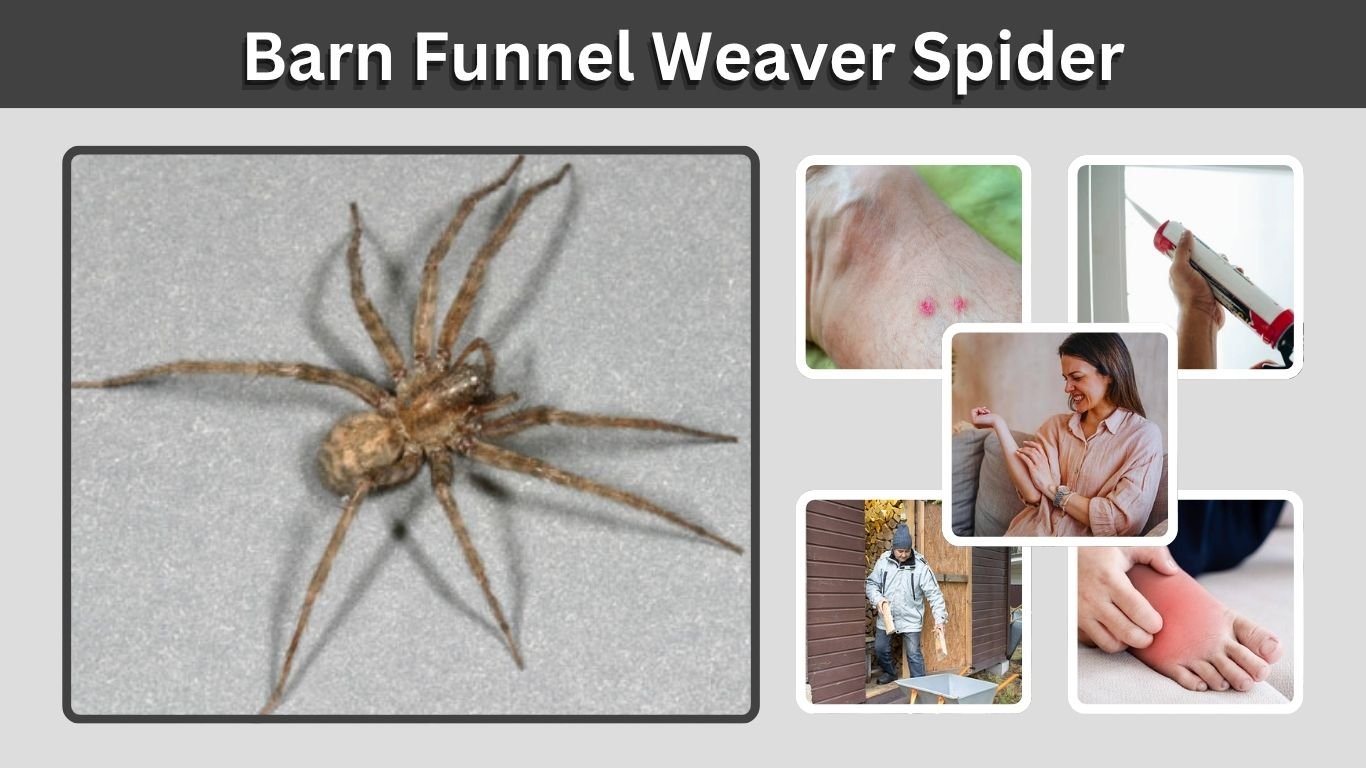
The barn funnel weaver spider is a common brown spider often found around barns, sheds, basements, garages, and other sheltered structures. Known scientifically as Tegenaria domestica, it builds a distinctive sheet-like web that leads into a funnel-shaped retreat. Its long legs and fast movement sometimes cause people to mistake it for a hobo spider or wolf spider. Although it possesses venom for catching prey, the barn funnel weaver is generally considered harmless to humans and usually prefers hiding over confrontation.
What Is a Barn Funnel Weaver Spider?
The barn funnel weaver is a member of the funnel-weaving spider family Agelenidae. It has adapted well to living around human structures and may remain in the same protected location for long periods if food is available. Its web and body shape provide some of the easiest clues for distinguishing it from other common brown spiders.
Barn Funnel Weaver Spider Identification
Look for these common characteristics:
- Brown, grayish-brown, or reddish-brown coloration
- Long, relatively slender legs
- Patterned abdomen with darker markings
- Two noticeable spinnerets extending from the rear
- Relatively flat body shape
- Fast running speed when disturbed
- Sheet-like web ending in a funnel-shaped retreat
- Preference for dark, protected corners
The overall color can vary, so identification should not depend on color alone.
Barn Funnel Weaver Spider Size
Adult barn funnel weavers are moderate-sized spiders. Their bodies are generally around ¼ to ½ inch long, although their long legs can make them appear considerably larger.
Females are usually somewhat larger and more robust than males. Adult males often look slimmer and may wander away from established webs while searching for females. Because their legs extend well beyond the body, even a relatively small individual can look intimidating indoors.
Male Barn Funnel Weaver Spider
Male barn funnel weavers become especially noticeable when they leave sheltered locations in search of mates. They may appear on walls, floors, basements, garages, or storage areas.
The male generally has a slimmer abdomen and proportionally longer-looking legs than the female. Enlarged pedipalps near the mouth are another characteristic of mature males. A wandering male indoors does not necessarily mean there are many spiders living inside the building.
Barn Funnel Weaver Spider Web
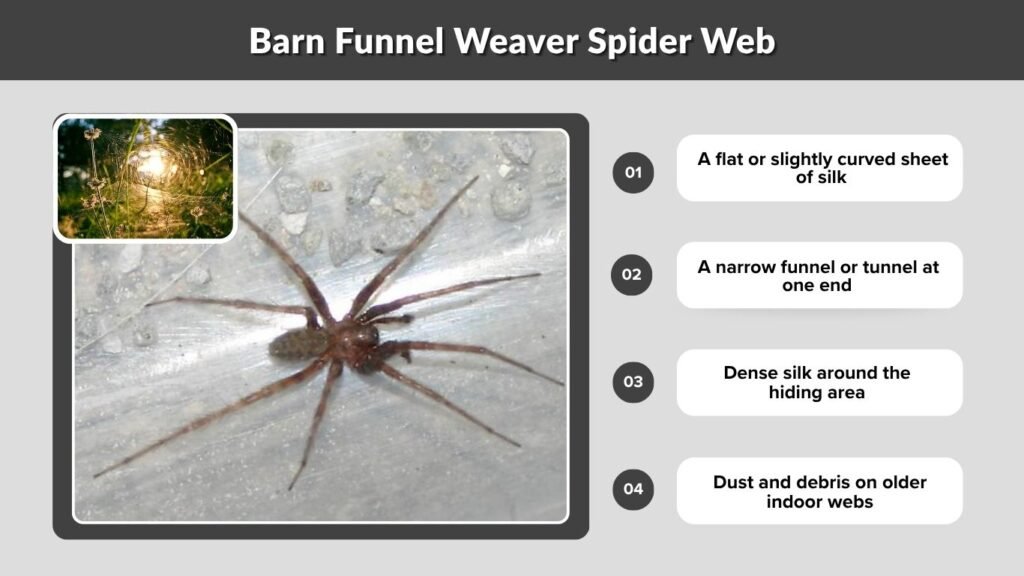
The web is perhaps the most recognizable feature of this spider. Barn funnel weavers construct a broad, horizontal sheet of silk connected to a tube-like retreat. The spider waits inside the funnel and responds quickly when vibrations indicate that an insect has landed or walked across the web.
What Does the Web Look Like?
A typical barn funnel weaver web has:
- A flat or slightly curved sheet of silk
- A narrow funnel or tunnel at one end
- Dense silk around the hiding area
- A web positioned in a protected corner or crack
- Dust and debris on older indoor webs
- A spider hiding close to the funnel entrance
Unlike many orb-weaver webs, the surface is not designed primarily around sticky capture threads.
Where Do They Build Their Webs?
Barn funnel weavers prefer quiet areas where their webs are protected from frequent disturbance. Indoors, they may establish themselves in basements, garages, barns, sheds, crawl spaces, window frames, and storage rooms.
Outdoors, they may use spaces beneath logs, rocks, boards, porches, or exterior siding. Buildings with plenty of cracks and a steady insect population can provide particularly suitable conditions.
How the Web Helps Them Hunt
The spider typically remains hidden inside its funnel with its front legs positioned near the entrance. When an insect moves across the sheet, vibrations travel through the silk.
The barn funnel weaver then rushes from its retreat, captures the prey, and may drag it back toward the funnel. This ambush strategy allows the spider to hunt efficiently while spending much of its time protected from predators and environmental conditions.
Is the Barn Funnel Weaver Spider Poisonous?
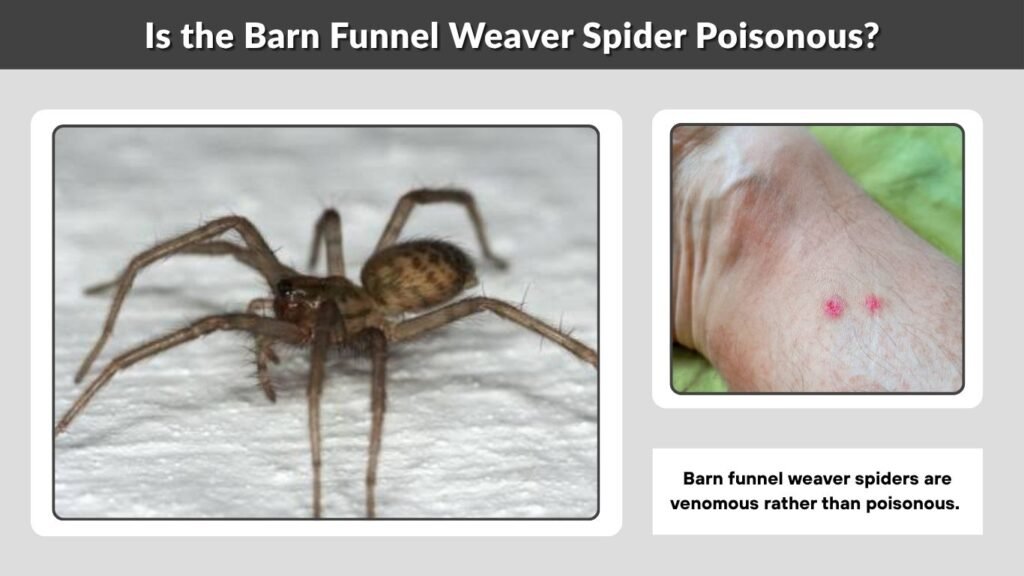
Barn funnel weaver spiders are venomous rather than poisonous. They inject venom through their fangs to immobilize insects and other small prey. However, their venom is not generally considered medically significant to humans, and these spiders are not known for aggressive behavior.
Is a Barn Funnel Weaver Spider Dangerous?
Barn funnel weavers generally pose little danger to people. They usually retreat deeper into their webs or run away when disturbed.
Bites are uncommon because the spider has little reason to attack something as large as a human. Most encounters occur when people move stored objects, clean garages or basements, or accidentally disturb a web.
The similar-sounding name should also not be confused with Australian funnel-web spiders, which belong to different groups and can have medically significant venom.
Barn Funnel Weaver Spider Venom
The spider’s venom is mainly designed for small prey such as flies, moths, beetles, and other insects. Venom helps subdue prey quickly before it can escape from the web.
In humans, a defensive bite may cause localized discomfort, but severe poisoning is not normally associated with the barn funnel weaver. Avoiding direct handling greatly reduces the chance of being bitten.
Can Children or Pets Be at Risk?
Children and pets are unlikely to be targeted because these spiders do not actively attack larger animals. A defensive bite could potentially occur if a spider were trapped against the skin or pressed by a paw.
Keeping stored areas clean and discouraging spiders from heavily used rooms can reduce accidental encounters. Unusual or severe symptoms after any suspected spider bite should receive appropriate medical or veterinary attention.
Barn Funnel Weaver Spider Bite
A barn funnel weaver bite is relatively uncommon. These spiders typically depend on speed and hiding behavior rather than biting for defense. If someone accidentally grabs, squeezes, or traps one, however, the spider may bite as a last defensive response.
Possible Bite Symptoms
Possible localized symptoms can include:
- Mild to moderate pain
- Redness
- Slight swelling
- Itching
- Tenderness
- Temporary irritation around the bite area
Symptoms can vary between individuals, and many skin conditions or insect bites are mistakenly blamed on spiders.
What to Do After a Bite
Wash the affected area gently with soap and water and keep it clean. A wrapped cold pack applied for short periods can help reduce minor discomfort or swelling.
Avoid scratching the area, especially if itching develops. Seek medical attention if there is severe pain, rapidly increasing swelling, spreading redness, difficulty breathing, dizziness, or another unusual reaction.
How Common Are Bites?
Verified barn funnel weaver bites are not commonly reported because the spider normally stays hidden inside its retreat. Even when disturbed, it often escapes rather than biting.
Many supposed spider bites occur without the spider ever being observed. For that reason, unexplained skin irritation should not automatically be attributed to a barn funnel weaver.
Barn Funnel Weaver vs Hobo Spider
Barn funnel weavers and hobo spiders belong to the same general funnel-weaving family and can look quite similar. Both are brown, fast-moving spiders that make sheet webs with funnel retreats. Reliable identification may require closer examination than simply comparing overall size or color.
Main Differences
Some useful comparison points include:
- Species: The barn funnel weaver is Tegenaria domestica; the hobo spider is Eratigena agrestis.
- Appearance: Both are brown and can have patterned abdomens.
- Web: Both construct sheet webs connected to funnel retreats.
- Location: Their geographic ranges can overlap in some areas.
- Identification: Detailed anatomical features are more reliable than color alone.
- Behavior: Both generally prefer escape over confrontation with humans.
Because they are closely related, casual visual identification can be difficult.
Is a Hobo Spider More Dangerous?
Older information sometimes portrayed the hobo spider as a medically dangerous species. Current understanding does not support treating typical hobo spider bites as a major cause of severe skin damage.
Neither a hobo spider nor a barn funnel weaver should be handled unnecessarily, but their presence alone is not normally an emergency. When identification matters, examining the actual spider is far more reliable than trying to identify one from a suspected bite.
Barn Funnel Weaver vs Wolf Spider
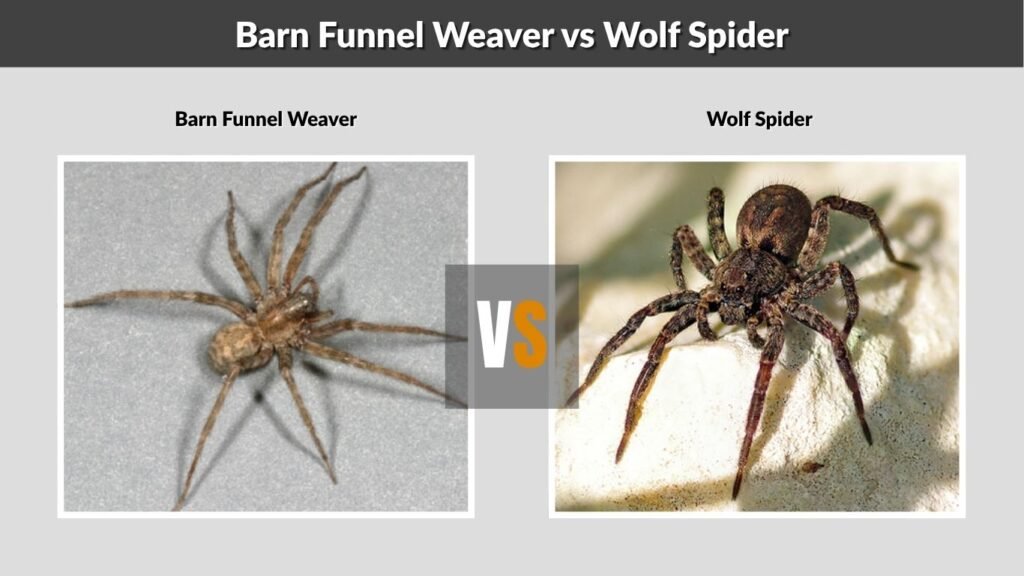
Wolf spiders frequently get confused with barn funnel weavers because both can be brown, long-legged, and extremely fast. Their hunting behavior, body structure, and use of webs provide useful ways to separate them.
How to Tell Them Apart
- Web use: Barn funnel weavers rely on funnel-shaped capture webs; wolf spiders hunt without capture webs.
- Body shape: Wolf spiders usually appear heavier and more robust.
- Spinnerets: Funnel weavers often have more noticeable elongated spinnerets.
- Eyes: Wolf spiders have two especially large forward-facing eyes.
- Hunting style: Wolf spiders roam after prey, while barn funnel weavers wait near their webs.
- Indoor behavior: Both may occasionally wander indoors.
Finding the spider inside a clearly defined funnel web is one of the strongest clues that it is a funnel weaver.
How to Get Rid of Barn Funnel Weaver Spiders
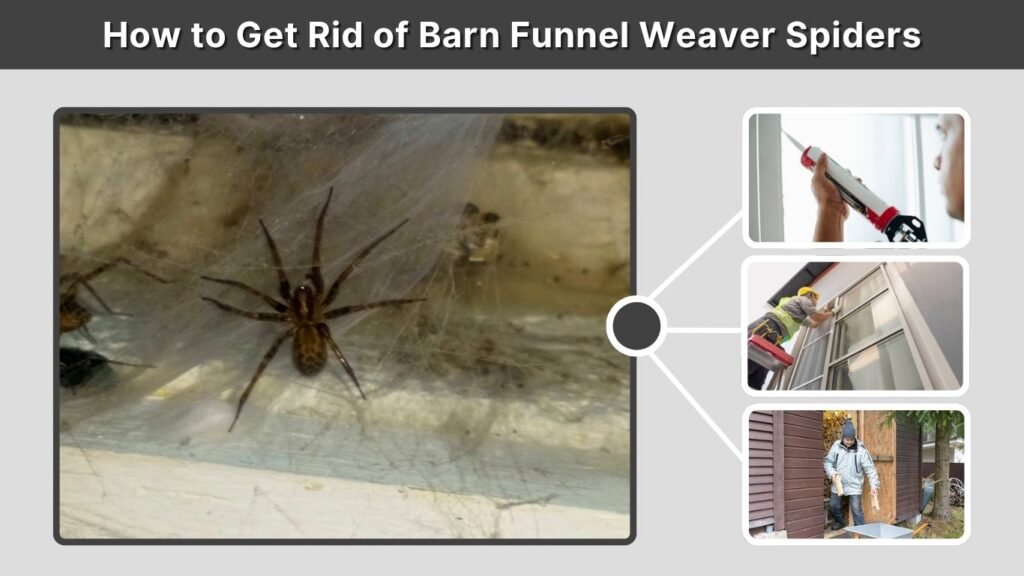
A single barn funnel weaver in a garage or shed usually does not indicate a serious problem. These spiders can actually reduce insect numbers. If they repeatedly appear inside living spaces, reducing shelter and insect prey is generally more effective than simply removing individual spiders.
Ways to Reduce Barn Funnel Weavers
- Remove old webs with a vacuum or broom.
- Seal gaps around windows, doors, siding, and foundations.
- Repair damaged screens.
- Reduce clutter in basements, garages, and storage areas.
- Keep boxes and stored items away from walls.
- Reduce outdoor lighting that attracts insects.
- Clean around window wells and exterior corners.
- Move firewood away from the house.
- Address indoor insect problems that provide food.
Preventing insects and eliminating hiding places can make a building far less attractive to funnel weavers.
Barn Funnel Weaver Spider Facts
Barn funnel weavers have lived alongside humans for a long time because buildings provide dry, protected places for their webs. Although their quick movements and brown appearance can be unsettling, they generally play the same ecological role as many other spiders by controlling small insects.
Quick Facts
- Scientific name: Tegenaria domestica
- Family: Agelenidae
- Common habitat: Barns, sheds, garages, basements, and sheltered outdoor areas
- Web type: Sheet web with a funnel retreat
- Diet: Mainly insects and other small arthropods
- Behavior: Shy and fast-moving
- Human danger: Generally low
- Bite frequency: Uncommon
- Hunting method: Ambushes prey from its funnel
- Common confusion: Hobo spiders and wolf spiders
FAQs
Are barn funnel weaver spiders poisonous?
Barn funnel weavers are technically venomous because they inject venom into their prey. They are not considered poisonous, and their venom is generally not regarded as medically significant to humans. These spiders usually avoid people and prefer retreating into their webs when disturbed.
What does a barn funnel weaver spider bite look like?
A bite may cause localized redness, mild swelling, tenderness, itching, or temporary pain. However, these symptoms are not unique to spider bites. Without observing the spider actually biting, it can be difficult to determine whether a skin reaction was caused by a barn funnel weaver.
How big does a barn funnel weaver spider get?
The body is generally around ¼ to ½ inch long, although the long legs can make the spider appear much larger. Females are commonly more robust than males, while mature males can appear especially long-legged as they wander in search of mates.
Are barn funnel weavers the same as hobo spiders?
No. They are different species, although both belong to the funnel-weaver family and can look similar. The barn funnel weaver is Tegenaria domestica, while the hobo spider is Eratigena agrestis. Accurate identification may require more than comparing color or general body shape.
Should I kill barn funnel weaver spiders?
Usually, there is no need to kill one found in a garage, shed, or outdoor area. Barn funnel weavers prey on insects and generally avoid humans. Indoors, they can be removed with a container or vacuum, while sealing gaps and reducing insect prey can prevent repeated appearances.
