
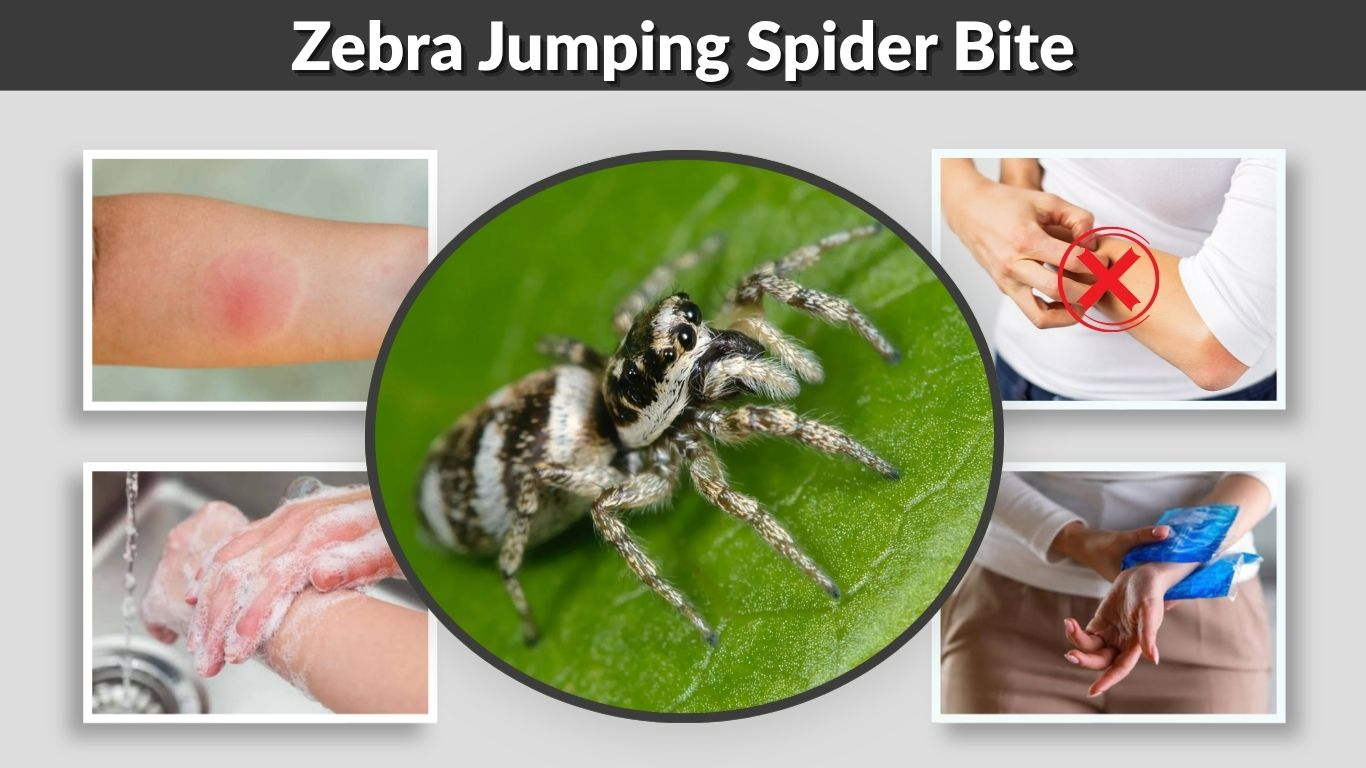
A zebra jumping spider bite sounds scary at first, especially if you have just found a tiny black-and-white spider on your wall, window, hand, or clothing. The good news is that zebra jumping spiders are not considered dangerous to humans. They are small, shy hunters that usually jump away rather than bite. Still, it is helpful to know what a bite may look like, what symptoms are normal, and when you should seek medical advice.
What Is a Zebra Jumping Spider?
The zebra jumping spider is a small black-and-white jumping spider known scientifically as Salticus scenicus. It is also commonly called the zebra spider, zebra jumper spider, or jumping zebra spider. This spider gets its common name from the pale stripes across its dark body, which can look a little like zebra markings.
Zebra jumping spiders belong to the jumping spider family, Salticidae. These spiders are famous for their sharp eyesight, curious behavior, and ability to leap short distances when hunting or escaping danger. Unlike many house spiders, they do not build a sticky web to trap prey. Instead, they actively stalk small insects and pounce when close enough.
You may see zebra jumping spiders on sunny walls, windowsills, fences, tree trunks, garden furniture, or indoor surfaces near bright light. They are often noticed because they move in quick bursts, stop suddenly, and seem to look directly at you with their large front-facing eyes.
Do Zebra Jumping Spiders Bite?
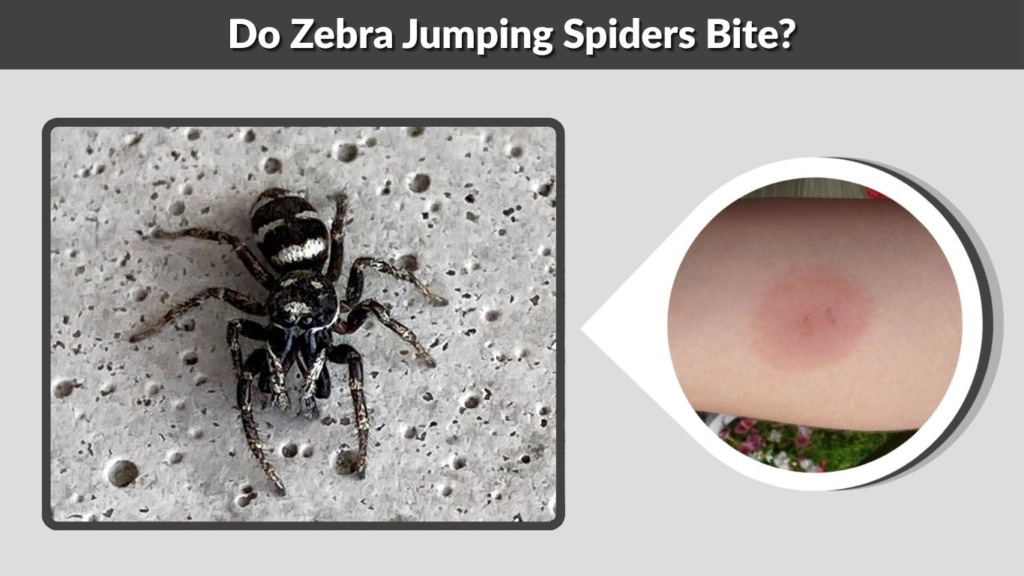
Yes, a zebra jumping spider can bite, but bites are rare. These spiders are not aggressive toward people. Their first reaction is usually to run, jump away, or hide. A bite is most likely to happen if the spider is trapped against the skin, squeezed, handled roughly, or caught inside clothing.
Because zebra jumping spiders are very small, their fangs are tiny. In many cases, they may not be able to pierce human skin easily. Even if a bite does occur, it is usually mild and short-lived.
A zebra jumping spider bite is not like a bite from a medically significant spider. It is not expected to cause dangerous venom effects, severe tissue damage, or serious illness in a healthy person. Most concerns come from fear, misidentification, or irritation from another insect bite that is mistaken for a spider bite.
Is a Zebra Jumping Spider Bite Dangerous?
For most people, a zebra jumping spider bite is not dangerous. Zebra jumping spiders do have venom, but their venom is designed to immobilize tiny insects, not harm humans. Their small size also limits how much venom they could deliver.
The word “venomous” can sound alarming, but many harmless spiders are technically venomous. Venom is simply part of how they hunt. “Poisonous” is different. A poisonous animal is harmful if touched or eaten, while a venomous animal injects venom through a bite or sting. Zebra jumping spiders are technically venomous, but they are not considered medically dangerous to people.
In simple terms: a zebra jumping spider bite may be annoying, but it is usually not a health emergency.
Zebra Jumping Spider Bite Symptoms
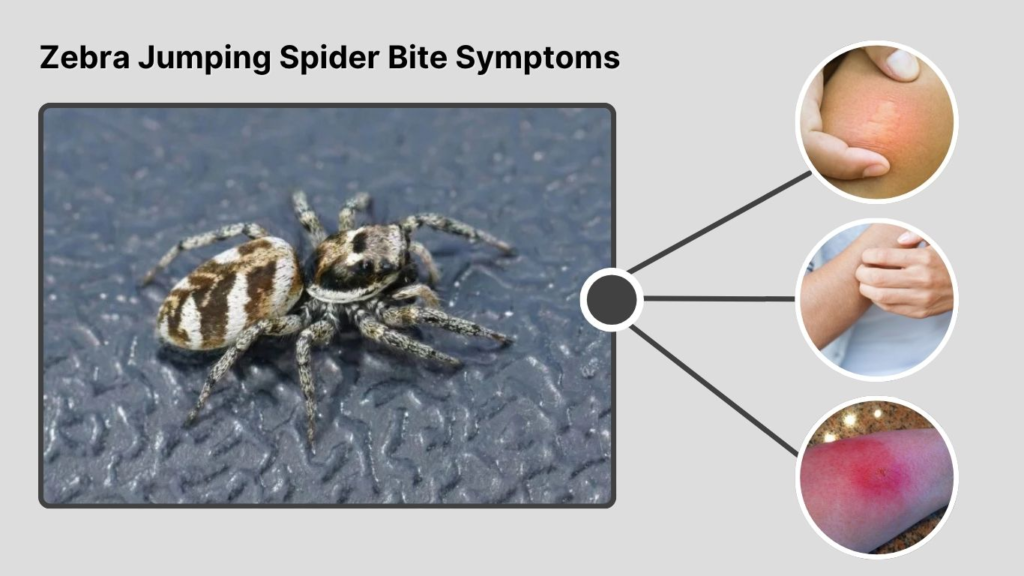
Most zebra jumping spider bite symptoms are mild. Some people may feel nothing at all. Others may notice a tiny sting, a small red spot, or slight itching. Symptoms are usually limited to the bite area.
Common Mild Symptoms
A zebra jumping spider bite may cause:
- A small red bump
- Mild swelling
- Slight itching
- Brief stinging or pinching
- Minor tenderness
- A tiny mark at the bite site
- Warmth around the area
These symptoms may resemble a mosquito bite, flea bite, or minor skin irritation. In many cases, the bite may improve within a few hours to a couple of days.
What the Bite May Look Like
A zebra jumping spider bite may look like a small red dot or raised bump. It may be hard to see clearly because the bite mark is usually tiny. Some people may notice light swelling around the area, but large swelling is not typical.
It is important to remember that many skin bumps are blamed on spiders even when no spider was seen biting. Mosquitoes, fleas, bed bugs, mites, ants, and skin allergies can all cause similar marks.
Zebra Jumping Spider Bite Symptoms Timeline
The timeline can vary from person to person, but a mild bite usually follows a simple pattern.
First Few Minutes
You may feel a tiny pinch, prick, or sting. Some people feel nothing. If the spider is seen on the skin, it may jump away quickly.
First Few Hours
A small red bump or mild swelling may appear. Itching or tenderness can develop. The area may feel slightly irritated, but symptoms should remain local.
First 24 Hours
The bump may stay the same or become a little itchier. Mild redness is common. Symptoms should not rapidly spread or become severely painful.
After 1–3 Days
Most mild irritation should begin to fade. If redness, swelling, pain, or warmth is getting worse instead of better, another cause may be involved, such as infection, allergic reaction, or a different biting insect.
How to Treat a Zebra Jumping Spider Bite
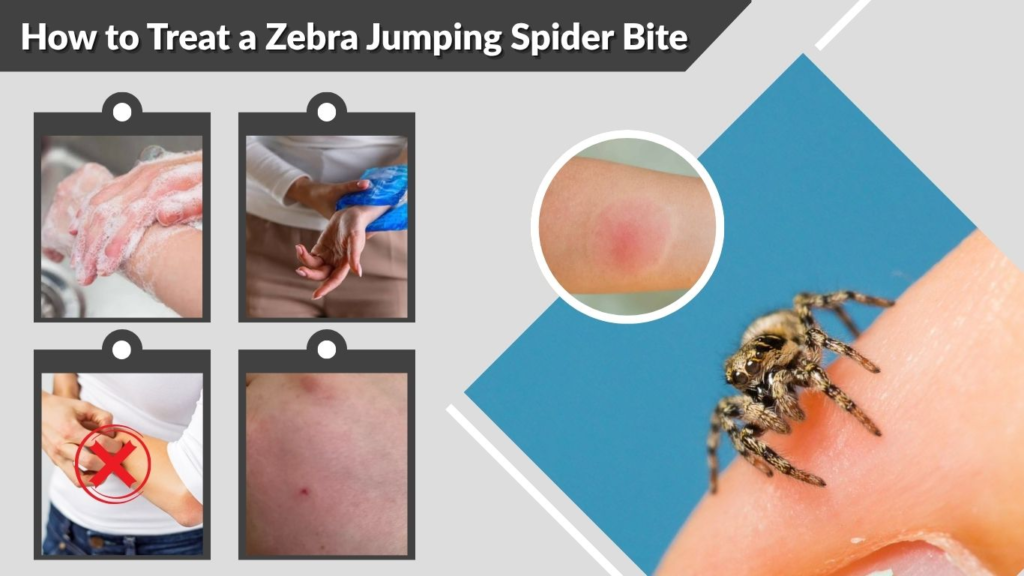
Most zebra jumping spider bites can be treated at home with basic first aid. The goal is to clean the skin, reduce irritation, and avoid scratching.
Step 1: Wash the Area
Clean the bite area with soap and water. This helps remove bacteria and lowers the chance of infection. Pat the skin dry with a clean towel.
Step 2: Use a Cold Compress
Apply a cold compress or wrapped ice pack for 10 to 15 minutes at a time. This can reduce swelling, itching, and discomfort. Do not place ice directly on bare skin.
Step 3: Avoid Scratching
Scratching can break the skin and increase the risk of infection. If the bite itches, try a cold compress first. An over-the-counter anti-itch cream may help, but follow the label instructions.
Step 4: Watch for Changes
Check the bite over the next day or two. Mild redness and itching are usually not a concern. Worsening pain, spreading redness, pus, fever, or severe swelling should be taken more seriously.
When to Seek Medical Help
A zebra jumping spider bite is usually mild, but medical care may be needed if symptoms are unusual or severe. You should be cautious if you did not clearly identify the spider, because some bites blamed on jumping spiders may come from other insects or conditions.
Seek Medical Advice If You Notice:
- Severe or spreading swelling
- Redness that keeps expanding
- Increasing pain
- Pus or signs of infection
- Fever or chills
- Dizziness
- Nausea or vomiting
- Muscle cramps
- Trouble breathing
- Swelling of the lips, face, or throat
- A wound that turns dark, open, or blistered
Breathing trouble, facial swelling, or throat tightness can be signs of a serious allergic reaction and should be treated as urgent.
Zebra Jumping Spider Bite vs Other Bug Bites
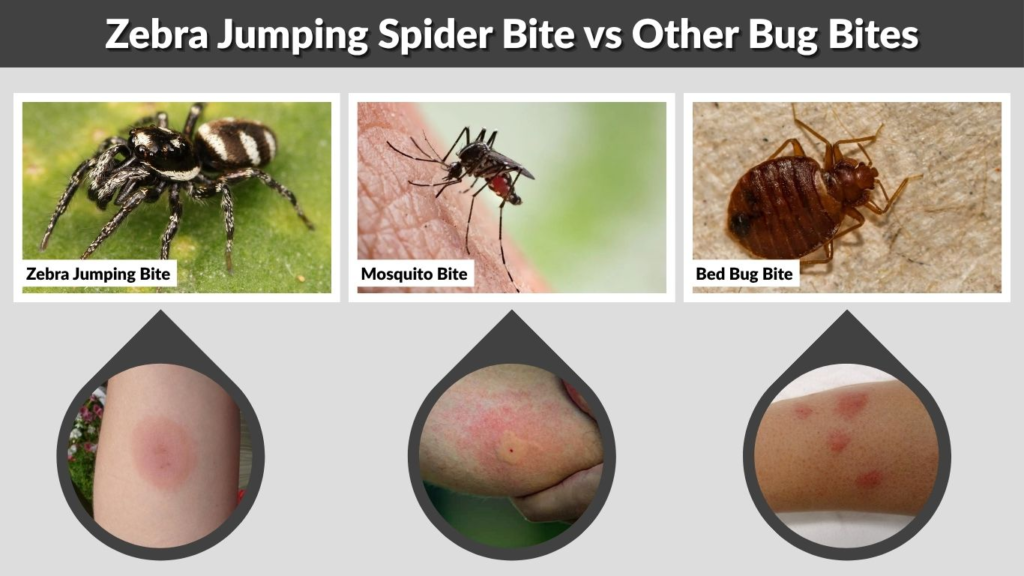
A zebra jumping spider bite can look similar to many other small bites. This is why identification can be difficult unless you actually saw the spider bite you.
Compared With a Mosquito Bite
A mosquito bite is usually itchier and may swell more. Zebra jumping spider bites are often less noticeable and may feel like a tiny pinprick.
Compared With an Ant Bite
Some ant bites or stings can burn more strongly and may form a small pustule. Zebra jumping spider bites are usually milder.
Compared With a Bed Bug Bite
Bed bug bites often appear in clusters or lines, especially after sleeping. A zebra jumping spider bite is more likely to be a single small spot.
Compared With a Dangerous Spider Bite
Dangerous spider bites may cause more serious symptoms, depending on the species. Severe pain, spreading tissue damage, muscle cramps, sweating, nausea, or systemic illness are not expected from a zebra jumping spider bite. If symptoms are severe, do not assume it was a harmless zebra jumping spider.
Why Zebra Jumping Spiders Bite
Zebra jumping spiders do not bite people for food. Humans are far too large to be prey. If a bite happens, it is defensive.
Common reasons include:
- The spider was pressed against skin
- It was trapped in clothing
- Someone tried to pick it up
- It was squeezed accidentally
- It felt threatened and had no escape route
The best way to avoid a bite is simple: do not handle the spider. If you find one indoors, gently guide it into a cup and release it outside near a wall, fence, or garden area.
Are Zebra Jumping Spiders Aggressive?
No, zebra jumping spiders are not aggressive toward humans. Their curious behavior can make them seem bold because they may turn and look at you instead of immediately fleeing. However, this is not aggression. Jumping spiders rely heavily on vision, so they often pause to inspect movement.
Their jumping ability is also sometimes misunderstood. A zebra jumping spider may jump away from danger or toward prey, but it is not trying to attack people. Its jump is a hunting and escape tool.
Can a Zebra Jumping Spider Bite a Child or Pet?
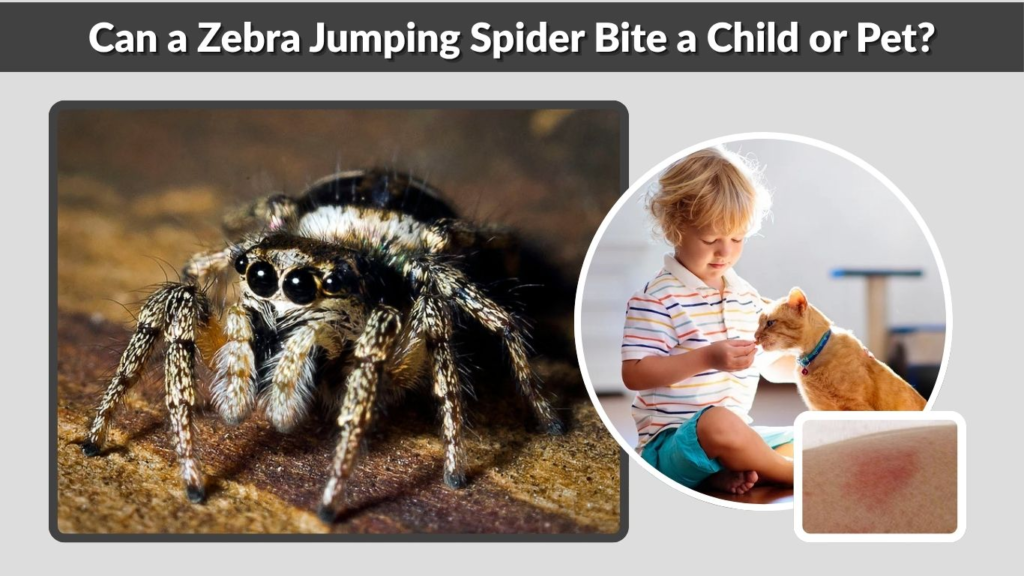
A zebra jumping spider can theoretically bite a child or pet, but it is unlikely. Children may be more likely to get bitten if they try to catch or squeeze the spider. Teach children not to pick up spiders with bare hands.
For pets, zebra jumping spiders are generally not a major concern. A cat or dog may notice and paw at one, but the spider is more likely to escape than bite. If a pet develops swelling, drooling, vomiting, or unusual behavior after interacting with any spider, contact a veterinarian.
How to Prevent Zebra Jumping Spider Bites
Since zebra jumping spiders are harmless and beneficial, you usually do not need pest control for them. They eat small insects and do not infest homes like some pests. Prevention is mostly about reducing accidental contact.
Simple Prevention Tips
- Avoid handling spiders directly
- Shake out clothing or towels left outside
- Use a cup and paper to move spiders safely
- Seal gaps around windows and doors
- Keep window screens in good condition
- Reduce small flying insects near lights
- Wear gloves when moving outdoor items
If you see a zebra jumping spider indoors, it is often just passing through or hunting near a sunny window.
Should You Kill a Zebra Jumping Spider?
In most cases, no. Zebra jumping spiders are beneficial predators. They help control small insects and are not dangerous to humans. If one is inside your home and you do not want it there, relocation is a better option.
Use a small cup or jar and a piece of paper. Place the cup over the spider, slide the paper underneath, and release it outside in a sheltered area. Avoid dropping it from a height or placing it somewhere wet.
Myths About Zebra Jumping Spider Bites
There are many myths about spider bites, and zebra jumping spiders are often misunderstood because they move quickly and have bold markings.
Myth 1: Zebra Jumping Spiders Are Poisonous
They are not poisonous to humans. They are technically venomous, but their venom is used for small prey and is not considered dangerous to people.
Myth 2: They Jump at People to Attack
They do not jump at people to attack. If they jump, they are usually escaping, exploring, or hunting tiny prey.
Myth 3: Every Small Red Bump Is a Spider Bite
Many red bumps come from mosquitoes, fleas, bed bugs, skin irritation, allergies, or minor infections. Unless you saw the spider bite you, it can be hard to confirm the cause.
Myth 4: A Zebra Jumping Spider Bite Causes Necrosis
Tissue necrosis is not expected from a zebra jumping spider bite. If a wound becomes dark, open, painful, or worsening, seek medical care because another cause may be involved.
FAQs
Is a zebra jumping spider bite dangerous?
No, a zebra jumping spider bite is not considered dangerous for most people. These spiders are small and their venom is meant for tiny prey. A bite may cause mild redness, itching, or swelling, but serious symptoms are not expected in a healthy person.
What are zebra jumping spider bite symptoms?
Common zebra jumping spider bite symptoms include a tiny red bump, mild swelling, itching, slight tenderness, or a brief stinging feeling. Some people may not notice any symptoms at all. If symptoms spread or worsen, seek medical advice.
Can a jumping zebra spider bite pierce skin?
It may be able to pierce skin in some cases, but zebra jumping spiders are very small, and their fangs are tiny. Many defensive bites may cause little to no injury. If a bite happens, it is usually mild and localized.
How do you treat a zebra jumper spider bite?
Wash the area with soap and water, apply a cold compress, and avoid scratching. Mild itching or swelling usually improves on its own. Get medical help if you notice severe swelling, spreading redness, pus, fever, breathing problems, or worsening pain.
Should I worry if I was bitten by a zebra jumping spider?
Usually, no. Stay calm, clean the bite, and watch the area. Most bites are minor. You should worry only if symptoms are severe, spreading, infected-looking, or if you are unsure whether the spider was actually a harmless zebra jumping spider.
