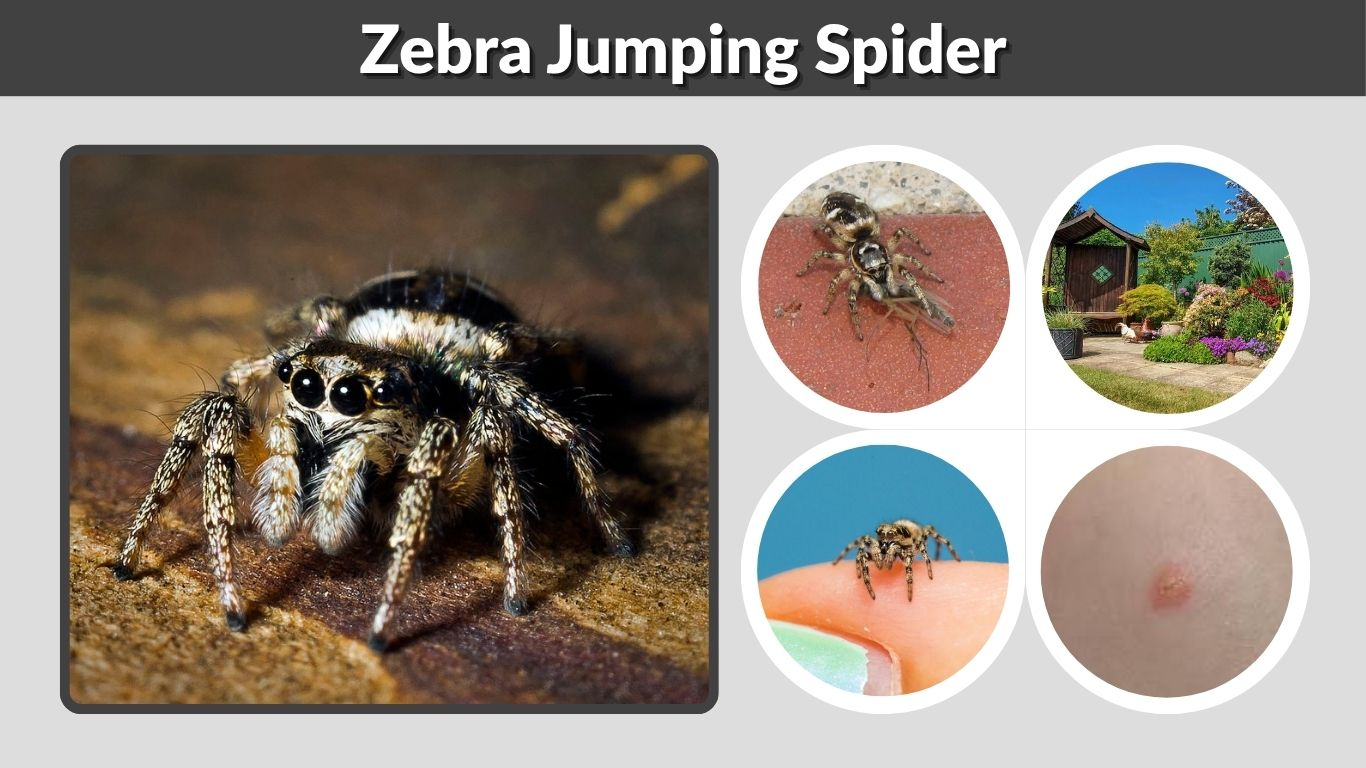
The zebra jumping spider is one of the easiest jumping spiders to recognize, thanks to its bold black-and-white stripes, quick movements, and curious behavior. Often seen on sunny walls, windowsills, fences, and garden surfaces, this tiny hunter is harmless to most people and fascinating to watch. Below, you’ll learn how to identify it, where it lives, what it eats, whether it bites, and whether it makes a good pet.
What Is a Zebra Jumping Spider?
The zebra jumping spider, also called the zebra spider or zebra jumper spider, is a small species of jumping spider known scientifically as Salticus scenicus. It belongs to the Salticidae family, the jumping spiders, which are famous for their excellent eyesight, active hunting style, and short, accurate jumps.
Unlike web-building spiders, the zebra jumping spider does not spin a web to trap insects. Instead, it stalks prey during the day, judges distance with its large front-facing eyes, and jumps with surprising precision. Its black-and-white body pattern gives it the “zebra” name.
Quick Facts About Zebra Jumping Spiders
| Feature | Details |
| Scientific name | Salticus scenicus |
| Common names | Zebra jumping spider, zebra spider, zebra jumper spider |
| Body size | Usually about 4–6.5 mm, with females often slightly larger |
| Overall size | Around 8 mm including legs |
| Diet | Small insects and other tiny arthropods |
| Web use | Uses silk for safety lines and retreats, not prey capture |
| Lifespan | Often 1–2 years in the wild |
| Risk to humans | Very low; bites are uncommon and usually mild |
How to Identify a Zebra Jumping Spider
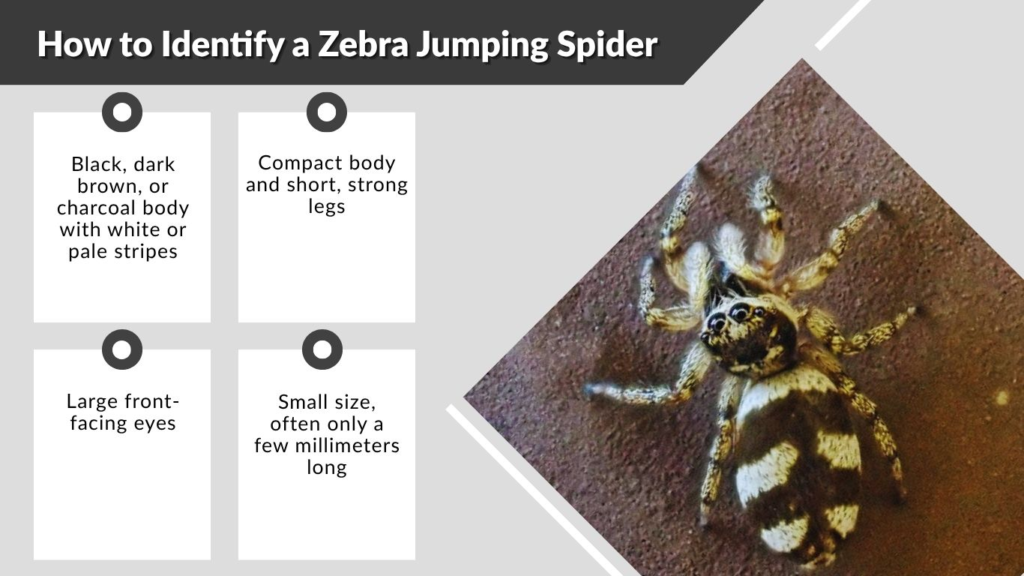
A zebra jumping spider is small, compact, and patterned with pale white or silver bands over a darker body. When seen up close, it has a squared front body shape and large eyes that make it look alert and almost expressive.
You may notice it moving in short bursts. It often stops suddenly, turns toward movement, and appears to “watch” nearby objects. This stop-start hunting style is one of the easiest ways to recognize jumping spiders.
Main Identification Signs
Look for these features:
- Black, dark brown, or charcoal body with white or pale stripes
- Compact body and short, strong legs
- Large front-facing eyes
- Jerky, curious movement
- Daytime activity on sunny surfaces
- Small size, often only a few millimeters long
The zebra striped jumping spider is sometimes confused with other small jumping spiders, especially bold jumping spiders. However, the zebra jumping spider is usually smaller and has a more clearly striped black-and-white pattern.
Zebra Jumping Spider Size: Baby, Juvenile, and Adult
The zebra jumping spider is tiny even when fully grown. Adult males usually have a body length of about 4–5.5 mm, while adult females may reach around 4–6.5 mm. Including the legs, many appear close to 8 mm overall.
A full grown zebra jumping spider is still much smaller than many house spiders. This is why people often spot them only when they move across a bright wall, window frame, or table.
Baby and Juvenile Zebra Jumping Spiders
Baby zebra jumping spiders, also called spiderlings or slings by hobbyists, are very small and delicate. Juveniles may already show hints of striping, but the markings can become clearer as they mature.
Young zebra jumping spiders go through several molts as they grow. After each molt, their body becomes larger and their markings may appear more defined.
Zebra Jumping Spider Size Compared to a Human Hand
On a human hand, an adult zebra jumping spider looks like a tiny moving dot with legs. Its body is much smaller than a fingernail, and even with legs spread, it remains a very small spider. This makes it easy to overlook unless it is moving.
Male vs Female Zebra Jumping Spider
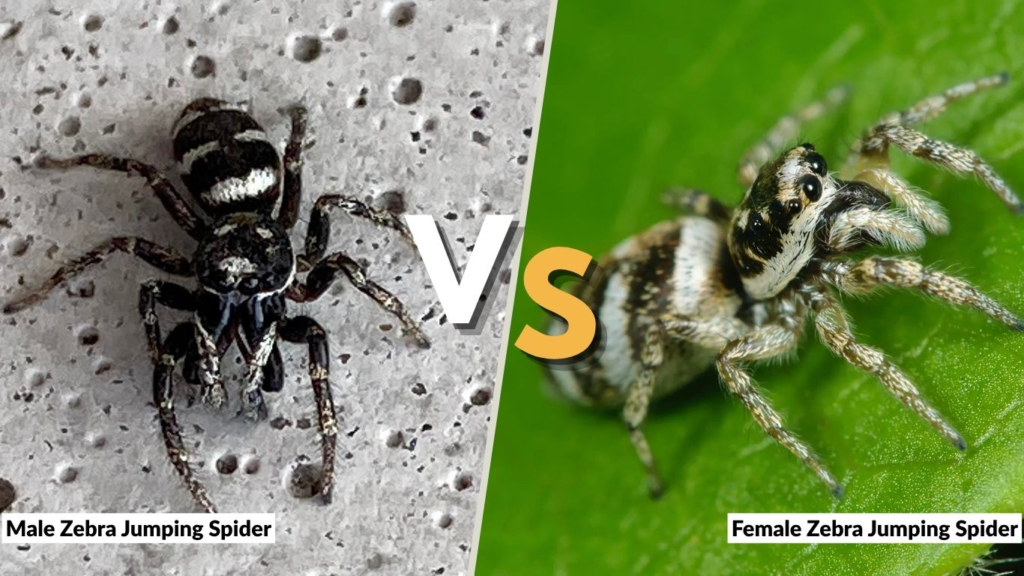
Male and female zebra jumping spiders can look similar at first glance, but there are some differences. Females are often slightly larger and rounder, especially in the abdomen. Males are usually a bit smaller and may have more noticeable front structures.
One of the clearest male features is the enlarged chelicerae, or mouthparts. In males, these can look like small dark “jaws” or a moustache-like feature from the front. Males may also perform courtship displays, using movement and body posture to attract females.
Difference Between Male and Female Zebra Jumping Spiders
Common differences include:
- Females are often slightly larger
- Females may have a fuller abdomen
- Males often have enlarged chelicerae
- Males may appear more active during courtship
- Males may use visual displays or dance-like movements
If you are trying to sex a zebra jumping spider, size alone is not always enough. It is best to look at body shape, chelicerae, and behavior together.
Zebra Jumping Spider Habitat and Range
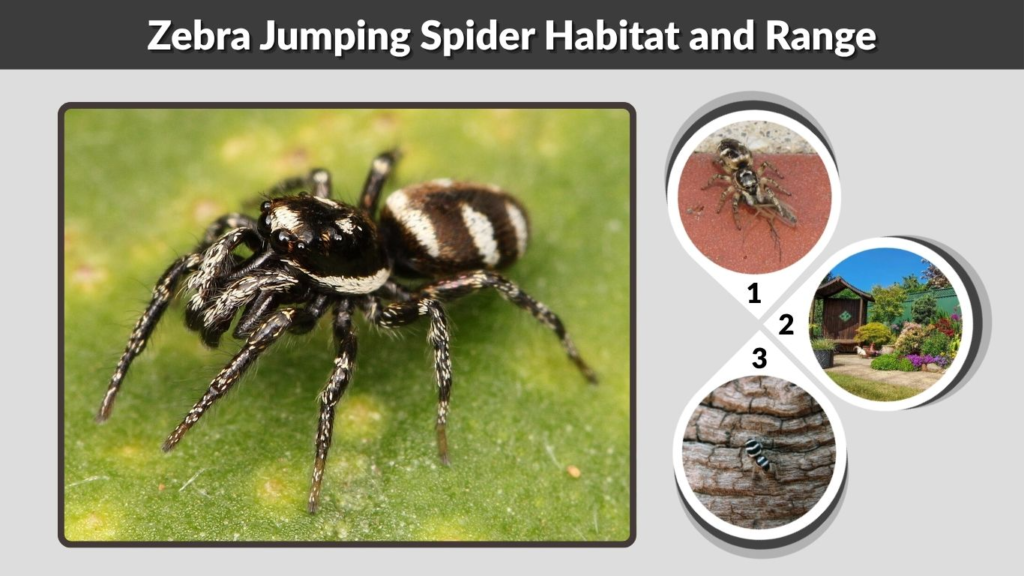
Zebra jumping spiders are commonly found across parts of the Northern Hemisphere, including Europe, the UK, Ireland, and North America. They are especially common around human structures because walls, fences, windows, and garden surfaces provide warm hunting areas.
They like sunny places where small insects are active. You may see one on an outside wall, a window ledge, a fence post, or even inside near a bright window.
Common Places to Find Them
Zebra jumping spiders are often found on:
- House walls and exterior brickwork
- Garden fences and sheds
- Windowsills and door frames
- Tree trunks and rocks
- Sunny indoor walls
- Patios, decks, and outdoor furniture
Searches like “zebra jumping spider UK,” “zebra jumping spider Ireland,” “zebra jumping spider Oregon,” “zebra jumping spider Colorado,” and “zebra jumping spider California” usually come from people who have spotted one locally and want to know if it belongs there. In many temperate regions, the answer is yes.
Zebra Jumping Spider Diet and Hunting Behavior
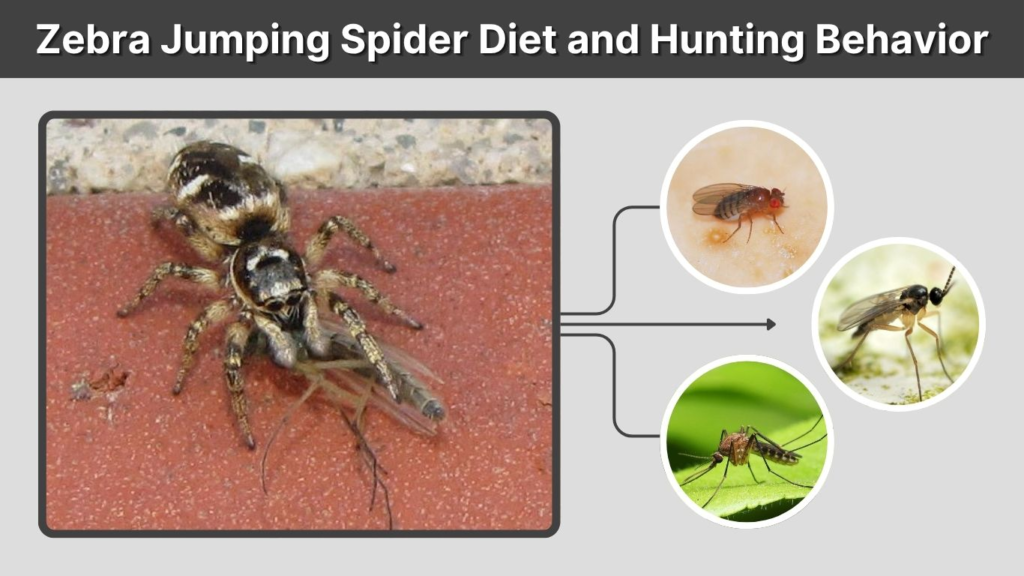
The zebra jumping spider is an active daytime hunter. Instead of waiting in a web, it searches for prey, approaches carefully, and pounces when close enough. It uses silk as a dragline, which works like a safety rope in case the jump fails.
Its diet mainly includes small insects and other tiny arthropods. It may eat flies, gnats, mosquitoes, small moths, and other little bugs it can overpower.
What Does a Zebra Jumping Spider Eat?
A zebra jumping spider may eat:
- Small flies
- Gnats
- Mosquitoes
- Tiny moths
- Small ants
- Aphids
- Other small arthropods
Because it eats nuisance insects, the zebra jumping spider can be considered beneficial around homes and gardens.
Do Zebra Jumping Spiders Make Webs?
A zebra jumping spider can produce silk, but it does not use a web to catch prey. This is one of the biggest differences between jumping spiders and many other house spiders.
Instead, it uses silk for safety lines, resting retreats, and egg sacs. You may see a small silk shelter in a crack, corner, or protected area, but you usually will not see a large trap web.
Why They Use Silk
Zebra jumping spiders use silk to:
- Anchor themselves before jumping
- Make small resting shelters
- Protect eggs
- Create safe hiding places
- Reduce the risk of falling from walls or plants
So, if you search “zebra jumping spider web,” the simple answer is that they do make silk, but not the kind of web used for trapping insects.
Is a Zebra Jumping Spider Poisonous or Venomous?
Many people search “is zebra jumping spider poisonous?” or “is zebra jumping spider venomous?” Technically, zebra jumping spiders have venom because they use it to subdue tiny prey. However, they are not considered dangerous to humans.
For most people, a zebra jumping spider is harmless. It is small, shy, and unlikely to bite unless trapped or handled roughly.
The word “poisonous” usually means something is harmful if eaten or touched. “Venomous” means it injects venom through a bite or sting. Zebra jumping spiders are venomous in the technical sense, but their venom is meant for tiny prey, not people.
Zebra Jumping Spider Bite and Bite Symptoms
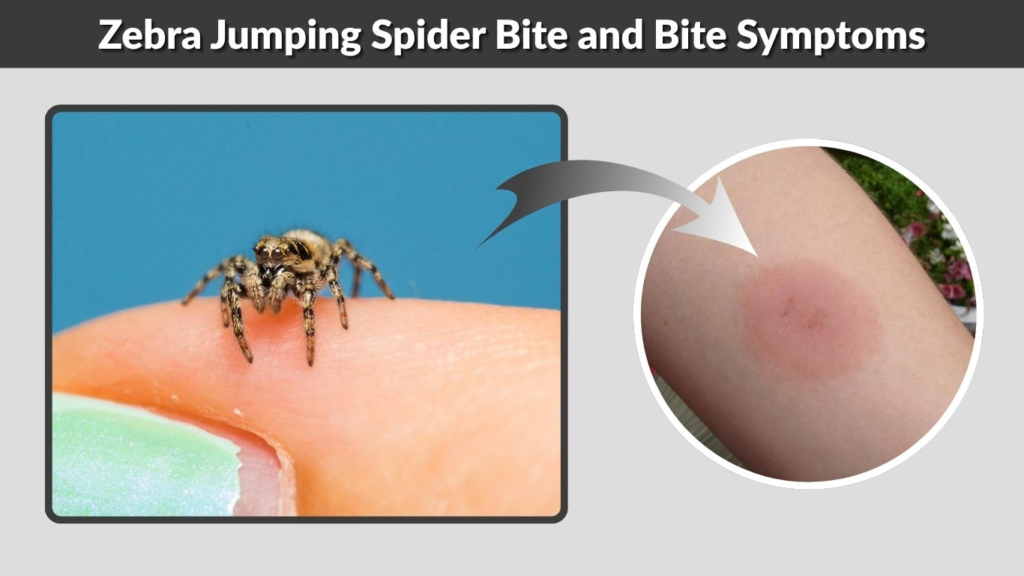
A zebra jumping spider bite is rare. These spiders usually prefer to run or jump away instead of biting. If a bite does happen, it is usually because the spider was squeezed, trapped against skin, or handled carelessly.
Most reported jumping spider bites are mild. Symptoms may be similar to a tiny pinprick or minor insect bite.
Possible Bite Symptoms
A zebra jumping spider bite may cause:
- Mild redness
- Slight swelling
- Itching
- Brief stinging or discomfort
- A small raised bump
Serious symptoms are not expected for most healthy people. However, anyone who develops severe swelling, spreading redness, breathing trouble, dizziness, or signs of infection should seek medical help. These reactions are unusual but should not be ignored.
Can You Keep a Zebra Jumping Spider as a Pet?
Yes, some people keep zebra jumping spiders as pets, although they are less commonly sold than larger pet jumping spiders such as regal or bold jumping spiders. Their small size makes them interesting but also more delicate to care for.
A pet zebra jumping spider is best for someone who enjoys observing tiny animals rather than handling them. They are quick, fragile, and easy to lose.
Basic Zebra Jumping Spider Care
A simple zebra jumping spider enclosure should include:
- A small, well-ventilated container
- Tiny air holes that the spider cannot escape through
- Small sticks, bark, or climbing surfaces
- A dry area and a lightly misted area
- Good lighting during the day, but no overheating
- Small live prey suited to the spider’s size
Food should be very small. Fruit flies, tiny flies, or small pinhead insects may work for juveniles, while adults can take slightly larger prey. Avoid prey that is too large or aggressive.
Zebra Jumping Spider Enclosure Tips
Because zebra jumping spiders are tiny, enclosure security matters. They can escape through gaps that look impossibly small. The enclosure should be taller than it is wide because jumping spiders like to climb and build retreats near the top.
Avoid keeping the enclosure too wet. Good airflow is important. A light mist can provide moisture, but standing water and damp conditions can be harmful.
Zebra Jumping Spider for Sale: What to Know
Searches for “zebra jumping spider for sale” usually come from people interested in keeping one as a pet. Before buying, check local rules, seller reputation, and whether the spider is captive-bred or wild-caught.
Because zebra jumping spiders are small and common in many places, some people observe them outdoors instead of buying one. If you do keep one, make sure you can provide suitable tiny prey and a secure enclosure.
Do not release captive spiders into the wild unless they were collected locally and have not been exposed to non-native prey, parasites, or other captive animals.
Bold Jumping Spider vs Zebra Jumping Spider
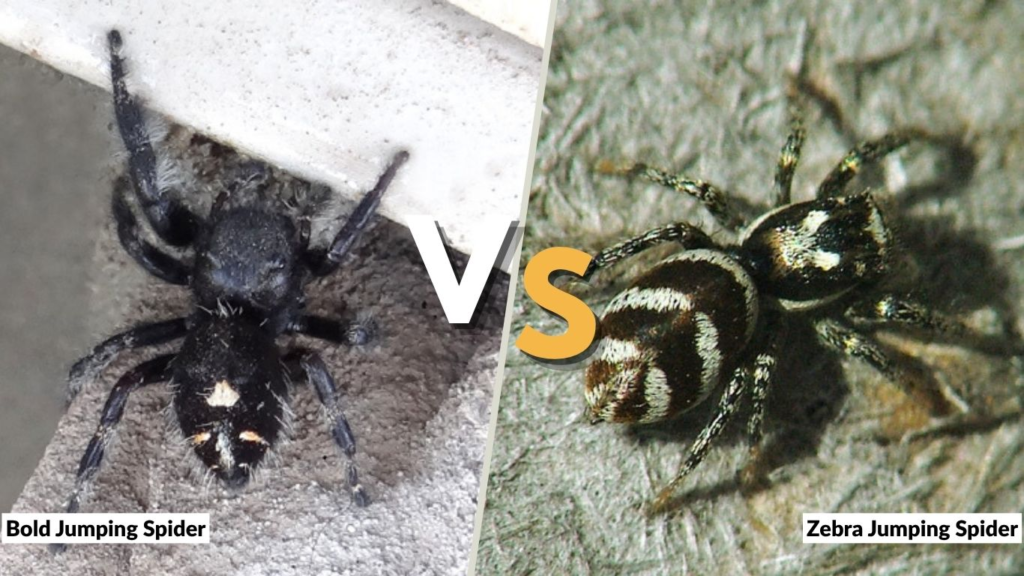
The bold jumping spider and the zebra jumping spider are both active, curious jumping spiders, but they are not the same. The bold jumping spider is generally larger and often has black coloring with white markings and sometimes bright green or blue chelicerae. The zebra jumping spider is smaller and has clearer zebra-like stripes.
The bold jumping spider is also more common in the pet hobby because it is larger and easier to feed. The zebra jumping spider can be kept, but its tiny size makes care more challenging.
Main Differences
The bold jumping spider is usually:
- Larger
- Stockier
- More common as a pet
- Easier to feed with larger prey
- Often marked with spots rather than zebra-like bands
The zebra jumping spider is usually:
- Smaller
- More finely striped
- Common on walls and windows
- Easier to overlook
- Better for observation than handling
Zebra Jumping Spider Eggs and Life Cycle
Female zebra jumping spiders lay eggs in a silk retreat or egg sac. The spiderlings hatch as tiny versions of adults and grow through molts. Like other spiders, they shed their outer covering as they develop.
The life cycle includes egg, spiderling, juvenile, and adult stages. In the wild, many zebra jumping spiders live around one to two years, depending on climate, food, predators, and survival through colder seasons.
Zebra Jumping Spider Spiritual Meaning
Some people search for the spiritual meaning of a zebra jumping spider after seeing one repeatedly. While this is not scientific, spiders are often symbolically linked with patience, creativity, awareness, and careful planning. Jumping spiders, in particular, may be seen as symbols of curiosity, courage, and timing because they watch carefully before leaping.
The zebra pattern may also be interpreted as balance or contrast. If you enjoy symbolic meanings, seeing a zebra jumping spider can be a reminder to pause, observe, and make your next move with confidence.
FAQs
Are zebra jumping spiders dangerous?
No, zebra jumping spiders are not considered dangerous to humans. They are small, shy hunters that usually run or jump away when disturbed. They have venom for catching tiny prey, but a bite is rare and usually causes only mild, local irritation.
How big is a full grown zebra jumping spider?
A full grown zebra jumping spider usually has a body length of about 4–6.5 mm. Females are often slightly larger than males. Including the legs, many appear around 8 mm overall, making them much smaller than many common house spiders.
What do zebra jumping spiders eat?
Zebra jumping spiders eat small insects and other tiny arthropods. Their diet can include flies, gnats, mosquitoes, aphids, and small moths. They hunt actively during the day and jump on prey instead of catching it in a web.
Can a zebra jumping spider bite you?
Yes, but bites are uncommon. A zebra jumping spider may bite if it is trapped, squeezed, or handled roughly. Most bites are mild and may cause slight redness, itching, swelling, or brief stinging, similar to a minor insect bite.
Can you keep a zebra jumping spider as a pet?
Yes, but it is better for observation than handling. Zebra jumping spiders are tiny, fast, and delicate. They need a secure, ventilated enclosure, small climbing surfaces, light misting, and appropriately sized live prey such as tiny flies or small insects.
