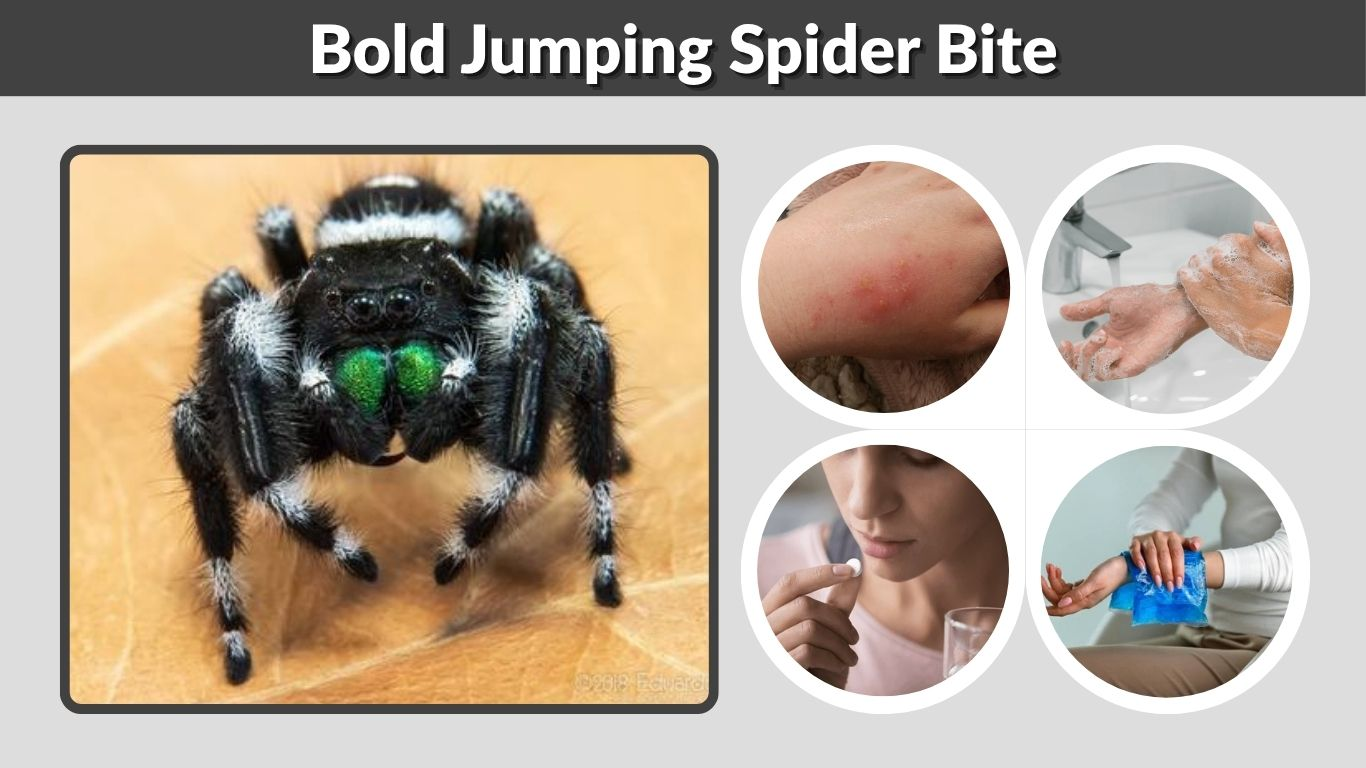
A bold jumping spider bite is usually not dangerous to humans. These small spiders can bite if they are trapped, squeezed, or handled roughly, but they are not aggressive and do not seek out people to bite. Most bites cause mild, local symptoms such as brief pain, redness, itching, or slight swelling. Still, it is helpful to know what a bite may look like, how to treat it, and when to get medical care.
Do Bold Jumping Spiders Bite?
Yes, bold jumping spiders can bite, but bites are uncommon. The bold jumping spider, also known as the bold jumper or Phidippus audax, is a small hunting spider known for its excellent eyesight, quick jumps, fuzzy body, and bright markings. It is often seen on walls, fences, windows, gardens, and outdoor surfaces.
A bold jumping spider usually bites only in self-defense. For example, it may bite if it is pressed against your skin, trapped inside clothing, pinched between fingers, or handled carelessly. If it has room to escape, it will usually jump away rather than bite.
Many people search “does the bold jumping spider bite” or “can a bold jumping spider bite” because these spiders look confident and curious. They may turn toward people, raise their front legs, or watch movement with their large eyes. This behavior can look bold, but it does not mean the spider is preparing to attack.
Is a Bold Jumping Spider Bite Poisonous?
A bold jumping spider bite is not considered medically dangerous for most people. Technically, spiders are venomous, not poisonous. Venom is injected through a bite, while poison is harmful when touched, eaten, or absorbed. So, a better question is whether the bold jumping spider’s venom is dangerous to humans.
For most healthy adults, the answer is no. The venom is mainly used to subdue small insect prey. A bite may irritate human skin, but it usually does not cause serious illness. However, individual reactions vary. A person who is sensitive or allergic may have stronger symptoms, and any worsening skin reaction should be monitored carefully.
What Does a Bold Jumping Spider Bite Look Like?
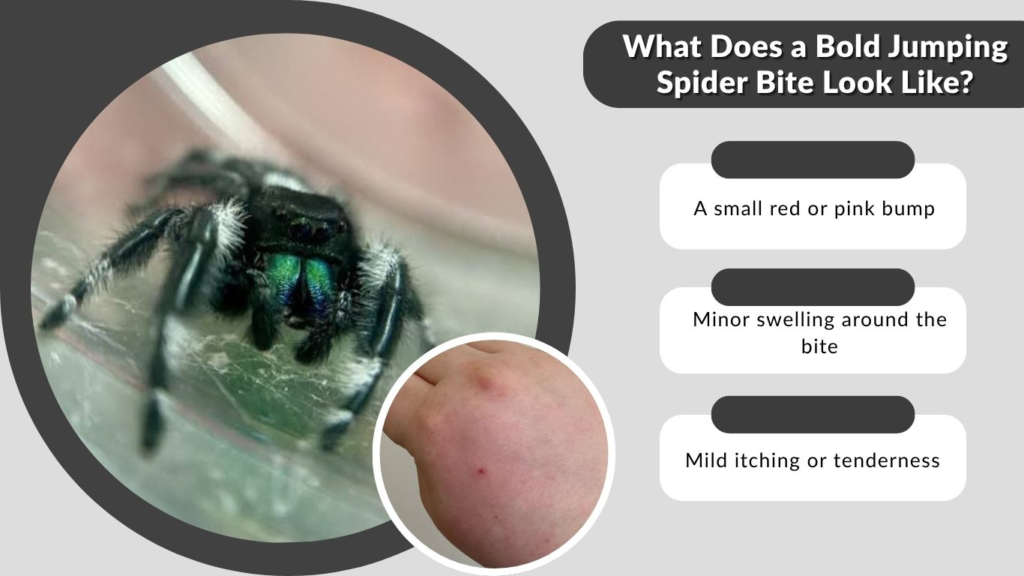
A bold jumping spider bite can look similar to many minor insect bites. It may appear as a small red bump, a tiny irritated spot, or a slightly swollen area. Some people may notice a small central dot where the bite happened, but many bites do not leave a clear puncture mark.
A mild bite may look like:
- A small red or pink bump
- Minor swelling around the bite
- Mild itching or tenderness
- A tiny raised spot
- Slight warmth around the area
- A mark similar to a mosquito bite
The phrase “bold jumping spider bite pictures” is searched often because people want to compare their skin mark with real examples. However, pictures can be misleading. Many skin problems look like spider bites, including mosquito bites, flea bites, ant bites, ingrown hairs, pimples, allergic rashes, and minor skin infections.
If you did not actually see the spider bite you, it can be hard to confirm that the mark came from a bold jumping spider.
Bold Jumping Spider Bite Symptoms
Bold jumping spider bite symptoms are usually mild and local. Symptoms may begin soon after the bite and improve with basic home care.
Common symptoms include:
- Brief sharp or pinching pain
- Redness
- Itching
- Mild swelling
- Slight burning
- Tenderness around the bite
- Minor irritation for a day or two
Some people may barely notice the bite. Others may feel a quick sting, similar to a small ant bite or mild bee-sting sensation. The reaction depends on skin sensitivity, bite location, and whether the area is scratched or irritated afterward.
Possible Stronger Reactions
Although uncommon, stronger reactions can happen. These may include larger swelling, hives, increasing redness, or more intense itching. A stronger reaction does not always mean the spider was dangerous; some people simply react more strongly to bites and stings.
Seek medical advice if symptoms are severe, spreading, or not improving.
What Happens If a Bold Jumping Spider Bites You?
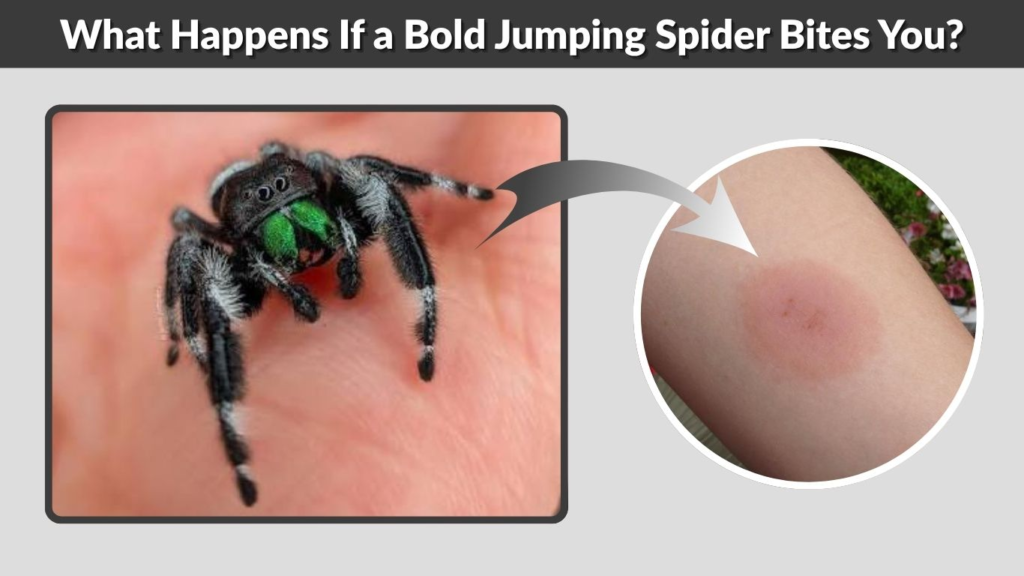
If a bold jumping spider bites you, the most likely result is a small irritated spot that improves on its own. You may feel a quick pinch, then see redness or slight swelling. The bite may itch for a short time.
Most cases do not require medical treatment beyond cleaning the area and reducing discomfort. However, you should watch the bite over the next 24 to 48 hours. If it becomes more painful, spreads, drains pus, forms an open sore, or comes with whole-body symptoms, it may need medical attention.
| Bite Reaction | What It May Mean | What to Do |
| Small red bump | Mild local reaction | Clean and monitor |
| Mild itch or swelling | Common irritation | Use cold compress |
| Increasing redness | Possible irritation or infection | Watch closely or call a doctor |
| Pus, warmth, worsening pain | Possible infection | Seek medical advice |
| Trouble breathing or facial swelling | Possible allergic reaction | Get emergency help |
| Severe cramps or systemic symptoms | May not be a jumping spider bite | Seek urgent care |
Bold Jumping Spider Bite Treatment
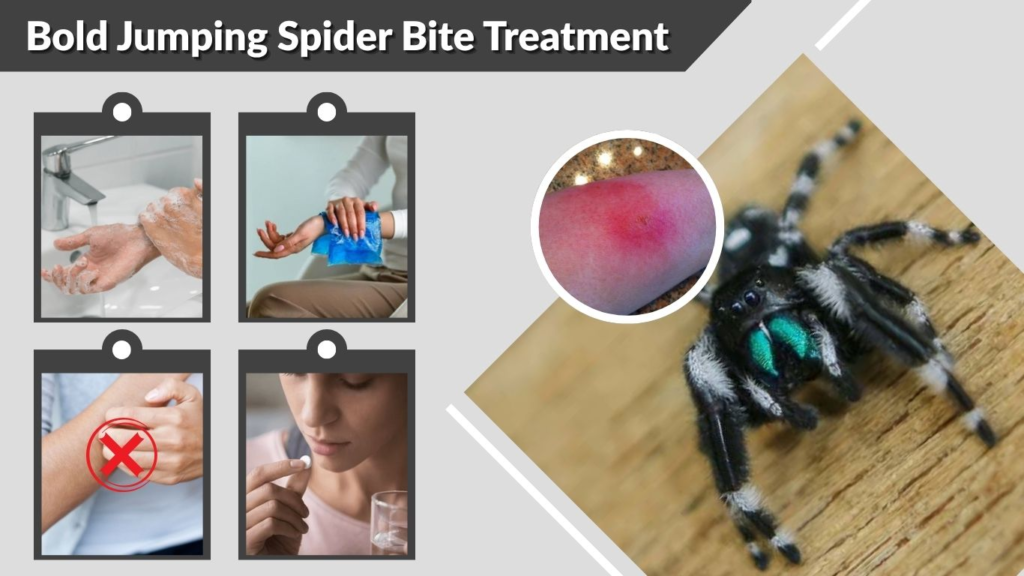
Most bold jumping spider bites can be treated at home with simple first aid. The goal is to clean the area, reduce swelling, and avoid infection.
Step 1: Wash the Bite
Wash the bite area gently with soap and water. This helps remove bacteria from the skin and lowers the chance of infection. Do not scrub aggressively, because that may worsen irritation.
Step 2: Apply a Cold Compress
Place a cold compress or wrapped ice pack on the bite for 10 to 15 minutes at a time. This can help reduce swelling, itching, and discomfort. Do not put ice directly on bare skin.
Step 3: Avoid Scratching
Scratching can break the skin and increase the risk of infection. If the bite itches, keep the area clean and consider using an over-the-counter anti-itch option according to the product label.
Step 4: Monitor the Area
Check the bite for changes. A mild bite should gradually improve. If redness spreads, swelling worsens, or the area becomes hot and painful, contact a healthcare provider.
Step 5: Use Pain Relief if Needed
For mild discomfort, an over-the-counter pain reliever may help if you can safely take it. Always follow the label and avoid medications that are not suitable for you.
When to Seek Medical Care
A bold jumper spider bite is usually mild, but not every suspected spider bite is actually from a bold jumping spider. Some bites and skin reactions can be more serious.
Get medical help right away if you notice:
- Trouble breathing
- Swelling of the lips, tongue, face, or throat
- Dizziness or fainting
- Severe or spreading pain
- Muscle cramps or stiffness
- Fever or chills
- Nausea or vomiting
- Redness that rapidly spreads
- Pus or red streaks from the bite
- A dark, blistering, or open wound
- Symptoms in a young child, older adult, or medically fragile person
You should also seek care if you suspect the bite came from a black widow or brown recluse, or if you cannot identify the spider and symptoms are getting worse.
Bold Jumping Spider Bite Mark: What to Expect
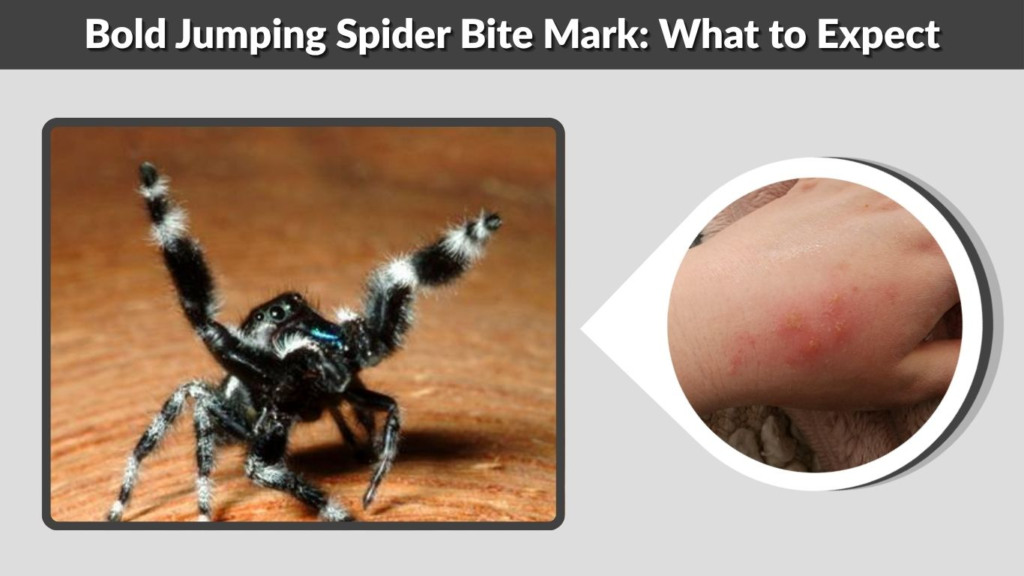
A bold jumping spider bite mark is usually small. It may not show two obvious fang marks. Many people expect spider bites to have clear double punctures, but that is not always visible.
A typical mild bite mark may:
- Stay small
- Look like a red bump
- Feel slightly itchy or sore
- Improve within a short period
- Not blister or spread
A bite mark that grows larger, becomes very painful, turns dark, blisters, or develops drainage should not be ignored. That pattern may suggest infection, another type of bite, or a different skin condition.
Bold Jumping Spider Bite Pictures: Why They Can Confuse You
Searching for bold jumping spider bite pictures can help you understand general appearance, but it should not be your only way to judge a bite. Online images may show different reactions, different spider species, or unrelated skin problems.
Pictures can be confusing because:
- Many bug bites look alike
- Skin infections are often mistaken for spider bites
- Some images may show severe bites from other spiders
- Lighting and skin tone affect how redness appears
- Scratching can make any bite look worse
If you are writing or publishing about this topic, it is better to explain that a mild bold jumping spider bite usually resembles a small irritated bump rather than showing alarming images that may not be accurate.
Do Bold Jumping Spiders Bite Humans?
Yes, bold jumping spiders can bite humans, but they rarely do. They are not blood-feeding pests like mosquitoes or ticks. They do not bite people for food. A bite usually happens only when the spider feels trapped or threatened.
To avoid bites:
- Do not squeeze or pinch the spider
- Avoid handling wild spiders
- Shake out gloves, shoes, or clothing stored outside
- Use a cup and paper to move the spider outdoors
- Teach children not to grab spiders
- Keep window screens repaired
Bold jumping spiders are beneficial predators because they eat flies, mosquitoes, small moths, and other insects. If one is in your home, it can usually be relocated safely.
Bold Jumping Spider Bite on a Dog
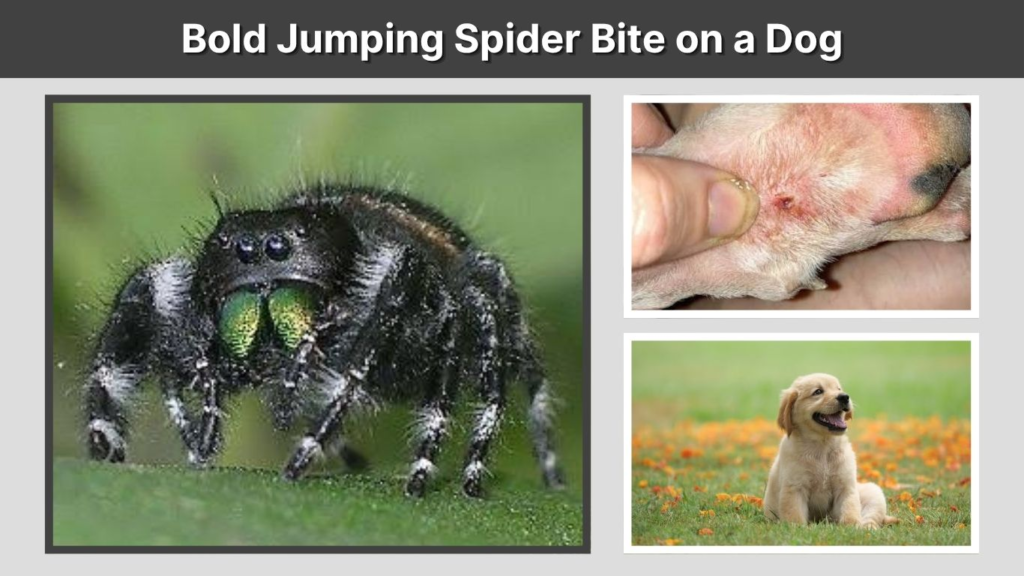
A bold jumping spider bite on a dog is possible but uncommon. Dogs may sniff, paw at, or try to eat small spiders, which can lead to a defensive bite. In most cases, a mild bite may cause temporary irritation.
Possible signs in a dog include:
- Licking or chewing one spot
- Mild swelling
- Redness
- Pawing at the face
- Brief discomfort
- A small bump
Contact a veterinarian if your dog has facial swelling, vomiting, weakness, breathing trouble, severe pain, repeated licking, or a worsening skin reaction. Small dogs, puppies, senior dogs, and dogs with allergies may need extra caution.
Do not give human medications to a dog unless a veterinarian tells you to. Some common human pain relievers can be dangerous for pets.
Are Bold Jumping Spiders Dangerous?
Bold jumping spiders are not considered dangerous to people. They are more likely to flee than bite, and their venom is not known for causing serious human illness. Their reputation comes more from their bold behavior and striking appearance than from any real threat.
They are also useful around homes and gardens because they hunt insects. Unlike web-building spiders, jumping spiders actively stalk prey using vision and quick movement. Their “jumping” behavior can startle people, but it is mainly used for hunting and escape.
How to Prevent Bold Jumping Spider Bites
Preventing bites is mostly about avoiding accidental contact. Since bold jumping spiders are not aggressive, you do not need extreme measures.
Helpful prevention tips include:
- Avoid handling spiders with bare hands
- Move spiders with a container instead of fingers
- Wear gloves when gardening or moving outdoor items
- Shake out outdoor shoes, towels, and gloves
- Keep clutter reduced in garages and sheds
- Seal gaps around windows and doors
- Use screens to reduce indoor insects and spiders
If you keep jumping spiders as pets, handle them carefully and avoid forcing interaction. Even calm spiders may bite if stressed, trapped, or injured.
Common Myths About Bold Jumping Spider Bites
Myth 1: Bold Jumping Spiders Are Aggressive
They are curious, not aggressive. Their large eyes and alert movement make them seem brave, but they usually avoid conflict.
Myth 2: Every Red Bump Is a Spider Bite
Many red bumps are caused by insects, irritation, allergies, or infection. Unless you saw the spider bite you, the cause may be uncertain.
Myth 3: A Bold Jumping Spider Bite Is Deadly
This is not true for typical cases. Most bites are mild and local. Serious reactions are rare and usually involve allergy, infection, or mistaken spider identity.
Myth 4: You Need to Kill Bold Jumping Spiders
Bold jumping spiders are beneficial predators. If one is indoors, relocation is usually enough.
FAQs
Can a bold jumping spider bite?
Yes, a bold jumping spider can bite, but bites are rare. It usually bites only when trapped, squeezed, or handled roughly. If left alone, it will normally jump away rather than attack. Most bites are mild and cause only local irritation.
What does a bold jumping spider bite look like?
A bold jumping spider bite usually looks like a small red bump or mildly swollen spot. It may itch, sting, or feel tender. It can resemble a mosquito bite or other minor insect bite, so it is hard to confirm unless you saw the spider bite you.
Is a bold jumping spider bite poisonous?
A bold jumping spider bite is not considered dangerous for most people. Spiders are technically venomous rather than poisonous, but bold jumping spider venom is usually not medically significant to humans. Allergic reactions or infections are possible, so worsening symptoms should be checked.
What are bold jumping spider bite symptoms?
Common symptoms include brief pain, redness, itching, mild swelling, and tenderness. These symptoms are usually local and improve with basic care. Severe swelling, breathing trouble, fever, pus, spreading redness, or intense pain should be treated as warning signs.
How do you treat a bold jumping spider bite?
Wash the area with soap and water, apply a cold compress, avoid scratching, and monitor the bite. Over-the-counter itch or pain relief may help if safe for you. Seek medical care if symptoms worsen, spread, or include signs of allergy or infection.
