
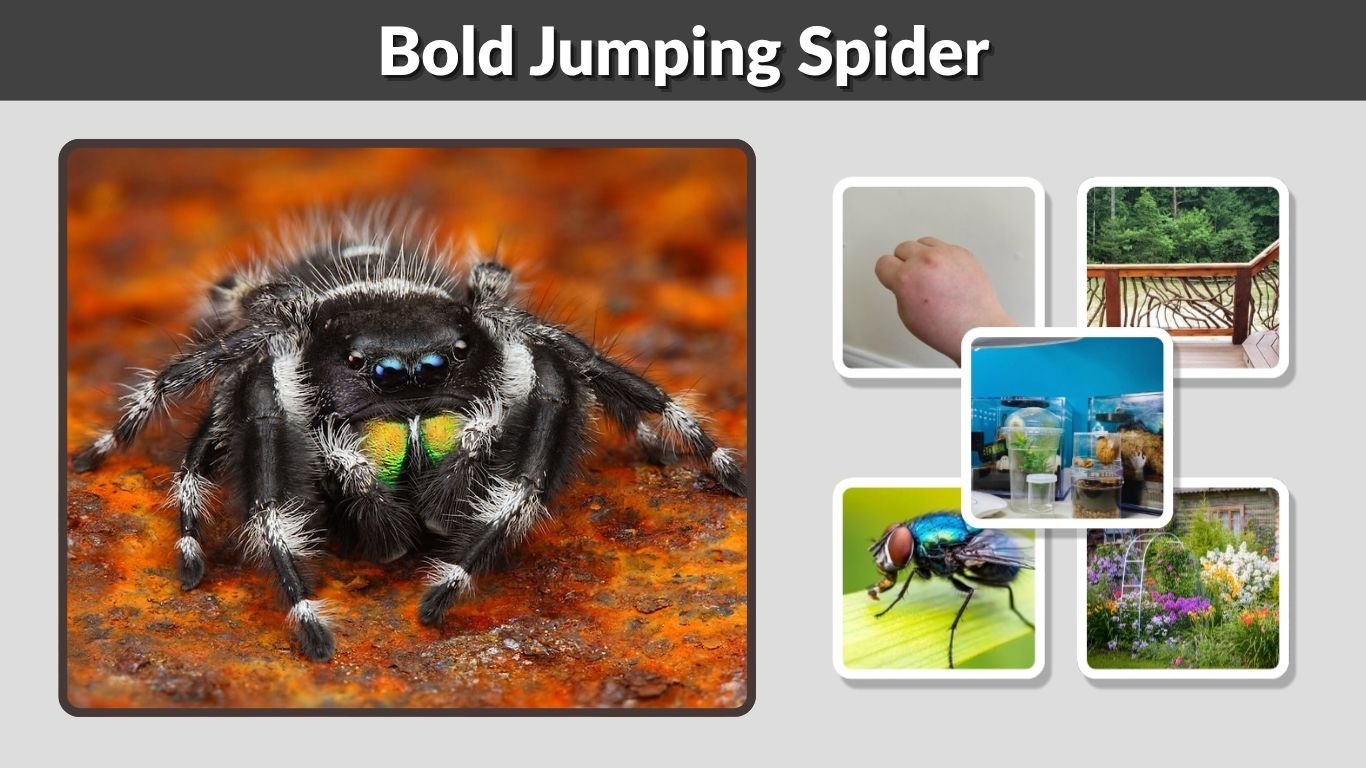
The bold jumping spider is one of the most recognizable jumping spiders in North America. Known for its fuzzy black body, bright white markings, quick movements, and shiny green or blue mouthparts, this small spider often appears on walls, fences, gardens, windows, and outdoor furniture. Although it can look alert and fearless, the bold jumping spider is not considered dangerous to people.
What Is a Bold Jumping Spider?
The bold jumping spider, also called the bold jumper spider, is a compact hunting spider with the scientific name Phidippus audax. It belongs to the jumping spider family, Salticidae, a group known for excellent eyesight, active hunting, and curious behavior.
Unlike web-building spiders that wait for insects to get trapped, bold jumping spiders stalk their prey. They use their large front-facing eyes to judge distance, then leap quickly to catch insects. This active hunting style is one reason people often describe them as intelligent, curious, or even friendly.
Why Is It Called “Bold”?
The word “bold” fits this spider’s behavior. Instead of always running away, it may turn toward movement, watch people, or jump from surface to surface with confidence. This does not mean the spider wants to attack. It is usually observing its surroundings and looking for a safe escape route or possible prey.
Bold Jumping Spider Identification
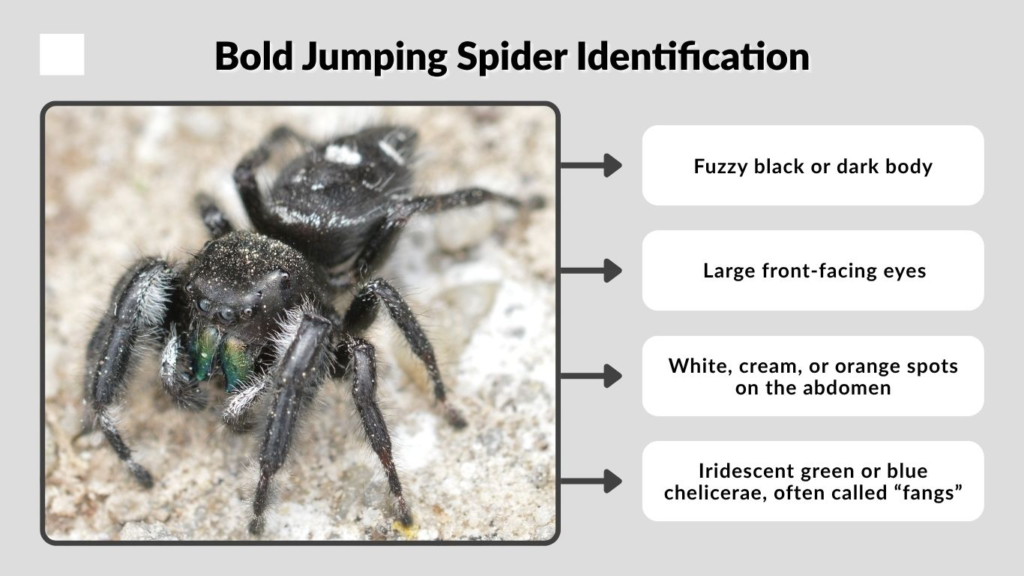
The bold jumping spider is usually easy to identify once you know its main features. It has a sturdy, fuzzy body and a pattern of pale spots on the abdomen. Many adults are black with three white marks, although younger spiders may have orange markings that become white as they mature.
Key Identification Features
Look for these signs:
- Fuzzy black or dark body
- Large front-facing eyes
- White, cream, or orange spots on the abdomen
- Iridescent green or blue chelicerae, often called “fangs”
- Short, strong legs
- Quick jumping movement
- Compact body shape
- Active daytime hunting behavior
The green “fangs” are one of the spider’s most popular features. Technically, these shiny parts are called chelicerae. They can look metallic green, blue, or turquoise depending on the light.
Bold Jumping Spider Size
Bold jumping spiders are small but noticeable because of their shape and markings. Adult females are usually larger and heavier-bodied than males. Males tend to look slimmer and may have more dramatic front legs or mouthpart coloration.
| Feature | Typical Description |
|---|---|
| Common name | Bold jumping spider or bold jumper spider |
| Scientific name | Phidippus audax |
| Adult size | Small, usually under 1 inch including legs |
| Color | Black with white, cream, or orange markings |
| Special feature | Shiny green or blue chelicerae |
| Activity | Daytime hunter |
| Web use | Silk retreats, not prey-catching webs |
| Human risk | Low |
People often search for a bold jumping spider size chart because juveniles, males, and females can look different. A young bold jumper may be tiny with orange spots, while a full-grown female can look much larger and rounder.
Male vs Female Bold Jumping Spider
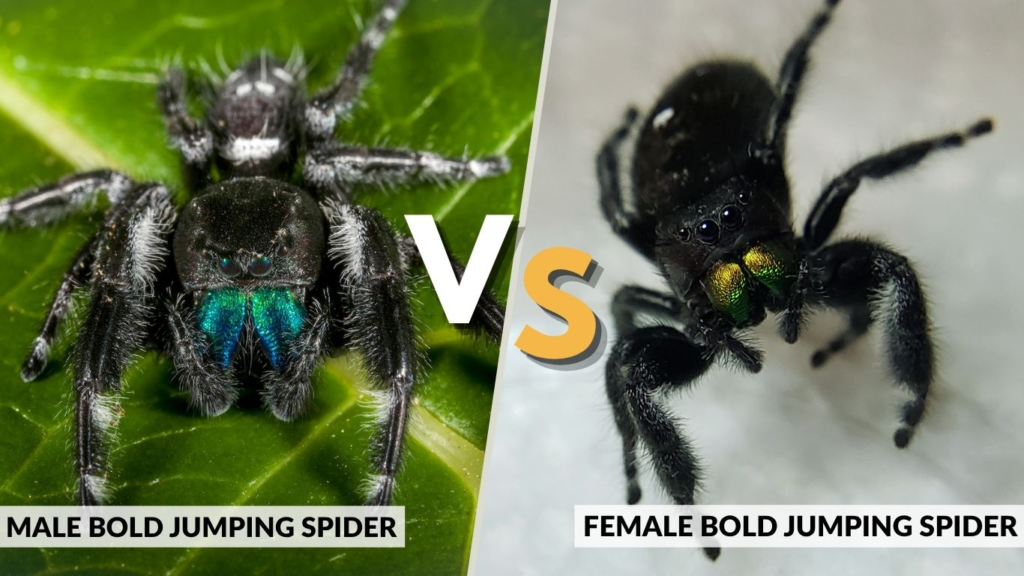
Male vs female bold jumping spider identification is a popular search because the differences can be useful for pet keepers and spider enthusiasts. Females are typically larger, broader, and more rounded. Males are usually smaller, slimmer, and may have longer-looking front legs.
Female Bold Jumping Spider
A female bold jumping spider often has:
- A larger abdomen
- A rounder body shape
- A heavier build
- Clear white or cream abdominal spots
- Less dramatic front-leg display than males
- A longer potential adult life than males
Females may also build silk retreats for molting, resting, or protecting egg sacs. If you see a bold jumping spider guarding a silken sac, it is likely female.
Male Bold Jumping Spider
A male bold jumping spider often has:
- A slimmer body
- Longer-looking front legs
- More active wandering behavior
- More visible courtship movements
- Enlarged pedipalps near the mouth
- Bright green or blue chelicerae
Males may roam more often while searching for females. This is why people sometimes notice them on walls, patios, fences, or windows.
Bold Jumping Spider Bite
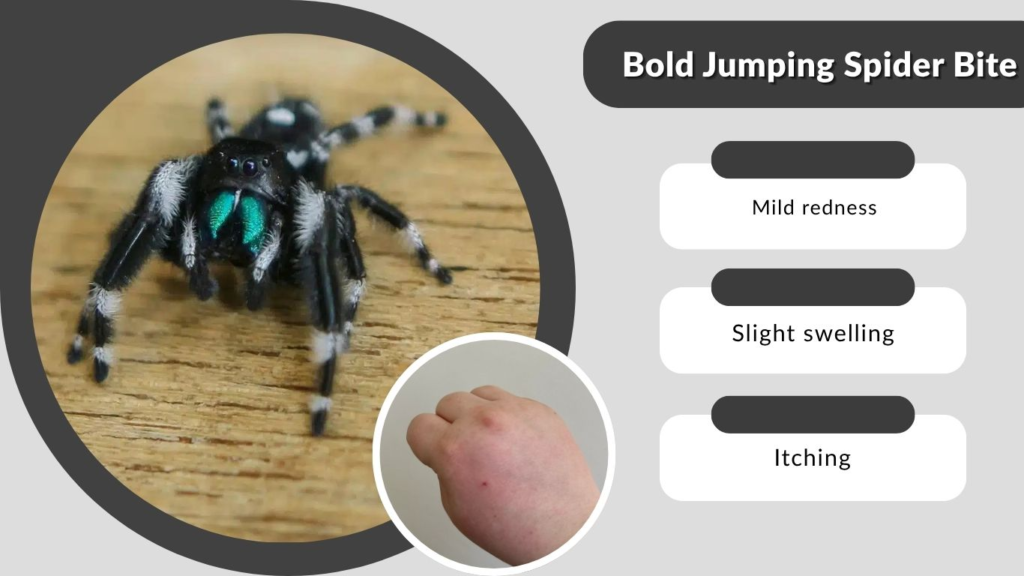
A bold jumping spider bite is possible but uncommon. These spiders do have venom, but they use it to subdue small insects, not to harm people. They are not aggressive toward humans and usually bite only if squeezed, trapped, or handled roughly.
Is the Bold Jumping Spider Poisonous?
Many people ask, “Is a bold jumping spider poisonous?” The better word is “venomous.” A poisonous animal causes harm if touched or eaten, while a venomous animal injects venom through a bite or sting.
The bold jumping spider is venomous in the technical sense, but its venom is not considered medically significant for most people. A bite may cause mild local symptoms, similar to a small insect bite.
What Does a Bite Look Like?
A bold jumping spider bite may cause:
- Mild redness
- Slight swelling
- Itching
- Tenderness
- A small raised bump
- Brief stinging or pinching pain
Most bites can be managed with simple first aid. Wash the area with soap and water, apply a cold compress, and avoid scratching. Seek medical advice if swelling spreads, pain becomes severe, signs of infection appear, or an allergic reaction occurs.
Bold Jumping Spider Habitat
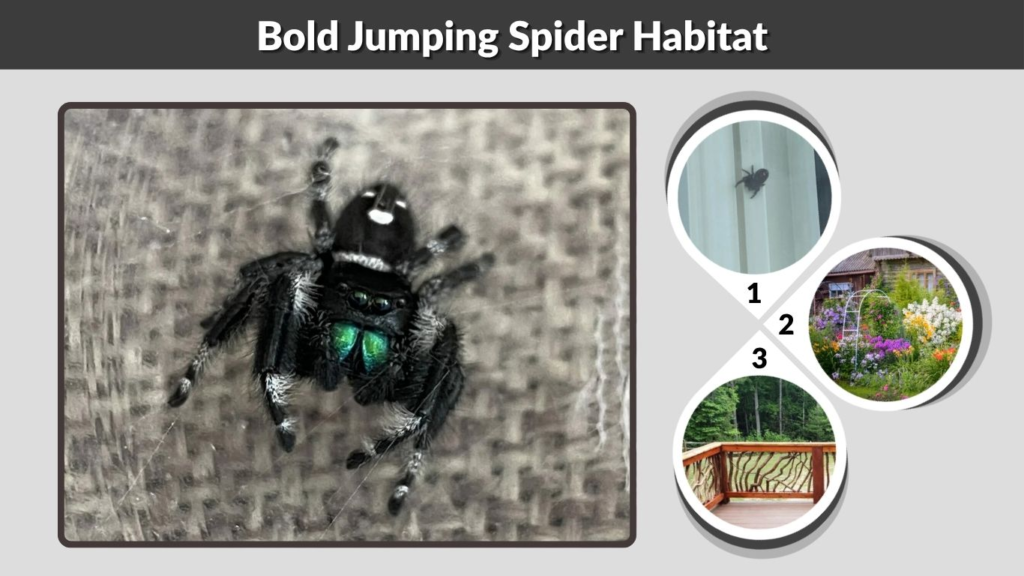
Bold jumping spiders are common in many parts of North America. They can live in fields, gardens, yards, wood edges, fences, sheds, barns, garages, and sometimes inside homes. They are often seen during the day because they rely heavily on vision to hunt.
Common Places to Find Them
You may find bold jumping spiders around:
- Window frames
- Garden plants
- Fence posts
- Deck rails
- Outdoor furniture
- Garage walls
- Sheds and barns
- Tree bark
- Porch areas
- Sunny indoor walls
They do not build large sticky webs to catch prey. Instead, they create small silk shelters called retreats. These retreats may be used for resting, molting, hiding, overwintering, or protecting eggs.
Bold Jumping Spider Diet
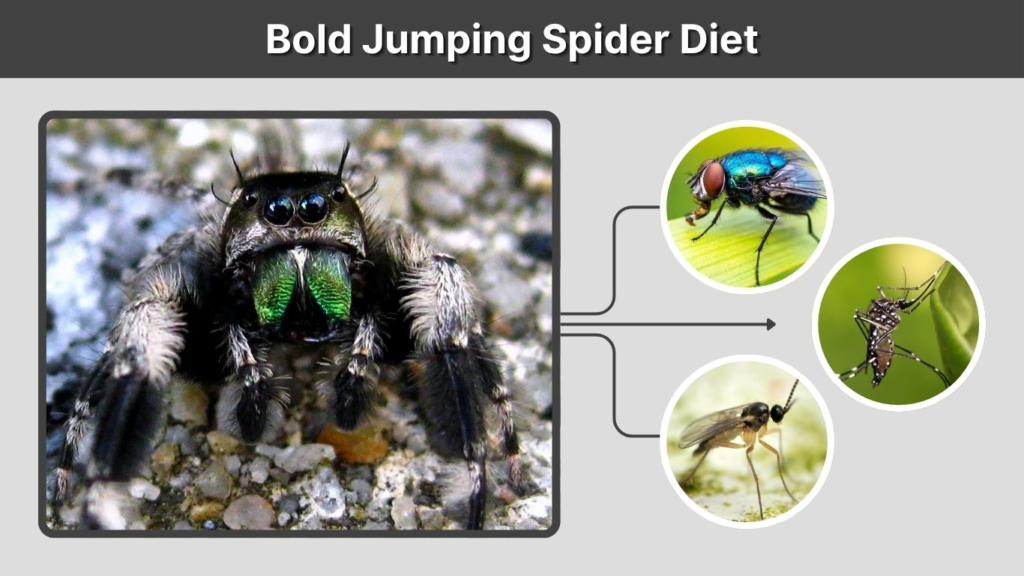
Bold jumping spiders are active predators. They eat small insects and other arthropods. Instead of waiting in a web, they stalk prey and leap when close enough.
What Do They Eat?
Their diet may include:
- Flies
- Mosquitoes
- Gnats
- Small moths
- Caterpillars
- Leafhoppers
- Small beetles
- Other spiders
- Tiny garden pests
This makes them helpful around gardens and homes. A bold jumping spider on a plant is usually not harming the plant. It is more likely hunting insects that may feed on the plant.
Bold Jumping Spider Web
Bold jumping spiders do make silk, but they do not use webs the same way orb-weavers or house spiders do. They use silk as a safety line when jumping and as a shelter for resting or molting.
You may see a small, white, tent-like silk retreat in a corner, under bark, between leaves, or inside a small crevice. This is not a messy infestation web. It is more like a private shelter.
Bold Jumping Spider Lifespan and Life Cycle
The bold jumping spider life cycle begins with eggs inside a silk egg sac. After hatching, spiderlings go through several molts as they grow. Juvenile bold jumping spiders may look different from adults because their markings can be orange instead of white.
As they mature, they become stronger hunters and develop clearer adult features. Females may live longer than males, especially when kept in stable conditions. In the wild, lifespan depends on weather, food, predators, and seasonal conditions.
Bold Jumping Spider Eggs
A female bold jumping spider may create an egg sac inside a silk retreat. She often guards it until the spiderlings hatch. If you find a spider protecting a white silk sac, it is best to leave it alone or relocate it carefully if it is in an inconvenient indoor area.
Bold Jumping Spider as a Pet
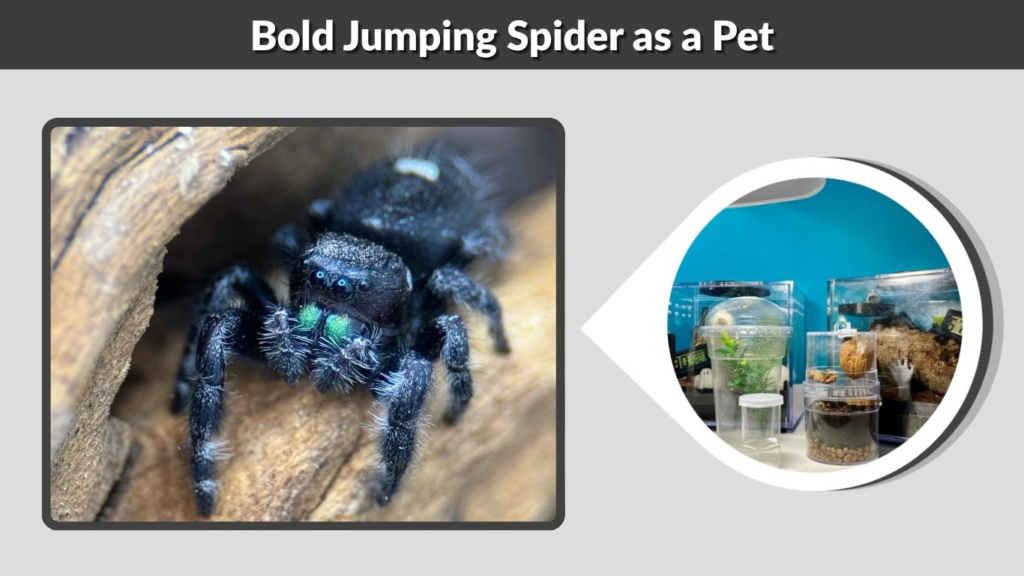
The bold jumping spider has become popular among people who enjoy keeping small pet spiders. Its curious behavior, attractive markings, and manageable size make it appealing. However, it still needs proper care and should not be treated like a toy.
Basic Care Needs
A pet bold jumping spider needs:
- A small secure enclosure
- Good ventilation
- Climbing surfaces
- Hiding spots
- Safe humidity levels
- Small live prey
- Clean water droplets or misting
- Protection from overheating
- No pesticide exposure
A bold jumping spider enclosure should be escape-proof because these spiders are small, quick, and excellent climbers. Avoid large prey that could injure the spider.
Bold Jumping Spider vs Regal Jumping Spider
Many people compare the bold jumping spider with the regal jumping spider. Both belong to the genus Phidippus, and both can have bright markings and iridescent chelicerae. However, the regal jumping spider is often larger and is especially common in the southeastern United States.
Main Differences
The bold jumping spider is usually more widespread across North America and often has a black body with white spots. The regal jumping spider may be larger, and females can show gray, orange, or tan coloration depending on the individual.
Both species are popular with spider keepers, but they should not be collected or handled carelessly. Proper identification is helpful, especially if someone is choosing a pet spider or trying to understand what they found at home.
Are Bold Jumping Spiders Friendly?
Bold jumping spiders are often called friendly because they appear curious and may watch people with their large eyes. They are not social pets like cats or dogs, but they are less defensive than many spiders and may become comfortable with gentle, careful handling.
Still, handling should be limited. A fall can injure a small spider, and rough handling can stress it. The best way to enjoy a bold jumping spider is to observe its behavior, movement, and hunting style.
How to Remove a Bold Jumping Spider from Your Home
If you find a bold jumping spider indoors, there is usually no need to kill it. It is not a household pest and may be helping by catching small insects.
Safe Removal Steps
To move it outside:
- Place a cup gently over the spider.
- Slide a piece of paper underneath.
- Carry it outside carefully.
- Release it near plants, a fence, or a sheltered wall.
- Avoid touching or squeezing it.
If you keep seeing them indoors, check window screens, door gaps, and insect activity. Spiders often enter homes while following prey.
FAQs
Is a bold jumping spider dangerous?
No, the bold jumping spider is not considered dangerous to humans. It has venom for catching small insects, but its bite is usually mild if it happens at all. Most bold jumping spiders avoid people and only bite when trapped, squeezed, or handled roughly.
How big does a bold jumping spider get?
A bold jumping spider is small, usually under an inch when measured with its legs. Females are generally larger and rounder than males, while males are slimmer and may appear more active. Juveniles are much smaller and may have orange markings before turning white.
What does a bold jumping spider eat?
Bold jumping spiders eat small insects and other tiny arthropods. Their diet may include flies, mosquitoes, gnats, moths, caterpillars, beetles, leafhoppers, and sometimes other spiders. They are active hunters and use excellent eyesight to stalk and jump on prey.
Can you keep a bold jumping spider as a pet?
Yes, some people keep bold jumping spiders as pets. They need a small secure enclosure, ventilation, climbing space, hiding areas, safe moisture, and properly sized live prey. They should be handled carefully and only when necessary because falls and stress can harm them.
How do you tell male and female bold jumping spiders apart?
Females are usually larger, rounder, and heavier-bodied. Males are often slimmer, more active, and may have more noticeable pedipalps near the mouth. Both can have bright green or blue chelicerae, but males may show more display behavior when looking for mates.
