
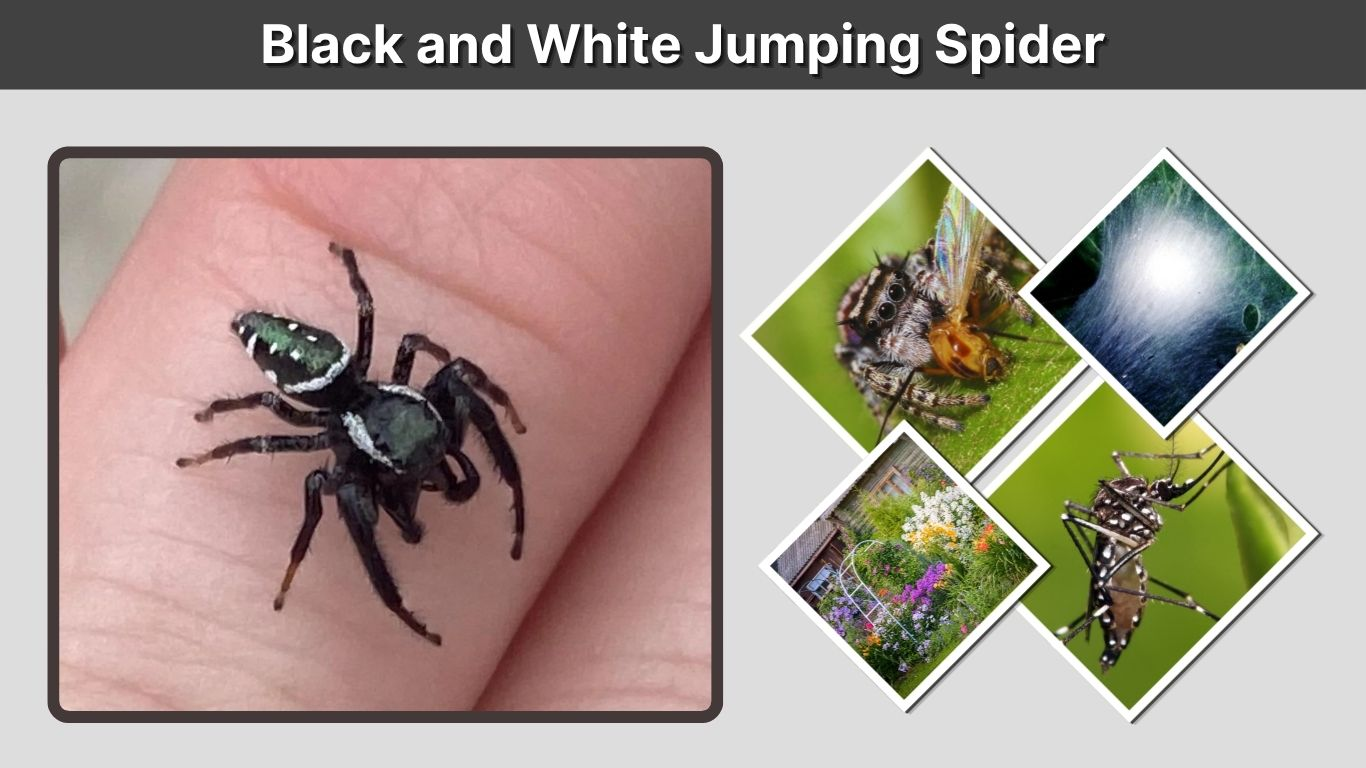
The black and white jumping spider with green fangs is usually the bold jumping spider (Phidippus audax). This small but striking spider is easy to recognize because of its fuzzy black body, bright white markings, and metallic green or blue-green mouthparts. It is common in many areas and often attracts attention because it looks unusual, alert, and surprisingly expressive for a spider.
What Is the Black and White Jumping Spider With Green Fangs?
This spider is best known as the bold jumping spider, though some people also call it the daring jumping spider. It belongs to the jumping spider family, Salticidae, which is famous for excellent eyesight, quick movements, and active hunting behavior.
Common Name and Scientific Name
The species most people mean when they describe a black and white jumping spider with green fangs is Phidippus audax. It is one of the most recognizable jumping spiders in North America. Unlike web-building spiders that wait for prey, this species actively explores its surroundings and stalks insects before jumping on them.
Why the Green Fangs Stand Out
The “green fangs” are actually the spider’s iridescent chelicerae, which are mouthparts near the front of the face. In good light, they often appear metallic green, blue-green, or turquoise. This bright color contrasts strongly with the spider’s black body and white spots, making it one of the easiest jumping spiders to identify.
Identification and Appearance
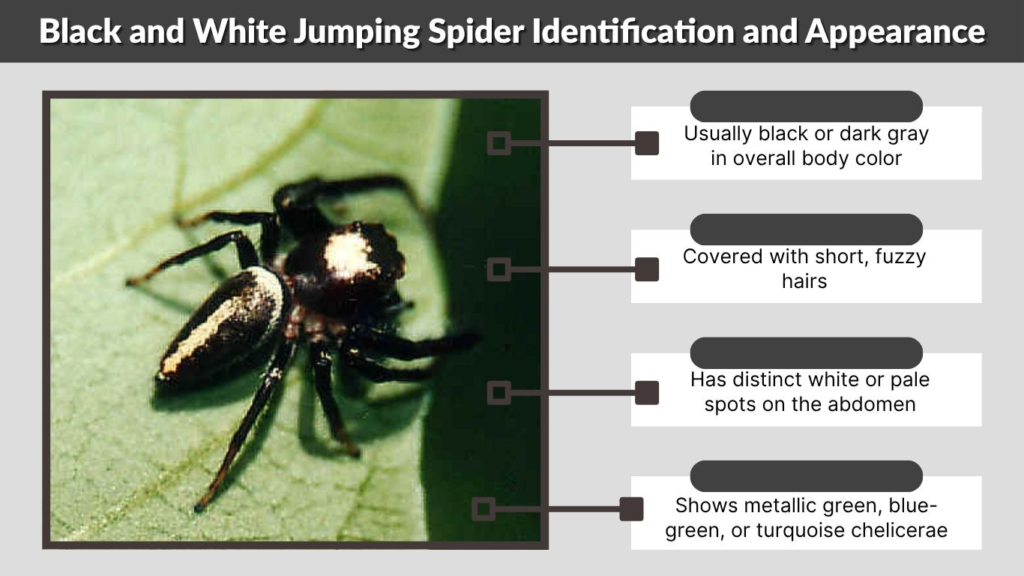
This spider has several features that make it stand out from other small spiders. If you know what to look for, identification is usually simple.
Identification Features
- Usually black or dark gray in overall body color
- Covered with short, fuzzy hairs
- Has distinct white or pale spots on the abdomen
- Shows metallic green, blue-green, or turquoise chelicerae
- Has a compact, sturdy body shape
- Features large forward-facing eyes typical of jumping spiders
- Moves in short bursts and often jumps instead of running long distances
- Commonly measures about 8 to 18 mm depending on age and sex
Quick Facts
| Feature | Description |
|---|---|
| Common Name | Bold Jumping Spider |
| Scientific Name | Phidippus audax |
| Main Colors | Black with white markings |
| Notable Trait | Metallic green fangs (chelicerae) |
| Family | Salticidae |
| Size | About 8–18 mm |
| Range | Common in North America |
| Behavior | Active hunter, excellent jumper |
Habitat and Range
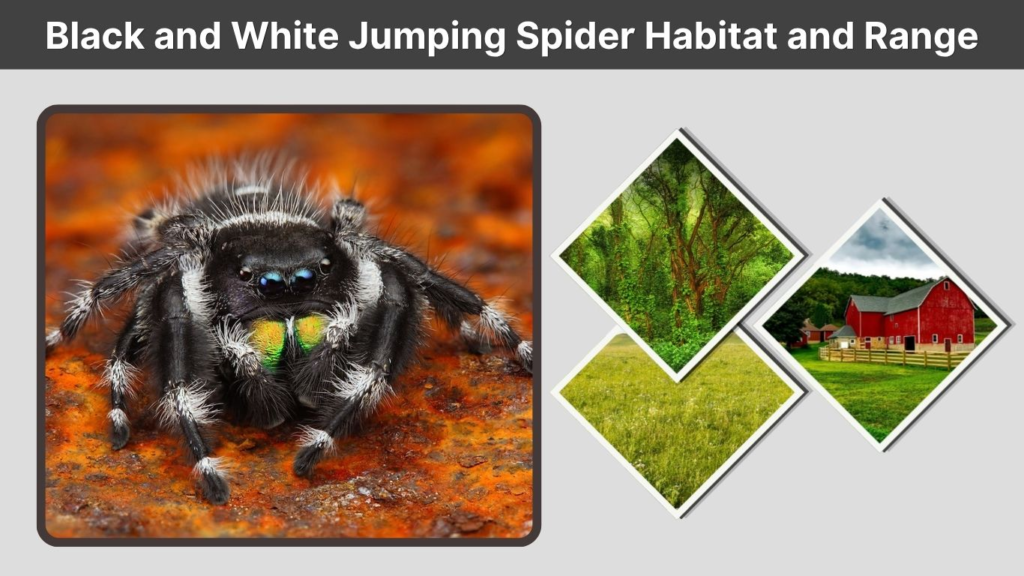
This spider is adaptable and can live in many different places. It often does well around homes, gardens, and sunny outdoor spaces.
Where It Is Commonly Found
- Gardens and backyards
- House walls, fences, and window frames
- Fields, shrubs, and meadows
- Garages, sheds, and porches
- Farms and agricultural areas
- Sunny places where insects are active
Indoor and Outdoor Habits
Bold jumping spiders are mostly outdoor spiders, but they sometimes wander indoors. When found inside a house, they are usually on walls, near windows, or exploring bright areas where insects might gather. They do not build large capture webs in corners like many other house spiders. Instead, they roam and hunt during the day.
They are especially common in warm months, when insect activity is high. In cooler weather, they may hide in protected spaces. Their small silk shelters are often used for resting, molting, or laying eggs rather than catching prey.
Behavior and Movement
Jumping spiders are known for behavior that seems almost curious. The bold jumping spider often turns to look directly at movement, including people, which makes it appear attentive and aware.
How It Hunts
Unlike web-dependent spiders, this species hunts visually. It uses its excellent eyesight to detect prey, then slowly approaches before making a fast, accurate leap. A silk dragline is often attached before the jump, acting like a safety line.
This hunting style makes the spider very efficient. It may pause often, tilt its body, and carefully judge distance before attacking. Because it relies so heavily on vision, it is most active during daylight hours.
Temperament Around People
Bold jumping spiders are generally shy rather than aggressive. They may stand their ground if threatened, but they usually prefer escape over confrontation. Many people find them less frightening than other spiders because their movements are deliberate and their face appears more animated due to their large front eyes.
In some cases, they may even seem inquisitive, especially if they pause and watch human movement. That behavior is normal and is part of how they interpret the world.
Diet and Hunting Style
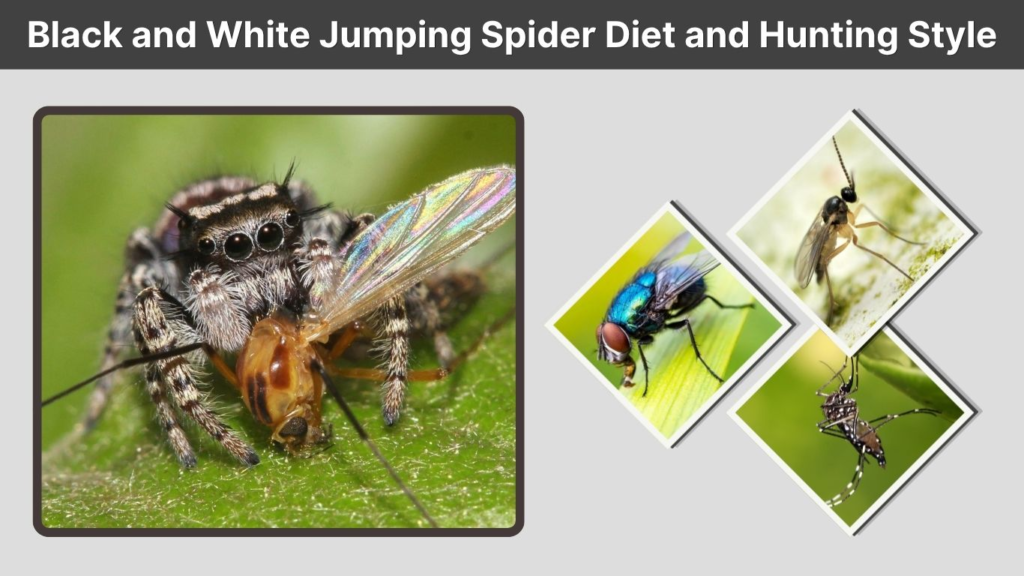
These spiders are beneficial predators because they feed on many small insects and pests. Their diet helps control nuisance bugs in gardens and around homes.
What They Eat
- Flies
- Gnats
- Small moths
- Mosquitoes
- Beetles
- Ants
- Small crickets
- Other small spiders
Feeding Habits
The bold jumping spider does not rely on sticky webs to capture food. Instead, it stalks prey with patience and precision. Once it gets close enough, it jumps and bites the insect, injecting venom that helps immobilize and digest it.
Because of this hunting style, the spider is often considered useful in natural pest control. In gardens, it may help reduce insect numbers without causing damage to plants. Around homes, it can also be beneficial by feeding on small nuisance insects.
Life Cycle and Reproduction
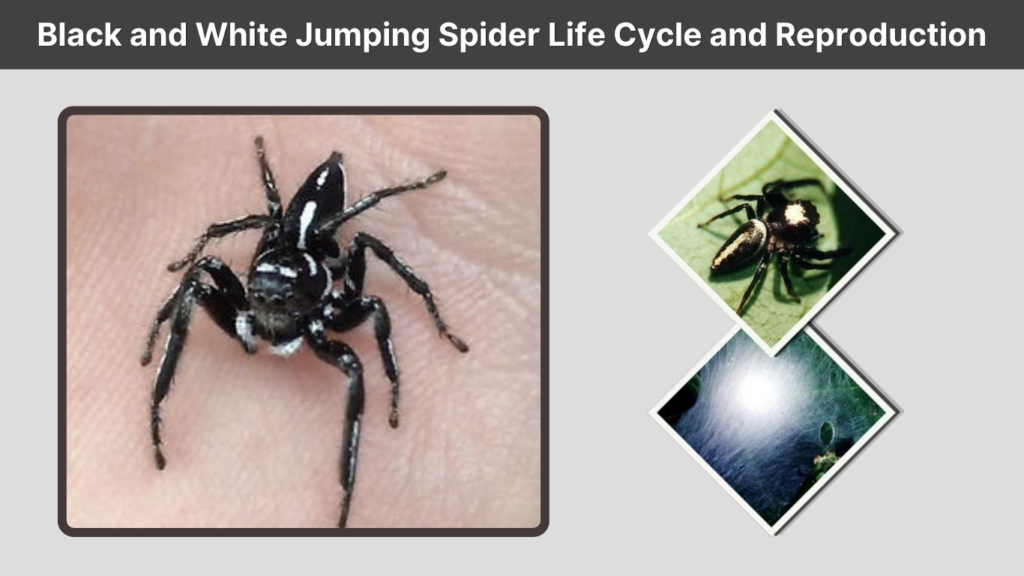
The life cycle of this spider follows the typical pattern of egg, juvenile, and adult stages. Like other spiders, it grows by molting.
Growth and Development
Young bold jumping spiders often look a bit different from adults. Juveniles may have orange, tan, or differently colored spots that become whiter and more defined as they mature. Their metallic mouthparts may also become more vivid with age.
As they grow, they shed their exoskeleton several times. After each molt, the spider becomes larger and more developed. Adult size and coloration can vary slightly, but the classic black-and-white look with green chelicerae becomes easier to recognize.
Mating and Egg Sac
During mating season, males perform visual displays to attract females. These movements may include waving legs, raising the body, and making careful approaches. If mating is successful, the female lays eggs in a silk sac placed in a sheltered area.
She may guard the egg sac for a time. Once the spiderlings hatch, they remain protected until they are ready to disperse. This early protection increases their chances of survival.
Is It Dangerous?
Many people worry when they see a spider with bold colors and bright green fangs, but this species is not considered dangerous to humans.
Bite Risk and Safety
- Usually avoids biting unless handled or trapped
- Venom is used mainly for subduing prey
- Not medically significant to most people
- Bite symptoms are usually mild if one occurs
- Typical effects may include slight pain, redness, or swelling
- Severe reactions are uncommon but possible in sensitive individuals
Should You Remove It?
If you find one indoors, there is usually no urgent reason to kill it. It is a harmless hunter and can even help reduce insects. If you do not want it inside, the safest option is to gently capture it in a container and release it outdoors.
Because it does not build messy capture webs and does not seek out people, it is often one of the least troublesome spiders to have nearby.
Similar Spiders and Common Confusion
Several jumping spiders may look somewhat similar, especially to people unfamiliar with spider identification. However, the bold jumping spider has a distinctive combination of black coloring, white abdominal spots, and iridescent green mouthparts.
How It Differs From Other Jumping Spiders
Some jumping spiders are tan, gray, or striped rather than black and white. Others may have orange markings or less vivid chelicerae. The bold jumping spider is more robust and often appears fuzzier than many small house spiders.
The key difference is the facial area. If you notice large forward-facing eyes and metallic green mouthparts, you are very likely looking at a bold jumping spider.
FAQs
Is the black and white jumping spider with green fangs poisonous?
Like most spiders, it has venom, but it is used to catch prey and is not considered dangerous to humans. If it bites, the effect is usually mild, such as slight pain or swelling. Serious reactions are uncommon and usually involve sensitivity or allergy.
What is the scientific name of this spider?
The black and white jumping spider with green fangs is usually Phidippus audax, commonly called the bold jumping spider or daring jumping spider. It is one of the best-known jumping spider species and is widespread in North America.
Why are its fangs green?
The green color comes from the spider’s iridescent chelicerae, which reflect light in a metallic way. Depending on lighting and angle, they may appear green, blue-green, or turquoise. This shiny coloration is one of the spider’s most noticeable and attractive identification features.
Do bold jumping spiders build webs?
They do not build large prey-catching webs like orb-weavers or house spiders. Instead, they hunt actively during the day. However, they still use silk for safety lines, resting shelters, molting spaces, and egg sacs, so silk remains important in their daily life.
Are these spiders good to have around?
Yes, in most cases they are beneficial. They feed on flies, gnats, mosquitoes, and other small insects, which helps reduce pests naturally. They are also not aggressive and rarely cause problems, making them one of the more welcome spiders around homes and gardens.
