
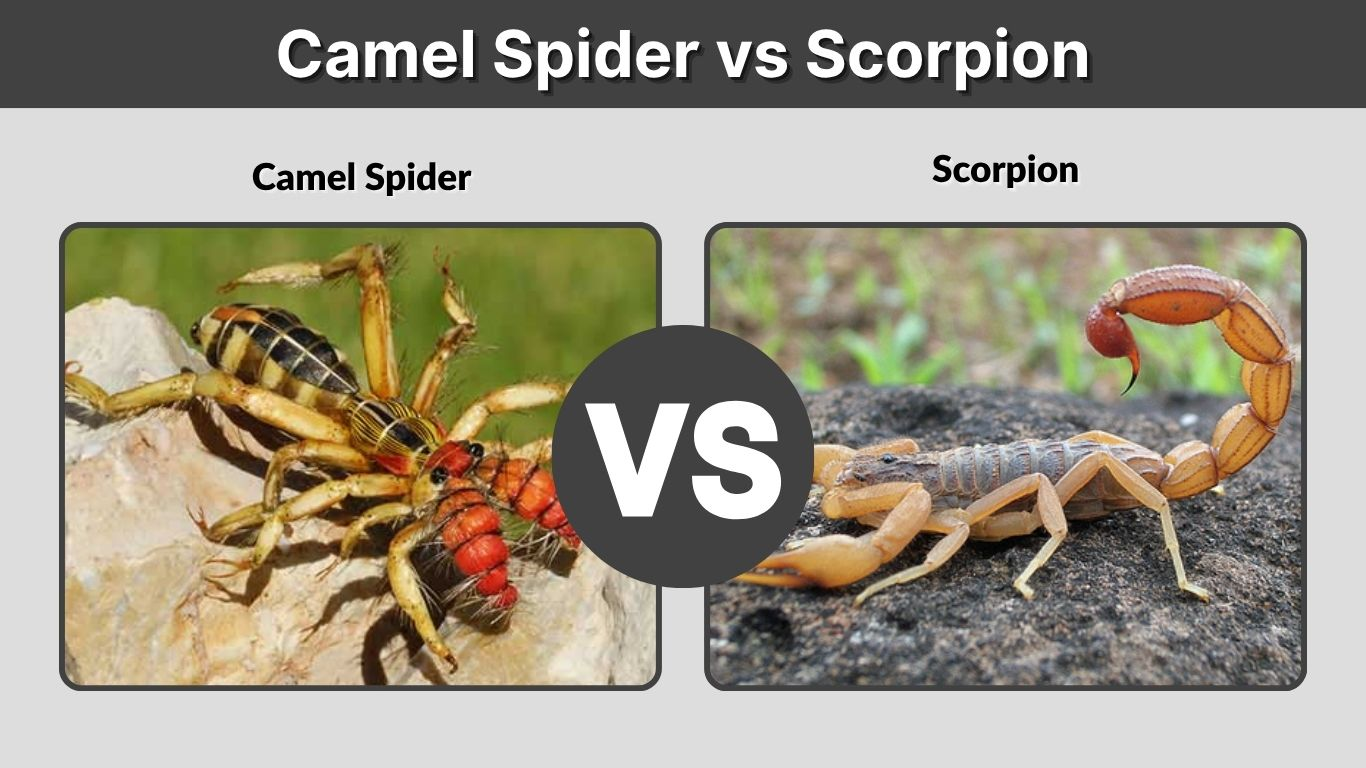
Camel spiders are among the most misunderstood desert arachnids in the world. Their fast movement, large jaws, and unusual appearance often lead people to compare them with scorpions, tarantulas, centipedes, and other predators. Internet myths and exaggerated stories have also increased curiosity about these strange creatures.
Although camel spiders may look dangerous, they are very different from venomous scorpions and true spiders. This guide compares camel spiders with scorpions, tarantulas, wolf spiders, and other desert hunters to explain their appearance, behavior, hunting abilities, and actual threat to humans.
What Is a Camel Spider?
Camel spiders belong to the order Solifugae, a group of fast-moving arachnids commonly found in dry and desert regions. Despite their name, they are not true spiders and do not possess venom glands like many spider species. Their powerful jaws and impressive speed make them highly effective nighttime hunters in harsh desert environments.
Camel Spider Scientific Classification
Camel spiders are arachnids related to spiders, scorpions, and ticks. However, they belong to their own unique order called Solifugae. Scientists recognize them as separate from true spiders because they lack silk glands and venom-producing fangs.
Common Names for Camel Spiders
Camel spiders are known by several different names depending on the region and local folklore.
Popular names include:
- Wind scorpion
- Sun spider
- Solpugid
- Red Roman
- Sand spider
These names often cause confusion because camel spiders are neither true spiders nor scorpions.
Where Camel Spiders Live
Camel spiders prefer hot and dry habitats where they can hunt insects and small prey at night. They are commonly found in deserts, rocky terrain, and dry grasslands throughout parts of Africa, the Middle East, and the southwestern United States.
Camel Spider vs Scorpion
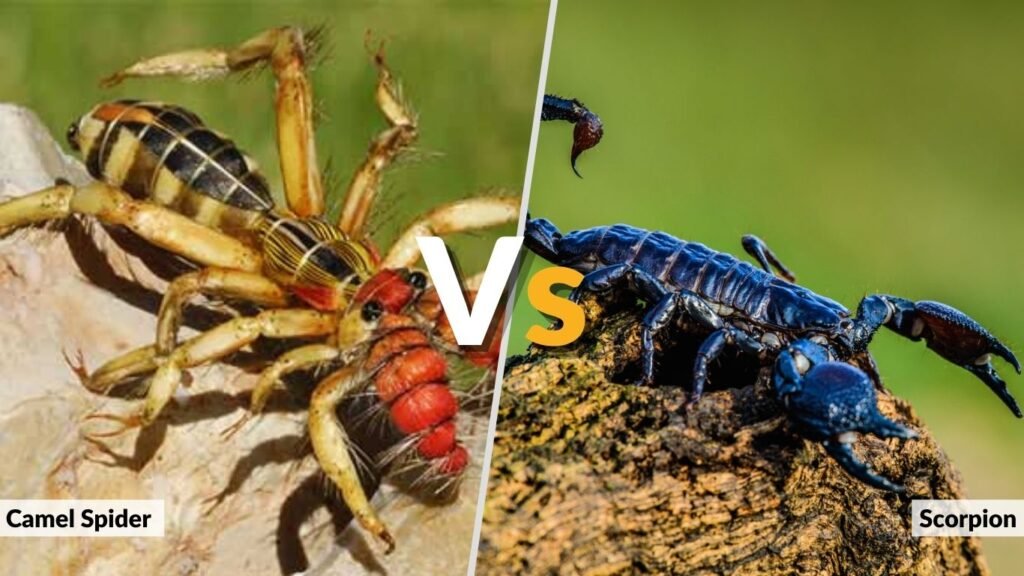
Camel spiders and scorpions are two of the most famous desert arachnids, but they differ greatly in anatomy, venom, and hunting methods. While scorpions rely on venomous stingers for defense and hunting, camel spiders depend on speed and powerful jaws to capture prey.
Appearance Differences
Scorpions have curved tails equipped with venomous stingers, while camel spiders completely lack tails. Camel spiders instead possess oversized jaws called chelicerae that help them crush insects and small prey. Their long legs also make them appear larger and faster than many scorpions.
Venom and Danger Level
One of the biggest differences between these arachnids is venom. Most scorpions inject venom through their stingers, while camel spiders are non-venomous. Although camel spider bites can be painful because of their strong jaws, they are generally not considered medically dangerous to healthy humans.
Speed and Hunting Style
Camel spiders are extremely fast runners and actively chase prey across the desert floor. Scorpions usually rely on ambush tactics, waiting quietly before striking with their pincers and stingers. Both are nocturnal hunters, but camel spiders tend to move far more aggressively while searching for food.
Camel Spider vs Scorpion Comparison Table
| Feature | Camel Spider | Scorpion |
| Venomous | No venom | Venomous |
| Tail | None | Curved stinger tail |
| Speed | Very fast | Moderate |
| Main Weapon | Powerful jaws | Venomous sting |
| Habitat | Dry deserts | Deserts and rocky areas |
Camel Spider vs Tarantula
Camel spiders are often compared to tarantulas because both are large arachnids with intimidating appearances. However, tarantulas are true spiders with venom and silk abilities, while camel spiders belong to a completely different arachnid group with distinct hunting methods and body structures.
Body Size and Appearance
Tarantulas usually appear bulkier and hairier than camel spiders. Camel spiders have slimmer bodies, longer legs, and massive jaws that stand out immediately. Tarantulas often rely on thick hair and larger body mass for defense.
Hunting and Feeding Behavior
Unlike tarantulas, camel spiders are active hunters that constantly move while searching for prey.
Important hunting differences include:
- Camel spiders chase prey quickly
- Tarantulas often ambush prey
- Camel spiders rely on jaw strength
- Tarantulas use venom and fangs
- Both are mostly nocturnal predators
These hunting styles help both predators survive in different environments.
Which Is More Dangerous?
Tarantulas possess venom, but most species are not dangerous to humans. Camel spiders lack venom entirely, although their bite may still cause pain and minor skin damage. In most situations, neither animal poses a serious threat unless provoked or handled carelessly.
Camel Spider vs Wolf Spider
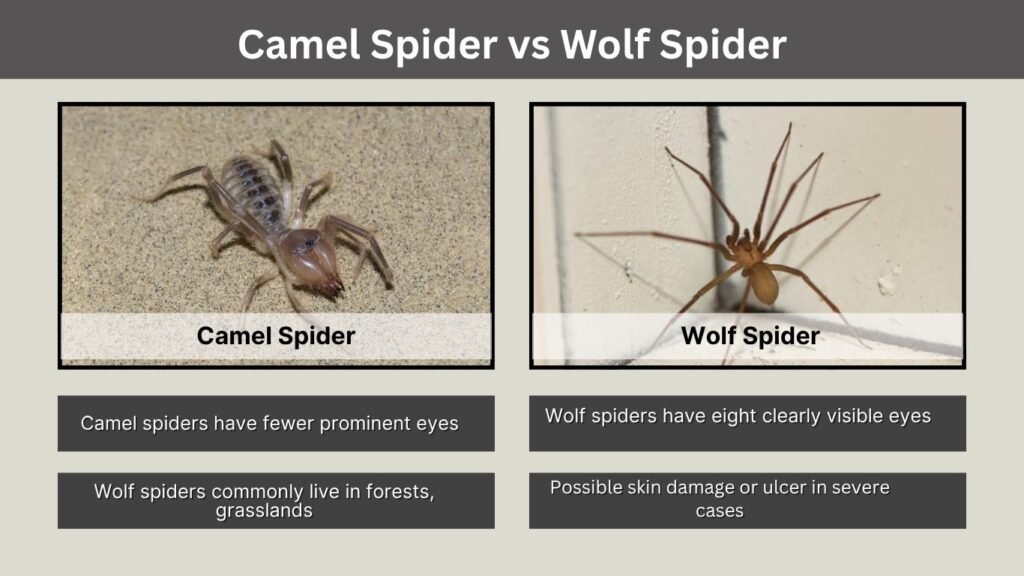
Wolf spiders and camel spiders are frequently confused because both are fast-moving ground hunters. Despite some similarities in behavior, their body structure, eye arrangement, and hunting techniques are noticeably different upon closer examination.
Identification Differences
Wolf spiders have eight clearly visible eyes arranged in rows, while camel spiders have fewer prominent eyes and much larger jaws. Camel spiders also appear more elongated and leggy compared to the compact body shape of wolf spiders.
Habitat and Lifestyle
Wolf spiders commonly live in forests, grasslands, and gardens, while camel spiders mainly inhabit deserts and dry environments. Both species are solitary hunters that avoid building webs and prefer chasing prey directly.
Bite and Aggression Comparison
Neither camel spiders nor wolf spiders are considered highly dangerous to humans. Wolf spider bites may produce mild pain and swelling because of venom, while camel spider bites rely purely on jaw pressure rather than toxins.
Camel Spider vs Jerusalem Cricket
Camel spiders and Jerusalem crickets are sometimes confused because both have large jaws and unusual appearances. However, these creatures belong to completely different groups. Camel spiders are arachnids, while Jerusalem crickets are insects with thick bodies and powerful legs designed for digging and movement.
Appearance Comparison
Jerusalem crickets have large rounded abdomens and thick striped bodies, while camel spiders appear slimmer with longer legs. Camel spiders also have oversized jaws that move independently when feeding or defending themselves.
Movement and Speed
Camel spiders are much faster than Jerusalem crickets and can rapidly chase prey across the ground. Jerusalem crickets move more slowly and spend much of their time burrowing underground or hiding beneath rocks and debris.
Diet and Behavior
These two creatures also differ in feeding habits and survival behavior.
Key behavioral differences include:
- Camel spiders are active predators
- Jerusalem crickets often scavenge
- Camel spiders hunt insects at night
- Jerusalem crickets dig underground shelters
- Both avoid humans when possible
Despite their frightening appearance, neither species is considered highly dangerous to people.
Camel Spider vs Centipede
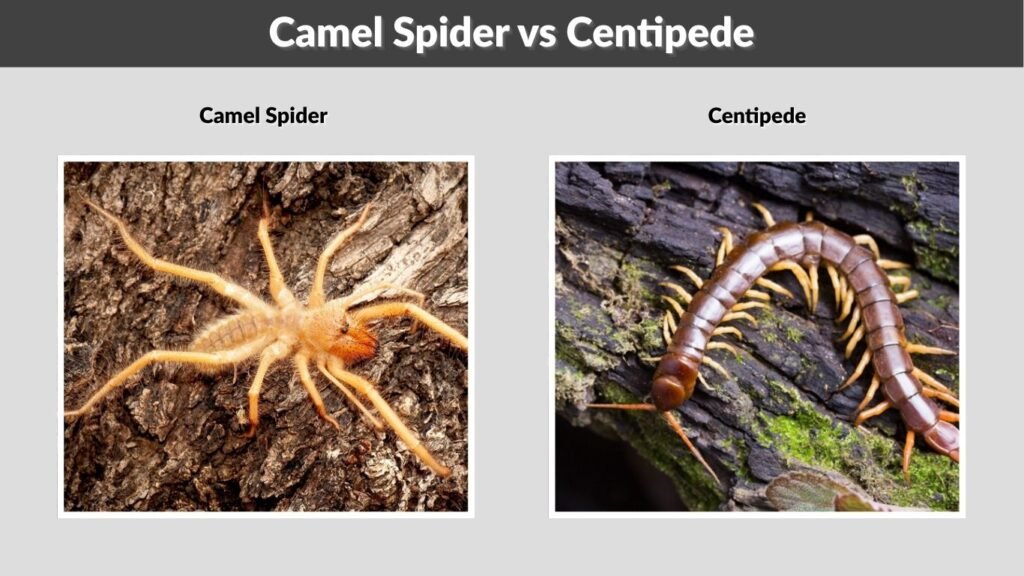
Camel spiders and giant centipedes are aggressive hunters that rely on speed and strong mouthparts to overpower prey. Both creatures are feared because of their appearance and rapid movement, but they differ greatly in anatomy, venom, and attack methods.
Body Structure Differences
Centipedes have long segmented bodies with dozens of legs, while camel spiders possess eight legs like other arachnids. Camel spiders also lack the elongated body shape and venom claws that make centipedes easy to identify.
Venom and Bite Power
Most large centipedes inject venom through specialized front claws called forcipules. Camel spiders do not have venom but instead use strong jaws capable of crushing insects, lizards, and smaller prey. Centipede bites are generally more painful and medically significant.
Predatory Skills
Both predators are highly effective nighttime hunters. Camel spiders rely heavily on speed and quick attacks, while centipedes use venom to weaken prey before feeding. Their hunting methods reflect adaptations for survival in harsh desert or tropical environments.
Camel Spider vs Praying Mantis
Praying mantises and camel spiders are both skilled predators with impressive reflexes and fast attack speeds. However, they belong to entirely different animal groups and use different techniques when capturing prey.
Hunting Style Comparison
Praying mantises usually wait patiently before striking prey with their grasping front legs. Camel spiders actively chase prey over short distances and overpower victims using jaw strength instead of grabbing limbs.
Speed and Agility
Camel spiders are faster runners on open ground, while mantises are more agile climbers among plants and branches. Both species react quickly to movement and are efficient hunters in their natural habitats.
Which Would Win?
A fight between a praying mantis and a camel spider would depend on size and environment. Mantises have strong gripping forelegs, but camel spiders possess greater running speed and powerful jaws that could provide an advantage during close combat.
Camel Spider vs Huntsman Spider
Camel spiders and huntsman spiders are often mistaken for each other because both are large, long-legged arachnids capable of moving quickly. Despite their similarities, huntsman spiders are true spiders with venom, while camel spiders belong to a separate arachnid order.
Physical Differences
Huntsman spiders have flatter bodies and sideways leg positioning that helps them squeeze into narrow spaces. Camel spiders have more upright legs and noticeably larger jaws that dominate the front of the body.
Venom and Bite Comparison
Huntsman spiders use mild venom to subdue prey, although their bites are not usually dangerous to humans. Camel spiders do not produce venom but may still deliver painful bites using their strong jaws.
Habitat and Activity
These arachnids live in very different environments.
Common habitat differences include:
- Camel spiders prefer deserts
- Huntsman spiders often enter homes
- Camel spiders avoid humid areas
- Huntsman spiders climb walls and ceilings
- Both are mostly nocturnal hunters
Their environments strongly influence how people encounter them.
Camel Spider vs Vinegaroon
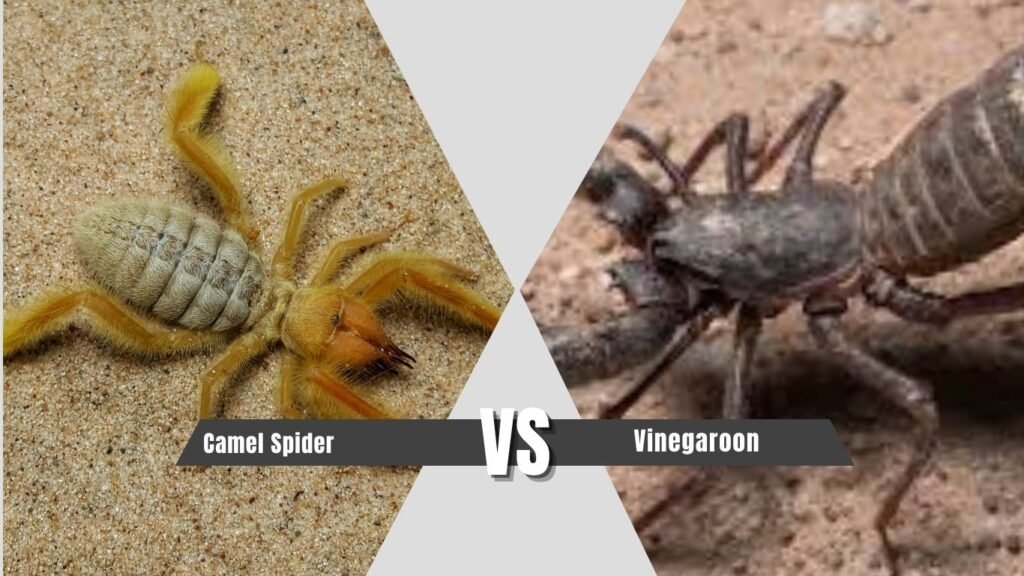
Vinegaroons, also called whip scorpions, are another unusual arachnid commonly compared with camel spiders. Both species have intimidating appearances, but vinegaroons possess defensive features that camel spiders lack.
Tail and Defense Mechanisms
Vinegaroons have long whip-like tails and can spray a vinegar-smelling defensive liquid when threatened. Camel spiders do not possess tails, venom, or chemical spray defenses. Instead, they depend on speed and jaw strength to escape danger.
Appearance and Identification
Camel spiders are usually slimmer and faster-moving than vinegaroons. Vinegaroons appear bulkier and have large front pedipalps that resemble pincers. Their defensive tail also makes them easier to identify.
Behavior Around Humans
Neither vinegaroons nor camel spiders are aggressive toward humans. Most encounters happen accidentally when these nocturnal arachnids search for shelter or prey around buildings and outdoor lights.
FAQs
Is a camel spider more dangerous than a scorpion?
Most scorpions are more dangerous because they use venomous stingers for defense and hunting. Camel spiders are non-venomous and mainly rely on speed and powerful jaws. Although their bite can be painful, it is usually not medically serious for humans.
Are camel spiders true spiders?
No, camel spiders are not true spiders. They belong to the arachnid order Solifugae, while true spiders belong to the order Araneae. Camel spiders also lack silk glands and venom-producing fangs.
What is the difference between a camel spider and a sun spider?
There is no difference. “Camel spider” and “sun spider” are common names for the same arachnid. They are also called wind scorpions or solpugids in some regions.
Can a camel spider beat a tarantula?
The outcome would depend on the size and situation. Camel spiders are faster and aggressive hunters, while tarantulas have venom and stronger defensive abilities. In nature, direct fights between them are uncommon.
Why are camel spiders feared so much?
Camel spiders are feared because of their large jaws, rapid speed, and exaggerated internet stories. Viral myths often falsely claim they are giant, venomous, or deadly to humans, even though they are generally harmless.
