
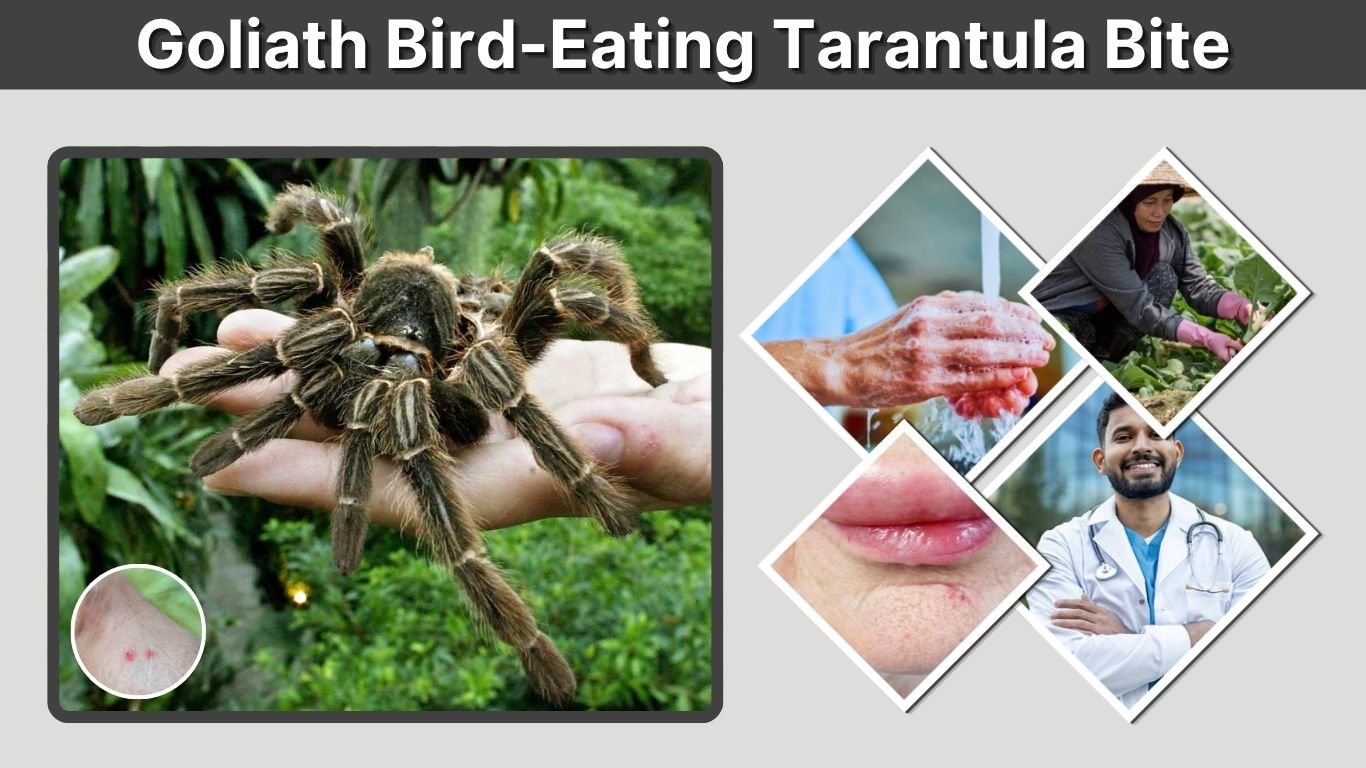
The Goliath bird-eating tarantula, scientifically known as Theraphosa blondi, is one of the world’s largest spiders by body mass. Its enormous size, thick legs, large fangs, and defensive behavior can make it appear extremely dangerous. However, confirmed human bites are uncommon, and detailed medical evidence specifically involving this species is limited. A bite can still be painful because its large fangs may create deep puncture wounds and inject venom. The spider’s irritating abdominal hairs may sometimes pose a greater practical risk, especially when they enter the eyes or airways.
Is the Goliath Bird-Eating Tarantula Venomous?
Yes, the Goliath bird-eating tarantula is venomous. Like other tarantulas, it uses venom primarily to immobilize and begin digesting prey. Venom is delivered through two large fangs located beneath the front of the spider’s body.
Being venomous does not automatically mean that an animal is deadly to people. Most medically documented tarantula bites cause localized pain and other relatively minor effects. Nevertheless, reactions vary according to the species, the amount of venom delivered, the bite location, the victim’s health, and individual sensitivity.
There is no well-established evidence that a typical Theraphosa blondi bite is normally fatal to a healthy adult. However, the absence of many published bite reports means that the exact effects of this particular species are not as thoroughly documented as those of more medically important spiders.
Why Does a Goliath Bird-Eater Bite?
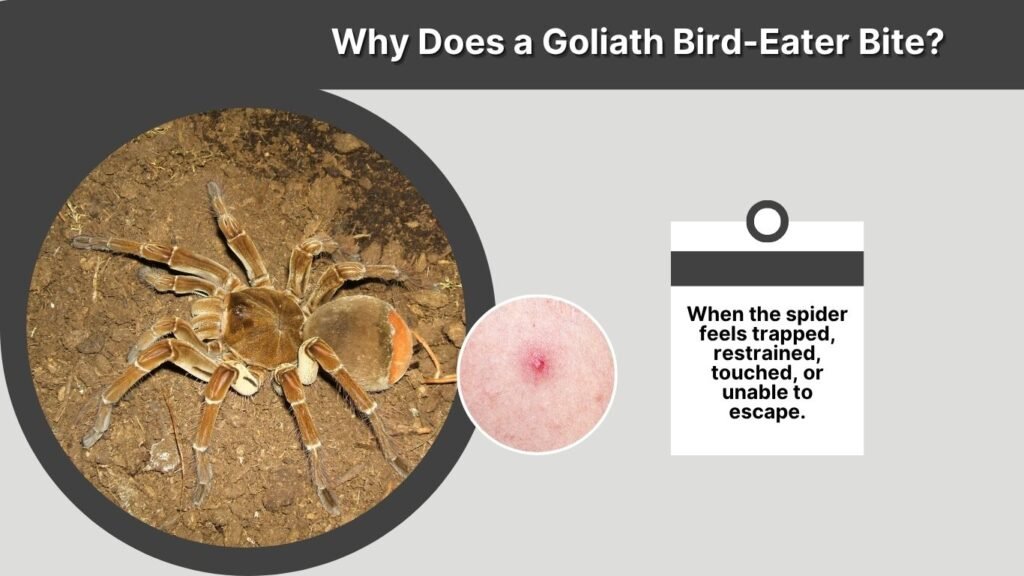
The Goliath bird-eater does not hunt humans or normally attack without warning. Biting is a defensive response that may occur when the spider feels trapped, restrained, touched, or unable to escape.
Before biting, it may display warning behaviors such as:
- Raising its front legs
- Showing its fangs
- Making a hissing or stridulating sound
- Turning toward the perceived threat
- Kicking irritating hairs from its abdomen
- Striking without necessarily injecting venom
A bite is more likely during improper handling, enclosure maintenance, transport, or an attempted escape. Experienced keepers generally avoid handling large tarantulas because falls can injure the spider, while defensive behavior can injure the person.
Common Symptoms of a Goliath Bird-Eating Tarantula Bite
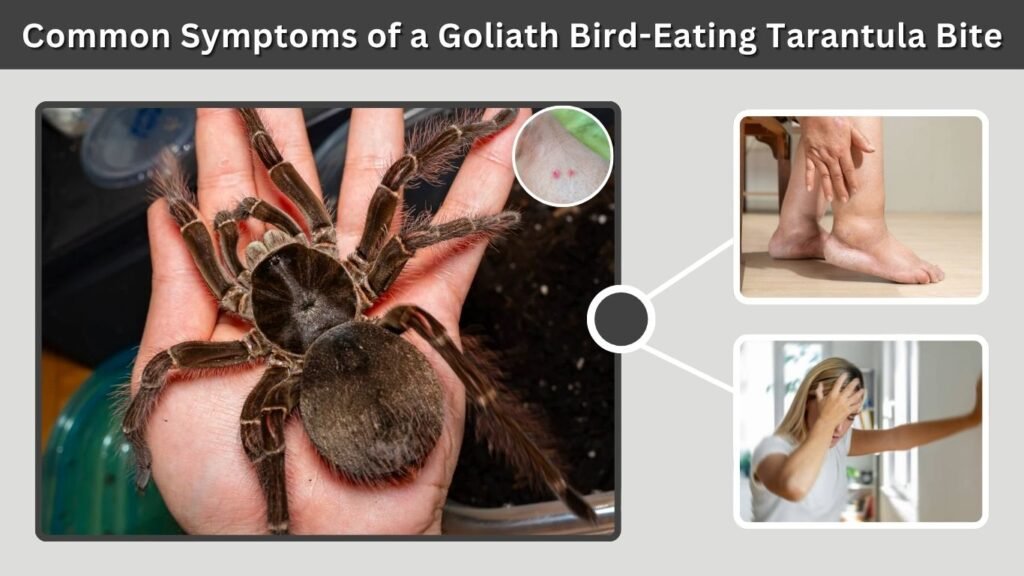
Because species-specific clinical reports are scarce, expected symptoms are largely based on documented tarantula bites and the mechanical effects of large fangs. Symptoms can begin immediately or develop during the hours following the bite.
1. Immediate Pain
Pain at the bite site is the most likely symptom. It may feel like a sharp puncture, sting, burning sensation, or intense pinch. Large tarantulas can produce substantial mechanical trauma even when little venom is delivered.
Studies of confirmed tarantula bites describe local pain as the most common effect. In several reported cases involving other tarantula species, the pain was considered severe.
2. Visible Fang Marks
The victim may have two puncture marks where the fangs entered the skin. The marks may bleed, especially if the bite occurs on a finger, hand, or another area with small blood vessels close to the surface.
Because a Goliath bird-eater possesses large fangs, the punctures may be deeper than those caused by a smaller spider. Mechanical injury, rather than venom alone, can therefore be an important concern.
3. Redness and Swelling
Redness, tenderness, and swelling may develop around the puncture wounds. These effects are common after many arthropod bites and can result from venom, tissue damage, inflammation, or contamination of the wound.
Mild swelling may remain close to the bite. Increasing or spreading swelling requires closer attention, particularly if it involves the face, mouth, or throat.
4. Burning, Tingling, or Numbness
Some people may notice burning, tingling, altered sensation, or numbness around the bite. These symptoms can arise from local tissue irritation, swelling, pressure on small nerves, or venom activity.
Persistent numbness, weakness, or difficulty moving the affected area should be medically evaluated.
5. Muscle Discomfort or Cramping
Muscle spasms and cramps have been reported after bites from some tarantula species, especially certain Old World tarantulas. These effects are not well established as typical symptoms of a Goliath bird-eater bite, but unusual muscular symptoms should not be ignored.
A person who develops severe cramps, widespread pain, weakness, or difficulty walking should seek urgent medical care.
6. Nausea or General Discomfort
A frightened or sensitive person may experience nausea, sweating, dizziness, headache, rapid heartbeat, or a general feeling of illness. These symptoms could be related to venom, pain, anxiety, or an allergic response.
It may be difficult to distinguish between anxiety-related symptoms and systemic envenomation without medical assessment.
How Dangerous Is the Bite?
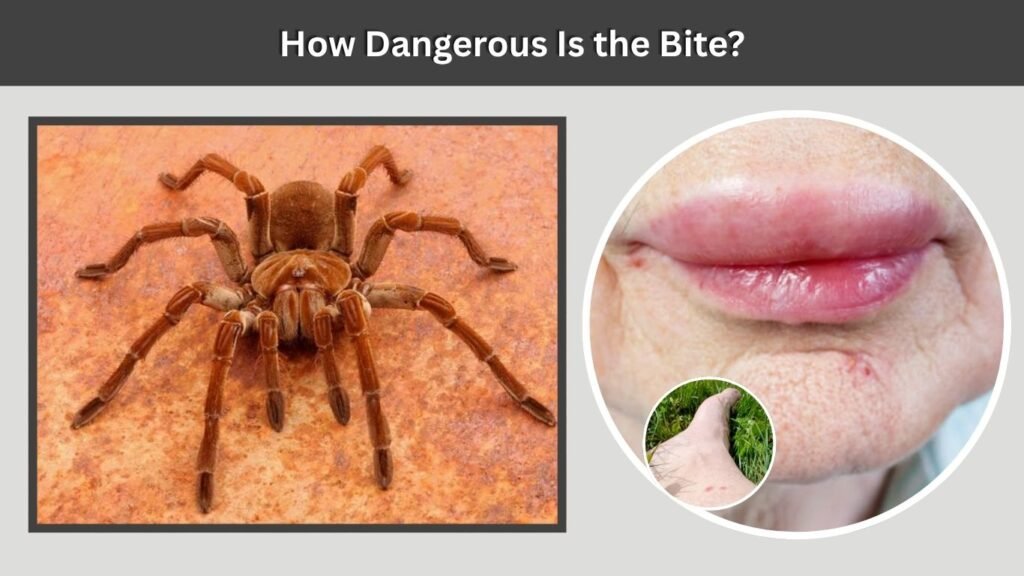
For most healthy adults, a tarantula bite is expected to cause pain and localized symptoms rather than life-threatening poisoning. Published reports of tarantula bites generally describe minor outcomes, although severe pain and occasional systemic symptoms have occurred.
The main potential risks include mechanical damage from the fangs, infection, allergic reaction, venom-related symptoms, and exposure to urticating hairs.
Mechanical Injury
The Goliath bird-eater’s large fangs may create significant puncture wounds. A bite over a joint, tendon, nail, or sensitive structure could cause more serious injury than a shallow bite to thicker skin.
Deep wounds may also allow bacteria to enter. Monitoring for infection is important even when the initial venom effects appear mild.
Allergic Reaction
Any bite or exposure to animal proteins can potentially trigger an allergic reaction. Serious allergic symptoms may include:
- Difficulty breathing
- Wheezing
- Swelling of the lips, tongue, face, or throat
- Widespread hives
- Sudden weakness or fainting
- Very rapid heartbeat
- Low blood pressure or collapse
These symptoms require immediate emergency medical assistance. Severe allergic reactions after tarantula exposure appear uncommon, but they can be dangerous when they occur.
Infection
The bite site can become infected if bacteria enter the puncture wounds. Possible signs include increasing redness, warmth, swelling, pain, pus, fever, or red streaks moving away from the wound.
Symptoms that worsen after initially improving may also indicate infection. People with diabetes, immune-system problems, or poor circulation should seek medical advice early.
Urticating Hairs May Be a Bigger Problem
The Goliath bird-eating tarantula has microscopic defensive hairs, known as urticating setae, on its abdomen. When threatened, it can rub its hind legs against the abdomen and release these barbed hairs into the air.
The hairs may lodge in the skin and cause:
- Intense itching
- Burning or stinging
- Red bumps
- Rash
- Local swelling
- Persistent irritation
Species in the genus Theraphosa possess urticating hairs that can be especially irritating to mammals. The sensation is sometimes compared with contact with tiny pieces of fiberglass.
Eye Exposure
Eye exposure is a more serious concern. The tiny hairs can become embedded in the conjunctiva or cornea, causing redness, pain, tearing, light sensitivity, inflammation, and a persistent foreign-body sensation.
Medical reviews describe eye inflammation associated with tarantula hairs, sometimes called ophthalmia nodosa. Because the hairs can travel deeper into eye tissue, symptoms may continue or recur and require specialist treatment.
Do not rub an exposed eye. Rinse gently with clean water or sterile saline and obtain prompt medical evaluation, preferably from an eye specialist.
Breathing Exposure
Airborne hairs may irritate the nose, throat, or respiratory tract. Coughing, throat irritation, wheezing, or breathing difficulty requires medical attention, particularly in someone with asthma or respiratory disease.
First Aid for a Goliath Bird-Eater Bite
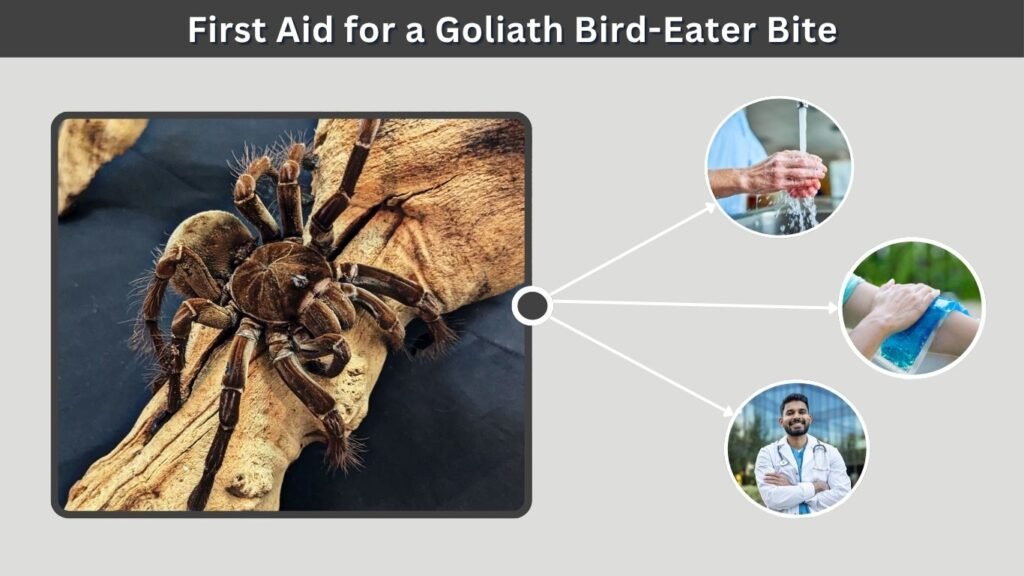
Remain calm and move away from the spider. Do not attempt to catch it with bare hands. A photograph taken from a safe distance may help with identification, but personal safety comes first.
Step 1: Wash the Wound
Wash the bite gently with soap and running water. This removes surface contamination and may lower the risk of infection. Do not aggressively scrub deep punctures.
Step 2: Control Bleeding
Apply gentle pressure with clean gauze or a clean cloth if the wound is bleeding. Heavy bleeding, loss of sensation, or difficulty moving the bitten area needs urgent assessment.
Step 3: Apply a Cold Pack
Place a cold pack wrapped in cloth over the area for approximately 10 to 15 minutes at a time. Cooling may reduce pain and swelling. Do not place ice directly on the skin.
Step 4: Elevate the Area
When possible, raise the bitten hand, arm, foot, or leg above heart level. Elevation can help limit swelling.
Step 5: Contact a Medical Professional
Contact a poison information service, doctor, or urgent-care provider for personalized guidance, particularly after a confirmed bite from a large exotic tarantula. Poison Control advises washing tarantula bites with soap and water and contacting a poison center for further instructions.
Do not cut the wound, attempt to suck out venom, apply an extremely tight tourniquet, or use unapproved chemicals.
When to Seek Emergency Medical Care
Call emergency services immediately when the person develops:
- Trouble breathing or swallowing
- Swelling of the mouth, tongue, or throat
- Fainting or confusion
- Widespread hives
- Severe or rapidly increasing swelling
- Uncontrolled bleeding
- Chest pain
- Repeated vomiting
- Severe muscle spasms
- Weakness affecting several parts of the body
- Eye pain after hair exposure
Children, older adults, pregnant individuals, people with severe allergies, and those with major underlying illnesses should be assessed more cautiously.
How Long Do Symptoms Last?
Mild local pain, redness, or swelling may improve within several hours or days. Deeper fang injuries may remain tender for longer. The duration depends on the depth of the bite, the amount of venom delivered, and whether complications develop.
Skin irritation from urticating hairs can persist for days or occasionally longer. Eye symptoms may continue much longer if the hairs remain embedded and are not properly treated.
How to Prevent a Bite
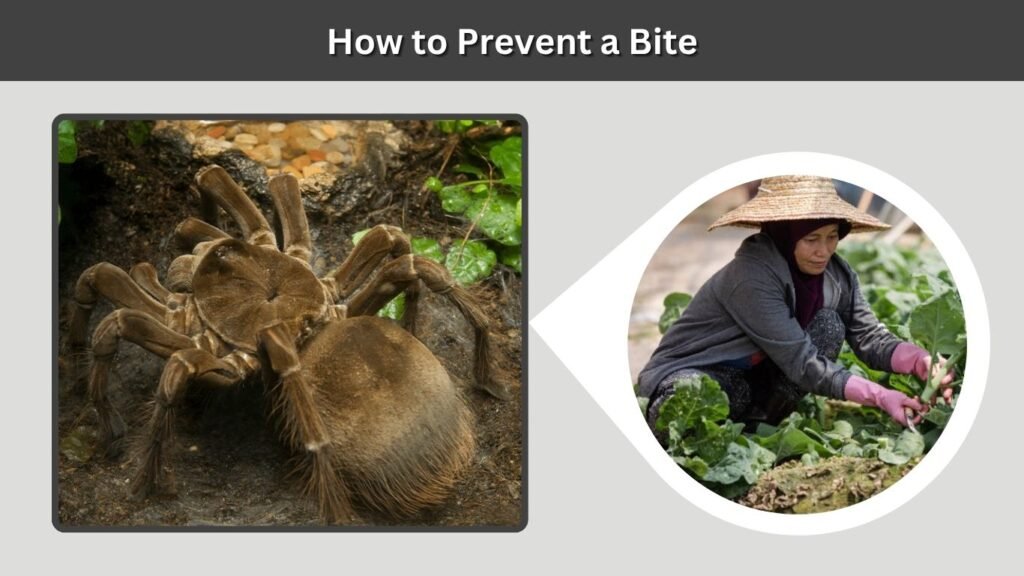
Never handle a Goliath bird-eating tarantula unnecessarily. Use long feeding tongs, secure containers, and catch cups when performing enclosure maintenance. Keep the enclosure closed, clearly labeled, and away from children or pets.
Wear gloves, long sleeves, and eye protection when cleaning an enclosure containing loose hairs or old molts. Avoid touching the face and wash exposed skin afterward. Even an empty enclosure may contain irritating hairs in the substrate and webbing.
FAQs
Can a Goliath bird-eating tarantula bite kill a human?
There is no strong evidence that a normal bite is routinely fatal to healthy humans. However, it can cause painful puncture wounds, swelling, and possible systemic or allergic symptoms. Any severe reaction, breathing problem, or rapidly worsening condition requires emergency medical care.
Is its bite more painful than a bee sting?
It may be. The spider’s large fangs can penetrate deeply and produce substantial mechanical pain. Individual experiences vary, and there are too few confirmed Theraphosa blondi bite reports to provide a dependable pain rating.
Does every bite inject venom?
No. Tarantulas can sometimes deliver a dry bite in which little or no venom is injected. It is impossible to confirm immediately whether venom was delivered, so every bite should be cleaned, observed, and treated cautiously.
What should I do if tarantula hairs enter my skin?
Avoid rubbing or scratching the area. Wash exposed skin and remove visible loose hairs carefully with adhesive tape. Seek medical advice if irritation is severe, spreads, affects breathing, or does not improve.
Should I go to the hospital after every bite?
Not every minor tarantula bite requires hospital treatment, but contacting a poison center or medical professional is sensible after a confirmed Goliath bird-eater bite. Emergency care is necessary for breathing difficulty, facial swelling, severe pain, neurological symptoms, uncontrolled bleeding, or eye exposure.
