
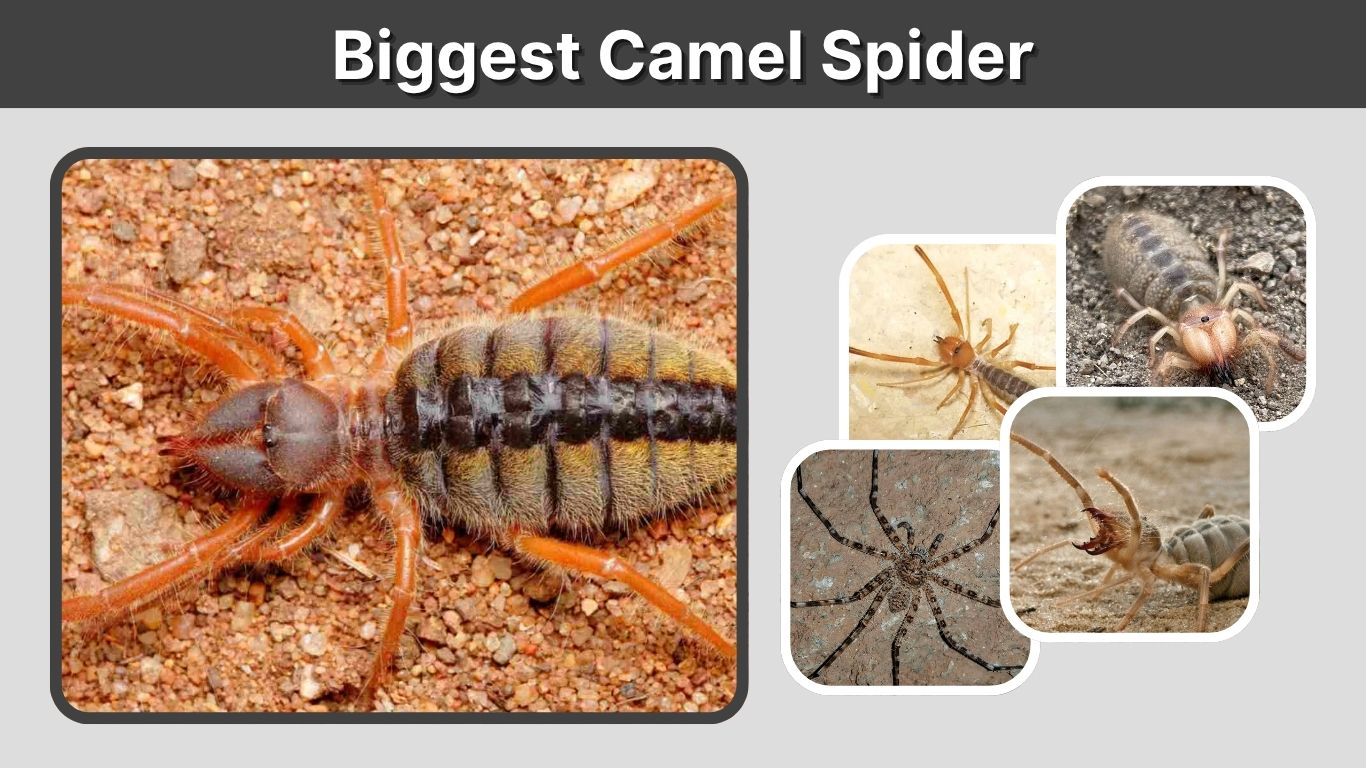
Camel spiders, also called solifugae, are desert arachnids renowned for their speed, predatory skill, and the myths surrounding their size. While some stories exaggerate their dimensions, verified records show impressive specimens capable of fast hunting and large body spans.
This article explores the biggest camel spiders ever recorded, including body and leg measurements, jaw size, notable specimens, and regional differences. By examining actual data and verified records, readers can separate myth from fact and appreciate these desert predators realistically.
Overview of Camel Spider Size
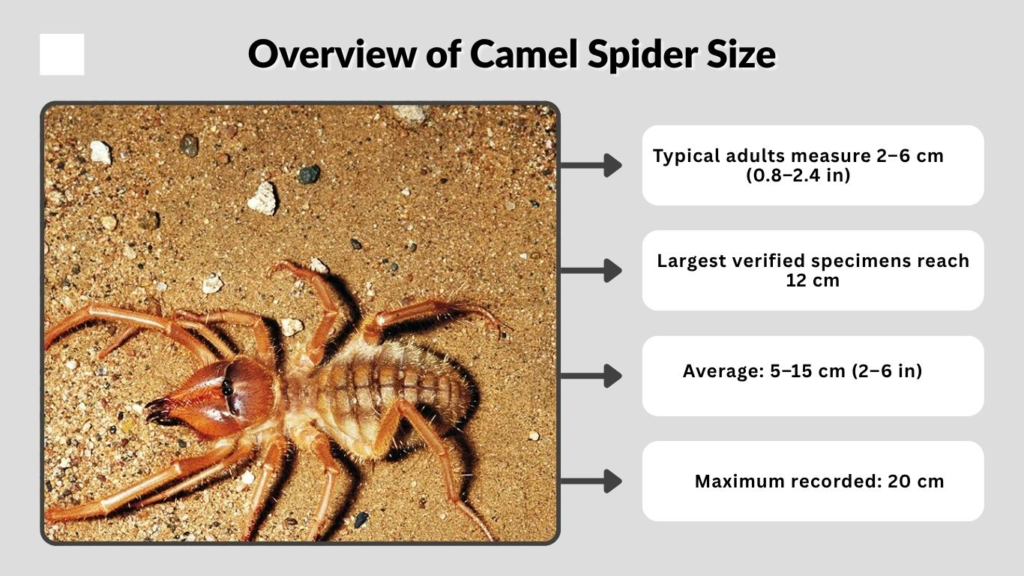
Camel spiders are medium to large arachnids whose size depends on species, age, and location. Myths often exaggerate their size, but real measurements reveal remarkable predators adapted for speed and hunting efficiency in desert environments. Key size metrics include body length, leg span, and chelicerae (jaws).
Average Body Length
- Typical adults measure 2–6 cm (0.8–2.4 in)
- Body length includes prosoma (head) and opisthosoma (abdomen)
Maximum Body Length
- Largest verified specimens reach 12 cm
- Observed mostly in Middle Eastern deserts
Leg Span
- Average: 5–15 cm (2–6 in)
- Maximum recorded: 20 cm
- Longer legs increase perceived size and aid in hunting speed
Regional Differences in Size
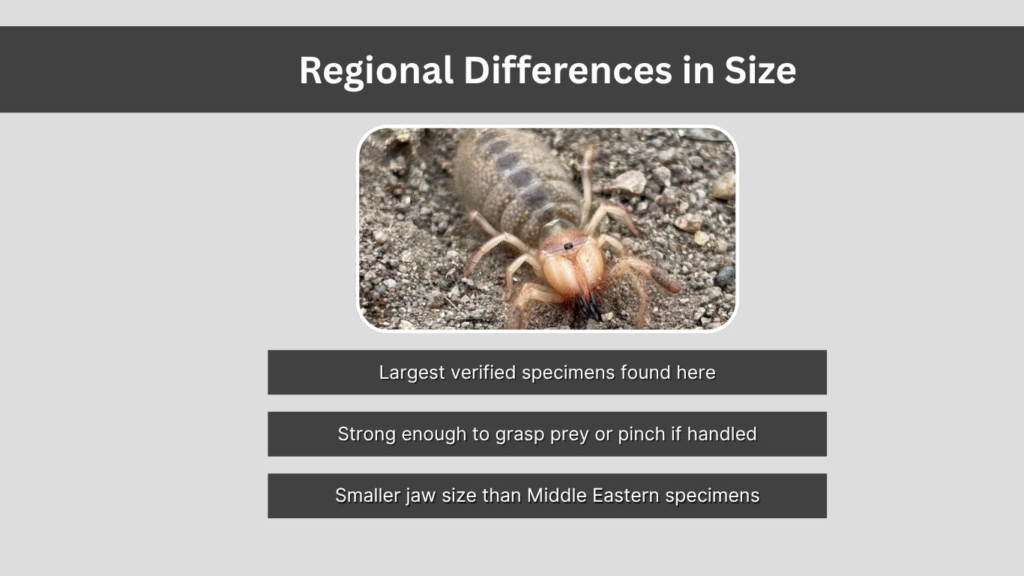
Camel spider size varies geographically due to climate, prey availability, and species diversity. Middle Eastern deserts tend to produce the largest specimens, while North American and Australian deserts host smaller species.
Middle East (Iraq & Afghanistan)
- Largest verified specimens found here
- Body length: up to 12 cm
- Leg span: up to 20 cm
- Chelicerae length: 2–3 cm
North America (Arizona, New Mexico, California)
- Medium size desert species
- Body length: 4–8 cm
- Leg span: 10–15 cm
- Smaller jaw size than Middle Eastern specimens
Australia
- Smaller desert-adapted species
- Body length: 2–5 cm
- Leg span: 6–10 cm
- Adapted for dry environments with limited prey
Comparison to Humans and Objects
Understanding camel spider size is easier when compared to humans and familiar objects. Misperceptions often arise from close-up photography and desert shadows, which exaggerate their apparent size.
Human Hand Comparison
- Average adult camel spider smaller than a palm
- Leg span may approach hand width in giant specimens
Object Comparison (List Section)
- Quarter coin: Most camel spiders 2–3 times its length
- Ruler: Typical body length ~2–6 cm
- Smartphone: Largest species may cover width
- Footprint perspective: Shadows exaggerate perceived size
Myths vs Reality
- Camel spiders do not chase humans
- Extreme claims (30+ cm) are false
- Verified specimens remain impressive but not terrifying
The Biggest Camel Spider Records
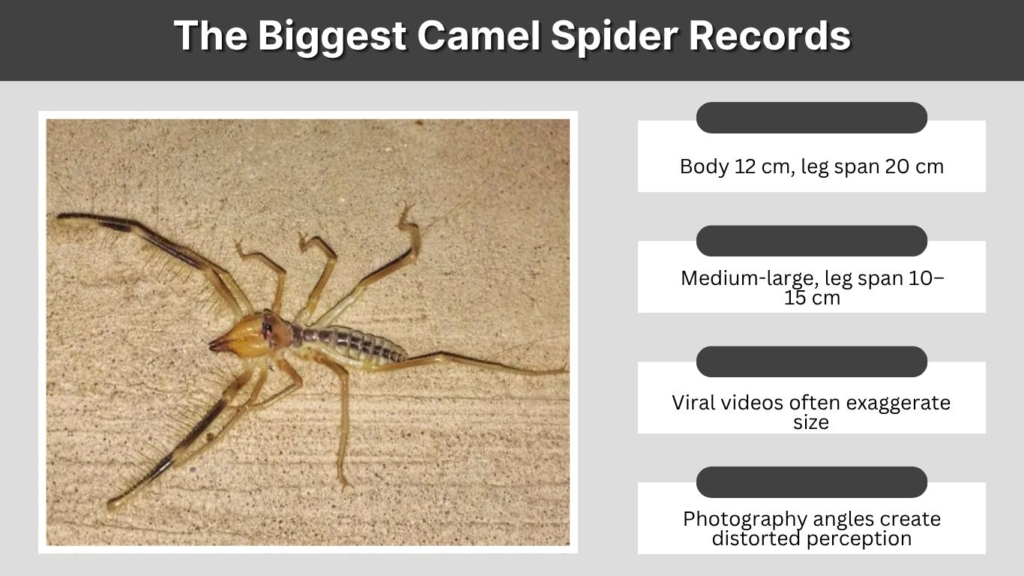
Verified records provide insight into the true scale of these arachnids. While myths exaggerate size, research and museum specimens show realistic maximum dimensions.
Largest Verified Specimens
- Middle Eastern deserts: Body 12 cm, leg span 20 cm
- Arizona desert specimens: Medium-large, leg span 10–15 cm
Shedding and Growth
- Camel spiders molt to grow; largest adults usually older
- Molted exoskeletons indicate potential maximum size
Online and Media Records
- Viral videos often exaggerate size
- Photography angles create distorted perception
- Object comparisons help clarify actual measurements
Camel Spider Size Charts
Charts help visualize size variations among camel spiders across regions and body parts, clarifying myths about “giant” specimens.
Body Length and Leg Span Table
| Region | Body Length | Leg Span | Notes |
| Iraq/Afghanistan | 6–12 cm | 15–20 cm | Largest desert species |
| Arizona/NM | 4–8 cm | 10–15 cm | Medium-large individuals |
| California | 3–6 cm | 8–12 cm | Smaller desert species |
| Australia | 2–5 cm | 6–10 cm | Small species |
Chelicerae (Jaw) Size Table
| Specimen | Chelicerae Length | Function |
| Giant Iraq Spec. | 2–3 cm | Prey capture, defense |
| Arizona Spec. | 1.5–2 cm | Feeding on insects |
| Australian Spec. | 0.8–1.5 cm | Hunting small prey |
Camel Spider Body Part Sizes
Breaking down components explains why camel spiders appear “giant” in myths and media.
Legs
- Front legs are longest, aiding speed and hunting
- Leg span contributes most to “full size” perception
Chelicerae (Jaws)
- Large, powerful jaws for capturing prey
- Can pinch humans if handled, though no venom
- Length exaggerated in media
Prosoma and Opisthosoma
- Prosoma width corresponds to body mass
- Opisthosoma adds bulk in large specimens
- Overall proportion contributes to perceived size
Camel Spider vs Other Large Arachnids
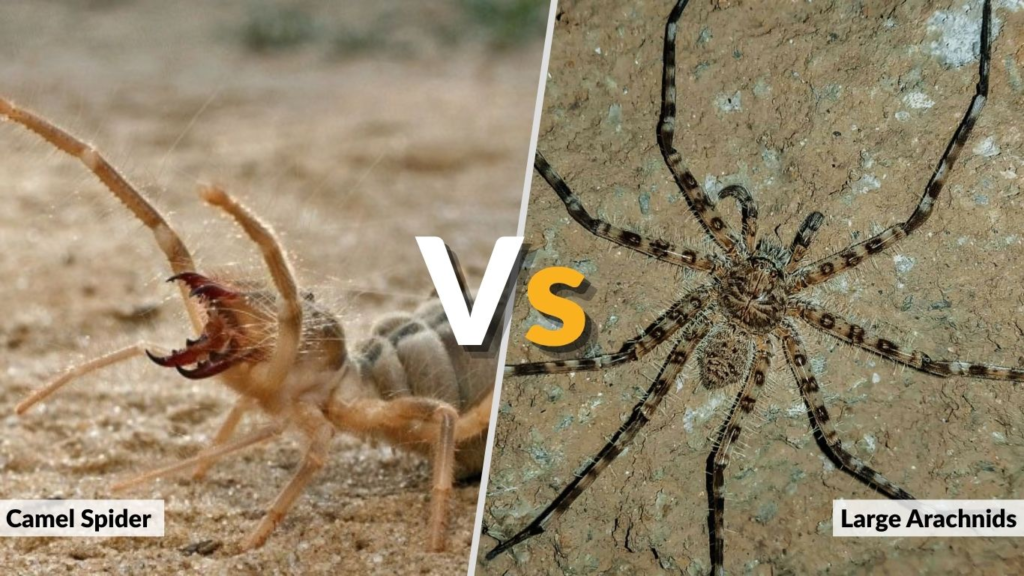
While impressive, camel spiders are not the largest arachnids globally. Comparison shows differences in mass, leg span, and hunting style.
Tarantulas
- Larger mass but slower hunters
- Camel spiders are faster and more agile
Goliath Bird-Eating Spider
- Body length ~12 cm, leg span up to 30 cm
- Camel spiders: body up to 12 cm, leg span 20 cm
- Camel spiders excel in speed, not bulk
Other Desert Arachnids (List Section)
- Scorpions: smaller, venomous
- Other spiders: slower, rely on webs
- Solifugae: fastest desert hunters
Regional Size Facts
Iraq & Afghanistan
- Largest specimens recorded here
- Body length up to 12 cm, leg span ~20 cm
- Adapted to arid climates with abundant prey
North America (Arizona, New Mexico, California)
- Medium-sized species
- Body length 4–8 cm, leg span 10–15 cm
- Smaller than Middle Eastern counterparts
Australia
- Smaller desert-adapted species
- Body length 2–5 cm, leg span 6–10 cm
- Limited prey and cooler arid environments
FAQs
What is the biggest camel spider ever recorded?
Largest verified specimens reach 12 cm body length and 20 cm leg span, mostly from Iraq and Afghanistan.
Are camel spiders the biggest spiders in the world?
No. Tarantulas and Goliath spiders surpass them in leg span and bulk, though camel spiders are faster hunters.
How do myths exaggerate camel spider size?
Videos and close-up photos exaggerate perspective, creating legends of 30+ cm “giants,” which are unverified.
Does size vary by region?
Yes. Middle Eastern desert species are the largest, while North American and Australian species are smaller.
Can camel spiders grow larger in captivity?
Rarely. Growth is limited by diet, humidity, and temperature. Desert conditions favor maximum size.
Conclusion
Camel spiders are fascinating desert arachnids with body lengths, leg spans, and powerful jaws that vary by species, region, and age. While myths exaggerate size, verified records show medium to large predators well-adapted for speed and hunting.
Comparisons to humans, coins, and other arachnids clarify actual size, while charts and tables provide perspective. Appreciating verified data helps separate fact from fiction and highlights their role as efficient desert hunters and predators.
