
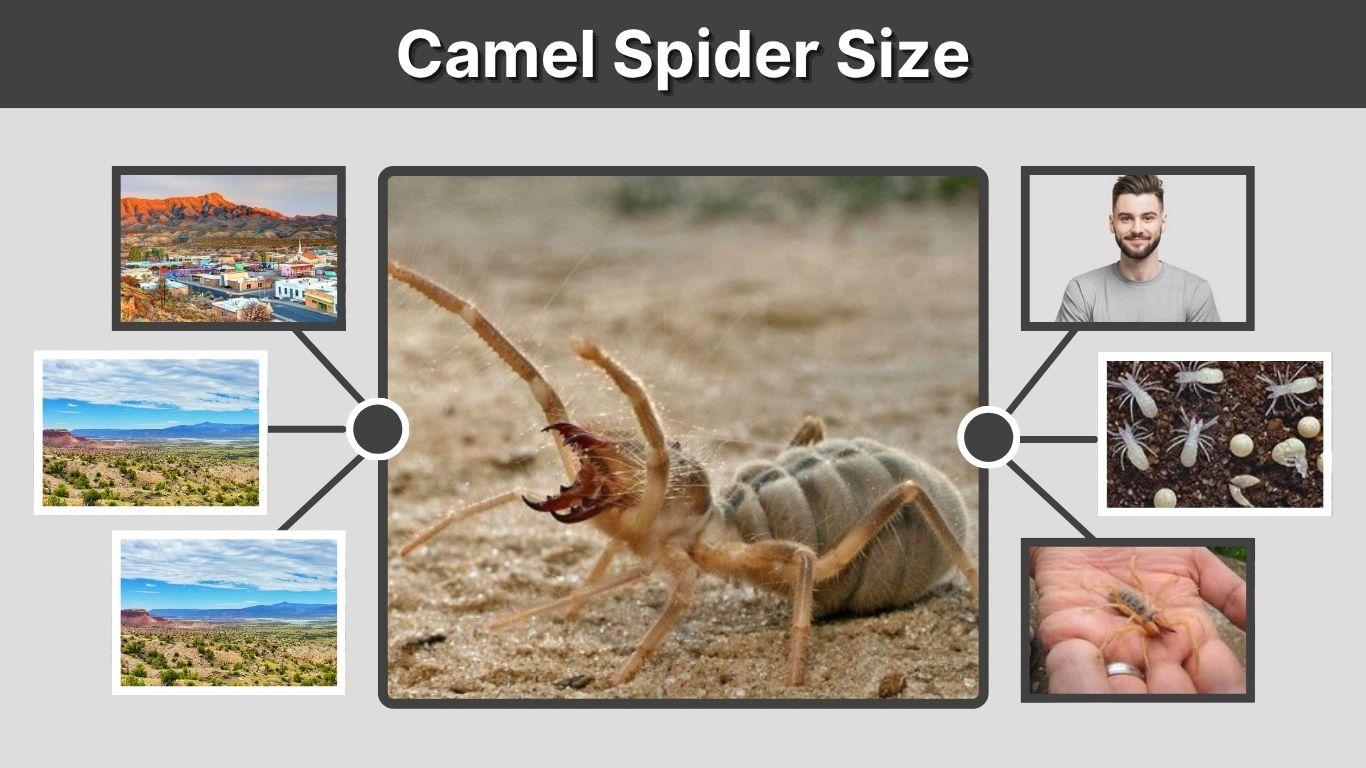
Camel spiders, also known as solifugae, are desert arachnids often surrounded by myths exaggerating their size and speed. Understanding their actual dimensions—from average adults to the largest specimens—helps separate fact from fiction.
This article explores camel spider size in detail, including body length, leg span, weight, jaw dimensions, and regional variations. We also compare them to humans and everyday objects, providing readers with accurate context about these fascinating desert predators.
Overview of Camel Spider Size
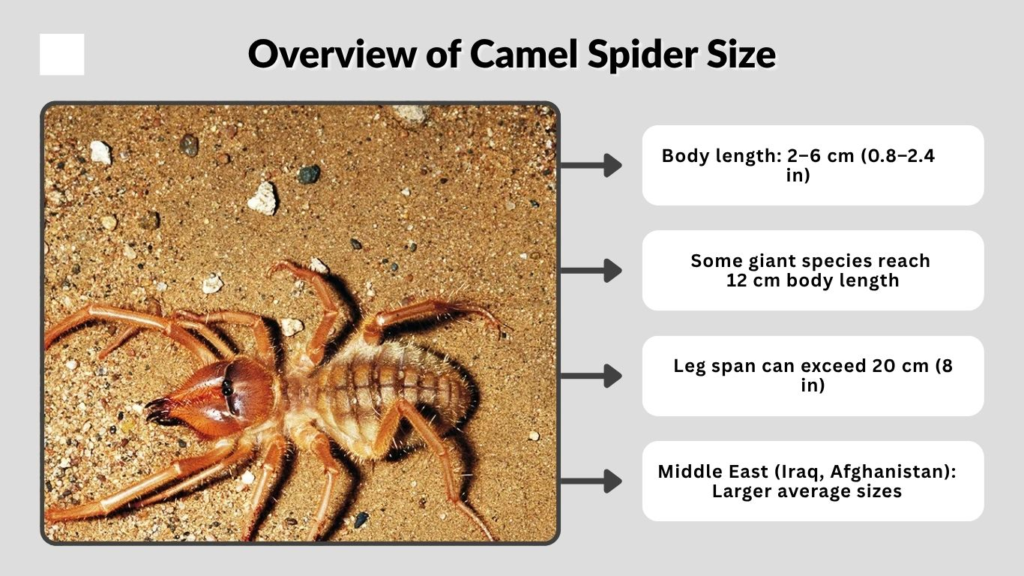
Camel spiders vary in size depending on species, age, and region. While many myths exaggerate their dimensions, real measurements reveal medium to large arachnids with impressive hunting adaptations. This section highlights average, maximum, and regional size differences.
Average Size
- Body length: 2–6 cm (0.8–2.4 in)
- Leg span: 5–15 cm (2–6 in)
- Weight: 10–30 g (0.35–1 oz)
Maximum Size
- Some giant species reach 12 cm body length
- Leg span can exceed 20 cm (8 in)
- Largest specimens reported in Iraq, Afghanistan, and Arizona
Size Variation by Region
- Middle East (Iraq, Afghanistan): Larger average sizes
- North America (Arizona, New Mexico, California): Medium-sized
- Australia: Smaller desert-adapted species
Comparison to Humans and Objects
Camel spiders often appear larger in photographs due to camera perspective. Comparing them to humans and familiar objects provides clarity and corrects common misconceptions about their size.
Human Comparison
- Body length usually smaller than an adult palm
- Leg span may approach hand width in large species
- Myths exaggerate “chasing humans” based on speed and appearance
Object Comparisons
- Quarter coin: Average camel spider ~2–3 times its length
- Ruler: Typical body length ~2–6 cm
- Small smartphone: Giant species can cover width
- Footprint perspective: Shadows can make them appear huge
Visual Representation
- Full-size photographs in natural desert habitats
- Size charts showing body length, leg span, and weight
- Infographics comparing camel spiders to humans and common objects
Body Component Sizes
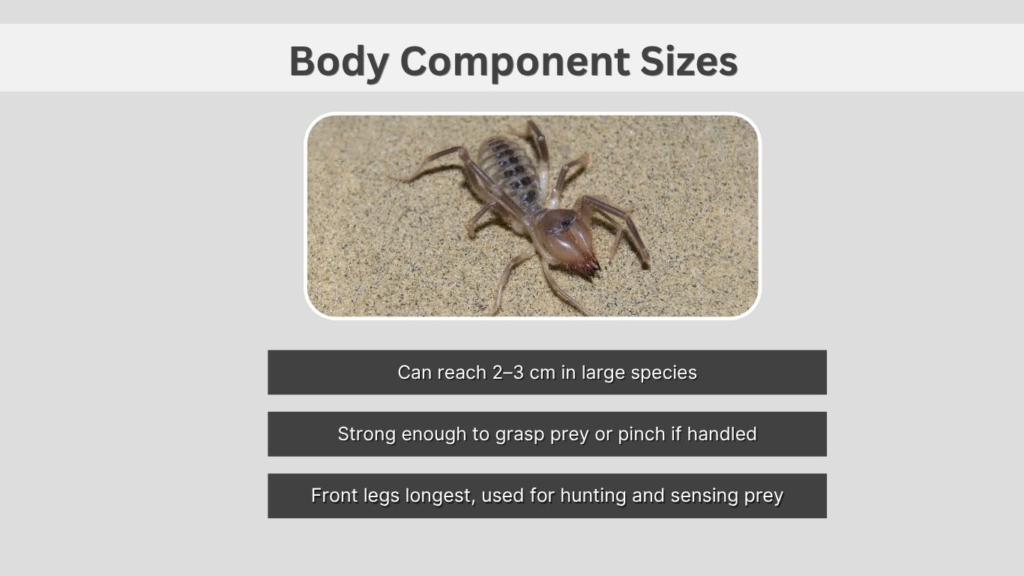
Different body parts contribute to the perceived size of camel spiders. Large jaws, extended legs, and robust bodies often create the illusion of “giant” arachnids.
Jaw (Chelicerae) Size
- Can reach 2–3 cm in large species
- Strong enough to grasp prey or pinch if handled
- Frequently exaggerated in media
Leg Length
- Front legs longest, used for hunting and sensing prey
- Leg span is most noticeable when measuring “full size”
Body Width and Head Size
- Prosoma (head region) width correlates with body length
- Large species have a robust, intimidating appearance
Regional Size Records
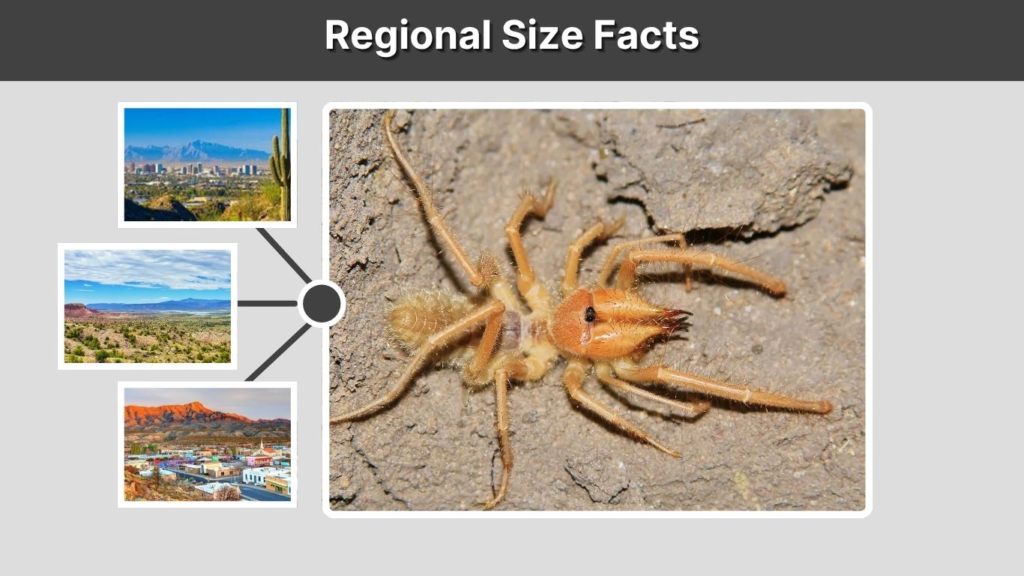
Camel spider size can vary significantly depending on habitat and species. Some regions produce notably larger specimens.
Largest Documented Specimens
- Iraq and Afghanistan: Up to 12 cm body length, leg span ~20 cm
- Arizona and New Mexico: Medium-large individuals, 10–15 cm leg span
- Mythical claims (30+ cm) are exaggerations
Regional Size Differences
- Desert environments with abundant prey produce larger individuals
- Cooler or less arid regions result in smaller average sizes
Record Keeping
- Verified specimens housed in museums
- Online videos often distort size due to close-up angles
Camel Spider Size Charts and Data
Camel spider sizes vary by species and region. Using charts helps readers visualize the full range from average adults to record-breaking specimens.
Average vs Maximum Size Table
| Region | Body Length | Leg Span | Notes |
| Iraq/Afghanistan | 6–12 cm | 15–20 cm | Largest desert species |
| Arizona/NM | 4–8 cm | 10–15 cm | Medium-large individuals |
| California | 3–6 cm | 8–12 cm | Smaller desert species |
| Australia | 2–5 cm | 6–10 cm | Small species |
Jaw (Chelicerae) Size Chart
| Species | Chelicerae Length | Function |
| Giant Iraq Spec. | 2–3 cm | Prey capture, defense |
| Arizona Spec. | 1.5–2 cm | Insect hunting |
| Australian Spec. | 0.8–1.5 cm | Small prey capture |
Camel Spider Size by Body Part
Breaking down the body components provides insight into why camel spiders appear “giant” in myths and media.
Legs
- Front legs longest, aiding in speed and prey capture
- Leg span contributes most to perceived size
Chelicerae (Jaws)
- Large and powerful in giant species
- Can slice prey and pinch humans if handled
- Length exaggerated in videos and photos
Prosoma and Opisthosoma
- Prosoma width corresponds to body mass
- Opisthosoma (abdomen) relatively slender but adds to bulk in large specimens
Camel Spider Size Comparison to Humans
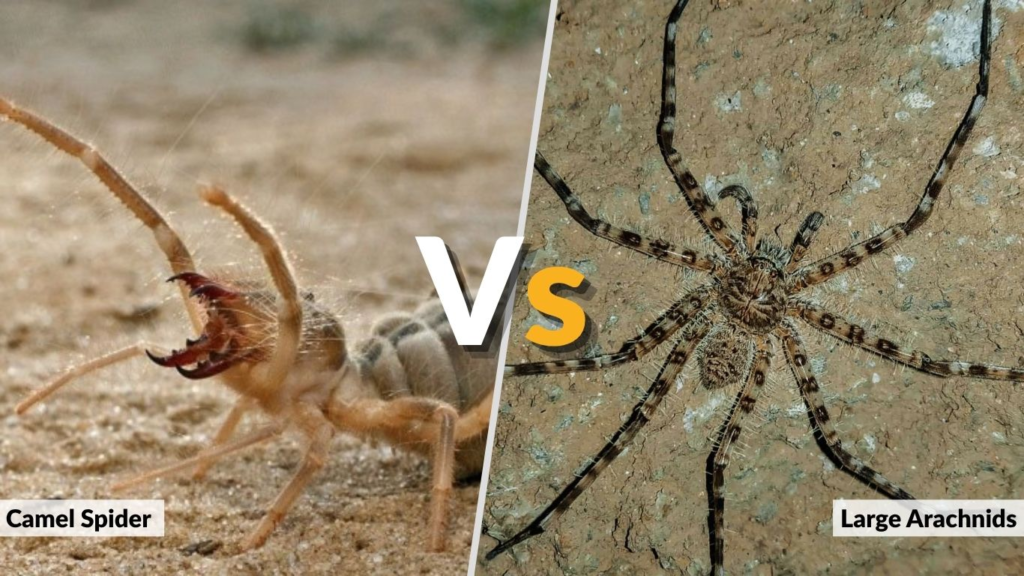
Camel spiders are often misrepresented as being huge. Comparisons with humans and common objects help clarify reality.
Human Hand Comparison
- Average body length smaller than adult palm
- Leg span may approach hand width in giant specimens
Everyday Objects Comparison (List Section)
- Quarter coin: Most camel spiders 2–3 times its length
- Ruler: Shows actual body length 2–6 cm
- Smartphone: Largest species can cover width
- Desert footprints: Shadows exaggerate appearance
Myths vs Reality
- Claims of camel spiders “chasing humans” are false
- Extreme size reports (>30 cm) are unverified
- Verified specimens remain impressive but not terrifying
Regional Size Facts
Iraq and Afghanistan
- Largest specimens recorded
- Up to 12 cm body length, leg span 20 cm
- Adapted to desert climates with abundant prey
North America (Arizona, New Mexico, California, Nevada, Utah, Texas)
- Medium-sized specimens, 4–8 cm body length
- Leg span 10–15 cm
- Smaller desert species, less robust than Middle East counterparts
Australia
- Small desert-adapted species, 2–5 cm body length
- Leg span 6–10 cm
- Adapted to less extreme arid regions
FAQs
How big can camel spiders get?
The largest species can reach 12 cm body length and 20 cm leg span, with chelicerae up to 3 cm long. Average adults are smaller.
Are camel spiders as large as myths suggest?
No. Most claims of 30+ cm body length or chasing humans are exaggerations. Verified specimens are impressive but smaller.
Does size vary by region?
Yes. Desert species in the Middle East tend to grow larger than North American or Australian counterparts due to climate and prey availability.
How does their size affect hunting?
Larger species can handle bigger prey and use longer legs to capture and snatch insects, arachnids, and small vertebrates efficiently.
Can camel spiders grow larger in captivity?
No. Growth is limited by diet, temperature, and humidity. Desert-adapted species rarely reach record sizes outside their natural environment.
