
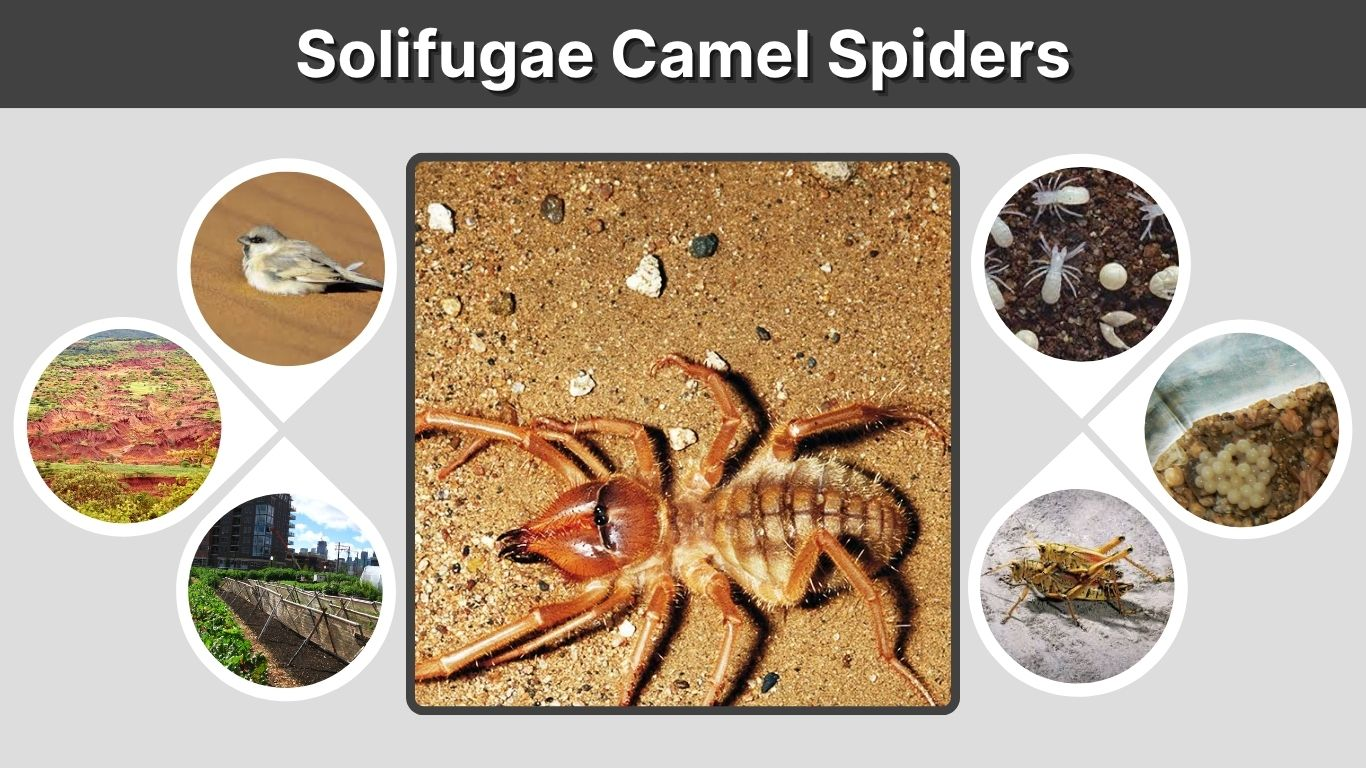
Solifugae, commonly known as camel spiders, are fascinating arachnids renowned for their speed, predatory skills, and unique appearance. Often misunderstood due to myths, these creatures are highly efficient hunters in desert ecosystems, controlling insect and small animal populations.
This article explores the biology, behavior, habitat, and hunting adaptations of solifugae, emphasizing their snatching techniques and ecological importance. By understanding these intriguing arachnids, readers can distinguish facts from fiction and appreciate their role in the natural world.
Overview of Solifugae
Solifugae are a unique order of arachnids, separate from true spiders and scorpions. They are agile nocturnal hunters, highly adapted to arid environments, and play a crucial role in controlling insect populations. Their speed, powerful jaws, and sensory adaptations make them one of the most effective predatory arthropods in desert regions.
Taxonomy and Classification
- Order: Solifugae
- Families: 12 recognized families worldwide
- Genera: Over 140 genera identified
- Distinct from spiders (Araneae) and scorpions (Scorpiones) in anatomy and behavior
Physical Characteristics
- Size: Typically 2–12 cm in length, some species larger
- Body: Segmented with a distinct prosoma and opisthosoma
- Chelicerae: Large, powerful jaws used for grasping and cutting prey
- Legs: Eight legs plus pedipalps used for sensing and manipulation
- Color: Generally sandy or brown, adapted for camouflage in desert habitats
Sensory and Locomotion Features
- Extremely fast runners, capable of speeds up to 16 km/h
- Pedipalps function like antennae to detect vibrations and prey movement
- No venom, but chelicerae can inflict a painful pinch
- Highly sensitive to environmental cues, enabling nocturnal hunting
Solifugae Camel Spiders Habitat and Distribution
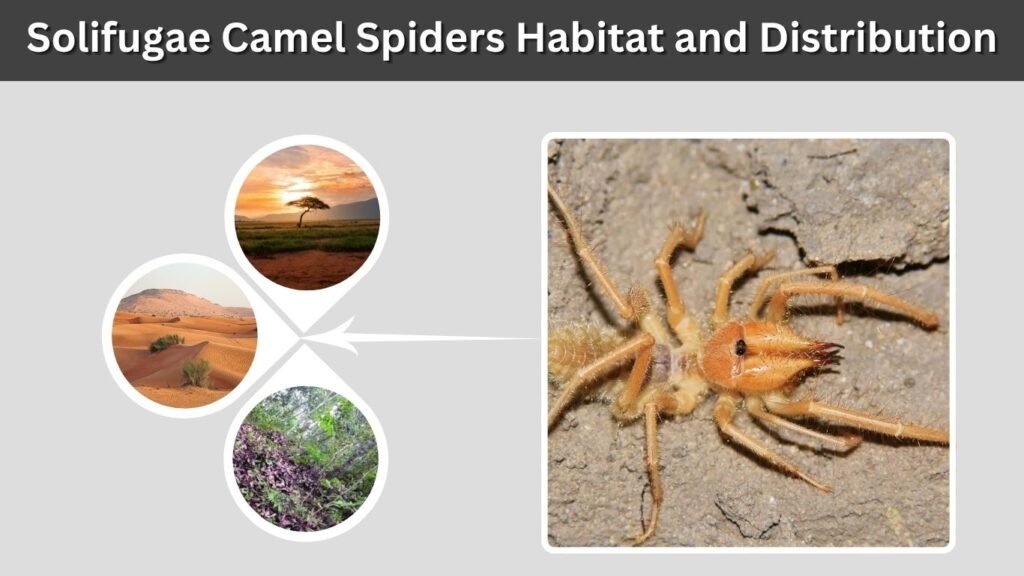
Solifugae thrive in deserts, semi-arid regions, and scrublands. They are primarily nocturnal, avoiding extreme heat by hiding during the day. Their distribution spans multiple continents, highlighting their adaptability to different dry ecosystems.
Geographic Range
- Africa: Sahara and Sahel regions
- Middle East: Arabian Peninsula deserts
- Central Asia: Arid plains and rocky deserts
- Americas: Southwestern United States, Mexico, and parts of South America
Microhabitats
- Burrows: Excavated in sand for daytime shelter
- Rock crevices: Provide protection from predators and sun exposure
- Vegetation: Under shrubs or leaf litter for ambush hunting
- Sand dunes: Serve as hunting grounds at night
Solifugae Camel Spiders Hunting and Feeding Behavior
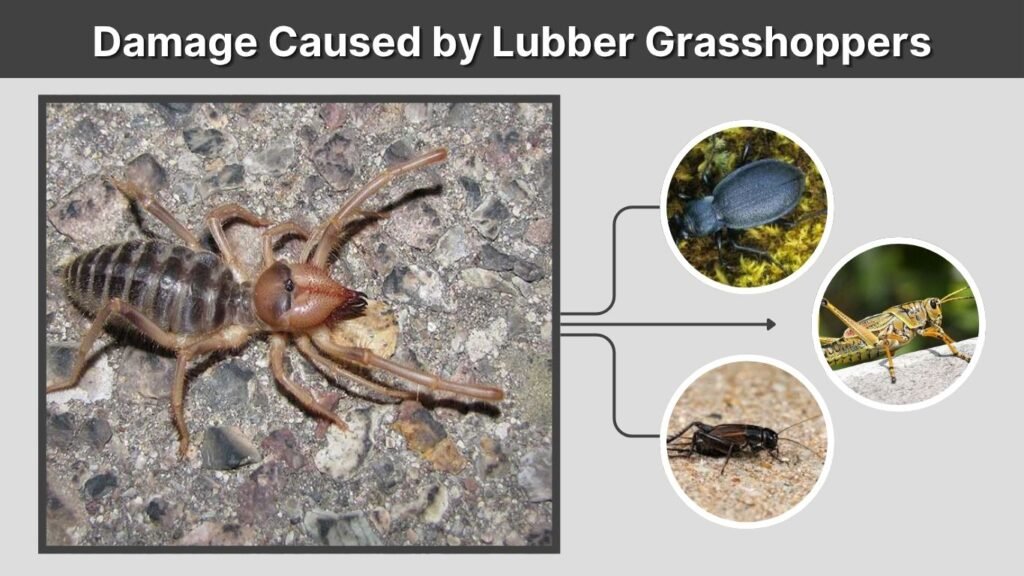
Solifugae are formidable predators with highly specialized hunting strategies. Their snatching techniques and jaw strength allow them to capture a wide variety of prey efficiently. They rely on agility, sensory input, and rapid strikes to overpower their targets.
Prey Types
- Insects: Beetles, grasshoppers, crickets
- Other arachnids: Scorpions, spiders
- Small vertebrates: Lizards, rodents
- Occasional scavenging: Dead insects or carrion
Snatching and Feeding Techniques
- Chelicerae grasp prey firmly, often cutting it into pieces
- Ambush predators use stealth or sudden sprints to catch moving prey
- Rapid feeding ensures minimal exposure to predators
Nocturnal Predation
- Active mainly at night to avoid heat stress
- Uses vibrations and chemical cues to locate prey
- Nighttime hunting enhances efficiency while reducing competition
Solifugae Camel Spiders Life Cycle and Reproduction
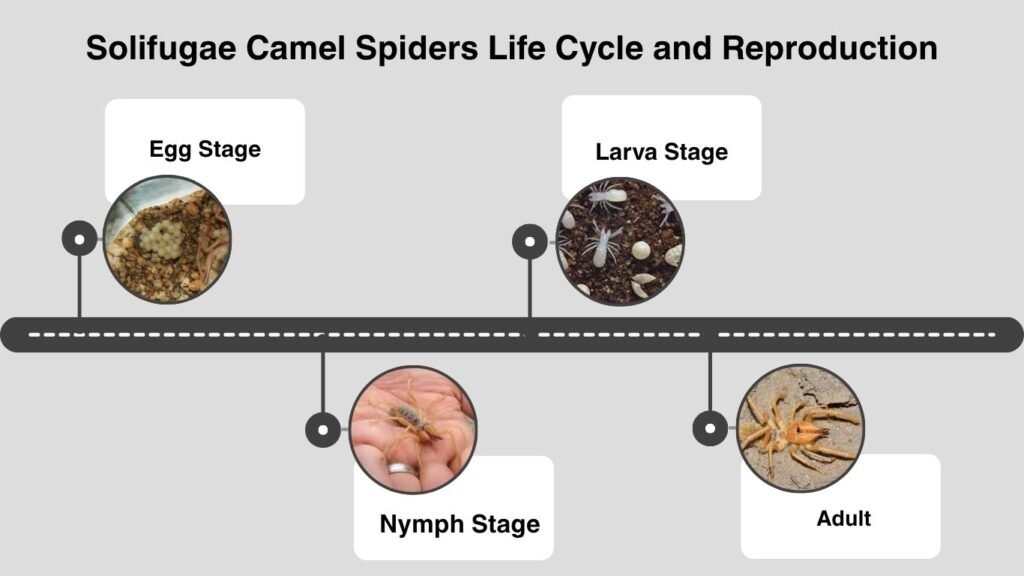
Solifugae have a relatively short lifespan, usually one to two years. Reproduction involves distinct courtship behaviors, egg-laying, and multiple developmental stages. Understanding their life cycle sheds light on survival strategies and population dynamics in desert ecosystems.
Mating Behavior
- Males perform courtship rituals using pedipalps
- Pheromones may attract females in some species
- Females lay 50–200 eggs in burrows for protection
Development Stages
- Egg: Incubation period varies by species and temperature
- Larva: Emerges with limited mobility, relying on instinct to feed
- Nymph: Undergoes multiple molts, gradually gaining adult characteristics
- Adult: Fully developed predator capable of reproduction and active hunting
Interactions with Humans
Despite exaggerated myths, solifugae rarely pose a threat to humans. Encounters typically occur when people enter desert habitats or handle them directly. Understanding their behavior and ecological role can reduce fear and promote coexistence.
Myths and Misconceptions
- Legends exaggerate their size, claiming over 30 cm (false)
- Myths suggest venomous bites, though they have no venom
- Claims of chasing humans are based on rapid movement and light sensitivity
Safety Precautions
- Avoid handling camel spiders with bare hands
- Wear gloves when working in areas where they burrow
- Seal cracks and crevices in desert homes to reduce accidental entry
Ecological Benefits
- Natural pest control, reducing insects and small arachnid populations
- Prey for birds, lizards, and small mammals
- Indicators of ecosystem health and biodiversity
Solifugae Camel Spiders vs Other Arachnids
Solifugae share features with spiders and scorpions but differ in behavior, venom, and hunting strategies. A clear comparison highlights these distinctions:
| Feature | Solifugae | Spiders | Scorpions |
| Venom | None | Most have venom | Most have venom |
| Hunting | Active hunters | Web-based or ambush | Ambush or active |
| Speed | Extremely fast | Moderate | Slow to moderate |
| Habitat | Deserts, arid regions | Various (forests, caves, homes) | Arid and tropical |
| Chelicerae | Large, strong jaws | Small, venomous fangs | Strong pincers (pedipalps) |
This table shows solifugae are unique in combining high-speed hunting with non-venomous predation, making them efficient snatchers without relying on toxins.
Conservation Status
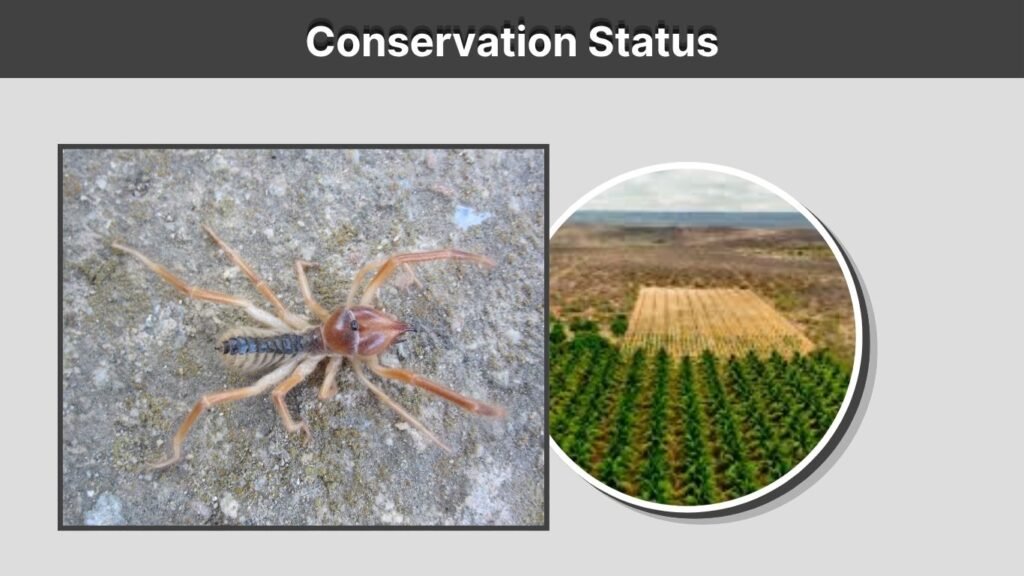
Solifugae are not classified as endangered, but habitat loss and climate change can threaten localized populations. Preserving desert ecosystems is essential for maintaining their biodiversity.
Threats
- Urban expansion and desert agriculture reducing natural habitat
- Climate change increasing desertification and altering prey availability
- Predation by birds, reptiles, and larger mammals in certain regions
Research and Awareness
- Behavioral studies help understand their hunting, reproduction, and sensory adaptations
- Public education reduces myths and encourages conservation
- Monitoring desert ecosystems helps track population trends
FAQs
Do camel spiders bite humans?
Camel spiders are non-venomous and rarely bite. Bites usually occur only if handled or provoked, and while painful, they are not medically significant.
How fast can solifugae run?
These arachnids can reach speeds up to 16 km/h, making them among the fastest land arthropods. Their speed aids in hunting and avoiding predators.
Are solifugae dangerous?
No, they are not dangerous to humans. They are efficient predators of insects and small animals but lack venom.
Where are solifugae commonly found?
They are primarily found in deserts and arid regions worldwide, with high concentrations in Africa, the Middle East, Central Asia, and North America.
What do camel spiders eat?
Their diet includes insects like beetles and grasshoppers, other arachnids such as scorpions and spiders, small lizards, rodents, and occasionally scavenged carrion.
