
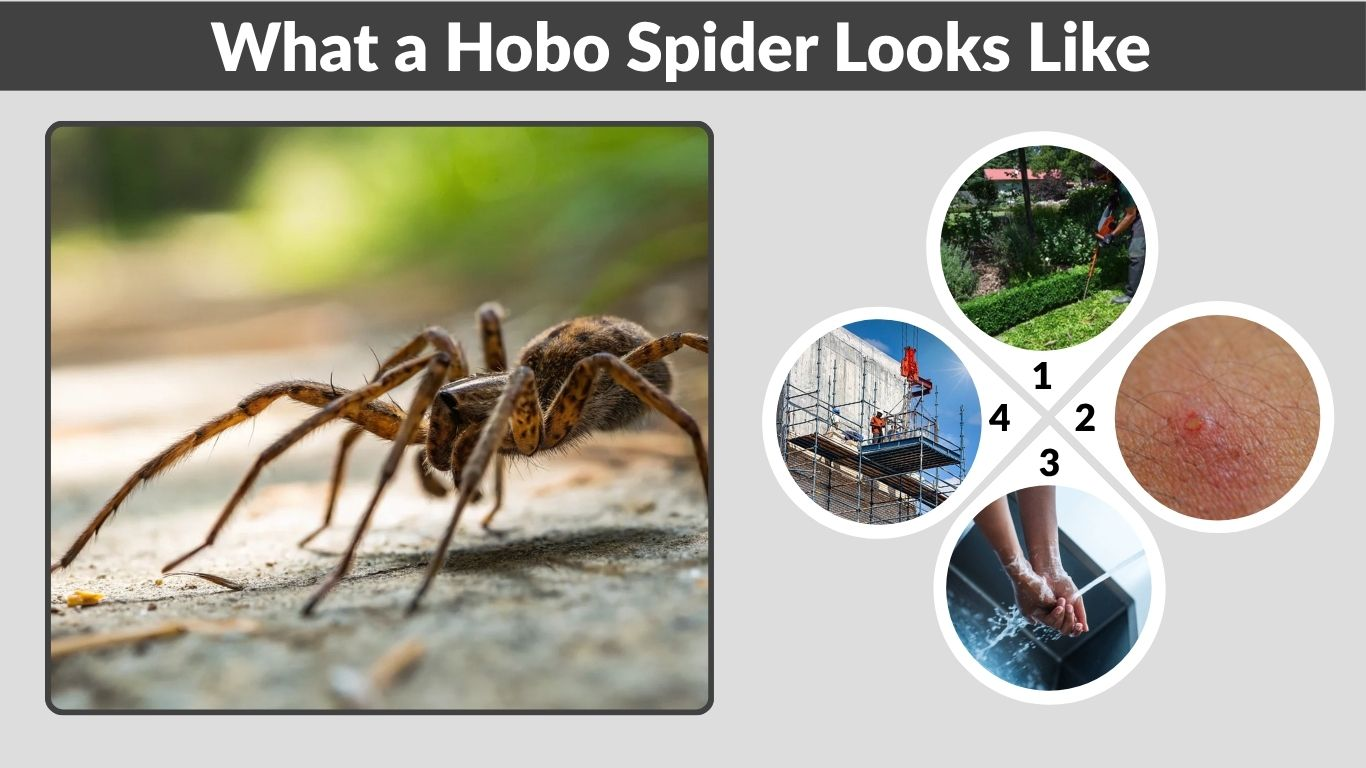
The Hobo Spider (Tegenaria agrestis) is a fast-moving, brown funnel-web spider commonly found in basements, crawl spaces, sheds, and outdoor debris piles across North America. Recognizable by its herringbone-patterned abdomen and long legs, it is often mistaken for Wolf Spiders, Grass Spiders, or even Brown Recluses. While generally non-aggressive, its bite can occasionally cause mild necrotic reactions. Understanding its appearance, bites, webs, and look-alikes is essential for accurate identification and safe interaction.
This guide explores adult and juvenile characteristics, bite symptoms, web and nest structures, and common look-alikes to help homeowners and archaeology enthusiasts identify Hobo Spiders confidently.
Physical Appearance of the Hobo Spider
Hobo Spiders have distinctive features that separate them from other brown spiders. Their body size, abdominal pattern, leg length, and smoothness help identify them, while juveniles may appear lighter and smaller, often near egg sacs. Observing these characteristics carefully is key for accurate identification.
Adult Hobo Spider Characteristics
- Brown body with a herringbone pattern on the abdomen
- Male size: 7–14 mm, Female size: 9–18 mm
- Long legs for rapid terrestrial movement
- Spinnerets visible at the rear of the abdomen
- Smooth to moderately hairy body
Baby Hobo Spider Characteristics
- Smaller and lighter brown than adults
- Legs proportionally longer than body
- Herringbone pattern may be faint or absent
- Often found near egg sacs or retreat tunnels
Distinguishing Features
- Smooth, slender body compared to bulkier Wolf Spiders
- Less hair than Wolf Spiders but more than Brown Recluses
- Funnel-shaped web is a unique behavioral marker
Hobo Spider Bites
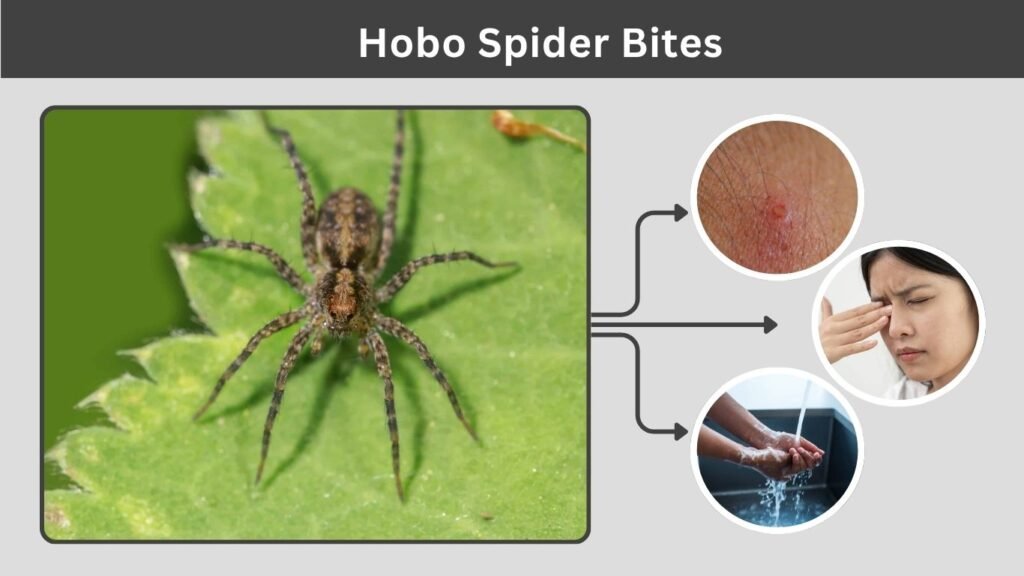
Hobo Spider bites are rare and typically occur when the spider is accidentally trapped against the skin. Recognizing bite symptoms helps differentiate them from other insect or spider bites. Most bites are mild, but in unusual cases, necrotic lesions may form.
Initial Bite Appearance
- Redness and localized swelling at the bite site
- Mild pain, tingling, or itching
- Small puncture marks visible within a few hours
Later Bite Symptoms
- Rare development of necrotic lesions or discoloration
- Blistering may occur in unusual reactions
- Pain usually subsides within several days
First Aid and Safety
- Wash bite area thoroughly with soap and water
- Apply ice to reduce swelling and discomfort
- Monitor for worsening redness, blistering, or necrosis
- Seek medical attention if symptoms escalate
Hobo Spider Webs and Nests
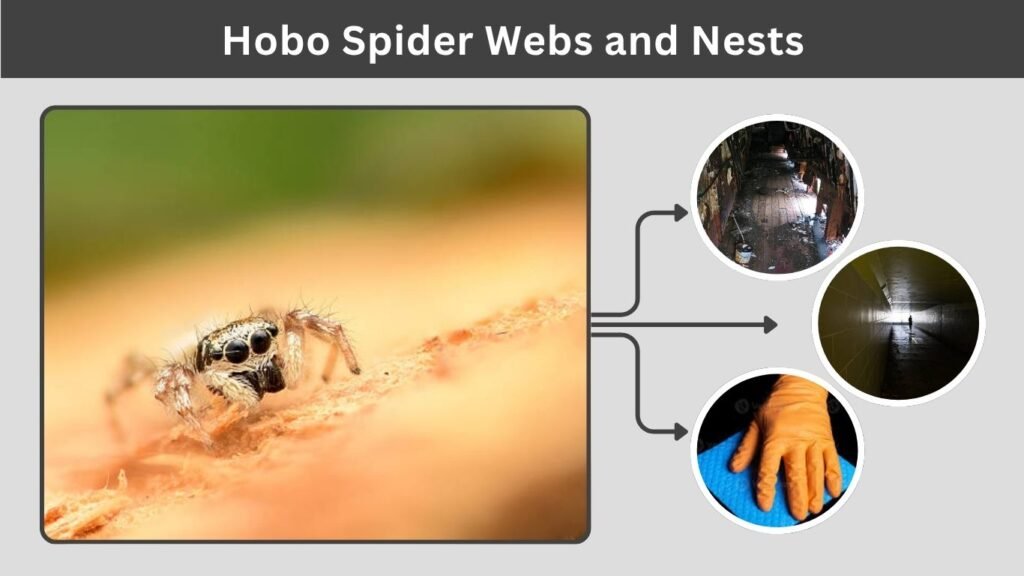
Hobo Spiders construct distinctive funnel-shaped webs with a retreat tunnel that serves as both a hunting and resting site. Recognizing these webs is often easier than spotting the spider itself, as they remain in the same location for extended periods.
Funnel-Shaped Webs
- Flat sheet of silk leading into a narrow funnel retreat
- Located in basements, crawl spaces, corners of sheds, or outdoor debris
- Functions as both a trap for prey and a shelter for the spider
Egg Sacs and Nesting
- Small, round, silk-covered sacs containing 50–200 eggs
- Hidden within retreat tunnels or in sheltered areas
- Juvenile spiders stay near sacs until dispersal
Observing Webs Safely
- Avoid direct contact with web and spider
- Use gloves when cleaning debris or moving objects near webs
- Identifying web location helps determine spider presence without direct sightings
Hobo Spider Look-Alikes
Many spiders resemble Hobo Spiders, making misidentification common. Understanding the physical differences, web type, and behavior of look-alikes such as Wolf Spiders, Grass Spiders, and Brown Recluses reduces confusion and unnecessary alarm.
Common Look-Alikes
- Wolf Spider: Hairier, bulkier, active hunter, does not build funnel webs
- Brown Recluse: Light brown with violin-shaped marking, six eyes, smooth body
- Grass Spider: Funnel web builder, longer spinnerets, smaller than Hobo Spider
- Other Funnel-Weavers: Similar brown color but different abdominal pattern
Regional Look-Alikes
- Hobo Spiders in the Pacific Northwest can be confused with local Grass or Funnel Spiders
- Juvenile Hobo Spiders may resemble small Wolf Spiders
Identifying Hobo Spiders in Homes and Outdoors
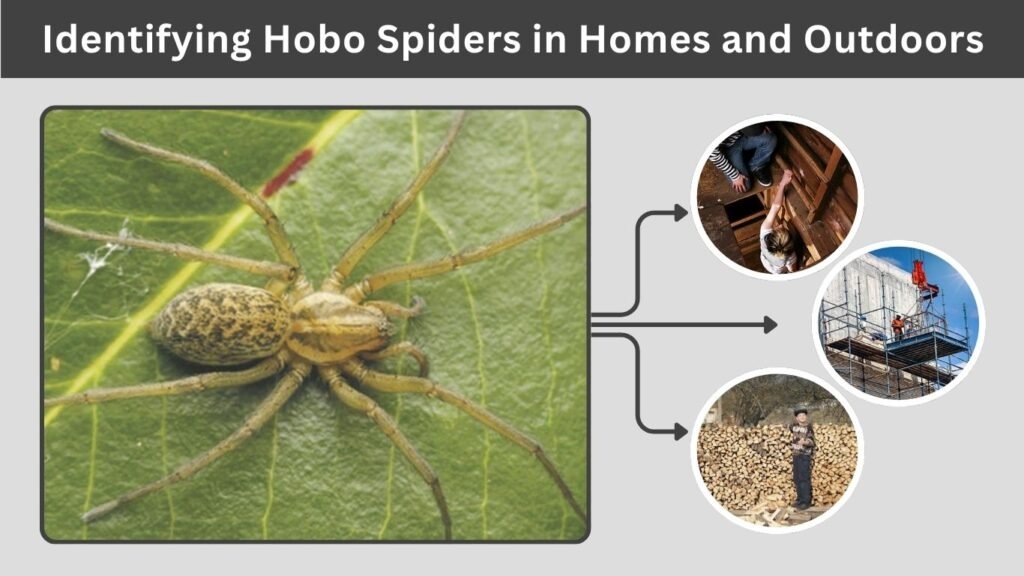
Hobo Spiders often go unnoticed until webs are spotted or a bite occurs. Identifying their presence helps reduce unnecessary alarm and prevents accidental contact. Their habitats indoors and outdoors are distinct but sometimes overlap with other spiders.
Indoor Signs of Hobo Spiders
- Funnel-shaped webs in basements, crawl spaces, and attics
- Retreat tunnels in corners, behind furniture, or along foundation walls
- Occasional sightings in garages, sheds, and storage areas
Outdoor Signs of Hobo Spiders
- Woodpiles, stone walls, and under mulch
- Garden debris and leaf litter near homes
- Retreats in cracks of concrete or around foundations
Seasonal Activity
- More active in late summer and early fall during mating season
- Juveniles disperse after hatching from egg sacs
- Adults may seek indoor shelter in colder months
Behavior and Hunting Patterns
Hobo Spiders are ambush predators rather than roaming hunters. Their funnel-shaped webs are integral to hunting, allowing them to strike prey that touches the web. Understanding their behavior differentiates them from look-alikes like Wolf Spiders.
Hunting Style
- Wait in funnel retreats for insects to contact web
- Quick to rush out and immobilize prey
- Feed on small arthropods, flies, ants, and other spiders
Daily Activity
- Primarily nocturnal hunters
- Avoid humans unless threatened
- Rest within funnel webs during the day
Preventing Hobo Spider Infestations
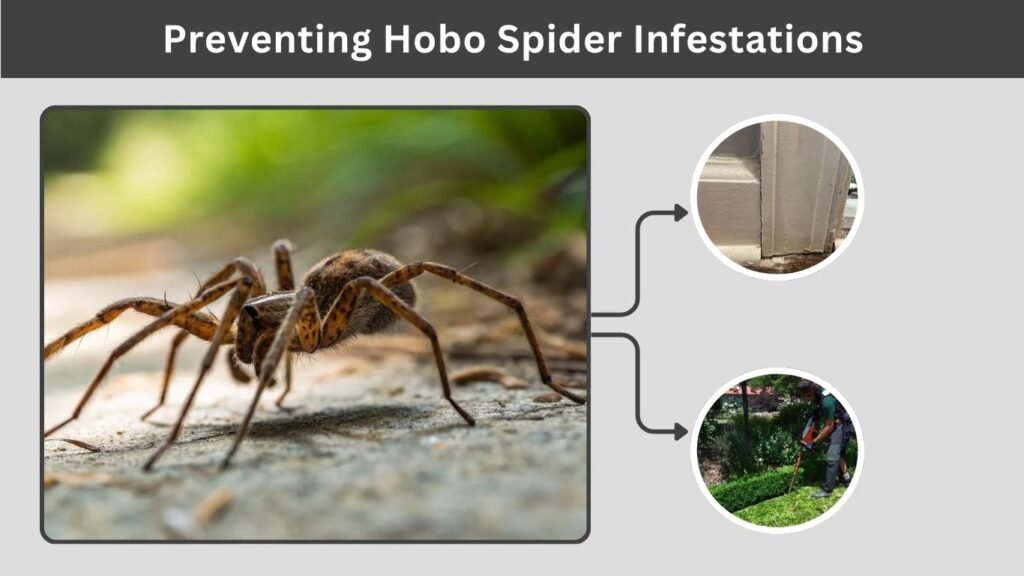
Homeowners can minimize Hobo Spider encounters with preventative measures. Reducing clutter and sealing entry points limits their access to indoor spaces.
Homeproofing Tips
- Seal cracks in doors, windows, and foundations
- Remove woodpiles, mulch, and debris near homes
- Keep basements and crawl spaces dry and clean
- Use sticky traps to monitor spider activity
Outdoor Management
- Trim vegetation around foundations
- Avoid storing firewood or garden debris directly against buildings
- Regularly inspect outdoor structures for funnel webs
Misconceptions About Hobo Spiders
Hobo Spiders are often feared due to misidentification and exaggerated reports of their bites. Accurate knowledge helps prevent unnecessary panic.
Are Hobo Spiders Dangerous?
- Most bites are mild and rarely cause necrotic lesions
- They are non-aggressive and bite only when trapped or threatened
- Serious reactions are extremely rare
Common Confusions
- Mistaken for Wolf Spiders, Brown Recluses, or Grass Spiders
- Juveniles may resemble small brown spiders, increasing misidentification
- Web presence often used as a key identifier
Hobo Spider vs Look-Alike Spiders
Comparing Hobo Spiders with similar species clarifies identification and prevents mistakes.
Key Differences
| Feature | Hobo Spider | Wolf Spider | Brown Recluse | Grass Spider |
| Body Size | 7–18 mm | 10–35 mm | 6–20 mm | 6–12 mm |
| Body Hair | Moderate | Hairy | Minimal | Moderate |
| Web | Funnel-shaped | None (active hunter) | Irregular, hidden | Funnel-shaped |
| Eye Arrangement | 8 eyes evenly aligned | 8 eyes in 3 rows | 6 eyes | 8 eyes evenly aligned |
| Bite Risk | Low | Low | Moderate, necrotic possible | Low |
Tips for Accurate Identification
- Observe web type: funnel vs no web
- Check body shape: slender vs bulky
- Examine hairiness and eye arrangement
- Juveniles may lack clear patterns, so observe location and web type
FAQs
What does a Hobo Spider look like?
Adults are brown with herringbone-patterned abdomens and long legs. Juveniles are smaller and lighter in color, often near egg sacs.
What does a Hobo Spider bite look like?
Bites usually cause redness, swelling, and mild pain. Necrotic lesions are rare and occur in unusual cases.
What does a Hobo Spider web look like?
Funnel-shaped silk sheets lead to retreat tunnels, usually in basements, crawl spaces, or outdoor debris piles.
What spiders look like a Hobo Spider?
Wolf Spiders, Brown Recluses, Grass Spiders, and other funnel-weavers. Key differences include web type, hairiness, eye arrangement, and body patterns.
What do Hobo Spider babies and egg sacs look like?
Egg sacs are round and silk-covered, hidden in retreat tunnels. Babies are small, lighter brown, and may lack the adult herringbone pattern.
