
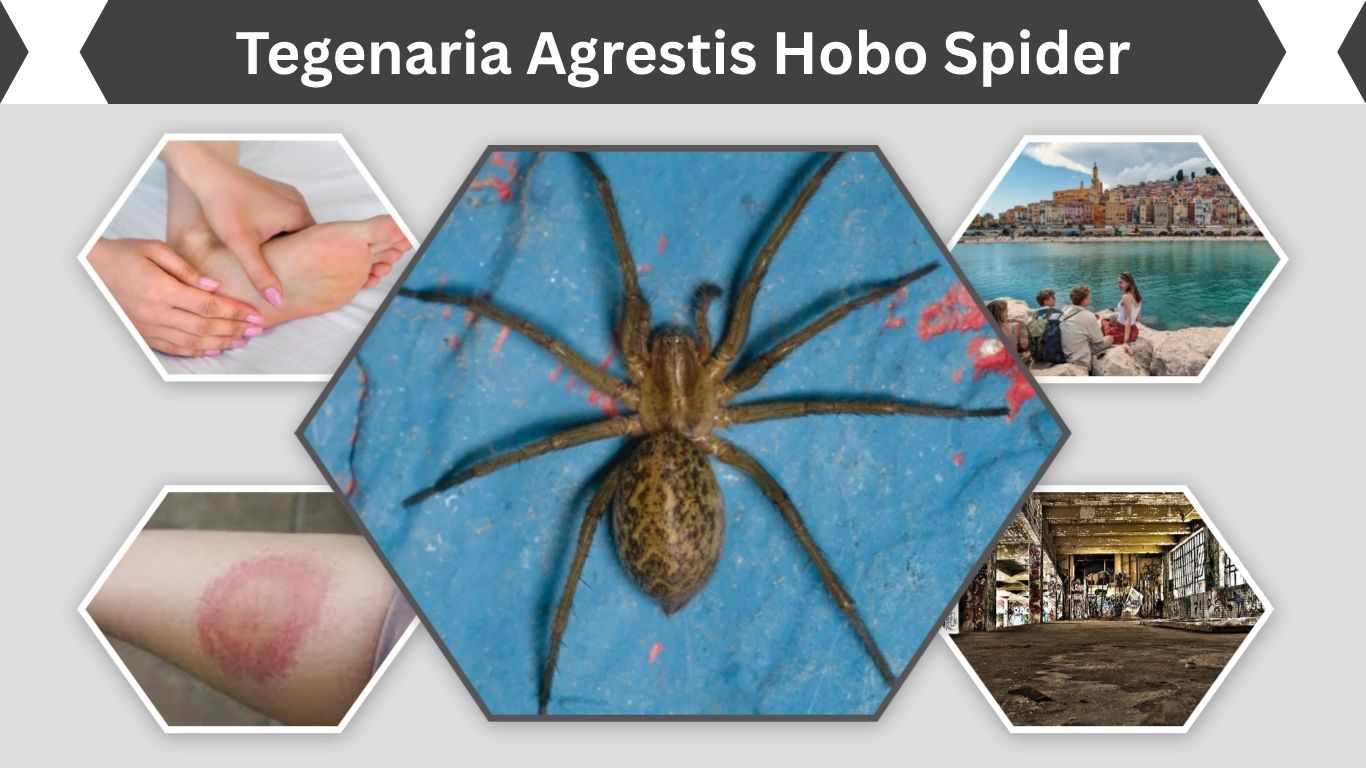
The Tegenaria agrestis, commonly known as the Hobo Spider, is a fast-moving, funnel-web spider originally native to Europe and now established in parts of North America. Recognizable by its brown coloration and herringbone abdominal pattern, it often inhabits homes, basements, and sheds. While not aggressive, its bite has occasionally caused mild necrotic effects, leading to concerns among homeowners. Understanding its identification, behavior, habitat, and interaction with humans is essential for safety and proper pest management.
This guide explores the Hobo Spider in detail, from its physical characteristics to its preferred environments and web-building behavior. By learning more about this species, you can prevent unnecessary alarm and safely manage encounters.
Overview of Hobo Spiders
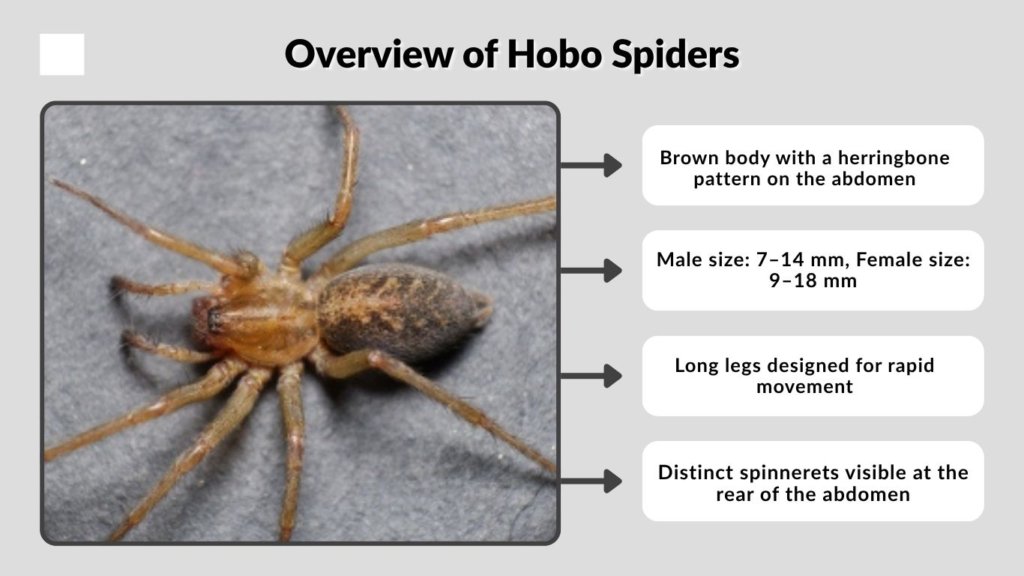
Hobo Spiders belong to the Agelenidae family and are known for constructing funnel-shaped webs. They are active hunters rather than passive web sitters, moving quickly to capture prey. These spiders are primarily nocturnal and tend to avoid human contact, although they may enter homes seeking shelter in cool, damp areas.
Physical Characteristics
- Brown body with a herringbone pattern on the abdomen
- Male size: 7–14 mm, Female size: 9–18 mm
- Long legs designed for rapid movement
- Distinct spinnerets visible at the rear of the abdomen
Identification Tips
- Funnel-shaped web with a retreat tunnel
- Fast, terrestrial movement
- Often found in basements, sheds, crawl spaces, and outdoor debris
Tegenaria Agrestis Hobo Spider Habitat and Distribution
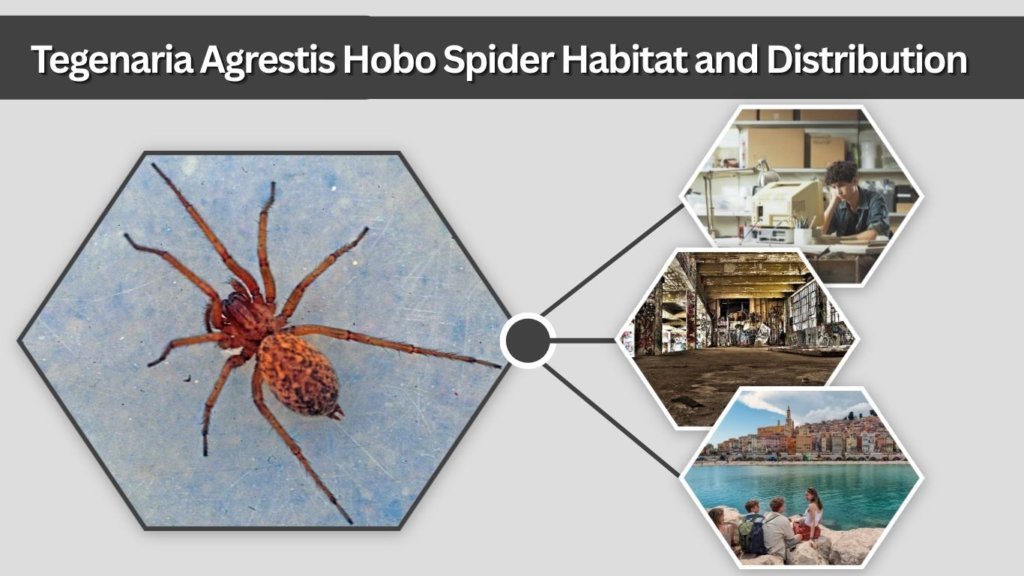
Hobo Spiders thrive in temperate climates and are now common across the Pacific Northwest of the United States. They originally came from Europe but have adapted well to North American environments, especially where human-made structures provide shelter.
Preferred Environments
- Basements, crawl spaces, and attics in homes
- Garden mulch, woodpiles, and stone foundations
- Cracks in concrete, retaining walls, and other sheltered outdoor locations
Geographic Range
- Native: Europe
- Introduced and established: USA (Pacific Northwest) and parts of Canada
- Most active in regions with moderate humidity and cooler temperatures
Tegenaria Agrestis Hobo Spider Behavior and Web Construction
Unlike spiders that passively wait for prey, Hobo Spiders actively hunt insects and other small arthropods. They rely on the funnel-shaped webs to trap prey and use their speed to capture it efficiently. These webs also serve as retreats for resting and laying eggs.
Hunting and Feeding
- Prey includes insects such as flies, ants, and other small arthropods
- Ambush predators: they wait in funnel retreat tunnels to strike
- Quickly immobilize and consume prey
Reproduction
- Mating occurs mainly in late summer
- Females lay between 50 and 200 eggs in silk sacs
- Egg sacs are hidden within the funnel web for protection
Tegenaria Agrestis Hobo Spider Human Interaction and Safety
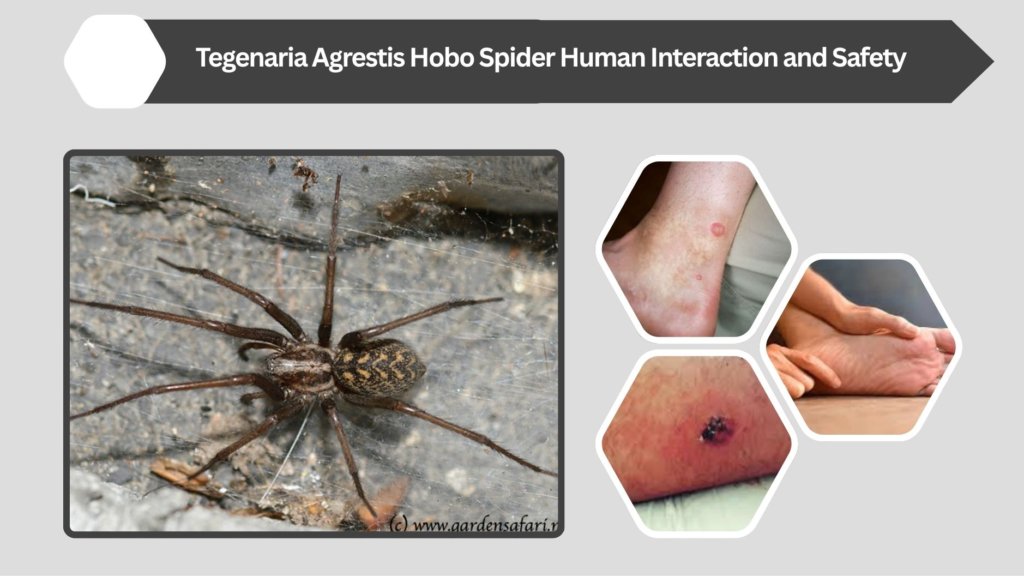
Although Hobo Spiders are not considered highly venomous, their bite can cause mild necrotic effects in rare cases. Most bites occur when the spider is accidentally trapped against the skin. Understanding how to identify, prevent, and respond to Hobo Spider encounters helps minimize risks.
Bite Symptoms
- Redness and localized swelling at the bite site
- Mild pain or itching, sometimes tingling
- Rarely, small necrotic lesions may develop
- Symptoms usually appear within 24 hours
First Aid Measures
- Wash the bite site with soap and water
- Apply ice to reduce swelling and discomfort
- Monitor for increasing redness, blistering, or necrosis
- Seek medical attention if severe reactions occur
Prevention and Control
- Seal cracks and crevices around doors, windows, and foundations
- Reduce clutter in basements and crawl spaces
- Remove woodpiles, mulch, and debris near the home
- Use sticky traps or professional pest control if needed
Tegenaria Agrestis Hobo Spider Common Misconceptions
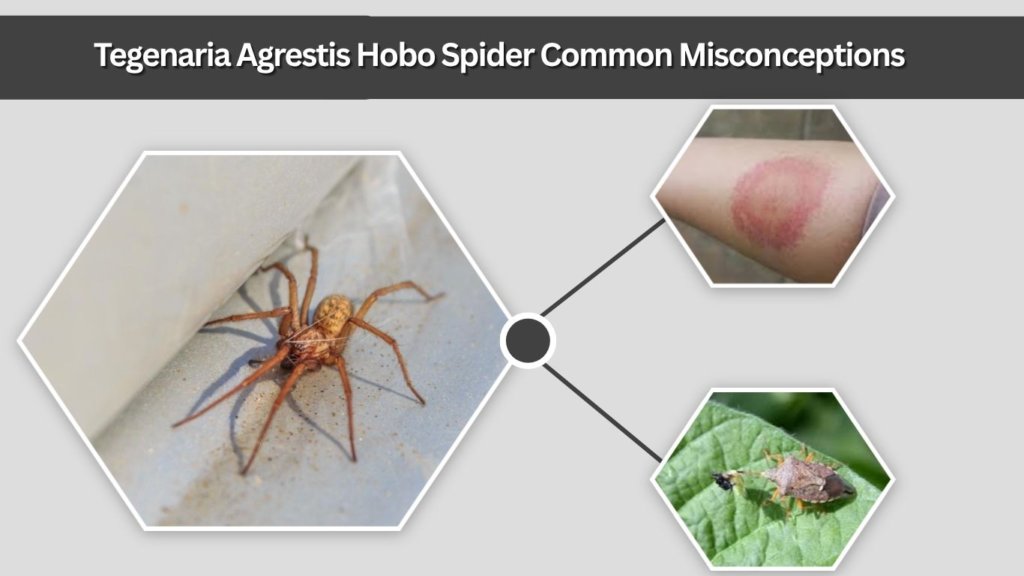
Many people mistakenly believe Hobo Spiders are highly dangerous. In reality, their bite rarely causes serious harm. Misidentification is common because several brown spiders resemble Hobo Spiders.
Differences from Similar Species
- Vs. Domestic House Spider: Hobo Spider moves faster and has a distinct herringbone pattern
- Vs. Wolf Spider: Wolf Spiders do not construct funnel-shaped webs
- Vs. Brown Recluse: Hobo Spider lacks the violin-shaped marking on the cephalothorax
Debunking Myths
- Hobo Spiders do not actively seek humans to bite
- Most bites occur when the spider is accidentally trapped against skin
- They are primarily beneficial predators of pest insects
FAQs
Are Hobo Spiders dangerous to humans?
Bites are rare and usually result in mild symptoms. Severe necrotic reactions are extremely uncommon. Most encounters are harmless, and spiders generally avoid human contact.
How can I identify a Hobo Spider in my home?
Look for brown spiders with long legs, herringbone abdominal markings, and funnel-shaped webs, typically in basements, crawl spaces, sheds, or outdoor debris piles.
What should I do if bitten by a Hobo Spider?
Clean the bite area with soap and water, apply ice to reduce swelling, and monitor symptoms. Seek medical attention if redness spreads, blisters form, or necrosis appears.
Do Hobo Spiders bite often?
No, Hobo Spiders are generally non-aggressive and bite only when trapped or threatened. Most human encounters involve spiders simply being in the same area.
How can I prevent Hobo Spiders from entering my home?
Seal cracks and crevices, reduce clutter, remove debris and woodpiles near foundations, and maintain dry, clean basements or crawl spaces to discourage spider habitation.
