
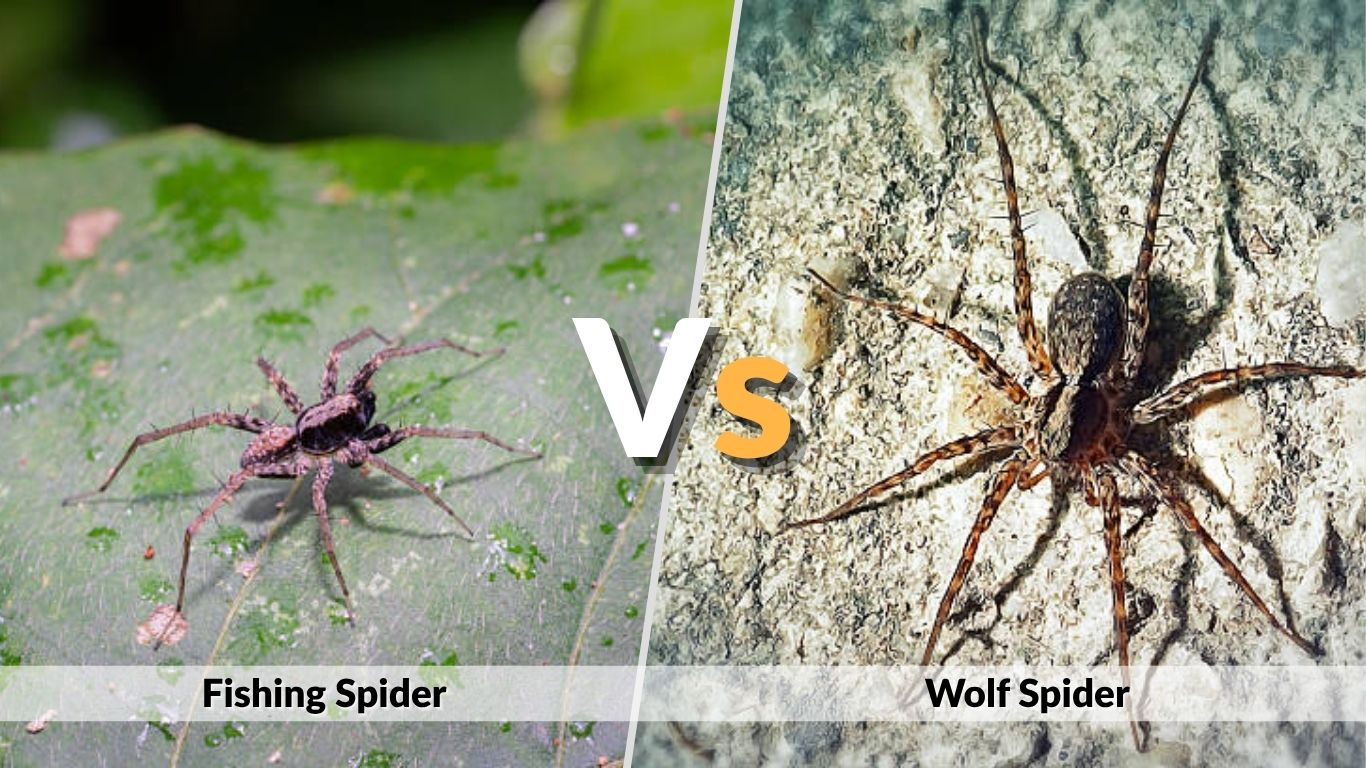
Fishing spiders and wolf spiders are two large hunting spiders that people commonly confuse with each other. Both species are fast-moving predators with hairy bodies and long legs, which often causes homeowners and outdoor enthusiasts to mistake one for the other.
Although they may appear similar at first glance, fishing spiders and wolf spiders have several important differences. Their habitat, eye arrangement, body shape, hunting style, and size can help you identify them more accurately.
What Is a Fishing Spider?
Fishing spiders belong to the Dolomedes genus and are known for their semi-aquatic lifestyle. Unlike web-building spiders, fishing spiders actively hunt prey instead of trapping insects in large webs.
These spiders are commonly found near freshwater habitats such as ponds, lakes, marshes, and slow-moving streams. Some species can even walk across water surfaces and briefly dive underwater.
Main Features of Fishing Spiders
Fishing spiders have several characteristics that separate them from other large spiders.
Important features include:
- Long legs spread outward
- Flat body posture
- Brown or gray camouflage coloring
- Semi-aquatic behavior
- Strong climbing ability
- Hunts without prey-catching webs
Because of their long legs, fishing spiders often appear much larger than they actually are.
Common Types of Fishing Spiders
Several fishing spider species are commonly seen in North America.
Popular examples include:
- Dark fishing spider
- Six-spotted fishing spider
- Striped fishing spider
Among these, the dark fishing spider is the species most often mistaken for a wolf spider because of its large size and hairy appearance.
What Is a Wolf Spider?
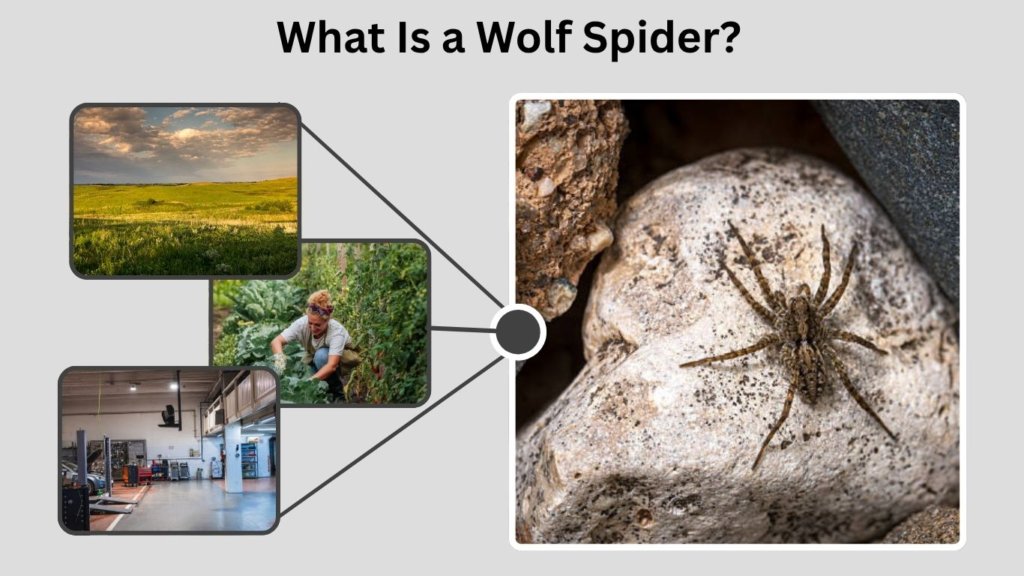
Wolf spiders are ground-hunting spiders known for their speed, agility, and excellent vision. Unlike fishing spiders, wolf spiders are usually found in dry habitats instead of near water.
They do not build webs to catch prey. Instead, they chase down insects using fast movement and strong eyesight.
Wolf spiders are common in:
- Grasslands
- Forest floors
- Gardens
- Basements
- Leaf litter
Many wolf spider species are active at night and can be identified by the bright reflection from their eyes under flashlight beams.
Main Features of Wolf Spiders
Wolf spiders have a more compact and muscular appearance compared to fishing spiders.
Key characteristics include:
- Thick, stocky body
- Hairy appearance
- Fast-running ability
- Strong eyesight
- Compact leg positioning
- Excellent nighttime hunting skills
Female wolf spiders are also famous for carrying spiderlings on their backs after hatching.
Where Wolf Spiders Are Commonly Found
Wolf spiders prefer dry ground habitats where they can actively search for insects and small prey.
Common locations include:
- Gardens
- Forest floors
- Grasslands
- Wood piles
- Basements
- Garages
Unlike fishing spiders, wolf spiders are not strongly associated with freshwater environments.
Fishing Spider vs Wolf Spider Size
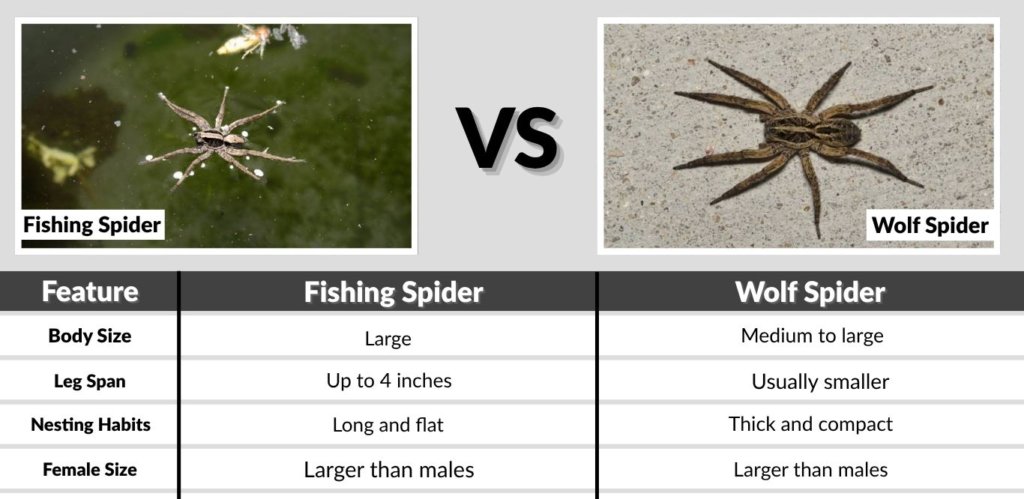
Size is one of the most searched comparison topics between these two spiders. Both species can grow fairly large, but fishing spiders usually appear bigger because of their extremely long legs.
Wolf spiders, however, often look bulkier because of their heavier body structure.
Which Spider Is Bigger?
In most cases, fishing spiders are larger overall than wolf spiders, especially when leg span is considered.
Fishing spiders can develop leg spans of up to 4 inches, while most wolf spiders remain somewhat smaller. However, wolf spiders often appear more solid and muscular.
Size Comparison Table
| Feature | Fishing Spider | Wolf Spider |
| Body Size | Large | Medium to large |
| Leg Span | Up to 4 inches | Usually smaller |
| Body Shape | Long and flat | Thick and compact |
| Female Size | Larger than males | Larger than males |
Fishing spiders generally look larger because their legs spread outward across surfaces, creating a wider appearance.
Fishing Spider vs Wolf Spider Size Differences
There are several noticeable differences in body structure between these spiders.
Fishing spiders usually have:
- Longer legs
- Flatter bodies
- Slimmer appearance
- Wider leg positioning
Wolf spiders typically have:
- Heavier bodies
- Shorter legs
- More compact shape
- Stronger ground-running posture
These physical differences make fishing spiders appear more stretched out, while wolf spiders look sturdier.
Fishing Spider vs Wolf Spider Eyes
Eye arrangement is one of the best ways to identify whether a spider is a fishing spider or a wolf spider. Although both species have eight eyes, the placement and appearance are very different.
Fishing Spider Eye Pattern
Fishing spiders have their eyes arranged in two fairly even horizontal rows. Their eyes are smaller and less dramatic in appearance compared to wolf spiders.
Important features include:
- Horizontal eye alignment
- Smaller eye grouping
- Less noticeable eye shine
- Moderate nighttime vision
Their eyes are adapted for hunting near water and detecting movement around shorelines.
Wolf Spider Eye Pattern
Wolf spiders are famous for their distinctive eye arrangement. They have large forward-facing central eyes that provide excellent vision for nighttime hunting.
Common wolf spider eye traits include:
- Large middle eyes
- Strong reflective eye shine
- Excellent depth perception
- Better night vision
If you shine a flashlight at night and notice bright glowing eyes near the ground, there is a good chance you are looking at a wolf spider instead of a fishing spider.
Eye Pattern Comparison Table
| Feature | Fishing Spider Eyes | Wolf Spider Eyes |
| Eye Layout | Two horizontal rows | Large central eyes with rows |
| Night Reflection | Less noticeable | Strong eyeshine |
| Vision Strength | Good | Excellent |
| Identification Ease | Moderate | Easier because of large eyes |
The eye arrangement is one of the easiest ways to separate these two spiders, especially at night.
Fishing Spider vs Wolf Spider Habitat
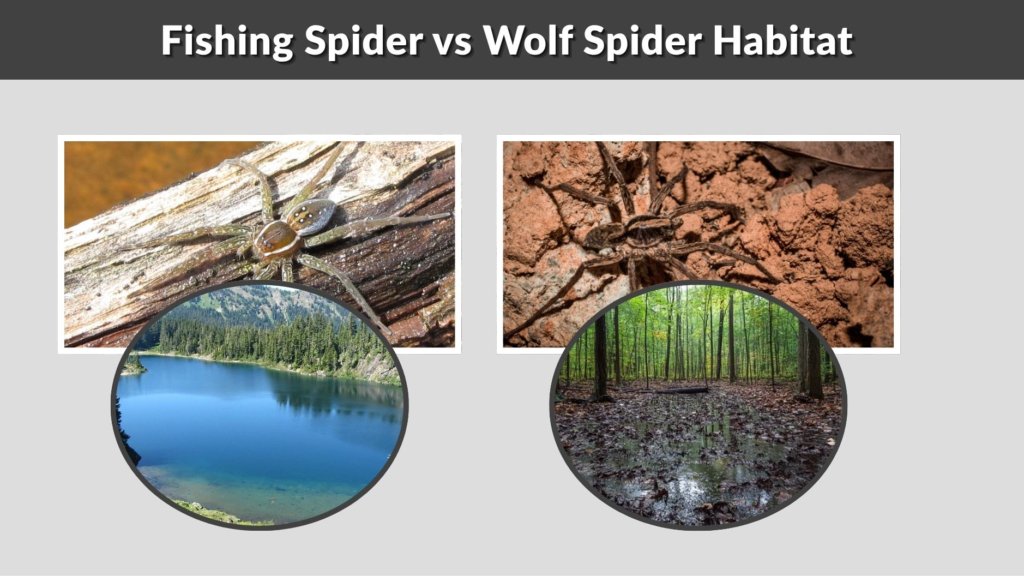
Habitat is another important clue when identifying whether a spider is a fishing spider or a wolf spider. While both species can occasionally wander indoors, they usually prefer very different environments.
Fishing spiders are strongly connected to water, while wolf spiders mainly stay in dry ground habitats.
Where Fishing Spiders Live
Fishing spiders prefer moist environments where aquatic prey is available.
They are commonly found near:
- Lakes
- Streams
- Wetlands
- Marshes
- Riverbanks
- Wooden docks
These spiders often rest on rocks, logs, tree bark, or vegetation close to water.
Where Wolf Spiders Live
Wolf spiders are ground hunters that prefer dry or moderately moist habitats.
Common locations include:
- Grasslands
- Forest floors
- Gardens
- Garages
- Basements
- Leaf litter
Unlike fishing spiders, wolf spiders rarely spend time near open water unless searching for prey.
Habitat Comparison Table
| Habitat Feature | Fishing Spider | Wolf Spider |
| Water Association | Strong | Weak |
| Preferred Moisture | Humid environments | Dry to moderate |
| Indoor Sightings | Less common | More common |
| Hunting Area | Near water | Ground level |
If you find a large spider near a dock, pond, or lake, it is more likely to be a fishing spider.
Dark Fishing Spider vs Wolf Spider
The dark fishing spider is the fishing spider species most commonly confused with wolf spiders. Both are large, brown, hairy spiders that actively hunt instead of building prey-catching webs.
However, several key differences can help identify them correctly.
Key Differences
Some of the easiest ways to distinguish these spiders include:
- Fishing spiders rest flat against surfaces
- Wolf spiders appear more upright and compact
- Fishing spiders prefer wet habitats
- Wolf spiders hunt mainly on dry ground
- Fishing spiders have longer legs
- Wolf spiders have bulkier bodies
The dark fishing spider also tends to have wavy body markings, while wolf spiders often display bold stripes.
Identification Tips
If you are unsure whether a spider is a fishing spider or wolf spider, look for these clues:
- Near water = likely fishing spider
- Thick compact body = likely wolf spider
- Long spread-out legs = fishing spider
- Bright eye reflection = wolf spider
- Flat posture against walls or bark = fishing spider
These simple observations can help identify the spider without needing close contact.
Hunting Behavior Differences
Although both species are active hunters, their hunting styles differ significantly because of their habitats and body structure.
Fishing Spider Hunting Style
Fishing spiders rely heavily on vibrations and ambush techniques while hunting near water.
Their hunting behavior includes:
- Detecting water movement
- Waiting near shorelines
- Ambushing aquatic prey
- Running across water surfaces
- Occasionally catching small fish or tadpoles
They are especially active at night when insects gather near water.
Wolf Spider Hunting Style
Wolf spiders are fast-moving ground predators that chase prey directly instead of waiting in ambush.
Common hunting traits include:
- Chasing insects on land
- Excellent nighttime vision
- Fast running speed
- Strong jumping ability
- Active ground patrol behavior
Wolf spiders depend more on eyesight and speed than fishing spiders.
Are Fishing Spiders or Wolf Spiders Dangerous?
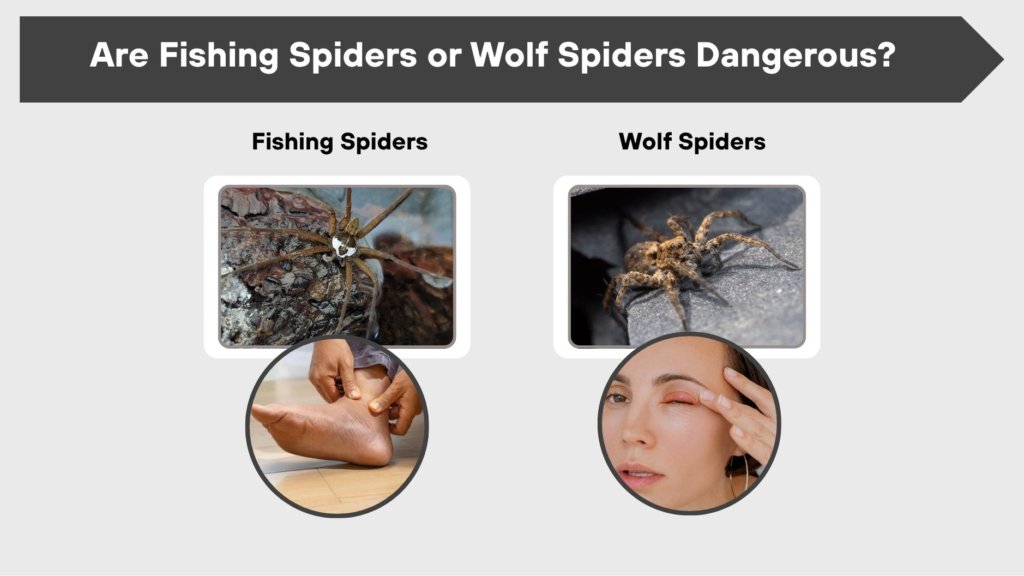
Large spiders often scare people, but both fishing spiders and wolf spiders are generally harmless to humans.
Neither species is considered medically dangerous.
Fishing Spider Bite
Fishing spiders can bite if threatened, but bites are uncommon because these spiders prefer escaping instead of attacking.
Possible bite symptoms include:
- Mild redness
- Swelling
- Temporary pain
- Minor itching
Most symptoms disappear quickly without medical treatment.
Wolf Spider Bite
Wolf spider bites are also usually mild and non-dangerous.
Symptoms may include:
- Mild pain
- Redness
- Swelling
- Temporary irritation
Serious reactions are extremely rare.
Which Spider Is More Dangerous?
Neither fishing spiders nor wolf spiders are considered dangerous to healthy humans. Both spiders are beneficial predators that help control insect populations naturally.
They reduce pests such as:
- Mosquitoes
- Flies
- Beetles
- Garden insects
Because of their ecological benefits, many experts recommend leaving these spiders alone whenever possible.
How to Identify Fishing Spiders and Wolf Spiders
Identifying these spiders becomes much easier once you understand their physical and behavioral differences.
Quick Identification Checklist
Use these simple tips for fast identification:
- Near water = fishing spider
- Thick body = wolf spider
- Long flat legs = fishing spider
- Bright reflective eyes = wolf spider
- Flat resting posture = fishing spider
- Fast ground runner = wolf spider
Carefully observing habitat and body structure is usually enough to tell these spiders apart.
FAQs
What is the difference between a fishing spider and a wolf spider?
Fishing spiders usually live near water and have long legs that spread outward. Wolf spiders are ground hunters with thicker, more compact bodies. Fishing spiders often appear flatter, while wolf spiders are known for their large reflective eyes and strong running ability.
Which is bigger, a fishing spider or a wolf spider?
Fishing spiders are generally larger overall because they have longer legs and wider leg spans. Some fishing spiders can reach up to 4 inches across. Wolf spiders are usually stockier and heavier but often smaller in total leg span.
Are fishing spiders more dangerous than wolf spiders?
Neither fishing spiders nor wolf spiders are considered dangerous to humans. Both can bite if threatened, but their bites usually cause only mild symptoms such as redness, swelling, or temporary pain that fades within a short time.
How can you identify a wolf spider by its eyes?
Wolf spiders have large forward-facing central eyes that create noticeable eye shine when light hits them at night. This reflective eye pattern is one of the easiest ways to distinguish wolf spiders from fishing spiders.
Do fishing spiders and wolf spiders build webs?
Both spiders use silk, but neither relies on large prey-catching webs for hunting. Fishing spiders actively hunt near water, while wolf spiders chase prey across the ground using speed and strong eyesight.
