
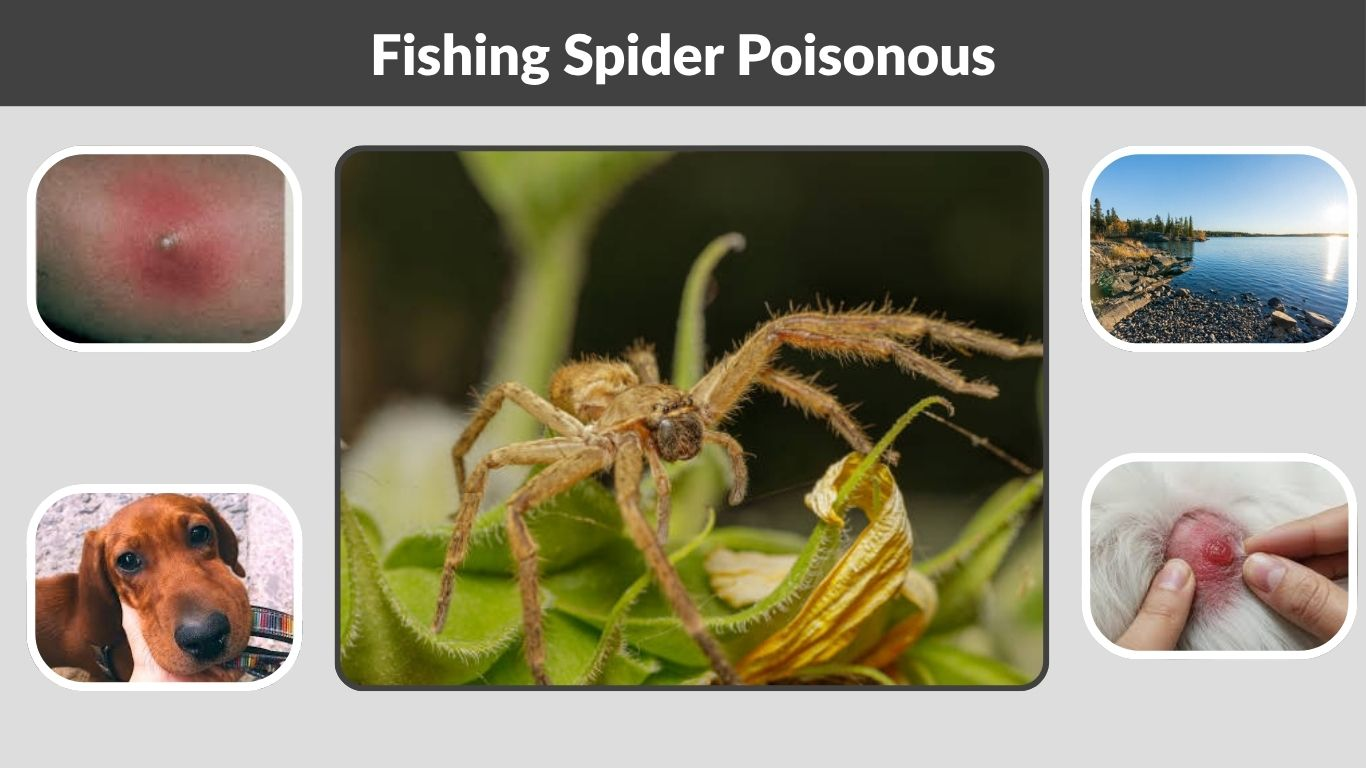
Fishing spiders are large semi-aquatic spiders that often scare people because of their size, long legs, and fast movement. Many homeowners become alarmed when they spot one near a dock, pond, basement, or lakeside cabin and immediately wonder whether the spider is poisonous or dangerous.
Although fishing spiders may look intimidating, they are generally harmless to humans. These spiders are actually beneficial predators that help control insects and other small pests near freshwater habitats.
What Is a Fishing Spider?
Fishing spiders belong to the Dolomedes genus and are known for their ability to hunt near water. Unlike web-building spiders, fishing spiders actively stalk and capture prey instead of trapping insects in large webs.
These spiders are commonly found around:
- Lakes
- Streams
- Marshes
- Wetlands
- Riverbanks
- Wooden docks
Fishing spiders can even run across water surfaces and briefly dive underwater when threatened.
Main Features of Fishing Spiders
Fishing spiders have several physical traits that make them easy to recognize.
Common characteristics include:
- Large leg span
- Brown or gray camouflage coloring
- Long hairy legs
- Flat body posture
- Excellent climbing ability
- Fast hunting behavior
Because of their large appearance, many people confuse fishing spiders with wolf spiders or even tarantulas.
Common Fishing Spider Species
Several fishing spider species are found throughout North America.
The most common include:
- Dark fishing spider
- Six-spotted fishing spider
- White-banded fishing spider
- Striped fishing spider
Most of these species share similar hunting behavior and venom strength.
Are Fishing Spiders Poisonous or Venomous?
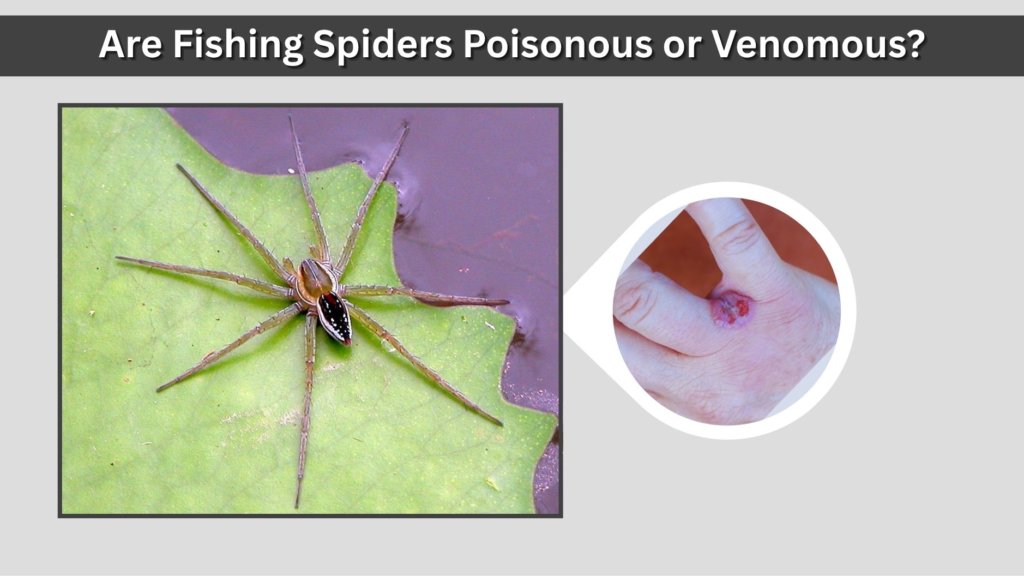
One of the biggest misunderstandings about fishing spiders involves the terms “poisonous” and “venomous.” Many people use these words interchangeably, but they actually have different meanings.
Fishing spiders are venomous, not poisonous.
Poisonous vs Venomous Spiders
The difference between poisonous and venomous animals is important for understanding spider safety.
| Term | Meaning | Fishing Spider Status |
| Poisonous | Harmful if eaten or touched | No |
| Venomous | Injects venom through bites | Yes |
Fishing spiders use venom to immobilize insects and small prey during hunting. However, their venom is relatively mild and not considered medically dangerous to humans.
Are Fishing Spiders Dangerous to Humans?
Fishing spiders are generally not dangerous to healthy adults. Although they can bite if threatened, they are shy spiders that prefer escaping instead of attacking.
Some important facts include:
- Bites are uncommon
- Venom effects are usually mild
- Most bites heal quickly
- Severe reactions are extremely rare
In most cases, a fishing spider bite causes only temporary discomfort.
Why People Fear Fishing Spiders
Fishing spiders often frighten people because of their appearance and behavior.
Common reasons include:
- Large body size
- Long leg span
- Fast movement
- Found near homes and docks
- Similar appearance to dangerous spiders
Despite these fears, fishing spiders are actually beneficial predators that help control mosquitoes and other insects.
Is the Dark Fishing Spider Poisonous?
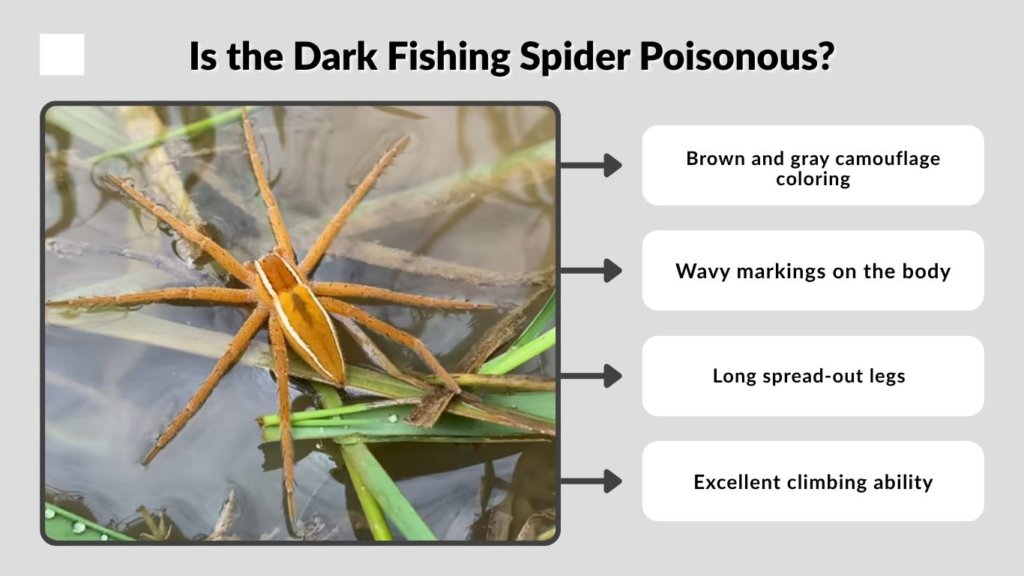
The dark fishing spider is one of the most searched fishing spider species because of its enormous size and intimidating appearance. Scientifically known as Dolomedes tenebrosus, it is one of the largest fishing spiders found in North America.
Many people mistake it for a wolf spider or brown recluse spider.
What Is a Dark Fishing Spider?
The dark fishing spider is a semi-aquatic hunting spider commonly found near lakes, wooded streams, wetlands, and riverbanks.
Key characteristics include:
- Brown and gray camouflage coloring
- Wavy markings on the body
- Long spread-out legs
- Excellent climbing ability
- Large female body size
These spiders often hide beneath bark, docks, rocks, or outdoor structures during the daytime.
Is the Dark Fishing Spider Dangerous?
Although the dark fishing spider is venomous to prey, it is not considered medically dangerous to humans.
Important facts include:
- Venom mainly affects insects and small prey
- Rarely aggressive toward people
- Bites happen mainly in self-defense
- Most symptoms are mild
The spider usually attempts to flee before biting.
Dark Fishing Spider Bite Symptoms
If a dark fishing spider bites a person, symptoms are usually minor and temporary.
Common bite symptoms include:
- Mild redness
- Swelling
- Temporary pain
- Itching
- Minor skin irritation
Many people compare the sensation to a mild bee sting.
Fishing Spider Bite Facts
Fishing spider bites are uncommon because these spiders avoid confrontation whenever possible. Most bites occur when someone accidentally traps or handles the spider.
Does a Fishing Spider Bite?
Yes, fishing spiders can bite if they feel threatened or cornered. However, they are not naturally aggressive toward humans.
Situations that may lead to bites include:
- Picking up the spider
- Disturbing hiding places
- Accidentally trapping it in clothing
- Attempting to kill the spider
In most situations, the spider will try to escape rather than bite.
What Does a Fishing Spider Bite Feel Like?
A fishing spider bite is usually mild and short-lasting.
People may experience:
- Mild stinging sensation
- Redness
- Slight swelling
- Temporary irritation
Serious medical complications are extremely rare in healthy individuals.
When to Seek Medical Attention
Although fishing spider bites are usually harmless, some situations may require medical attention. People with allergies or sensitive immune systems may react more strongly to spider venom.
You should seek medical help if symptoms include:
- Severe swelling
- Difficulty breathing
- Fever
- Dizziness
- Signs of infection
- Persistent pain
These reactions are uncommon, but it is always safer to contact a healthcare professional if symptoms worsen.
Are Fishing Spiders Poisonous to Dogs or Pets?
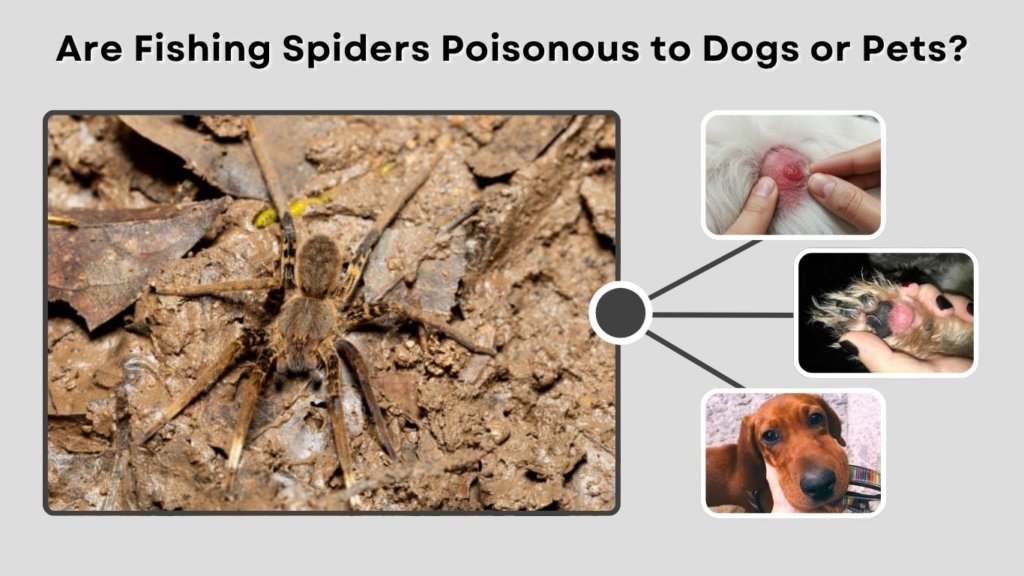
Many pet owners worry when they find large fishing spiders around their homes, garages, or lakeside cabins. Fortunately, fishing spiders are usually not dangerous to dogs or cats.
Most pets experience only mild irritation if bitten.
Dark Fishing Spider Poisonous to Dogs?
The dark fishing spider is not considered highly dangerous to dogs. Its venom is designed mainly for insects and small prey rather than large animals.
Possible symptoms in dogs may include:
- Mild swelling
- Temporary discomfort
- Pawing at the bite area
- Slight redness
Most pets recover quickly without serious complications.
Symptoms in Dogs or Cats
If a fishing spider bites a pet, symptoms are generally mild and temporary.
Common signs include:
- Licking or scratching the area
- Minor swelling
- Mild pain
- Temporary restlessness
- Drooling in some cases
Severe reactions are very rare, but small pets or animals with allergies may require veterinary attention.
What Pet Owners Should Do
If you suspect your pet was bitten by a fishing spider:
- Monitor symptoms closely
- Prevent excessive scratching
- Keep the bite area clean
- Contact a veterinarian if swelling increases
- Seek emergency care for breathing problems
Most cases improve within a short period without treatment.
Are Different Fishing Spider Species Poisonous?
Different fishing spider species possess similar venom strength and hunting behavior. While they use venom to subdue prey, they are generally harmless to humans.
The level of danger does not vary greatly between common fishing spider species.
Six-Spotted Fishing Spider Poisonous?
The six-spotted fishing spider is venomous to insects and small aquatic prey, but it is not considered dangerous to humans.
This spider usually avoids people and bites only when threatened. Most bites result in mild irritation and temporary swelling.
White-Banded Fishing Spider Poisonous?
The white-banded fishing spider also uses venom for hunting but is not medically significant to humans.
Like other fishing spiders, it prefers escaping instead of biting. Its venom mainly affects insects, tadpoles, and small prey animals.
Striped Fishing Spider Poisonous?
Striped fishing spiders have venom similar to other members of the Dolomedes genus. They are active hunters but rarely aggressive toward humans.
Their bites are uncommon and usually mild when they occur.
Where Are Fishing Spiders Commonly Found?
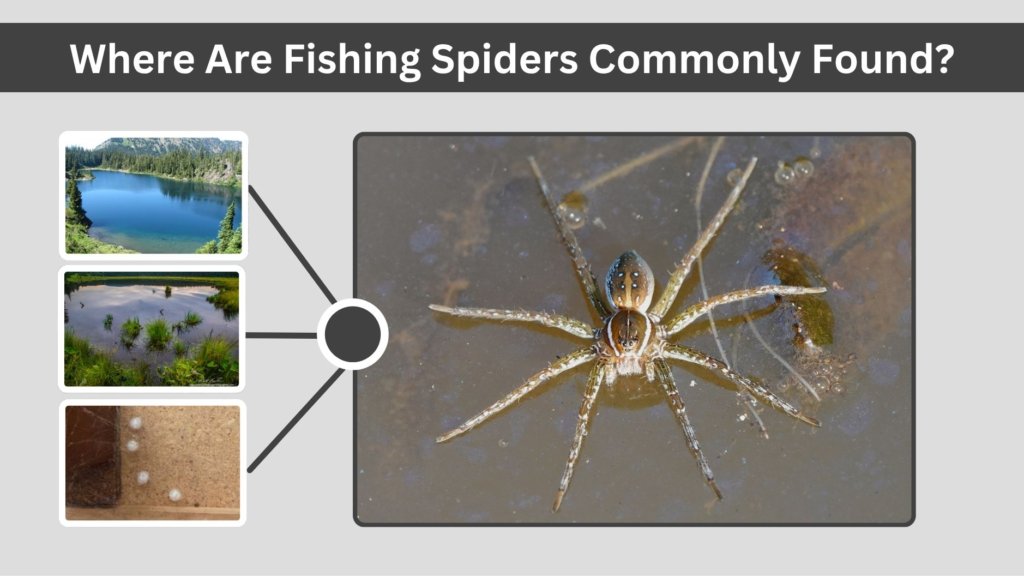
Fishing spiders thrive in moist environments where aquatic insects and prey are abundant. They are strongly associated with freshwater habitats.
Common places where fishing spiders are found include:
- Lakes
- Wetlands
- Ponds
- Marshes
- Streams
- Riverbanks
- Wooden docks
Because these spiders prefer humid habitats, they are more common in regions with forests and freshwater ecosystems.
Fishing Spider Locations in North America
Fishing spiders are widespread throughout many parts of North America.
They are commonly reported in:
- Michigan
- Wisconsin
- Ohio
- Minnesota
- North Carolina
People often encounter them near cabins, docks, sheds, and wooded lakeside properties.
How to Avoid Fishing Spider Bites
Fishing spider bites are easy to avoid because these spiders are not naturally aggressive.
Simple precautions include:
- Avoid handling spiders directly
- Wear gloves around woodpiles or docks
- Shake out outdoor clothing and gear
- Reduce moisture around homes
- Leave spiders undisturbed
Most bites happen only when the spider feels trapped or threatened.
Interesting Facts About Fishing Spider Venom
Fishing spider venom plays an important role in helping these spiders hunt and survive in aquatic environments.
Amazing Facts
- Fishing spiders use venom to immobilize prey
- Some species can catch small fish
- Their venom is weak compared to medically dangerous spiders
- Fishing spiders rarely bite humans
- Most bites heal quickly without treatment
These spiders are fascinating predators that help maintain balance in freshwater ecosystems by controlling insect populations.
FAQs
Are fishing spiders poisonous to humans?
Fishing spiders are not poisonous, but they are mildly venomous. They use venom to capture prey such as insects and tadpoles. For humans, their bites are usually harmless and may only cause mild redness, swelling, or temporary irritation that fades quickly.
Is the dark fishing spider poisonous?
The dark fishing spider is venomous to small prey but is not considered dangerous to humans. Its venom is relatively mild, and bites are uncommon. Most bite symptoms are minor and may include slight pain, redness, itching, or mild swelling.
What happens if a fishing spider bites you?
A fishing spider bite usually causes mild symptoms similar to a bee sting. Common effects include temporary pain, redness, swelling, and itching. Serious medical reactions are rare, but people with allergies or severe symptoms should seek medical attention.
Are fishing spiders dangerous to dogs?
Fishing spiders are generally not dangerous to dogs or cats. If a pet is bitten, symptoms are usually mild and may include slight swelling or irritation. Severe reactions are uncommon, but pet owners should monitor symptoms and contact a veterinarian if needed.
Are fishing spiders aggressive?
Fishing spiders are not aggressive toward humans. They prefer escaping and hiding instead of attacking. Most bites occur only when the spider feels trapped, threatened, or accidentally handled.
