
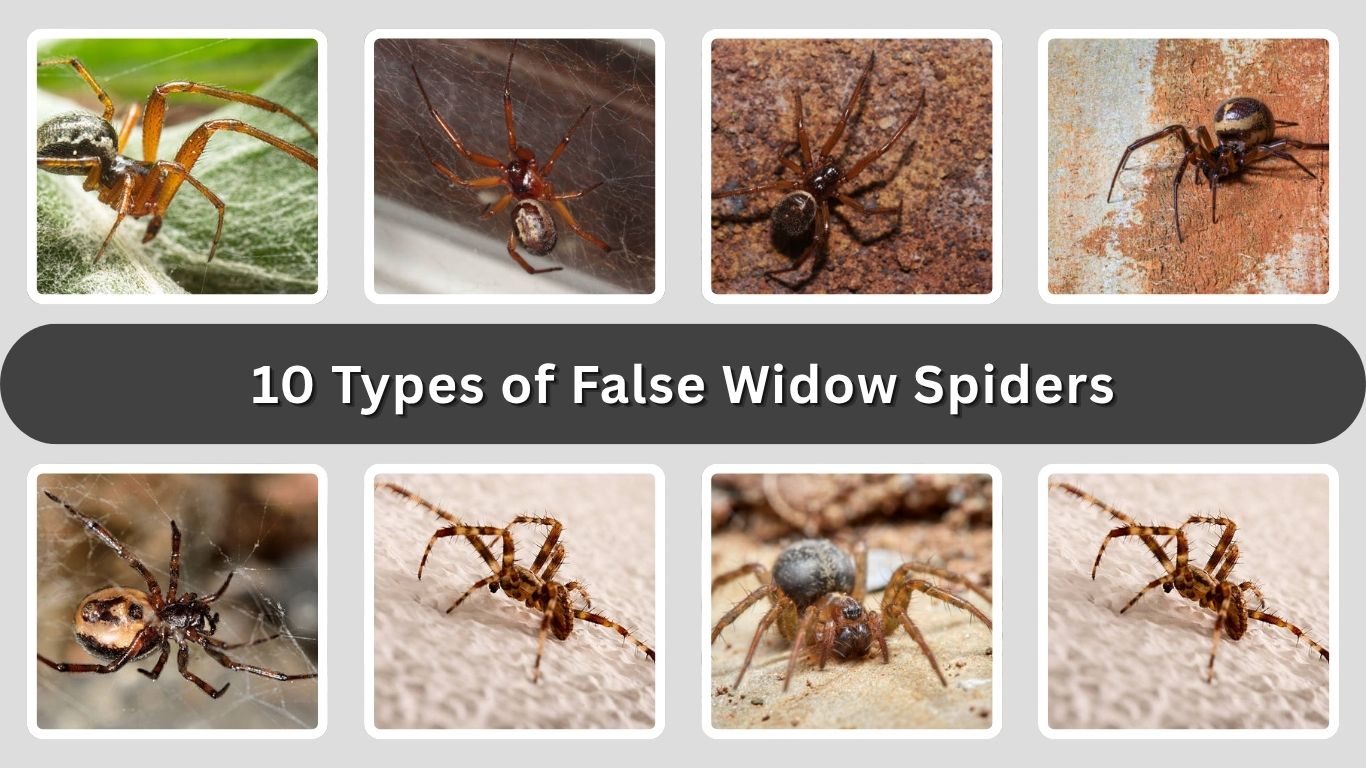
False widow spiders are often mistaken for their more dangerous relatives, the true widow spiders, due to their similar appearance. However, most false widows are far less harmful and tend to avoid human interaction. Their dark, glossy bodies and rounded abdomens can make them look intimidating, but they are generally shy and prefer to stay hidden in their webs.
This list covers 10 types of false widow spiders commonly found in homes and outdoor structures. Learning how to identify them, understand their behavior, and recognize their actual risk can help reduce unnecessary fear while appreciating their role in controlling insect populations.
1. Noble False Widow

The Noble False Widow is one of the most well-known false widow spiders, often mistaken for more dangerous species due to its dark color and bulbous abdomen. Native to the Canary Islands, it has spread widely and is now commonly found in homes and buildings across many regions.
Identification
- Shiny, dark brown to purplish body
- Rounded, bulbous abdomen
- Cream-colored skull-like pattern on the abdomen
- Long, slender legs
- Females larger than males, up to 14 mm
Behavior
Noble False Widows are generally calm and non-aggressive. They prefer to stay in their webs and only bite if provoked or trapped. They are active hunters within their web, quickly immobilizing prey with silk and venom.
Habitat
These spiders commonly inhabit walls, window frames, fences, and indoor corners. They prefer sheltered areas around homes and buildings where they can build irregular, tangled webs.
Risk to Humans
While their bite can be more noticeable than other house spiders, it is not considered dangerous for most people. Symptoms may include mild pain, swelling, or redness. Serious reactions are rare, and they are generally more beneficial than harmful due to their role in controlling insects.
2. Cupboard Spider

The Cupboard Spider is a common false widow species often found inside homes. It gets its name from its tendency to hide in cupboards, storage areas, and quiet indoor spaces. Despite its somewhat intimidating appearance, it is generally harmless.
Identification
- Dark brown to black glossy body
- Rounded abdomen with faint markings
- Smooth, shiny appearance
- Slender legs with minimal hair
- Body length around 8–10 mm
Behavior
Cupboard Spiders are shy and prefer to stay hidden. They build messy, irregular webs and wait for prey rather than actively hunting. They are not aggressive and will only bite if disturbed or pressed against the skin.
Habitat
They are commonly found indoors in cupboards, closets, behind furniture, and in corners of rooms. They favor dark, undisturbed environments where they can remain unnoticed.
Risk to Humans
Bites are rare and usually mild, causing slight pain or irritation. They are not considered dangerous and help control small insect populations indoors.
3. Rabbit Hutch Spider

The Rabbit Hutch Spider is another member of the false widow group, often found in outdoor structures like sheds and hutches. It is known for its adaptability and ability to live close to human environments.
Identification
- Dark brown or purplish body
- Bulbous abdomen with light markings
- Glossy texture
- Long, thin legs
- Medium size, around 10–12 mm
Behavior
This spider is non-aggressive and spends most of its time in its web. It captures prey using sticky silk and rarely leaves its web unless necessary. It may appear defensive if threatened but typically avoids confrontation.
Habitat
Commonly found in sheds, garages, fences, and animal enclosures such as rabbit hutches. It prefers sheltered outdoor areas but may occasionally enter homes.
Risk to Humans
It poses minimal risk to humans. Bites are uncommon and usually result in mild symptoms like redness or slight swelling. Like other false widows, it is beneficial for controlling insects.
4. Brown House Spider

The Brown House Spider is a common false widow species often found living quietly inside homes. Its subtle coloring helps it blend into indoor environments, making it less noticeable than darker relatives.
Identification
- Light to dark brown body
- Rounded abdomen with faint patterns
- Smooth, slightly glossy appearance
- Long, slender legs
- Body length around 6–10 mm
Behavior
Brown House Spiders are calm and non-aggressive. They spend most of their time in their webs, waiting for prey to become trapped. They rarely wander and prefer to stay hidden unless disturbed.
Habitat
They are typically found indoors in corners, behind furniture, ceilings, and storage areas. Their messy, tangled webs are often built in quiet, undisturbed places.
Risk to Humans
These spiders pose very little risk. Bites are rare and usually mild, causing slight irritation. They are helpful in reducing household insect populations.
5. False Black Widow

The False Black Widow is often mistaken for the true black widow due to its dark color and rounded abdomen. However, it is far less dangerous and generally harmless to humans.
Identification
- Shiny dark brown to black body
- Bulbous abdomen
- Faint or no visible markings
- Slender legs
- Medium size, around 8–12 mm
Behavior
This spider is shy and prefers to remain in its web. It is not aggressive and will usually retreat if disturbed. It captures prey using sticky silk and rarely leaves its web.
Habitat
Commonly found in sheds, garages, fences, and sometimes inside homes. It prefers sheltered areas where it can build its web undisturbed.
Risk to Humans
Bites are uncommon and typically mild, causing minor pain or swelling. It is not considered dangerous and plays a useful role in controlling insect populations.
6. Mediterranean False Widow

The Mediterranean False Widow is a widely distributed species known for its adaptability and close association with human environments. It is often found both indoors and outdoors in warm regions.
Identification
- Dark brown or purplish body
- Rounded, glossy abdomen
- Subtle lighter markings
- Long, thin legs
- Body length around 7–11 mm
Behavior
This spider is non-aggressive and prefers to remain in its web. It waits patiently for prey and rarely moves unless necessary. If disturbed, it usually retreats rather than attacking.
Habitat
Commonly found in walls, fences, garden structures, and indoor corners. It prefers warm, sheltered areas where insects are plentiful.
Risk to Humans
Bites are rare and usually mild, causing slight pain or redness. It is not considered dangerous and is beneficial for pest control.
7. Canary False Widow

The Canary False Widow is native to the Canary Islands but has spread to other regions. It is closely related to the Noble False Widow and shares many similar features.
Identification
- Dark brown to black body
- Bulbous abdomen with light patterns
- Glossy appearance
- Slender legs
- Medium size, around 10–13 mm
Behavior
This species is calm and tends to stay within its web. It is not aggressive and avoids human interaction. It captures prey using sticky silk and quick movements.
Habitat
Often found around homes, fences, window frames, and sheltered outdoor areas. Indoors, it prefers quiet corners and undisturbed spaces.
Risk to Humans
It poses minimal risk. Bites are uncommon and usually result in mild symptoms such as slight swelling or discomfort. Like other false widows, it helps control insect populations.
8. Madeiran False Widow

The Madeiran False Widow is a lesser-known member of the false widow group, native to Madeira but now found in various regions. It closely resembles other Steatoda species and is often mistaken for more dangerous spiders.
Identification
- Dark brown to black body
- Rounded abdomen with faint pale markings
- Smooth, glossy texture
- Long, slender legs
- Body length around 8–12 mm
Behavior
This spider is shy and non-aggressive. It spends most of its time in its web, waiting for prey to get caught. It rarely leaves its web and avoids confrontation whenever possible.
Habitat
Typically found in sheltered outdoor areas like walls, fences, and garden structures. It may also enter homes, especially in quiet corners and storage spaces.
Risk to Humans
Bites are rare and generally mild, causing slight pain or redness. It is not considered dangerous and contributes to controlling insect populations.
9. Steatoda grossa

Steatoda grossa, also known as the False Black Widow, is one of the more recognized false widow species. Its dark appearance often causes confusion with true widow spiders, but it is much less harmful.
Identification
- Dark brown to nearly black body
- Smooth, shiny abdomen
- Usually lacks distinct markings
- Thick, slightly hairy legs
- Body length around 6–10 mm
Behavior
Steatoda grossa is calm and prefers to stay hidden in its web. It is not aggressive and typically only bites if provoked. It captures prey using sticky silk and quick movements.
Habitat
Commonly found in homes, garages, sheds, and under furniture. It prefers dark, undisturbed areas where it can build irregular webs.
Risk to Humans
Bites are uncommon and usually mild, though they may cause localized pain or discomfort. Serious reactions are rare, making it generally harmless to humans.
10. Steatoda nobilis

Steatoda nobilis, commonly known as the Noble False Widow, is one of the most widespread and recognizable false widow spiders. It is often associated with human environments and is known for its distinctive markings and adaptability.
Identification
- Dark brown to purplish body
- Bulbous abdomen with cream-colored markings
- Glossy appearance
- Long, slender legs
- Body length up to 14 mm (females larger)
Behavior
Steatoda nobilis is generally non-aggressive and prefers to remain in its web. It is an efficient predator, quickly wrapping prey in silk. While it may appear bold, it typically avoids human interaction and only reacts when disturbed.
Habitat
This species is commonly found in and around buildings, including walls, fences, window frames, and indoor corners. It prefers sheltered areas where it can build its irregular, tangled web.
Risk to Humans
Although its bite can be more noticeable than other house spiders, it is not considered dangerous for most people. Symptoms may include mild pain, swelling, or redness, with serious reactions being rare.
