
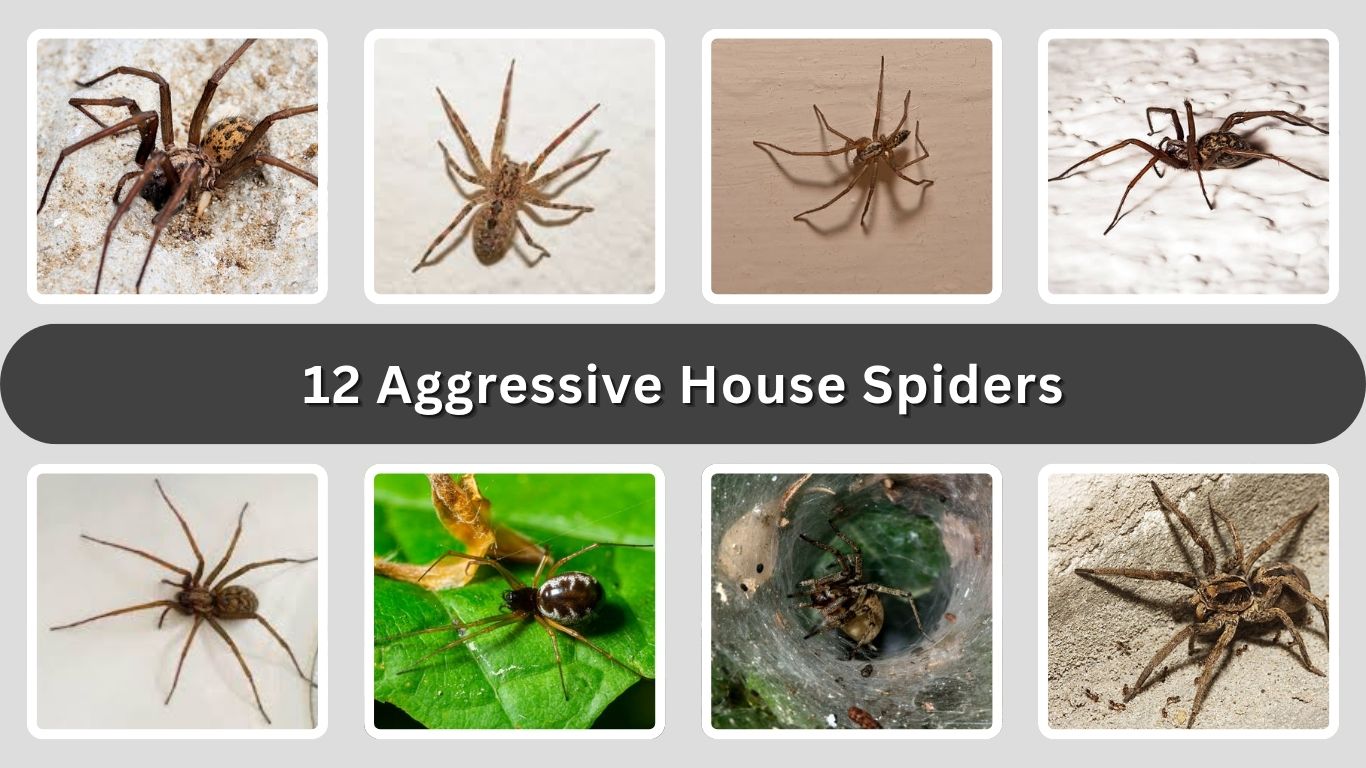
Spiders are a common part of indoor environments, especially in quiet, undisturbed areas like basements, corners, and storage spaces. While many house spiders may appear aggressive due to their size, speed, or sudden movements, most are actually harmless and prefer to avoid human interaction.
This list highlights 12 house spiders often mistaken as aggressive. Understanding their identification, behavior, and risks can help reduce fear and give you a clearer perspective on these misunderstood creatures that often play a helpful role in controlling household pests.
1. Giant House Spider

The Giant House Spider is one of the fastest and most intimidating spiders commonly found in homes. Despite its aggressive appearance and rapid movements, it is generally harmless to humans. These spiders are often spotted in dark corners, basements, and sheds, especially during late summer and autumn when males wander in search of mates.
Identification
- Large body size with long, slender legs
- Brown to dark brown coloration
- Hairy legs with visible banding
- Body length around 1–1.5 cm, leg span up to 7–10 cm
- Distinct elongated abdomen
Behavior
Giant House Spiders are known for their incredible speed, making them seem more aggressive than they actually are. They are nocturnal hunters and prefer to stay hidden during the day. Instead of actively attacking humans, they typically flee when disturbed. However, males may appear more active and noticeable indoors during mating season.
Habitat
These spiders commonly inhabit human structures such as houses, garages, and barns. They build funnel-shaped webs in corners, cracks, and undisturbed areas. Their webs are not sticky like those of other spiders; instead, they rely on speed to capture prey that wanders onto their web.
Risk to Humans
Although their size and speed can be alarming, Giant House Spiders pose very little danger to humans. Bites are rare and usually occur only when the spider is handled or threatened. Even then, the bite is typically mild, causing only slight irritation or redness. Overall, they are beneficial creatures that help control insect populations indoors.
2. Hobo Spider

The Hobo Spider is often misunderstood due to its reputation, but it is generally not as dangerous as commonly believed. Native to parts of Europe and North America, it is frequently found in homes, especially in lower levels like basements and crawl spaces.
Identification
- Medium-sized brown spider
- Chevron (V-shaped) patterns on the abdomen
- Long legs with fine hairs
- Body length about 1–1.5 cm
- Lacks distinct banding on legs
Behavior
Hobo Spiders are ground-dwelling hunters that rely on quick bursts of speed rather than climbing. They are not naturally aggressive and prefer to avoid confrontation. Most human encounters happen accidentally, especially when the spider is trapped or disturbed.
Habitat
They favor dark, moist environments such as basements, window wells, and woodpiles. Indoors, they build funnel-shaped webs in cracks, corners, and undisturbed areas close to the ground.
Risk to Humans
While once considered medically significant, recent research suggests their bites are not highly dangerous. Symptoms, if they occur, are usually mild, including redness and slight discomfort.
3. Brown Recluse

The Brown Recluse is one of the more well-known spiders due to its medically significant bite. Despite its reputation, it is shy and rarely interacts with humans unless disturbed.
Identification
- Light to medium brown color
- Violin-shaped marking on the back
- Six eyes arranged in pairs (unlike most spiders)
- Smooth legs without spines
- Body length about 1 cm
Behavior
True to its name, the Brown Recluse avoids contact and hides in quiet, undisturbed areas. It is mostly nocturnal and hunts at night rather than relying on webs to catch prey.
Habitat
Commonly found in warm, dry places such as closets, attics, cardboard boxes, and storage areas. They prefer cluttered environments where they can remain hidden for long periods.
Risk to Humans
Bites are rare but can be medically significant in some cases. Reactions vary from mild irritation to more serious skin damage, though severe outcomes are uncommon. Avoiding contact is the best prevention.
4. Wolf Spider

The Wolf Spider is a large, fast-moving spider known for its hunting ability and strong eyesight. Unlike many other spiders, it does not rely on webs to catch prey, which often makes it appear more aggressive when encountered indoors or outdoors.
Identification
- Robust, hairy body
- Brown, gray, or black coloration with patterns
- Prominent eyes arranged in three rows
- Strong legs built for running
- Body length up to 3 cm
Behavior
Wolf Spiders are active hunters that chase down their prey rather than trapping it. They are mostly nocturnal and rely heavily on their vision. Although they may seem intimidating and may even run toward movement, they are not aggressive toward humans and usually retreat when given the chance.
Habitat
They are commonly found outdoors in grasslands, gardens, and leaf litter, but may wander indoors occasionally. They prefer ground-level habitats and do not build traditional webs, instead creating burrows or hiding under debris.
Risk to Humans
Wolf Spider bites are rare and typically occur only when handled. Their bite may cause mild pain, redness, or swelling but is not considered dangerous. They play an important role in controlling insect populations.
5. Black House Spider

The Black House Spider is a common species often found living in and around human structures. Its dark appearance and web-building habits can make it seem threatening, but it is generally shy and non-aggressive.
Identification
- Dark brown to black body
- Velvety texture
- Thick legs with short hairs
- Body length around 1–1.8 cm
- Females larger than males
Behavior
Black House Spiders prefer to stay in one place, building messy, irregular webs to catch prey. They are not aggressive and tend to remain in their webs unless disturbed. When threatened, they are more likely to retreat than attack.
Habitat
They are commonly found in window frames, wall crevices, and under eaves. Indoors, they favor quiet, undisturbed areas where their webs can remain intact for long periods.
Risk to Humans
Bites are uncommon and usually mild, causing only slight pain or swelling. Serious reactions are extremely rare. These spiders are beneficial as they help reduce insect populations around homes.
6. Funnel-Web House Spider

The Funnel-Web House Spider is known for its distinctive web structure and quick movements. While it may look intimidating, most house-dwelling funnel weavers are not dangerous to humans and prefer to remain hidden.
Identification
- Medium to large size
- Brown to dark brown coloration
- Long legs with fine hairs
- Narrow body with elongated abdomen
- Spinnerets visible at the rear
Behavior
These spiders are fast and can appear aggressive when startled, but they primarily focus on catching prey. They wait inside their funnel-shaped retreat and rush out when vibrations signal trapped insects. They rarely leave their webs unless searching for mates.
Habitat
They build funnel-shaped webs in corners, cracks, and undisturbed indoor areas like basements and garages. Outdoors, they can be found in grass, woodpiles, and garden edges.
Risk to Humans
Most funnel-web house spiders are harmless. Bites are rare and usually occur only if the spider is handled. Symptoms are typically mild, such as slight pain or redness.
7. Domestic House Spider

The Domestic House Spider is one of the most common spiders found inside homes worldwide. It is small and often goes unnoticed, quietly helping control indoor insect populations.
Identification
- Small, light brown to tan body
- Rounded abdomen
- Long, thin legs
- Slight patterning on the abdomen
- Body length about 5–8 mm
Behavior
These spiders are passive and spend most of their time in their webs. They rarely leave their location unless necessary. They are not aggressive and usually avoid humans altogether.
Habitat
Domestic House Spiders prefer quiet indoor areas such as ceilings, corners, closets, and behind furniture. They build irregular, tangled webs to catch small flying insects.
Risk to Humans
They pose no significant threat to humans. Bites are extremely rare and generally harmless. Their presence is actually beneficial, as they help reduce common household pests like flies and mosquitoes.
8. Barn Funnel Weaver

The Barn Funnel Weaver is a common spider found in rural buildings and outdoor structures. It is known for its sheet-like web with a funnel retreat, which allows it to quickly ambush prey.
Identification
- Brown or grayish body
- Subtle striped or patterned abdomen
- Long, slender legs
- Slightly flattened body shape
- Medium size, around 1–1.5 cm
Behavior
Barn Funnel Weavers are quick and alert but not aggressive toward humans. They stay hidden inside their funnel and rush out when prey touches the web. If disturbed, they retreat rapidly instead of attacking.
Habitat
They are commonly found in barns, sheds, fences, and corners of buildings. Outdoors, they build webs in tall grass, bushes, and between structures where insects are abundant.
Risk to Humans
These spiders are harmless and rarely bite. Even if a bite occurs, it usually results in minor irritation. They are beneficial for controlling flying and crawling insects.
9. Tegenaria duellica

Tegenaria duellica, often grouped with giant house spiders, is a fast-moving species commonly found indoors. Its size and speed can make it seem aggressive, but it is generally harmless.
Identification
- Large brown body
- Long legs with light banding
- Hairy appearance
- Elongated abdomen
- Leg span can reach up to 8–10 cm
Behavior
This spider is known for its speed and sudden movements. It is a nocturnal hunter that prefers to stay hidden during the day. Males may wander indoors during mating season, increasing human encounters.
Habitat
Typically found in houses, basements, and garages. It builds funnel-shaped webs in corners, cracks, and undisturbed spaces where it can wait for prey.
Risk to Humans
Tegenaria duellica is not dangerous to humans. Bites are extremely rare and usually mild, causing only slight redness or discomfort. It plays a helpful role in reducing insect populations indoors.
10. Tegenaria domestica

Tegenaria domestica, commonly known as the Domestic Funnel Weaver, is a widespread spider often found living alongside humans. Its calm nature and preference for staying hidden make it less noticeable despite being quite common.
Identification
- Light brown to tan coloration
- Slender body with long legs
- Subtle patterns on the abdomen
- Fine hairs covering the legs
- Body length around 1 cm
Behavior
This spider is non-aggressive and spends most of its time waiting inside its funnel-shaped web. It relies on vibrations to detect prey and quickly rushes out to capture it. It rarely leaves its web unless disturbed or searching for a mate.
Habitat
Tegenaria domestica prefers indoor environments such as basements, corners of rooms, and behind furniture. It builds funnel webs in cracks, crevices, and undisturbed areas where insects are likely to pass.
Risk to Humans
It poses no real threat to humans. Bites are extremely rare and mild, usually causing only minor irritation. These spiders are beneficial because they help control indoor insect populations.
11. Eratigena atrica

Eratigena atrica is part of the giant house spider group and is known for its large size and rapid movements. Its intimidating appearance often causes concern, but it is generally harmless.
Identification
- Large, dark brown body
- Very long legs with slight banding
- Hairy appearance
- Elongated abdomen
- Leg span up to 10 cm
Behavior
This spider is extremely fast and primarily active at night. It prefers to stay hidden but may wander indoors, especially during mating season. Despite its speed, it avoids confrontation and usually retreats when disturbed.
Habitat
Eratigena atrica is commonly found in homes, sheds, and garages. It builds funnel-shaped webs in dark corners, basements, and other quiet, undisturbed spaces.
Risk to Humans
Although its size can be alarming, it is not dangerous. Bites are rare and typically mild, resulting in slight redness or discomfort. Like other house spiders, it helps reduce pest insects indoors.
12. Eratigena duellica

Eratigena duellica is another member of the giant house spider group, known for its impressive size and rapid speed. It is commonly found in homes and buildings, where it quietly helps control insect populations.
Identification
- Large brown body with darker markings
- Long, powerful legs with light banding
- Hairy appearance
- Elongated abdomen
- Leg span reaching up to 8–10 cm
Behavior
This spider is fast-moving and may seem aggressive due to its speed, but it is actually shy and avoids human interaction. It is mostly nocturnal and spends the day hidden in its web. Males often wander indoors during mating season, increasing sightings.
Habitat
Eratigena duellica prefers indoor environments such as basements, garages, and dark corners of rooms. It builds funnel-shaped webs in cracks, crevices, and undisturbed areas where prey is likely to pass.
Risk to Humans
It poses very little risk to humans. Bites are rare and usually occur only when the spider is provoked. Any bite is typically mild, causing slight irritation or redness. Overall, it is a beneficial spider that helps keep indoor insect populations under control.
