
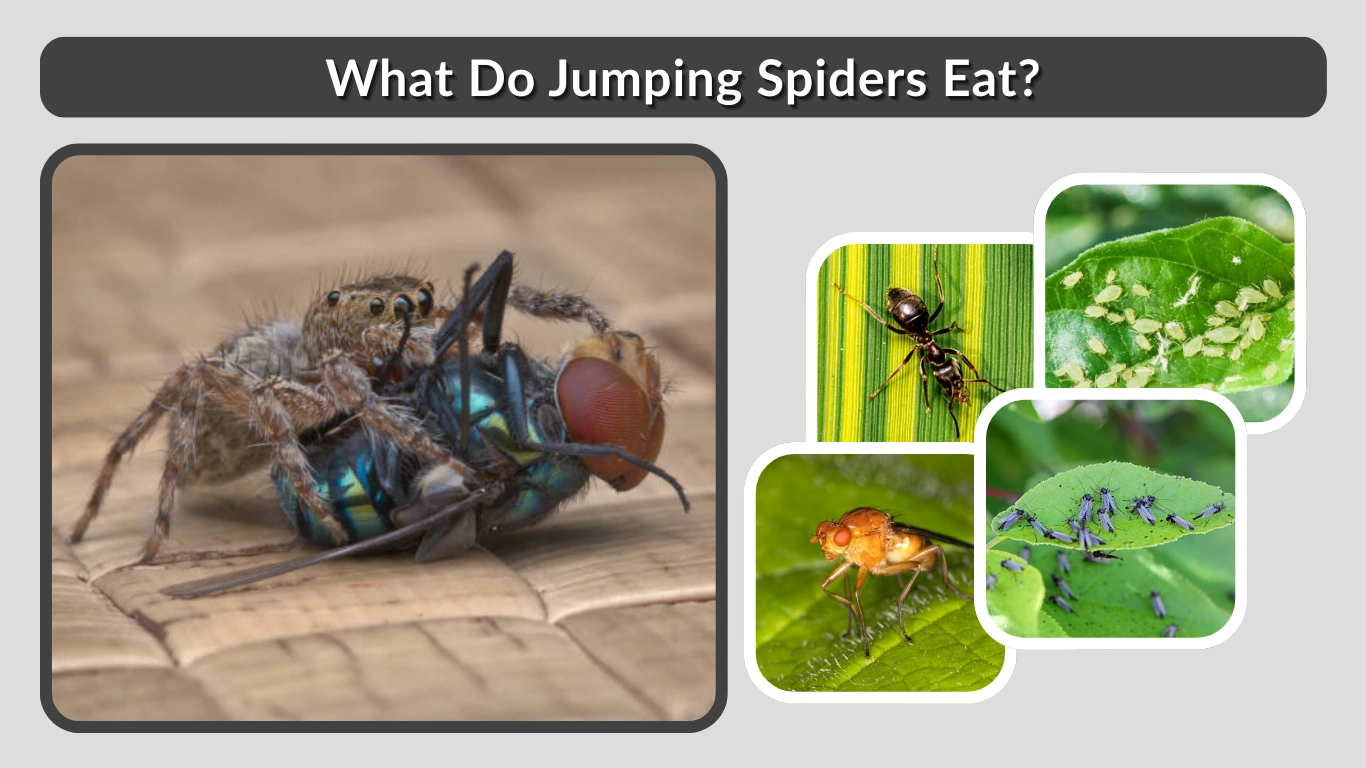
Jumping spiders are active, day-hunting predators known for their sharp eyesight and quick, precise movements. Unlike web-building spiders, they do not wait for prey to become trapped. Instead, they stalk, aim, and leap onto insects with impressive accuracy. But what exactly do jumping spiders eat, and how does their diet change depending on size, species, and environment? Understanding what jumping spiders eat helps explain their behavior, survival strategies, and important role in natural pest control.
What Do Jumping Spiders Eat?
Jumping spiders are carnivorous and feed almost entirely on live prey. Their diet consists mainly of small insects and other arthropods that they can overpower and consume safely. Rather than scavenging, jumping spiders rely on movement to trigger hunting behavior. Prey that does not move is usually ignored.
The exact diet of a jumping spider depends on its species, size, and habitat. Tiny species focus on very small insects, while larger jumping spiders can subdue bigger and more active prey. In forests and gardens, they often hunt flies, mosquitoes, and plant-dwelling insects. Around homes, they may capture moths, gnats, and insects attracted to light.
Jumping spiders use venom to immobilize prey and digestive enzymes to liquefy internal tissues. They then suck up the nutrients, leaving behind the empty exoskeleton. Because of this feeding method, they require prey that is soft enough to penetrate but substantial enough to provide energy for jumping, molting, and reproduction.
How Jumping Spiders Catch Their Food

Vision-Based Hunting
Jumping spiders have some of the best eyesight among all arthropods. Their large front eyes allow them to see detail, judge distance, and track movement. When a jumping spider spots potential prey, it turns to face it directly, slowly approaching while constantly adjusting its position.
This visual hunting style is different from most spiders, which rely heavily on vibration and web signals. Jumping spiders actively choose their targets, often abandoning one insect for another that appears easier or more nutritious.
Jumping and Attack Techniques
Once within range, the spider anchors a thin silk safety line to the surface behind it. This silk acts as a lifeline, preventing dangerous falls. The spider then crouches, aims, and launches itself forward in a rapid jump.
The leap is powered by sudden changes in blood pressure rather than muscle strength alone, allowing surprisingly long and accurate jumps. After landing on the prey, the spider grips it firmly with its front legs and delivers a venomous bite. The venom quickly subdues the insect, reducing the risk of injury.
Venom and External Digestion
Jumping spiders do not chew their food. Instead, they inject venom and digestive enzymes that break down the prey’s internal tissues into a liquid. This process, called external digestion, allows the spider to drink the nutrients. Hard parts such as wings and exoskeletons are discarded once feeding is complete.
Common Foods in a Jumping Spider’s Diet

In the wild, jumping spiders consume a wide variety of small, live insects and arthropods. Their flexible diet is one reason they are so successful across different ecosystems.
- Flies and fruit flies
- Mosquitoes and gnats
- Moths and small butterflies
- Ants and small beetles
- Aphids and plant-feeding pests
- Small crickets and young roaches
- Other spiders
Because they hunt visually, jumping spiders often prefer active prey that moves across open surfaces such as leaves, bark, walls, and windows.
Do Jumping Spiders Eat Other Spiders?
Yes, many jumping spider species will eat other spiders if given the opportunity. This behavior is known as intraguild predation, meaning predators feeding on other predators. Smaller web-building spiders, juvenile spiders, and wandering species are all potential targets.
However, jumping spiders usually avoid prey that is much larger than themselves. Larger spiders can be dangerous, capable of injuring or killing them. When they do hunt other spiders, jumping spiders often approach cautiously, attacking from behind to avoid being bitten or entangled in silk.
Eating other spiders can provide high nutritional value, but it is typically opportunistic rather than a primary food source.
Diet Differences Among Jumping Spider Species

Small Jumping Spider Species
Very small jumping spiders focus on tiny prey such as mites, springtails, aphids, and miniature flies. Their limited size restricts the prey they can overpower, so they often hunt in leaf litter, on flowers, and among fine plant surfaces.
Large Jumping Spider Species
Larger jumping spiders, such as species in the genus Phidippus, are capable of hunting bigger insects. They may capture houseflies, moths, young crickets, small roaches, and even other spiders. Their stronger bodies and longer legs allow them to tackle more active prey.
Specialized Feeding Behavior
Some jumping spider species show unique feeding strategies beyond typical insect hunting. Certain species specialize in hunting ants, carefully approaching from behind to avoid bites and chemical defenses. Others are known to raid spider egg sacs or feed on very young spiders. A few tropical jumping spiders have even been observed sipping nectar from flowers, although this is considered a supplement rather than a main food source. These specialized habits help different species reduce competition and survive in crowded ecosystems.
What Do Jumping Spiders Eat in Captivity?
Jumping spiders kept as pets should be fed a diet that closely mimics what they would eat in the wild. Live prey is essential because jumping spiders rely on movement to trigger feeding behavior. The size of the food should never be larger than the spider’s body to prevent injury.
- Fruit flies for spiderlings and very small species
- Pinhead crickets for juveniles
- Small roaches for larger spiders
- Houseflies as a natural, nutritious food
- Mealworms offered in small pieces
- Waxworms given occasionally as treats
Providing a variety of prey helps ensure balanced nutrition and supports proper growth and molting.
How Often Do Jumping Spiders Eat?

Feeding frequency depends on age, species, temperature, and activity level. Spiderlings usually need food every day or every other day because they grow quickly and molt often. Juveniles may eat two to three times per week. Adult jumping spiders typically eat once or twice a week, though active individuals may feed more often.
A well-fed jumping spider will have a rounded but not swollen abdomen. A very thin, wrinkled abdomen usually indicates hunger or dehydration. Overfeeding can lead to lethargy, poor molting, and shortened lifespan, especially in captivity.
Do Jumping Spiders Drink Water?
Water Sources in the Wild
In nature, jumping spiders get most of their moisture from their prey. They also drink tiny droplets of dew, rainwater, and nectar. Early morning moisture on leaves and surfaces is especially important for hydration.
Water in Captivity
Pet jumping spiders should always have access to moisture. Light misting of the enclosure allows them to drink droplets from surfaces. A small damp cotton pad or fine spray on one side of the habitat helps maintain safe humidity without flooding the space.
Why Diet Is Important for Jumping Spiders
What a jumping spider eats directly affects its health, behavior, and lifespan. A poor or limited diet can cause failed molts, weakness, and shortened life expectancy.
- Supports healthy growth and successful molting
- Provides energy for hunting and jumping
- Influences reproductive success
- Strengthens immune response
- Helps maintain normal lifespan
A balanced diet with appropriately sized prey is one of the most important factors in jumping spider survival.
Can Jumping Spiders Starve or Overeat?
Jumping spiders can survive for short periods without food, often one to two weeks depending on species and temperature. However, long-term starvation weakens the spider, disrupts molting, and can lead to death. Dehydration is often more dangerous than hunger.
Overeating is also a concern, especially in captivity. Consistently oversized meals can stress internal organs and interfere with molting. Proper portion control and feeding schedules are essential.
Role of Jumping Spiders in Controlling Insects
Jumping spiders play a valuable role in ecosystems and human environments. By feeding on flies, mosquitoes, aphids, and agricultural pests, they naturally reduce insect populations. In gardens, they help limit harmful insects without chemicals. Indoors, they quietly hunt nuisance bugs, making them beneficial co-inhabitants rather than pests.
FAQs
What is a jumping spider’s favorite food?
Most jumping spiders prefer small, active insects such as flies, mosquitoes, and gnats. These insects are easy to detect visually and are usually safe to capture. Larger species may favor houseflies and moths, while smaller species focus on fruit flies and aphids.
Do jumping spiders eat ants?
Yes, some jumping spider species eat ants, but not all. Ants can be dangerous due to their bites and chemical defenses, so spiders that hunt them often use specialized techniques. For most jumping spiders, ants are occasional prey rather than a primary food source.
Can jumping spiders eat dead insects?
Generally, no. Jumping spiders rely on movement to recognize food. Dead insects usually do not trigger a feeding response. In captivity, most jumping spiders ignore motionless prey unless it is freshly killed and manipulated, which is uncommon.
How long can jumping spiders live without food?
Many jumping spiders can survive one to two weeks without food, depending on species, age, and temperature. However, lack of food weakens them quickly. Regular feeding and access to moisture are essential, especially during growth and molting periods.
What should pet jumping spiders be fed?
Pet jumping spiders should be fed live insects such as fruit flies, houseflies, pinhead crickets, and small roaches. Prey should be smaller than the spider’s body. Variety is important to provide balanced nutrition and support healthy development.
