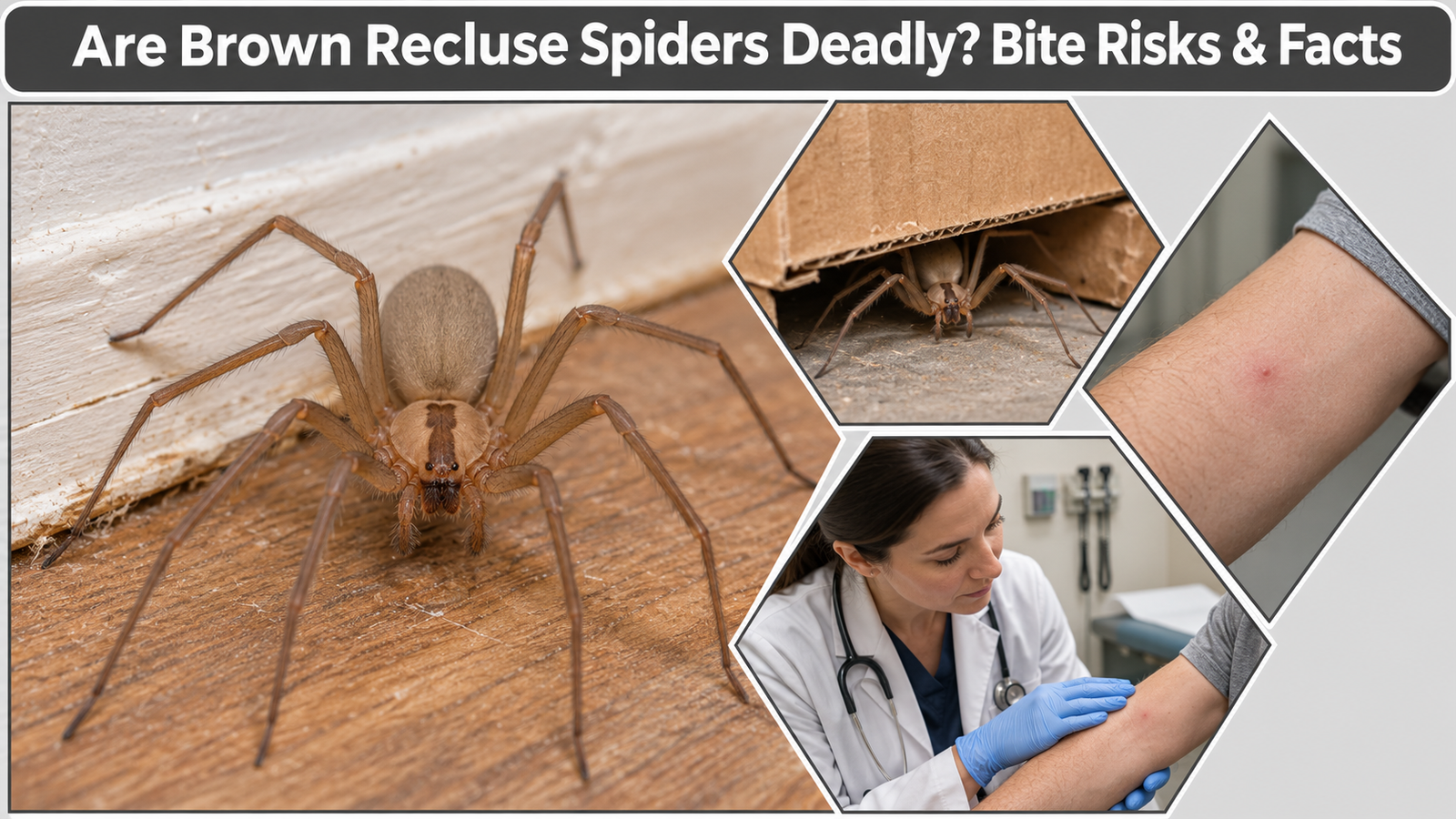
Brown recluse spiders are among the most feared spiders in North America because their venom can cause painful wounds and serious health complications. But are brown recluse spiders deadly? Although their bites can occasionally become life-threatening, deaths are extremely rare. Most people recover without severe complications, especially when they receive appropriate medical care. However, children and individuals who develop serious reactions may face greater risks. This guide explains how deadly brown recluse spiders are, their effects on humans and pets, warning signs, and what to do after a suspected bite.
Are Brown Recluse Spiders Deadly to Humans?
Yes, brown recluse spiders can be deadly to humans, but fatal bites are extremely rare. Their venom can damage skin tissue and, in uncommon cases, cause dangerous complications involving the blood and internal organs.
Most brown recluse bites produce only localized symptoms, such as redness, swelling, or discomfort. The spider is not naturally aggressive and generally bites only when trapped against someone’s skin.
How Deadly Are Brown Recluse Spiders?
Brown recluse spiders (Loxosceles reclusa) possess venom containing tissue-damaging enzymes. These substances can destroy skin cells and sometimes affect blood vessels.
However, a bite does not automatically cause severe poisoning. Many people experience relatively mild symptoms and recover within a few weeks.
Serious complications occur when the venom triggers extensive tissue damage or a systemic reaction. Although fatalities have been reported, they represent exceptionally uncommon outcomes.
There is no reliable percentage that predicts the risk of death from an individual bite because confirmed bites are relatively uncommon and many suspected cases involve misidentified spiders.
Can a Brown Recluse Spider Bite Kill You?
A brown recluse bite can occasionally cause death through severe systemic complications rather than through the skin wound alone.
Potentially life-threatening complications include:
- Hemolytic anemia: Destruction of red blood cells, reducing the blood’s ability to carry oxygen.
- Acute kidney injury: Damage to the kidneys that may interfere with their normal function.
- Disseminated intravascular coagulation: A serious disorder involving abnormal blood clotting and bleeding.
- Severe systemic reactions: Widespread illness affecting multiple organs.
- Serious infections: Secondary infections that may complicate an existing wound.
These complications are rare but require immediate medical attention.
Who Is Most at Risk From a Brown Recluse Bite?
Some individuals may be more vulnerable to serious complications than others.
Young children can be particularly susceptible because of their smaller body size. Older adults and people with existing health conditions may also have greater difficulty recovering from severe illness.
However, serious reactions can occur in otherwise healthy adults. Anyone experiencing worsening symptoms after a suspected bite should receive medical evaluation.
What Happens When a Deadly Brown Recluse Bites You?
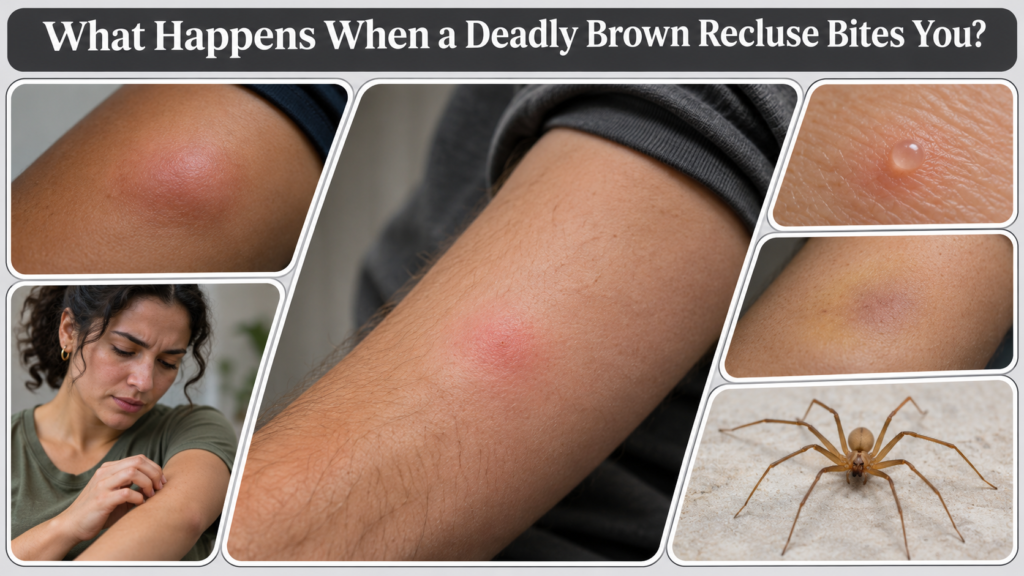
Brown recluse bites do not always produce immediate symptoms. Some people barely notice the initial bite, while others experience mild stinging or discomfort.
Symptoms may worsen over several hours or days. In most cases, the effects remain localized, but occasionally the venom causes more extensive problems.
Early Symptoms of a Brown Recluse Spider Bite
Common early symptoms include:
- Mild redness around the bite
- Itching or burning sensations
- Localized swelling
- Tenderness or increasing pain
- A small blister
- Changes in skin coloration
Some people develop a pale center surrounded by redness or a bluish discoloration.
These symptoms are not unique to brown recluse bites. Other insect bites, bacterial infections, and skin conditions can produce similar reactions.
Signs of a Severe Brown Recluse Spider Bite
A more serious reaction may develop when the venom damages surrounding tissue or affects the body beyond the bite location.
Warning signs include:
- Severe or worsening pain
- Expanding skin discoloration
- A darkening or ulcerated wound
- Fever and chills
- Nausea or repeated vomiting
- Unusual weakness or dizziness
- Dark urine or reduced urination
- Yellowing of the skin or eyes
Dark urine, marked weakness, or yellowing of the skin may indicate destruction of red blood cells and require emergency medical evaluation.
How Long Does It Take for Symptoms to Become Dangerous?
Symptoms may begin within several hours, but serious complications can develop later.
During the first 24 hours, a bite may produce redness, discomfort, or blistering. Over the following days, some wounds develop darker tissue or ulceration.
Rare systemic complications, including hemolysis, may appear several days after the bite.
Because severe symptoms can be delayed, a person should not assume that a bite is harmless simply because it initially looks minor.
Are Brown Recluse Spiders Deadly to Cats?
Brown recluse spiders can cause serious illness in cats, although fatal outcomes appear to be very rare.
Cats may encounter these spiders while exploring basements, garages, storage areas, or other undisturbed spaces. Their curiosity and hunting behavior can occasionally bring them into contact with hidden spiders.
Symptoms of Brown Recluse Bites in Cats
Possible symptoms include:
- Redness or swelling around the bite
- Pain or sensitivity when touched
- Excessive licking of an affected area
- Skin discoloration or open sores
- Reduced appetite
- Lethargy or unusual weakness
- Vomiting or fever
Severe systemic reactions are uncommon but may involve blood disorders or organ damage.
Because fur can hide early skin changes, identifying a bite may be difficult.
Can a Brown Recluse Bite Kill a Cat?
A brown recluse bite could potentially become life-threatening if a cat develops severe systemic complications. However, documented fatal outcomes are extremely uncommon.
The greatest concern is serious tissue injury or widespread illness.
If you suspect your cat has been bitten, contact a veterinarian promptly. Avoid administering human pain medications, as some are highly toxic to cats.
Are Brown Recluse Spiders Deadly to Dogs?
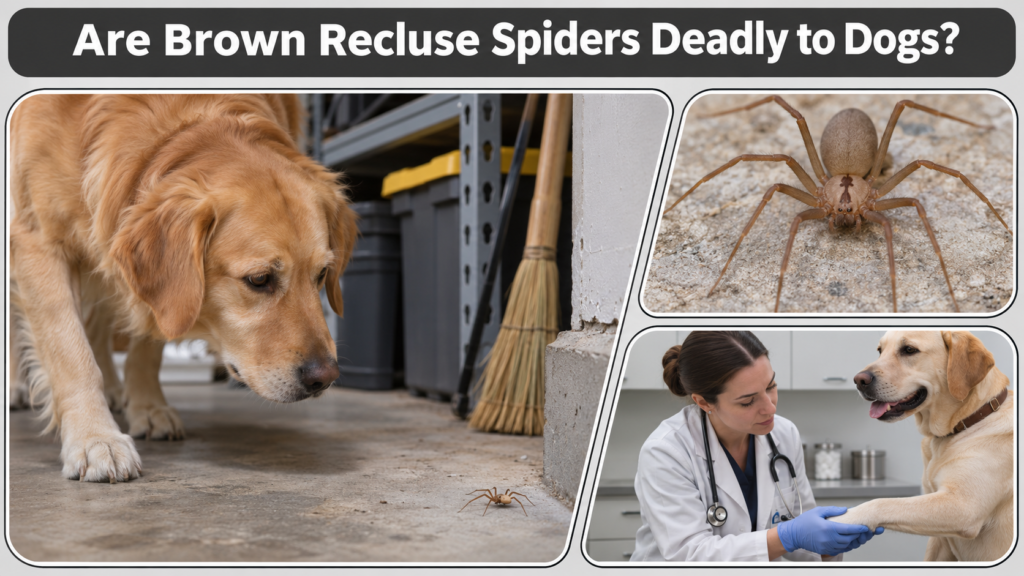
Brown recluse spiders can also harm dogs, although most suspected bites do not lead to fatal complications.
Dogs may encounter spiders when investigating sheds, woodpiles, garages, or stored household materials. A bite usually occurs when the spider becomes trapped against the dog’s body.
Symptoms of Brown Recluse Bites in Dogs
Possible symptoms include:
- Redness and swelling
- Painful or irritated skin
- Blistering or skin wounds
- Excessive licking or scratching
- Lethargy and reduced appetite
- Fever or vomiting
- Weakness in severe cases
Some dogs develop slowly healing wounds because the venom damages tissue surrounding the bite.
Can a Brown Recluse Bite Kill a Dog?
Although uncommon, severe brown recluse envenomation can potentially be fatal to dogs.
Life-threatening cases may involve destruction of red blood cells, abnormal clotting, or kidney damage.
However, most affected dogs experience localized symptoms rather than widespread illness.
Immediate veterinary attention is important if a dog develops a suspicious wound, vomiting, weakness, or other unusual symptoms after encountering a spider.
What Should You Do After a Brown Recluse Spider Bite?
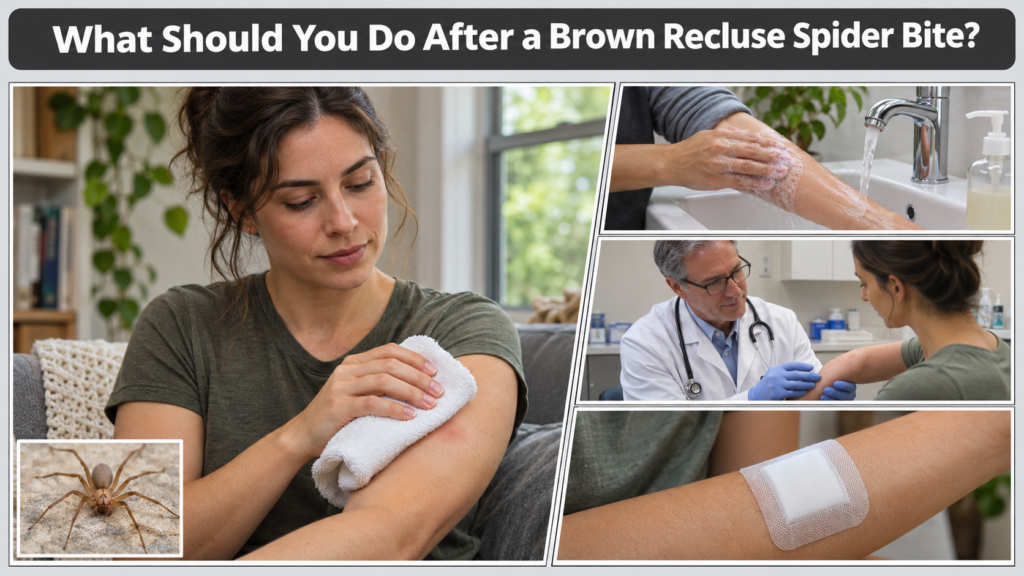
A suspected brown recluse bite deserves medical attention because the severity cannot always be predicted from its initial appearance.
Appropriate first aid can reduce discomfort while a healthcare professional evaluates the injury. Avoid attempting to remove venom or treating the wound with unproven remedies.
First Aid for Brown Recluse Spider Bites
Follow these steps:
- Wash the bite: Gently clean the affected area using soap and water.
- Apply a cold compress: Use a wrapped cold pack to reduce swelling and discomfort.
- Elevate the area: Keep the bitten limb raised when practical.
- Protect the wound: Cover broken skin with a clean, nonstick dressing.
- Avoid scratching: Do not squeeze, cut, or attempt to drain the bite.
- Get medical advice: Contact a healthcare professional or poison control service promptly.
If the spider can be photographed safely, the image may help with identification.
When Should You Seek Emergency Treatment?
Seek emergency medical care if you experience difficulty breathing, fainting, severe weakness, dark urine, repeated vomiting, or rapidly worsening symptoms.
A spreading or darkening wound also requires prompt evaluation.
Doctors may provide wound care, pain relief, tetanus protection, and additional treatment depending on the symptoms. Hospitalization may be necessary for severe systemic complications.
How to Prevent Dangerous Brown Recluse Spider Bites
Brown recluse spiders prefer quiet, dry, undisturbed locations. They are primarily found in the south-central and Midwestern United States.
Preventing accidental encounters is the most effective way to reduce the risk of bites.
Where Do Brown Recluse Spiders Hide?
Common hiding places include:
- Closets and storage rooms
- Basements and attics
- Garages and sheds
- Cardboard boxes
- Woodpiles
- Behind furniture
- Stored shoes and clothing
- Undisturbed household clutter
These spiders usually remain hidden during daylight and become more active at night.
How to Keep Brown Recluse Spiders Away
Several practical precautions can help minimize encounters:
- Shake out shoes and clothing before wearing them.
- Wear gloves when handling stored materials.
- Keep rooms organized and reduce clutter.
- Seal gaps around windows and doors.
- Avoid leaving clothing on the floor.
- Move beds away from walls and remove clutter underneath.
- Use sticky traps to monitor spider activity.
If numerous brown recluse spiders are present, consider contacting a qualified pest control professional.
FAQs
1. Are Brown Recluse Spiders Always Deadly?
No, brown recluse spiders are not always deadly. Most bites cause mild or localized symptoms and heal without life-threatening complications. However, their venom can occasionally produce serious tissue damage or systemic illness. Medical evaluation is recommended whenever a brown recluse bite is suspected.
2. How Many People Die From Brown Recluse Spider Bites?
Deaths from brown recluse bites are extremely rare, and there is no dependable annual total for confirmed fatalities. Some deaths have been documented in medical reports, but suspected bites are frequently misdiagnosed. The overwhelming majority of affected people survive.
3. Can a Healthy Adult Die From a Brown Recluse Bite?
Yes, although it is exceptionally uncommon. Healthy adults can occasionally develop severe complications, including hemolysis and organ damage. Fatal cases have been reported in adults. Prompt medical evaluation and treatment are important when serious symptoms develop.
4. Are Brown Recluse Spiders More Deadly Than Black Widows?
Both spiders can cause serious illness, but their venom works differently. Brown recluse venom primarily damages tissue, while black widow venom affects the nervous system and can cause severe muscle spasms. Neither spider commonly causes death, and both deserve medical attention.
5. Can You Survive a Brown Recluse Bite Without Medical Treatment?
Many brown recluse bites heal without serious complications, but the outcome cannot be predicted reliably. Some develop severe wounds or delayed systemic symptoms. Anyone who suspects a brown recluse bite should seek medical advice rather than assume treatment is unnecessary.
