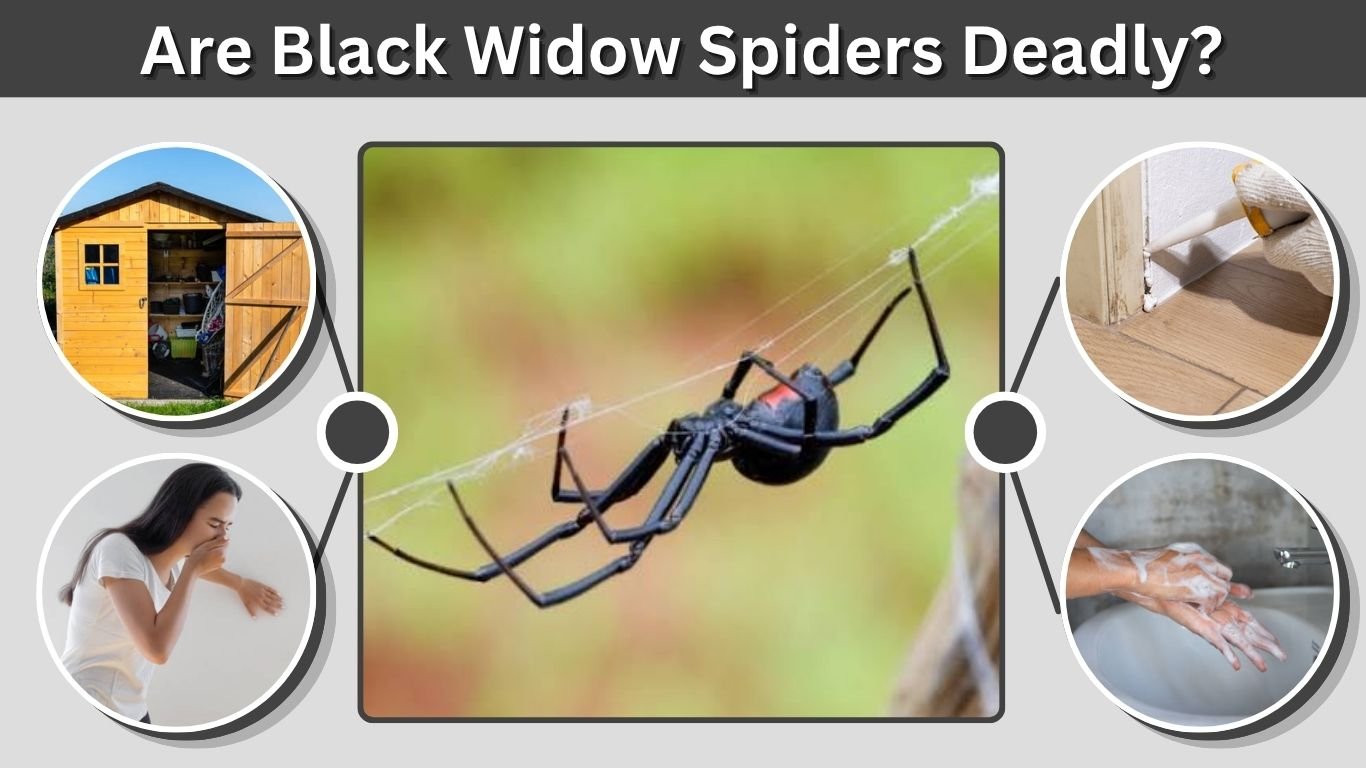
Black widow spiders are among the most feared venomous spiders because of their distinctive appearance and potentially serious bites. Their shiny black bodies, red hourglass markings, and powerful venom have contributed to their dangerous reputation. But are black widow spiders deadly to humans, or is their danger often exaggerated? Although their bites can cause severe pain and muscle cramps, fatalities are extremely rare. Understanding their venom, bite symptoms, medical risks, and natural behavior can help people respond appropriately. This guide explains how dangerous black widows are and how to avoid bites.
Are Black Widow Spiders Deadly to Humans?
Black widow spiders can cause serious envenomation, but their bites are rarely fatal to humans. Most people recover completely with appropriate medical care. Although their venom is powerful, the severity of a bite depends on the amount injected, the individual’s health, and how quickly symptoms receive treatment.
How Often Are Black Widow Bites Fatal?
Deaths from black widow spider bites are extremely uncommon. A review of more than 15,000 reported black widow exposures at American poison centers found no deaths.
However, some bites cause intense pain, muscle spasms, and other symptoms that require hospital treatment. Their low fatality rate does not mean their bites should be ignored.
Who Is Most at Risk?
Young children, older adults, and people with significant underlying medical conditions may experience more serious complications.
Children can be particularly vulnerable because of their smaller body size. Anyone with a suspected black widow bite should seek prompt medical advice, even when initial symptoms appear mild.
Why Are Black Widow Spiders So Dangerous?
Black widow spiders belong to the genus Latrodectus, a group recognized for its medically significant venom. Their venom contains neurotoxins that interfere with nerve signaling and can trigger painful muscle contractions throughout the body.
How Black Widow Venom Affects the Body
The primary neurotoxin, alpha-latrotoxin, causes excessive release of chemical messengers from nerve endings.
This disruption can produce severe muscle cramps, sweating, abdominal pain, and changes in blood pressure.
Unlike brown recluse venom, which may cause significant skin tissue damage, black widow venom primarily affects the nervous system.
Are All Black Widow Spiders Deadly?
Different black widow species possess medically significant venom, but not every bite produces severe poisoning.
Adult female black widows present the greatest concern because they can deliver meaningful amounts of venom. Males are considerably smaller and generally pose minimal medical risk.
Black widows may also deliver defensive bites without injecting substantial venom.
Symptoms of a Black Widow Spider Bite
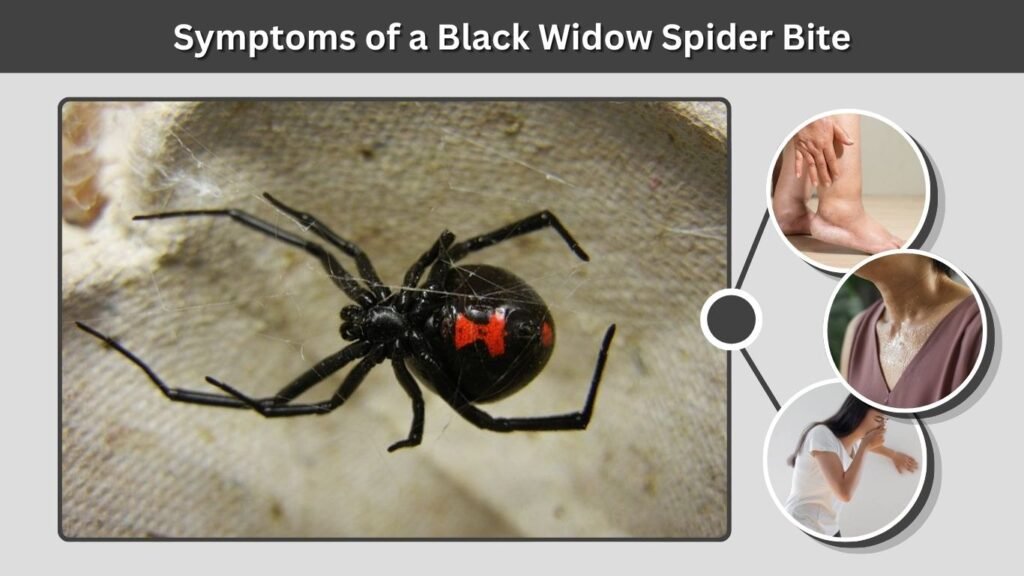
Black widow spider bites can produce symptoms within minutes or several hours. Some people initially notice a sharp pinprick sensation, while others experience little immediate discomfort.
As venom affects the nervous system, pain may spread beyond the original bite location.
Common Black Widow Bite Symptoms
Recognizable symptoms include:
- Localized pain: Burning or stinging around the bite.
- Redness and swelling: Mild irritation near the puncture marks.
- Muscle cramps: Painful contractions affecting nearby muscles.
- Abdominal pain: Tightness resembling severe stomach cramps.
- Excessive sweating: Sometimes occurring around the bite.
- Nausea and vomiting: Possible reactions to significant envenomation.
- Headache and weakness: General discomfort accompanying systemic symptoms.
Signs of Severe Envenomation
Severe cases can involve intense muscle spasms, high blood pressure, chest discomfort, and breathing difficulties.
These symptoms require urgent medical evaluation. Although most patients recover, severe untreated envenomation can occasionally cause dangerous complications.
What to Do if a Black Widow Spider Bites You
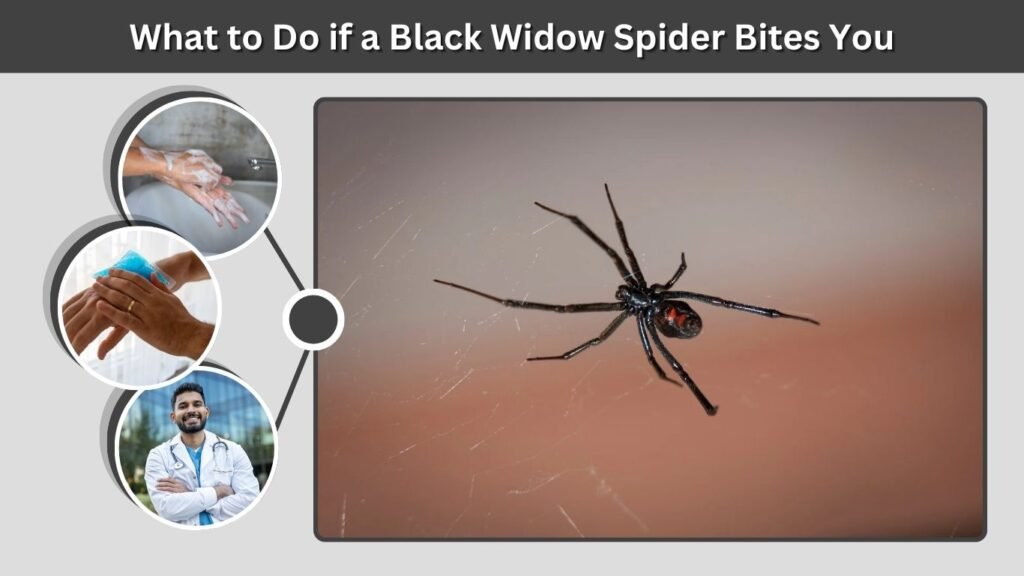
A suspected black widow bite requires prompt medical guidance because symptoms may worsen after the initial injury.
Basic first aid can reduce discomfort while professional medical advice is obtained.
Immediate First Aid Steps
- Move away from the spider: Prevent additional bites without attempting to handle it.
- Wash the bite: Clean the affected area gently with soap and water.
- Apply a cold compress: Use an ice pack wrapped in cloth to reduce discomfort.
- Remain calm: Avoid unnecessary physical activity while arranging care.
- Contact medical professionals: Seek prompt medical assessment or contact a poison control center.
- Avoid harmful remedies: Never cut the wound, attempt to suck out venom, or apply a tourniquet.
When Is Emergency Treatment Necessary?
Seek emergency care immediately for severe pain, muscle cramps, vomiting, breathing difficulties, chest pain, or significant weakness.
Children with suspected black widow bites should receive emergency medical evaluation.
How Do Doctors Treat Black Widow Bites?
Medical treatment focuses on controlling pain, managing muscle spasms, and monitoring complications.
Doctors may prescribe pain medication or muscle relaxants. In selected severe cases, antivenom may be considered, although it carries potential risks and is not routinely necessary.
How to Identify a Black Widow Spider
Black widow spiders are known for their rounded abdomens and distinctive red markings. However, their appearance varies by species, age, and sex.
Accurate identification helps distinguish medically significant black widows from similar-looking spiders.
Physical Identification Features
Common characteristics include:
- Body color: Adult females are often glossy black.
- Red marking: Many have a red or orange hourglass underneath the abdomen.
- Body shape: Rounded, bulbous abdomen with a smaller front section.
- Legs: Eight slender legs suited for navigating irregular webs.
- Body size: Mature females are generally larger than males.
- Web structure: Strong, tangled, irregular webs rather than symmetrical orb webs.
Northern vs. Southern Black Widow Spiders
Northern black widows (Latrodectus variolus) and southern black widows (Latrodectus mactans) are closely related North American species.
Northern black widows often have a divided hourglass marking, while southern black widows commonly display a more complete hourglass.
Both species possess medically significant venom, and suspected bites deserve medical attention.
Where Do Black Widow Spiders Live?
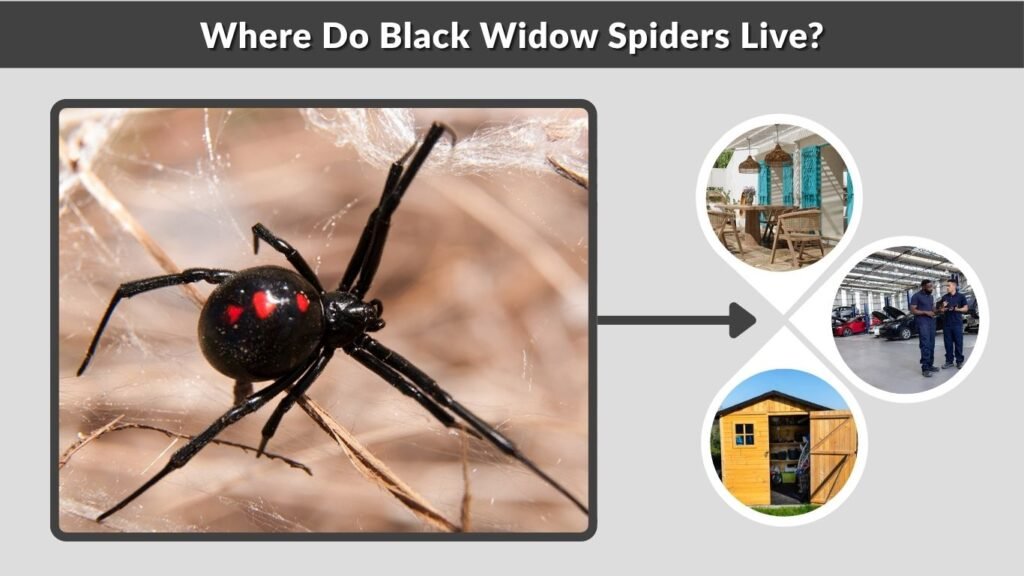
Black widow spiders inhabit various regions of North America, particularly warmer environments offering sheltered hiding places.
In the United States, different species occur across southern, eastern, central, and western regions. Northern black widows also inhabit areas farther north, including parts of Canada.
Are Black Widow Spiders Found in New Jersey and Canada?
Yes, northern black widow spiders occur in New Jersey and parts of southern Canada, including Ontario.
However, sightings are less frequent in colder northern environments than in many warmer southern regions.
Black widows typically hide beneath rocks, inside woodpiles, under outdoor furniture, and around garages, sheds, or other undisturbed structures.
Are Black Widow Spiders Deadly to Dogs?
Black widow spider bites can be dangerous to dogs, although outcomes vary depending on the animal’s size, health, and amount of venom injected.
Affected dogs may develop painful muscle cramps, trembling, vomiting, weakness, or difficulty moving.
Severe envenomation can be life-threatening, making prompt veterinary evaluation important.
Cats are generally more sensitive to widow spider venom than dogs and may experience particularly serious complications.
Are Redback Spiders More Deadly Than Black Widows?
Redback spiders (Latrodectus hasselti) are close relatives of black widow spiders and are native to Australia.
Both contain potent neurotoxic venom capable of producing severe pain, sweating, nausea, and muscle spasms.
Although their venom composition and bite characteristics differ, comparing which species is more deadly is difficult without considering bite circumstances, treatment availability, and reported outcomes.
Deaths from either spider are rare where appropriate medical care is available.
How to Prevent Black Widow Spider Bites
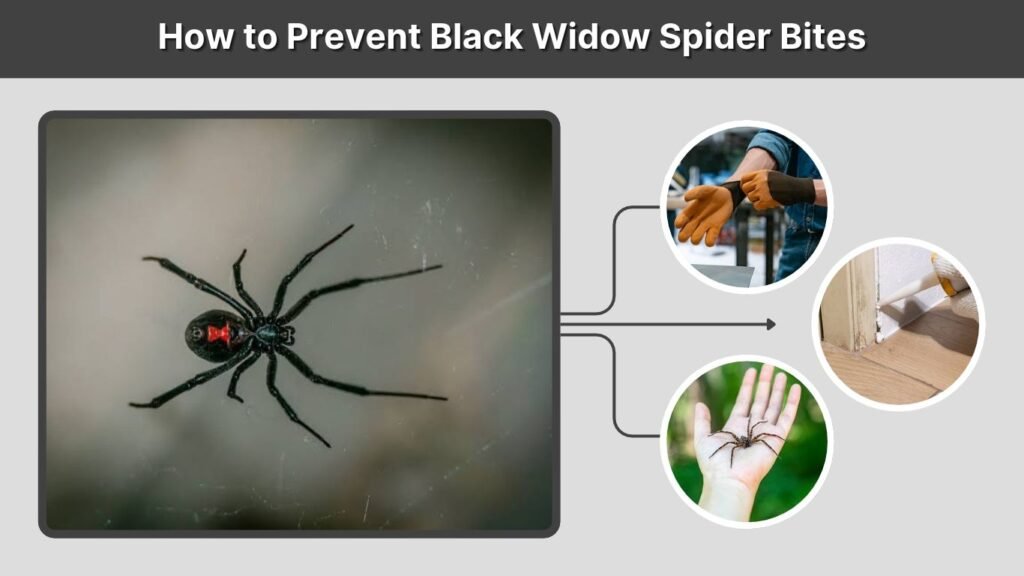
Black widow spiders generally avoid humans and bite mainly when trapped or disturbed. Reducing accidental contact is the most practical prevention strategy.
These spiders frequently occupy dark, protected spaces around residential properties.
Effective Black Widow Bite Prevention Tips
- Wear protective gloves: Use gloves while gardening or handling firewood.
- Inspect stored items: Check boxes, shoes, and outdoor equipment before use.
- Remove clutter: Keep garages, storage spaces, and sheds organized.
- Seal entry points: Close cracks and gaps around doors, windows, and foundations.
- Check outdoor furniture: Inspect hidden corners before moving equipment.
- Avoid direct handling: Never pick up an unidentified spider with bare hands.
Routine inspections and careful handling of stored materials can significantly reduce unwanted encounters.
FAQs
1. Can a Black Widow Spider Kill a Healthy Adult?
A black widow spider bite can potentially be life-threatening, but death in a healthy adult is extremely rare. Most affected adults recover with appropriate care. Severe muscle cramps, chest pain, or breathing difficulties require immediate medical assessment.
2. Are Northern Black Widow Spiders Deadly?
Northern black widow spiders possess medically significant venom capable of causing severe pain and muscle spasms. However, fatal bites are exceptionally rare. Like other widow species, they generally avoid people and bite primarily when accidentally trapped or disturbed.
3. Are Black Widow Spiders Aggressive Toward Humans?
Black widow spiders are generally shy and defensive rather than aggressive. They prefer remaining hidden in protected spaces. Most bites occur when someone unintentionally presses against a spider while gardening, moving stored materials, or reaching into sheltered areas.
4. How Long Do Black Widow Bite Symptoms Last?
Severe symptoms commonly begin improving within two to three days, although some discomfort may persist longer. Recovery depends on bite severity, individual health, and medical treatment. Persistent pain, worsening symptoms, or breathing difficulties require further medical evaluation.
5. Are Black Widow Spiders More Dangerous Than Brown Recluse Spiders?
Both spiders can cause medically significant bites, but their venoms work differently. Black widow venom primarily affects nerve signaling and muscles, while brown recluse venom can damage skin tissue. Neither species should be handled, and suspected bites require medical guidance.
