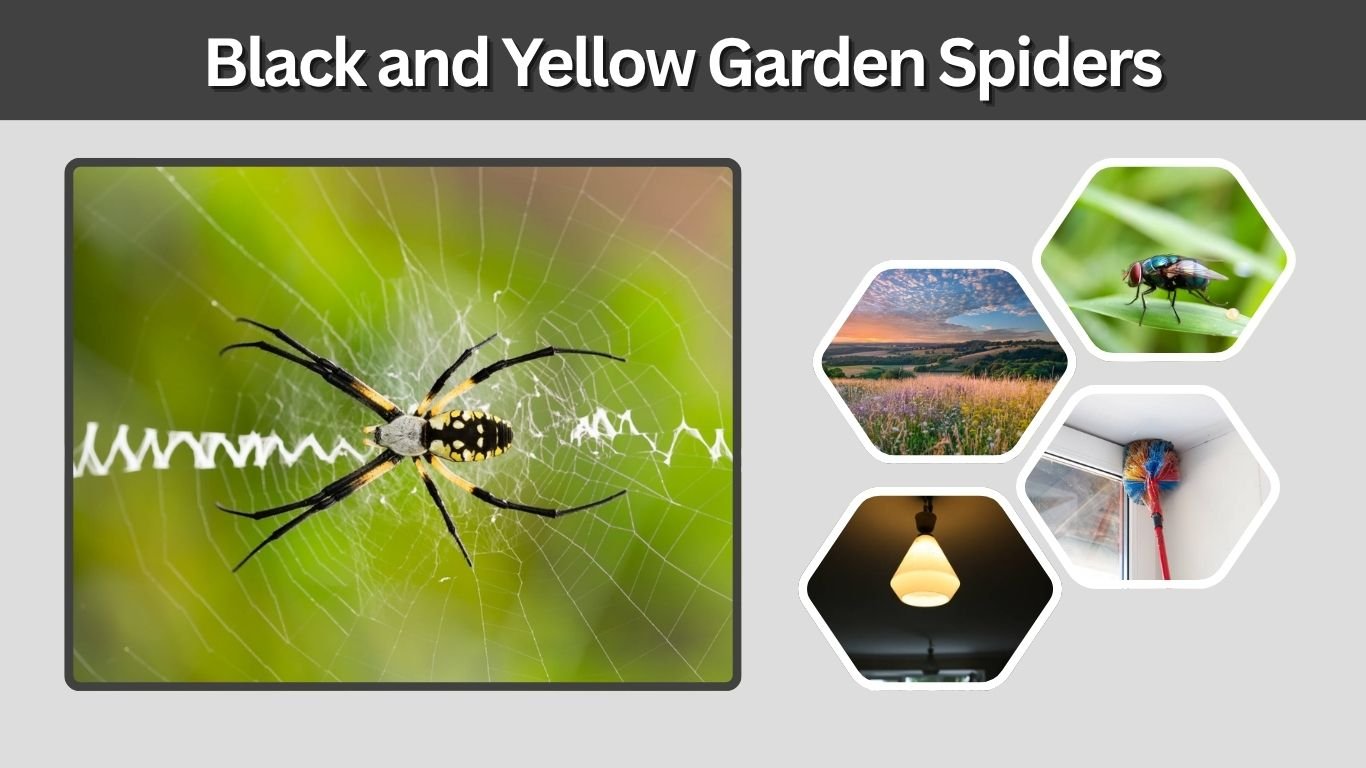
Black and yellow garden spiders are easy to recognize because of their bright markings, long legs, and large circular webs. Often called writing spiders or golden garden spiders, these striking arachnids commonly appear in backyards, flower beds, and grassy fields across North America. Their impressive size can be surprising, especially when mature females rest in the center of their webs. However, these spiders are generally peaceful and beneficial insect predators. This guide explains their identification, behavior, venom, bite risks, habitat, diet, lifespan, reproduction, and safe removal methods.
What Are Black and Yellow Garden Spiders?
Black and yellow garden spiders (Argiope aurantia) are large orb-weaving spiders belonging to the Araneidae family. They are native to North and Central America and commonly inhabit gardens, meadows, fields, and areas with dense vegetation.
These spiders are also known as golden garden spiders, writing spiders, zipper spiders, and corn spiders. Their names reflect their distinctive yellow markings and unusual zigzag web decorations.
Unlike spiders that actively chase insects, black and yellow garden spiders capture prey using sticky circular webs. They generally remain in one location until their webs become unsuitable.
How to Identify Black and Yellow Garden Spiders
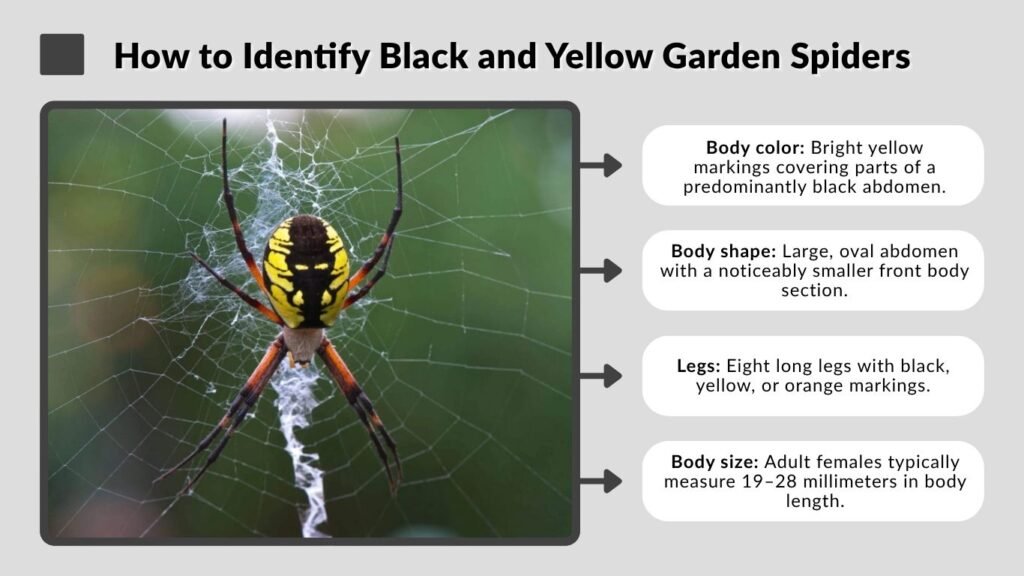
Black and yellow garden spiders have distinctive physical features that make mature females relatively easy to identify. Their striking coloration, large abdomen, and characteristic web-building behavior distinguish them from many other garden spiders.
Physical Appearance and Identification
Common identification characteristics include:
- Body color: Bright yellow markings covering parts of a predominantly black abdomen.
- Body shape: Large, oval abdomen with a noticeably smaller front body section.
- Legs: Eight long legs with black, yellow, or orange markings.
- Body size: Adult females typically measure 19–28 millimeters in body length.
- Web appearance: Large circular webs containing a distinctive zigzag silk pattern.
- Resting position: Usually hangs upside down with legs arranged in pairs.
Male vs. Female Garden Spiders
Female black and yellow garden spiders are considerably larger than males. Mature females have bright yellow and black markings, while males are smaller, slimmer, and generally less colorful.
Adult males typically measure approximately 5–9 millimeters in body length. They often remain near female webs during the mating season.
The banded garden spider (Argiope trifasciata) is a related species that can look similar but generally has more distinctly banded abdominal markings.
Are Black and Yellow Garden Spiders Poisonous?
Black and yellow garden spiders are venomous, but they are not considered dangerous to most humans. Their venom helps immobilize insects captured in their webs.
Although people frequently describe these spiders as poisonous, venomous is the more accurate term because they deliver venom through bites rather than causing poisoning when eaten or touched.
Do Black and Yellow Garden Spiders Bite?
Yes, black and yellow garden spiders can bite when threatened, trapped, or handled roughly. However, bites are uncommon because these spiders generally avoid human contact.
A bite may cause mild pain, redness, swelling, or itching around the affected area. These symptoms usually improve without serious complications.
Washing the bite with soap and water and applying a cold compress can help reduce discomfort. Severe symptoms or allergic reactions require medical attention.
Are Black and Yellow Garden Spiders Dangerous to Dogs?
Black and yellow garden spiders are not generally considered a significant venom threat to dogs. However, a bite may cause temporary irritation, discomfort, or localized swelling.
Dogs sometimes encounter these spiders while exploring gardens or bushes. If a dog develops severe swelling, vomiting, breathing difficulties, or unusual symptoms after a suspected bite, veterinary attention is necessary.
Where Do Black and Yellow Garden Spiders Live?
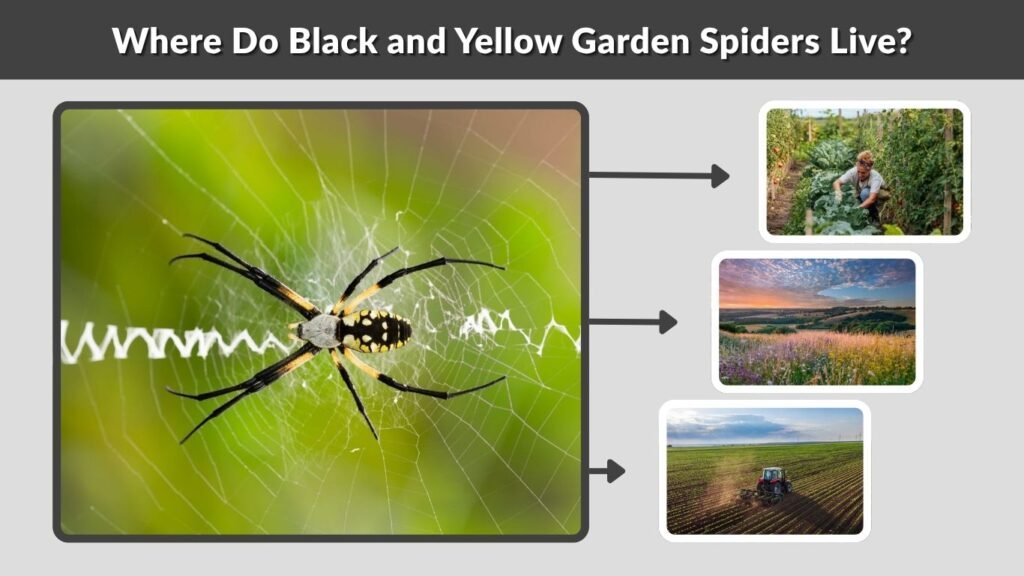
Black and yellow garden spiders occur throughout much of the United States, southern Canada, Mexico, and parts of Central America. They are particularly familiar in eastern and southern states, including Georgia, Florida, Texas, New York, Kansas, and Iowa.
These spiders also occur in portions of the western United States, although their abundance varies according to climate and habitat.
Preferred Habitat and Web Locations
Black and yellow garden spiders prefer sunny locations with abundant vegetation and flying insects. They commonly construct webs between tall grasses, flowering plants, shrubs, fences, and garden structures.
Their preferred habitats include backyard gardens, meadows, agricultural fields, forest edges, and open grasslands.
They select locations where insects frequently fly through vegetation, increasing their chances of capturing prey.
What Do Black and Yellow Garden Spiders Eat?
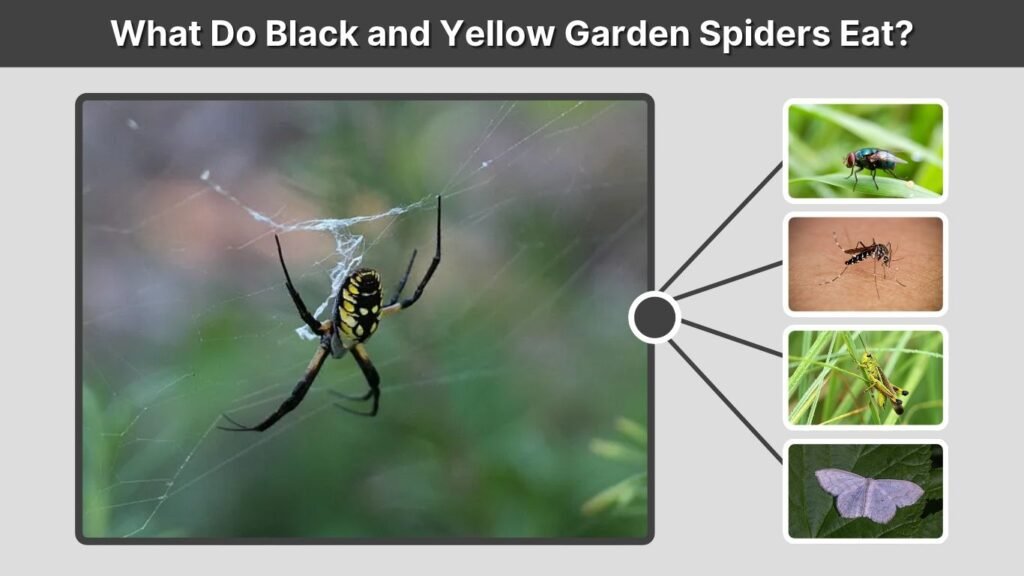
Black and yellow garden spiders are carnivorous predators that primarily consume insects caught in their webs. Their diet varies depending on the insects available in the surrounding environment.
Common Food Sources
These spiders commonly feed on:
- Flies: Frequently captured in sticky webs.
- Mosquitoes: Occasionally trapped while flying through vegetation.
- Grasshoppers: Larger insects that provide substantial nutrition.
- Moths: Common prey around gardens and outdoor vegetation.
- Bees and wasps: Sometimes captured in strong orb webs.
- Beetles: Various flying beetles that become entangled in silk.
- Cicadas: Large insects occasionally captured by mature females.
When prey becomes trapped, the spider quickly approaches and wraps it with silk. It then uses venom to immobilize the insect before consuming its liquefied tissues.
What Do Baby Garden Spiders Eat?
Baby black and yellow garden spiders, called spiderlings, consume tiny flying insects such as gnats and small flies.
As they grow, they build larger webs capable of capturing bigger prey. Young spiders must successfully hunt and molt several times before reaching adulthood.
Why Do Black and Yellow Garden Spiders Make Zigzag Webs?
Black and yellow garden spiders construct large, circular orb webs with strong radial threads and sticky spiral silk.
Their most recognizable feature is a thick white zigzag pattern called a stabilimentum. This decoration often runs vertically through the center of the web.
Scientists have proposed several explanations for its purpose, including attracting insects, making webs visible to larger animals, and protecting spiders from predators. However, its exact function remains debated.
Black and Yellow Garden Spider Behavior
These spiders often remain motionless in the center of their webs, hanging upside down while waiting for insects.
When disturbed, they may rapidly vibrate their webs, making themselves difficult to see clearly. They may also retreat into nearby vegetation.
Despite their intimidating appearance, they generally avoid aggressive encounters with larger animals.
How Long Do Black and Yellow Garden Spiders Live?
Black and yellow garden spiders usually complete their life cycle within approximately one year in temperate regions.
Young spiders emerge during spring, grow throughout summer, and reach reproductive maturity toward late summer or autumn. Adult females generally die when cold weather arrives.
Mating and Egg Laying
During the mating season, smaller males approach mature females and attempt to mate.
After mating, females produce brownish, papery egg sacs that may contain several hundred to more than a thousand eggs.
These sacs are typically attached to vegetation near the female’s web, providing protection for developing offspring.
Do Garden Spiders Die After Laying Eggs?
Female garden spiders do not necessarily die immediately after laying eggs. Some produce multiple egg sacs before their lives end.
In colder regions, adult females usually die during autumn, often around the first hard frost.
Spiderlings generally remain protected inside their egg sacs during winter before emerging the following spring.
Do Black and Yellow Garden Spiders Shed?
Yes, young black and yellow garden spiders shed their outer skeletons through a process called molting.
Because their rigid exoskeletons cannot expand continuously, they must molt repeatedly as they grow. Once they reach adulthood, they no longer molt.
How to Get Rid of Black and Yellow Garden Spiders
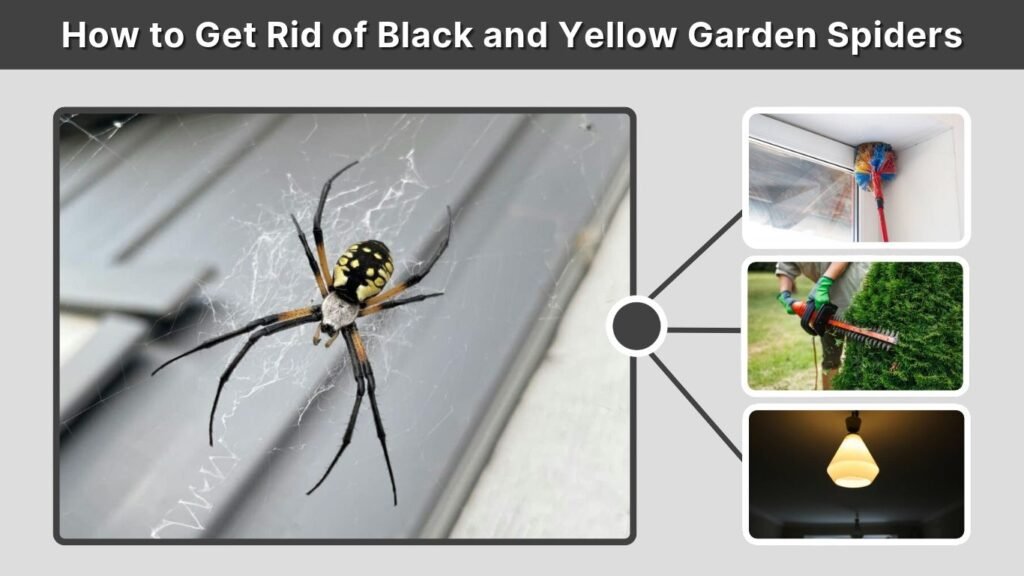
Black and yellow garden spiders rarely require pest control because they are beneficial predators that help manage insect populations. However, homeowners may prefer to move spiders that construct webs near entrances, patios, or frequently used walkways.
Safe Removal and Prevention Methods
- Relocate spiders carefully: Use a container and stiff paper to move spiders into nearby vegetation without direct handling.
- Remove unwanted webs: Gently clear webs from doors, pathways, and frequently used outdoor structures when unoccupied.
- Trim overgrown plants: Maintain vegetation around windows, entrances, and seating areas.
- Reduce unnecessary lighting: Limit nighttime lights that attract flying insects near entrances.
- Maintain garden spaces: Keep pathways open and remove excessive clutter around outdoor living areas.
- Avoid unnecessary pesticides: Chemical treatments can harm beneficial spiders and other wildlife.
Should You Leave Garden Spiders Alone?
Leaving black and yellow garden spiders undisturbed is usually the best option. They naturally capture insects and contribute to healthy garden ecosystems.
When their webs do not interfere with everyday activities, these spiders provide valuable ecological benefits without creating significant risks.
FAQs
1. Are Black and Yellow Garden Spiders Deadly?
No, black and yellow garden spiders are not considered deadly to humans. Although they possess venom, their bites rarely cause serious medical problems. They usually avoid human contact and bite only when threatened, trapped, or handled roughly.
2. How Big Do Black and Yellow Garden Spiders Get?
Adult female black and yellow garden spiders typically reach 19–28 millimeters in body length, excluding their legs. Males are much smaller, measuring approximately 5–9 millimeters. With their legs extended, mature females can appear several inches across.
3. Are Black and Yellow Garden Spiders Aggressive?
Black and yellow garden spiders are generally not aggressive toward humans. They prefer remaining in their webs and catching insects. When disturbed, they may shake their webs, retreat, or drop away rather than attack approaching people.
4. What Eats Black and Yellow Garden Spiders?
Natural predators of black and yellow garden spiders include birds, praying mantises, mud dauber wasps, and other spiders. Spiderlings are especially vulnerable to predators because of their small size, while egg sacs may also attract insects and other animals.
5. Are Black and Yellow Garden Spiders Good for Gardens?
Yes, black and yellow garden spiders are beneficial because they capture various flying insects, including some garden pests. They support natural insect population control and contribute to ecosystem balance without requiring chemical pesticides or other pest management treatments.
