
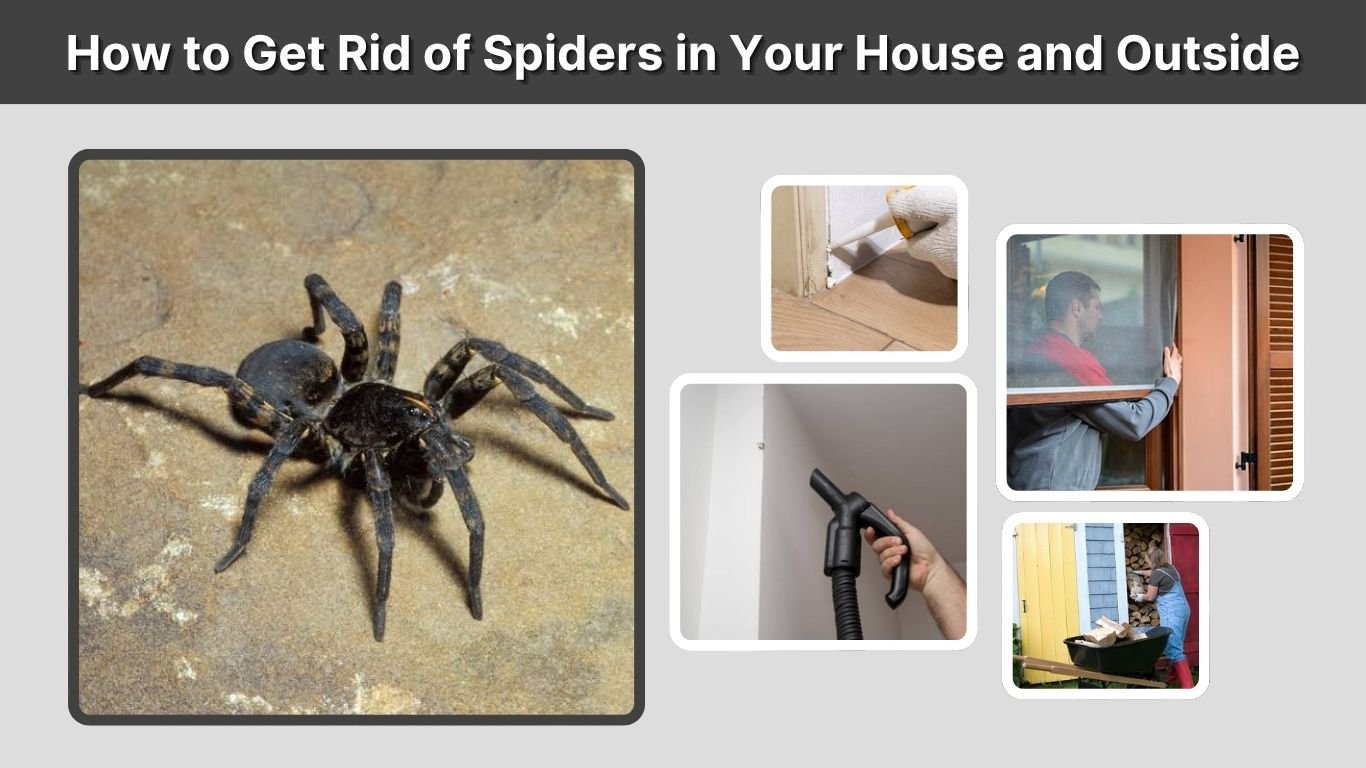
Spiders can enter homes while searching for food, shelter, moisture, or quiet places to build webs. Although most household spiders are harmless and even help control insects, large numbers of spiders, repeated webs, or potentially dangerous species can become a concern. The best way to get rid of spiders is not simply to kill the ones you see but to remove their food sources, hiding places, and entry points. This guide explains how to get rid of spiders in your house, basement, garage, bedroom, yard, and outdoor areas while helping prevent them from returning.
How to Get Rid of Spiders in the House
Getting rid of spiders indoors works best when several control methods are used together. Simply removing one spider rarely solves the underlying problem because insects, clutter, cracks, and undisturbed hiding places may continue attracting others. Start by physically removing spiders and webs, then make your home less suitable for both spiders and the insects they hunt.
Vacuum Spiders, Webs, and Egg Sacs
Vacuuming is one of the quickest ways to remove spiders from indoor spaces. Pay particular attention to corners, ceilings, window frames, closets, underneath furniture, behind storage boxes, and other quiet areas.
Remove visible webs as well as any egg sacs attached to them. Eliminating an egg sac before spiderlings emerge can prevent numerous young spiders from spreading throughout a room.
After vacuuming, empty the vacuum container outdoors or dispose of the bag according to the manufacturer’s instructions.
Reduce Indoor Clutter
Spiders prefer locations where they can remain hidden and undisturbed. Cardboard boxes, piles of clothes, papers, stored decorations, and rarely moved objects create excellent hiding areas.
Use sealed plastic storage containers where practical, particularly in basements, closets, garages, and attics. Keeping belongings elevated from floors and slightly away from walls also makes these areas easier to inspect and clean.
Eliminate the Insects Spiders Eat
A house with many spiders often has enough insects to support them. Flies, moths, mosquitoes, cockroaches, silverfish, and other small arthropods can all become spider prey.
Cleaning food spills, storing food securely, repairing screens, managing garbage, and addressing other insect problems can indirectly reduce spider populations. When prey becomes scarce, indoor spaces become much less attractive to spiders.
How to Keep Spiders From Entering Your Home
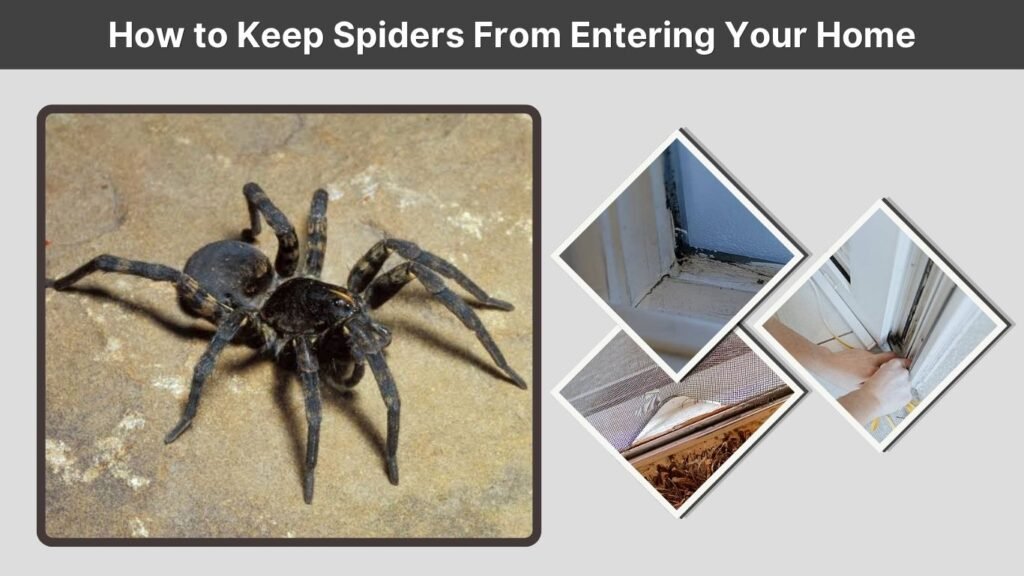
Prevention is one of the most effective long-term approaches. Spiders can enter through surprisingly small openings around doors, windows, utility lines, foundations, vents, and siding. Sealing these areas helps reduce both spiders and many other household pests.
Seal Common Entry Points
Inspect the outside of your home carefully and look for gaps or damaged materials that could allow spiders and insects to enter.
- Seal cracks around windows and door frames.
- Repair damaged window and door screens.
- Install or replace worn door sweeps.
- Seal gaps around pipes, cables, and utility lines.
- Repair cracks in the foundation.
- Check vents for damaged screens.
- Close gaps around siding and exterior trim.
Sealing entry points works especially well when combined with regular cleaning and insect control.
Check Items Before Bringing Them Indoors
Firewood, outdoor furniture, storage containers, gardening equipment, toys, and boxes can occasionally carry spiders inside.
Inspect these items before bringing them into living spaces. Firewood is best stored away from the house and brought indoors only when needed.
Reduce Moisture
Basements, bathrooms, crawl spaces, and other humid areas may attract insects and provide favorable conditions for certain spiders.
Repair plumbing leaks, improve ventilation, and use appropriate moisture-control measures where persistent dampness occurs. Reducing humidity can make these locations less attractive to many household pests.
How to Get Rid of Spider Webs
Removing spider webs is useful for both immediate cleanup and long-term monitoring. A newly appearing web can indicate that spiders are still active in a particular location.
Remove Webs Regularly
Use a vacuum, long-handled duster, or web-removal tool to clean corners, ceilings, windows, porches, exterior lights, eaves, and garage areas.
Regular web removal can discourage web-building spiders from repeatedly occupying the same convenient location. It also removes old prey remains and makes it easier to notice fresh activity.
Look for Egg Sacs
While removing webs, inspect them for round or silk-covered egg sacs. Their appearance differs between spider species, but they often look like small silk bundles attached to the web, vegetation, furniture, or sheltered surfaces.
Removing accessible egg sacs can significantly reduce the number of spiderlings appearing later.
How to Get Rid of Spiders Naturally
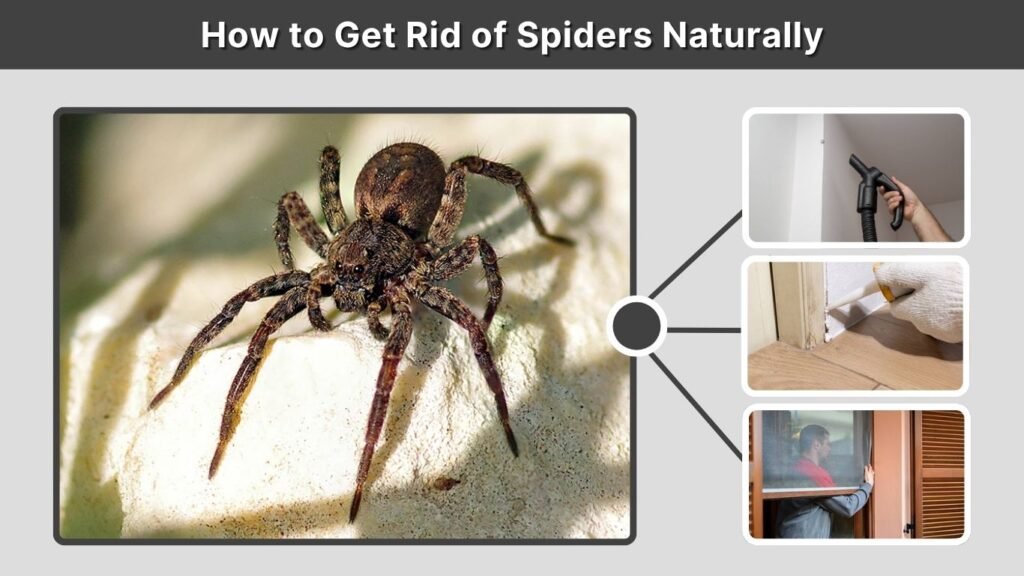
Many homeowners prefer nonchemical spider control, particularly when activity is limited. Natural control is most effective when it focuses on sanitation, exclusion, physical removal, and reducing insects rather than relying entirely on homemade repellents.
Use Nonchemical Control Methods
Some of the most useful approaches require no pesticide at all:
- Vacuum spiders and webs.
- Reduce clutter and hiding places.
- Seal cracks and gaps.
- Repair screens.
- Reduce indoor insects.
- Keep food and garbage covered.
- Control moisture.
- Move outdoor storage away from exterior walls.
These measures address the conditions that allow spider populations to persist.
Be Careful With Home Repellents
Peppermint oil and other strongly scented products are often promoted as natural spider repellents. Their effects can be inconsistent, and they should not replace proven exclusion and sanitation methods.
Essential oils may also irritate skin or affect pets when used improperly. If using any commercially prepared natural repellent, follow its label carefully and avoid assuming that fragrance alone will permanently eliminate spiders.
How to Get Rid of Spiders in the Basement
Basements provide darkness, shelter, moisture, and relatively little disturbance, making them common spider habitats. They can also contain insects that provide spiders with a steady food supply.
Make the Basement Less Attractive
Start by clearing clutter and removing old webs. Store belongings in sealed containers rather than open cardboard boxes.
Inspect foundation walls, windows, utility openings, and doors for cracks. Reducing excessive moisture is also important, particularly if insects such as silverfish or other moisture-loving pests are present.
Sticky monitoring traps can be placed along walls or in corners where spider activity is suspected. Keep traps away from children and pets and follow product directions.
How to Get Rid of Spiders in the Garage
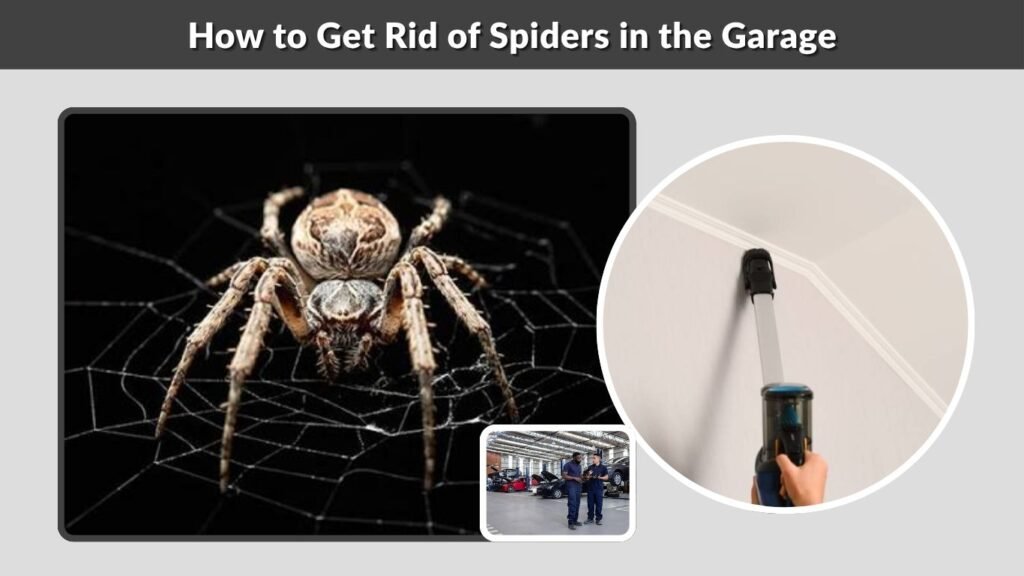
Garages frequently develop spider populations because doors remain open, insects enter easily, and stored belongings provide hiding places. Exterior lights can also attract flying insects, which then attract spiders.
Improve Garage Spider Control
Keep the garage organized and avoid leaving piles of cardboard, clothing, or unused materials on the floor. Vacuum webs from ceiling corners, shelving, windows, and around garage doors.
Check weather stripping around the garage door and seal gaps where practical. If insects gather around lights near the entrance, reducing unnecessary nighttime lighting or using less insect-attractive exterior lighting may help decrease available prey.
How to Get Rid of Spiders in the Bedroom
Finding a spider in the bedroom can be unsettling, but one spider does not necessarily mean there is an infestation. Begin by inspecting areas where spiders can hide and determining how they may be entering.
Reduce Bedroom Hiding Places
Keep clothing off the floor, vacuum beneath the bed, and clean behind nightstands, dressers, curtains, and other furniture.
Check window screens and frames for openings. If the bed is directly against a cluttered wall, creating some space can make inspection and cleaning easier.
Repeated spider sightings may indicate insects are present nearby, so look for flies, moths, ants, or other potential prey as well.
How to Get Rid of Spiders Outside
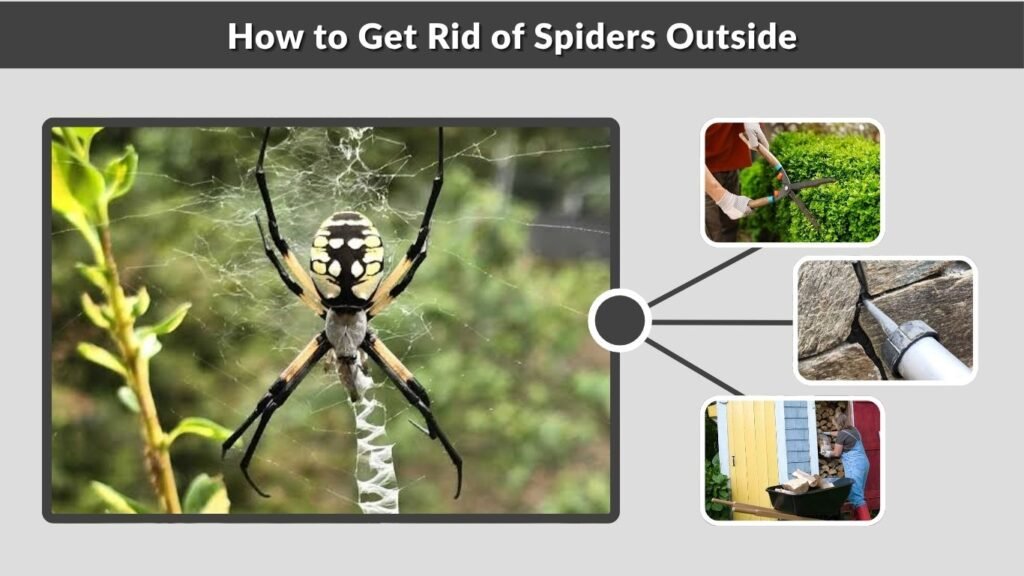
Outdoor spider control should be more selective because spiders are valuable predators in gardens and landscapes. Complete elimination is neither realistic nor usually desirable. Instead, focus on locations where spiders interfere with doors, patios, walkways, porches, or frequently used outdoor spaces.
Reduce Spider Activity Around the House
- Remove webs around doors, windows, and porch furniture.
- Trim shrubs and vegetation touching the building.
- Keep firewood and stored materials away from exterior walls.
- Clean leaves and debris from the foundation.
- Seal exterior gaps and cracks.
- Reduce insect-attracting lights near doors.
- Keep garbage containers closed.
- Correct persistent moisture around the foundation.
Vegetation does not need to be removed entirely. The goal is simply to create some separation between dense hiding areas and the structure.
Manage Outdoor Lighting
Nighttime lights attract moths, flies, mosquitoes, and other insects. Spiders often build webs nearby because these locations provide reliable hunting opportunities.
Turn unnecessary lights off when possible, reposition lights away from doors, or consider lighting designed to attract fewer insects. Reducing prey concentration can make entrances and porches less appealing to spiders.
How to Get Rid of Spiders Permanently
No method can guarantee that a property will remain completely spider-free forever. Spiders naturally live outdoors and may occasionally wander inside. However, you can dramatically reduce recurring problems by maintaining conditions that are unfavorable to them.
Focus on Long-Term Prevention
The most reliable strategy combines exclusion, sanitation, prey reduction, and regular monitoring. Continue sealing gaps as they appear, repair screens promptly, remove webs, keep storage organized, manage moisture, and reduce indoor insects.
Inspect basements, garages, attics, and exterior areas periodically rather than waiting until spider numbers become noticeable again.
When Professional Pest Control May Be Needed
Professional assistance may be appropriate when spiders repeatedly appear despite preventive measures, when large numbers are present, or when you suspect medically important species such as black widows or brown recluse spiders.
Avoid handling an unfamiliar spider with bare hands. If identification is important, a clear photograph taken from a safe distance may help a qualified pest-management professional or local extension service determine the species.
FAQs
What is the fastest way to get rid of spiders?
Vacuuming visible spiders, webs, and egg sacs provides the fastest immediate reduction. For lasting results, combine removal with sealing entry points, reducing clutter, and controlling the insects spiders feed on.
Why do I suddenly have lots of spiders in my house?
A sudden increase can occur because of seasonal activity, abundant insect prey, weather changes, open entry points, or the emergence of young spiders from an egg sac. Inspecting the surrounding area can often reveal the likely cause.
Does removing spider webs get rid of spiders?
Removing webs helps, especially with web-building species, but it may not eliminate the spider problem by itself. Spiders can rebuild if food, shelter, and suitable web locations remain available.
How can I keep spiders away naturally?
Regular vacuuming, decluttering, sealing cracks, repairing screens, reducing insects, controlling moisture, and keeping vegetation away from exterior walls are among the most practical nonchemical methods.
Should I kill spiders outside my house?
Usually not. Outdoor spiders are beneficial predators that consume many insects. Control is generally best limited to spiders and webs directly interfering with doors, walkways, patios, or other heavily used spaces.
