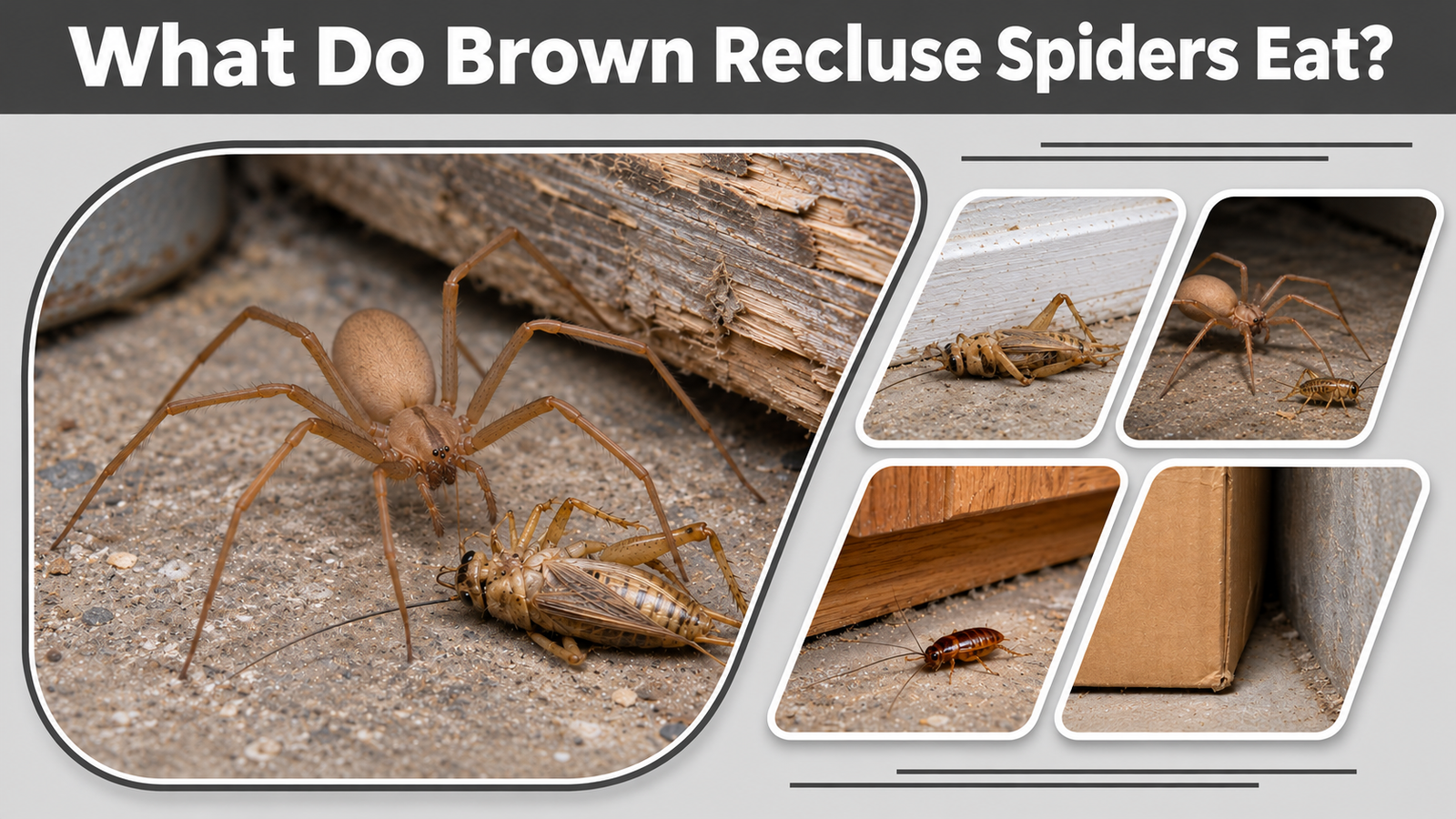
Brown recluse spiders eat small insects and other arthropods. Crickets and small cockroaches are examples of prey they may encounter around homes. They also feed on dead insects, which gives them another food source in quiet corners of garages, basements, and storage rooms. The brown recluse (Loxosceles reclusa) typically leaves its hiding place after dark to look for food. If you’re finding these spiders indoors, knowing what they eat can help you decide where to look for insect activity and which hiding spots to check.
What Is in a Brown Recluse Spider’s Diet?
A brown recluse eats the small prey it encounters near its hiding places. In a garage, that could be a cricket moving along the wall. Beneath an outdoor woodpile, it could be a small arthropod sheltering between pieces of wood. Prey size matters because a small insect is generally easier to overpower. A freshly dead insect offers another opportunity to feed when suitable live prey is scarce.
| Food source | How a brown recluse may encounter it |
|---|---|
| Crickets | It may catch small crickets moving along floors or near sheltered edges. Researchers have also used live and dead crickets in feeding experiments. |
| Small cockroaches | Young roaches can be potential prey where the two share cracks, wall edges, and dark storage spaces. |
| Other small insects | The spider may encounter them while roaming around boxes, debris, or gaps near its retreat. |
| Freshly dead insects | It may scavenge an insect carcass it finds while searching for food. |
Do Brown Recluse Spiders Eat Human Food?
Brown recluses feed on animal prey. Bread crumbs, cereal, and pet kibble can still affect where they find food indirectly. Spilled food may support cockroaches or other insects, giving a roaming spider more opportunities to feed nearby.
The same distinction applies if you see one near a pantry or pet bowl. Check for insects around the cabinet base, behind appliances, or along a nearby wall. The spider could also be passing through on its way between sheltered areas.
Do Brown Recluse Spiders Eat Dead Insects?
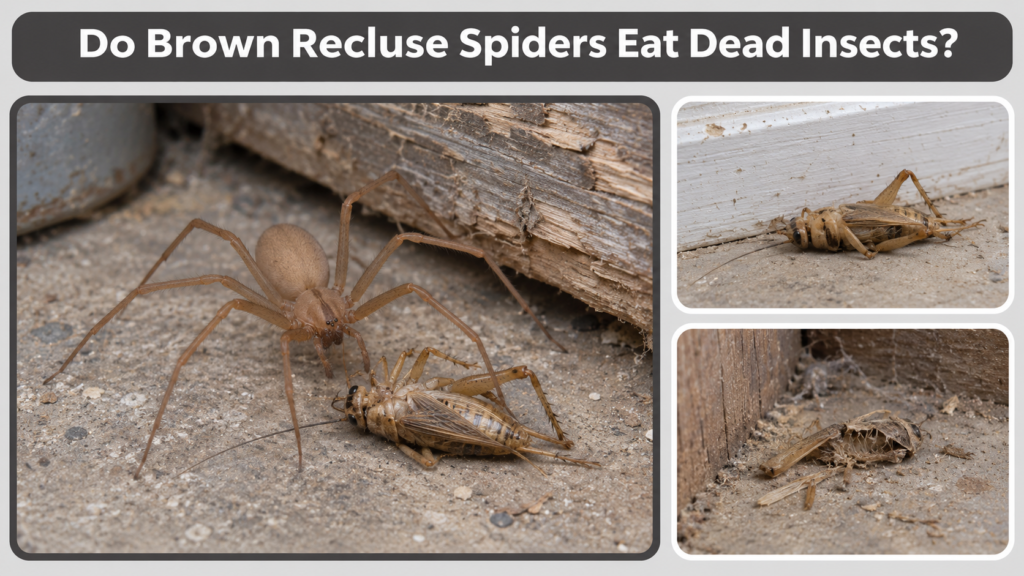
Yes. Brown recluses can scavenge dead insects as well as hunt live ones. One study combining laboratory tests and observations in homes reported a preference for scavenged prey. In a later study using crickets, brown recluses generally favored live prey, but their choices shifted with prey size, carcass freshness, and how recently the spiders had eaten. Both findings help explain why a brown recluse might feed in places where you rarely notice live insects.
Does It Matter How Long an Insect Has Been Dead?
Freshness can influence whether a brown recluse feeds on a dead insect. The cricket experiments compared freshly dead prey with carcasses of different ages. Spiders were more willing to feed on fresher carcasses, so an insect that died recently can be a more plausible food source than a dry husk that’s been behind a shelf for months.
Prey size can matter, too. A large live cricket is harder to subdue than a small one, while a freshly dead cricket of the same size presents no struggle. A brown recluse’s choice can change with the options it encounters on a particular night.
How Do Brown Recluse Spiders Hunt?
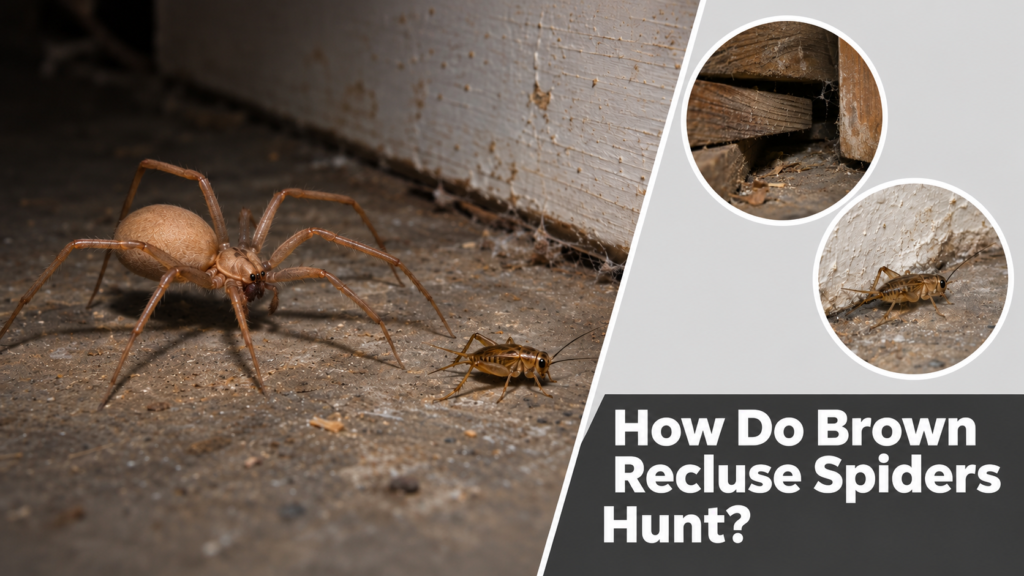
Brown recluses usually search for food at night. During the day, they often stay in crevices, behind stored items, or in other sheltered spaces. After dark, they may roam across floors and along walls in search of live or dead prey. A spider seen crossing a basement floor at night could be foraging or moving between retreats.
Do Brown Recluse Spiders Use Webs to Catch Prey?
Brown recluses produce silk and use it to line sheltered retreats. They can leave irregular strands or sheets of silk behind an object where they spend time. A retreat gives the spider a place to rest during the day and a sheltered point to return to after roaming.
They primarily find food by searching on foot. A conspicuous web stretched across an open ceiling corner is more likely to belong to another spider. Since several spiders can occupy the same basement or garage, a web near a brown spider is a weak clue to its identity.
How Do They Eat an Insect?
When a brown recluse catches live prey, it can bite with its fangs and use venom to subdue the insect. Like other spiders, it uses digestive fluids to break down soft tissues and draws in the liquefied material.
After feeding, the insect’s harder outer parts can remain. An old insect shell behind a box is therefore a poor way to identify what fed on it. It could also be a shed skin left by a growing insect or the remains of one that died there.
What Do Brown Recluse Spiders Eat Inside a House?
Inside homes, brown recluses take advantage of small insects and other prey that move through protected areas. Garages, basements, attics, and storage spaces can provide both shelter and hunting opportunities. A garage may have crickets that enter through gaps near the door, while a basement utility room may have insect activity near pipes, wall edges, or stored boxes. The available food varies from one room to another.
Where Should You Look for Indoor Food Sources?
Start where the walls meet the floor, especially behind shelves and near exterior doors. Small insects often move along these edges. Check for live insects, fresh carcasses, and gaps that connect the room to the outdoors. In a garage, daylight visible below a closed door can give you a practical place to start looking for an entry point.
Pay attention to undisturbed storage, too. Boxes pushed against a wall create narrow spaces that are easy to overlook when cleaning. Use a flashlight to inspect behind them and wear gloves when moving items you can’t see around clearly. Keeping boxes off the floor makes the edges easier to inspect later.
How Long Can Brown Recluse Spiders Live Without Food?
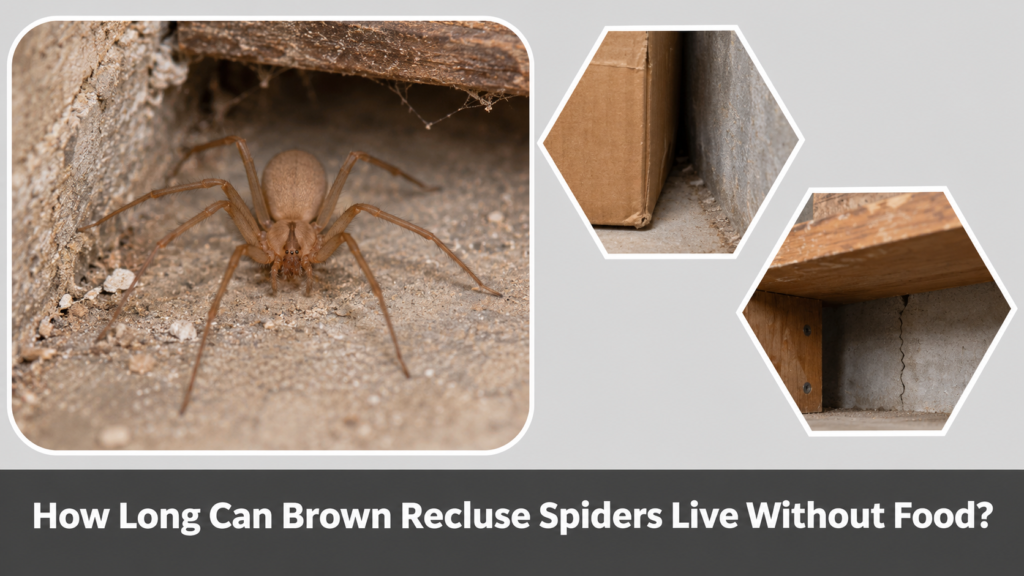
Brown recluses can survive for several months without feeding under some conditions. How long an individual survives varies with factors such as the temperature, its condition, and its access to moisture. In a house, occasional meals may also go unnoticed because the insects are small and much of the activity happens after dark. A stretch of time with few visible insects gives you limited information about how recently a spider ate.
Will Getting Rid of Insects Get Rid of Brown Recluses?
Reducing indoor insect activity can limit future feeding opportunities. Repair gaps around doors, vacuum up dead insects, and address any cricket or cockroach activity you find. If the same spot regularly has insects, look for the source. A gap beneath a garage door calls for a different fix than food spills behind a kitchen appliance.
Brown recluses can persist between meals, so it helps to reduce hiding places at the same time. Replace frequently used cardboard storage with lidded containers where practical, clear clutter along walls, and monitor areas where you’ve seen spiders. Repeated sightings in several rooms can make professional identification worthwhile, since many unrelated house spiders are brown.
Frequently Asked Questions
1. Do brown recluse spiders eat cockroaches?
Small cockroaches can be potential prey, particularly where both animals use cracks and sheltered wall edges. A young roach is a more manageable meal than a large adult. Brown recluses also feed on other small insects they encounter.
2. Do brown recluse spiders eat crickets?
Yes. Researchers have observed brown recluses eating both live and dead crickets. Small crickets are easier to subdue, while larger crickets can be more attractive as food when they’re already dead.
3. Do brown recluse spiders come out at night to eat?
They typically search for food after dark, when they may leave cracks or other retreats and roam along floors and walls. You can occasionally see one during the day, especially if its hiding place has been disturbed.
4. What do brown recluse spiders eat outdoors?
Outdoors, they can hunt small insects and other arthropods near places such as rocks, logs, woodpiles, and debris. They may also scavenge dead insects they encounter in those sheltered areas.
5. Do baby brown recluse spiders eat the same food as adults?
Young brown recluses also feed on small animal prey. Their size limits what they can handle, so very small insects are more manageable. As the spiders grow, they can take larger prey.
