
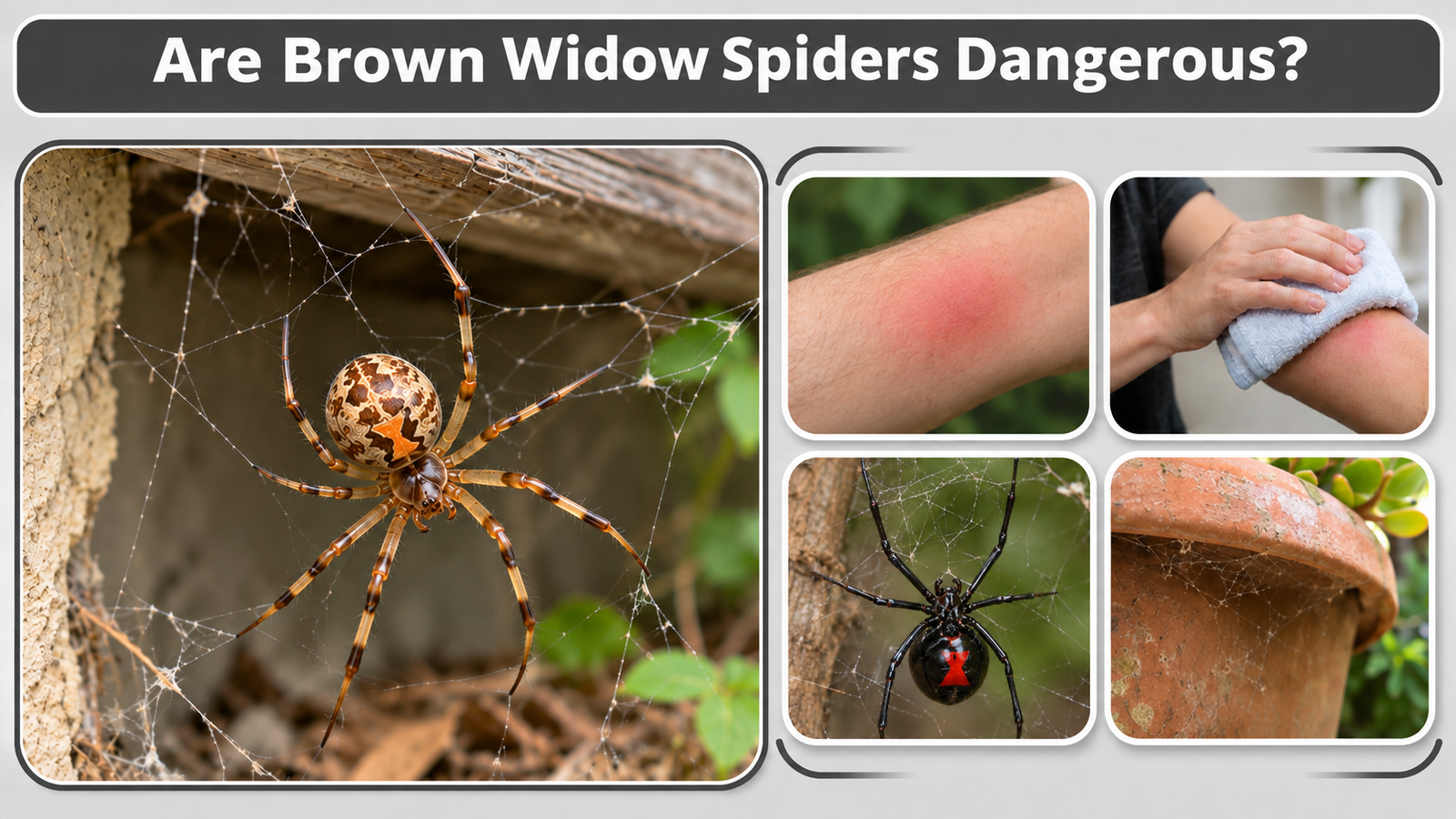
Brown widow spiders are venomous, but their bites usually cause milder symptoms than black widow bites. Most reported brown widow bites cause pain or irritation near the bite, although symptoms can sometimes spread beyond that area. Finding one under a patio chair or inside a garage calls for caution around its hiding spot. If someone may have been bitten, contact a poison center or healthcare professional for guidance, especially if pain worsens or muscle cramps develop. Get emergency help if the person has trouble breathing or swallowing.
How Dangerous Are Brown Widow Spiders to Humans?
The brown widow (Latrodectus geometricus) belongs to the same genus as black widow spiders. Its bite can be painful, though it generally causes less severe effects in people. In a South African case series that included 15 brown widow bites and 30 black widow bites, the black widow bites caused more severe symptoms overall. For an individual bite, how the symptoms develop matters more than the general comparison between the two spiders.
Are Brown Widow Spiders Venomous?
Yes. A brown widow can inject venom through its fangs. Pain often stays near the bite, but effects beyond the bite site can include muscle pain or cramping. The amount of venom delivered and the person’s response can influence how the bite feels.
The skin mark may look small even as discomfort increases. After a suspected widow bite, pay attention to whether pain spreads, whether cramps develop, and how the person feels overall.
When Are Brown Widows Most Likely to Bite?
Accidental contact is the main concern around the home. A spider tucked under the rim of a flowerpot or inside a patio chair frame can be pressed against your skin when you pick the item up. Reaching into a dark gap or putting on gardening gloves left outdoors can lead to similar encounters.
Check the underside of outdoor items before gripping them, especially if they have been undisturbed for a while. On patio furniture, look around the joints and underneath the seat before moving it.
Brown Widow Spider Bite Symptoms
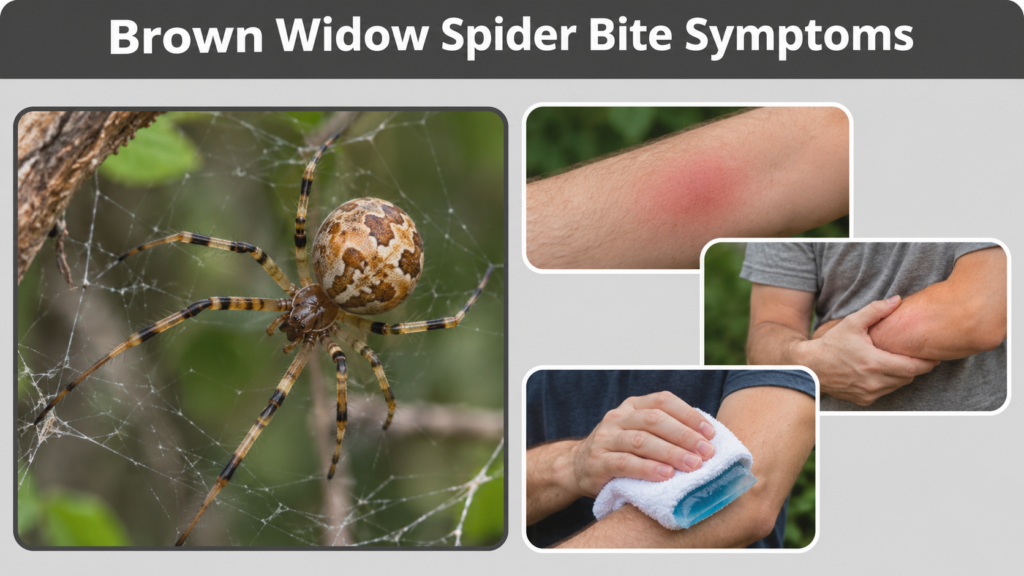
A brown widow bite may cause pain, redness, or mild swelling around the bite site. Symptoms sometimes extend beyond that spot, so pay attention to changes over time. Red bumps and small puncture marks have many possible causes. Seeing the spider bite or having a clear photograph of the spider can help an expert judge whether a widow was involved.
Symptoms That Need Prompt Medical Attention
Get prompt medical care if the pain becomes severe or starts spreading, if you develop significant muscle cramps, or if your abdomen starts cramping. Sweating, nausea, or vomiting alongside worsening pain are also worth reporting, especially if a black widow could have been involved.
An enlarging wound, spreading redness, or streaks near the wound also deserve medical assessment. Call emergency services if the person has trouble breathing or swallowing.
What to Do After a Suspected Brown Widow Bite
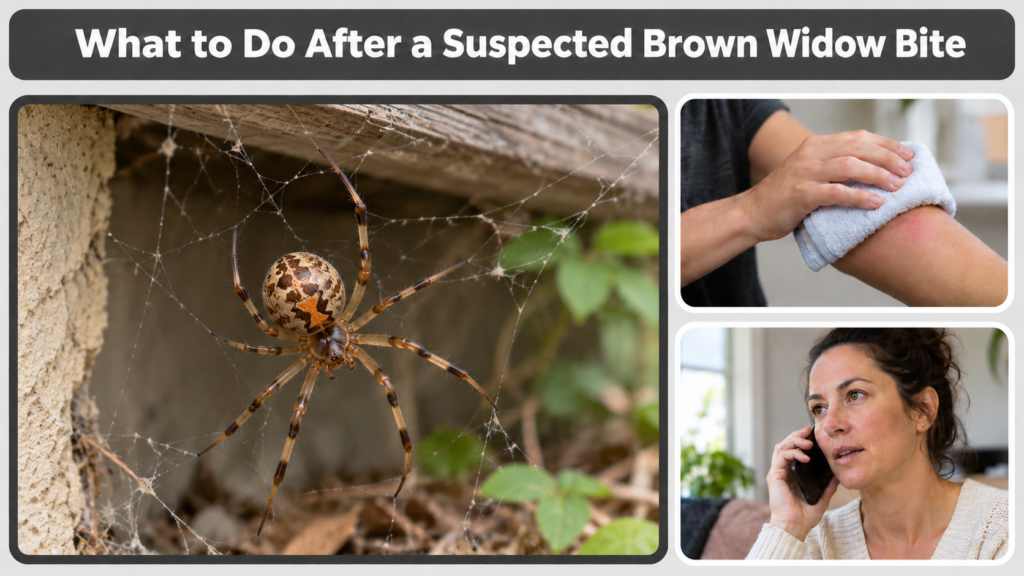
Gently wash the area with soap and water. Apply a cool, damp cloth or a cold pack wrapped in a clean cloth to help ease pain and swelling. Contact a poison center or healthcare professional if you suspect a widow bite, especially if the species is uncertain or symptoms are getting worse. Tell them when the bite happened, where it occurred on the body, and how the symptoms have changed. If you can photograph the spider from a safe distance, the photo may help with identification. Your healthcare provider can also advise whether you need a tetanus booster.
How to Identify a Brown Widow Spider
An adult female brown widow typically has a rounded abdomen, banded legs, and mottled tan, brown, or gray markings. Some individuals are considerably darker. The hourglass on the underside of the abdomen is often orange or yellowish-orange, although the shade can vary. Look at the overall body pattern and check for an egg sac nearby. Body color alone offers limited information because brown widows vary in color and young black widows can also have prominent markings.
What Does a Brown Widow Egg Sac Look Like?
A brown widow egg sac looks like a small, pale ball covered in pointed silk tufts. These tufts give the sac a spiky appearance that can stand out against a smooth chair frame or the underside of a pot. Black widow egg sacs generally look smoother.
A spiky sac in a sheltered, tangled web is often the clearest visible clue, particularly when the spider has retreated into a gap. You can usually see the texture from a safe distance or use your camera’s zoom for a closer look.
Brown Widow vs. Black Widow
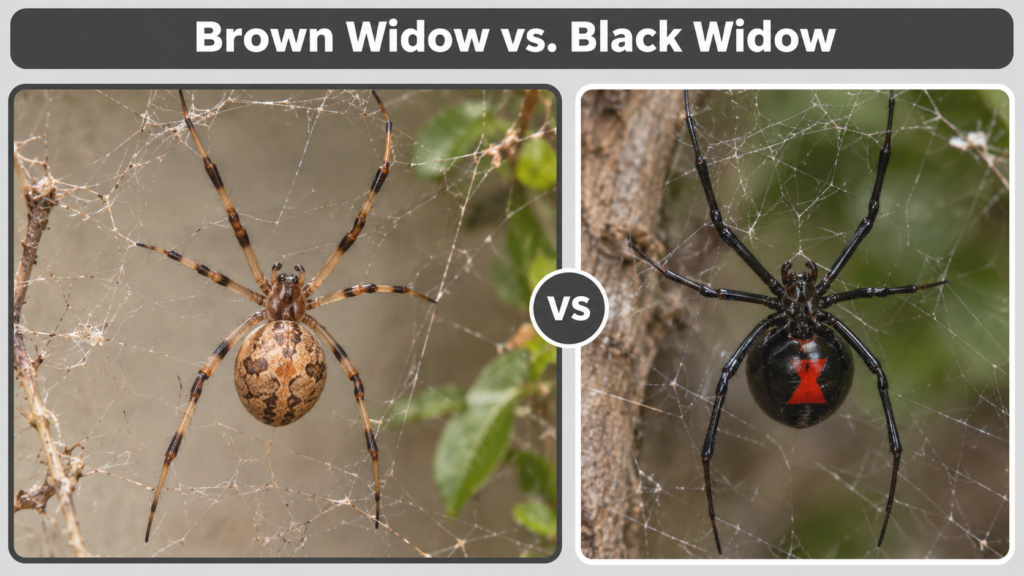
Black widow bites are more likely to cause severe, widespread symptoms. When identifying a spider around the home, egg sac texture, leg bands, and body markings can help. These are typical features of adult females. Young spiders can look different, and patterns can vary between individuals.
| Feature | Brown Widow | Black Widow |
|---|---|---|
| Adult female body | Often mottled tan, brown, or gray, sometimes very dark | Typically glossy black in common North American species |
| Legs | Often visibly banded | Usually dark on mature females |
| Hourglass | Commonly orange to yellowish-orange | Often red |
| Egg sac | Covered with pointed silk tufts | Generally smoother |
| Typical bite effects | Pain and other symptoms often stay near the bite | More likely to cause widespread pain and muscle cramps |
Where Do Brown Widow Spiders Live Around Homes?
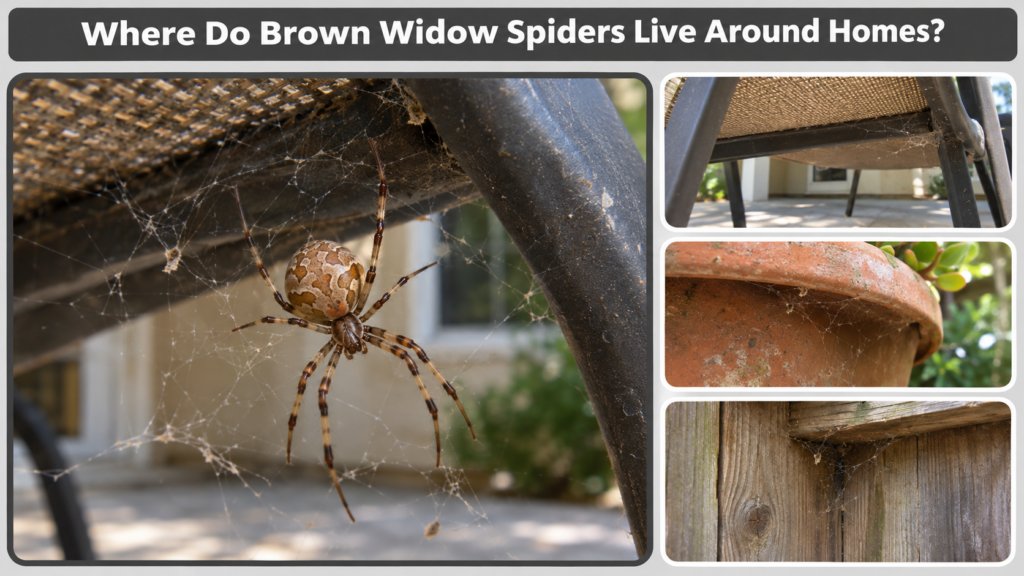
Brown widows frequently use sheltered spaces around buildings. Look for them beneath patio furniture, around the rims of planters, along fences, and in recesses around outdoor equipment. They build irregular webs where the silk is protected from frequent disturbance. On a chair, check beneath the seat and where the legs meet the frame. On a planter, look under the lip and near the base before lifting it.
How to Reduce Encounters With Brown Widows
Wear work gloves when moving pots, stacked items, and outdoor furniture. Use a flashlight before reaching into an area you can’t see clearly. Store gardening gloves and shoes in an enclosed container, and shake them out before putting them on if they’ve been left outdoors.
Clearing unused containers and other clutter makes potential hiding spots easier to inspect. Check outdoor furniture and play equipment after long periods of disuse. If you repeatedly find widow spiders or egg sacs in areas people use every day, a pest professional can identify the spiders and address the places where they keep appearing.
Frequently Asked Questions
1. Are brown widow spiders more dangerous than black widows?
Black widow bites generally cause more severe symptoms in people. Both spiders are venomous. Seek prompt medical care if pain becomes severe, spreads, or is accompanied by muscle cramps.
2. Do brown widow spiders always have an orange hourglass?
Orange or yellowish-orange is common, but the shade can vary. The marking is underneath the abdomen, so it may be hard to see. Banded legs, mottled markings, and a spiky egg sac provide additional clues.
3. Can you identify a brown widow bite from a picture of the skin?
A skin photo can document changes such as redness or swelling, but a bump or puncture mark alone can’t establish which spider caused it. A clear photograph of the spider, taken safely, gives an expert more information.
4. Does a spiky egg sac mean a brown widow is still nearby?
A spiky egg sac is a strong sign that a brown widow used the site. The sac may remain after the spider moves, so check the surrounding web and crevices from a safe distance before handling the item.
5. Is a brown widow the same as a brown recluse?
They are different spiders. A female brown widow typically has a rounded abdomen and an hourglass underneath. A brown recluse has a different body shape and lacks the widow’s hourglass. Several unrelated spiders are brown, so use body shape and markings together when identifying one.
