
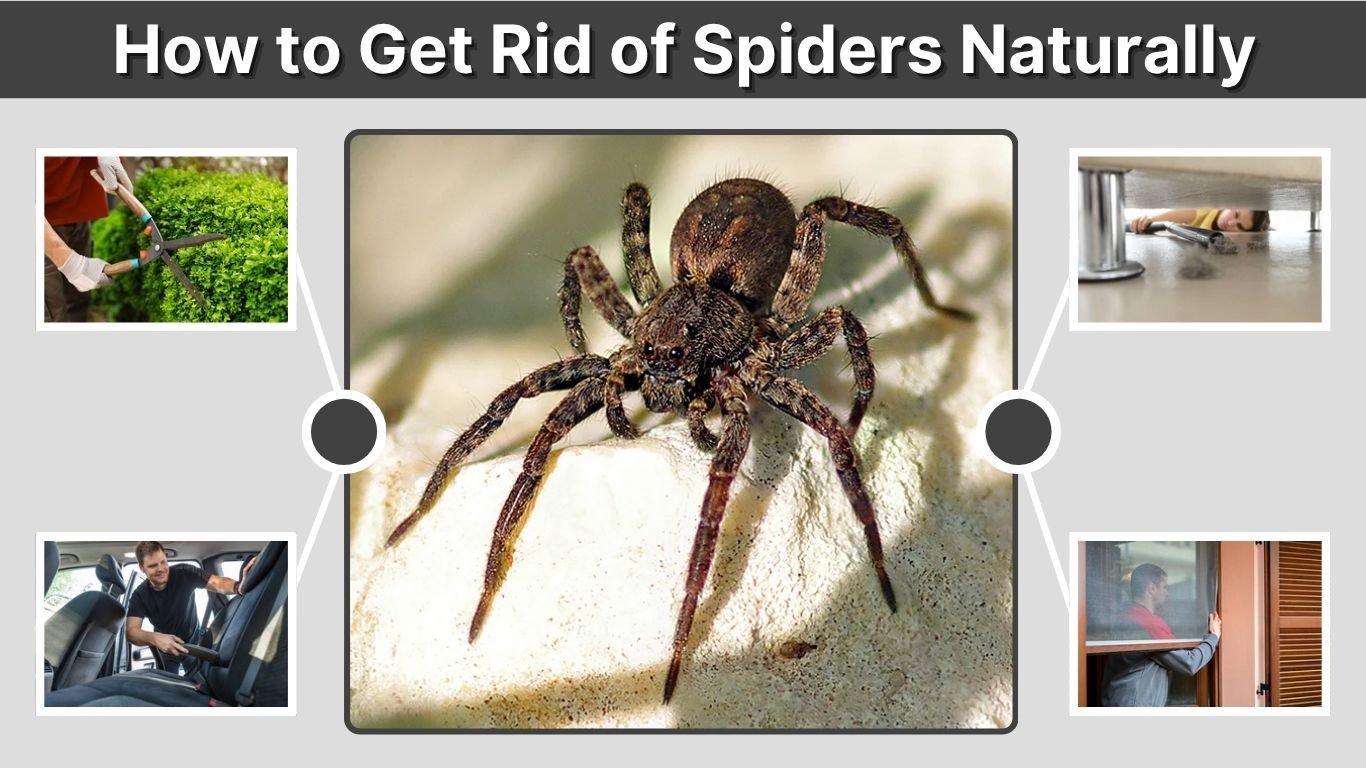
Spiders are useful predators outdoors, but finding them repeatedly in bedrooms, basements, garages, or other living spaces can become frustrating. If you prefer to avoid routine pesticide use, several practical methods can reduce spider activity naturally. The most effective approach is to remove existing spiders and webs while eliminating insects, hiding places, moisture, and entry points that attract new ones. This guide explains how to get rid of spiders naturally in your house, car, basement, garden, garage, and outdoor areas while helping prevent them from returning.
How to Get Rid of Spiders Naturally
Natural spider control works best as a combination of physical removal, cleaning, exclusion, and habitat modification rather than relying on one homemade repellent. Spiders generally remain where they can find prey and suitable shelter. Removing those resources makes an area considerably less attractive. University of Minnesota Extension recommends an integrated approach involving prey reduction, clutter removal, web removal, trapping, and exclusion.
1. Vacuum Spiders, Webs, and Egg Sacs
Vacuuming is one of the simplest ways to deal with spiders without applying pesticides. Concentrate on room corners, ceilings, closets, underneath furniture, behind appliances, window frames, storage areas, and other quiet spaces.
Vacuum visible webs as well as egg sacs. Removing egg sacs is particularly useful because they may eventually release numerous spiderlings.
Regular vacuuming also removes insects and debris that can make an indoor environment more favorable to spiders. University of Minnesota Extension specifically recommends removing webbing and destroying accessible egg sacs as part of spider management.
2. Remove Clutter and Hiding Places
Spiders prefer sheltered areas where they receive little disturbance. Cardboard boxes, piles of clothing, papers, unused furniture, firewood, and stored materials can provide excellent hiding locations.
Keep storage areas organized and, where practical, replace open cardboard boxes with sealed containers. Avoid leaving clothes and other belongings scattered on floors.
Basements, garages, sheds, closets, and attics deserve particular attention because they often remain undisturbed for long periods.
3. Seal Cracks and Entry Points
Stopping spiders before they enter is one of the most reliable natural prevention methods.
- Seal cracks around foundations.
- Caulk gaps around windows and doors.
- Repair damaged window screens.
- Replace worn door sweeps.
- Seal openings around pipes and cables.
- Check vents for damaged screening.
- Close gaps around exterior trim.
Colorado State University Extension recommends sealing cracks and crevices, ensuring doors and screens fit tightly, and reducing potential shelter around buildings.
4. Reduce the Insects Spiders Eat
Spiders do not usually enter a house because they want human food. They are predators, so a steady supply of insects can encourage them to remain.
Flies, moths, mosquitoes, ants, cockroaches, silverfish, and other small arthropods can provide prey.
Keep food sealed, clean crumbs and spills, manage garbage properly, repair screens, and address existing insect problems. Reducing prey is an important part of long-term spider management because fewer insects mean fewer feeding opportunities.
5. Control Moisture
Some spiders and many of the insects they hunt are more common in humid areas.
Repair dripping pipes, leaking faucets, and other moisture problems. Improve ventilation in bathrooms and damp storage areas and address persistent basement moisture.
Colorado State University notes that spiders are frequently encountered in kitchens, bathrooms, and basements where moisture may be available.
How to Get Rid of Spiders in the House Naturally
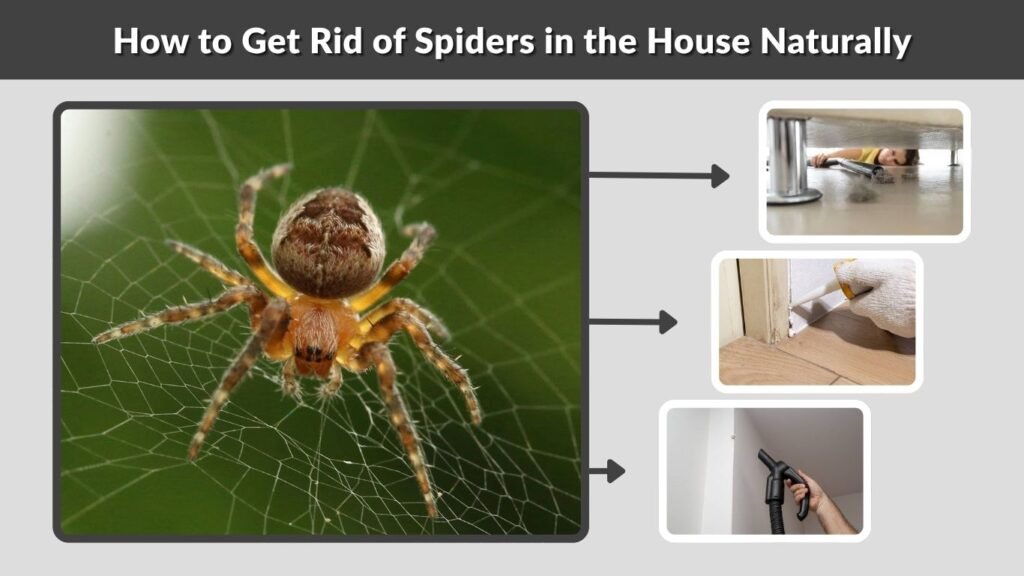
Indoor spider control should focus on making the home difficult to enter and unrewarding once a spider gets inside. A single wandering spider does not necessarily indicate an infestation. However, repeated sightings may indicate that spiders have reliable hiding places, insect prey, or convenient entry routes somewhere in or around the building.
Bedrooms and Living Areas
Vacuum underneath beds, couches, dressers, nightstands, and other furniture. Keep clothing off the floor and occasionally inspect curtains, window frames, and quiet corners.
Remove webs whenever they appear. If spiders repeatedly occur around one window, inspect the screen, frame, and surrounding trim for openings.
Sticky monitoring traps placed along walls or behind furniture can help reveal where spiders are moving. Keep traps where children and pets cannot access them. Extension guidance recognizes sticky traps as useful for monitoring spiders indoors.
Basement and Garage
Basements and garages provide numerous hiding places, particularly when they contain boxes and rarely moved equipment.
Reduce floor-level clutter, vacuum webs, seal foundation gaps, inspect windows, and organize stored belongings. In garages, pay particular attention to weather stripping around the main door.
Moving firewood, unused boards, bricks, and similar shelter away from exterior walls can also reduce the number of spiders living immediately beside the structure.
How to Get Rid of Spiders Outside Naturally
Trying to eliminate every outdoor spider is unnecessary and unrealistic. Spiders are beneficial predators and form an important part of garden ecosystems. Natural outdoor control should therefore concentrate on porches, doors, windows, patios, and other locations where webs or spiders interfere with everyday activities rather than attempting to remove them from an entire yard.
Clean Around the House
Remove unnecessary debris around the foundation and relocate firewood, bricks, boards, and other long-term storage materials farther from exterior walls.
Trim shrubs and vegetation that directly touch the house. These plants can provide shelter and create pathways for spiders and insects.
Visible webs around siding, porches, and exterior structures can be removed with a broom or strong stream of water.
Reduce Outdoor Lighting
Exterior lights attract flying insects, and concentrations of insects can create excellent hunting locations for web-building spiders.
Turn unnecessary lights off at night or reposition lights farther from doors and windows. Using lighting that attracts fewer insects can also reduce spider web activity around entrances.
Both Minnesota and Colorado State extension guidance recommend reducing insect-attracting outdoor lighting as part of spider prevention.
Leave Beneficial Garden Spiders Alone
Garden spiders, orb weavers, jumping spiders, and many other outdoor species capture insects and generally do not damage plants.
If a spider has built a web directly across a walkway, doorway, or frequently used seating area, removing the web may encourage relocation. Spiders elsewhere in the garden are usually better left undisturbed because of their role as natural insect predators.
How to Get Rid of Spiders in a Car Naturally
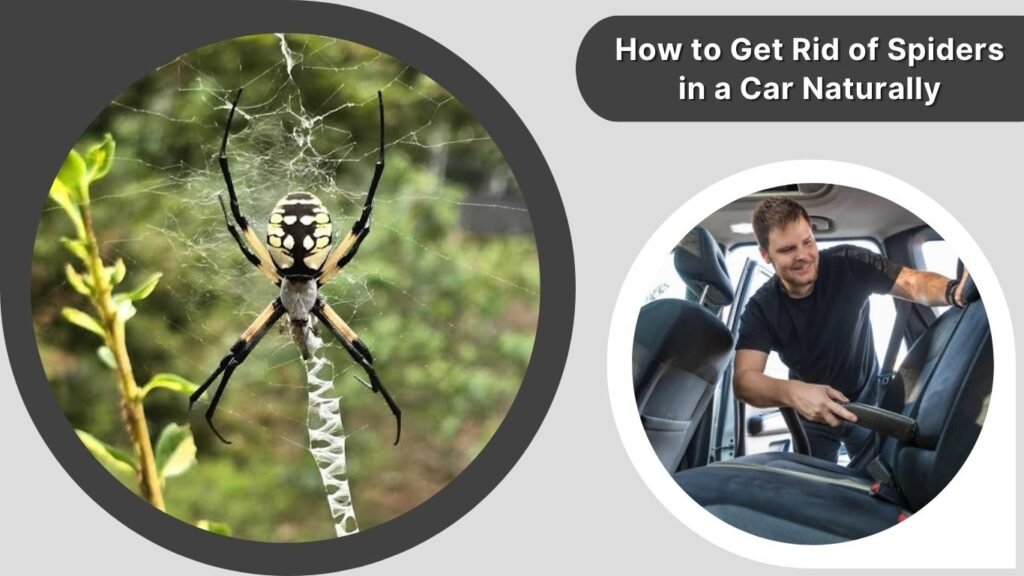
A spider occasionally entering a vehicle does not usually indicate that spiders are breeding throughout the car. They may enter through open doors and windows or arrive on stored items. The natural approach is to remove the spider, clean the vehicle thoroughly, and eliminate insects or clutter that could provide food and shelter.
Vacuum and Inspect the Vehicle
Vacuum underneath seats, around floor mats, in the trunk, and along accessible cracks where debris accumulates.
Remove food wrappers, bags, cardboard, and unnecessary stored items. Check around doors, the trunk, and weather stripping for visible webs.
Avoid spraying essential oils or homemade mixtures into vents, electronics, controls, or upholstery. If spider activity persists, identifying where spiders are entering is more useful than repeatedly applying fragrances.
Do Natural Spider Repellents Work?
Natural spider remedies are popular online, but research does not support every claimed repellent. Even products that affect certain species should be considered supplementary rather than substitutes for cleaning, exclusion, and prey reduction. Spider species can respond differently to the same substance, which makes broad claims such as “this scent keeps all spiders away” unreliable.
Does Peppermint Oil Repel Spiders?
There is some scientific evidence for mint oil, but its effectiveness should not be exaggerated.
A laboratory study tested peppermint oil, lemon oil, and chestnuts against three spider species. Mint oil strongly repelled the brown widow and European garden spider tested, but responses varied among species. The researchers therefore demonstrated species-specific repellency rather than proving that peppermint oil works against every household spider.
This means peppermint may discourage certain spiders, but it should not be relied upon as a permanent solution.
Does Lemon Oil Keep Spiders Away?
Evidence is weaker. In the same laboratory study, lemon oil did not repel any of the three spider species tested. This is an important example of why widely repeated natural remedies are not necessarily supported by controlled research.
Removing webs, sealing cracks, reducing insects, and eliminating hiding places have much stronger practical roles in household spider management.
Can You Get Rid of Spiders Permanently Naturally?
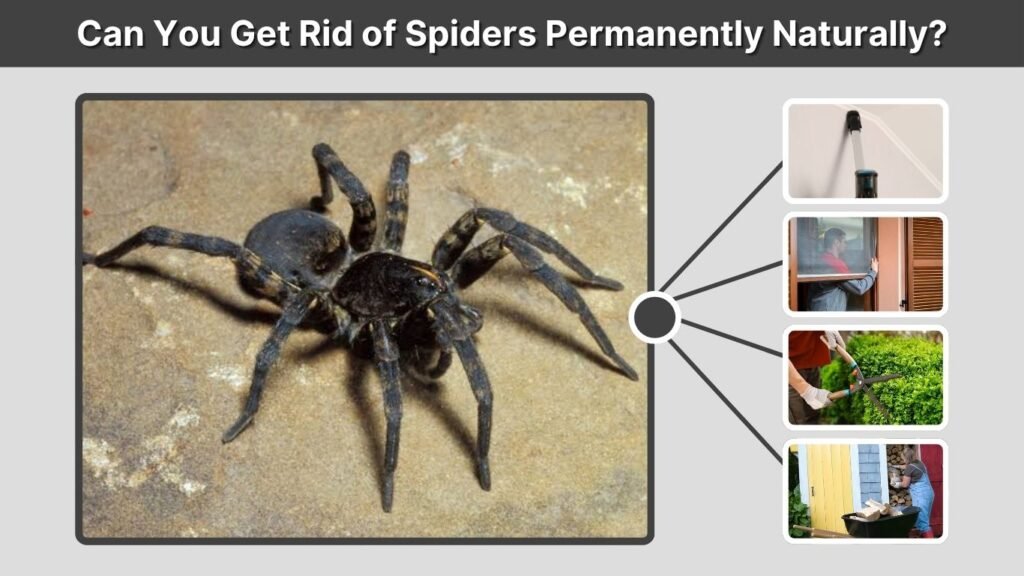
Completely and permanently eliminating spiders is not realistic because they naturally live around buildings and landscapes. Even a well-maintained home can occasionally receive a wandering spider. University of Minnesota Extension specifically notes that reducing spider numbers is possible but making a property entirely spider-free is impractical.
Focus on Long-Term Prevention
For the best lasting results:
- Vacuum webs and egg sacs regularly.
- Keep storage spaces organized.
- Reduce indoor insect populations.
- Repair screens and door sweeps.
- Seal exterior cracks and gaps.
- Manage basement and bathroom moisture.
- Trim vegetation touching the home.
- Move firewood and debris away from walls.
- Reduce unnecessary exterior lighting.
Consistency matters more than any single natural repellent.
What About Black Widow or Brown Recluse Spiders?
Extra caution is appropriate when a spider may be medically important. Natural repellents should not be treated as reliable protection against black widows, brown recluse spiders, or another potentially dangerous species.
Avoid Handling Dangerous Spiders
Do not attempt to pick up or closely handle a suspected medically significant spider. Vacuuming, exclusion, clutter reduction, and professional identification are safer approaches.
The peppermint study included brown widows, not brown recluse spiders, so its findings should not be interpreted as proof that peppermint oil controls brown recluse spiders.
When potentially dangerous spiders repeatedly occur inside living spaces, professional pest-management assistance may be preferable to experimenting with household remedies.
FAQs
What is the best natural way to get rid of spiders?
The most reliable approach combines vacuuming, web and egg-sac removal, decluttering, sealing entry points, reducing insect prey, and controlling excess moisture. These methods address why spiders are present instead of relying solely on repellents.
How do I get rid of spiders in my house naturally?
Vacuum visible spiders and webs, reduce clutter, repair screens, seal gaps around windows and doors, manage moisture, and reduce the insects spiders feed on.
What smell do spiders hate the most?
There is no scientifically established smell that reliably repels every spider species. Laboratory evidence suggests mint oil can repel some species, but responses vary. Lemon oil failed to repel the species tested in one controlled study.
How can I naturally keep spiders away from outside doors?
Remove nearby webs, trim plants touching the building, seal cracks, reduce clutter around the foundation, and limit insect-attracting lights near entrances.
Why do spiders keep coming back?
Recurring spiders usually indicate that suitable food, shelter, entry points, or web-building locations remain available. Removing one spider without changing these conditions allows other spiders to occupy the same area.
