
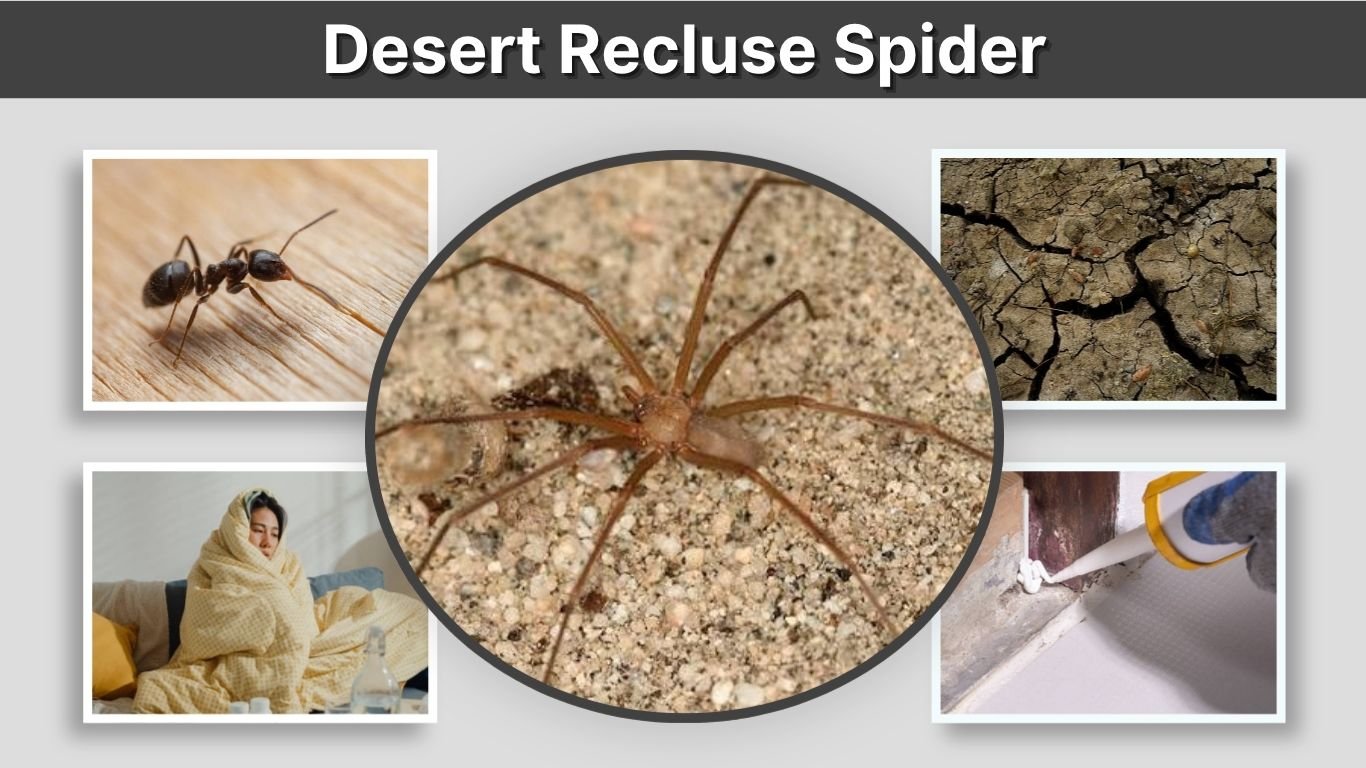
The desert recluse is a venomous spider native to arid areas of the southwestern United States and northwestern Mexico. Scientifically named Loxosceles deserta, it resembles the better-known brown recluse but occupies a different geographic range. This shy, nocturnal spider normally hides under rocks, inside rodent nests, and within other sheltered desert spaces. Bites are uncommon but may damage skin and require medical attention. This guide explains desert recluse identification, size, habitat, range, bite symptoms, treatment, prevention, and differences from the brown recluse.
What Is a Desert Recluse?
The desert recluse is a member of the Sicariidae family and the medically significant genus Loxosceles. It is adapted to dry environments and spends daylight hours inside a sheltered retreat. Despite its reputation, it does not actively pursue people and usually bites only when pressed against the skin or handled accidentally.
Identification and Appearance
A desert recluse generally has:
- A body measuring approximately ¼–½ inch
- A leg span that makes it appear substantially larger
- Tan, yellowish-brown, or darker brown coloring
- Six eyes arranged in three pairs
- Long, slender legs without prominent spines
- A relatively plain abdomen
- Fine hairs rather than heavy body hair
- A possible dark violin-shaped marking
- A low, flattened resting posture
Most spiders have eight eyes, making the desert recluse’s six-eye arrangement an important characteristic. However, examining eye patterns safely generally requires magnification and expert assistance.
Is the Violin Mark Reliable?
The dark marking on the cephalothorax may resemble a violin, with its narrow “neck” pointing toward the abdomen. However, the marking can be faint or almost absent in the desert recluse.
Many harmless spiders also have dark shapes that people interpret as violins. Color and markings alone cannot provide a reliable identification. Eye arrangement, leg structure, body hairs, geographic location, and reproductive anatomy offer better evidence.
Male, Female and Baby Desert Recluses
Adult females usually have broader abdomens, while males have slimmer bodies and enlarged reproductive structures at the ends of their pedipalps. Both sexes possess venom and may bite defensively.
Spiderlings resemble miniature adults but may be lighter and lack clear markings. Their small size makes visual identification particularly difficult. A baby brown spider should not automatically be classified as a desert recluse.
Desert Recluse Habitat and Range
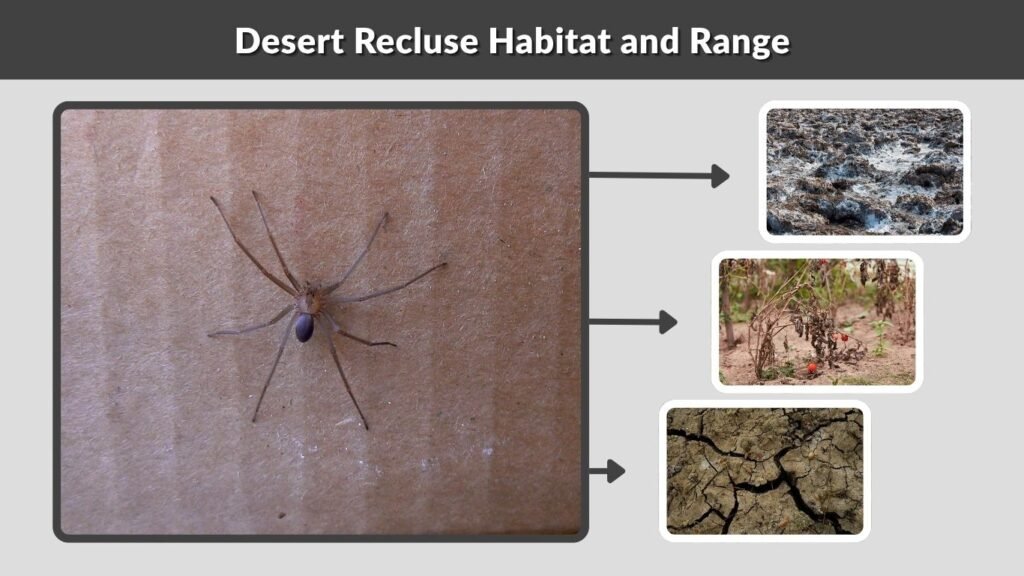
This species prefers hot, dry environments containing protected cracks and spaces. It is more commonly associated with undeveloped desert habitat than with heavily populated neighborhoods. Unlike brown recluses, which can establish large indoor populations, desert recluses are only occasionally encountered inside buildings.
Where Do Desert Recluses Live?
Their range includes portions of:
- Southern and eastern California
- The Mojave Desert
- The Sonoran Desert
- Western Arizona
- Southern Nevada
- Southwestern Utah
- New Mexico
- Northwestern Mexico
The exact distribution is patchy because suitable habitat is not continuous. In Utah, for example, established desert recluse populations are limited to Washington County.
Natural Hiding Places
Desert recluses may shelter in:
- Packrat and other rodent dens
- Spaces beneath rocks
- Cracks in dry soil or stone
- Dead vegetation
- Woodpiles and discarded materials
- Caves and abandoned animal burrows
- Storage sheds near natural desert habitat
Packrat nests provide shade, protection, stable humidity, and a regular supply of small insects. Consequently, desert recluses can occur in relatively high numbers around these nests.
Desert Recluses in California
The desert recluse is California’s most widespread native recluse species. It occurs mainly in the Sonoran and Mojave deserts, the foothills of the lower San Joaquin Valley, and adjoining areas of Mexico.
The true brown recluse, Loxosceles reclusa, does not have an established native population in California. It has only occasionally arrived in transported boxes or cargo. Therefore, a native recluse collected in California’s desert is more likely to be a desert recluse or another southwestern Loxosceles species.
Are They Found in San Diego?
Desert habitats in eastern San Diego County may provide suitable conditions, but coastal and densely urbanized San Diego are not typical desert recluse habitats. Southern California also contains other recluse species, making expert identification important.
Finding an unexplained skin lesion in San Diego does not demonstrate that a desert recluse was responsible. Numerous infections, allergic reactions, and other arthropod bites can resemble recluse envenomation.
Desert Recluse Web, Diet and Behavior
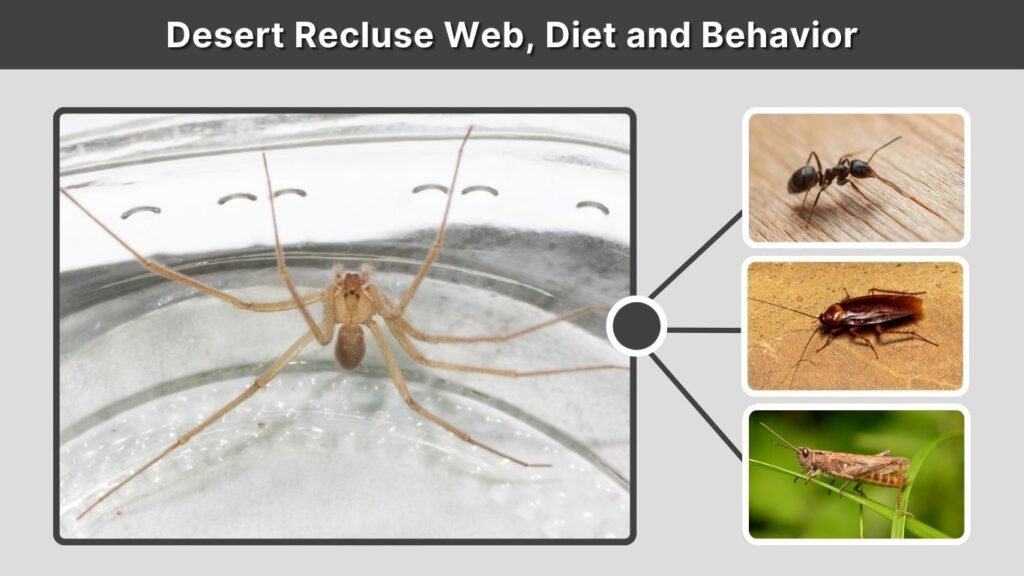
A desert recluse does not build a circular orb web. It creates a loose, irregular sheet of silk in a sheltered location. The web functions primarily as a retreat and may also help the spider detect nearby prey.
What Do Desert Recluses Eat?
Their diet may include:
- Ants and small beetles
- Cockroaches
- Crickets
- Silverfish
- Termites
- Moths and other small insects
- Dead arthropods encountered while scavenging
The spider commonly leaves its retreat at night to hunt. It can survive periods without food, an adaptation that helps it persist in unpredictable desert conditions.
Are Desert Recluses Aggressive?
No. The name “recluse” reflects their secretive behavior. They normally remain hidden during daylight and attempt to escape when exposed.
Bites generally occur when someone unknowingly presses a spider against the body. This could happen while putting on stored clothing or shoes, moving rocks, handling firewood, or sleeping near infested materials.
Desert Recluse vs. Brown Recluse
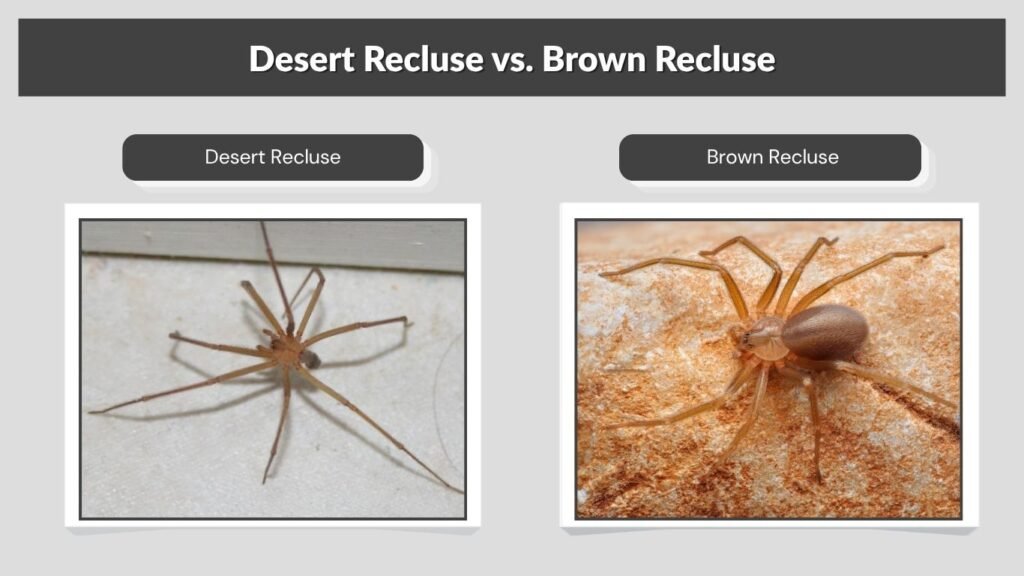
The desert recluse and brown recluse are related but separate species. They share a six-eye arrangement, slender legs, secluded behavior, and potentially tissue-damaging venom.
Important Differences
| Feature | Desert Recluse | Brown Recluse |
| Scientific name | Loxosceles deserta | Loxosceles reclusa |
| Main range | Southwestern deserts | South-central and Midwestern U.S. |
| Typical habitat | Natural desert areas and rodent nests | Buildings, storage areas and woodpiles |
| Violin marking | Often faint or absent | Usually more noticeable in adults |
| Indoor infestations | Uncommon | Possible in parts of its native range |
| Coloring | Pale tan to dark brown | Usually light to medium brown |
Neither species can be reliably identified only by its color or violin marking. A clear specimen examined by an arachnologist or extension specialist provides the strongest confirmation.
Is the Desert Recluse Poisonous?
The desert recluse is venomous, not poisonous. It injects venom while biting; a poisonous animal causes harm when eaten or touched. Its venom contains compounds that can injure cells and produce a condition called loxoscelism.
Most encounters do not result in bites. Even when a bite occurs, the severity can vary considerably. Some cause mild local irritation, while a smaller number develop more serious tissue damage.
Desert Recluse Bite Symptoms
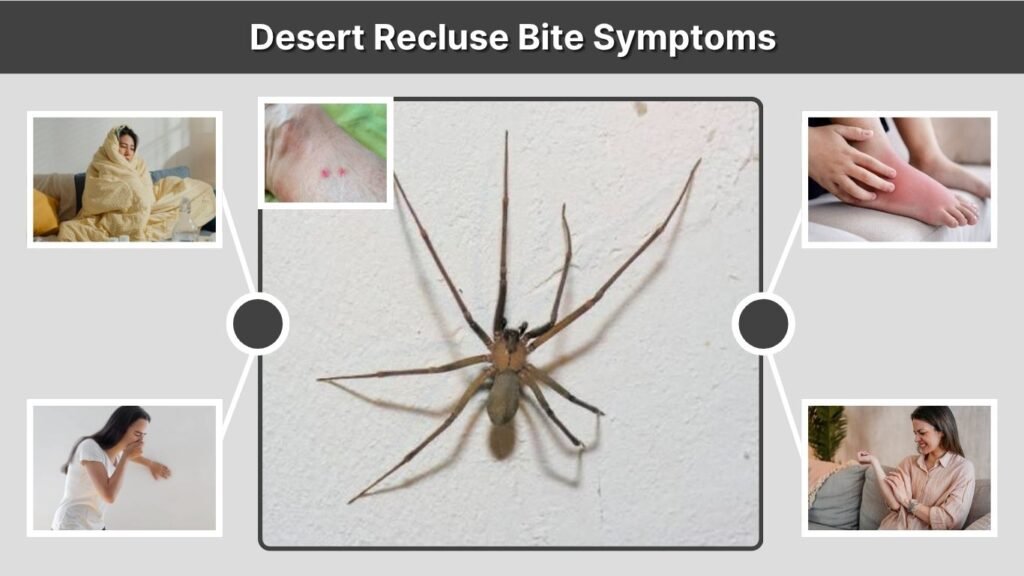
A bite may initially feel painless or produce a small stinging sensation. Symptoms can change over several hours, so the appearance immediately after the event may not indicate its eventual severity.
Possible Local Symptoms
Local reactions can include:
- Pain, burning, or tenderness
- Redness and swelling
- Itching around the bite
- A blister at the center
- A pale area surrounded by redness
- Blue, purple, or dark discoloration
- Breakdown of skin tissue
- A slowly healing ulcer
Not every recluse bite becomes necrotic. Tissue death, when it occurs, may develop gradually over several days.
Possible Systemic Symptoms
Uncommon but potentially serious effects include:
- Fever or chills
- Nausea and vomiting
- Fatigue or weakness
- Muscle pain
- Widespread rash
- Destruction of red blood cells
- Dark urine or jaundice
- Kidney complications
Children may have a higher risk of serious systemic effects relative to their body size. Seek emergency care for breathing difficulty, fainting, severe weakness, rapidly spreading redness, dark urine, or other body-wide symptoms.
Can Bite Pictures Confirm the Spider?
No. A photograph of a wound cannot reliably confirm a desert recluse bite. Bacterial infections, shingles, diabetic ulcers, chemical burns, tick bites, and other conditions can create similar lesions.
Diagnosis is strongest when the spider was observed biting, safely photographed or collected, and identified by a qualified specialist. Never delay medical care while attempting to catch it.
Desert Recluse Bite Treatment
There is no specific recluse antivenom routinely available in the United States. Treatment focuses on wound care, pain management, monitoring, and addressing complications.
First-Aid Steps
After a suspected bite:
- Move away from the spider without handling it.
- Wash the area gently with soap and water.
- Apply a wrapped cold pack for 10–20 minutes.
- Cover the area with a clean, non-stick bandage.
- Avoid scratching, squeezing, or opening blisters.
- Contact a medical professional or poison center.
- Check whether your tetanus vaccination is current.
Treatments to Avoid
Do not:
- Cut or attempt to suck venom from the wound
- Apply an improvised tourniquet
- Burn the bite or use extreme heat
- Place ice directly against the skin
- Apply bleach, gasoline, or other harsh chemicals
- Take antibiotics without medical direction
- Perform home surgery on damaged tissue
A clinician may monitor blood counts, kidney function, and signs of infection when systemic loxoscelism is suspected. Surgical removal of damaged tissue, when necessary, is generally considered only after the injury’s boundaries become clear.
Preventing Desert Recluse Bites
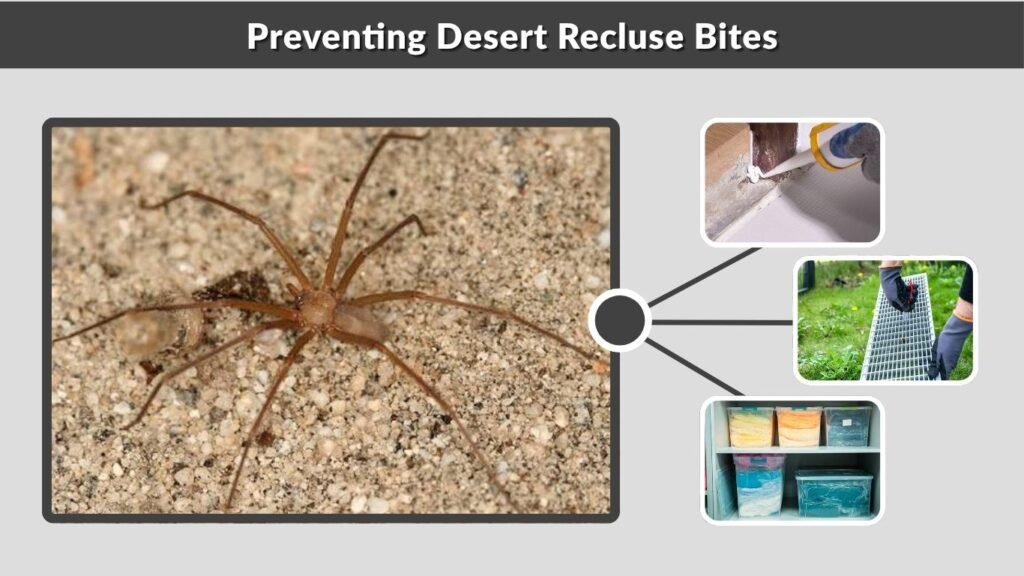
Homes close to undeveloped desert habitat have the greatest chance of occasional entry. Sanitation, exclusion, and careful storage reduce the likelihood of contact.
Practical Prevention Methods
- Seal cracks around doors, windows, pipes, and foundations
- Install intact screens and door sweeps
- Remove packrat nests only with appropriate health precautions
- Keep rocks, lumber, and firewood away from buildings
- Wear gloves when handling stored or outdoor materials
- Shake out shoes, clothing, towels, and gloves before use
- Store clothing and bedding in sealed containers
- Reduce clutter in garages, sheds, and storage rooms
- Place monitoring traps along walls and behind stored items
- Contact a pest professional if multiple specimens appear indoors
Sticky monitoring traps can help determine whether spiders are regularly entering a building, but place them where children and pets cannot reach them.
FAQs
Are desert recluse spiders dangerous?
They possess medically significant venom, but bites are rare. Most spiders attempt to escape rather than bite, and not every bite causes serious tissue damage.
How big is a desert recluse?
Its body is approximately ¼–½ inch long. The legs make an adult appear larger, but it remains much smaller than most tarantulas and large wolf spiders.
Do desert recluse spiders live indoors?
They occasionally enter structures near desert habitat but are predominantly outdoor spiders. Large indoor infestations are much less characteristic than with brown recluses.
Is a desert recluse the same as a brown recluse?
No. They are related species with different natural ranges. The desert recluse lives in southwestern deserts, while the brown recluse occurs mainly in the south-central and Midwestern United States.
Can a desert recluse bite cause necrosis?
Its venom can potentially damage skin and cause necrosis, but many bites remain mild. Any worsening or unexplained wound should be assessed by a medical professional.
