
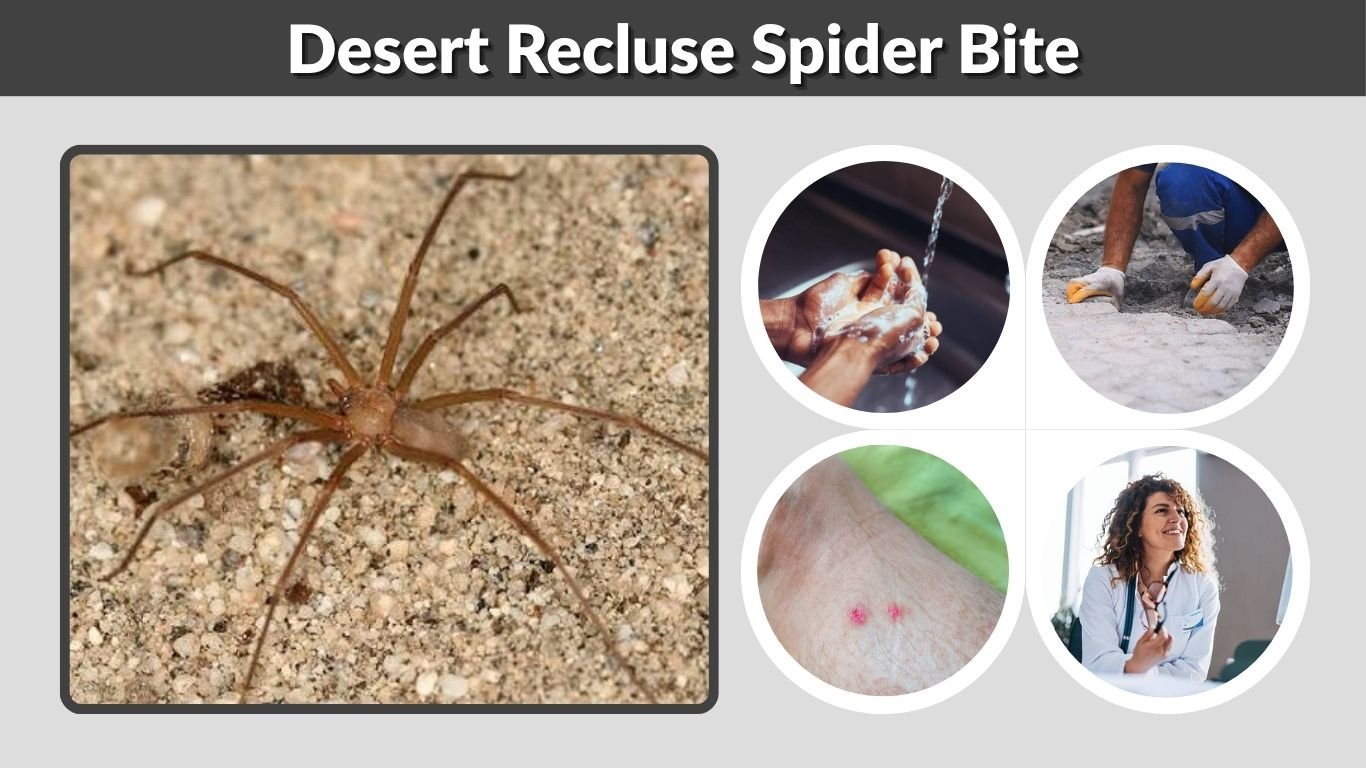
A desert recluse spider bite may cause pain, swelling, blistering, and—in a small minority of cases—skin tissue damage or systemic illness. The desert recluse, Loxosceles deserta, inhabits desert regions of the southwestern United States and northern Mexico. Its venom is considered medically similar to brown recluse venom, but confirmed bites are uncommon. Many wounds blamed on recluse spiders are actually bacterial infections or other skin conditions. Anyone developing severe pain, spreading discoloration, fever, vomiting, dark urine, breathing difficulty, or weakness needs prompt medical evaluation.
What Is a Desert Recluse Spider?
The desert recluse is a native southwestern recluse species related to the better-known brown recluse. It usually avoids humans and hides beneath rocks, wood, debris, or other undisturbed objects. Bites generally occur when a spider becomes trapped against the skin inside clothing, bedding, gloves, or shoes.
Identification Features
- Scientific name: Loxosceles deserta
- Color: Pale tan, yellowish-brown, or light brown
- Legs: Long, slender, and uniformly colored
- Eyes: Six eyes arranged in three pairs
- Body: Relatively small and without bold patterns
- Marking: Violin-shaped mark may be faint or absent
- Behavior: Reclusive rather than aggressive
- Habitat: Dry, sheltered, and relatively undisturbed spaces
Many harmless brown spiders are mistaken for recluses. The six-eye arrangement is more dependable than the violin marking, but examining eye patterns should be left to an experienced identifier.
Where Are Desert Recluses Found?
The species occurs mainly in the Sonoran and Mojave deserts, the foothills of California’s lower San Joaquin Valley, and adjacent areas of Mexico. Much of this habitat is sparsely populated.
California does not have established native populations of the brown recluse, Loxosceles reclusa. However, the desert recluse and several other native Loxosceles species occur in southern California.
Desert Recluse Bite Symptoms
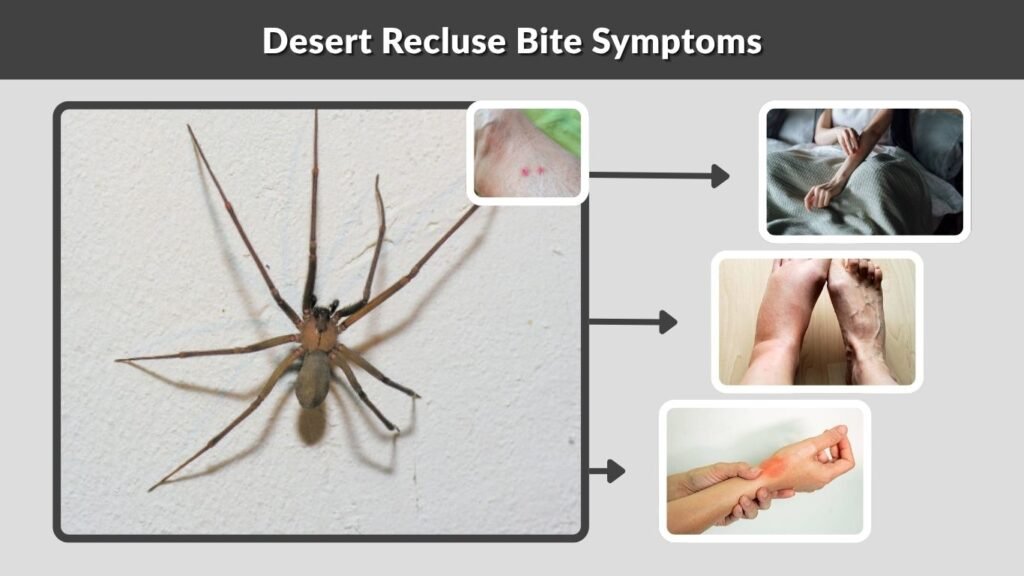
The effects of a desert recluse bite can vary considerably. Some people experience only mild irritation, while others develop significant skin damage. Clinical information specific to desert recluse bites is limited, so treatment guidance generally follows evidence for recluse envenomation, also called loxoscelism.
Early Local Symptoms
A bite may initially feel like a pinprick or may go unnoticed. Symptoms developing over the following hours can include:
- Tenderness or increasing pain
- Burning, itching, or tingling
- Localized redness
- Mild to moderate swelling
- A pale area around the bite
- Bruising or purple discoloration
- A small blister
- Sensitivity when the area is touched
Two puncture marks are not a dependable sign of a spider bite. They may be invisible or absent, while other insects and skin conditions can produce similar marks.
Skin Necrosis and Ulceration
Most suspected recluse bites do not produce major tissue destruction. In more severe cases, the center may become blue, purple, or dark as damaged tissue loses its blood supply. A blister or dry scab called an eschar may then develop.
The damaged area can eventually separate and leave an open ulcer. This process may take several days or even up to two weeks, rather than appearing immediately. Healing can require weeks or months when tissue damage is extensive.
About 10% of documented brown recluse bites cause moderate or greater tissue damage and scarring, according to UC IPM. The exact rate for desert recluse bites is not well established.
Systemic Loxoscelism
Rarely, recluse venom causes illness beyond the skin. Systemic loxoscelism can destroy red blood cells, affect blood clotting, and injure the kidneys. Children may be at greater risk of serious complications.
Warning symptoms include:
- Fever or chills
- Nausea or vomiting
- Abdominal pain
- Widespread rash
- Muscle or joint pain
- Severe weakness
- Dizziness or fainting
- Pale skin
- Yellow skin or eyes
- Dark brown or red urine
- Decreased urination
- Rapid heartbeat
- Confusion
Systemic illness may begin within 24 to 72 hours but can occasionally be delayed for several days. These symptoms require urgent medical assessment.
Desert Recluse Bite After 24 Hours
There is no single appearance that every bite follows. A mild bite may remain a small, itchy, red area. A more significant reaction may become painful, pale in the center, bruised, or blistered during the first day.
Possible Bite Timeline
- First few hours: The bite may be painless or feel like a pinprick. Mild redness, itching, or tenderness can begin.
- Six to 24 hours: Pain and swelling may increase. A pale center, surrounding redness, purple discoloration, or blister may appear.
- One to three days: Many reactions stabilize, but some lesions become darker. Fever, nausea, rash, or other systemic symptoms may develop.
- Several days to two weeks: A minority of bites form a dry scab or ulcer as damaged tissue separates.
- Following weeks: Mild lesions heal, while deeper wounds may require prolonged medical wound care.
Rapidly spreading redness, extreme pain, pus, substantial swelling, or very early ulceration can indicate an infection or another condition rather than typical recluse envenomation.
Can Pictures Confirm a Desert Recluse Bite?
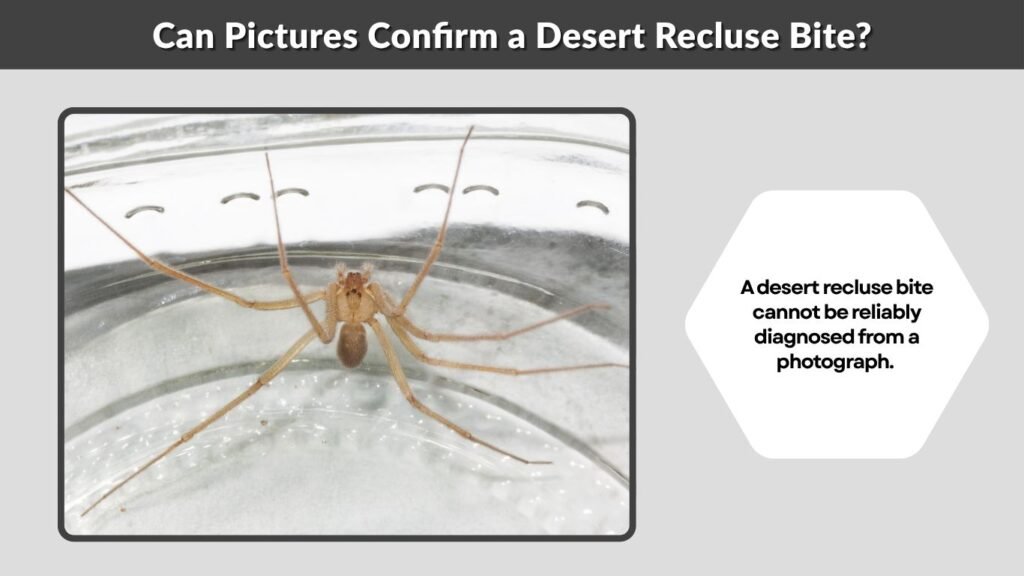
A desert recluse bite cannot be reliably diagnosed from a photograph. Pictures may document how a wound changes, but many unrelated conditions can produce redness, blisters, dark centers, or open ulcers.
Conditions Commonly Mistaken for Spider Bites
- MRSA or another staphylococcal infection
- Streptococcal infection
- Cellulitis or a skin abscess
- Tick and insect bites
- Shingles
- Allergic contact dermatitis
- Diabetic ulcers
- Poor-circulation wounds
- Pyoderma gangrenosum
- Chemical or thermal burns
- Certain fungal infections
- Skin cancer
The strongest evidence is witnessing the bite and having the spider professionally identified. Even doctors cannot confirm recluse venom through a routinely available laboratory test.
Multiple lesions, recurring sores, wounds on widely separated body parts, or similar lesions affecting several household members make a single recluse bite less likely. Misdiagnosis can delay treatment of a serious bacterial infection.
First Aid for a Suspected Bite
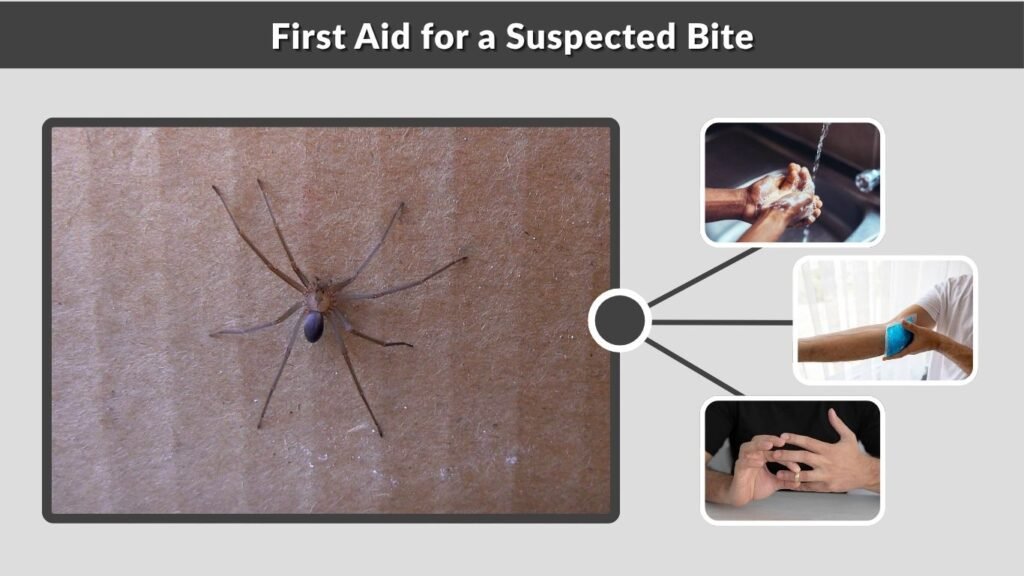
Immediate first aid focuses on cleaning the skin, limiting swelling, and monitoring for changes. Contact Poison Control or a healthcare professional for personalized guidance, particularly when the affected person is a child.
What to Do
- Move away from the spider: Do not risk another bite.
- Wash the area: Gently clean it with soap and water.
- Apply a cool compress: Use a cool, damp cloth for 10 to 20 minutes at a time. Avoid prolonged direct ice contact.
- Elevate the area: Raise an affected arm or leg when practical.
- Remove tight objects: Take off rings, watches, or tight clothing before swelling increases.
- Cover the wound: Use a clean, non-stick dressing if the skin is broken.
- Track changes: Mark the edge of redness and record the time. Take daily photographs with a ruler for scale.
- Call Poison Control: In the United States, call 1-800-222-1222 for free 24-hour guidance.
- Preserve the spider safely: If already captured without risk, place it in a secure container for identification. Do not handle it with bare hands.
The CDC recommends washing the bite, using a cold cloth, elevating the area, and avoiding attempts to remove venom.
What Not to Do
- Do not cut or squeeze the wound.
- Do not attempt to suck out venom.
- Do not apply a tourniquet.
- Do not use bleach or other caustic chemicals.
- Do not apply prolonged direct heat.
- Do not scratch or puncture a blister.
- Do not take leftover antibiotics.
- Do not attempt to remove dead tissue yourself.
- Do not use dapsone or steroids without specialist direction.
- Do not delay care because an online picture looks reassuring.
Medical Treatment
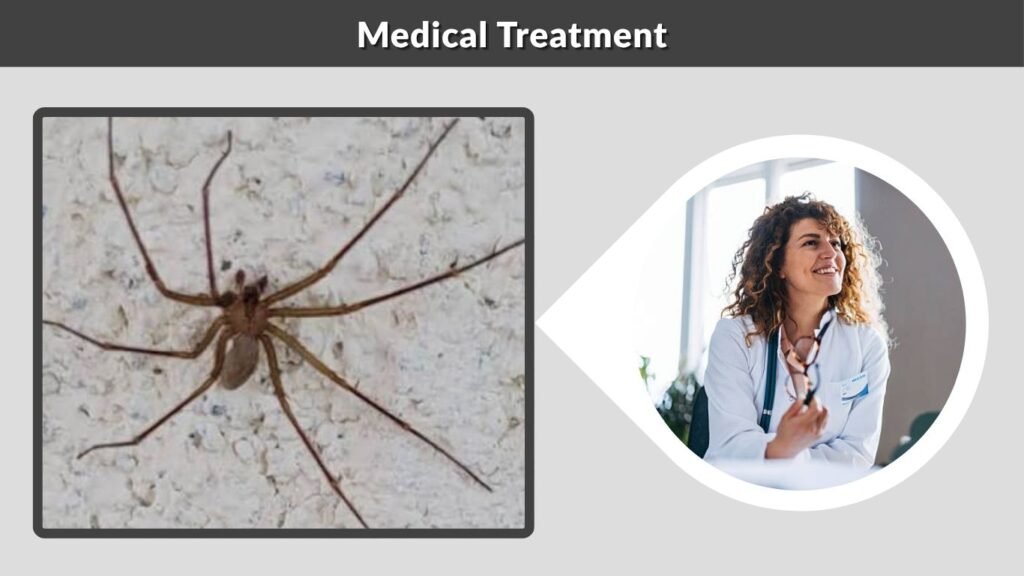
There is no approved recluse antivenom routinely available in the United States. Treatment is based on symptoms, wound care, pain control, and monitoring for complications.
What a Clinician May Do
A healthcare professional may:
- Examine the wound and consider alternative diagnoses
- Review tetanus vaccination status
- Provide appropriate pain or itching relief
- Recommend non-stick dressings and follow-up wound care
- Test blood and urine when systemic loxoscelism is suspected
- Monitor for anemia, hemolysis, kidney injury, or clotting problems
- Give intravenous fluids or a blood transfusion in severe cases
- Treat a confirmed secondary bacterial infection
- Refer a stable, mature wound for surgical evaluation if necessary
Antibiotics do not neutralize spider venom and are generally reserved for confirmed or strongly suspected infection. Early surgical removal of tissue is usually avoided because the eventual boundary of damage may not yet be clear. Dapsone is not routinely recommended because evidence of benefit is weak and it can cause dangerous blood-related side effects.
When to Seek Emergency Care
Call emergency services or go to an emergency department when a suspected bite causes breathing difficulty, facial or throat swelling, fainting, confusion, rapidly worsening illness, or other signs of a severe allergic reaction.
Urgent Warning Signs
Seek prompt medical attention for:
- Fever, chills, or repeated vomiting
- Severe or rapidly increasing pain
- Spreading purple or black discoloration
- A rapidly enlarging blister or wound
- Dark urine, jaundice, or pale skin
- Unusual fatigue or weakness
- Decreased urination
- Widespread rash
- Drainage, pus, or red streaks
- Symptoms in a young child
- A bite near the eye, mouth, or another sensitive location
Anyone who develops a wound or systemic illness after a known recluse bite should obtain medical care. Serious hemolysis is uncommon but can progress rapidly without treatment.
Preventing Desert Recluse Bites
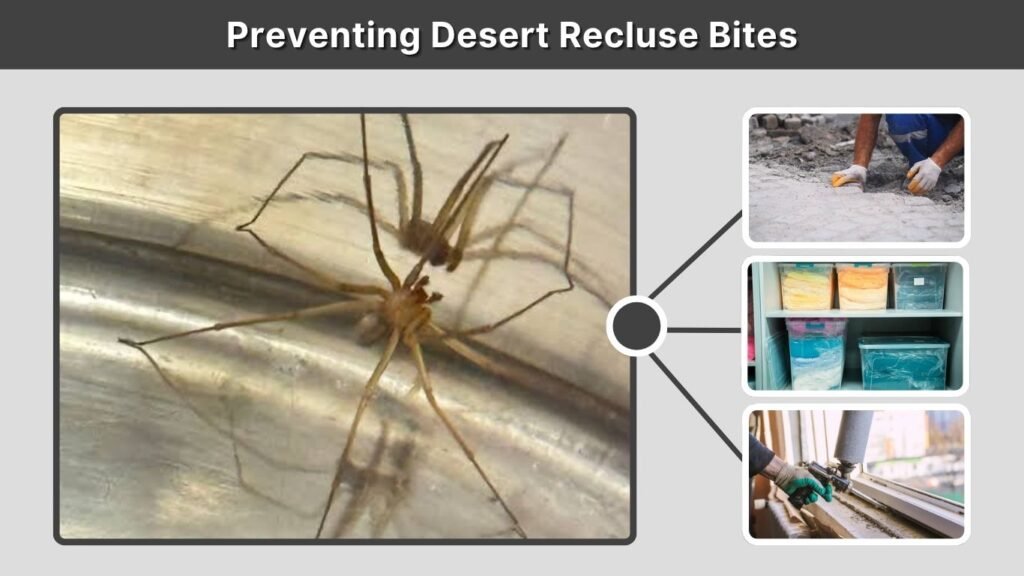
Desert recluses prefer retreating to biting. Reducing clutter and avoiding accidental contact are more useful than attempting to eliminate every spider around a property.
Prevention Tips
- Shake out shoes, clothing, gloves, and towels before use.
- Wear gloves when moving rocks, wood, boxes, or debris.
- Store rarely used clothing in sealed containers.
- Avoid leaving clothes and bedding on the floor.
- Keep beds slightly away from walls.
- Seal cracks around doors, windows, and foundations.
- Remove indoor clutter and outdoor debris.
- Store firewood away from living spaces.
- Use sticky traps in inaccessible locations for monitoring.
- Ask a qualified professional to identify suspected recluses.
FAQs
Is a desert recluse bite deadly?
Most bites are mild and heal without major complications. Severe systemic loxoscelism is rare but can be life-threatening, particularly when it causes hemolysis or kidney injury.
Does the bite hurt immediately?
Not always. It may initially feel like a small pinprick or go unnoticed. Pain, burning, itching, or tenderness can develop several hours later.
Will every desert recluse bite cause necrosis?
No. Most recluse bites cause limited inflammation rather than severe tissue loss. Only a minority develop significant ulceration, necrosis, or scarring.
How long does a desert recluse bite take to heal?
A mild reaction may improve over several days to a few weeks. Deeper ulcers can take weeks or months to close and may leave a scar.
Should I take antibiotics after a suspected bite?
Not automatically. Antibiotics treat bacterial infections, not spider venom. A clinician may prescribe them when examination suggests secondary infection.
