
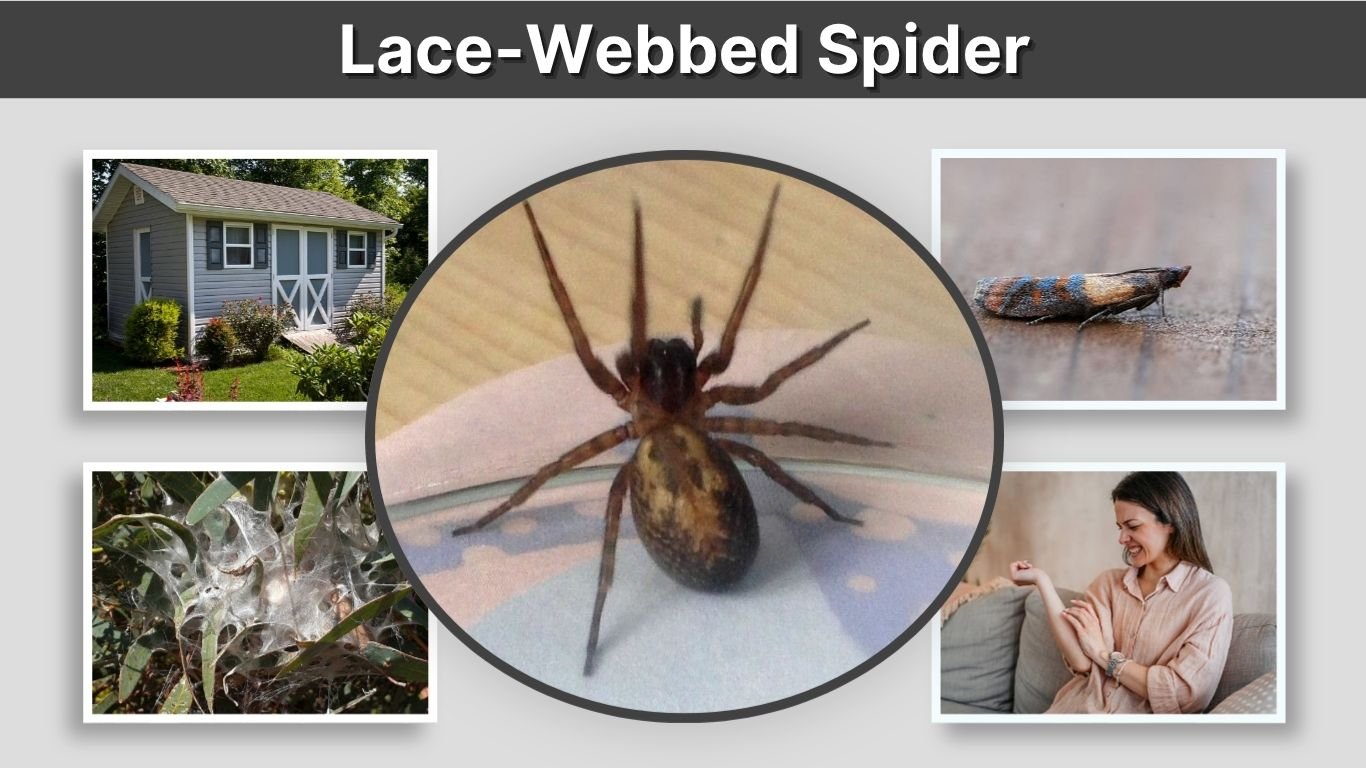
The lace-webbed spider is a dark, medium-sized spider commonly found around homes, gardens, walls, sheds, and woodland in the UK and parts of Europe. These spiders belong mainly to the genus Amaurobius and are named for the distinctive woolly, lace-like webs they build inside cracks and crevices. The black lace-weaver, Amaurobius ferox, is one of the best-known species. Although its dark appearance can cause concern, lace-webbed spiders are generally shy and bites to humans are uncommon.
What Is a Lace-Webbed Spider?
Lace-webbed spiders belong to the family Amaurobiidae and are sometimes called lace-weavers. They do not build large circular webs like garden orb-weavers. Instead, they produce dense, irregular retreats with a characteristic bluish-white or woolly appearance. Most species remain hidden during the day and emerge after dark to wait for insects approaching their webs.
Lace-Webbed Spider Identification
Common characteristics include:
- Genus: Often Amaurobius
- Body length: Commonly around 7–16 mm, depending on species and sex
- Color: Dark brown, reddish-brown, or almost black
- Abdomen: Often patterned with pale chevrons or markings
- Legs: Strong, brown to reddish-brown
- Body: Robust rather than extremely slender
- Activity: Mostly nocturnal
- Web: Dense, woolly, irregular silk around a retreat
Females are generally larger and heavier-bodied than males.
Black Lace-Weaver Spider
The black lace-weaver, Amaurobius ferox, is among the species most frequently noticed around buildings.
Adults are dark brown to almost black, with lighter markings on the abdomen. Females can appear particularly large and robust when mature.
They commonly hide under stones, logs, window frames, walls, sheds, and other sheltered structures.
Lace-Webbed Spider Habitat in the UK
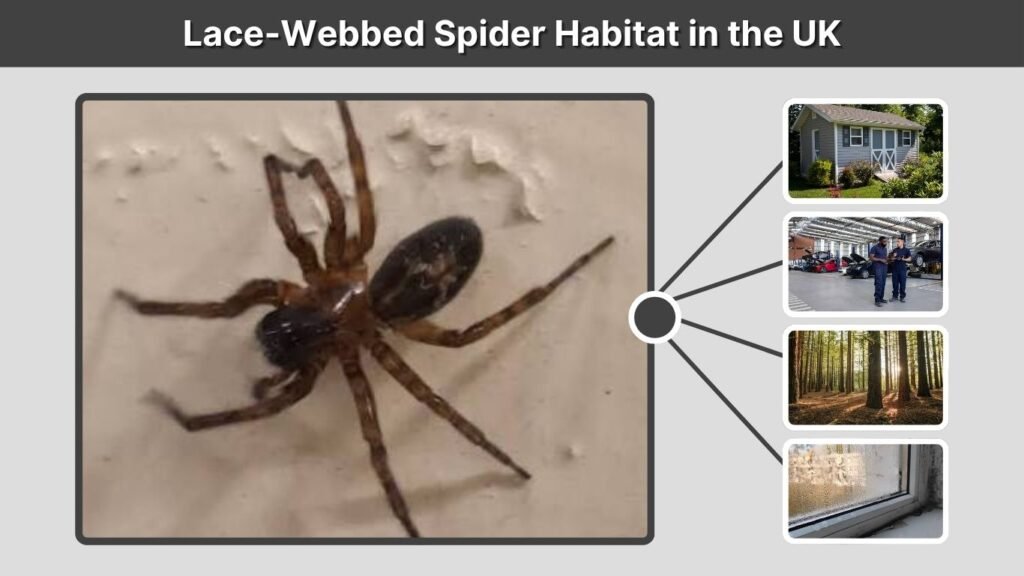
Lace-webbed spiders are widespread in Britain and can thrive in natural habitats as well as areas around human buildings. They prefer dark, protected locations where they can establish a permanent retreat and extend silk outward to detect approaching prey. Damp gardens, old walls, wood piles, and sheds often provide ideal conditions.
Where Lace-Webbed Spiders Live
Typical locations include:
- Cracks in brick walls
- Window frames
- Sheds
- Garages
- Cellars
- Under stones
- Beneath logs
- Tree bark
- Garden walls
- Wood piles
- Woodland
- Around building foundations
Finding one near a house does not necessarily indicate an infestation.
Lace-Webbed Spider in Houses
Most lace-webbed spiders prefer sheltered cracks rather than open indoor spaces.
Mature males may wander farther from their webs while searching for females, especially during breeding periods. This is when people are more likely to notice one crossing a floor or appearing near doors and windows.
If one enters a house, it can usually be moved outside using a container without touching it directly.
What Does a Lace-Webbed Spider Web Look Like?
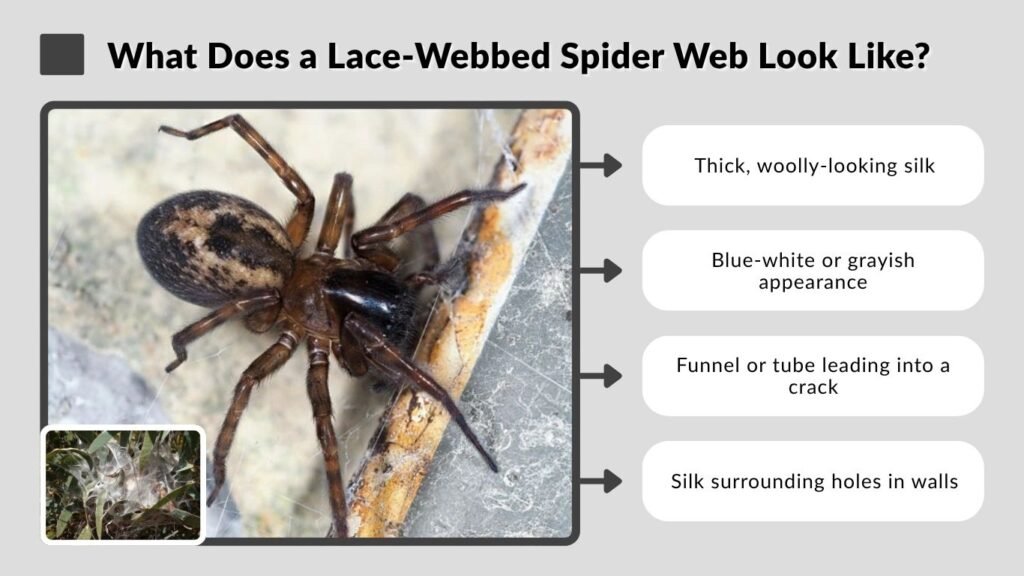
The web is one of the spider’s most distinctive features. Unlike a neat orb web, a lace-webbed spider produces an irregular sheet of silk connected to a tube-like retreat. The silk has an unusual fuzzy texture because these spiders use a special structure called a cribellum to produce extremely fine strands.
Lace-Webbed Spider Web Identification
Look for:
- Thick, woolly-looking silk
- Blue-white or grayish appearance
- Irregular sheet rather than a circular web
- Funnel or tube leading into a crack
- Silk surrounding holes in walls
- Webbing under stones or logs
- Dust and debris trapped in older webs
The spider generally waits inside the retreat until prey contacts the outer silk.
How the Web Catches Prey
The very fine cribellate silk can entangle small insects without relying entirely on sticky glue droplets.
When an insect becomes trapped, vibrations travel through the web. The spider rushes from its retreat, bites the prey, and drags it back into the sheltered area.
This allows the spider to hunt while remaining protected from predators and environmental conditions.
What Do Lace-Webbed Spiders Eat?
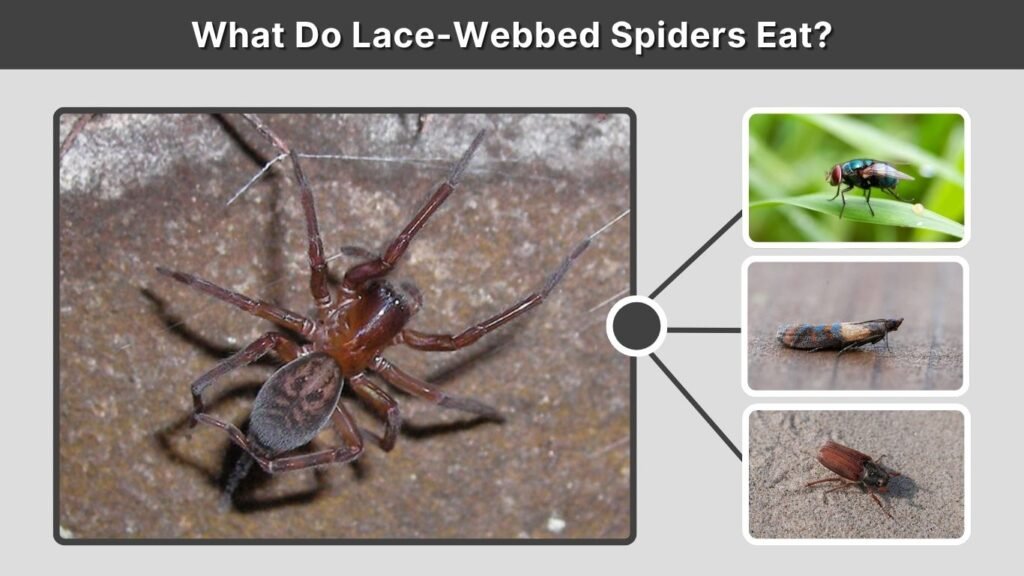
Lace-webbed spiders are carnivorous predators that mainly feed on small insects and other arthropods. Their webs are usually positioned in places where crawling insects frequently pass. By capturing these animals, lace-weavers can contribute to controlling insect populations in gardens and around homes.
Lace-Webbed Spider Diet
Common prey may include:
- Flies
- Moths
- Beetles
- Small cockroaches
- Earwigs
- Ants
- Small crickets
- Other spiders
- Various crawling insects
The exact diet depends largely on what is available around the spider’s web.
Hunting Behavior
A lace-webbed spider does not normally wander far from its retreat to hunt.
Instead, it relies on vibrations created when prey contacts its web. Once it detects movement, the spider quickly approaches and delivers a venomous bite to immobilize the insect.
After feeding, remains may accumulate around an established web.
Lace-Webbed Spider Bite
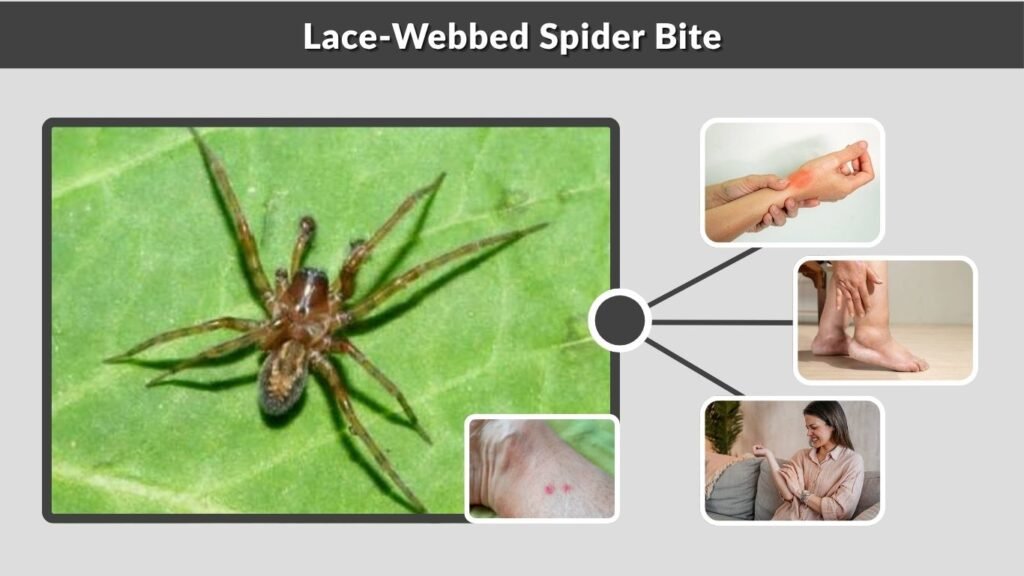
Lace-webbed spiders possess venom because they need it to subdue insects. However, they are not considered aggressive toward people. Human bites are uncommon and usually occur only when a spider becomes trapped against the skin, handled, or otherwise strongly disturbed.
What Happens If a Lace-Webbed Spider Bites?
Reported or possible localized effects can include:
- Immediate discomfort
- Mild to moderate pain
- Redness
- Temporary swelling
- Itching
- Tenderness around the bite
Symptoms are generally expected to remain localized and improve with time.
Spider bites can be difficult to identify accurately because many skin conditions and insect bites can look similar.
What to Do After a Suspected Bite
Wash the affected area gently with soap and water and avoid scratching it.
A cold pack wrapped in cloth may help reduce discomfort and swelling.
Seek medical advice if symptoms become severe, swelling spreads significantly, the wound appears infected, or symptoms such as breathing difficulty or widespread reactions occur.
Is a Lace-Webbed Spider Dangerous?
Despite their dark coloration and relatively substantial fangs, lace-webbed spiders are not generally considered dangerous to humans. Their venom is primarily adapted for small arthropod prey. They usually retreat into their web when disturbed rather than attempting to attack a person.
Are Lace-Webbed Spiders Poisonous?
No. They are venomous rather than poisonous.
A venomous animal delivers venom through a bite or sting, while a poisonous animal causes harm when touched or eaten.
Lace-webbed spiders use their fangs to inject venom into prey, but this does not make them a major human health threat.
Should You Remove Them?
Outdoor lace-webbed spiders usually do not need to be removed.
They are natural predators and may help reduce insects around buildings and gardens.
If a spider builds a web somewhere inconvenient, it can be relocated carefully rather than killed.
Lace-Webbed Spider vs False Widow
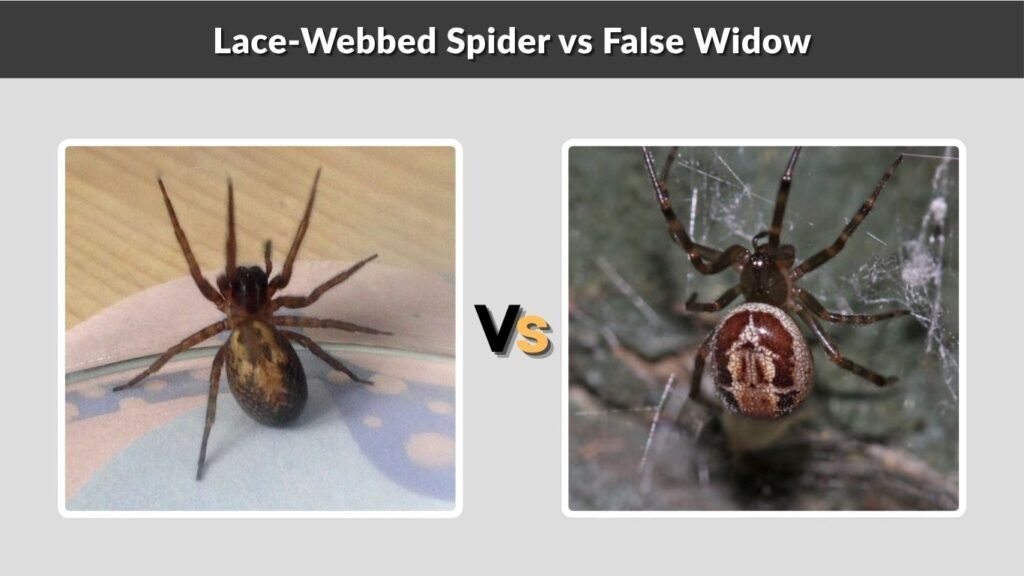
Lace-webbed spiders are sometimes confused with false widow spiders because both can be dark-colored and may occur around houses. However, they differ noticeably in body shape, markings, web structure, and overall appearance. The false widow usually has a smoother, more rounded and glossy abdomen, whereas lace-webbed spiders tend to look hairier and more robust.
Main Differences
Lace-webbed spider:
- Hairier appearance
- Robust body
- Often shows chevron-like abdominal markings
- Woolly lace-like web
- Commonly hides deep inside cracks
False widow:
- More rounded abdomen
- Often smoother and shinier
- Typically builds a tangled cobweb
- Abdomen may have cream or pale markings
- Belongs to the genus Steatoda
Photographs can sometimes be misleading, so multiple characteristics should be considered before identifying either spider.
Lace-Webbed Spider Reproduction and Life Cycle
The life cycle begins with eggs protected by the female inside or near her retreat. Young spiderlings remain associated with the nest for a period before dispersing. Lace-webbed spiders have an especially unusual reproductive behavior because, in some species, the mother becomes an important first food source for her offspring after they hatch.
Eggs and Spiderlings
Females produce an egg sac within a sheltered retreat.
The spiderlings hatch and initially remain together close to their mother.
In species such as Amaurobius ferox, the mother can eventually be consumed by her offspring, a behavior known as matriphagy.
This provides the young spiders with a substantial source of nutrition during their earliest development.
FAQs
Lace-webbed spiders are often noticed because of their dark appearance and unusual woolly webs. Most questions concern whether they bite, whether they are dangerous, and how to distinguish them from false widows. Understanding their natural behavior helps show that they are primarily shy insect predators rather than spiders that actively threaten people.
Are Lace-Webbed Spiders Dangerous?
No. They are not generally considered dangerous to humans. Bites are uncommon and usually produce only localized symptoms.
Do Lace-Webbed Spiders Bite?
They can bite if trapped or handled, but they normally avoid contact with people.
Are Lace-Webbed Spiders Found in the UK?
Yes. Several Amaurobius species occur in the UK and are frequently found in gardens, walls, sheds, and woodland.
Is a Lace-Webbed Spider a False Widow?
No. Lace-webbed spiders and false widows belong to different spider families and differ in body shape, markings, and web structure.
What Does a Lace-Webbed Spider Web Look Like?
The web is usually irregular, dense, and woolly, often extending from a crack or crevice into a small sheet of bluish-white or gray silk.
