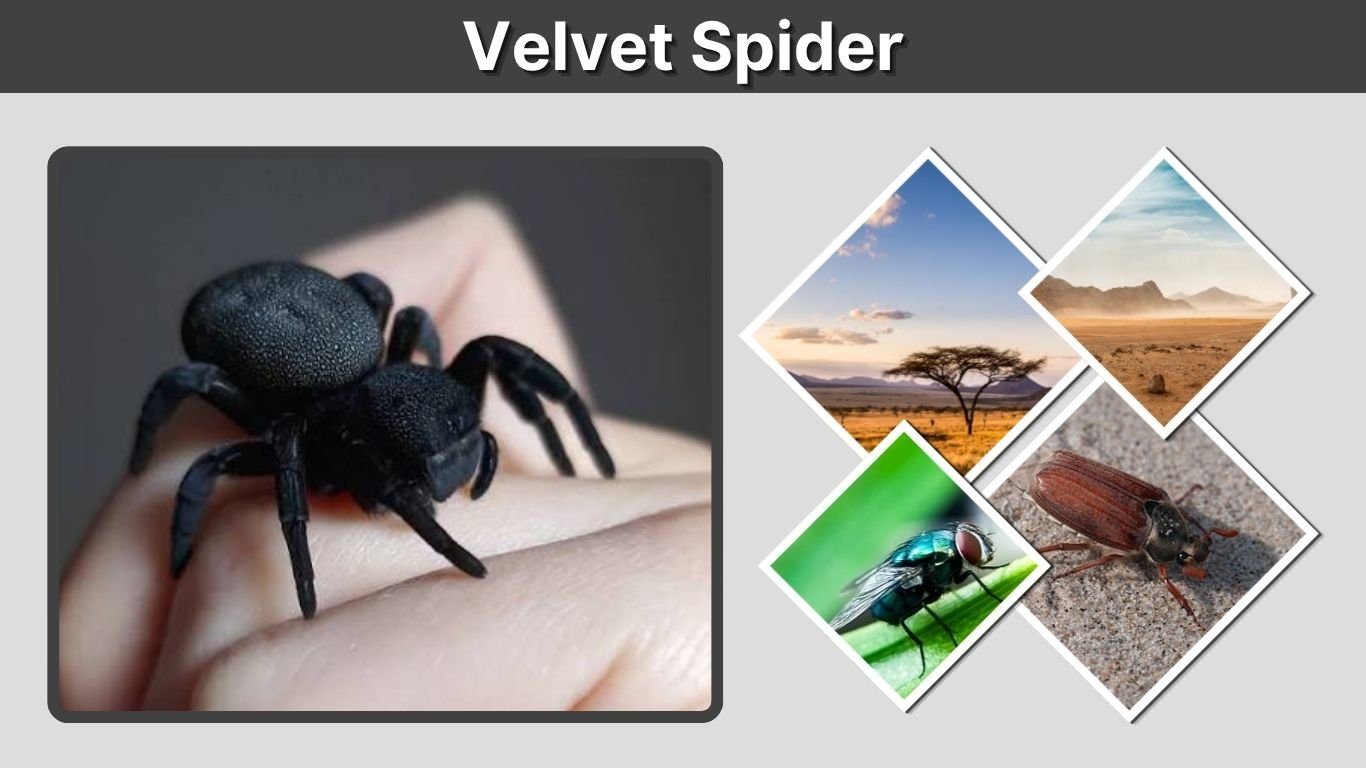
The velvet spider is a striking arachnid known for its thick, soft-looking body covering and vivid colors. Most belong to the family Eresidae, a group found mainly across Europe, Africa, and parts of Asia. Depending on the species, velvet spiders may be black, red, orange, blue-gray, or patterned. Their unusual appearance has also made some species increasingly popular among exotic-pet keepers. Despite their dramatic colors and sturdy build, velvet spiders are generally secretive animals that spend much of their lives hidden in silk-lined retreats.
What Is a Velvet Spider?
Velvet spiders get their common name from the dense, short hairs covering their bodies, which create a smooth, velvety appearance. The family Eresidae includes many species with very different colors, behaviors, and lifestyles.
Most velvet spiders live on or near the ground, although some occupy vegetation, crevices, or other sheltered habitats.
Velvet Spider Identification
Common characteristics include:
- Thick, compact body
- Dense velvet-like hairs
- Strong, relatively short legs
- Eight small eyes
- Large chelicerae and visible fangs
- Black, red, orange, brown, or gray coloration
- Males sometimes more colorful than females
- Silk retreats rather than classic circular webs
Not every fuzzy spider is a velvet spider, so geographic location and body structure are important for accurate identification.
Velvet Spider Size
Size varies greatly between species and sexes. Many velvet spiders have a body length of roughly 6–20 mm, although some can be larger.
Females are often noticeably larger and heavier-bodied than males. A spider may appear larger because of its thick legs and dense hairs.
Black, Red, and Other Velvet Spider Colors
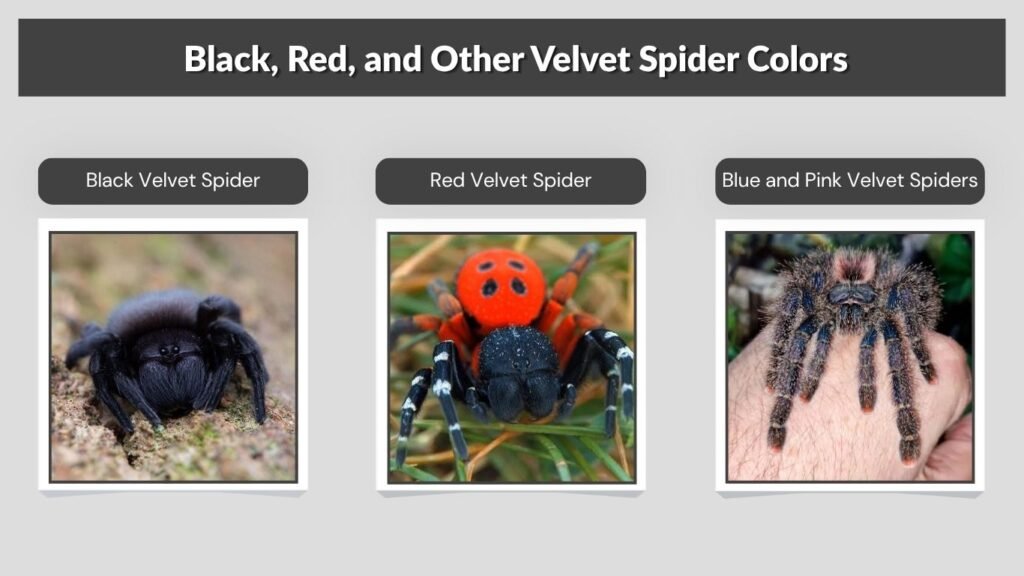
Velvet spiders are especially famous for the remarkable differences in coloration among species.
Black Velvet Spider
Black velvet spiders usually have dark brown to deep black bodies covered in dense hairs. Females of several species are predominantly black, while males may develop brighter markings when mature.
The dark coloration and stocky body can look intimidating, but appearance alone does not indicate that a spider is dangerous.
Red Velvet Spider
The term red velvet spider commonly refers to species whose males have bright red or orange abdomens with dark markings.
Some male Eresus species resemble ladybirds, which is why they are often called ladybird spiders.
Blue and Pink Velvet Spiders
Names such as blue velvet spider, Egyptian pink velvet spider, and orange-ring velvet spider are frequently used in the exotic-pet trade for particular species or locality forms.
Color can change somewhat with age, sex, lighting, and molt stage, so pet-trade names should not replace scientific identification.
Ladybird Velvet Spider
Ladybird spiders are among the best-known velvet spiders, particularly members of the genus Eresus.
Adult males are famous for their colorful appearance, while females are usually darker and much more secretive.
Male Velvet Spider
Males are commonly smaller and more brightly colored. After reaching maturity, they may leave their retreats and wander in search of females.
This wandering behavior explains why colorful male velvet spiders are more likely to be seen in open areas.
Female Velvet Spider
Females generally have larger abdomens and darker coloration. They spend much of their lives inside sheltered silk retreats.
Female velvet spiders also play an extraordinary role in caring for their offspring, making their reproductive behavior one of the most fascinating aspects of the family.
Velvet Spider Habitat and Web
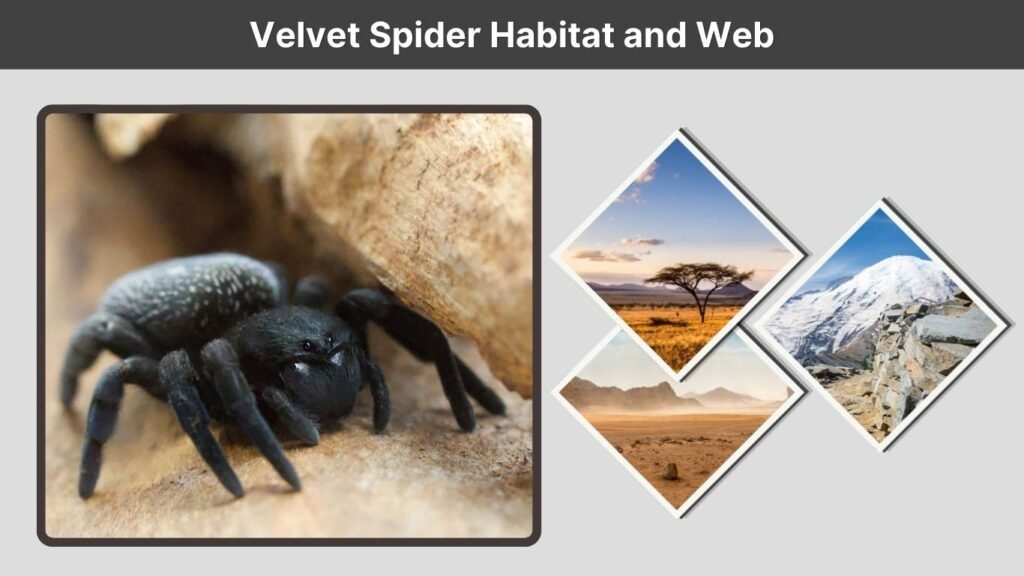
Velvet spiders occur in a variety of habitats, including dry grasslands, rocky regions, Mediterranean environments, deserts, shrublands, and woodland edges.
Many species prefer warm locations with soil suitable for making retreats.
What Does a Velvet Spider Web Look Like?
Velvet spiders generally do not build large orb-shaped webs.
Instead, they create:
- Silk-lined burrows
- Tubular retreats
- Sheet-like webbing
- Trip lines around entrances
- Dense silk beneath stones or vegetation
When an insect touches the surrounding silk, vibrations alert the spider, which quickly attacks its prey.
What Do Velvet Spiders Eat?
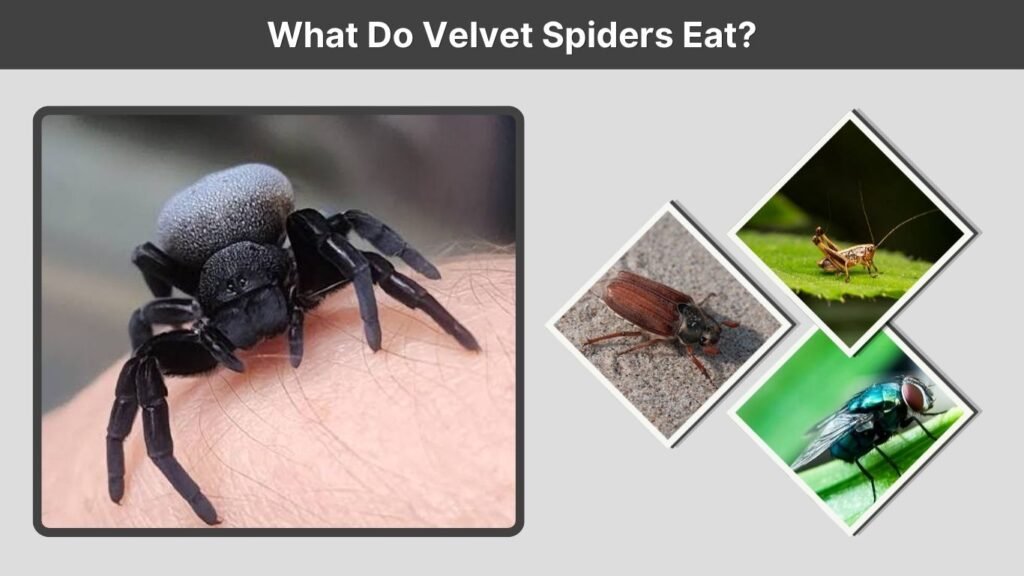
Velvet spiders are carnivorous predators that mainly feed on insects and other small arthropods.
Their prey may include:
- Beetles
- Crickets
- Cockroaches
- Grasshoppers
- Small moths
- Flies
- Other small arthropods
Species that live in burrows often wait near the entrance until vibrations reveal nearby prey.
Rather than chasing prey over long distances, many velvet spiders rely heavily on ambush hunting.
Are Velvet Spiders Poisonous?
Velvet spiders are venomous, not poisonous. Like most spiders, they use venom delivered through their fangs to immobilize prey.
However, the presence of venom does not automatically mean a spider poses a serious threat to humans.
Are Velvet Spiders Dangerous?
Most velvet spiders are not considered dangerously venomous to humans. They are generally defensive rather than aggressive and usually prefer hiding or retreating.
Handling should still be avoided because any spider may bite when frightened, squeezed, or restrained.
Velvet Spider Bite
Documented bites are relatively uncommon. A defensive bite could potentially cause symptoms such as:
- Local pain
- Redness
- Minor swelling
- Tenderness
- Itching or irritation
People can react differently to bites. Anyone experiencing severe pain, rapidly increasing swelling, breathing difficulty, dizziness, or other significant symptoms should seek medical care.
Velvet Spider Lifespan and Reproduction
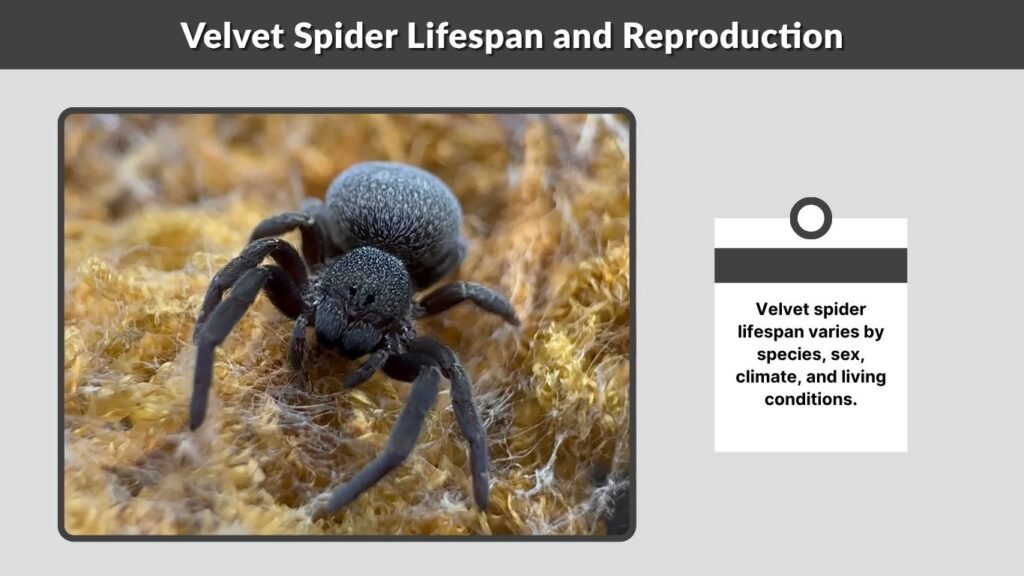
Velvet spider lifespan varies by species, sex, climate, and living conditions. Females often live significantly longer than adult males.
Some species develop slowly, spending considerable time underground before reaching maturity.
Velvet Spider Mother and Babies
Certain velvet spiders are famous for an extreme form of maternal care.
The female protects her offspring after they hatch and may provide them with food. In some species, the spiderlings eventually consume the mother’s body, a reproductive strategy known as matriphagy.
Although this behavior sounds dramatic, it provides young spiders with a concentrated source of nutrients during an important stage of development.
How Long Does a Velvet Spider Mom Live After Giving Birth?
There is no single lifespan applicable to every velvet spider. In species that practice matriphagy, the mother dies as part of the reproductive process after investing heavily in her offspring.
In other velvet spider species, reproductive behavior may differ. Therefore, claims that every velvet spider mother dies immediately after giving birth are inaccurate.
Velvet Spider as a Pet
Some velvet spiders are kept by experienced invertebrate enthusiasts because of their colors, relatively small size, and interesting behavior.
They are generally more suitable as display animals than as spiders intended for frequent handling.
Velvet Spider Enclosure
A suitable enclosure should focus on security, ventilation, and opportunities for the spider to build a retreat.
Important considerations include:
- Secure escape-proof lid
- Appropriate ventilation
- Adequate substrate for burrowing species
- Small hides or pieces of bark
- Suitable humidity for the particular species
- Correct temperature range
- Appropriately sized live prey
Requirements vary considerably between desert, Mediterranean, and tropical species, so the exact species should be identified before establishing an enclosure.
Velvet Spider Handling
Routine handling is not recommended. Velvet spiders are small and can easily be injured by falls, squeezing, or sudden movements.
Handling can also stress the spider and increase the chance of a defensive bite. Using a catch cup for enclosure maintenance or transfers is generally safer.
Velvet Spider vs Jumping Spider
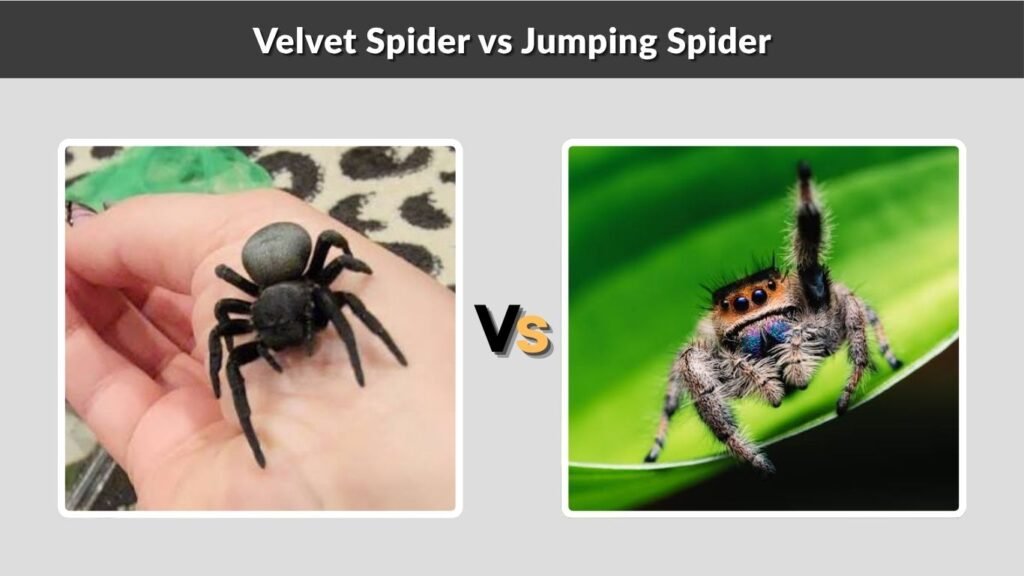
Velvet spiders and jumping spiders can both be hairy and colorful, but they belong to different spider families.
Jumping spiders have very large forward-facing eyes and actively hunt prey using excellent vision. Velvet spiders generally have smaller eyes and rely more heavily on silk retreats, vibration detection, and ambush tactics.
Jumping spiders also tend to move quickly and visibly explore their surroundings, while many velvet spiders spend considerable time hidden.
Interesting Velvet Spider Facts
Velvet spiders have several characteristics that make them unusual among spiders:
- Their bodies are covered with dense, velvet-like hairs.
- Some males develop brilliant red and black coloration.
- Ladybird spiders belong to the velvet spider family.
- Many species spend most of their lives inside retreats.
- Females are commonly larger than males.
- Some species demonstrate remarkable parental care.
- Certain spiderlings consume their mother after hatching.
- They primarily hunt insects and other arthropods.
Their combination of unusual appearance, secretive behavior, and complex reproduction has made velvet spiders increasingly interesting to both researchers and arachnid enthusiasts.
FAQs
Are velvet spiders poisonous?
No. Velvet spiders are venomous rather than poisonous. They use venom to capture prey, but most species are not considered medically dangerous to humans.
How big does a velvet spider get?
Many species measure approximately 6–20 mm in body length, although size varies by species and sex. Females are commonly larger than males.
Can you keep a velvet spider as a pet?
Yes, some species are kept as exotic pets. They require a secure enclosure and species-appropriate temperature, moisture, substrate, and prey.
How long do velvet spiders live?
Lifespan differs among species. Females often survive longer than adult males, and environmental conditions can significantly affect longevity.
Do velvet spider mothers die after giving birth?
In some velvet spider species, females eventually sacrifice themselves as food for their spiderlings through matriphagy. However, reproductive behavior differs across the family, so this does not occur identically in every velvet spider species.
