
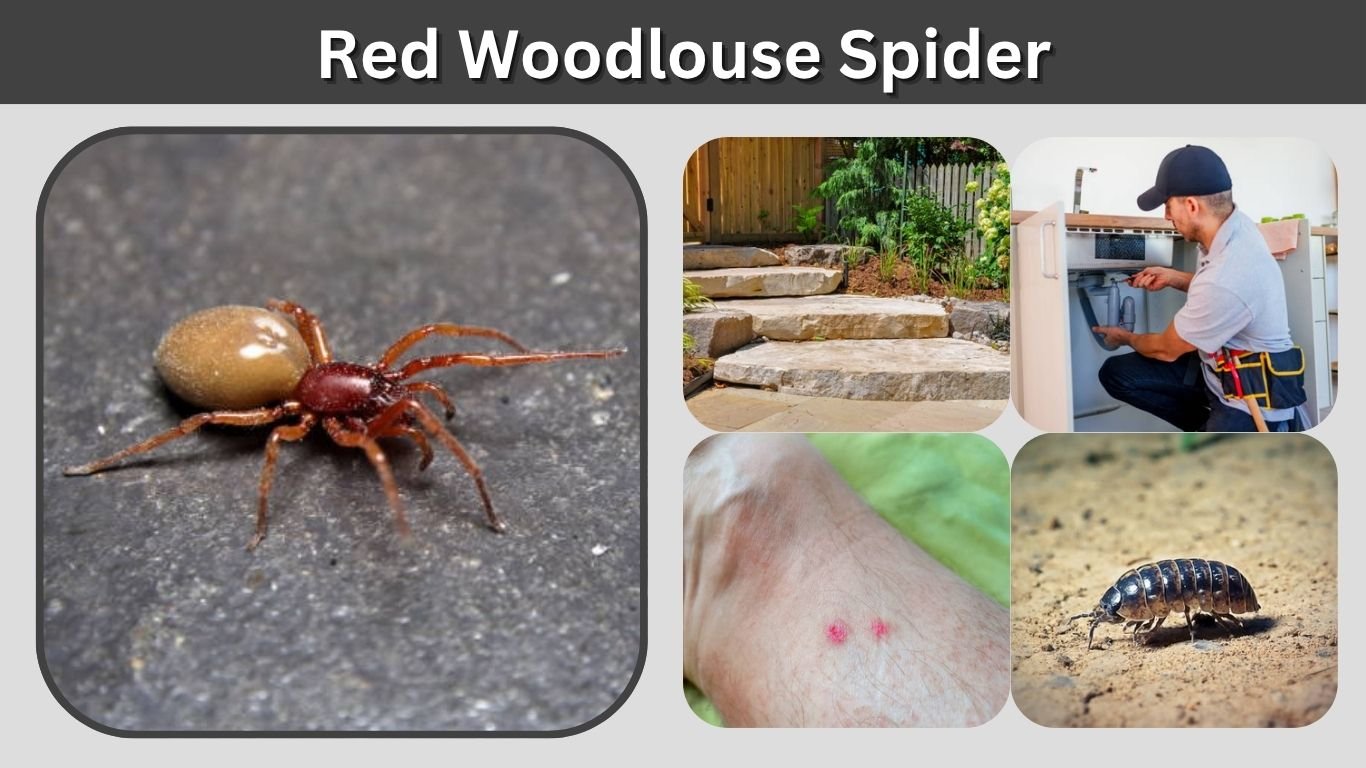
The red woodlouse spider is a distinctive ground-hunting spider with a glossy red-orange front body, reddish legs, a pale abdomen, and unusually large fangs. Scientifically known as Dysdera crocata, it is also called the woodlouse hunter, sowbug killer, pill bug hunter, or slater spider. Despite its intimidating appearance, it is not considered a serious threat to humans. It spends most of the day hidden in damp shelters and emerges at night to hunt woodlice and other small ground-dwelling animals.
Red Woodlouse Spider Quick Facts
| Feature | Description |
| Scientific name | Dysdera crocata |
| Family | Dysderidae |
| Body color | Red-orange front body with a cream or gray abdomen |
| Female size | Approximately 11–15 mm |
| Male size | Approximately 9–10 mm |
| Number of eyes | Six |
| Main food | Woodlice and other isopods |
| Activity | Primarily nocturnal |
| Web use | Builds a silk retreat but not a prey-catching web |
| Bite danger | Generally minor |
| Common locations | Gardens, basements, mulch, rocks, bark and wood piles |
The accepted scientific name is Dysdera crocata, and females are generally larger than males. Pennsylvania State University Extension gives a body length of about 11–15 mm for females and 9–10 mm for males.
What Is a Red Woodlouse Spider?
The red woodlouse spider is a specialized predator named for its habit of hunting woodlice. Woodlice are crustaceans with hard, segmented bodies, so the spider has developed strong jaws and long fangs capable of reaching their softer undersides.
Unlike orb weavers and house spiders that catch insects in visible webs, the woodlouse spider actively searches for prey. It normally remains inside a silken shelter during daylight and hunts after dark.
The species is believed to have originated in the Mediterranean or surrounding Old World regions but has become established in numerous parts of Europe, North America, South America, Australia and New Zealand. Global biodiversity records recognize it as an introduced species in multiple countries and islands.
How to Identify a Red Woodlouse Spider
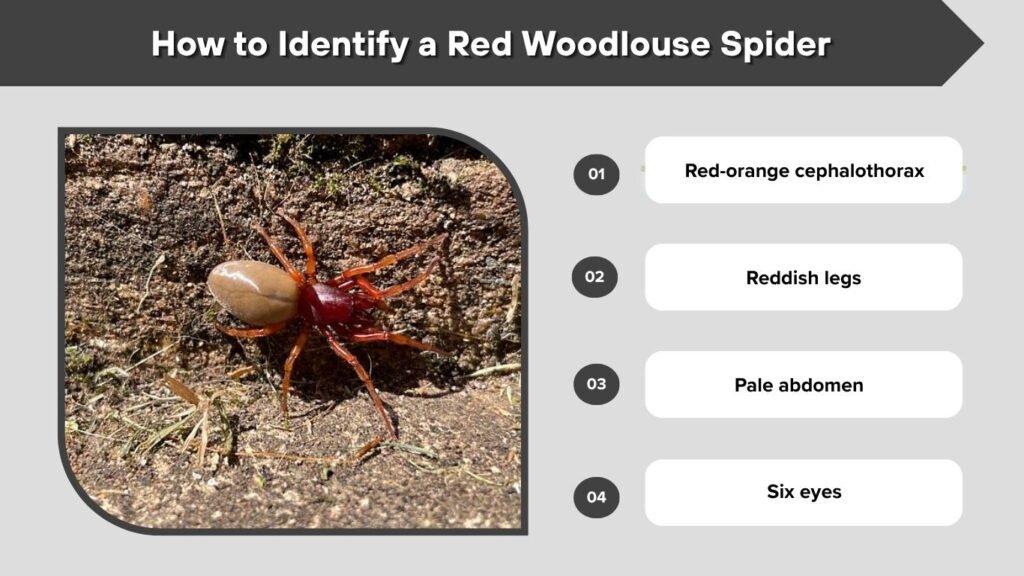
The spider’s contrasting red and pale coloration makes it easier to recognize than many small brown spiders. However, proper identification should consider its eyes, fangs, body shape and habitat rather than color alone.
Identification Features
- Red-orange cephalothorax: The front body section is smooth, shiny and usually deep orange, reddish brown or dark red.
- Reddish legs: All eight legs are orange-red, with the front legs often appearing especially strong.
- Pale abdomen: The abdomen is normally cream, pinkish gray, beige or light brown.
- Six eyes: The eyes are arranged near the front of the head rather than forming the eight-eye pattern found in most spiders.
- Large fangs: Two prominent, forward-projecting chelicerae give the spider a menacing appearance.
- Smooth body: It lacks the conspicuous hairs, markings and patterned abdomen seen on many other spiders.
Utah State University describes the species as having a reddish head area, cream-to-gray abdomen, six eyes and mouthparts that project directly in front of its head.
Why Is the Spider Red and White?
The phrase “red and white woodlouse spider” usually refers to the contrast between its reddish front body and pale abdomen. The abdomen is not normally pure white; it can appear cream, tan, pinkish gray or light silvery brown depending on the individual and lighting.
Young spiders may appear paler and more orange, while mature individuals can develop deeper red coloring. A recently fed spider may also have a fuller, darker abdomen.
Woodlouse Spider vs Brown Recluse
Woodlouse spiders are sometimes misidentified as brown recluse spiders because both have six eyes and may be found in dark shelters. However, their overall appearances are different.
| Feature | Red woodlouse spider | Brown recluse |
| Front body | Glossy red or orange | Light to medium brown |
| Abdomen | Pale cream or gray | Usually uniformly brown |
| Fangs | Large and visibly projected | Less conspicuous |
| Body markings | Generally unmarked | May have a violin-like marking |
| Typical bite effect | Temporary localized pain | Can occasionally cause significant injury |
| California presence | Established | No established brown recluse population |
The University of California notes that woodlouse spiders have six eyes arranged in two groups of three and lack obvious body markings. It also states that established brown recluse populations do not occur in California, despite frequent reports of supposed bites.
Where Do Red Woodlouse Spiders Live?
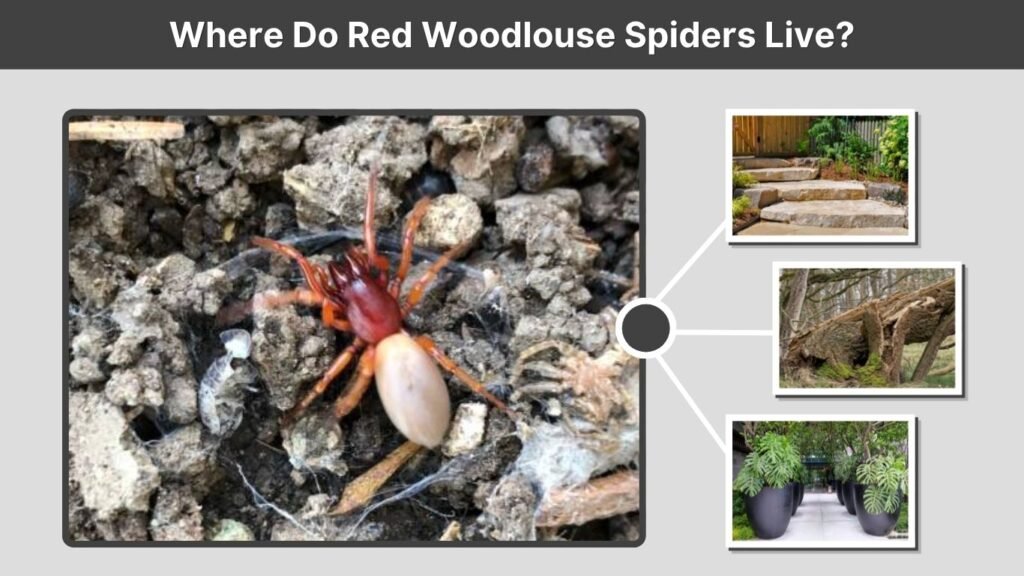
Red woodlouse spiders prefer dark, damp environments where woodlice are abundant. They are usually found at ground level rather than in high corners or hanging webs.
Common Outdoor Shelters
They frequently hide beneath:
- Rocks and paving stones
- Fallen bark and decaying logs
- Bricks and garden decorations
- Plant pots and outdoor containers
- Mulch and leaf litter
- Garbage cans
- Damp boards and wood piles
- Objects resting directly on soil
The spider constructs a small silk-lined retreat inside a crevice or beneath an object. It rests there during daylight and leaves the shelter to hunt at night. Utah State University specifically associates it with rocks, bark, mulch, plants, wood piles and other moist areas occupied by isopods.
Why Are They Found Inside Houses?
A woodlouse spider may accidentally enter a basement, bathroom, garage, laundry room or ground-floor room. Indoor sightings are more likely where moisture, cracks and woodlice provide suitable conditions.
Finding one spider does not necessarily indicate an infestation. The spider may have wandered through a door gap or foundation crack while searching for prey. Repeated sightings could indicate excessive moisture or a population of woodlice around the building.
Red Woodlouse Spiders in the UK
The red woodlouse spider is established in Britain and is recognized by the British Arachnological Society and other UK wildlife organizations. It can be found in gardens, woodland edges and areas around buildings, especially beneath stones, pots and dead wood.
The Woodland Trust describes it as a shiny spider with a reddish head and legs, a pinkish-gray abdomen and prominent jaws. Females may reach approximately 11–15 mm in body length.
British homeowners may encounter it in damp sheds, garages and lower rooms. Although it should be handled respectfully, its presence does not mean the home contains a medically dangerous spider.
Red Woodlouse Spiders in Utah and California
Woodlouse spiders also occur in parts of the western United States. Utah State University provides specific identification and management guidance for the species, confirming its occurrence in Utah. The university notes that invading spiders may be particularly noticeable between August and October.
The species has also been documented in California. Records include sightings from Orange County and the San Francisco Bay Area, while the University of California includes it among spiders that residents may confuse with brown recluses.
What Do Red Woodlouse Spiders Eat?
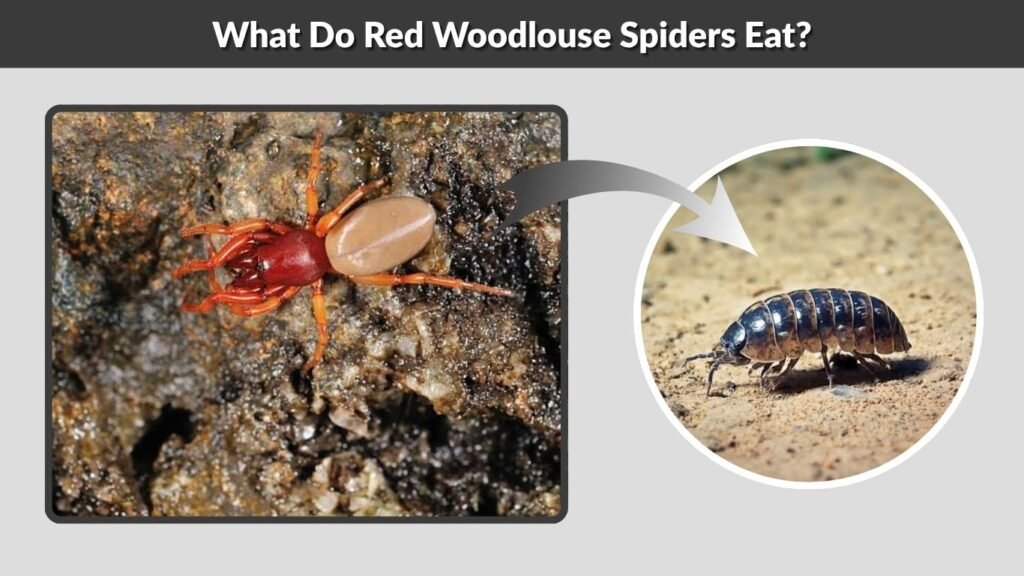
Woodlice are their primary prey. These small crustaceans are also known as pill bugs, sowbugs, roly-polies or slaters.
The spider’s long fangs allow it to attack around the edges or underside of the woodlouse’s armored body. It may position one fang above the prey and the other beneath it, helping penetrate less-protected areas.
Woodlouse spiders may also capture other small ground-dwelling invertebrates when available. However, their body structure, hunting behavior and preferred habitat are strongly associated with feeding on isopods. Utah State University identifies isopods as their diet and considers the spiders beneficial predators.
Is the Red Woodlouse Spider Poisonous?
The red woodlouse spider is not poisonous. It is technically venomous because it injects venom through its fangs to subdue prey.
“Poisonous” describes an animal or substance that is harmful when eaten, touched or absorbed. “Venomous” describes an animal that delivers venom through a bite or sting.
Although the spider possesses venom, it is not regarded as a significant human health hazard. Utah State University lists it as not known to be a health hazard, while Colorado State University states that its venom is not known to cause medical problems.
Does a Red Woodlouse Spider Bite?
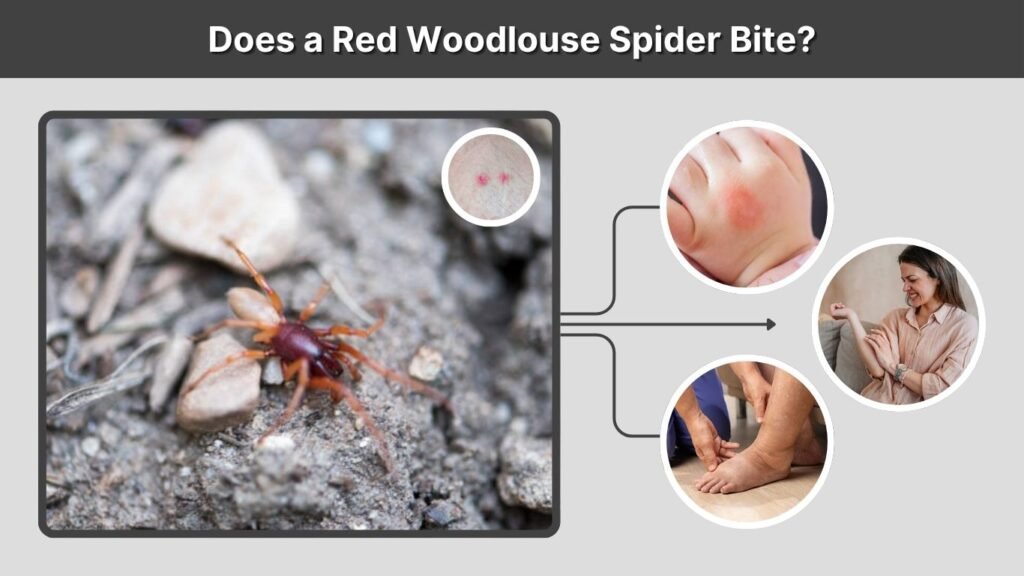
A woodlouse spider can bite if it is picked up, squeezed, trapped against the skin or otherwise threatened. It does not normally pursue or attack people.
Because its fangs are large, a bite may cause an immediate sharp or pinching sensation. Possible localized effects include:
- Minor pain
- A small red mark
- Mild swelling
- Tenderness
- Temporary itching
A published examination of verified Dysdera crocata bites found that they were virtually harmless. Minor pain was the principal symptom and typically lasted less than one hour, with much of the discomfort possibly caused by the fangs physically puncturing the skin.
What to Do After a Bite
Wash the area gently with soap and water. Apply a cold compress wrapped in cloth for 10–20 minutes to reduce discomfort and swelling. Avoid scratching, cutting or squeezing the bite.
Seek medical advice when pain or swelling continues to worsen, redness spreads, pus develops, or the area becomes unusually hot. Emergency care is necessary for breathing difficulty, facial swelling, faintness or another severe reaction. These would not be typical effects of a woodlouse spider bite.
How to Remove Woodlouse Spiders
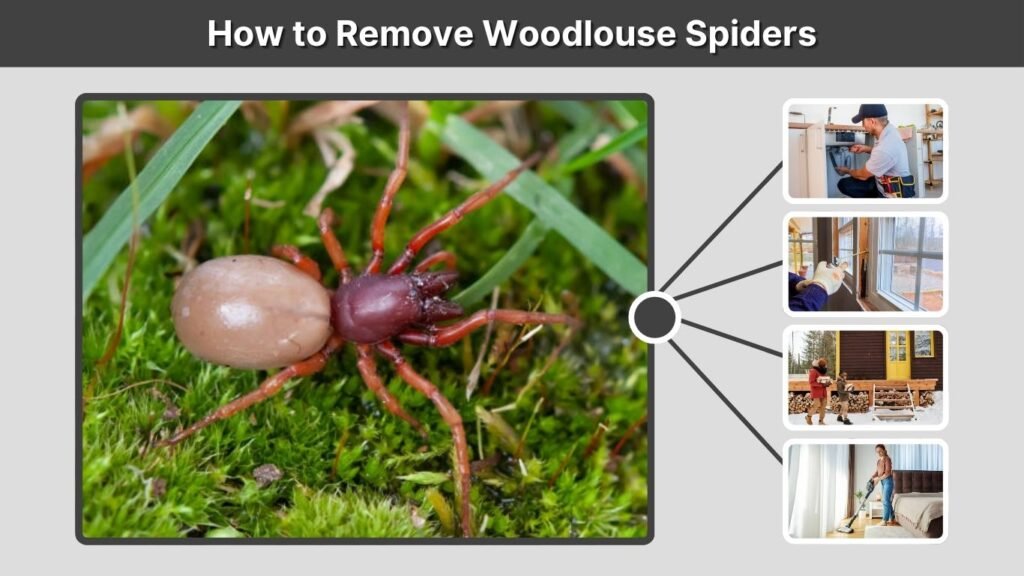
A single spider can be captured beneath a glass or container and released outside. Avoid handling it directly because its defensive bite can be painful.
To reduce recurring sightings:
- Fix leaks and improve ventilation in damp rooms.
- Seal cracks around doors, windows and foundations.
- Install tight-fitting exterior door sweeps.
- Move wood piles, stones and stored materials away from walls.
- Remove heavy leaf litter and unnecessary ground-level clutter.
- Reduce woodlice by correcting moisture problems.
- Vacuum spiders that enter indoor living areas.
Reducing moisture and the spider’s woodlouse prey is usually more effective than repeatedly applying pesticides. Utah State University recommends habitat reduction, sealing entry points, addressing moisture and controlling isopods around affected buildings.
FAQs
Are red woodlouse spiders dangerous?
They are not considered medically dangerous to most people. Their large fangs can produce a painful defensive bite, but verified cases have mainly involved brief, localized discomfort.
Why does a woodlouse spider have such large fangs?
Its fangs are adapted for hunting woodlice, which have hard, armored bodies. The spider uses them to reach softer areas around the prey’s underside or body segments.
Do red woodlouse spiders build webs?
They do not construct prey-catching webs. Instead, they build silk-lined retreats beneath rocks, bark or other sheltered objects and leave them at night to hunt.
Are woodlouse spiders beneficial?
Yes. They prey on woodlice and other small animals around the ground. Their presence may help control isopods, although frequent indoor sightings can indicate excess moisture.
Should you kill a red woodlouse spider?
Killing it is usually unnecessary. Capture it with a container and move it outdoors. Prevent future entry by reducing moisture, sealing gaps and removing sheltered habitat near the building.
