
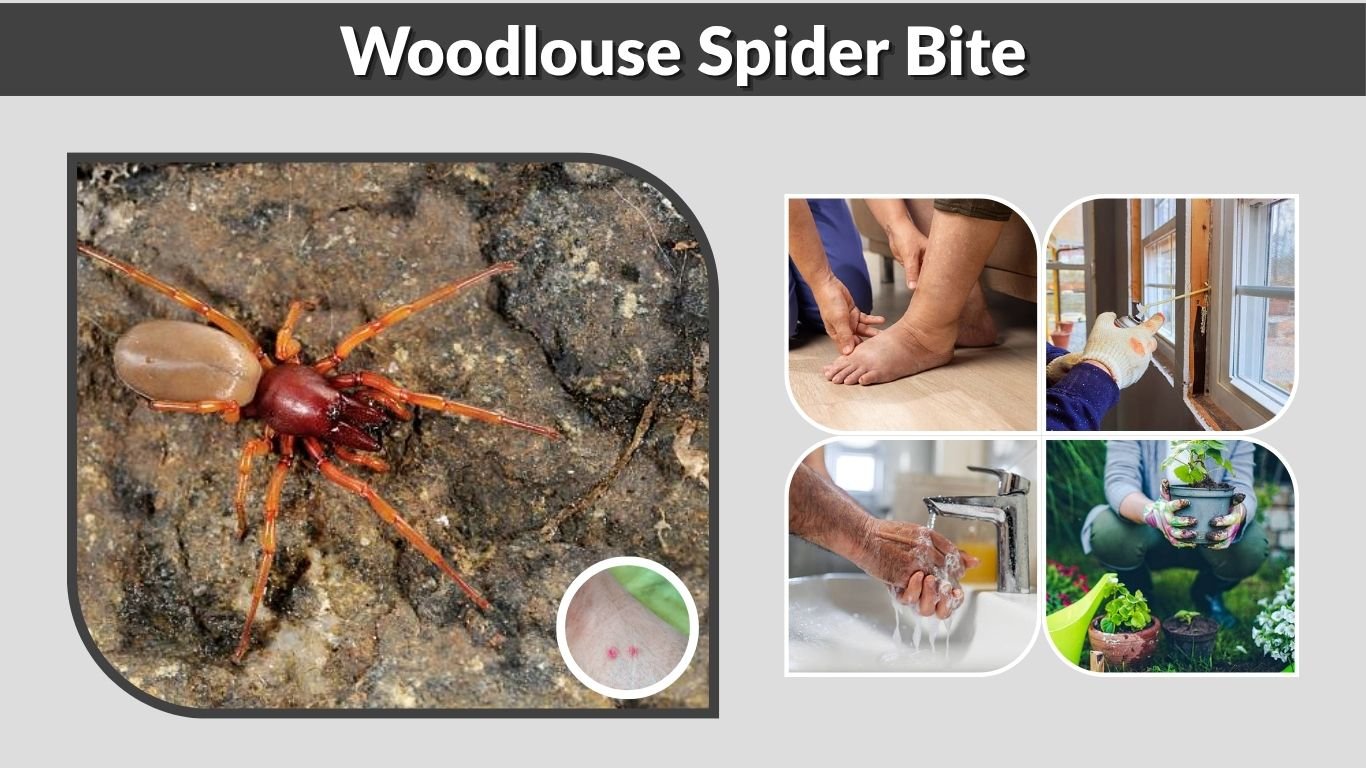
A woodlouse spider bite may look alarming because this reddish spider has unusually large fangs. However, verified bites from the woodlouse hunter, Dysdera crocata, have generally caused only minor, short-lived effects. Most people experience immediate localized pain, a small red mark, mild swelling, or itching. Serious illness, skin destruction, and death have not been associated with confirmed bites from this species.
Woodlouse Spider Bite Quick Facts
| Feature | Typical outcome |
| Pain | Immediate, mild to moderate |
| Bite mark | Small red area or visible punctures |
| Swelling | Usually mild and localized |
| Itching | Possible around the bite |
| Symptom duration | Pain often lasts less than one hour |
| Skin necrosis | Not expected from a verified bite |
| Medical danger | Generally low |
| Basic treatment | Wash, apply a cold compress, and monitor |
Do Woodlouse Spiders Bite Humans?
Woodlouse spiders can bite humans, but they do not seek people as prey. Bites usually happen when a spider is trapped against the skin, picked up, squeezed, or disturbed in its shelter.
The species has large, forward-pointing fangs adapted to piercing the hard bodies of woodlice, also called sowbugs or pill bugs. These fangs can penetrate human skin and may produce a noticeable pinching or stabbing sensation.
A published investigation of verified woodlouse spider bites found that the principal effect was minor pain, generally lasting less than an hour. Researchers suggested that much of this discomfort resulted from the physical puncture of the skin rather than a powerful venom effect.
What Does a Woodlouse Spider Bite Look Like?
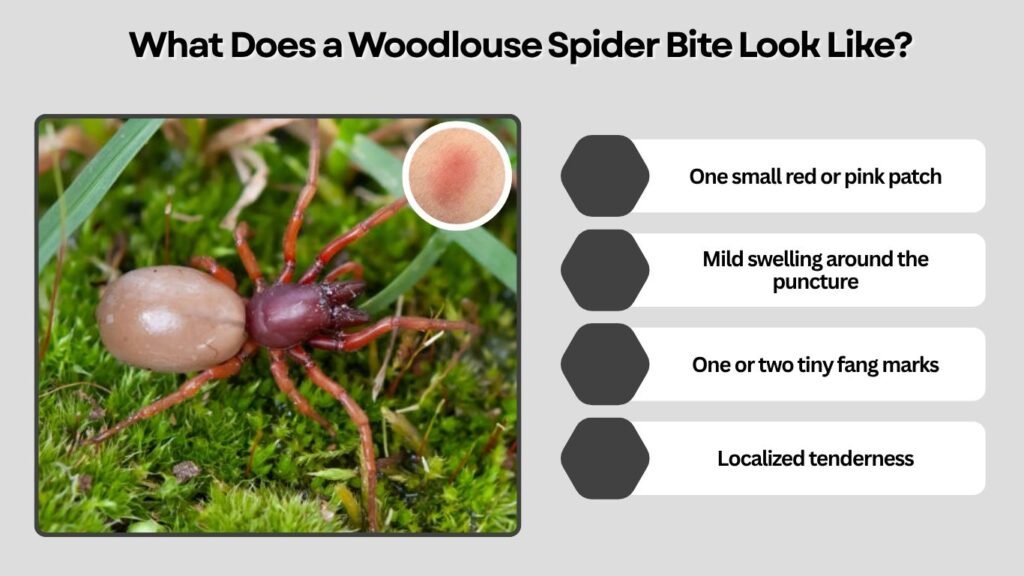
There is no single appearance that can confirm a woodlouse spider bite. The mark may resemble many ordinary insect bites, scratches, inflamed hair follicles, or other minor skin irritations.
Possible Bite-Mark Features
- One small red or pink patch
- Mild swelling around the puncture
- One or two tiny fang marks
- Localized tenderness
- Itching or warmth
- A small raised bump
Because the spider’s fangs are relatively large, puncture marks may be visible in some cases. However, two marks do not prove that a spider caused the injury. A reliable identification is usually possible only when the spider was seen biting and was safely collected or photographed afterward.
Why Bite Pictures Can Be Misleading
A photograph of a skin mark cannot normally identify the responsible spider. Bacterial infections, allergic reactions, other arthropod bites, and several skin conditions can produce similar redness and swelling.
Do not assume that a worsening wound is a woodlouse spider bite merely because this spider was found somewhere in the house. Seek medical advice when the mark spreads, becomes increasingly painful, produces pus, or fails to improve.
Woodlouse Spider Bite Symptoms
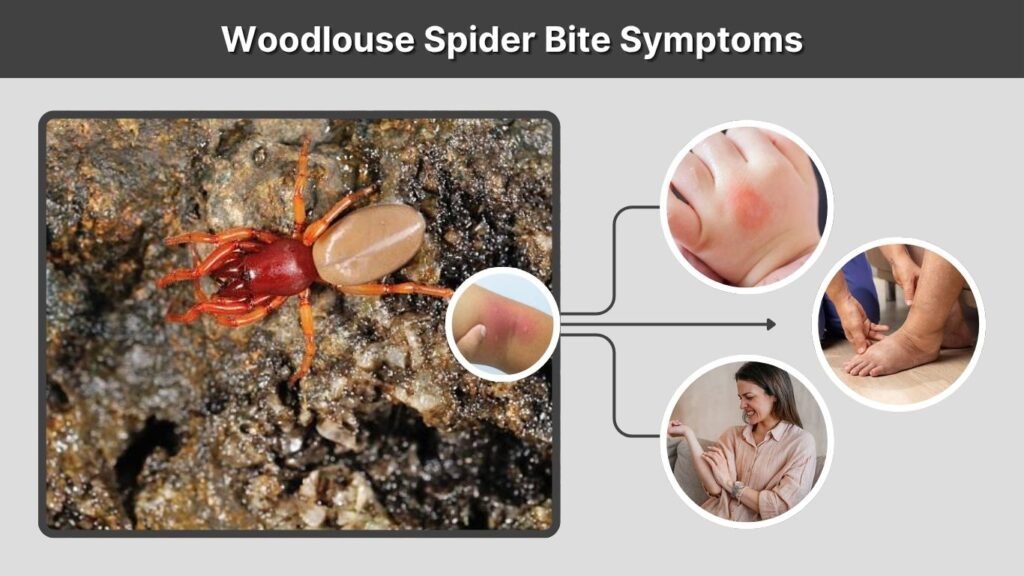
Symptoms are ordinarily limited to the area around the bite.
Common Symptoms
The person may feel an immediate sharp prick when the fangs enter the skin. A small red mark, minor swelling, tenderness, or itching may then appear.
Verified cases indicate that pain usually remains mild and resolves relatively quickly. Some localized irritation may remain after the initial pain disappears.
Signs of Infection
A bite can become infected if bacteria enter broken skin, especially when the area is repeatedly scratched. Possible warning signs include:
- Increasing pain rather than improvement
- Spreading redness or swelling
- Skin that feels unusually hot
- Pus or fluid
- Swollen glands
- A red line extending from the area
- Fever or flu-like symptoms
An infection may become noticeable several days after the initial injury and can require medical treatment.
Is a Woodlouse Spider Bite Dangerous?
A confirmed woodlouse spider bite is not considered medically significant for most healthy people. Available evidence does not connect verified bites with severe poisoning, destructive wounds, or fatalities.
The spider is technically venomous because it uses venom to subdue prey. It is not “poisonous,” and the presence of venom does not automatically make its bite dangerous to humans. Its intimidating appearance and large fangs have contributed to exaggerated claims about its effects.
Individual reactions can still vary. Any bite or sting can potentially cause an unusual allergic reaction or develop a secondary infection, even when the responsible animal is not normally dangerous.
Woodlouse Spider vs Brown Recluse Bite
The woodlouse spider is sometimes mistaken for a brown recluse because both are brownish spiders that may shelter in dark places. Their bites, however, do not have the same established effects.
| Feature | Woodlouse spider | Brown recluse |
| Typical initial pain | Often immediate | May initially be painless |
| Usual effect | Minor localized discomfort | Can occasionally cause tissue injury |
| Skin necrosis | Not expected | Possible in serious cases |
| Fang marks | May be noticeable | May be difficult to see |
| Medical importance | Generally low | Potentially medically significant |
Brown recluse bites may become increasingly painful over several hours and can occasionally develop blistering, discoloration, or tissue damage. These effects are not characteristic of verified woodlouse spider bites.
A red spider with a pale gray or cream abdomen and prominent jaws is more consistent with a woodlouse hunter. Nevertheless, skin symptoms alone cannot reliably identify either species.
How to Treat a Woodlouse Spider Bite
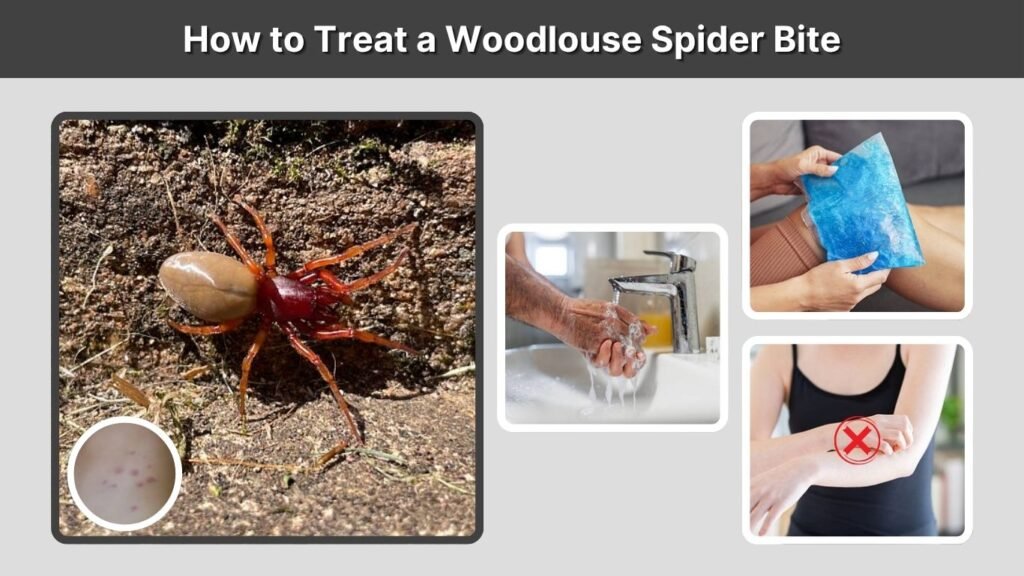
Most mild bites can be managed with basic first aid.
Immediate Treatment
- Wash the area: Gently clean the skin with soap and water to reduce the risk of infection.
- Apply a cold compress: Place an ice pack wrapped in cloth over the bite for approximately 10–20 minutes. Never apply ice directly to the skin.
- Raise the affected area: Elevation may help reduce swelling when the bite is on an arm or leg.
- Avoid scratching: Scratching can damage the skin and introduce bacteria.
- Consider symptom relief: A pharmacist can advise whether an appropriate pain reliever, oral antihistamine, or hydrocortisone cream is suitable for you.
- Monitor the area: Photographing the mark can help you notice whether redness or swelling is spreading.
These measures are consistent with general first-aid guidance for uncomplicated bites and stings.
Do not cut the bite, squeeze it, attempt to remove venom, or apply harsh chemicals. Antibiotics are not routinely needed unless a healthcare professional identifies an infection.
When to Seek Medical Attention
Get medical advice when:
- Pain, redness, or swelling continues to worsen
- The bite is near an eye, inside the mouth, or in the throat
- Pus, increasing warmth, or spreading redness develops
- You experience fever, vomiting, dizziness, or swollen glands
- A blister, darkened center, or open wound appears
- The affected person is very young, medically vulnerable, or has a history of severe allergic reactions
- You are uncertain which spider caused the bite
Seek emergency help immediately for breathing difficulty, facial or throat swelling, fainting, confusion, or trouble swallowing. These may indicate a serious allergic reaction rather than a typical response to the woodlouse spider.
Woodlouse Spider Bites on Cats and Dogs
Published information about confirmed woodlouse spider bites in cats and dogs is limited. The mild effects documented in humans should not be treated as proof that every pet will react the same way.
Contact a veterinarian when a pet develops marked swelling, persistent licking, limping, severe pain, vomiting, breathing difficulty, weakness, or unusual behavior after possible contact with a spider. Do not give human painkillers or antihistamines unless a veterinarian specifically recommends them.
How to Prevent Woodlouse Spider Bites
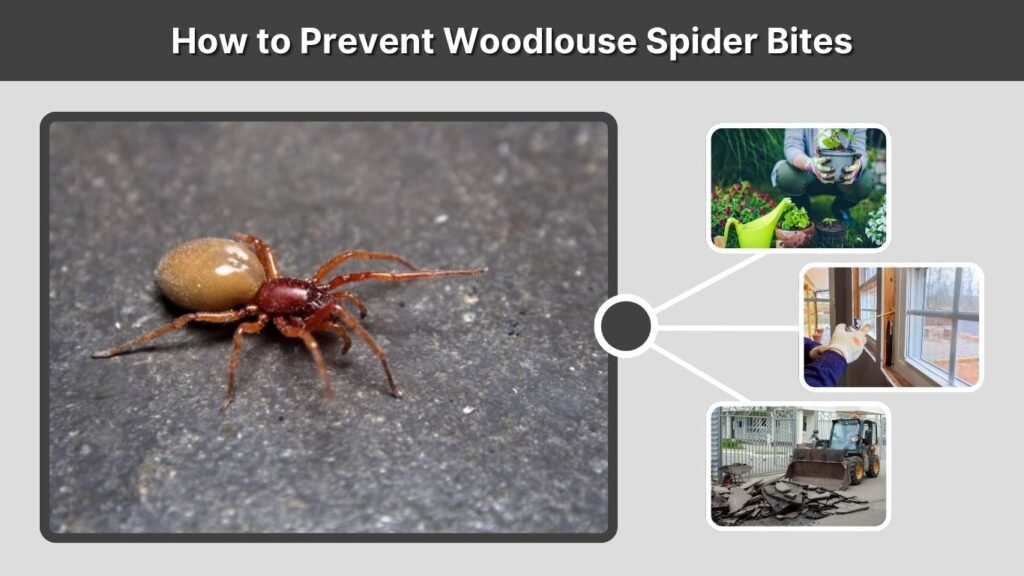
Woodlouse spiders usually hide beneath stones, logs, plant pots, bricks, damp debris, or objects lying on the ground. Wearing gloves while gardening and checking stored shoes, clothes, or equipment can reduce accidental contact.
Move the spider using a container rather than touching it with bare hands. Reducing dampness, sealing gaps, and removing unnecessary debris near the building can also make the area less attractive to both woodlice and the spiders that hunt them.
FAQs
Can a woodlouse spider bite through human skin?
Yes. Its large fangs can puncture human skin and cause an immediate sharp or pinching sensation. Nevertheless, verified bites have generally produced only mild, localized symptoms rather than serious poisoning.
How long does a woodlouse spider bite last?
The initial pain often lasts less than an hour, although mild redness, tenderness, or itching may persist longer. A bite that becomes progressively worse instead of improving should be evaluated by a healthcare professional.
Is a woodlouse spider bite poisonous?
The spider is venomous rather than poisonous because it injects venom through its fangs. Its venom helps capture small prey, but confirmed human bites have not shown major venom-related effects.
Can a woodlouse spider bite cause skin necrosis?
Skin necrosis is not an expected effect of a confirmed woodlouse spider bite. A blistering, enlarging, darkening, or ulcerated wound may have another cause and should receive medical assessment.
Has anyone died from a woodlouse spider bite?
No confirmed deaths have been linked to verified bites from Dysdera crocata. Claims describing the species as deadly are unsupported, although any severe or unusual reaction still requires immediate medical attention.
