
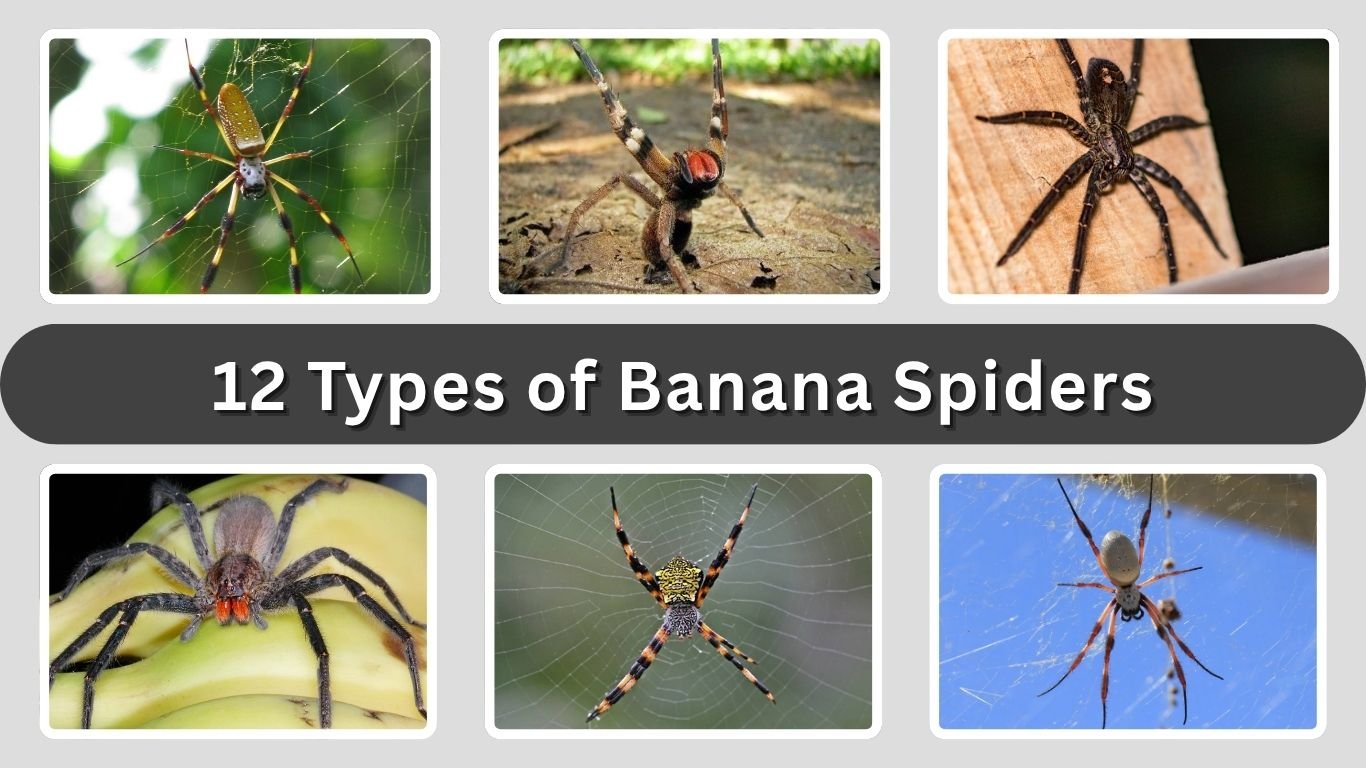
Banana spiders are a diverse group of spiders known for their large size, bright colors, powerful hunting abilities, or impressive golden webs. The name does not refer to a single species; it is commonly used for several orb-weavers, garden spiders, and wandering spiders found in tropical and subtropical regions. Some are harmless web builders that help control insects, while others possess medically significant venom. This guide introduces 12 types of banana spiders, including their appearance, habitat, diet, behavior, and potential danger to humans.
1. Golden Silk Orb-Weaver
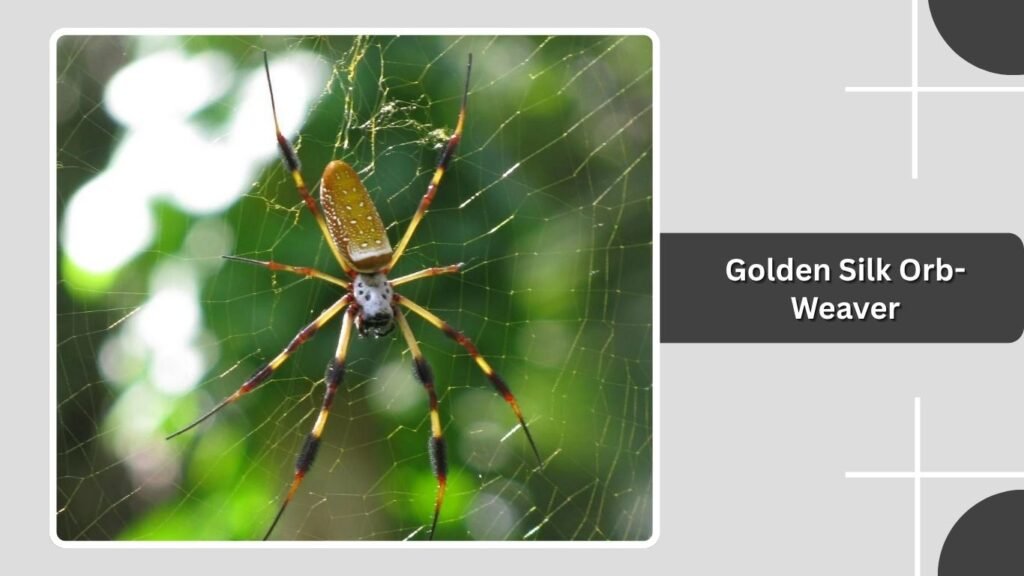
The Golden Silk Orb-Weaver is one of the best-known spiders commonly called a banana spider. It belongs to the genus Trichonephila and is famous for building large, strong webs with golden-colored silk. These spiders are commonly found in warm regions, including the southern United States, Central America, and parts of South America.
Identification
- Females can reach about 1 to 2 inches in body length.
- Their legs may span up to 4 or 5 inches.
- The body is usually yellow, orange, brown, or silver.
- Long legs often have dark bands or hairy sections.
- Males are much smaller and less colorful than females.
- Their webs may appear golden when sunlight passes through them.
Habitat
Golden Silk Orb-Weavers prefer warm, humid environments. They often build webs between trees, bushes, utility lines, and garden plants. Their webs are usually placed in open areas where flying insects are common. They may also be seen near forest edges, walking trails, wetlands, and buildings surrounded by vegetation.
Diet
These spiders mainly eat flying insects trapped in their webs. Their diet includes flies, mosquitoes, moths, beetles, bees, wasps, and small grasshoppers. After detecting vibrations, the spider quickly wraps the prey in silk and injects venom to immobilize it before feeding.
Are They Dangerous?
Golden Silk Orb-Weavers are not considered dangerous to humans. They are generally calm and prefer to escape rather than bite. A bite may cause temporary pain, redness, or swelling, but serious reactions are uncommon. They are beneficial spiders because they help control many flying insect populations.
2. Brazilian Wandering Spider
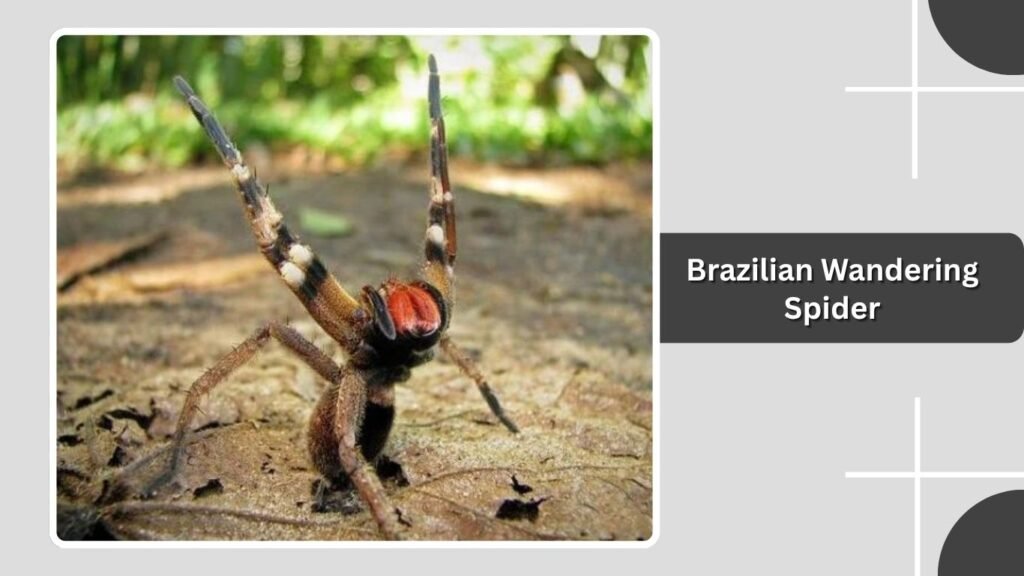
The Brazilian Wandering Spider is a large, fast-moving spider found mainly in Central and South America. It belongs to the genus Phoneutria and is sometimes called a banana spider because individuals may hide in banana plants or fruit shipments. Unlike orb-weavers, it actively hunts prey instead of building a web to catch food.
Identification
- The body is generally brown, gray, or tan.
- Adults may have a leg span of 5 to 7 inches.
- Dark bands may appear along the legs.
- The underside of the front legs can show red or orange hairs.
- It may raise its front legs when threatened.
- Its body is covered with short, dense hairs.
Habitat
Brazilian Wandering Spiders live in tropical forests, plantations, gardens, and other humid areas. During the day, they may hide beneath logs, rocks, leaves, banana plants, shoes, boxes, or other dark objects. At night, they leave their shelters and search for prey.
Diet
These spiders eat insects, crickets, cockroaches, beetles, and other spiders. Larger individuals may occasionally capture small frogs, lizards, or mice. They rely on speed, strong legs, and venom to overpower prey.
Are They Dangerous?
Brazilian Wandering Spiders have medically significant venom and should never be handled. A bite may cause severe pain, swelling, sweating, nausea, or other serious symptoms. Anyone who suspects a bite should seek emergency medical care immediately.
3. Red-Faced Banana Spider
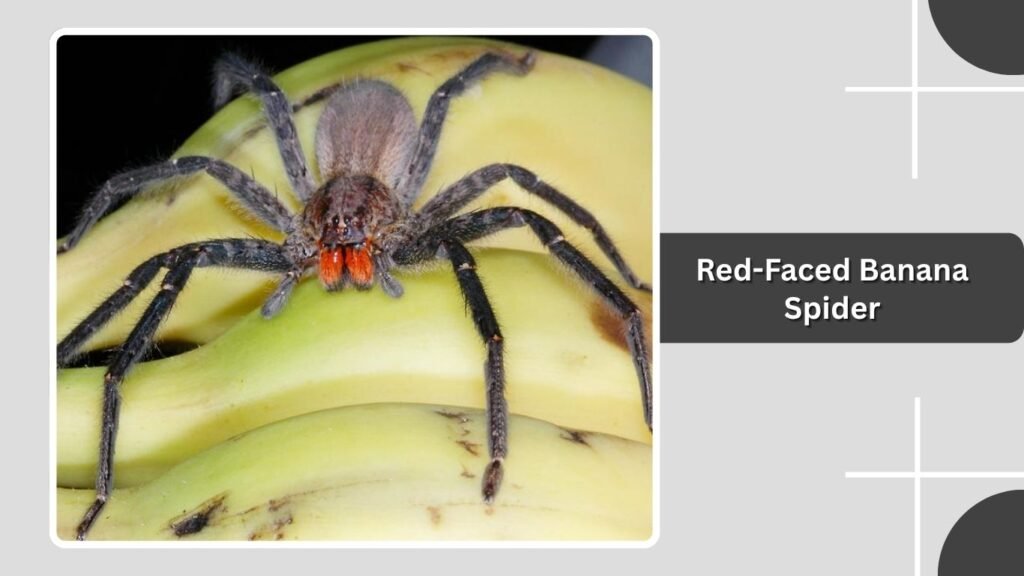
The Red-Faced Banana Spider is a wandering spider commonly associated with tropical banana-growing regions. It is known for the reddish or orange coloration around its mouthparts and underside. This spider does not build a large catching web; instead, it moves across vegetation and the ground while hunting insects.
Identification
- The body is usually brown, gray, or reddish-brown.
- Red or orange markings may appear near the mouthparts.
- The legs are long, powerful, and covered with fine hairs.
- Dark stripes or bands may be visible on the legs.
- Females are typically larger than males.
- It may display a defensive posture when disturbed.
Habitat
Red-Faced Banana Spiders prefer warm, moist environments. They may be found in forests, banana plantations, gardens, under leaves, beneath tree bark, and around piles of plant material. They sometimes enter houses while searching for shelter or prey.
Diet
Their diet mainly includes cockroaches, crickets, moths, beetles, grasshoppers, and other small arthropods. The spider approaches prey quietly before making a fast attack and delivering a venomous bite.
Are They Dangerous?
These spiders can bite when trapped, handled, or threatened. The bite may cause pain, swelling, redness, and other symptoms. Because identification can be difficult, it is best to avoid contact and seek medical advice if a bite causes severe or worsening reactions.
4. Tiger Wandering Spider
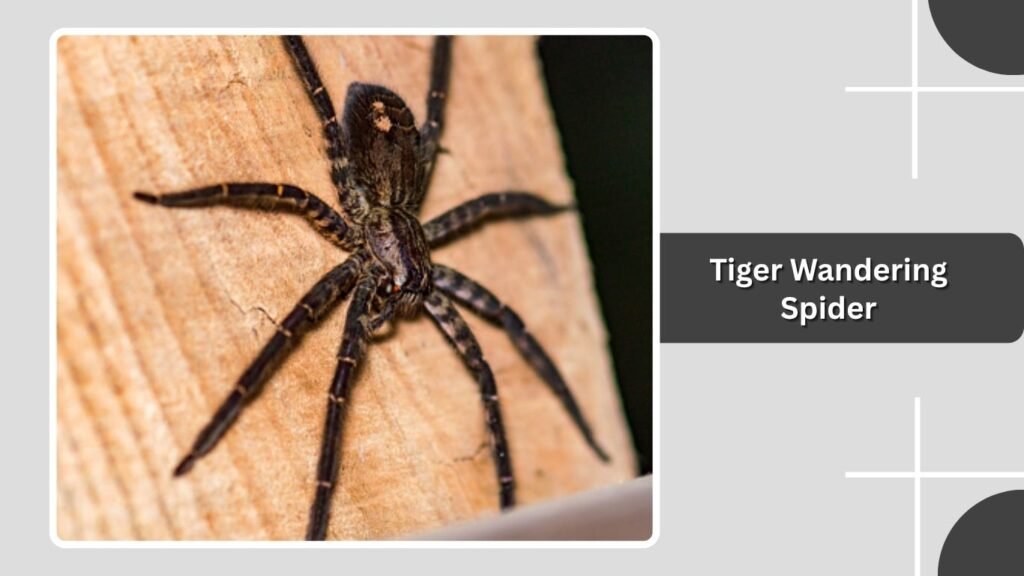
The Tiger Wandering Spider is a large hunting spider named for the striped or patterned appearance of its body and legs. It is found in tropical parts of Central and South America. Like other wandering spiders, it does not depend on a prey-catching web and spends much of the night actively searching for food.
Identification
- The body is usually brown, tan, or dark gray.
- Dark stripes may run across the legs and abdomen.
- Adults have long legs and a flattened hunting posture.
- Fine hairs cover much of the body.
- The abdomen may have chevron-shaped markings.
- Females generally have a heavier body than males.
Habitat
Tiger Wandering Spiders live in rainforests, plantations, wooded gardens, and humid lowland areas. They commonly hide under logs, rocks, leaves, loose bark, and thick vegetation during daylight hours. They may also shelter in sheds or other quiet structures.
Diet
These spiders feed on crickets, cockroaches, beetles, moths, grasshoppers, and smaller spiders. They use sensitive leg hairs to detect movement and vibrations before rushing toward their prey.
Are They Dangerous?
Tiger Wandering Spiders are generally defensive rather than aggressive. However, they may bite if cornered or pressed against the skin. A bite can cause localized pain and swelling. Avoid handling the spider, and seek medical attention if serious symptoms develop.
5. Yellow Garden Spider
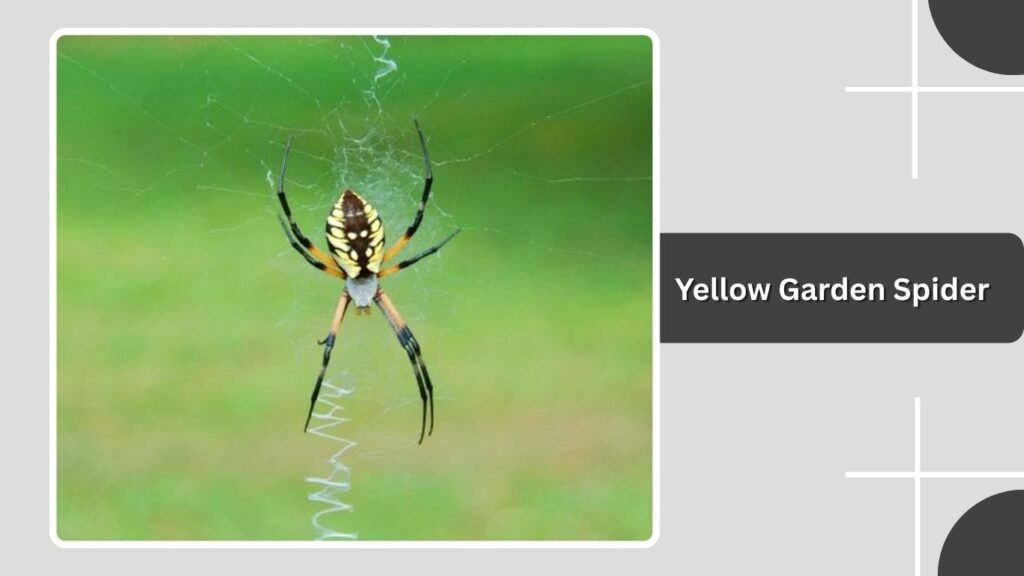
The Yellow Garden Spider is a large and colorful orb-weaver commonly found throughout North America. It is sometimes called a banana spider because of its bright yellow markings and large size. Its scientific name is Argiope aurantia, and it is easily recognized by the zigzag silk decoration placed in the center of its web.
Identification
- Females have black bodies with bright yellow markings.
- The abdomen is oval and boldly patterned.
- Legs are long and often black with yellow or reddish sections.
- Females may reach about 1 inch in body length.
- Males are much smaller and less noticeable.
- The web often contains a thick, zigzag silk pattern.
Habitat
Yellow Garden Spiders prefer sunny locations with tall plants and abundant insects. They build webs in gardens, fields, meadows, forest edges, and around fences. Their large circular webs are often positioned between shrubs or flowers.
Diet
Their diet includes flies, mosquitoes, moths, bees, wasps, grasshoppers, and other flying insects. Once prey becomes trapped, the spider wraps it in silk and saves it for feeding.
Are They Dangerous?
Yellow Garden Spiders are not dangerous to people. They rarely bite unless squeezed or handled. A bite may cause mild pain, redness, or swelling, similar to a bee sting. These spiders are beneficial because they naturally reduce garden pests.
6. Hawaiian Garden Spider
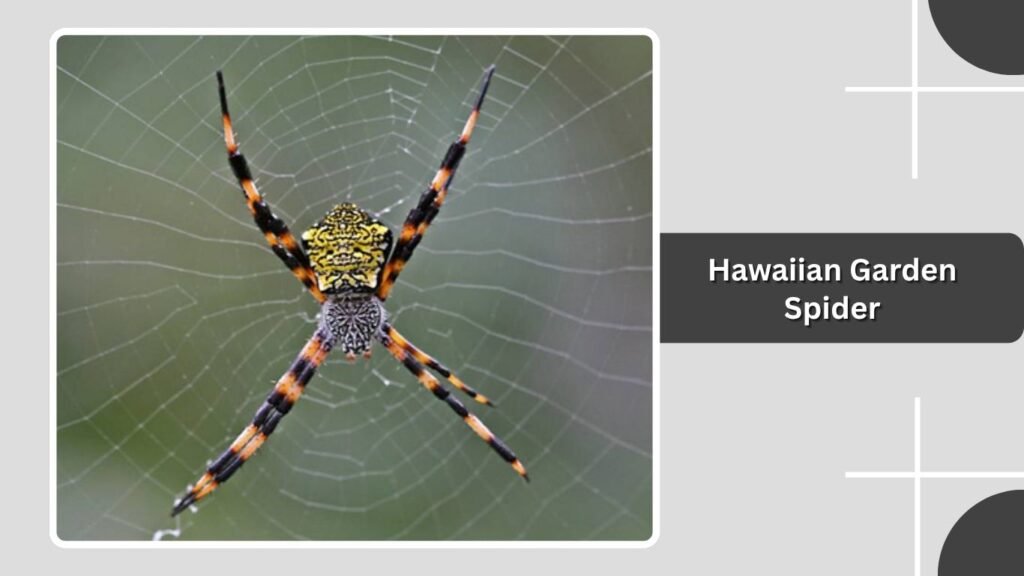
The Hawaiian Garden Spider is a striking orb-weaver found throughout the Hawaiian Islands. It is known locally as a garden spider and is commonly seen in open vegetation. The species builds large circular webs and has a colorful abdomen that may include yellow, white, black, or orange markings.
Identification
- Females have a broad abdomen with bright markings.
- The body may be yellow, white, black, silver, or orange.
- Legs are long and usually marked with dark bands.
- Males are much smaller and duller in color.
- A zigzag silk band may appear in the web.
- Females often rest head-down in the web’s center.
Habitat
Hawaiian Garden Spiders live in gardens, farms, grasslands, roadsides, parks, and forest clearings. They place webs between shrubs, tall grasses, tree branches, fences, and other supports. Sunny areas with frequent insect activity are especially suitable.
Diet
These spiders capture moths, flies, mosquitoes, bees, small wasps, and other flying insects. The web detects vibrations caused by struggling prey, allowing the spider to react quickly and wrap its meal in silk.
Are They Dangerous?
Hawaiian Garden Spiders are considered harmless to humans. They are not aggressive and usually remain in their webs. Bites are uncommon and typically cause only temporary discomfort, redness, or swelling. They are useful predators that help control insects around gardens and farms.
7. Red-Legged Golden Orb-Weaver
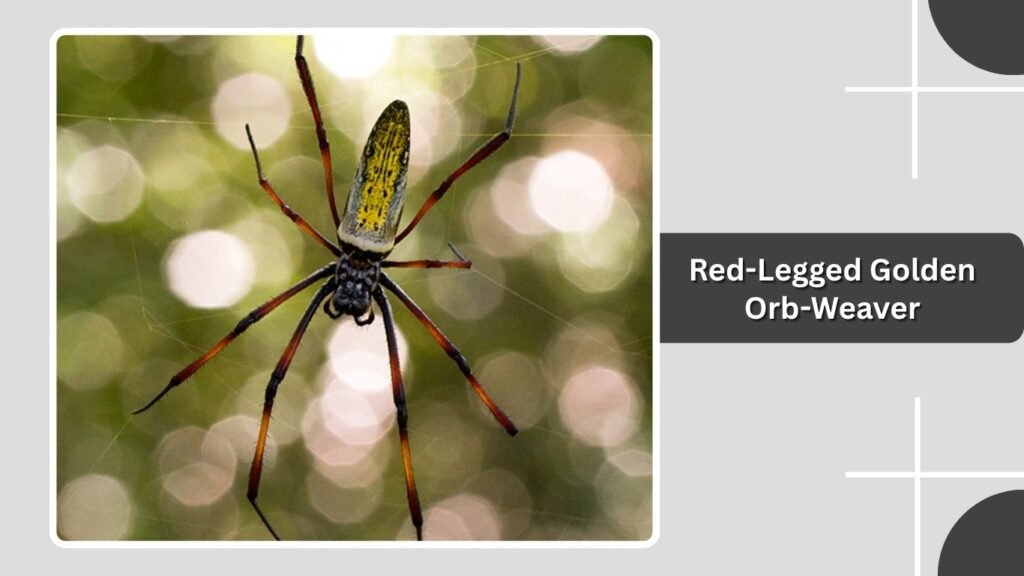
The Red-Legged Golden Orb-Weaver is a large web-building spider scientifically known as Trichonephila inaurata. It occurs in eastern and southern Africa and on western Indian Ocean islands, including Madagascar, Mauritius, Réunion, and the Seychelles. Its reddish legs and shimmering golden web make it relatively easy to recognize.
Identification
- Females are considerably larger than males.
- The legs commonly have noticeable red, orange, or reddish-brown sections.
- Its elongated abdomen may appear yellow, cream, brown, or silvery.
- The legs are long and usually marked with darker joints.
- Females normally rest near the center of their webs.
- The web’s yellow silk can shine gold in direct sunlight.
Habitat
Red-Legged Golden Orb-Weavers inhabit warm forests, wooded gardens, plantations, and other areas with dense vegetation. They build large, asymmetrical webs between trees, shrubs, and other strong supports. Several spiders may occasionally construct webs close together where flying insects are plentiful.
Diet
Their prey includes flies, mosquitoes, moths, beetles, wasps, and other insects that become trapped in the sticky web. The spider detects vibrations, approaches the struggling insect, and immobilizes it before wrapping it in silk.
Are They Dangerous?
Red-Legged Golden Orb-Weavers are not considered aggressive toward humans. Like other golden orb-weavers, they prefer remaining in or escaping through their webs rather than biting. A defensive bite is possible when a spider is squeezed or handled, so it should be observed without touching it.
8. Australian Golden Orb-Weaver
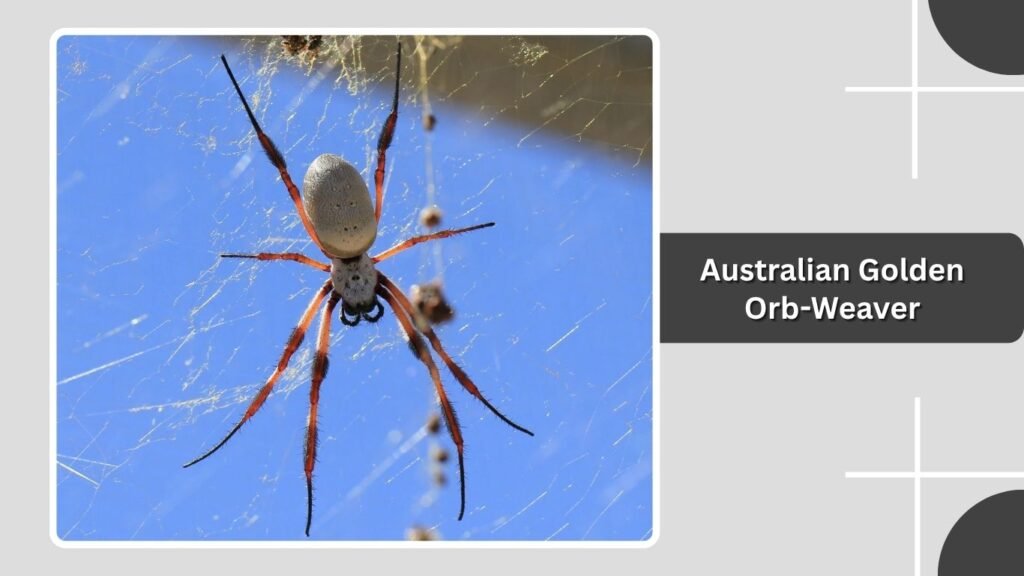
The Australian Golden Orb-Weaver commonly refers to Trichonephila edulis, although several golden orb-weaver species live in Australia. This impressive spider creates a strong, golden-colored web and may be encountered in gardens, parks, forests, and bushland.
Identification
- Females have a large, elongated abdomen.
- Their bodies may appear gray, cream, brown, or silvery.
- The long legs often contain red, orange, yellow, and black sections.
- Dark markings may be visible on the abdomen.
- Males are extremely small compared with females.
- Their webs can have a yellow or golden appearance.
Habitat
Australian Golden Orb-Weavers build permanent webs between trees, bushes, fences, and garden structures. Their webs are usually placed in open flight paths where insects are likely to pass. They are especially noticeable during warmer months when females reach their full size.
Diet
These spiders capture flies, moths, beetles, cicadas, wasps, and other flying insects. Their large webs are strong enough to hold relatively heavy prey. The spider may repair damaged sections rather than completely abandoning the entire structure.
Are They Dangerous?
Australian Golden Orb-Weavers are reluctant to bite and are not generally considered dangerous to people. They may defend themselves if held, pinched, or trapped against the skin. Any bite would usually be expected to cause localized discomfort rather than severe poisoning.
9. Giant Golden Orb-Weaver
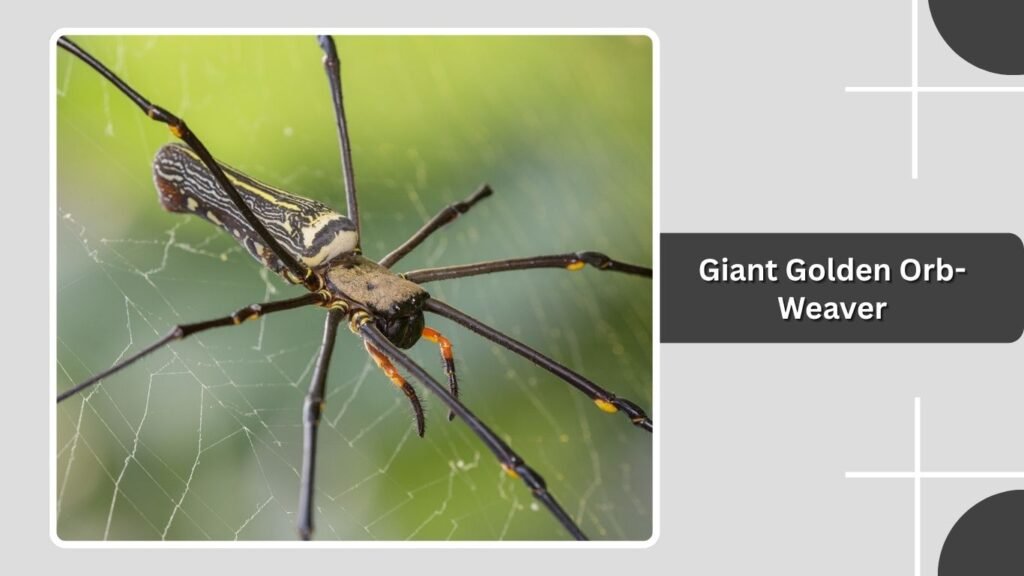
The Giant Golden Orb-Weaver, also called the giant wood spider, commonly refers to Nephila pilipes. It is found across parts of eastern and southeastern Asia and Oceania. Adult females are among the largest orb-weaving spiders, while mature males remain remarkably small.
Identification
- Females may have bodies approximately 1 to 2 inches long.
- Their complete leg span appears much larger than the body.
- The abdomen is elongated and commonly dark yellow, brown, or black.
- Yellow stripes or markings may appear along the abdomen.
- The legs are long and frequently banded with black and yellow.
- Males may measure only a fraction of the female’s size.
Habitat
Giant Golden Orb-Weavers inhabit tropical and subtropical forests, woodland edges, gardens, and plantations. Their webs are stretched between trees or other tall supports, often around human eye level or higher. The hub may be positioned above the web’s center rather than directly in the middle.
Diet
They primarily consume flying insects, including beetles, moths, flies, bees, wasps, and cicadas. Their elastic central web helps absorb the force of large insects striking the silk at speed. The spider quickly secures suitable prey before feeding.
Are They Dangerous?
Despite their impressive size, Giant Golden Orb-Weavers are not known for attacking people. Golden orb-weaving spiders are normally reluctant to bite. They should still be left undisturbed because any large spider may defend itself when roughly handled.
10. Joro Spider
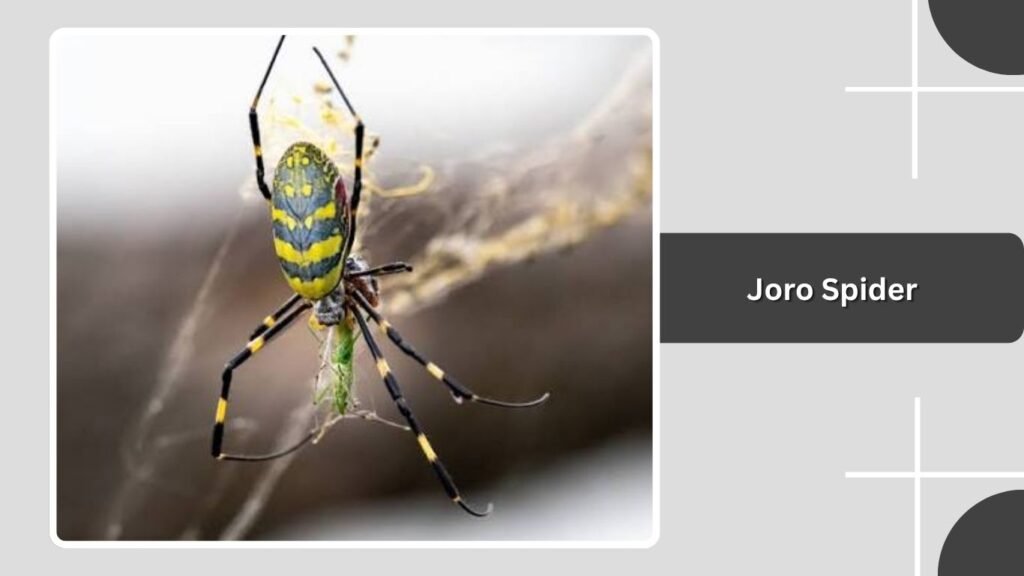
The Joro Spider, scientifically called Trichonephila clavata, is a colorful golden orb-weaver native to East Asia. It has also established populations in parts of the United States. Females produce large, multilayered golden webs on trees, power lines, buildings, and garden structures.
Identification
- Adult females have bright yellow abdomens.
- Broad bluish-green horizontal bands cross the upper abdomen.
- Red markings are visible underneath the body.
- Their black legs have yellow or orange bands.
- Females measure approximately 0.67 to 1.2 inches in body length.
- Males are much smaller and mostly brown.
Habitat
Joro Spiders can tolerate forests, gardens, parks, suburban yards, and urban environments. Their webs frequently appear along habitat edges and between overhead structures. Small juveniles are difficult to notice, while mature females become especially visible during late summer and fall.
Diet
Joro Spiders catch numerous flying and crawling insects, including flies, moths, beetles, mosquitoes, wasps, and brown marmorated stink bugs. Their strong, stretchy silk helps hold insects until the spider can approach and wrap them.
Are They Dangerous?
Joro Spiders pose little threat to humans. Their first reaction is generally to escape, and bites are extremely uncommon, even when the spiders are disturbed. They are venomous for capturing prey, but their venom is not considered medically dangerous to most people.
11. Batik Golden Web Spider
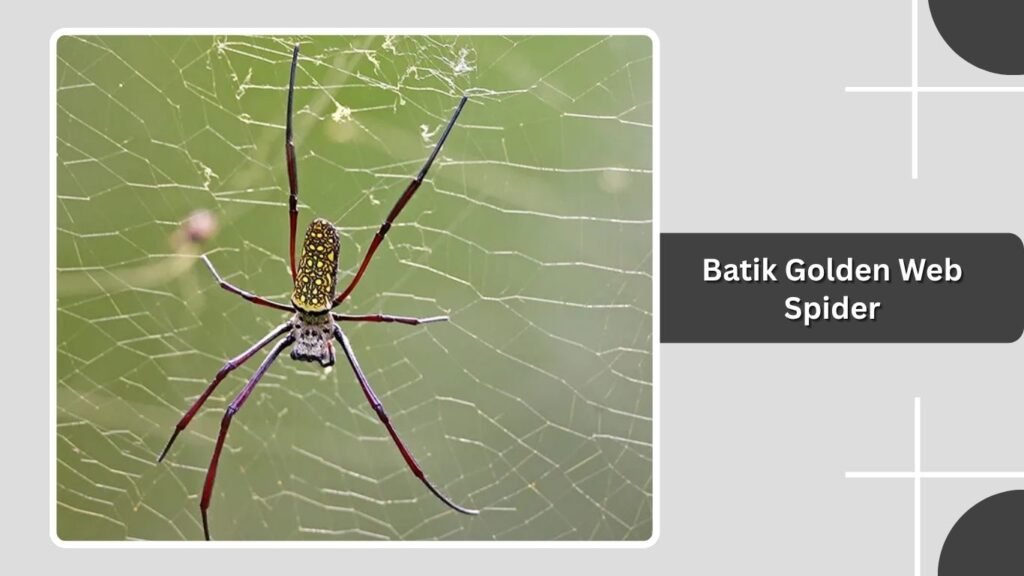
The Batik Golden Web Spider is an Asian golden orb-weaver scientifically known as Trichonephila antipodiana. The word “batik” refers to the spider’s decorative body pattern, which can resemble patterned fabric. It is found in parts of Southeast Asia and builds large golden webs in warm, vegetated environments.
Identification
- Females have an elongated, patterned abdomen.
- The body may display yellow, cream, brown, black, and orange markings.
- Its decorative pattern can resemble batik textile designs.
- The legs are extremely long and usually dark with lighter bands.
- Mature males are much smaller than females.
- Its large web may appear yellow when illuminated by sunlight.
Habitat
Batik Golden Web Spiders inhabit tropical forests, plantations, rural gardens, forest edges, and areas near streams. They position their webs across open spaces between branches, bushes, fences, and utility structures where flying insects regularly travel.
Diet
Their diet consists mainly of moths, flies, beetles, wasps, mosquitoes, and other insects. The spider remains in the web and responds to vibrations produced by trapped prey. Small male spiders may also live near the edges of a mature female’s web.
Are They Dangerous?
Batik Golden Web Spiders are not considered aggressive. Their large size can appear intimidating, but they generally remain in their webs or move away when disturbed. As with other orb-weavers, a bite would be most likely if the spider were deliberately grabbed or compressed.
12. Spotted Golden Orb-Weaver
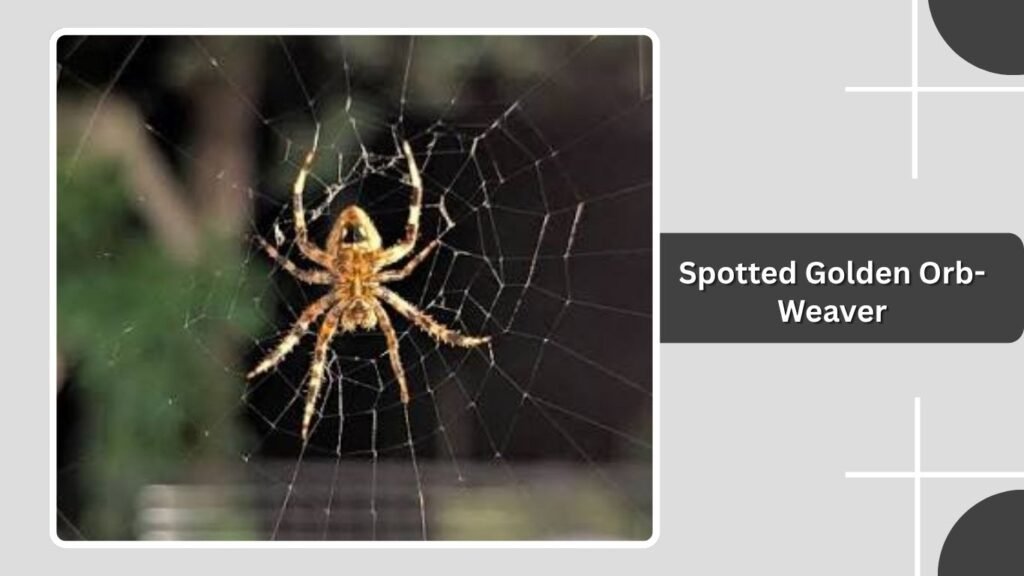
The Spotted Golden Orb-Weaver is a regional common name used for patterned Asian golden orb-weavers. In some areas, the name is associated with spiders also called giant or Batik golden orb-weavers, so it may not always indicate a completely separate species. The spider is named for the pale spots or decorative markings on its abdomen.
Identification
- The abdomen has pale spots, stripes, or irregular patterned markings.
- Its body may be yellow, brown, black, orange, or silvery.
- The legs are long and usually contain contrasting bands.
- Females are dramatically larger than males.
- The spider rests head-down in a large web.
- Its silk may look yellow or golden in bright light.
Habitat
Spotted Golden Orb-Weavers are associated with warm forests, woodland clearings, gardens, parks, and plantations. They create large webs between trees and other sturdy supports. Locations with open flying space and plentiful insects provide especially favorable web-building sites.
Diet
They feed on moths, flies, beetles, mosquitoes, wasps, and other insects caught in their webs. The spider relies on web vibrations to determine the position and size of its prey before approaching it.
Are They Dangerous?
Spotted Golden Orb-Weavers are generally shy and reluctant to bite. They use venom to subdue insect prey but are not regarded as a serious human threat. It is still sensible to avoid handling them and to carefully relocate webs that block frequently used pathways.
FAQs
1. Why are they called banana spiders?
The name “banana spider” is used for several unrelated spiders. Some received the name because they live around banana plants, while others have yellow bodies or golden webs. Brazilian wandering spiders may also be called banana spiders because they occasionally hide in banana shipments.
2. Are banana spiders poisonous to humans?
Banana spiders are venomous rather than poisonous, but the danger depends on the species. Most golden orb-weavers and garden spiders are harmless to humans. Brazilian wandering spiders, however, have medically significant venom and require immediate medical attention if a bite is suspected.
3. Do banana spiders bite?
Most banana spiders rarely bite unless they are trapped, squeezed, or deliberately handled. Orb-weavers usually remain in their webs or retreat when disturbed. A bite from a harmless species may cause mild pain or swelling, while bites from wandering spiders can produce serious symptoms.
4. Where do banana spiders live?
Banana spiders generally live in warm, humid regions. Depending on the species, they may occur in forests, gardens, plantations, grasslands, and around buildings. Golden orb-weavers build large webs between plants, while wandering spiders hide under leaves, logs, rocks, or stored objects.
5. What do banana spiders eat?
Banana spiders mainly eat insects and other small animals. Orb-weavers capture flies, mosquitoes, moths, beetles, bees, and wasps in their webs. Wandering spiders actively hunt cockroaches, crickets, grasshoppers, and other spiders, while larger individuals may occasionally catch small frogs or lizards.
